
Insects in Forensic Science How bugs Tell Time
Insects in Forensic Science How bugs Tell Time
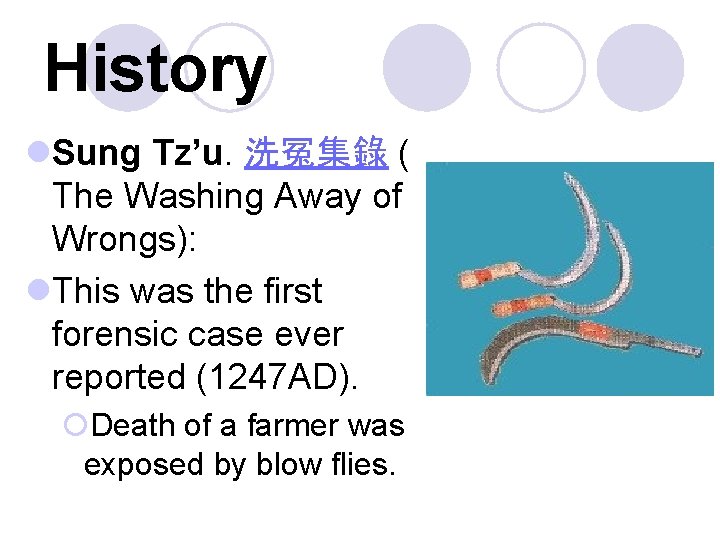
History l. Sung Tz’u. 洗冤集錄 ( The Washing Away of Wrongs): l. This was the first forensic case ever reported (1247 AD). ¡Death of a farmer was exposed by blow flies.
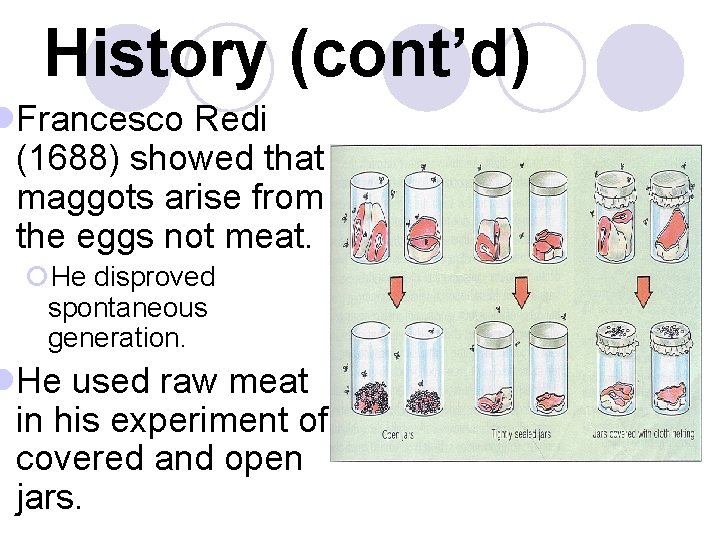
History (cont’d) l. Francesco Redi (1688) showed that maggots arise from the eggs not meat. ¡He disproved spontaneous generation. l. He used raw meat in his experiment of covered and open jars.
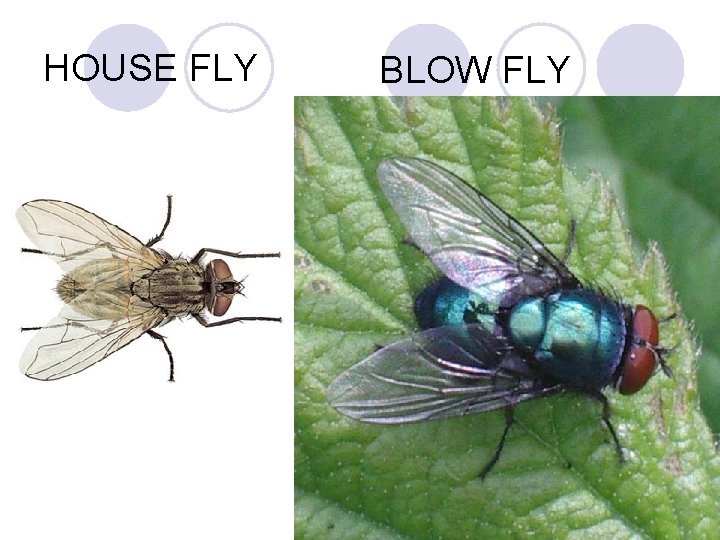
HOUSE FLY BLOW FLY
Life Cycle l. Metamorphosis = transition of insects from egg to adult. l. Larvae or maggot • 1 st, 2 nd. 3 rd instar l. Pupa l. Adult
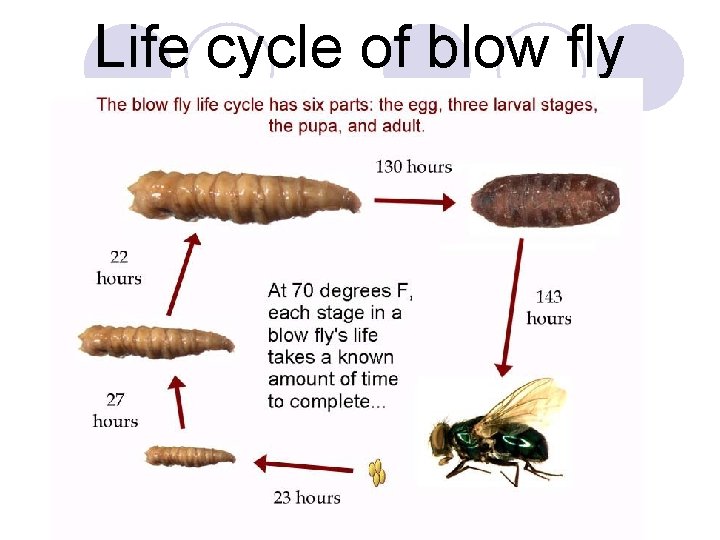
Life cycle of blow fly
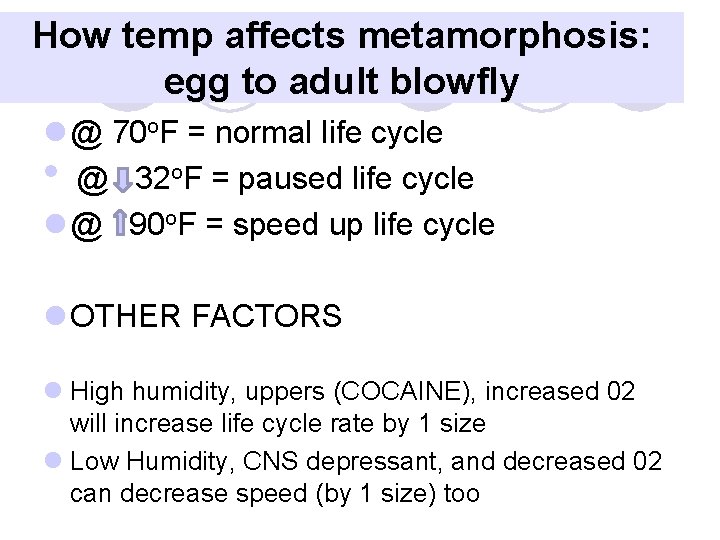
How temp affects metamorphosis: egg to adult blowfly l @ 70 o. F = normal life cycle l @ 32 o. F = paused life cycle l @ 90 o. F = speed up life cycle l OTHER FACTORS l High humidity, uppers (COCAINE), increased 02 will increase life cycle rate by 1 size l Low Humidity, CNS depressant, and decreased 02 can decrease speed (by 1 size) too
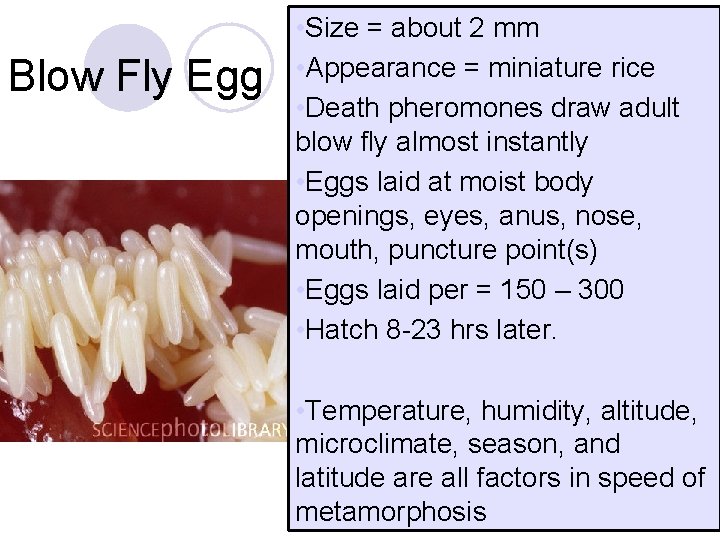
Blow Fly Egg • Size = about 2 mm • Appearance = miniature rice • Death pheromones draw adult blow fly almost instantly • Eggs laid at moist body openings, eyes, anus, nose, mouth, puncture point(s) • Eggs laid per = 150 – 300 • Hatch 8 -23 hrs later. • Temperature, humidity, altitude, microclimate, season, and latitude are all factors in speed of metamorphosis
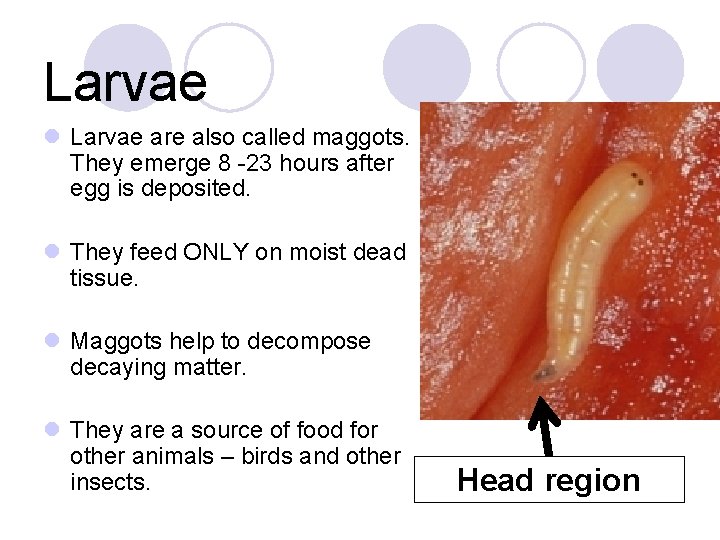
Larvae l Larvae are also called maggots. They emerge 8 -23 hours after egg is deposited. l They feed ONLY on moist dead tissue. l Maggots help to decompose decaying matter. l They are a source of food for other animals – birds and other insects. Head region
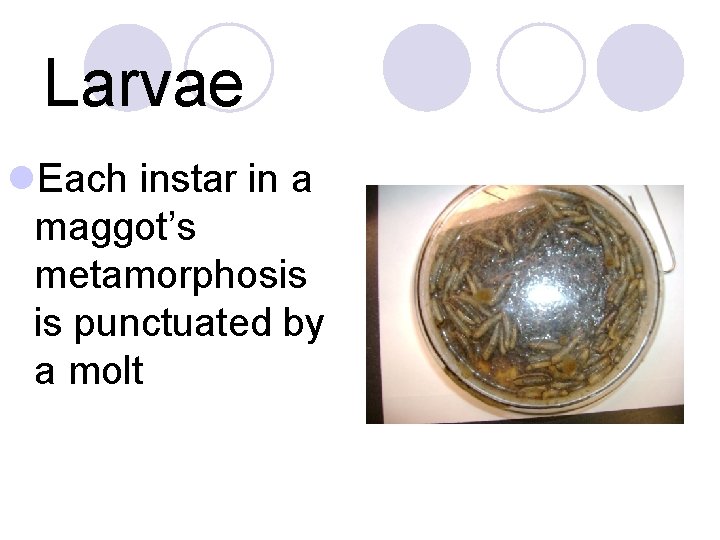
Larvae l. Each instar in a maggot’s metamorphosis is punctuated by a molt
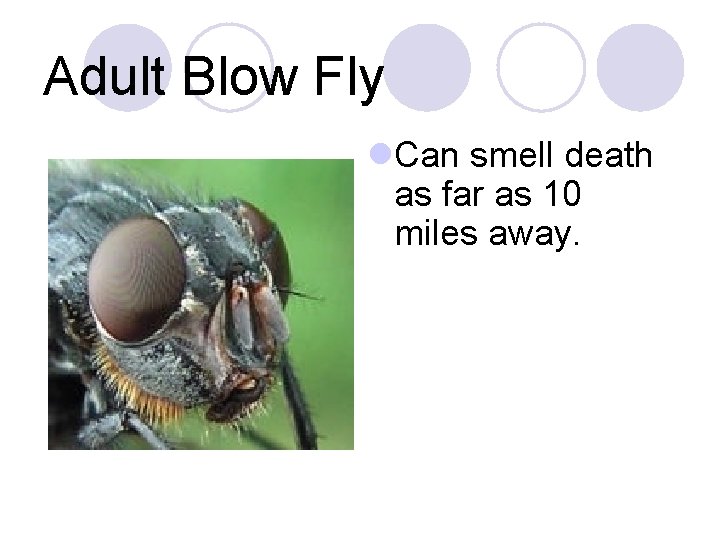
Adult Blow Fly l. Can smell death as far as 10 miles away.
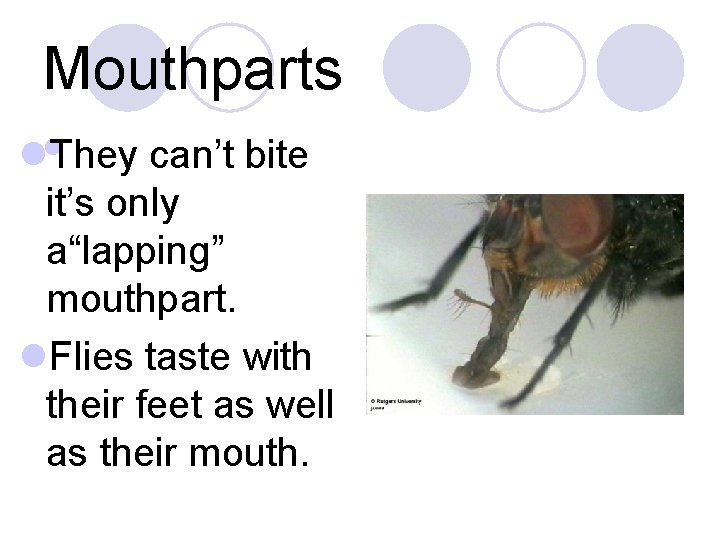
Mouthparts ll. They can’t bite it’s only a“lapping” mouthpart. l. Flies taste with their feet as well as their mouth.
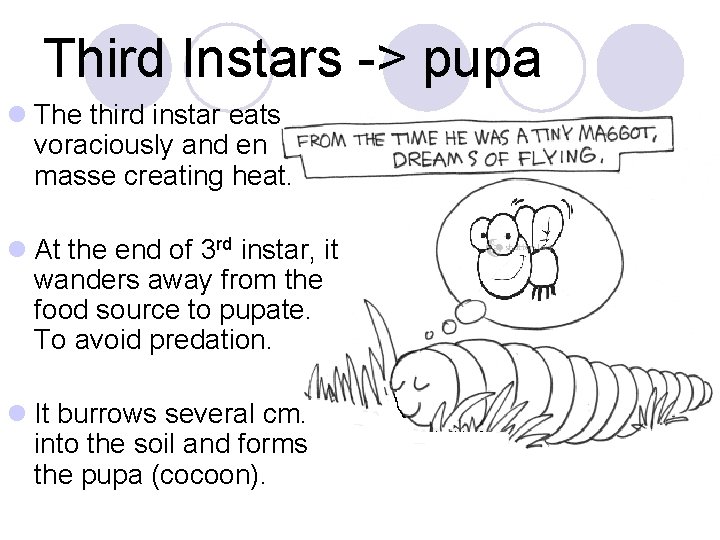
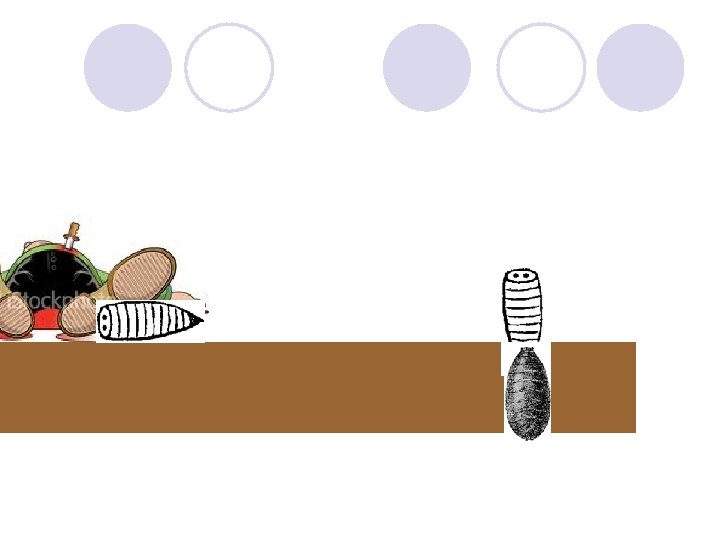
Third Instars -> pupa l The third instar eats voraciously and en masse creating heat. l At the end of 3 rd instar, it wanders away from the food source to pupate. To avoid predation. l It burrows several cm. into the soil and forms the pupa (cocoon).
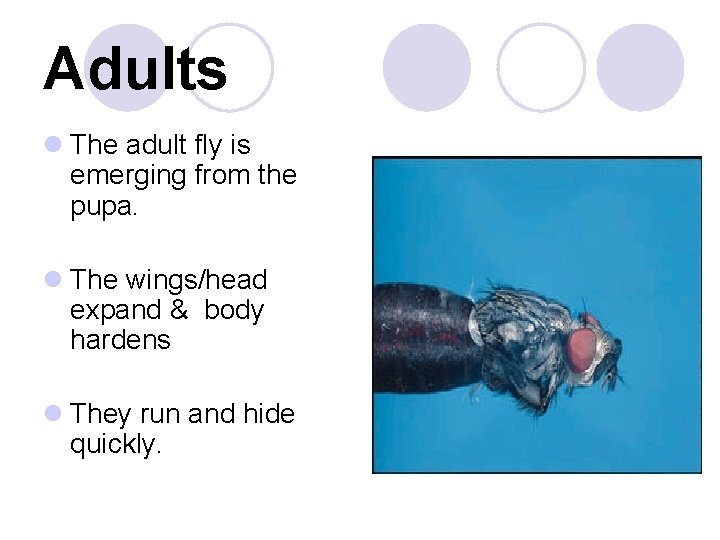
Adults l The adult fly is emerging from the pupa. l The wings/head expand & body hardens l They run and hide quickly.
What feeds on the feeders?
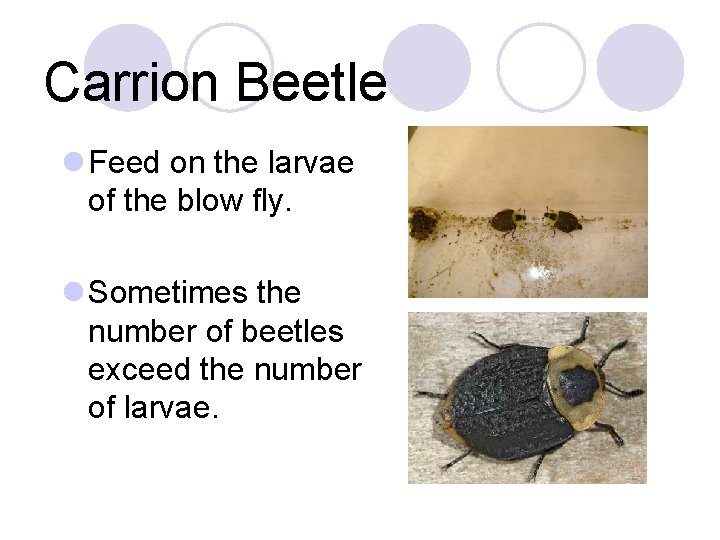
Carrion Beetle l Feed on the larvae of the blow fly. l Sometimes the number of beetles exceed the number of larvae.
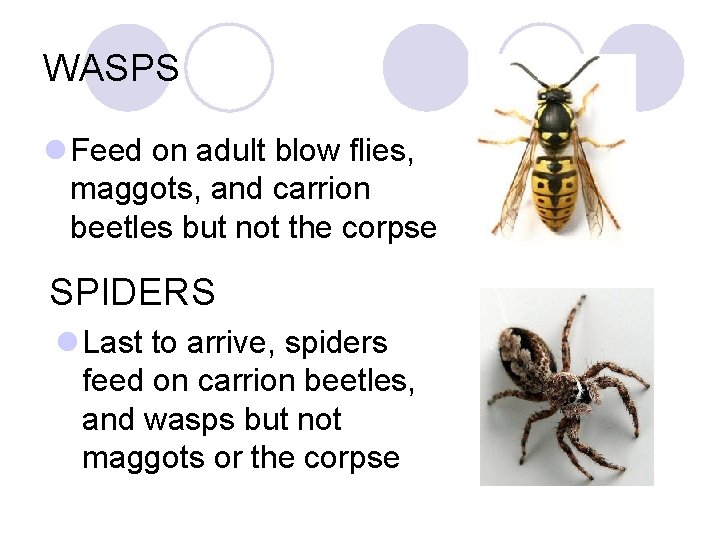
WASPS l Feed on adult blow flies, maggots, and carrion beetles but not the corpse SPIDERS l Last to arrive, spiders feed on carrion beetles, and wasps but not maggots or the corpse
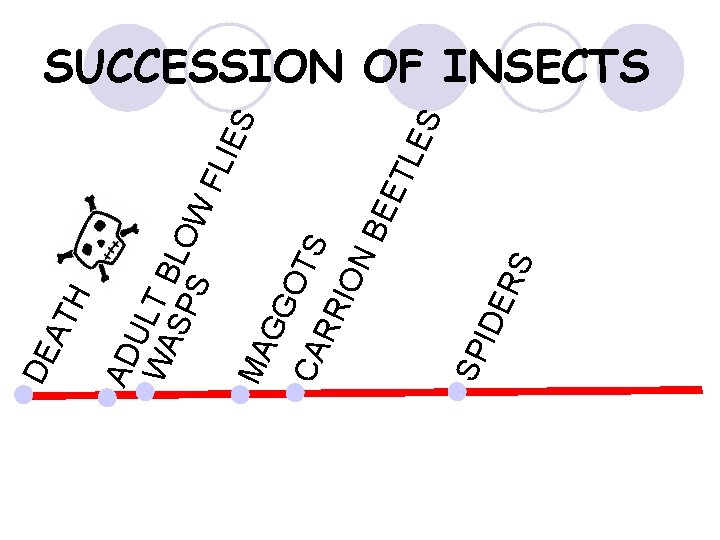
S ER PID l. S FL ES IES TL EE AG l C GOT S AR RIO NB l. M l. A DU l W LT AS BLO PS W TH EA l. D SUCCESSION OF INSECTS

THE END
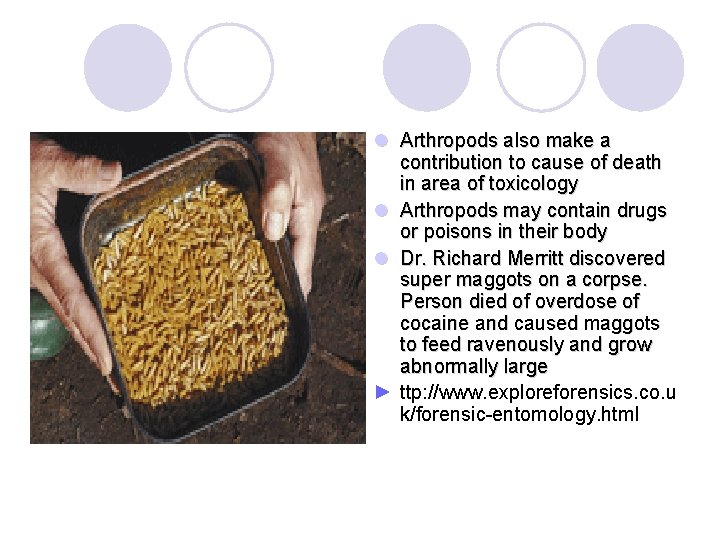
l Arthropods also make a contribution to cause of death in area of toxicology l Arthropods may contain drugs or poisons in their body l Dr. Richard Merritt discovered super maggots on a corpse. Person died of overdose of cocaine and caused maggots to feed ravenously and grow abnormally large ► ttp: //www. exploreforensics. co. u k/forensic-entomology. html
Decomposition Stages 1. Fresh (1 -2 days) – l Adult blow flies, yellowjackets 2. Bloated (2 -6 days)l Blow flies, yellowjackets 3. Major Decay(5 -11 days)¡ Flies, beetles, cockroaches, spiders ¡ After first three stages, liquid has mostly seeped away. Biomass also drastically decreases. 4. Post-decay(10 -24 days)-Beetles, fruit flies, gnats 5. Dry Stage (24+ days)-Some beetles, ants, and flies
- Slides: 24