
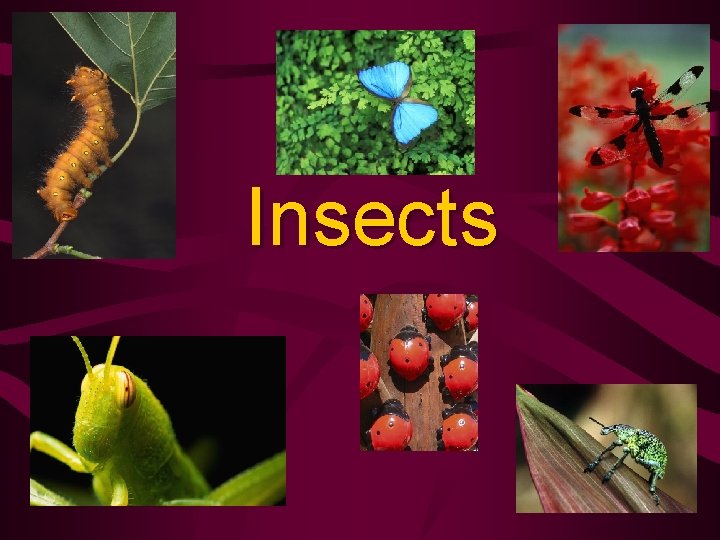
Insects I What Makes an Insect i Insects
- Slides: 22
Insects
I. What Makes an Insect? i. Insects belong to the Phylum ________. A. This Phylum also includes ______. B. _________ have jointed legs and bodies that are divided into segments.
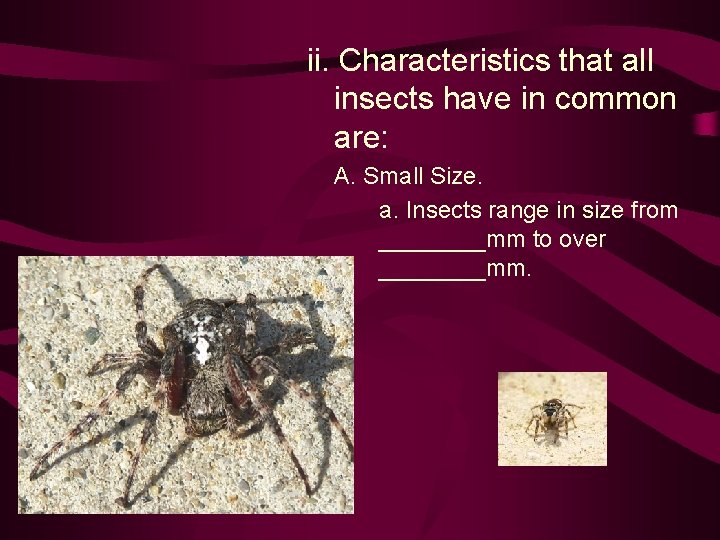
ii. Characteristics that all insects have in common are: A. Small Size. a. Insects range in size from ____mm to over ____mm.
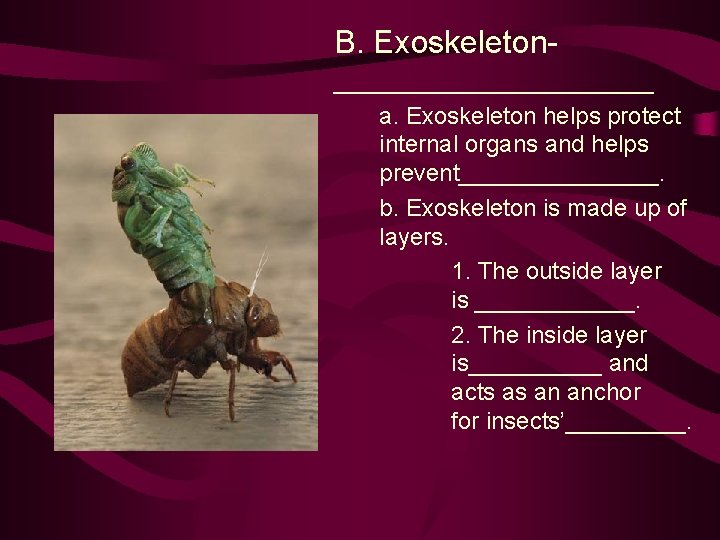
B. Exoskeleton____________ a. Exoskeleton helps protect internal organs and helps prevent________. b. Exoskeleton is made up of layers. 1. The outside layer is ______. 2. The inside layer is_____ and acts as an anchor for insects’_____.
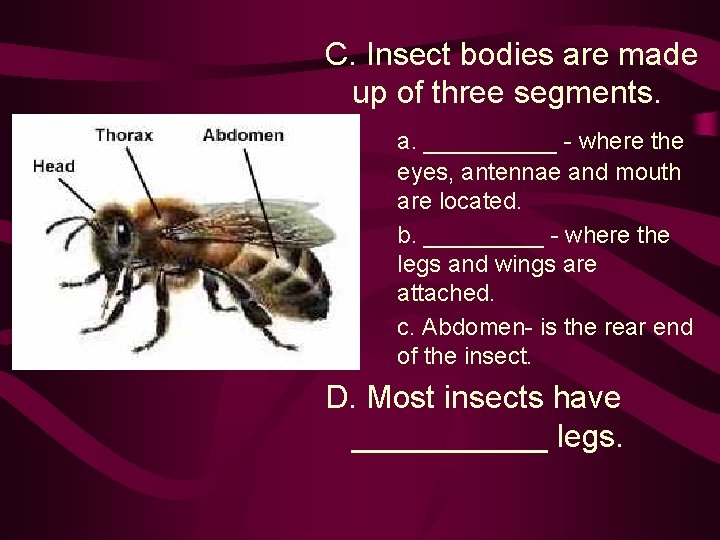
C. Insect bodies are made up of three segments. a. _____ - where the eyes, antennae and mouth are located. b. _____ - where the legs and wings are attached. c. Abdomen- is the rear end of the insect. D. Most insects have ______ legs.
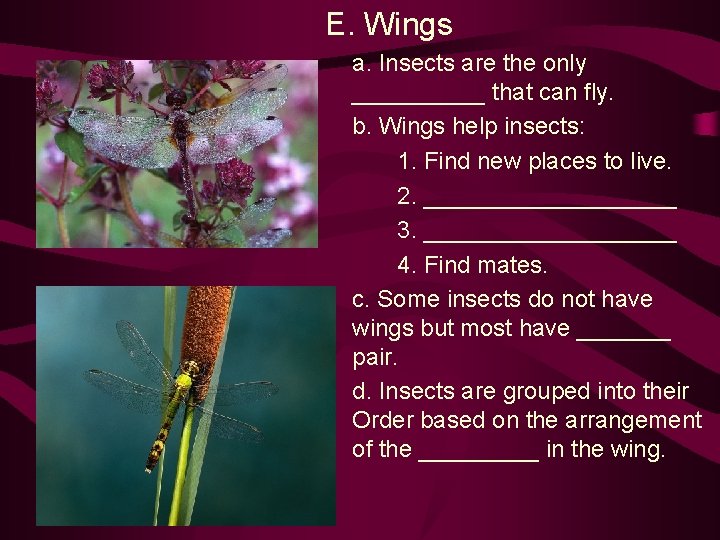
E. Wings a. Insects are the only _____ that can fly. b. Wings help insects: 1. Find new places to live. 2. __________ 3. __________ 4. Find mates. c. Some insects do not have wings but most have _______ pair. d. Insects are grouped into their Order based on the arrangement of the _____ in the wing.
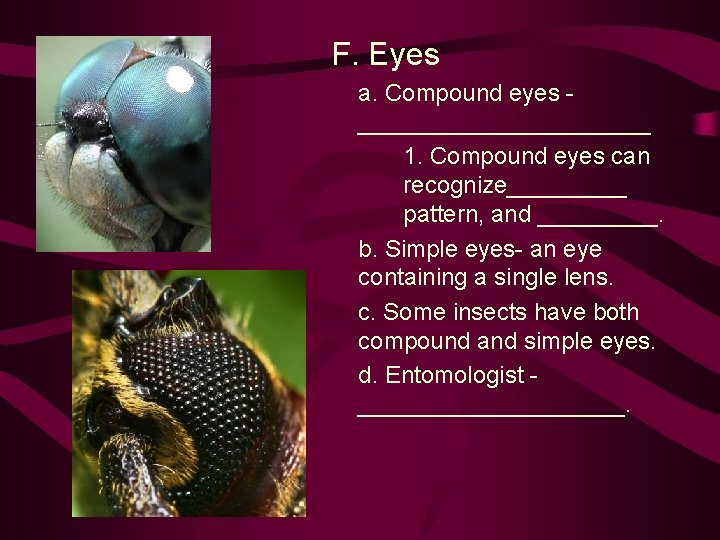
F. Eyes a. Compound eyes ___________ 1. Compound eyes can recognize_____ pattern, and _____. b. Simple eyes- an eye containing a single lens. c. Some insects have both compound and simple eyes. d. Entomologist __________.
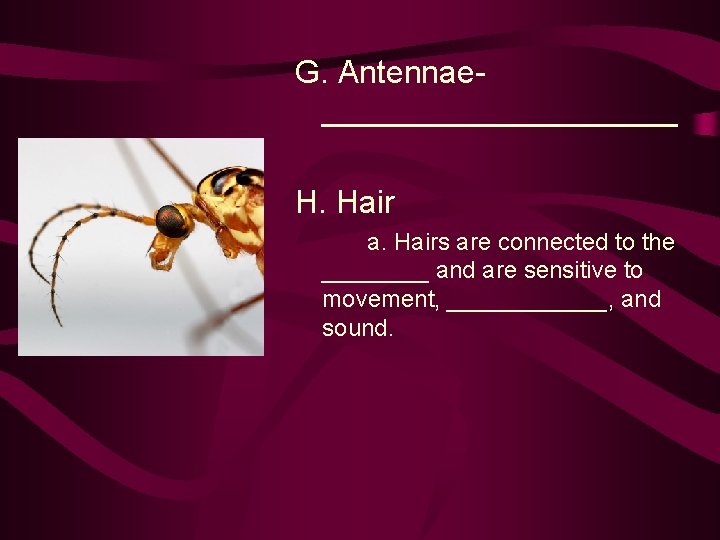
G. Antennae__________ H. Hair a. Hairs are connected to the ____ and are sensitive to movement, ______, and sound.
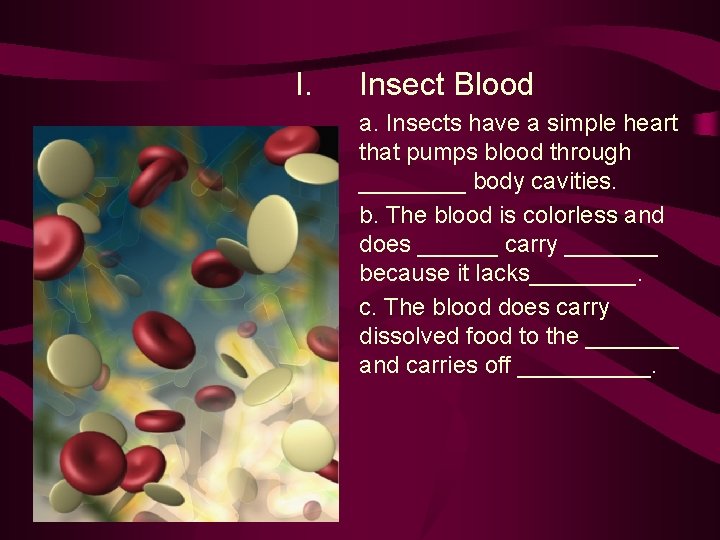
I. Insect Blood a. Insects have a simple heart that pumps blood through ____ body cavities. b. The blood is colorless and does ______ carry _______ because it lacks____. c. The blood does carry dissolved food to the _______ and carries off _____.
J. Pheromones ________. a. Two functions of pheromones are: 1. Attract the opposite sex. 2. _______
II. Finding a Place to Live i. There are millions of different kinds of insects and many times as many waiting to be found. ii. Habitat is an animal’s home and provides insects with: A. Food
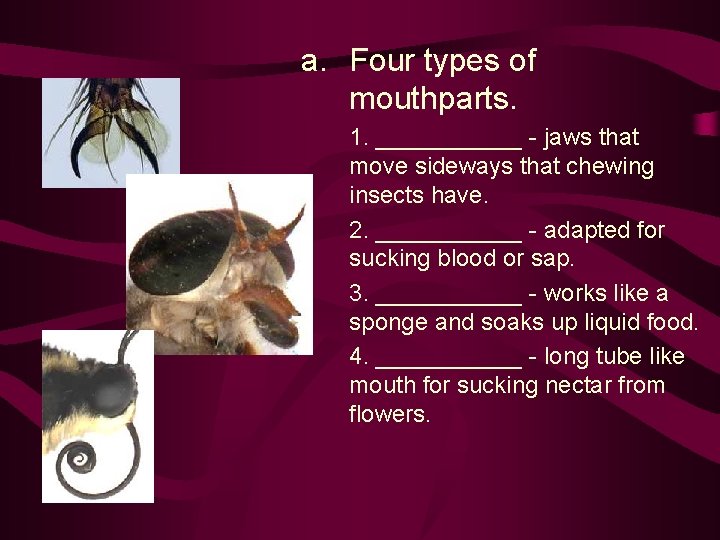
a. Four types of mouthparts. 1. ______ - jaws that move sideways that chewing insects have. 2. ______ - adapted for sucking blood or sap. 3. ______ - works like a sponge and soaks up liquid food. 4. ______ - long tube like mouth for sucking nectar from flowers.
B. Oxygen a. Insects do not have lungs; instead, they have _______ tiny openings on both sides of the _____ and _____ in which air enters. 1. The spiracles are connected to _______. 2. Some aquatic insects have one of the following: i. Thin exoskeleton that allows oxygen to seep into their bodies. ii. ___________________ iv. Bubble of air that they carry as they dive.
C. ______ - a place to live that is protected from enemies, bad weather, and drying out. D. Water a. Most insects get water from ______. b. Others drink water.
E. Insects require certain living conditions: a. ______ - the amount of heat in the air. b. ______ - the amount of water in the air. c. Sunlight. d. Soil e. _____ - edible plants. f.
III. Staying Alive i. Adaptations that have contributed to the success of insects are: A. Because of their small size, insects can live in places where other animals cannot. B. Hard exoskeleton protects them from being eaten and drying out. C. Because insects have ______ reproductive rates, they can _______ more quickly to new situations. a. Pomace flies have 25 generations in one year. That means that the population could be as big as ____ flies.
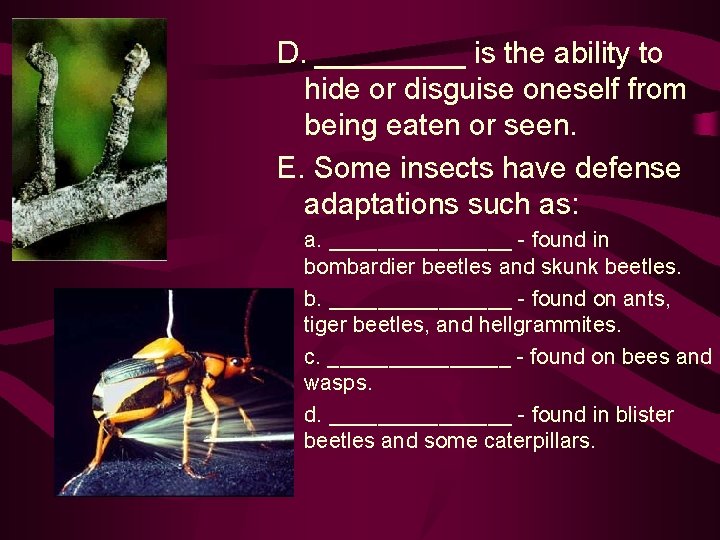
D. _____ is the ability to hide or disguise oneself from being eaten or seen. E. Some insects have defense adaptations such as: a. ________ - found in bombardier beetles and skunk beetles. b. ________ - found on ants, tiger beetles, and hellgrammites. c. ________ - found on bees and wasps. d. ________ - found in blister beetles and some caterpillars.
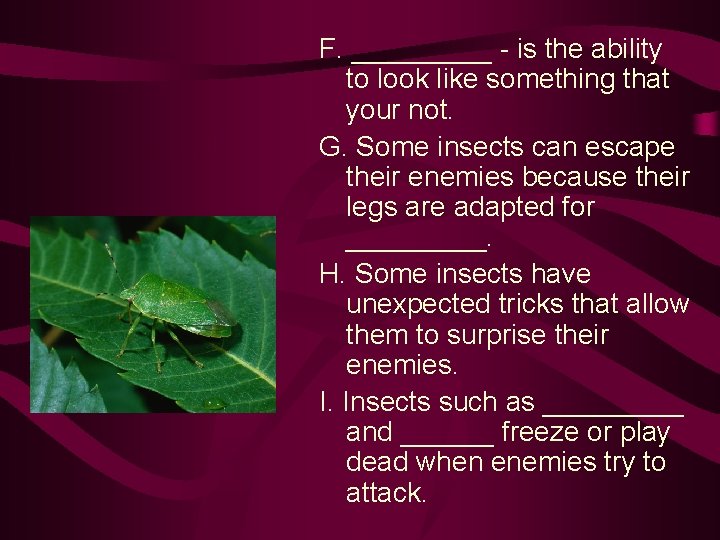
F. _____ - is the ability to look like something that your not. G. Some insects can escape their enemies because their legs are adapted for _____. H. Some insects have unexpected tricks that allow them to surprise their enemies. I. Insects such as _____ and ______ freeze or play dead when enemies try to attack.
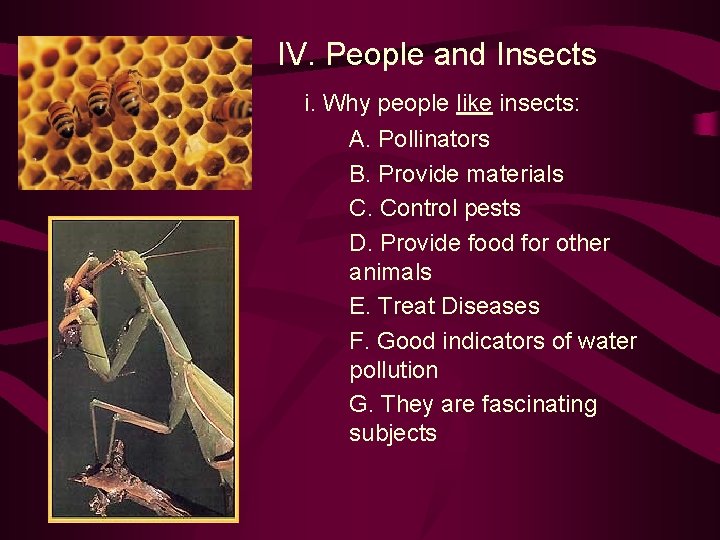
IV. People and Insects i. Why people like insects: A. Pollinators B. Provide materials C. Control pests D. Provide food for other animals E. Treat Diseases F. Good indicators of water pollution G. They are fascinating subjects
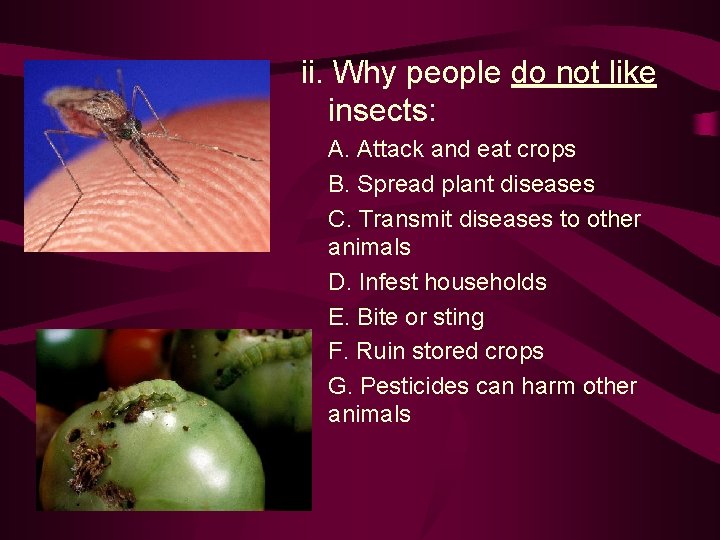
ii. Why people do not like insects: A. Attack and eat crops B. Spread plant diseases C. Transmit diseases to other animals D. Infest households E. Bite or sting F. Ruin stored crops G. Pesticides can harm other animals
V. ______ - uses a variety of pest control techniques to create a more efficient and safe way to manage insect pests. A. _____ - animals that will naturally eat the pest. B. _____ - bacteria, viruses, and insects that will kill the pests. C. Mixed plantings- planting mixed crops or trees because insects are not as attracted to the area. D. Sterile insects – insects that are able to mate but will not produce offspring.
E. _____ - getting rid of where the insects live F. _____ - natural chemicals that can prevent the insect from growing into a sexual mature adult. G. Using chemicals such as pesticides only as needed. H. Regulating planting and harvesting to times when pests are least abundant. I. Removing eggs, larvae, cocoons, and adults from plants by _____. J. ______ - natural or synthetic chemical attractants that attract or confuse pests.