
INSECT TAXONOMIC DIVERSITY By Ashton Durbin INSECT ORDERS

INSECT TAXONOMIC DIVERSITY By: Ashton Durbin

INSECT ORDERS: ØEphemeroptera ØLepidoptera ØOdonata ØDiptera ØBlattaria ØSiphonoptera ØIsoptera ØHymenoptera ØDermatptera ØMantodea ØOrthoptera ØPlecoptera ØPhasmida ØColeoptersa
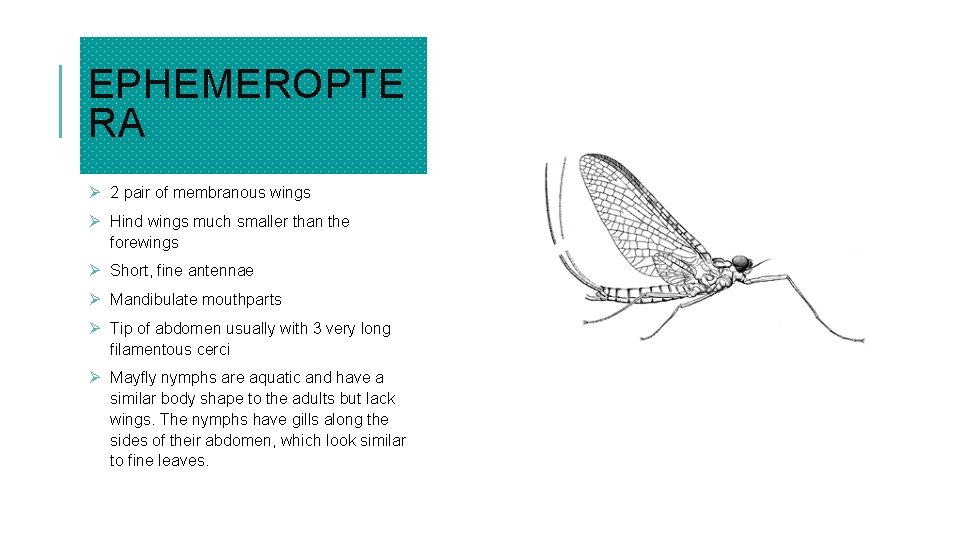
EPHEMEROPTE RA Ø 2 pair of membranous wings Ø Hind wings much smaller than the forewings Ø Short, fine antennae Ø Mandibulate mouthparts Ø Tip of abdomen usually with 3 very long filamentous cerci Ø Mayfly nymphs are aquatic and have a similar body shape to the adults but lack wings. The nymphs have gills along the sides of their abdomen, which look similar to fine leaves.
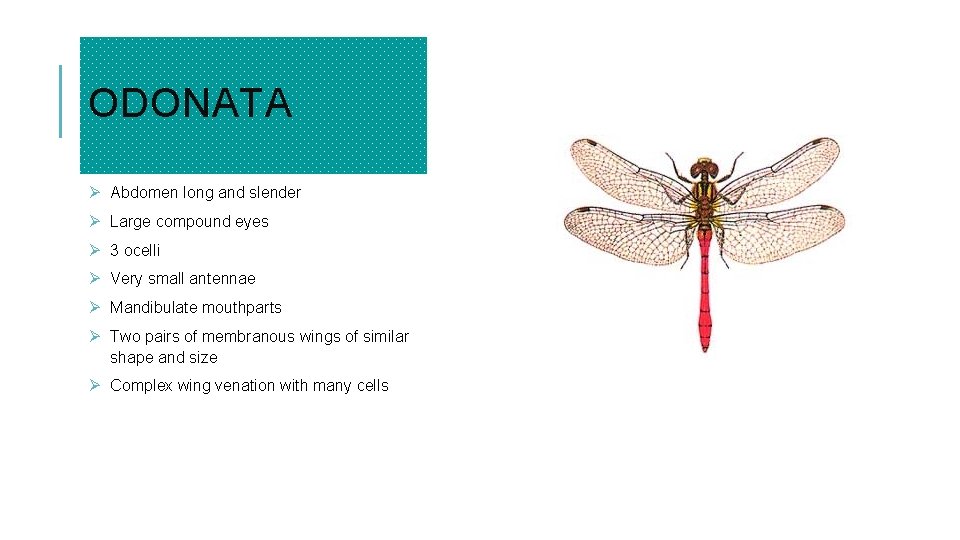
ODONATA Ø Abdomen long and slender Ø Large compound eyes Ø 3 ocelli Ø Very small antennae Ø Mandibulate mouthparts Ø Two pairs of membranous wings of similar shape and size Ø Complex wing venation with many cells
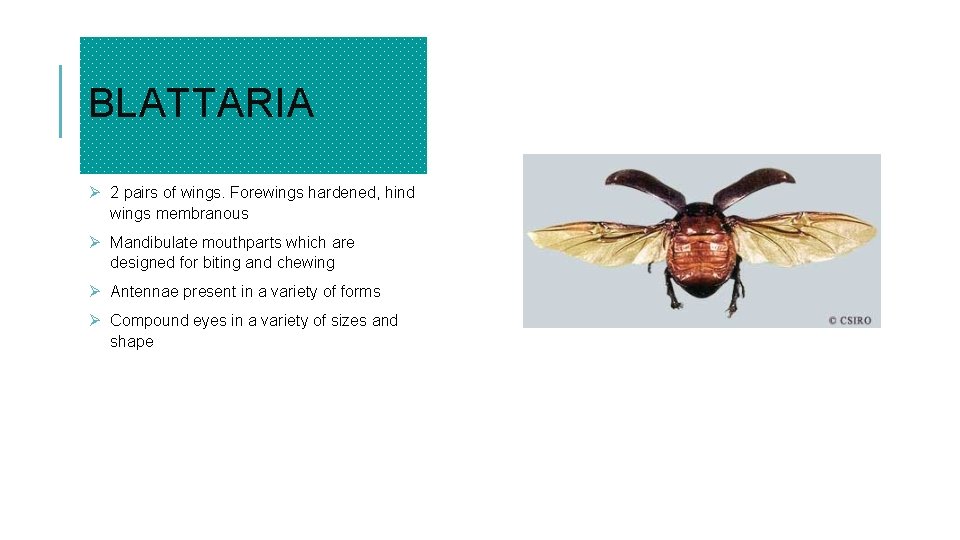
BLATTARIA Ø 2 pairs of wings. Forewings hardened, hind wings membranous Ø Mandibulate mouthparts which are designed for biting and chewing Ø Antennae present in a variety of forms Ø Compound eyes in a variety of sizes and shape

ISOPTERA Ø Pale, elongate body Ø 2 pairs of membranous wings of equal length. Wings are present in reproductive castes only and shed after mating Ø Mandibulate (chewing) mouthparts Ø Antennae about the same length as the hea

DERMAPTERA Ø Flattened elongated body Ø Heavily sclerotised pincer-like cerci. Females have straight cerci with a inward pointing tip and males have curved cerci Ø 2 pairs of wings. The forewings are short and protectively hardened. The hind wings are membranous and folded in a fan-like way underneath the forewings when not in use. Some species are also wingless Ø Chewing (mandibulate) mouthparts Ø Moderately long antennae
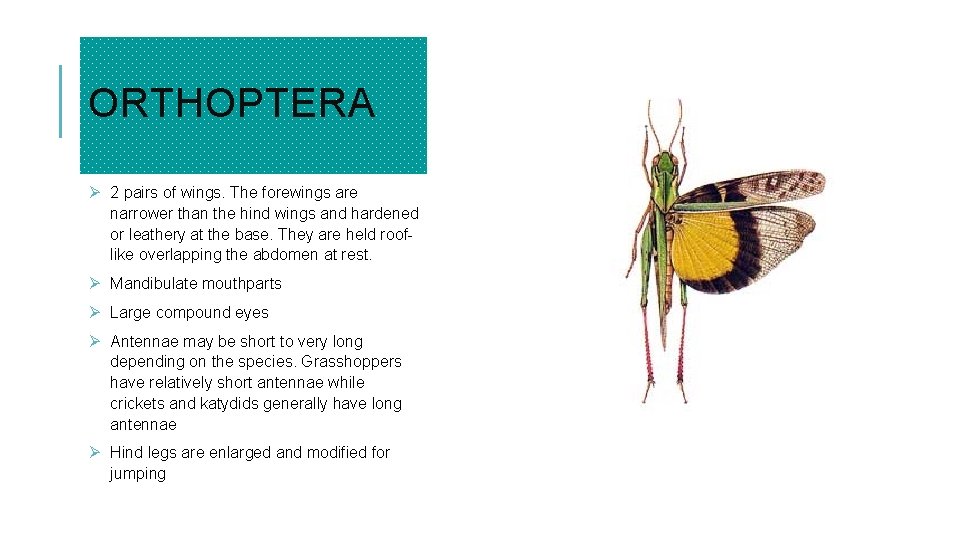
ORTHOPTERA Ø 2 pairs of wings. The forewings are narrower than the hind wings and hardened or leathery at the base. They are held rooflike overlapping the abdomen at rest. Ø Mandibulate mouthparts Ø Large compound eyes Ø Antennae may be short to very long depending on the species. Grasshoppers have relatively short antennae while crickets and katydids generally have long antennae Ø Hind legs are enlarged and modified for jumping
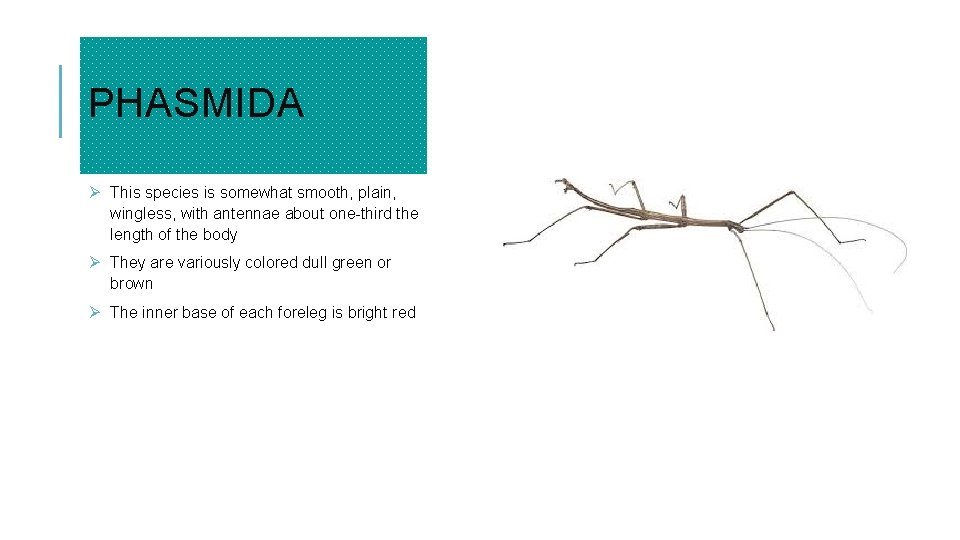
PHASMIDA Ø This species is somewhat smooth, plain, wingless, with antennae about one-third the length of the body Ø They are variously colored dull green or brown Ø The inner base of each foreleg is bright red
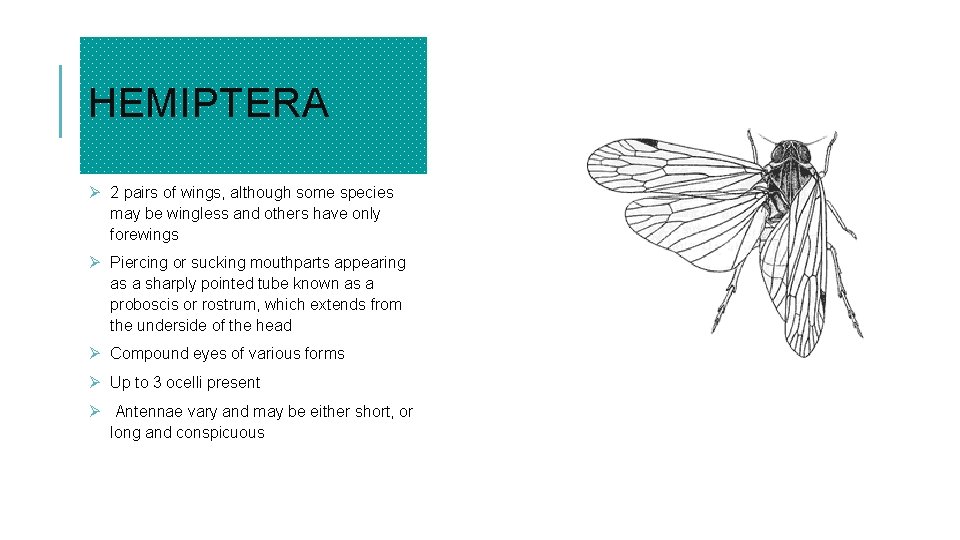
HEMIPTERA Ø 2 pairs of wings, although some species may be wingless and others have only forewings Ø Piercing or sucking mouthparts appearing as a sharply pointed tube known as a proboscis or rostrum, which extends from the underside of the head Ø Compound eyes of various forms Ø Up to 3 ocelli present Ø Antennae vary and may be either short, or long and conspicuous

COLEOPTERA
- Slides: 11