
Insect Pests in Home Fruit Gardens Basic Training
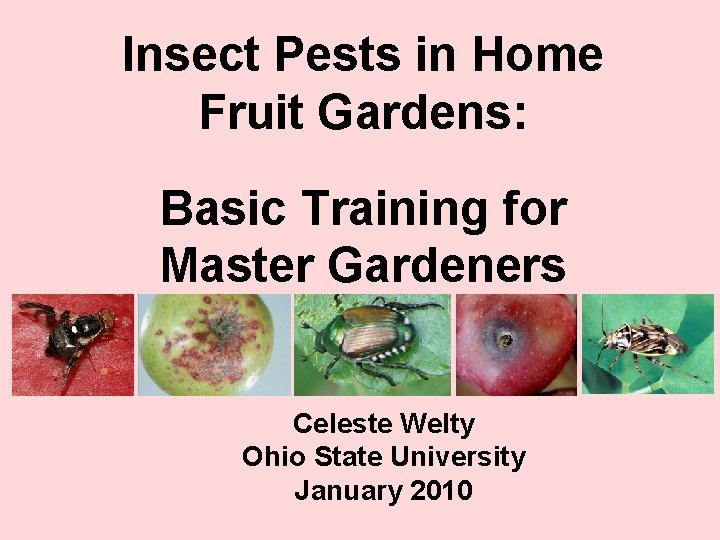
Insect Pests in Home Fruit Gardens: Basic Training for Master Gardeners Celeste Welty Ohio State University January 2010
Common fruit pests • Generalists – Japanese beetle – Slugs – Tarnished plant bug – Plum curculio • Specialists – Codling moth (apple) – Apple maggot – Oriental fruit moth (peach) – Peachtree borer – San Jose scale – Cherry fruit fly
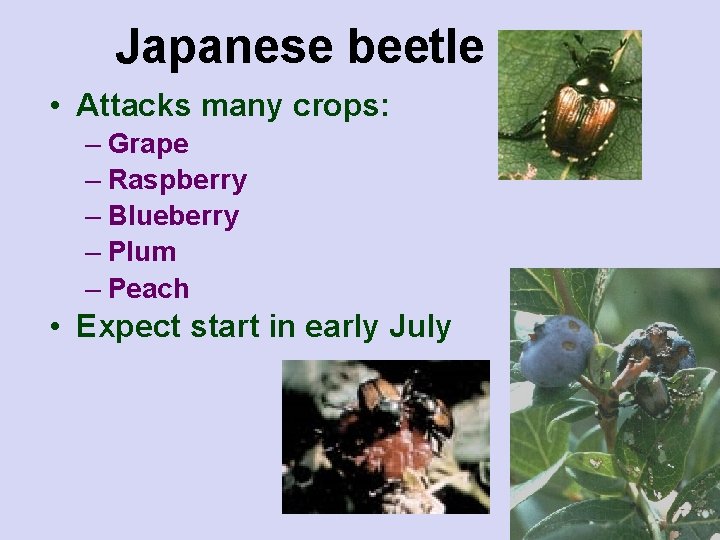
Japanese beetle • Attacks many crops: – Grape – Raspberry – Blueberry – Plum – Peach • Expect start in early July
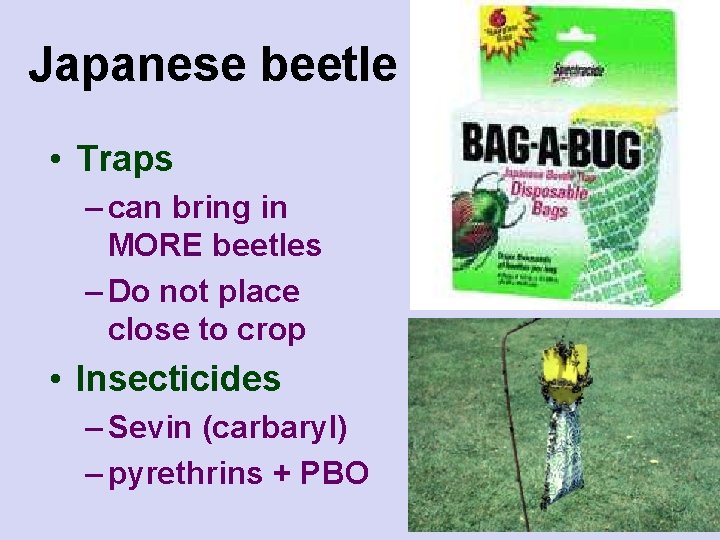
Japanese beetle • Traps – can bring in MORE beetles – Do not place close to crop • Insecticides – Sevin (carbaryl) – pyrethrins + PBO
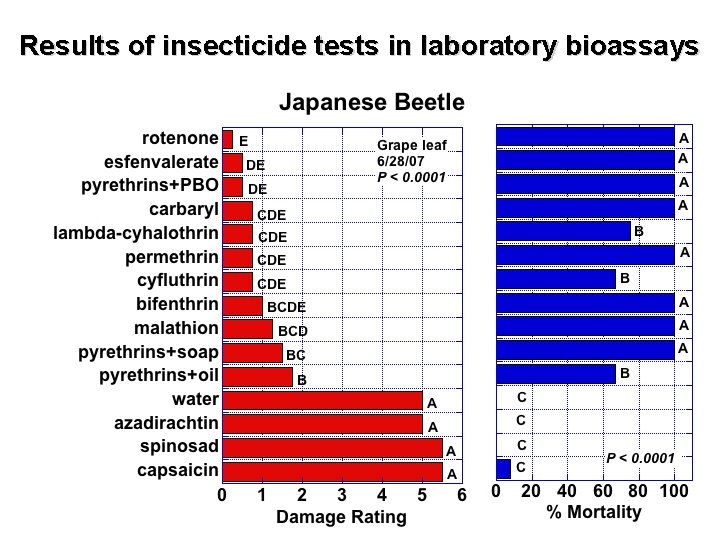
Results of insecticide tests in laboratory bioassays
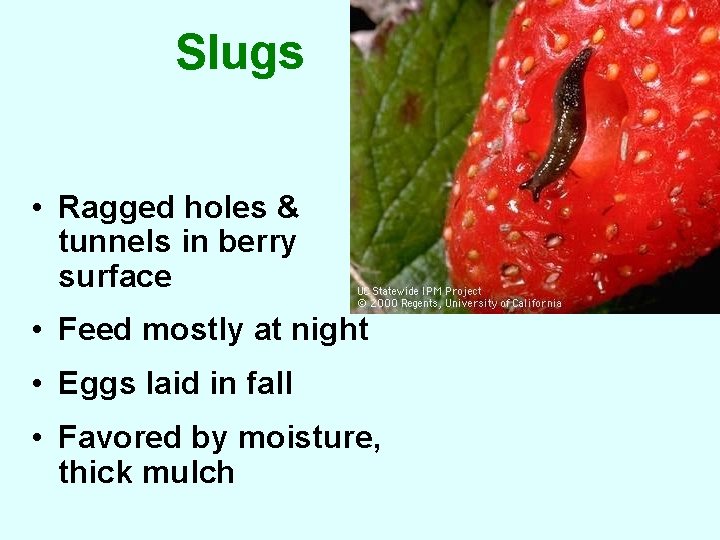
Slugs • Ragged holes & tunnels in berry surface • Feed mostly at night • Eggs laid in fall • Favored by moisture, thick mulch
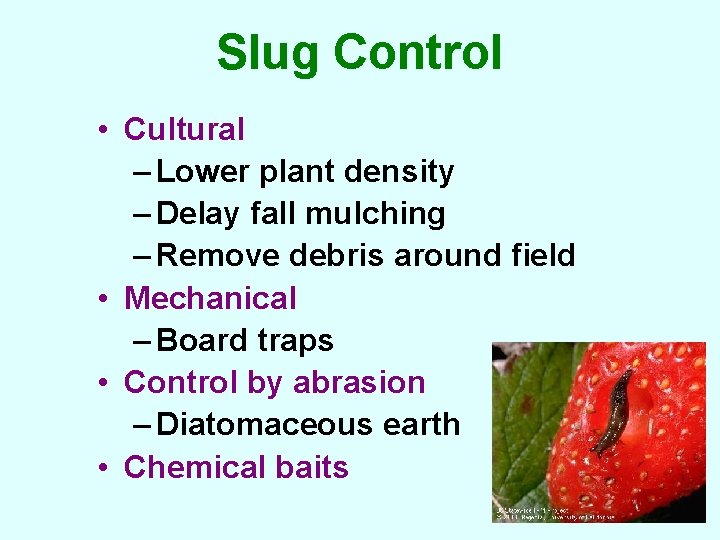
Slug Control • Cultural – Lower plant density – Delay fall mulching – Remove debris around field • Mechanical – Board traps • Control by abrasion – Diatomaceous earth • Chemical baits
Slug Control • Chemical baits – Metaldehyde (Bug-Geta, etc. ) • Kill slugs by over stimulating mucous • Prevents damage • Toxic to dogs • Works best when temp. warm – Iron phosphate (Sluggo, Slug Magic, etc. ) • Light brown; less visible to pickers • Safe to humans, animals, natural enemies • Less rapid toxic effect • Stop the slugs from feeding • Eventually leads to their death
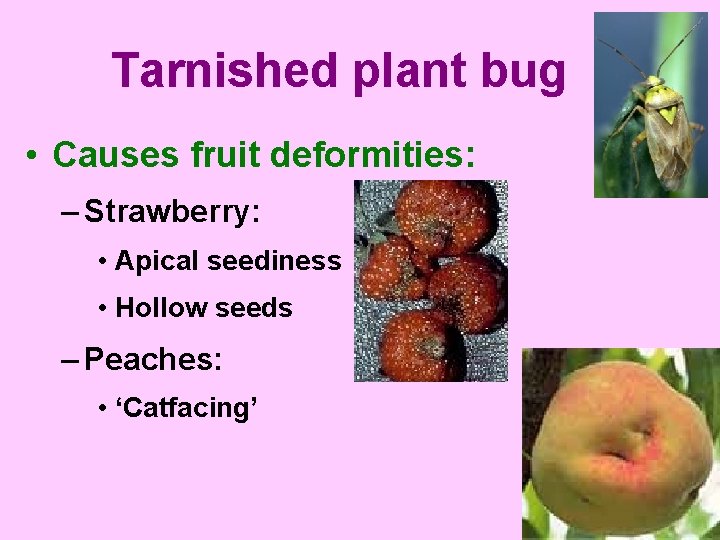
Tarnished plant bug • Causes fruit deformities: – Strawberry: • Apical seediness • Hollow seeds – Peaches: • ‘Catfacing’
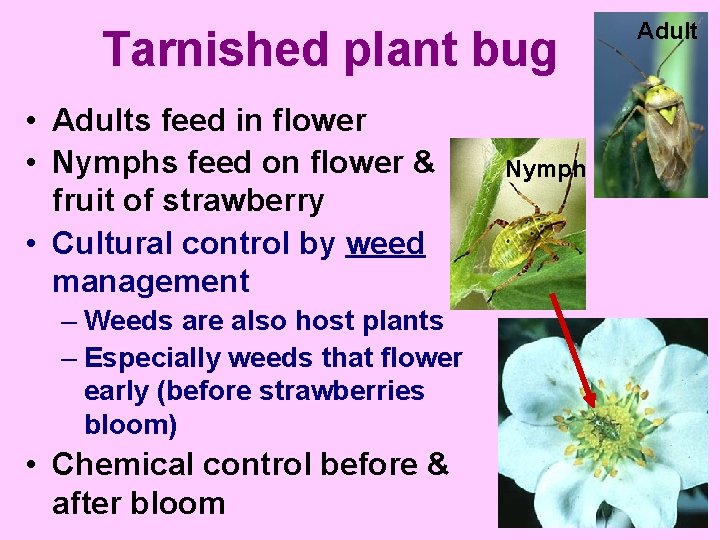
Tarnished plant bug • Adults feed in flower • Nymphs feed on flower & fruit of strawberry • Cultural control by weed management – Weeds are also host plants – Especially weeds that flower early (before strawberries bloom) • Chemical control before & after bloom Nymph Adult

Plum curculio • External damage on apples from egg-laying • Internal damage on plum, peach, cherry, blueberry from larvae tunneling cherry apple
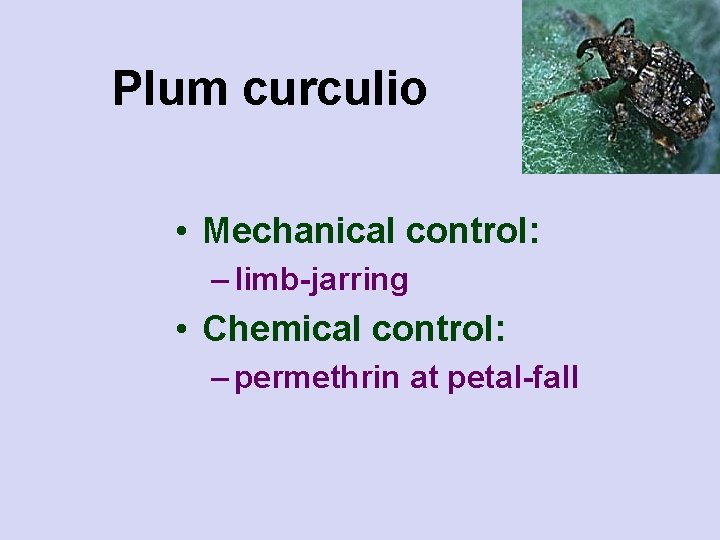
Plum curculio • Mechanical control: – limb-jarring • Chemical control: – permethrin at petal-fall
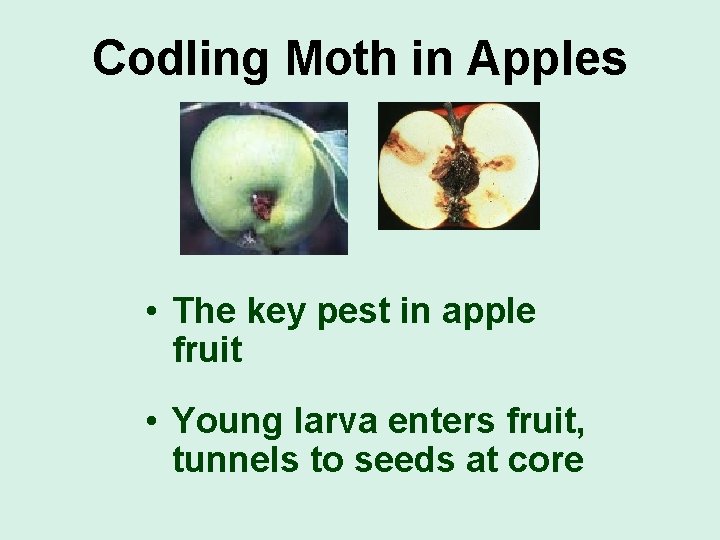
Codling Moth in Apples • The key pest in apple fruit • Young larva enters fruit, tunnels to seeds at core
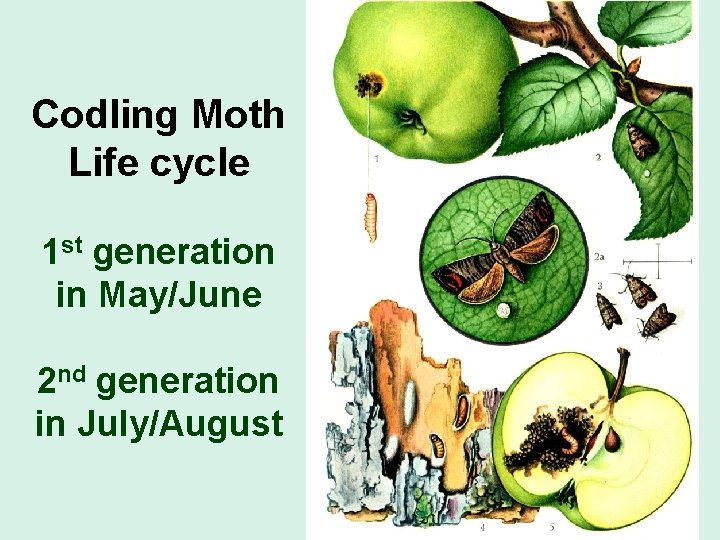
Codling Moth Life cycle larva 1 st generation in May/June 2 nd generation in July/August
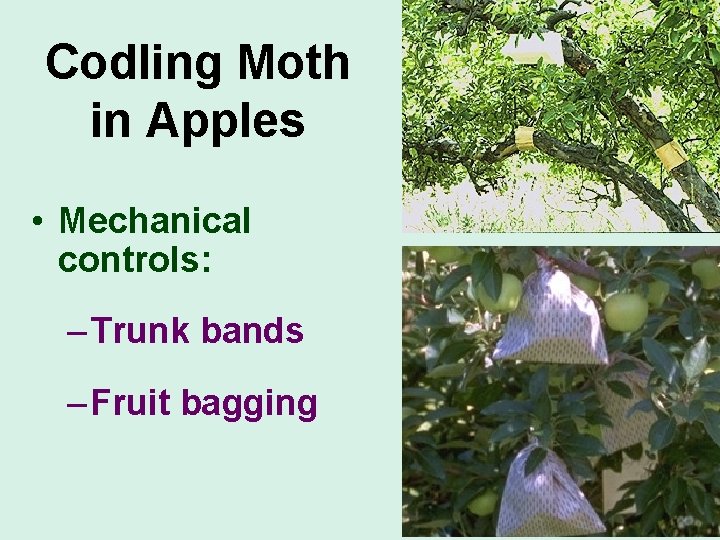
Codling Moth in Apples • Mechanical controls: – Trunk bands – Fruit bagging
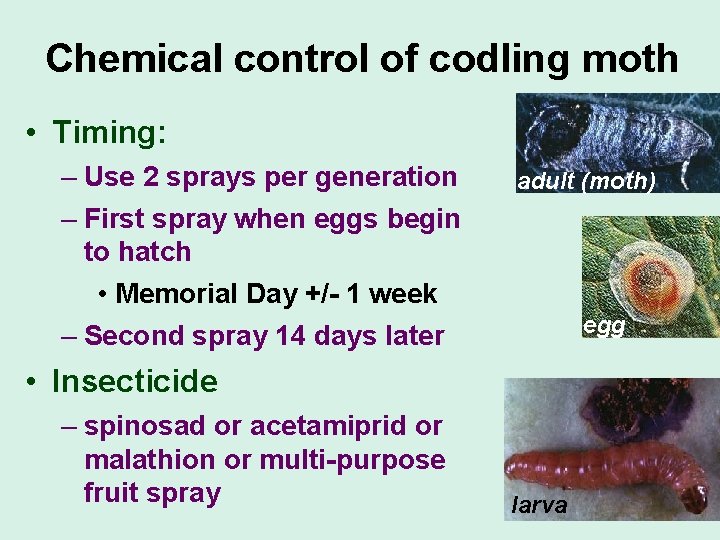
Chemical control of codling moth • Timing: – Use 2 sprays per generation – First spray when eggs begin to hatch • Memorial Day +/- 1 week – Second spray 14 days later adult (moth) egg • Insecticide – spinosad or acetamiprid or malathion or multi-purpose fruit spray larva
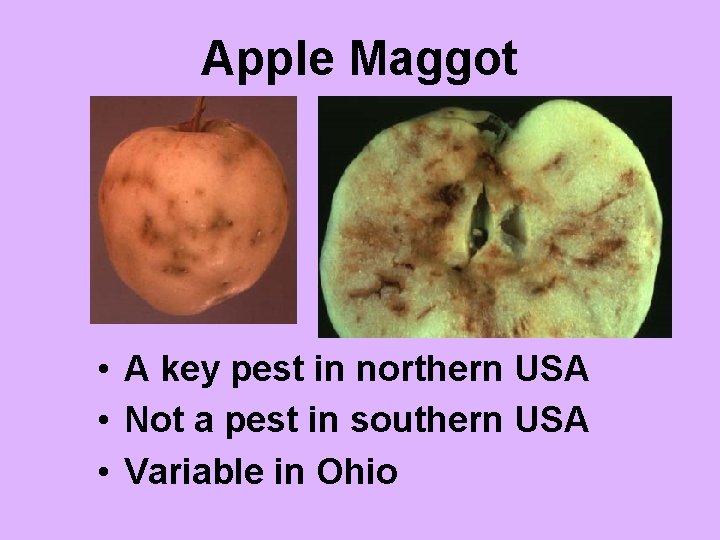
Apple Maggot • A key pest in northern USA • Not a pest in southern USA • Variable in Ohio
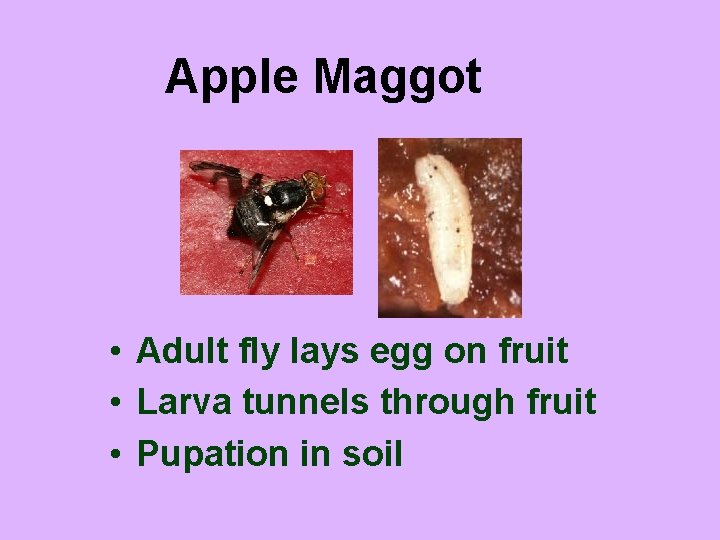
Apple Maggot • Adult fly lays egg on fruit • Larva tunnels through fruit • Pupation in soil
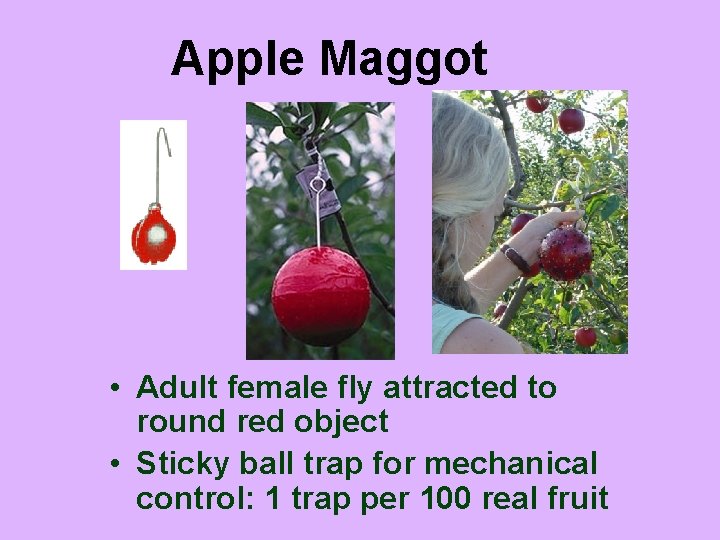
Apple Maggot • Adult female fly attracted to round red object • Sticky ball trap for mechanical control: 1 trap per 100 real fruit
Apple Maggot Chemical control: • Sevin (carbaryl) or acetamiprid in July & August
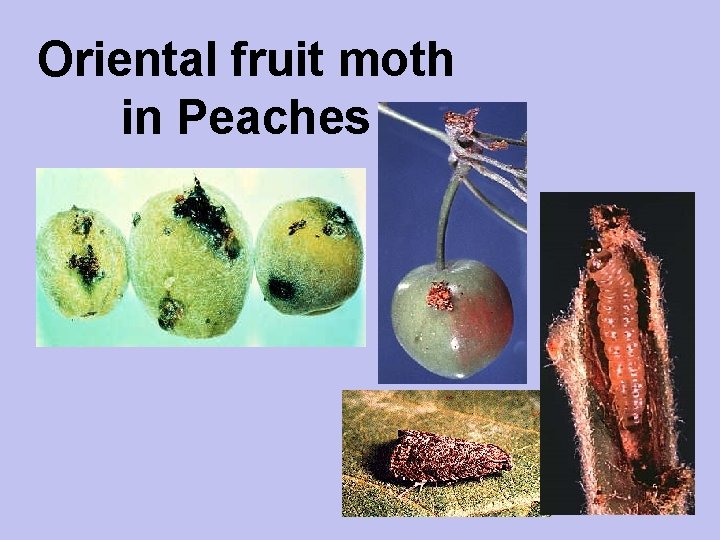
Oriental fruit moth in Peaches
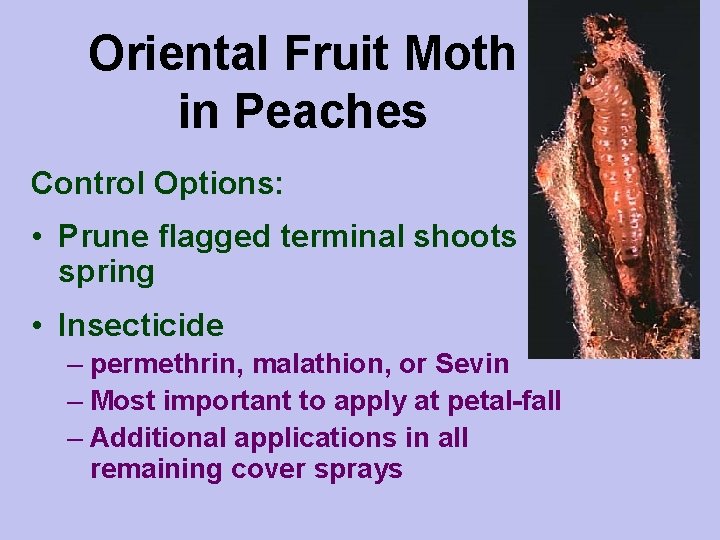
Oriental Fruit Moth in Peaches Control Options: • Prune flagged terminal shoots in spring • Insecticide – permethrin, malathion, or Sevin – Most important to apply at petal-fall – Additional applications in all remaining cover sprays
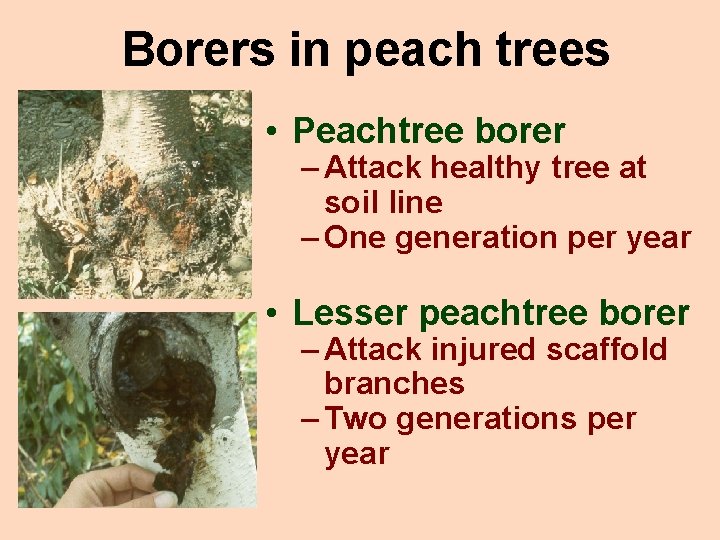
Borers in peach trees • Peachtree borer – Attack healthy tree at soil line – One generation per year • Lesser peachtree borer – Attack injured scaffold branches – Two generations per year
Cultural control of borers • Train trees to form wide angles • Promote healthy trees • Avoid practices that injure bark – Over load of fruit – Improper pruning – Mowing injury – Fertilizing – Damage during harvest
Mechanical control of borers • • • ‘Worming’ Effective Insert knife or wire into entry hole Smash the larvae! Do in early spring or late fall Practical in small plantings
Chemical control of borers • Dip bare roots before planting new trees • Insecticide drench (start year 2) – Permethrin or Thiodan – Preventive via residual action – Curative via fumigant action • Target on tree: – Soil line for peachtree borer – Trunk & scaffolds for lesser PTB
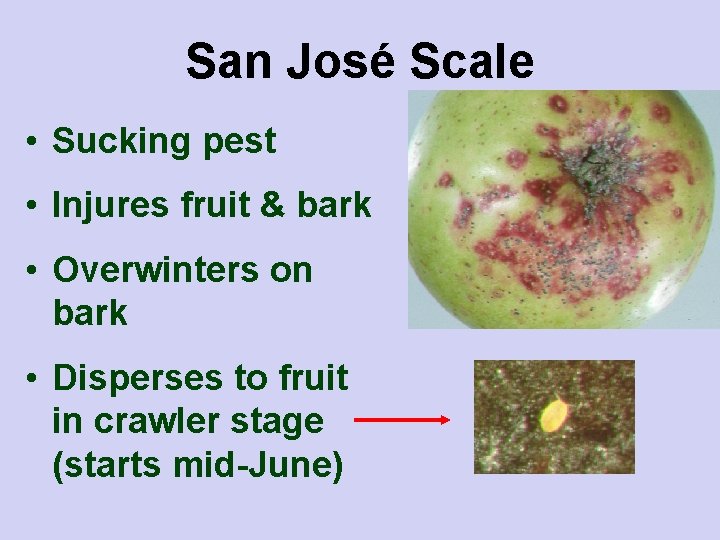
San José Scale • Sucking pest • Injures fruit & bark • Overwinters on bark • Disperses to fruit in crawler stage (starts mid-June)

San José Scale
San José Scale Insecticide spray options: • Dormant – Oil – Lime sulfur • Post-bloom (crawlers) – Malathion – Carbaryl (Sevin) – Insecticidal soap
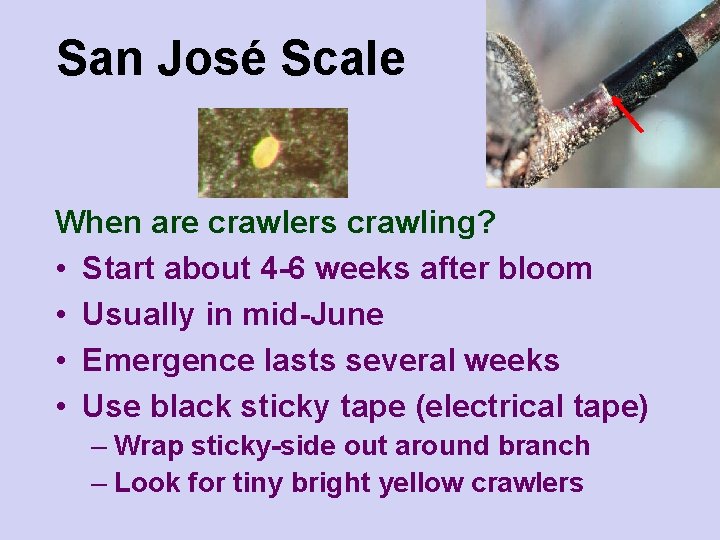
San José Scale When are crawlers crawling? • Start about 4 -6 weeks after bloom • Usually in mid-June • Emergence lasts several weeks • Use black sticky tape (electrical tape) – Wrap sticky-side out around branch – Look for tiny bright yellow crawlers
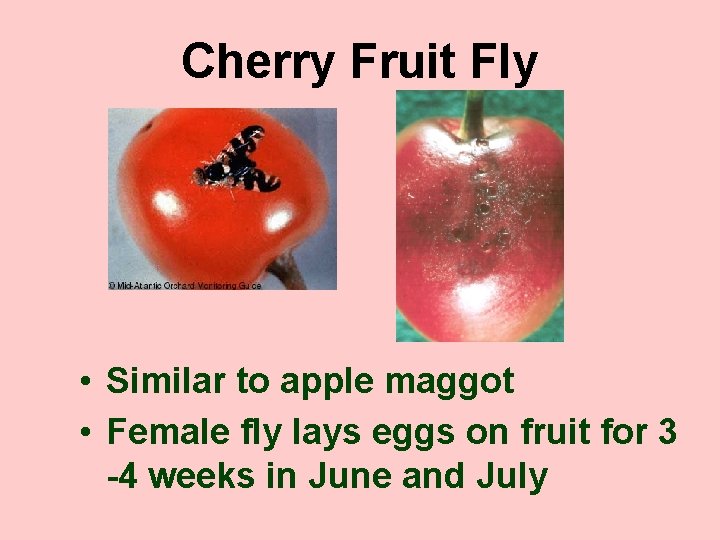
Cherry Fruit Fly • Similar to apple maggot • Female fly lays eggs on fruit for 3 -4 weeks in June and July
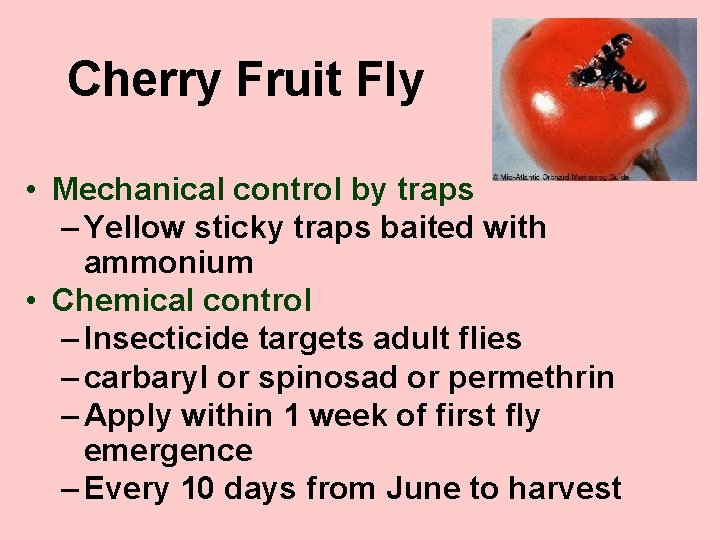
Cherry Fruit Fly • Mechanical control by traps – Yellow sticky traps baited with ammonium • Chemical control – Insecticide targets adult flies – carbaryl or spinosad or permethrin – Apply within 1 week of first fly emergence – Every 10 days from June to harvest
the end
- Slides: 33