
Insect Morphology Exoskeleton Principal layers Epicuticle waxy layer


- Slides: 19
Insect Morphology
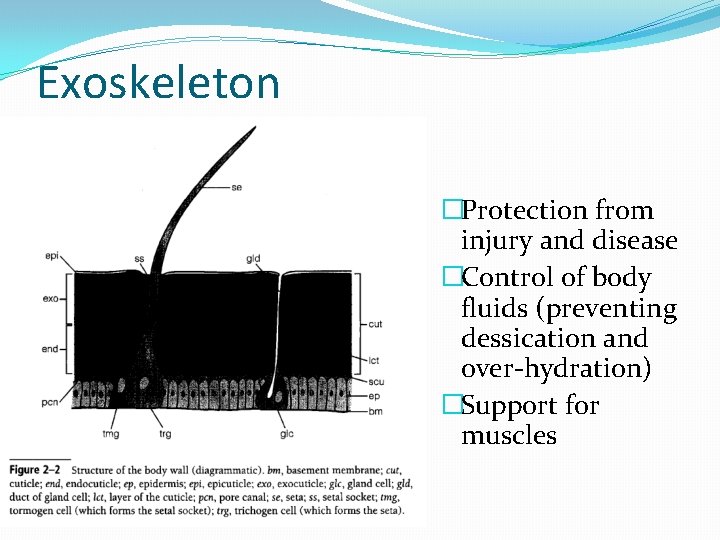
Exoskeleton �Principal layers �Epicuticle � waxy layer � provides waterproofing in/out � delicate, may be scratched �Cuticle � chitinous, sometimes sclerotized layer �Epidermis � cellular layer � the living “skin” with multiple secretory functions
Exoskeleton �Protection from injury and disease �Control of body fluids (preventing dessication and over-hydration) �Support for muscles
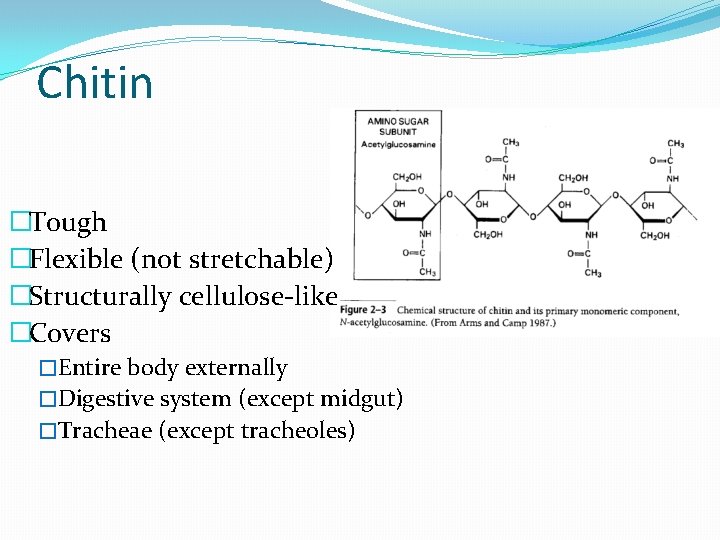
Chitin �Tough �Flexible (not stretchable) �Structurally cellulose-like �Covers �Entire body externally �Digestive system (except midgut) �Tracheae (except tracheoles)
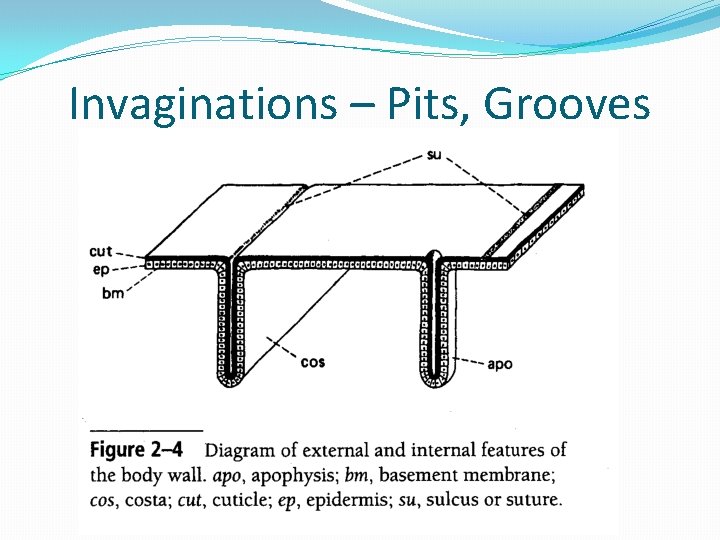
Exoskeleton modifications �Immovable projections �wrinkles, spines – sound production, predation, etc. �Movable projections �Spurs, hairs/setae, scales – proprioception, external movement �Invaginations �Pits, grooves - indicate location of internal projections
Invaginations – Pits, Grooves
Directional definitions �Anterior – toward the head �Posterior – toward the tail (caudal) �Dorsal – top or upper side �Ventral – bottom or lower side �Mesal – longitudinal centerline of dorsum or venter �Axial – longitudinal axis of body �Lateral – on side (pleural) �Basal – near point of attachment (proximal) �Apical – farthest from point of attachment (distal)
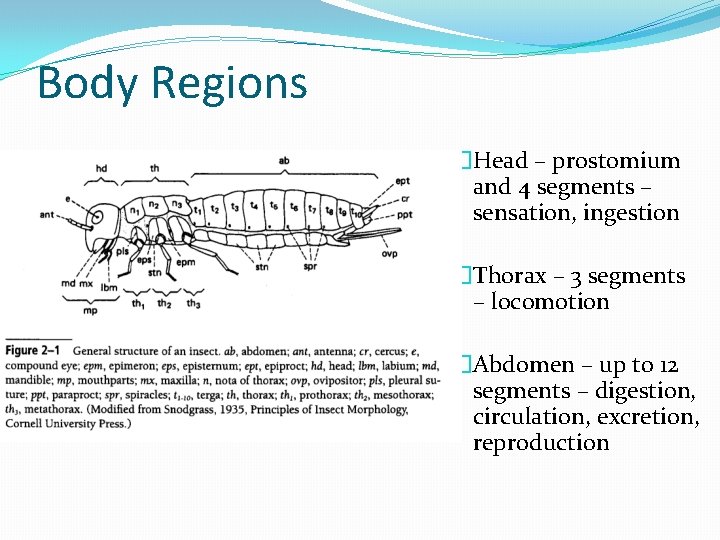
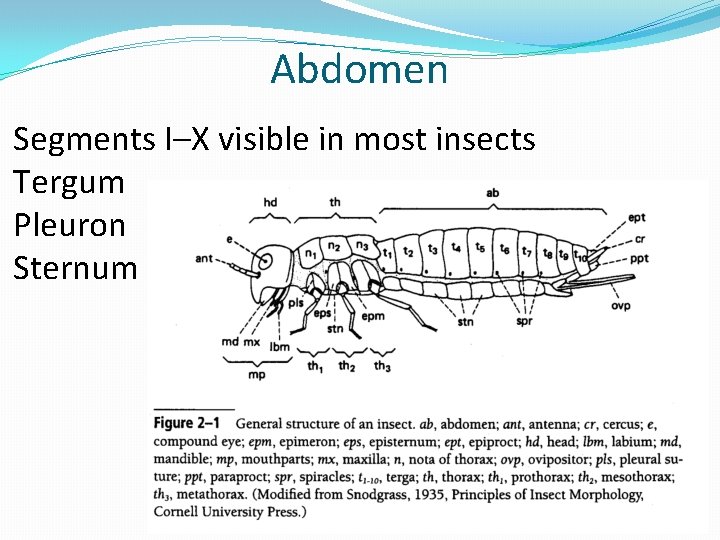
Body Regions �Head – prostomium and 4 segments – sensation, ingestion �Thorax – 3 segments – locomotion �Abdomen – up to 12 segments – digestion, circulation, excretion, reproduction
Head Positions �Hypognathous – mostly chewing herbivores/detritivores �Prognathous – most predators �Opisthognathous – sucking herbivores and predators
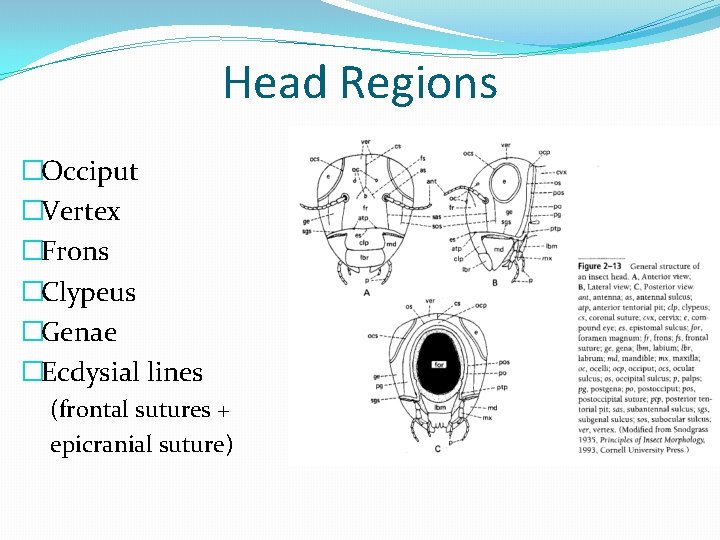
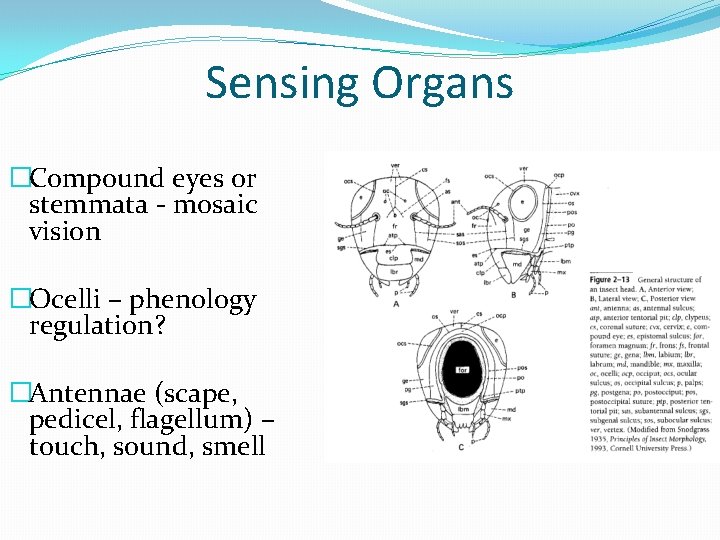
Head Regions �Occiput �Vertex �Frons �Clypeus �Genae �Ecdysial lines (frontal sutures + epicranial suture)
Sensing Organs �Compound eyes or stemmata - mosaic vision �Ocelli – phenology regulation? �Antennae (scape, pedicel, flagellum) – touch, sound, smell
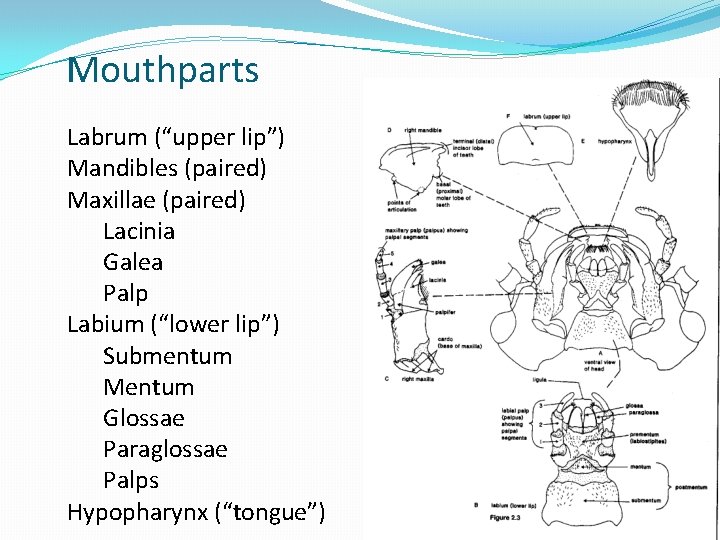
Mouthparts Labrum (“upper lip”) Mandibles (paired) Maxillae (paired) Lacinia Galea Palp Labium (“lower lip”) Submentum Mentum Glossae Paraglossae Palps Hypopharynx (“tongue”)
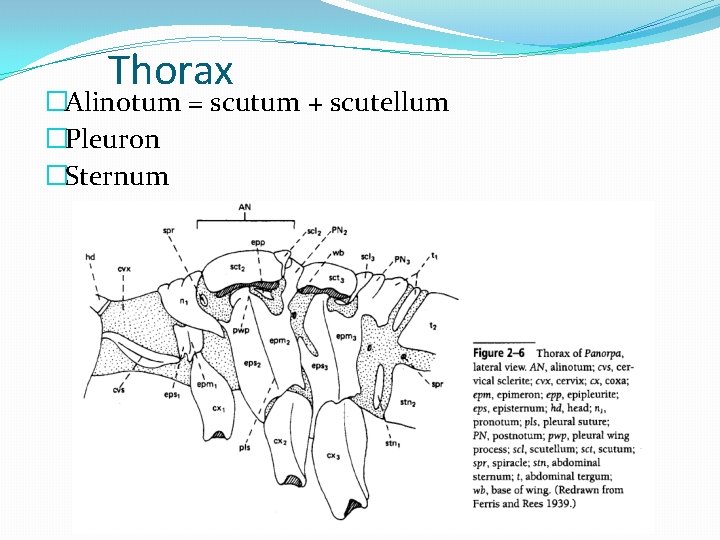
Thorax �Alinotum = scutum + scutellum �Pleuron �Sternum
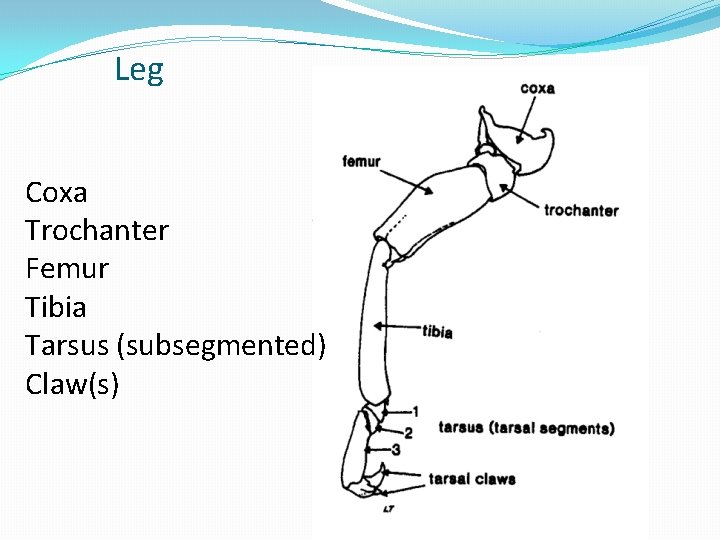
Leg Coxa Trochanter Femur Tibia Tarsus (subsegmented) Claw(s)
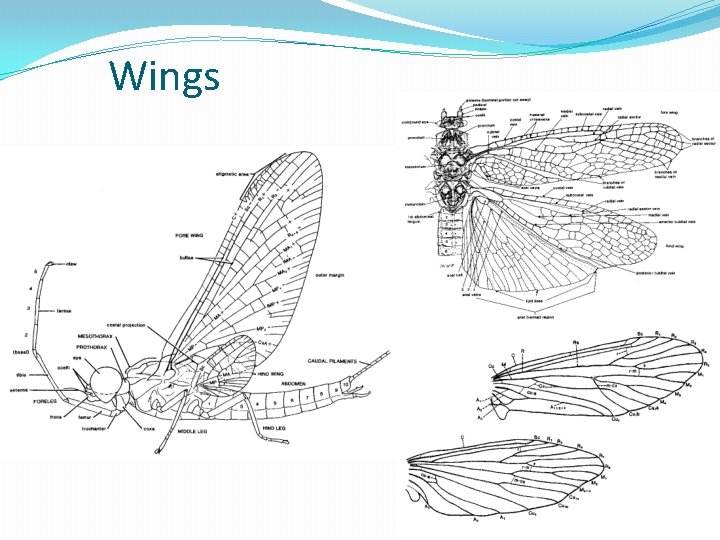
Wings
Abdomen Segments I–X visible in most insects Tergum Pleuron Sternum
Abdominal Appendages �Respiratory structures – gills, siphon �Cerci – tactile processes of abdominal segment XI �Caudal filament – dorsal process of some mayflies �Anal claws – caddisflies, some beetles �Crochets – moths �Genitalia – mating/oviposition structures of adults
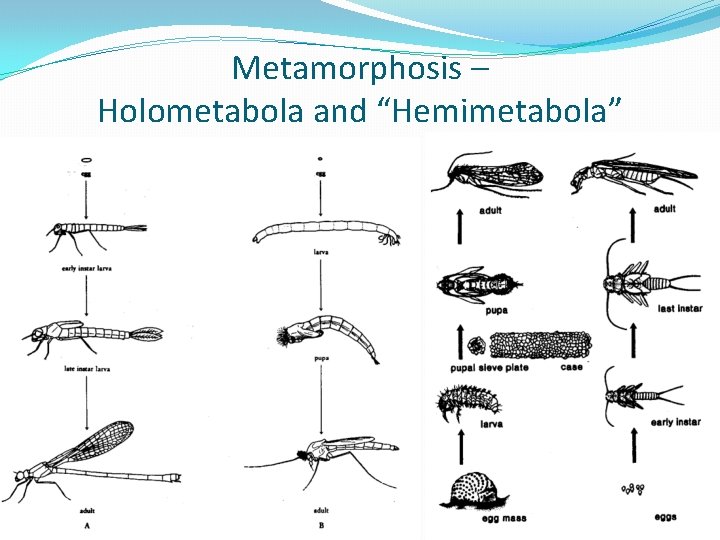
Metamorphosis �Ecologically similar larvae and adults �“Ametabola” = Egg–larva–adult (“incomplete”) � Collembola �“Paurometabola” = Egg–larva–adult (“incomplete”) � Orthoptera, Hemiptera �Ecologically different larvae and adults �“Hemimetabola” = Egg–larva–adult (“incomplete”) � Ephemeroptera, Odonata, Plecoptera �Holometabola = Egg–larva–pupa–adult (“complete”) � Megaloptera, Neuroptera, Trichoptera, Lepidoptera, Mecoptera, Coleoptera, Diptera, Hymenoptera
Metamorphosis – Holometabola and “Hemimetabola”