
INSECT DIGESTION ESSENTIAL INFO write this on your
- Slides: 43
INSECT DIGESTION ESSENTIAL INFO (write this on your chart!!) • Some insects feed on plants, others feed on animals
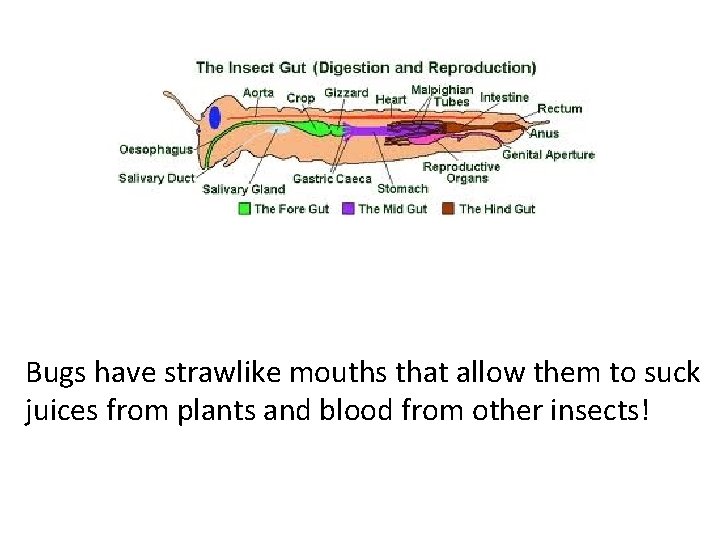
Bugs have strawlike mouths that allow them to suck juices from plants and blood from other insects!
INSECT EXCRETION ESSENTIAL INFO (write this on your chart!!) • Excrete waste through a structure called malipghian tubes
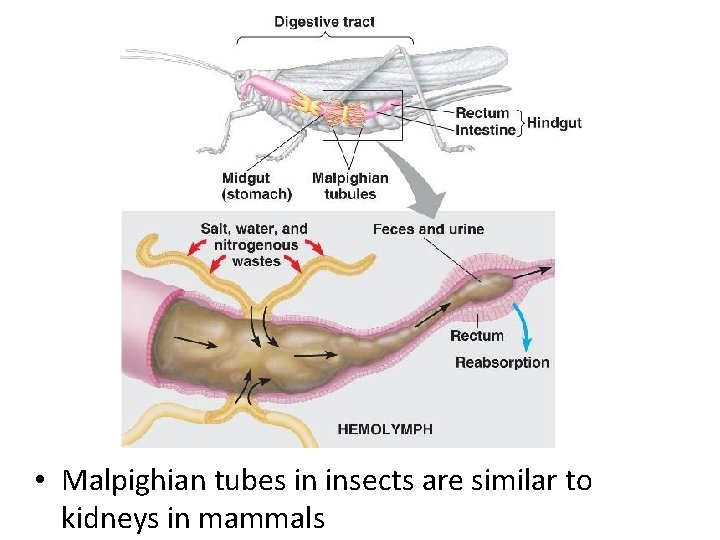
• Malpighian tubes in insects are similar to kidneys in mammals
INSECT RESPIRATION AND REGULATION ESSENTIAL INFO (write this on your chart!!) • Endothermic • No lungs; exchange gases through tiny holes and tubes
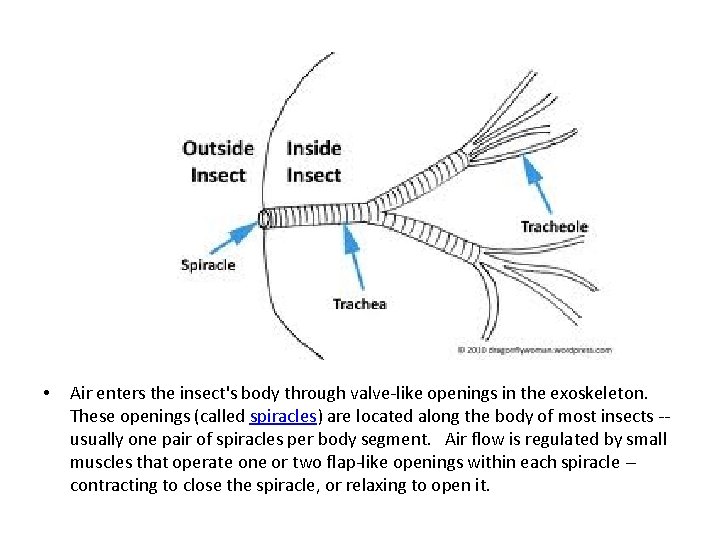
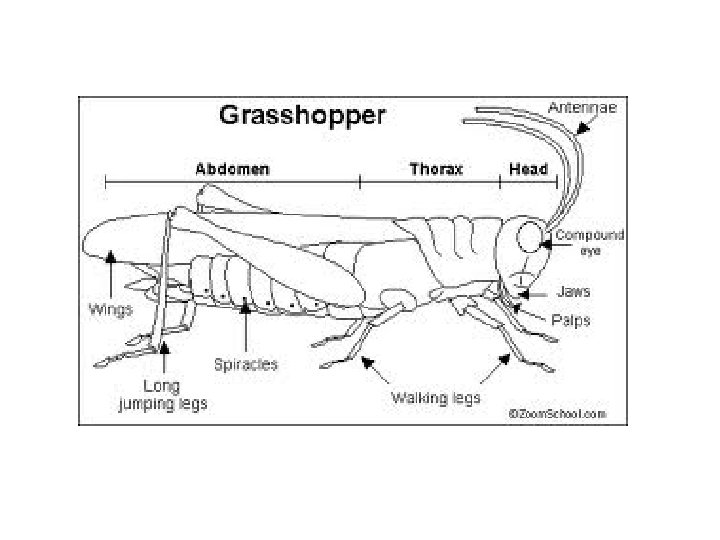
• Air enters the insect's body through valve-like openings in the exoskeleton. These openings (called spiracles) are located along the body of most insects -usually one pair of spiracles per body segment. Air flow is regulated by small muscles that operate one or two flap-like openings within each spiracle -contracting to close the spiracle, or relaxing to open it.
INSECT REPRODUCTION ESSENTIAL INFO (write this on your chart!!) • Most hatch from eggs • Go through several growth phases because their hard exoskeleton gives them no room to grow
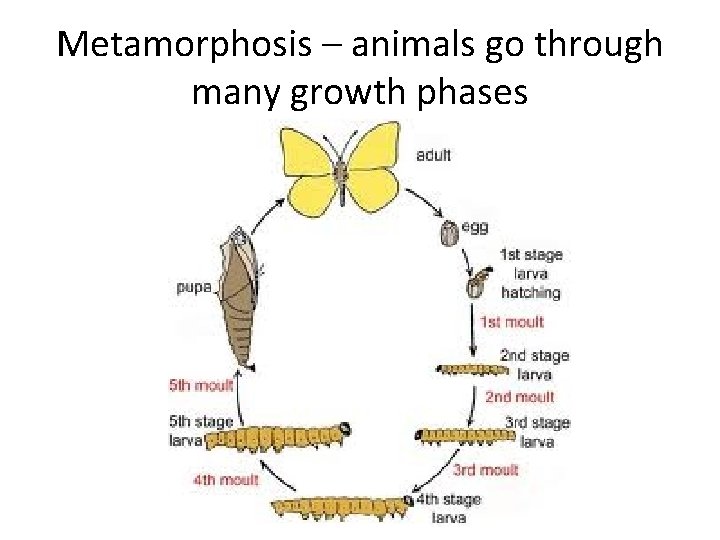
Metamorphosis – animals go through many growth phases
INSECT CIRCULATION ESSENTIAL INFO (write this on your chart!!) • Open circulatory system • Large blood vessel functions as the heart
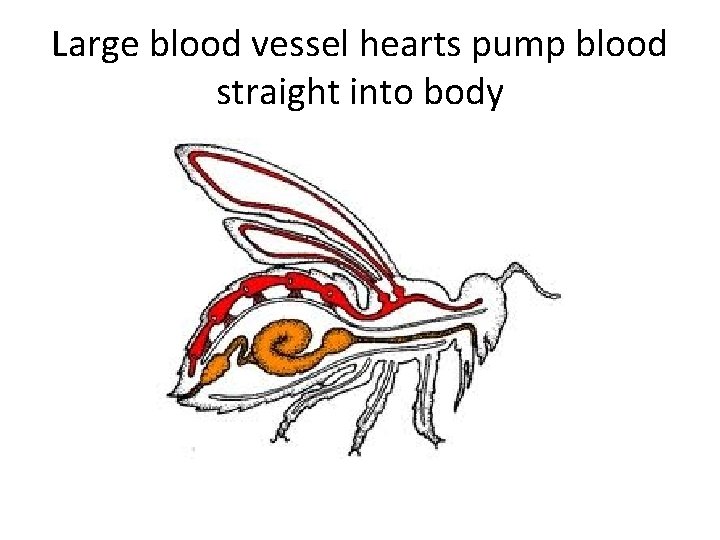
Large blood vessel hearts pump blood straight into body
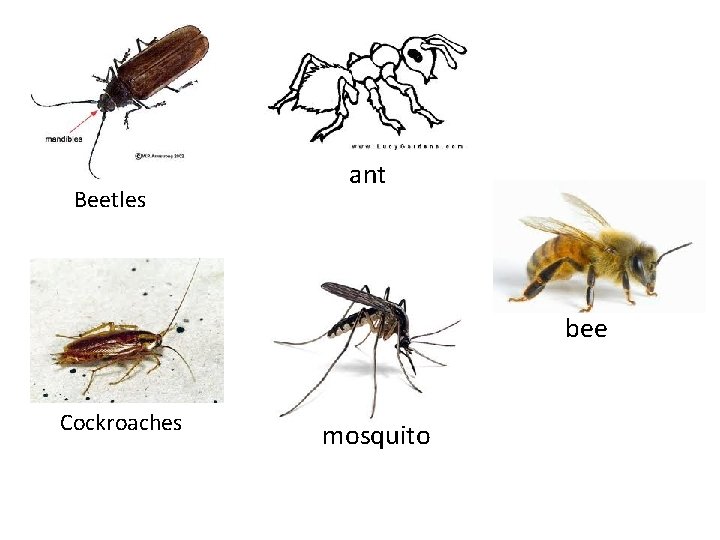
INSECT FUN FACTS • 74% of the world’s animals are insects • Beetles account for one quarter of all known species of plants and animals. There are more kinds of beetles than all plants. • Scientists can study life cycles of bugs at crime scenes to tell when a crime occured • A cockroach can live for 9 days without its head
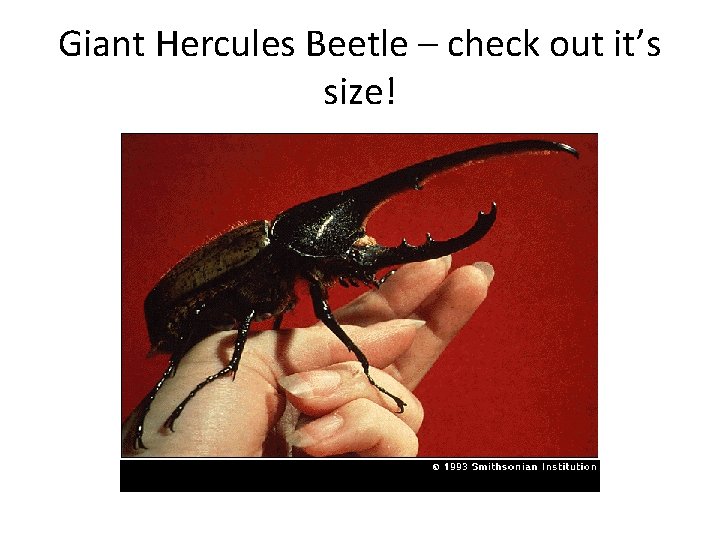
Giant Hercules Beetle – check out it’s size!
Beetles ant bee Cockroaches mosquito
INSECTS – OTHER IMPORTANT FACTS (write this on your charts!!) • Phylum Arthropoda • Invertebrates • Have exoskeletons • Segmented bodies
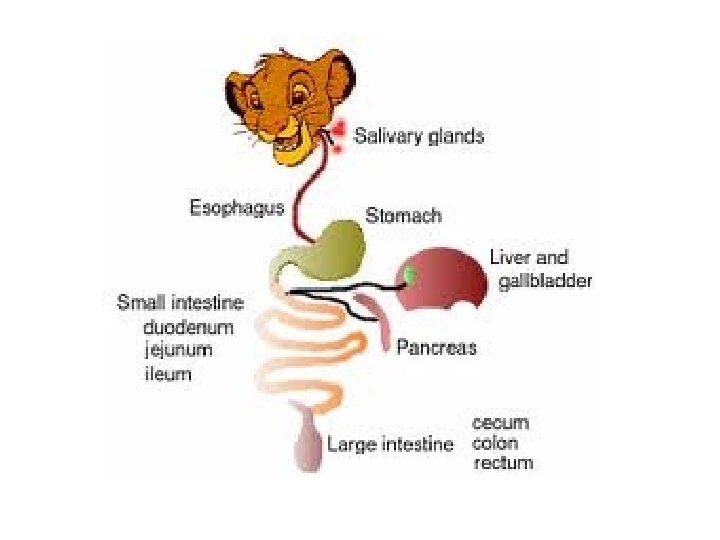
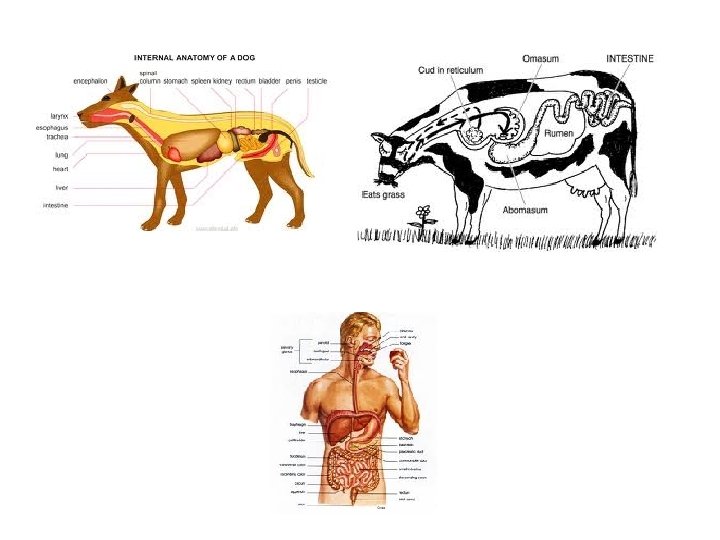
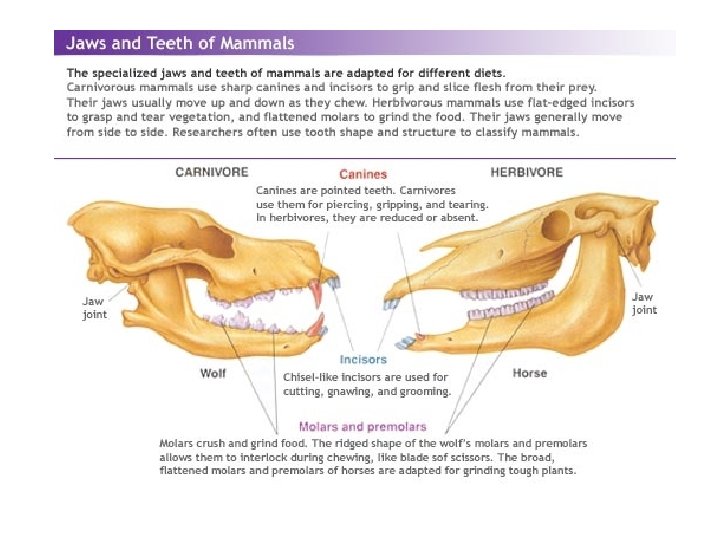
MAMMALS – DIGESTION (write this on your charts!!) • Jaws and teeth adapted to eat larger food and prey • Advanced digestive systems that break down food
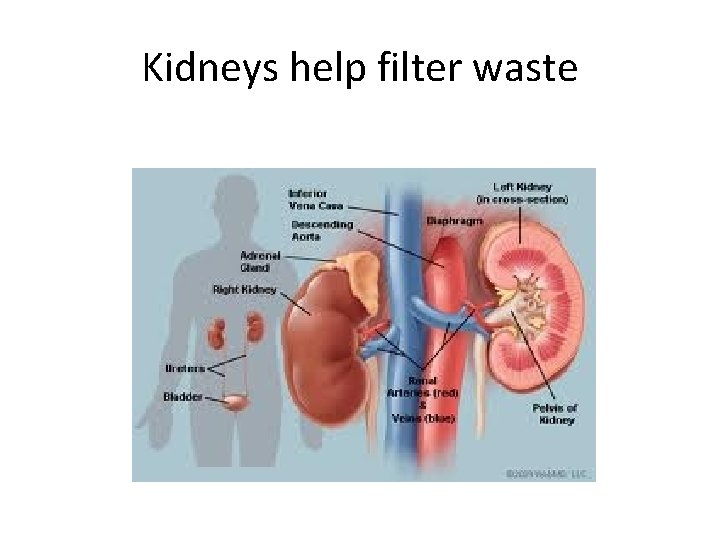
MAMMALS – EXCRETION (write this on your charts!!) • Urogenital systems • Kidneys help filter waste
Kidneys help filter waste
MAMMALS – RESPIRATION AND REGULATION (write this on your charts!!) • Endothermic • Lungs • Hormones, nervous system, advanced brains
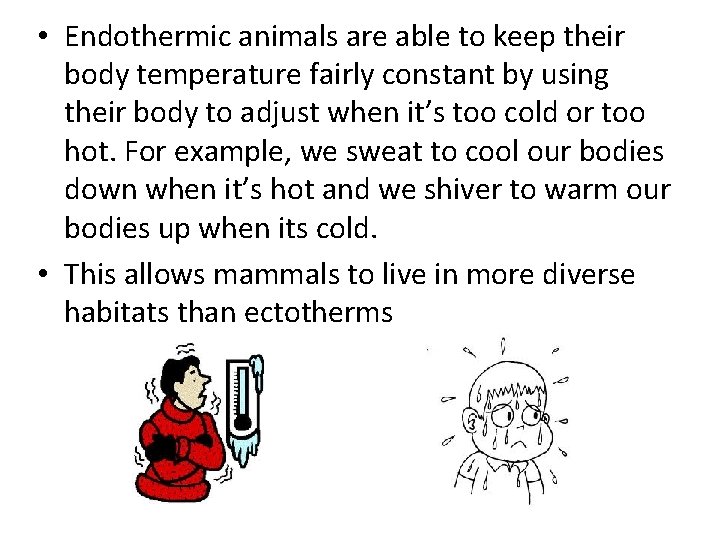
• Endothermic animals are able to keep their body temperature fairly constant by using their body to adjust when it’s too cold or too hot. For example, we sweat to cool our bodies down when it’s hot and we shiver to warm our bodies up when its cold. • This allows mammals to live in more diverse habitats than ectotherms
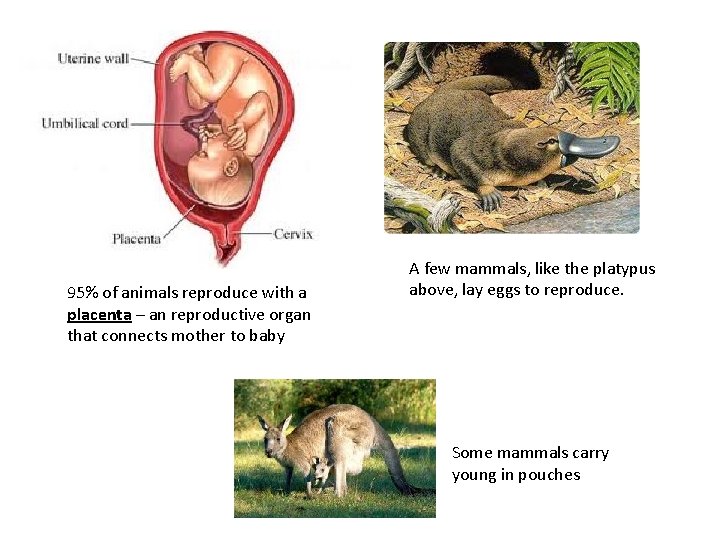
MAMMALS – REPRODUCTION (write this on your charts!!) • Produce milk and nurse young • 95% have a placenta • Few lay eggs or have pouches for babies
95% of animals reproduce with a placenta – an reproductive organ that connects mother to baby A few mammals, like the platypus above, lay eggs to reproduce. Some mammals carry young in pouches
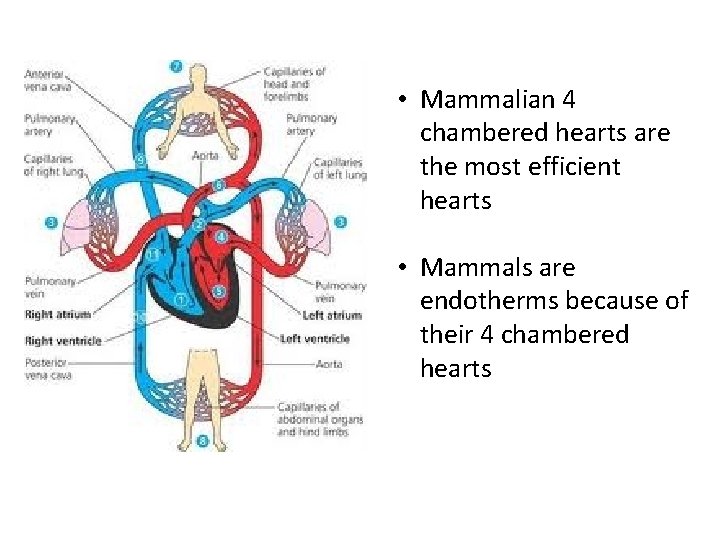
MAMMALS – CIRCULATION (write this on your charts!!) • 4 Chambered Heart • Closed circulatory system
• Mammalian 4 chambered hearts are the most efficient hearts • Mammals are endotherms because of their 4 chambered hearts
MAMMALS – OTHER IMPORTANT FACTS (write this on your charts!!) • Phylum chordata • Vertebrates
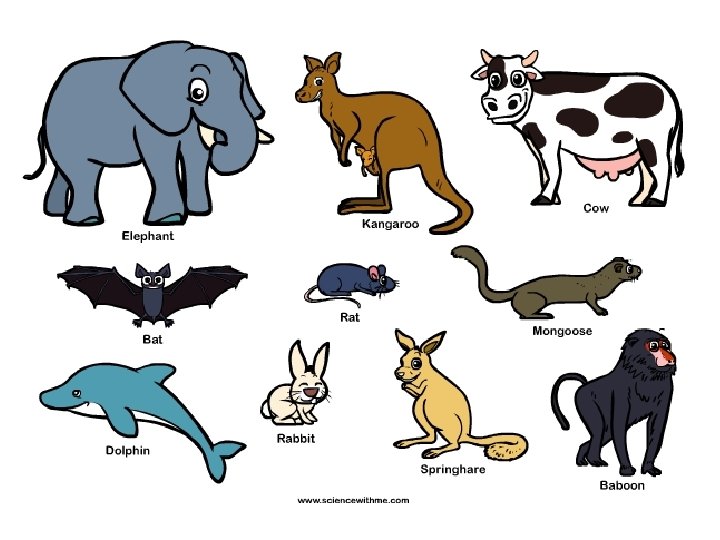
Mammal Fun Facts • YOU are a mammal! • Elephants have huge feet and can weigh more than five tons. But they have big, soft, spongy feet that spread their weight out so well they barely even leave footprints. • Fastest mammal is the cheetah that runs 6070 miles per hour • Slowest mammal is the sloth
AMPHIBIANS – DIGESTION (write this on your charts!!) • Takes in food through mouth • Have stomachs and intestines
AMPHIBIANS – EXCRETION (write this on your charts!!) • Have excretory systems with kidneys to help filter waste
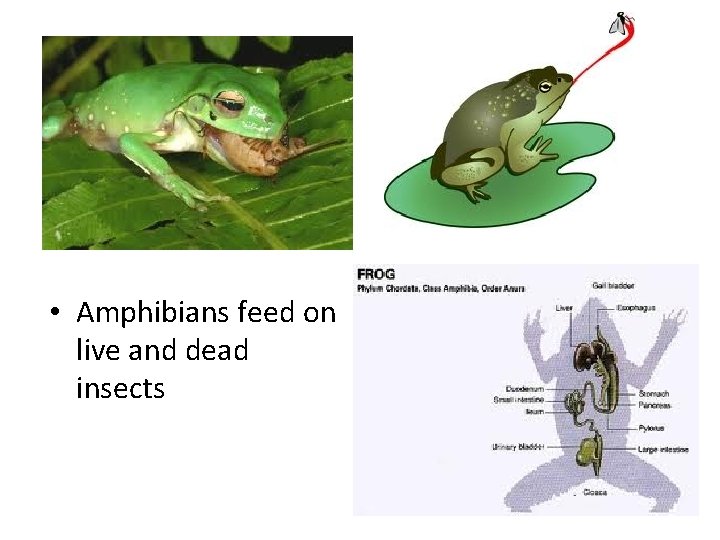
• Amphibians feed on live and dead insects
AMPHIBIANS – RESPIRATION AND REGULATION (write this on your charts!!) • Ectotherms • Breathe through skin • in water – gills • on land - lungs
• Ectotherms absorb heat from their surroundings. • This is bad because ectotherms can only live in habitats that fall within the survivable temperature range
AMPHIBIANS – REPRODUCTION (write this on your charts!!) • Sexual reproduction • External fertilization • Eggs must be laid in water
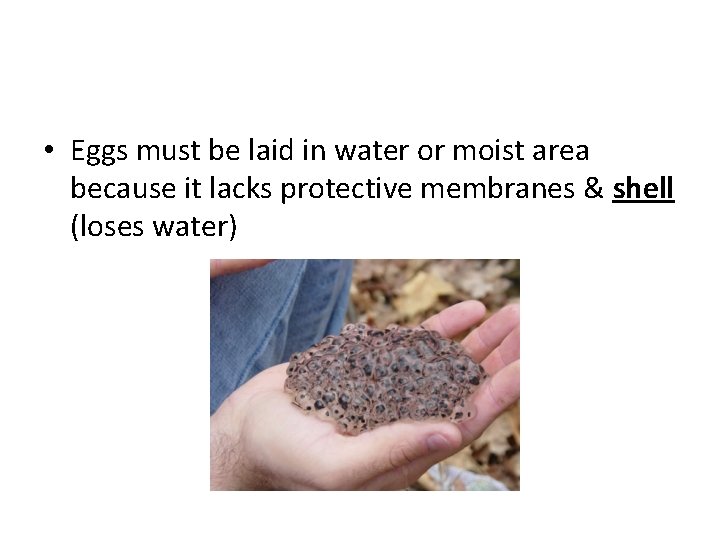
• Eggs must be laid in water or moist area because it lacks protective membranes & shell (loses water)
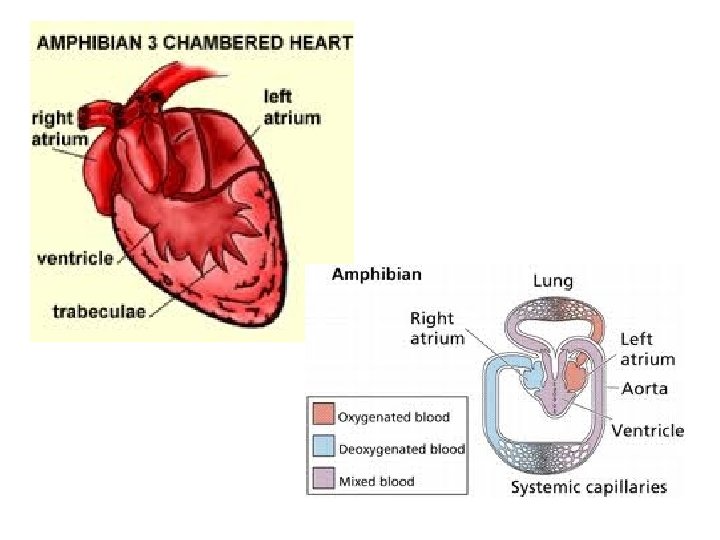
AMPHIBIANS – CIRCULATION (write this on your charts!!) • Closed circulatory system • 3 chambered hearts
AMPHIBIANS – OTHER IMPORTANT FACTS (write this on your charts!!) • “double life” – water and land • Vertebrates • Chordata
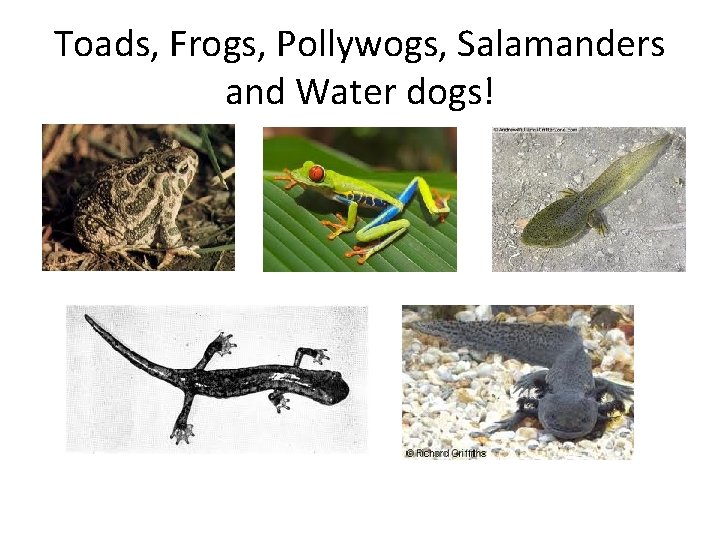
Toads, Frogs, Pollywogs, Salamanders and Water dogs!
Amphibian fun facts • Because frogs swallow their food whole, the size of their meal is only limited by the size of their mouth and their stomach. • Frogs can remain tadpoles from anywhere between 8 months and 2 years • salamanders can re-grow their toes and tails.