
Insect Camouflage Mimicry and Defense Is That Really

- Slides: 35
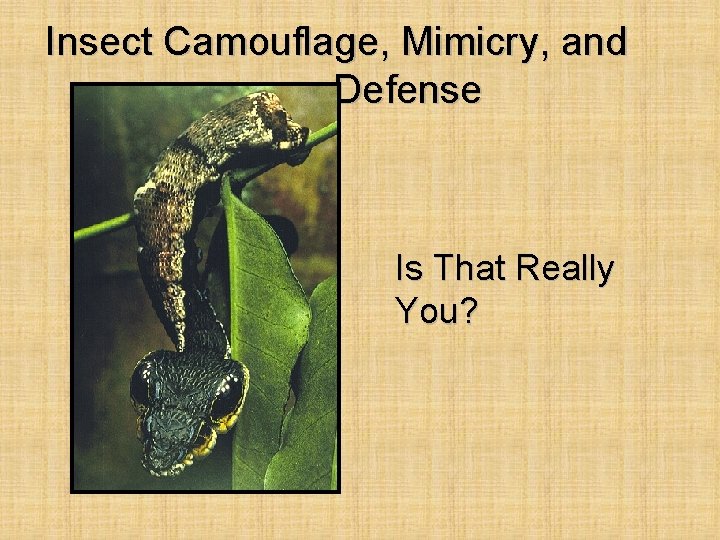
Insect Camouflage, Mimicry, and Defense Is That Really You?
Insects Are a Nutritious and Abundant Source of Food • How do you defend against being eaten? – Exoskeleton – Flight – Large population numbers – “Hide” – Develop defenses and advertise them
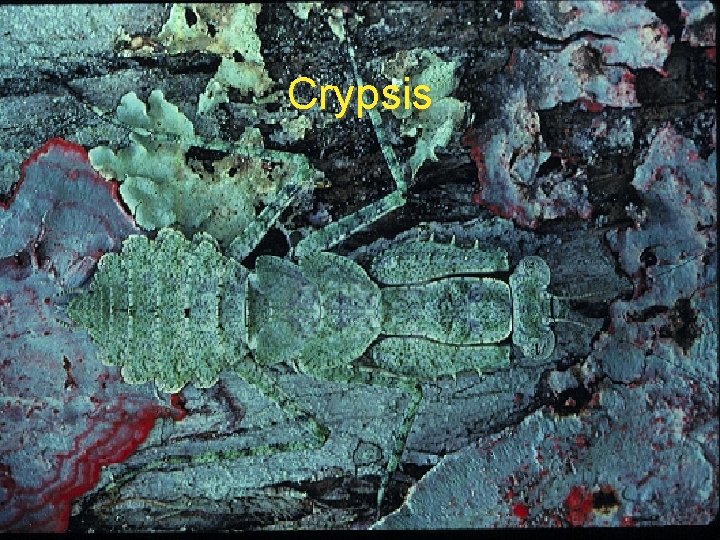
Crypsis
Crypsis can be morphological or behavioral • • Shape Color Pattern Contour • Olfactory • Auditory • Orientation and Attitude
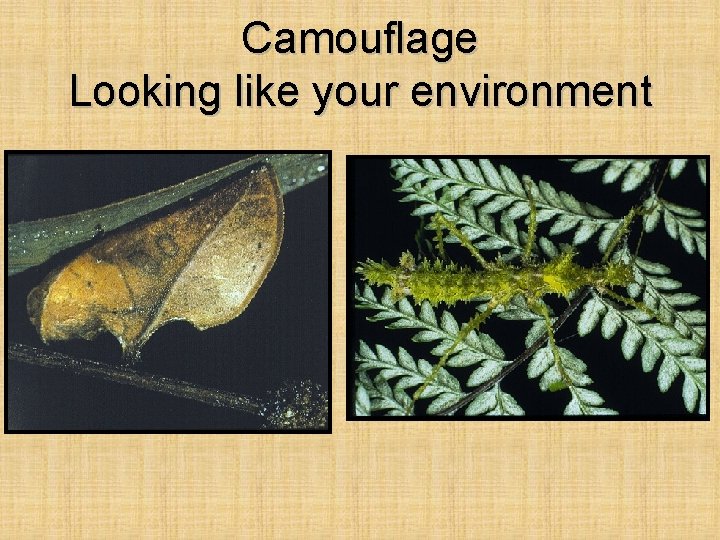
Camouflage Looking like your environment
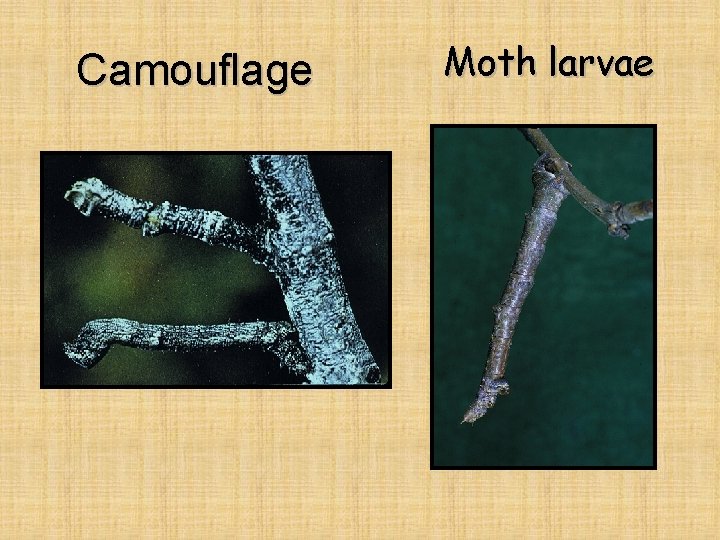
Camouflage Moth larvae
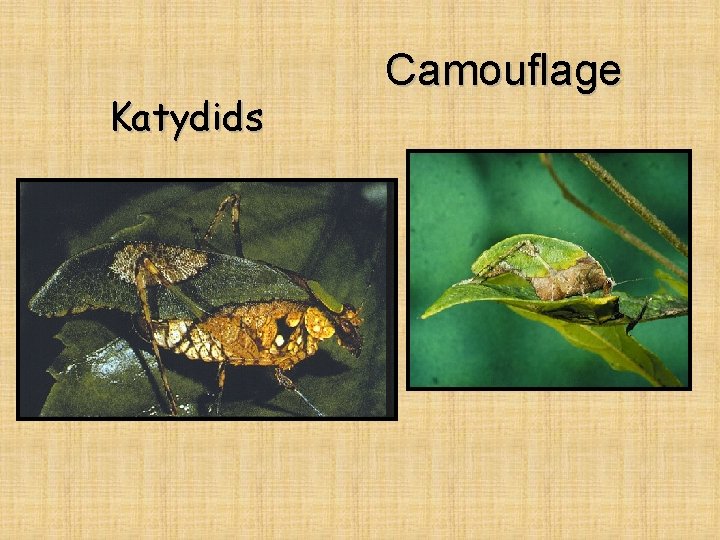
Katydids Camouflage
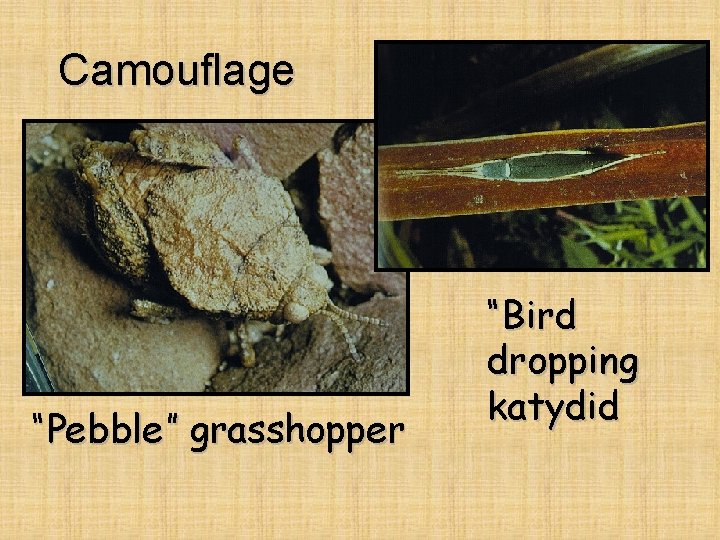
Camouflage “Pebble” grasshopper “Bird dropping katydid
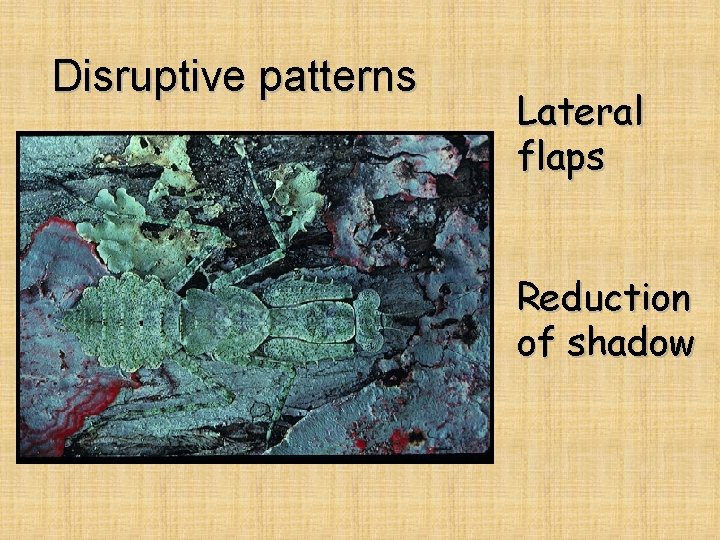
Disruptive patterns Lateral flaps Reduction of shadow
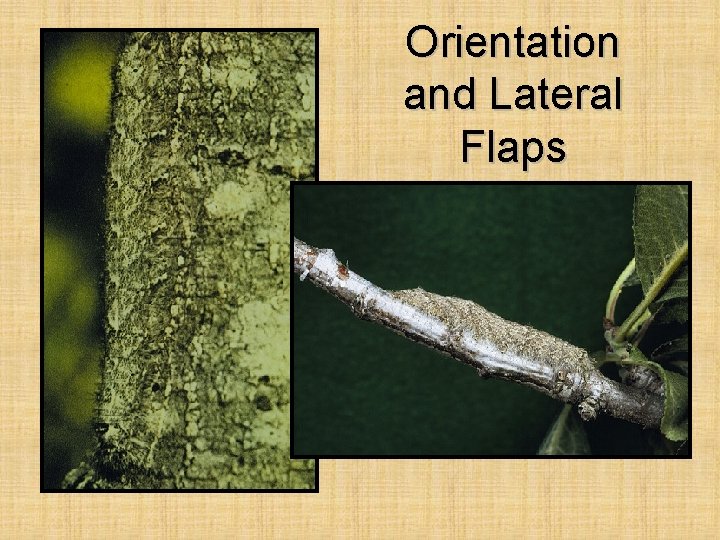
Orientation and Lateral Flaps
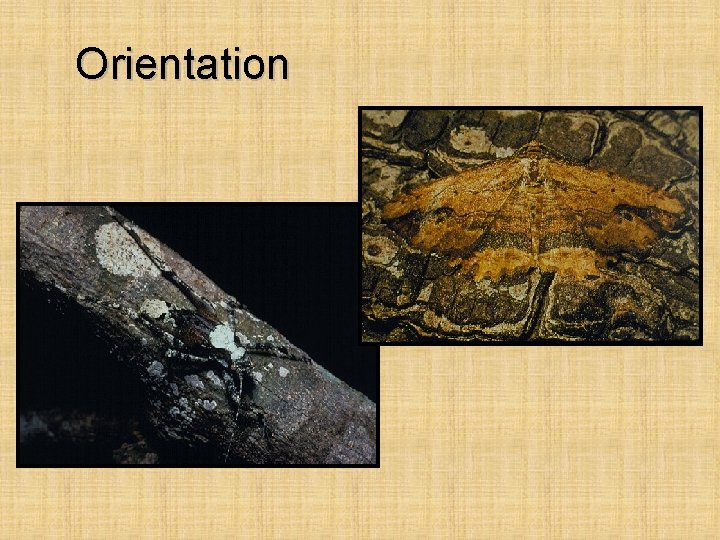
Orientation
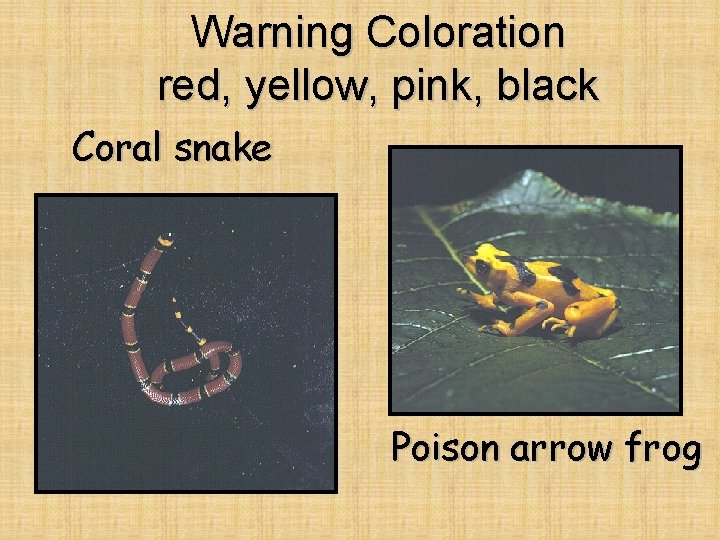
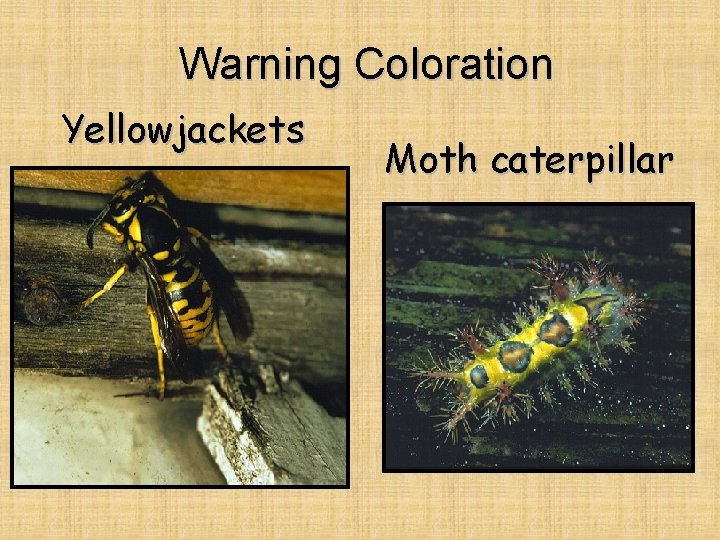
Aposematic or Warning Coloration “I am Dangerous!” May incorporate: vivid colors large, colorful aggregations distinctive sounds “flaunting” behavior
Warning Coloration red, yellow, pink, black Coral snake Poison arrow frog
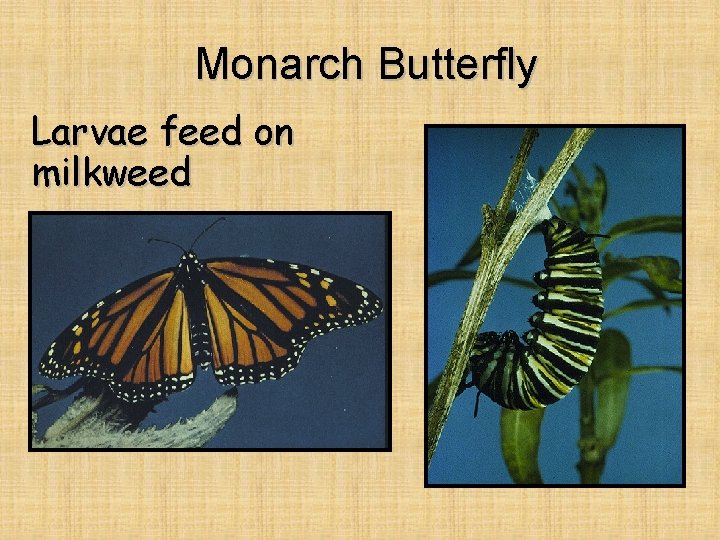
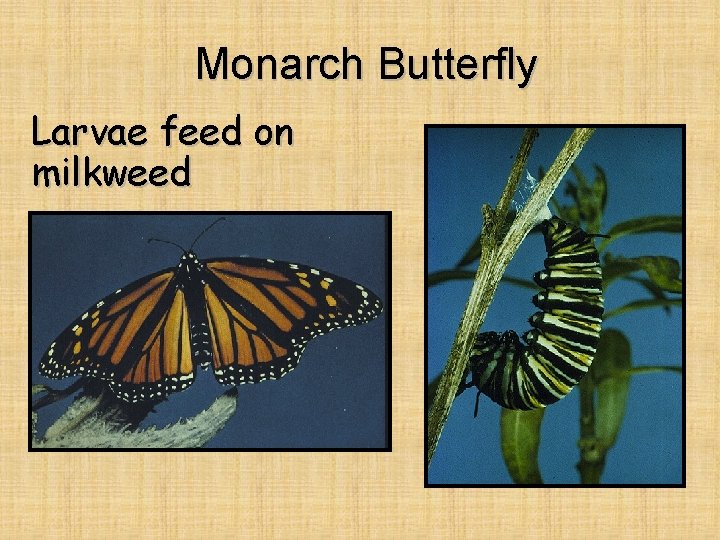
Monarch Butterfly Larvae feed on milkweed
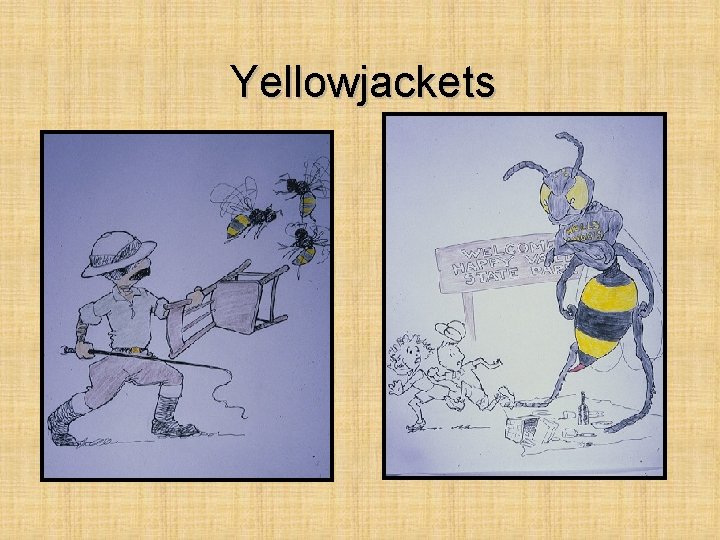
Warning Coloration Yellowjackets Moth caterpillar
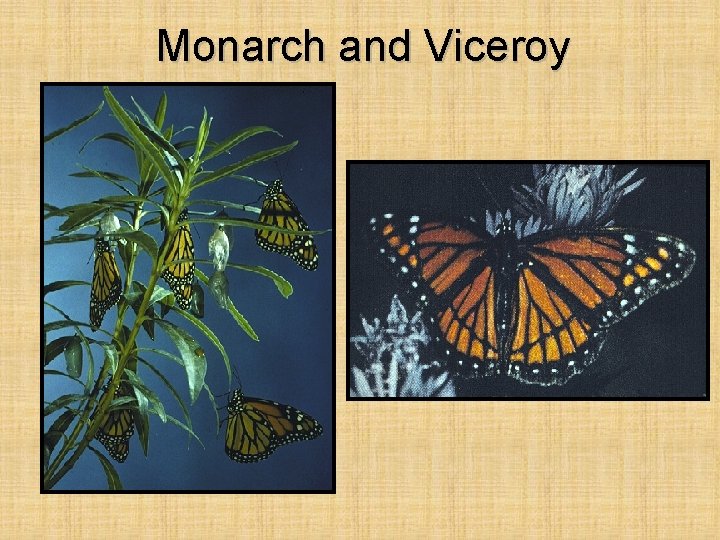
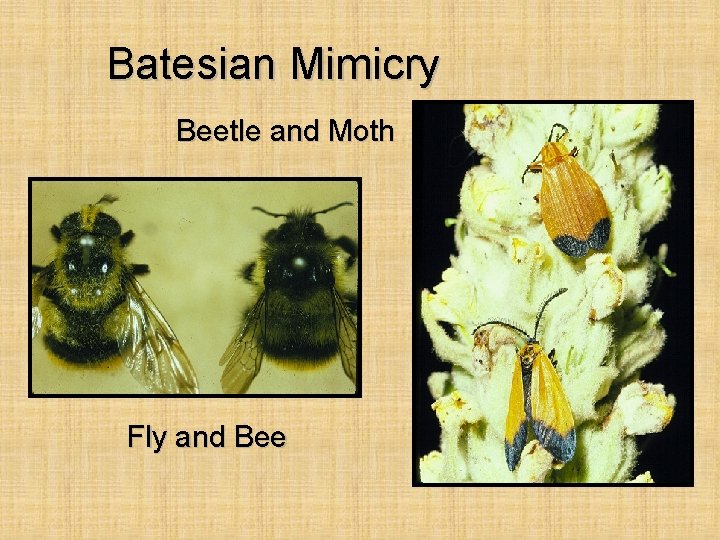
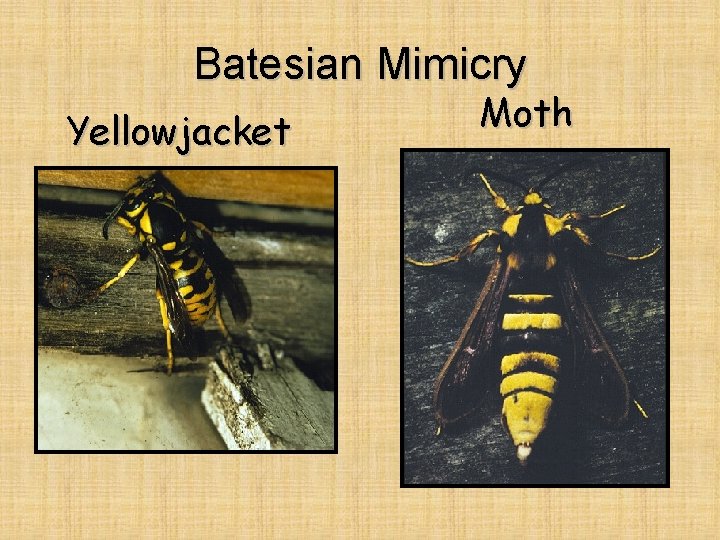
Mimicry “I am Someone Else” • One species (the mimic) resembles another (the model) • The model is dangerous (usually toxic unpalatable) - the mimic is not dangerous (it is palatable) • Usually more models than mimics (but not necessarily) • Species must occur together
Batesian Mimicry Traditional Model/Mimic Situation Model is unpalatable or dangerous Mimic is palatable or not dangerous
Monarch and Viceroy
Batesian Mimicry Beetle and Moth Fly and Bee
Batesian Mimicry Yellowjacket Moth
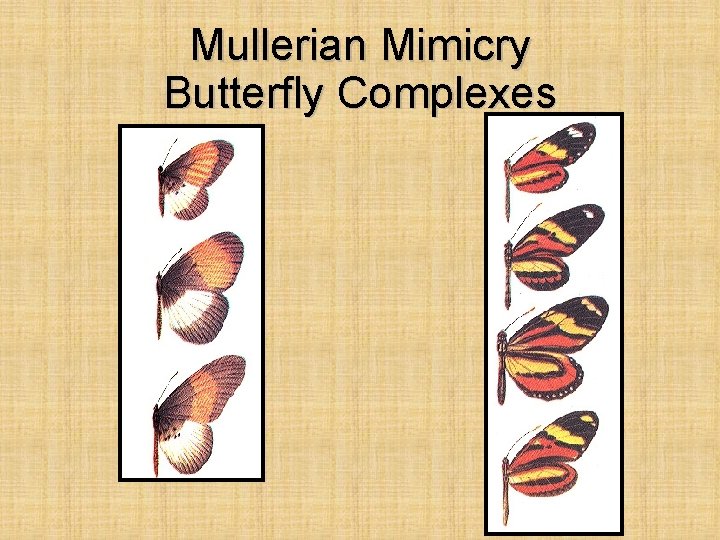
Mullerian Mimicry Unpalatable or dangerous (unrelated) species evolve to look like each other • Butterfly complexes • Stinging insects
Mullerian Mimicry Butterfly Complexes
Passive and Systemic Chemical Defenses “I am not tasty” Remember allomones - benefit the sender! Remember how important chemical signals are to insects!
Monarch Butterfly Larvae feed on milkweed
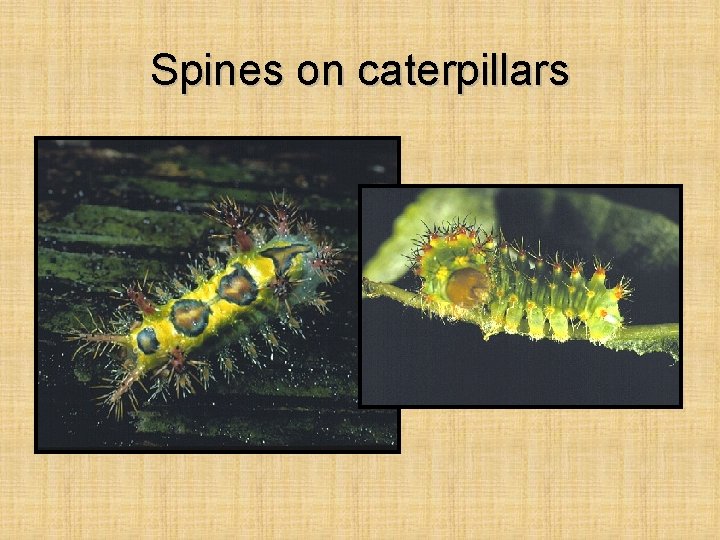
Spines on caterpillars
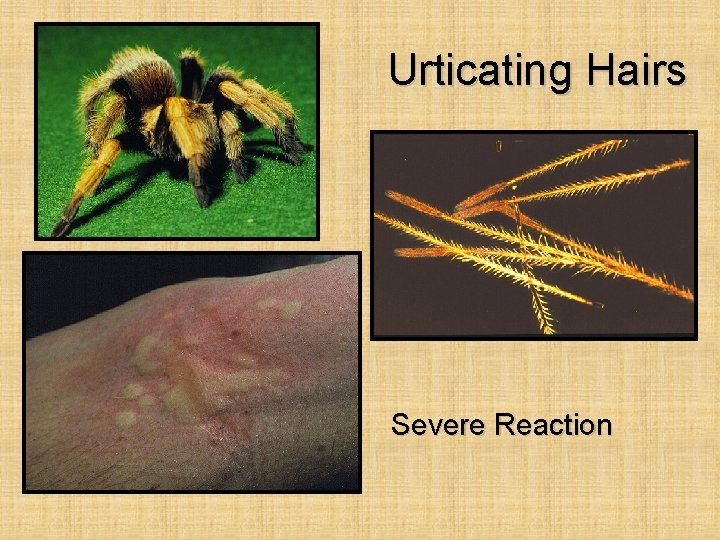
Urticating Hairs Severe Reaction
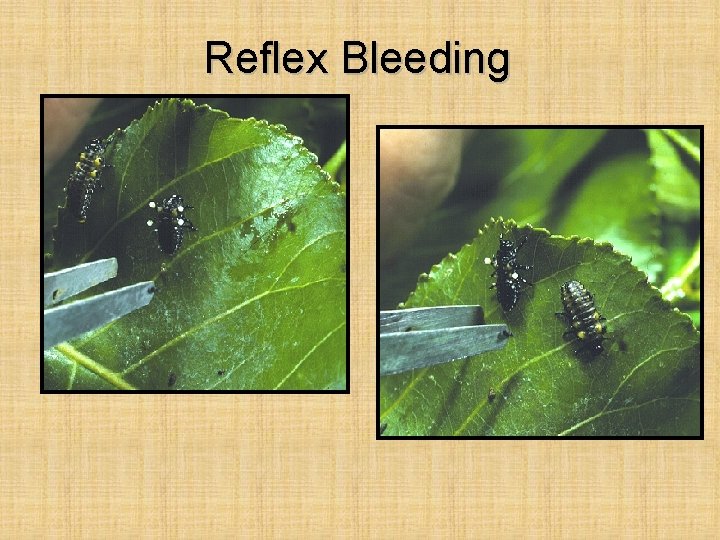
Reflex Bleeding
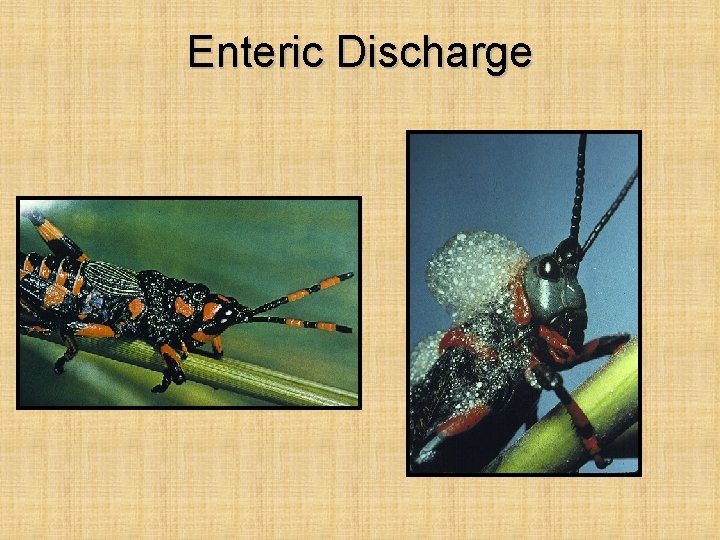
Enteric Discharge
Turning the Tables - Attack! Osmetaria
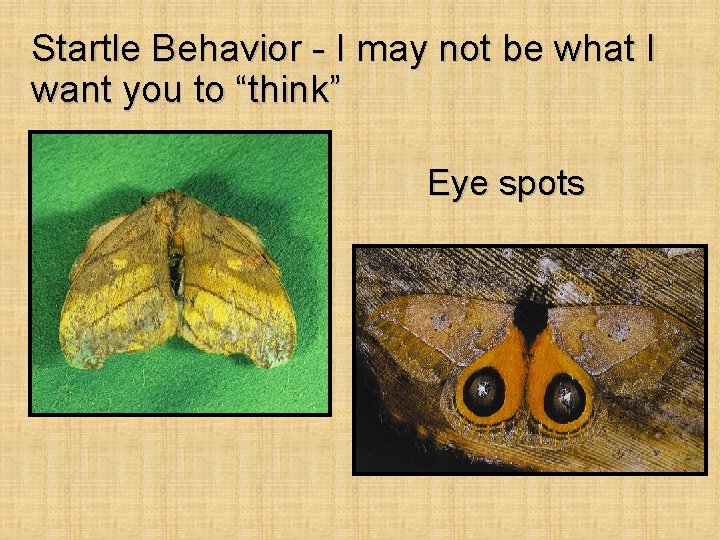
Startle Behavior - I may not be what I want you to “think” Eye spots
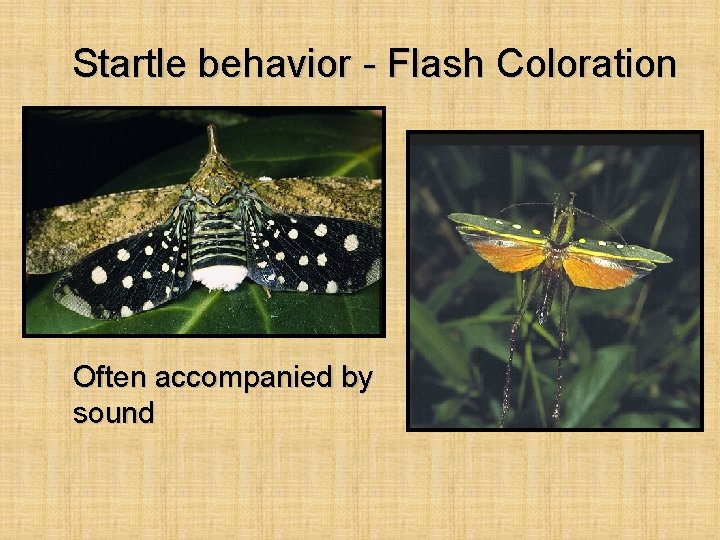
Startle behavior - Flash Coloration Often accompanied by sound
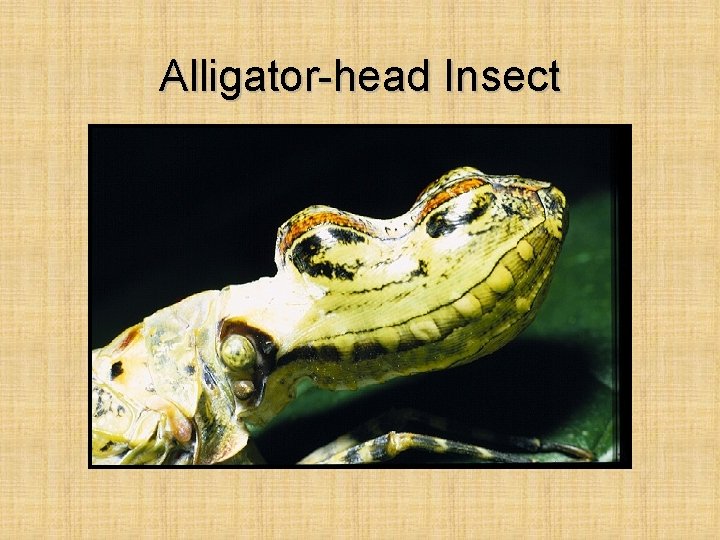
Alligator-head Insect
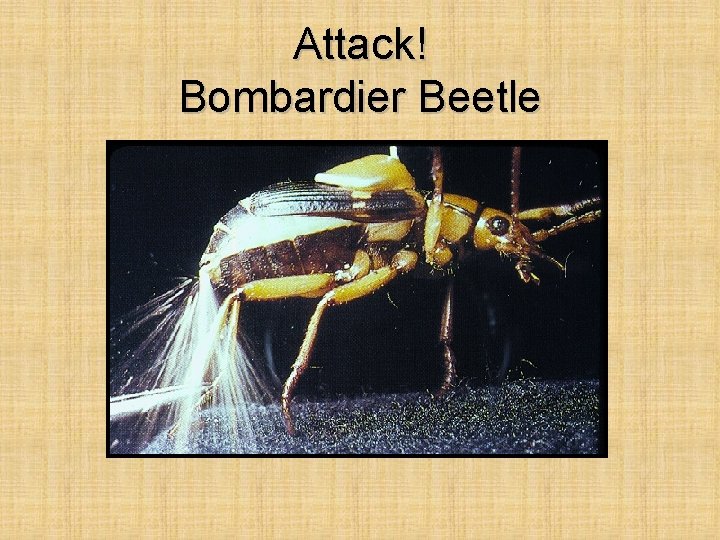
Attack! Bombardier Beetle
Yellowjackets
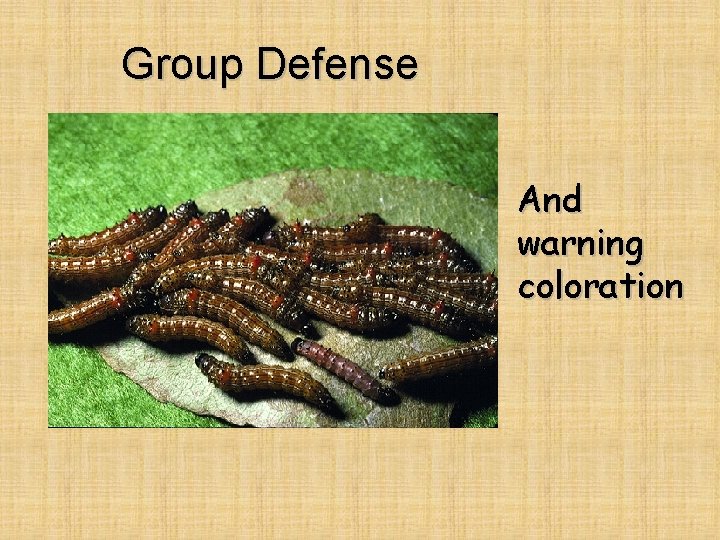
Group Defense And warning coloration