
INS Inertial Navigation Systems An overview of 4
- Slides: 24
INS: Inertial Navigation Systems An overview of 4 sensors
What is an INS? n n Position (dead reckoning) Orientation (roll, pitch, yaw) Velocities Accelerations
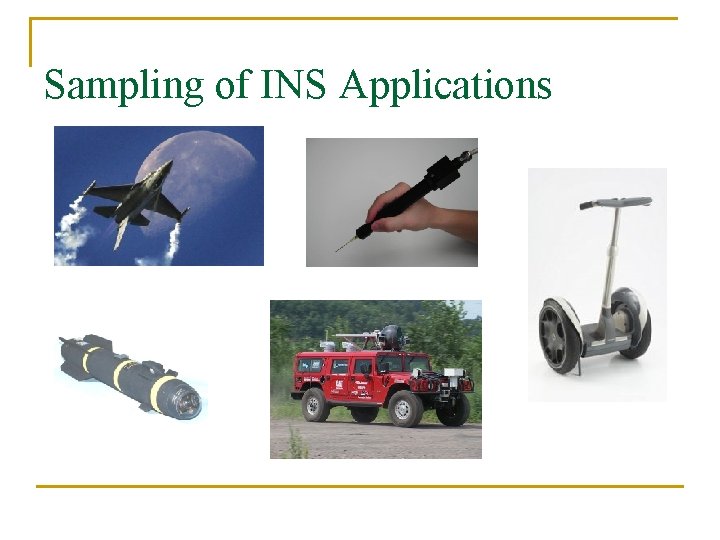
Sampling of INS Applications
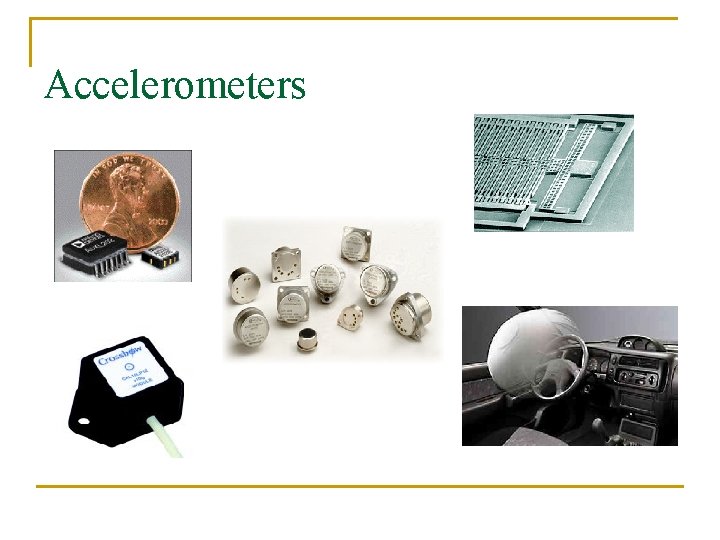
Accelerometers
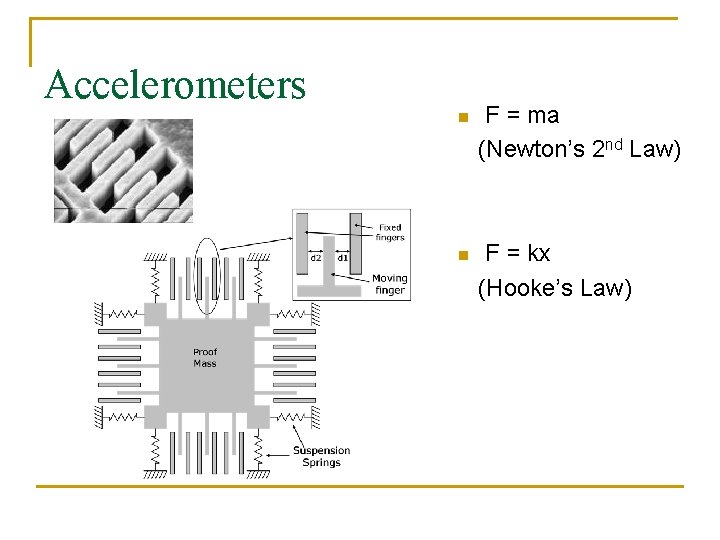
Accelerometers n F = ma (Newton’s 2 nd Law) n F = kx (Hooke’s Law)
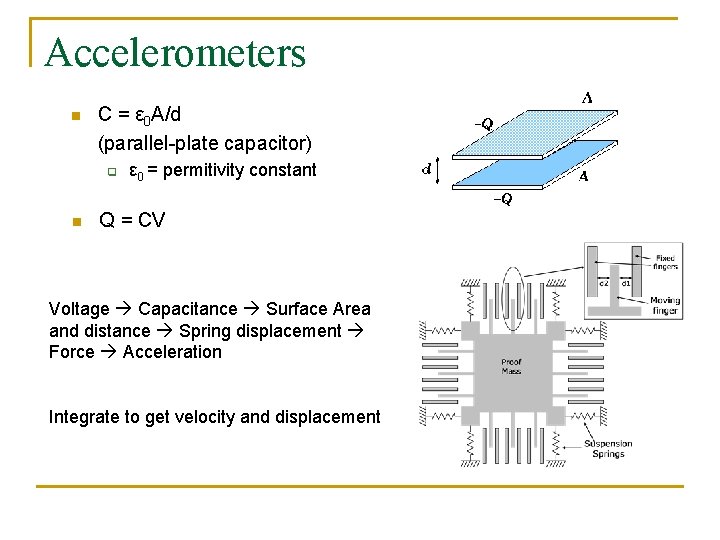
Accelerometers n C = ε 0 A/d (parallel-plate capacitor) q n ε 0 = permitivity constant Q = CV Voltage Capacitance Surface Area and distance Spring displacement Force Acceleration Integrate to get velocity and displacement
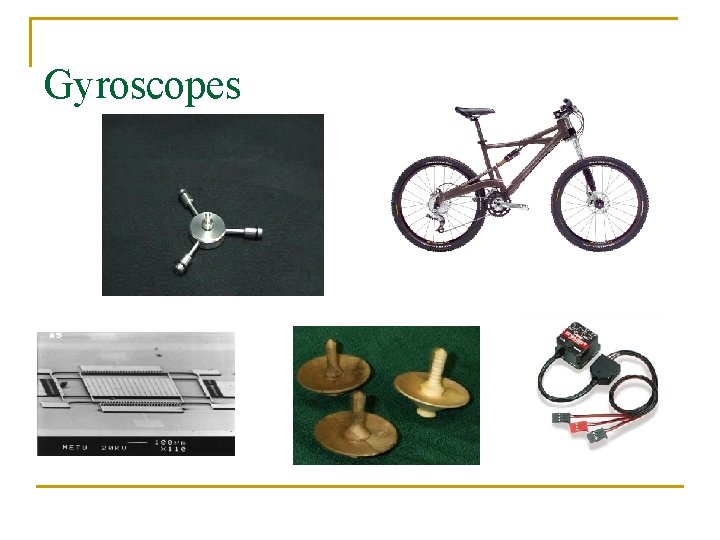
Gyroscopes
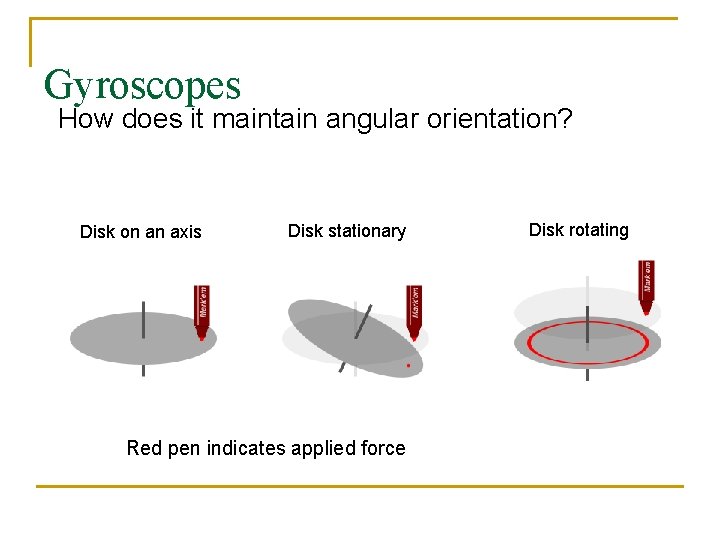
Gyroscopes How does it maintain angular orientation? Disk on an axis Disk stationary Red pen indicates applied force Disk rotating
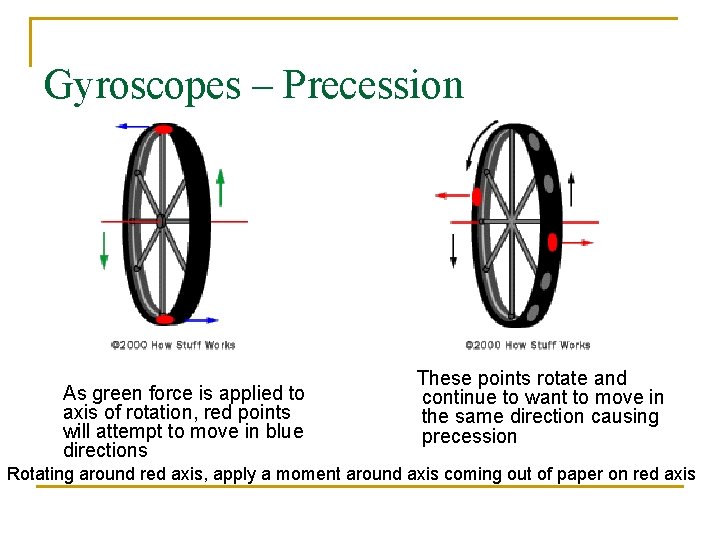
Gyroscopes – Precession As green force is applied to axis of rotation, red points will attempt to move in blue directions These points rotate and continue to want to move in the same direction causing precession Rotating around red axis, apply a moment around axis coming out of paper on red axis
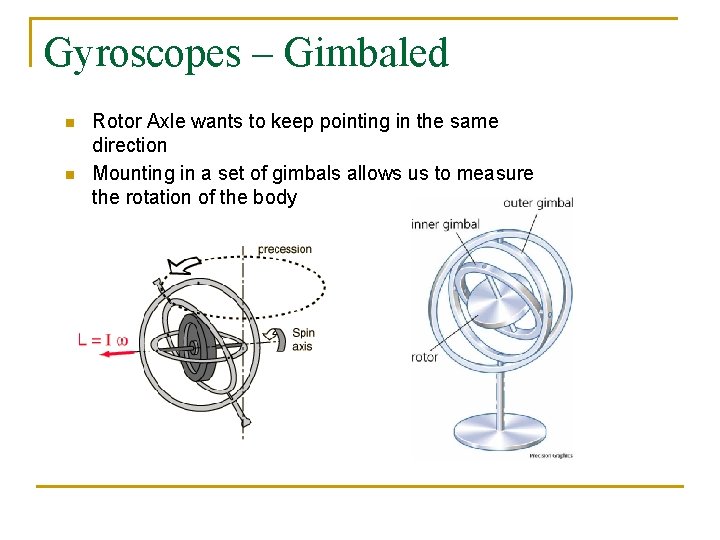
Gyroscopes – Gimbaled n n Rotor Axle wants to keep pointing in the same direction Mounting in a set of gimbals allows us to measure the rotation of the body
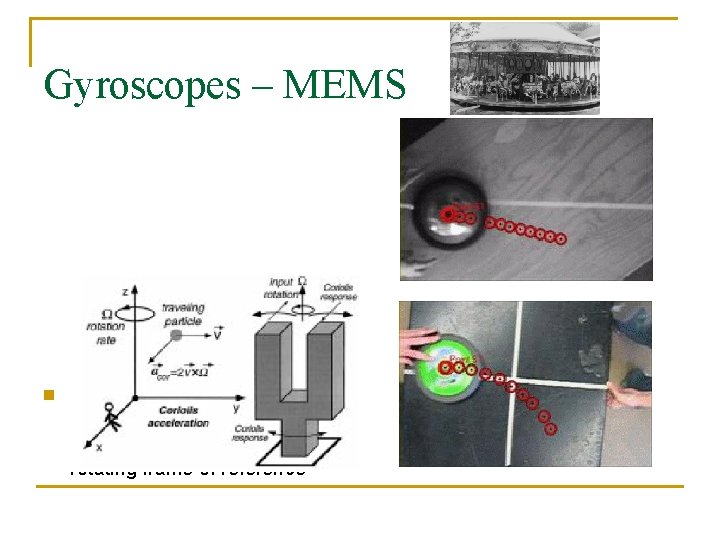
Gyroscopes – MEMS n Coriolis effect – “fictitious force” that acts upon a freely moving object as observed from a rotating frame of reference
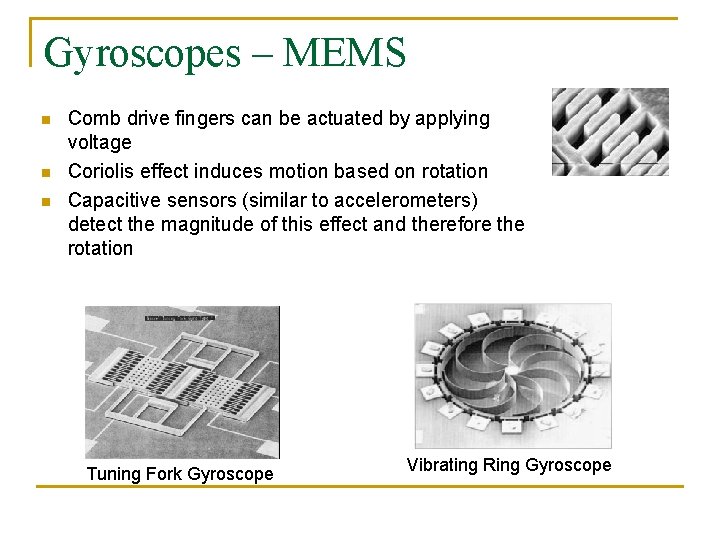
Gyroscopes – MEMS n n n Comb drive fingers can be actuated by applying voltage Coriolis effect induces motion based on rotation Capacitive sensors (similar to accelerometers) detect the magnitude of this effect and therefore the rotation Tuning Fork Gyroscope Vibrating Ring Gyroscope
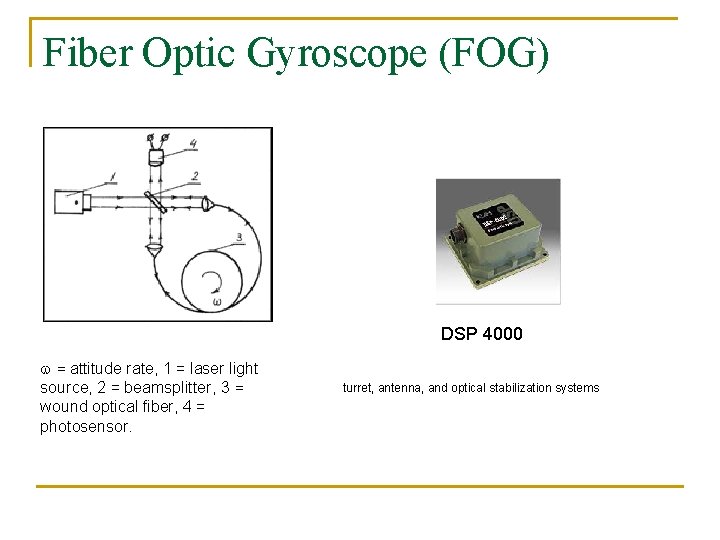
Fiber Optic Gyroscope (FOG) DSP 4000 w = attitude rate, 1 = laser light source, 2 = beamsplitter, 3 = wound optical fiber, 4 = photosensor. turret, antenna, and optical stabilization systems
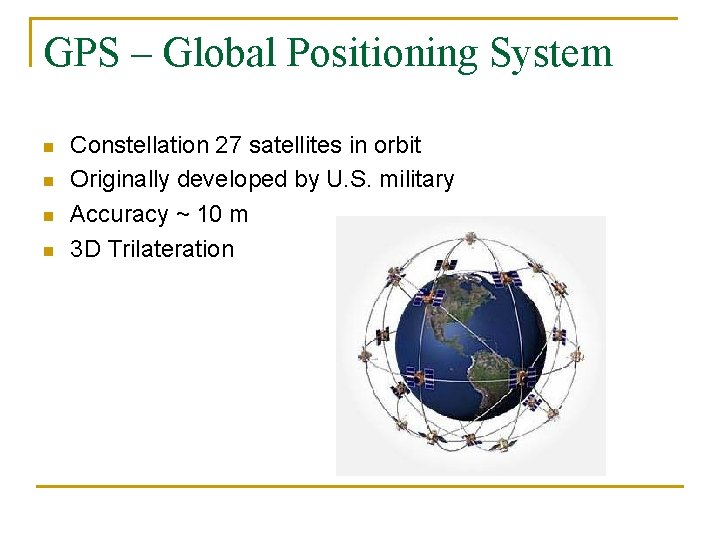
GPS – Global Positioning System n n Constellation 27 satellites in orbit Originally developed by U. S. military Accuracy ~ 10 m 3 D Trilateration
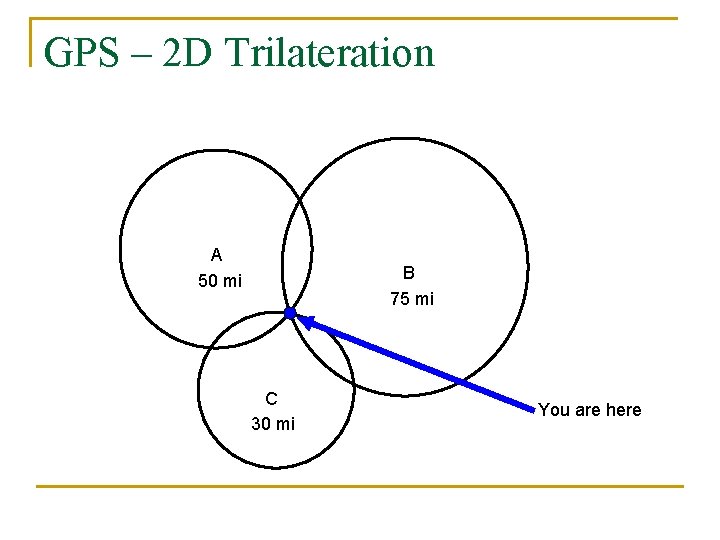
GPS – 2 D Trilateration A 50 mi B 75 mi C 30 mi You are here
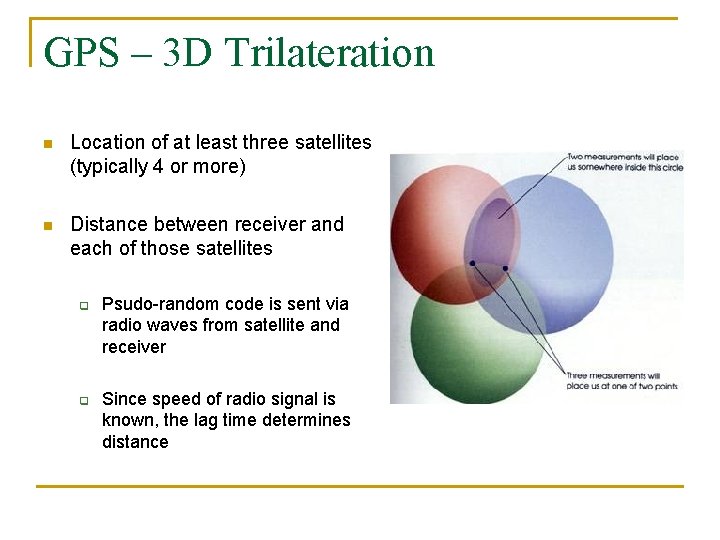
GPS – 3 D Trilateration n Location of at least three satellites (typically 4 or more) n Distance between receiver and each of those satellites q q Psudo-random code is sent via radio waves from satellite and receiver Since speed of radio signal is known, the lag time determines distance
GPS – Improvements n Some sources of error q q q n Earth’s atmosphere slows down signal Radio signal can bounce off large objects Misreporting of satellite location Differential GPS (DGPS) q q q Station with known location calculates receiver’s inaccuracy Broadcasts signal correction information Accuracy ~ 10 m
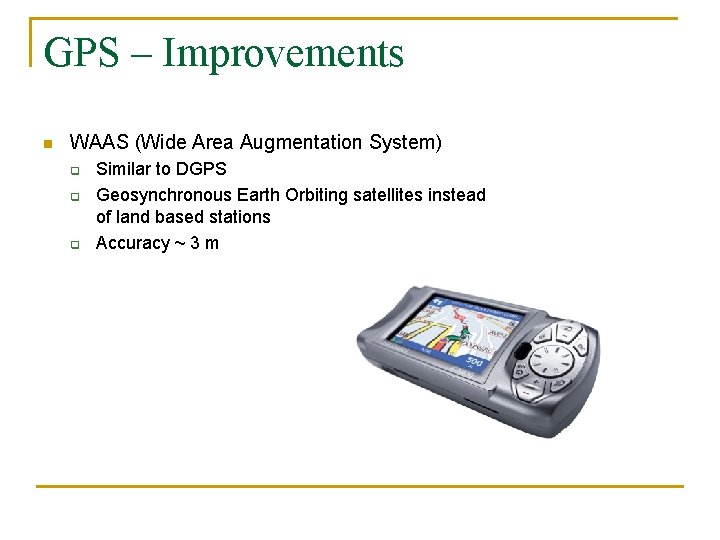
GPS – Improvements n WAAS (Wide Area Augmentation System) q q q Similar to DGPS Geosynchronous Earth Orbiting satellites instead of land based stations Accuracy ~ 3 m
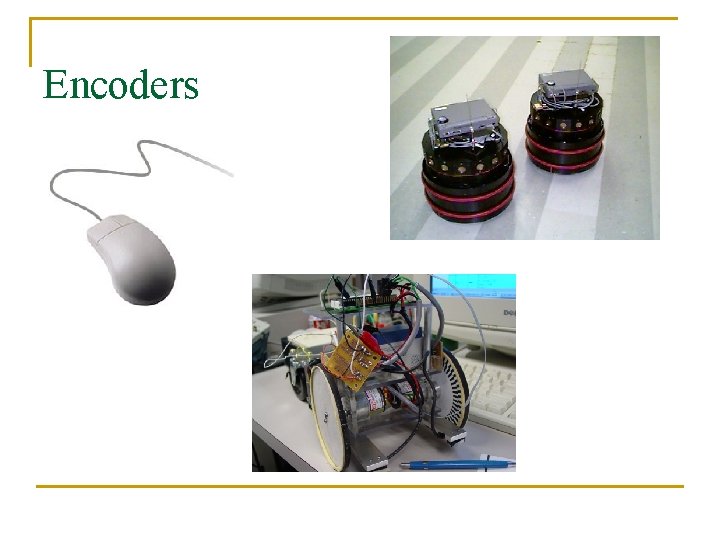
Encoders
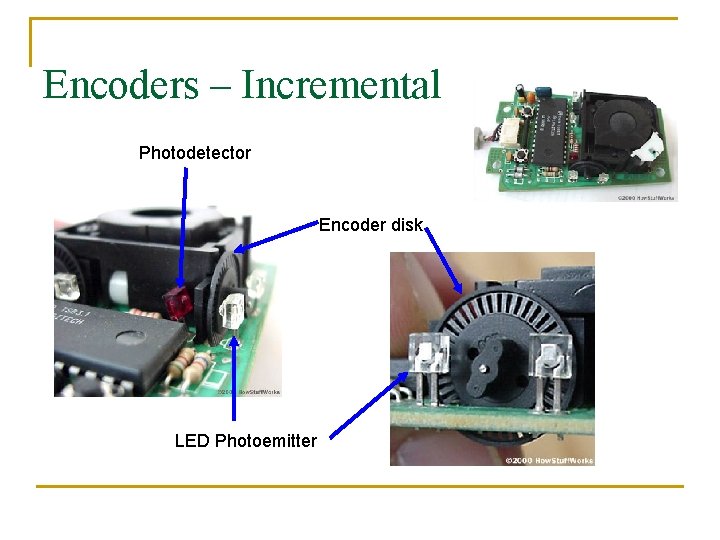
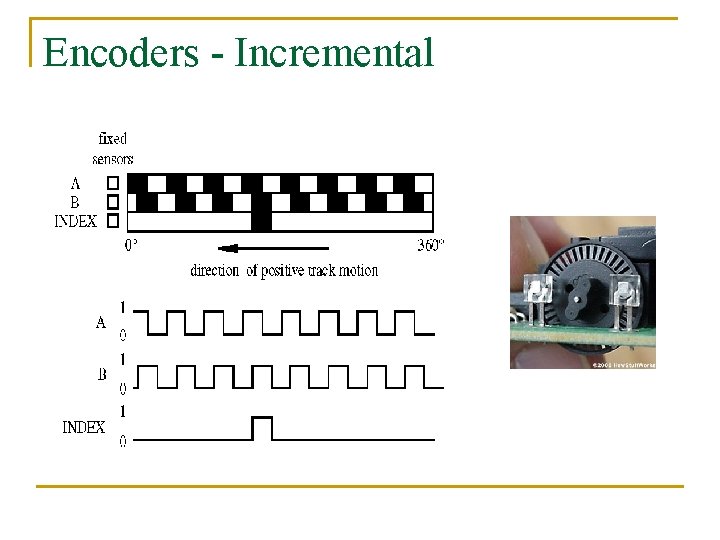
Encoders – Incremental Photodetector Encoder disk LED Photoemitter
Encoders - Incremental
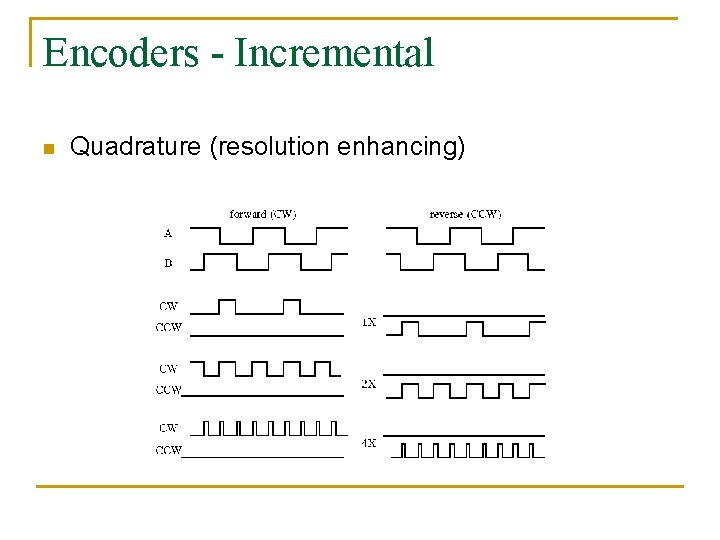
Encoders - Incremental n Quadrature (resolution enhancing)
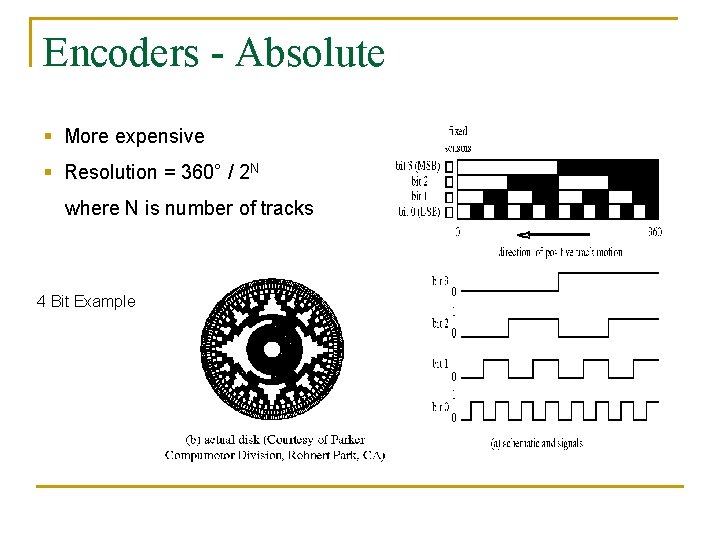
Encoders - Absolute § More expensive § Resolution = 360° / 2 N where N is number of tracks 4 Bit Example
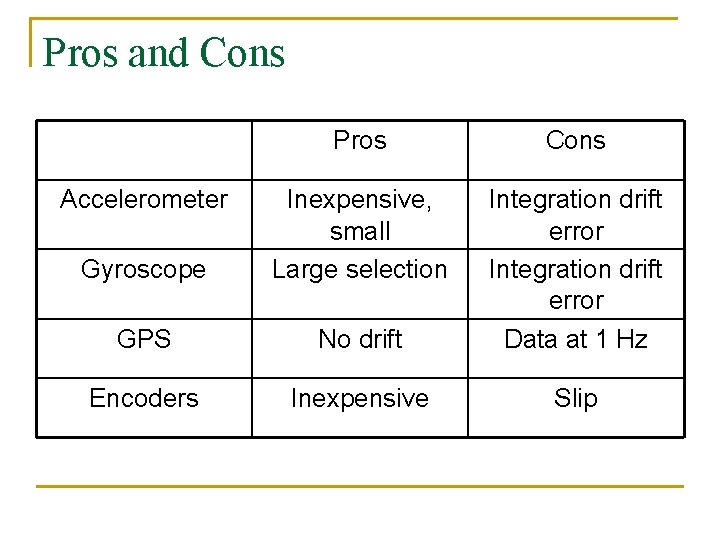
Pros and Cons Pros Cons Gyroscope Inexpensive, small Large selection GPS No drift Integration drift error Data at 1 Hz Encoders Inexpensive Slip Accelerometer