
INQUIRYBASED LEARNING AND THE DISCIPLINEBASED INQUIRY Mrs Bertrand
INQUIRY-BASED LEARNING AND THE DISCIPLINE-BASED INQUIRY Mrs Bertrand Mrs Bundevski – April 2016
Learning A DYNAMIC PROCESS WHICH NEEDS AUTHENTICITY FOR THE STUDENTS TO GAIN…: • Knowledge about facts, symbols, concepts and rules of the subject field in question. • The know-how to problem solve • Knowledge about their own cognitive functioning. • Self-regulatory skills. Positive beliefs about themselves as a learner. • Ability to self-regulate one’s own learning
Discipline-based Inquiry: the concept The students experience appropriate versions of the ways knowledge is created, verified, and communicated with a particular discipline. Each discipline (e. g. , science, mathematics, history) has its own particular ways of generating knowledge, verifying what counts as quality work, and communicating. As students learn best when the subjects are meaningful to them, student tasks must have “an authenticity, [and a sense] that the work being done in classrooms is ‘real work’ that reflects the living realities of the discipline being taught” (Friesen & Jardine, 2011).
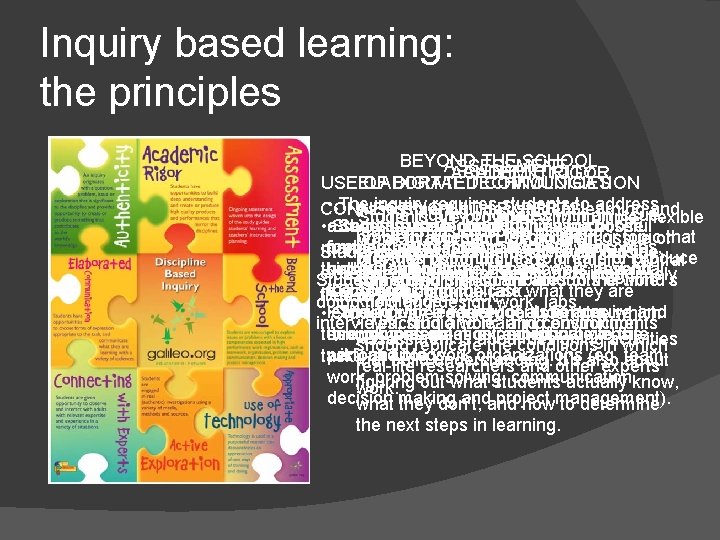
Inquiry based learning: the principles BEYOND THE SCHOOL ASSESSMENT AUTHENTICITY ACADEMIC RIGOR COMMUNICATION USE ELABORATED OF DIGITAL TECHNOLOGIES • • The inquiry requires students to address CONNECTING WITH EXPERTS Assessment guides student learning and • Students The inquiry originates with an issue, are provided with multiple, flexible semi-structured question, issue or Students have opportunities choose • • a. Students use technology in a to purposeful teachers’ instructional planning. problem, question, exploration topicorthat ACTIVE EXPLORATION ways to approach the problem, orissue problem, relevant to curriculum outcomes, forms of expression to express their manner that demonstrates new ways of Students observe interact with outside • On-going assessment isto woven into the provides opportunities create or central produce question usingand methods of inquiry but grounded in the. Technology life and work understanding. thinking and doing. is beyond essential expertise, including professionals the design of the inquiry study, providing timely something that contributes to in the world’s Students spend significant amounts of time to the disciplines. school. Students communicate in • the accomplishing the task. what they are field offield study. descriptive feedback. knowledge. doing and design work, labs, • Students The inquiry students to acquire and with arequired variety of • learning areleads toaudiences determine which • Teaching learning environments interviews, studioand work, and construction. use competencies expected in high through presentation, exhibition, website, technologies are most appropriate toactivities the • Assessment is about designing should replicate the conditions in which performance work organizations (eg. team wiki, andbuild blogs. task. that understanding. It’s also about real-life researchers and other experts work, problem solving, communication, figuring work. out what students actually know, decision andand project what making they don’t, howmanagement). to determine the next steps in learning.
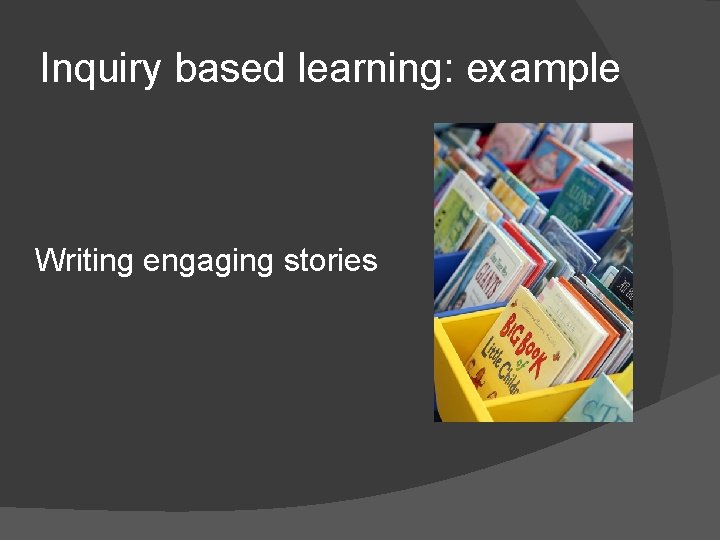
Inquiry based learning: example Writing engaging stories
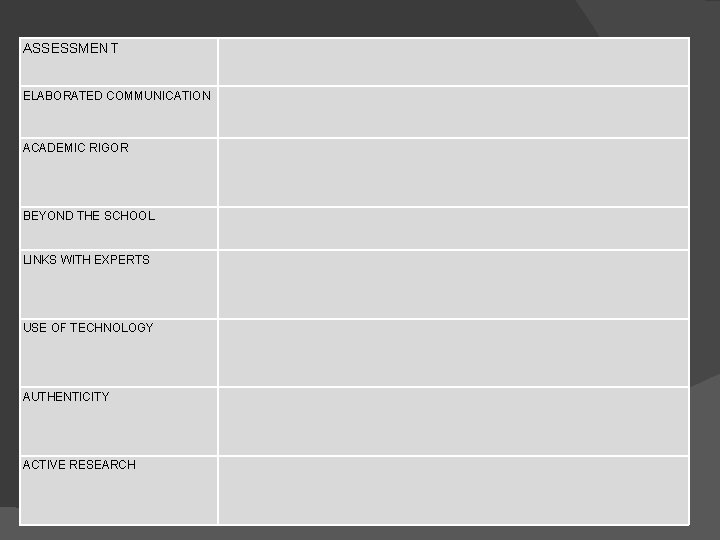
ASSESSMENT ELABORATED COMMUNICATION ACADEMIC RIGOR BEYOND THE SCHOOL LINKS WITH EXPERTS USE OF TECHNOLOGY AUTHENTICITY ACTIVE RESEARCH
Discipline-based Inquiry: into practice Defining Essential Questions Preparing your project Building the background knowledge to activities Getting hooked on a topic: Student engagement Designing Great Tasks
Assessment 3 essential elements of understanding (Wiggins, 2014) There has to be a clear focus on ‘understanding’. The assessments must align with the goals via ‘backward design’, The instructional practices must align with the goals. Several forms of assessment: • Self assessment • Peer assessment • Teacher assessment
To know more about the inquiry -based learning Assessment: feedback, designing rubrics Focus on Technology Focus on the Interdisciplinary
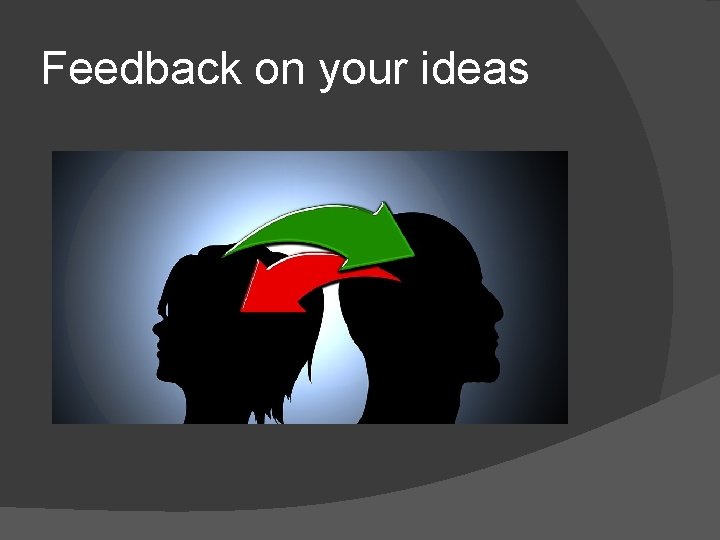
Feedback on your ideas
Your turn!
- Slides: 11