
Input and Output I Fluid Balance Fluid intake


Input and Output

I. Fluid Balance: Fluid intake should equal fluid output A. Intake 1. 70% of adult body consists of water 2. 1% short= thirsty 5% short= slight shortage 12% short= possible death 3. Daily: ½ of body weight in ounces
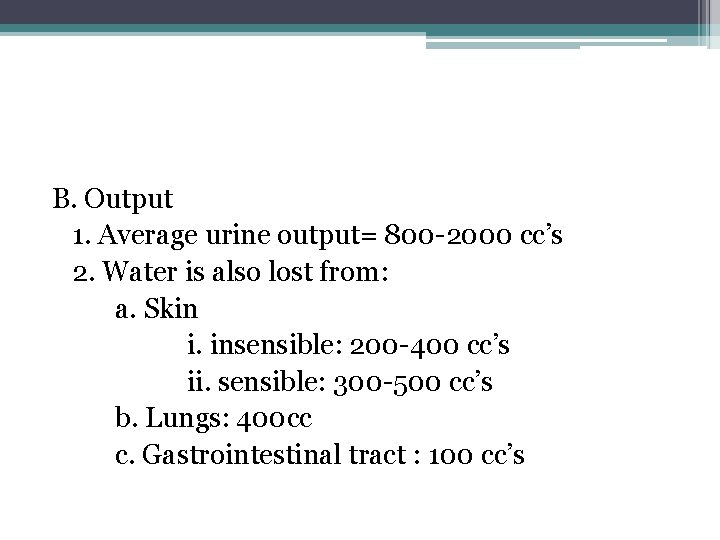
B. Output 1. Average urine output= 800 -2000 cc’s 2. Water is also lost from: a. Skin i. insensible: 200 -400 cc’s ii. sensible: 300 -500 cc’s b. Lungs: 400 cc c. Gastrointestinal tract : 100 cc’s

II. Fluid Imbalance A. Dehydration – fluid output exceeds fluid intake. 1. Causes a. Diarrhea b. Vomiting c. Bleeding d. Excessive perspiration (diaphoresis) e. Poor fluid intake
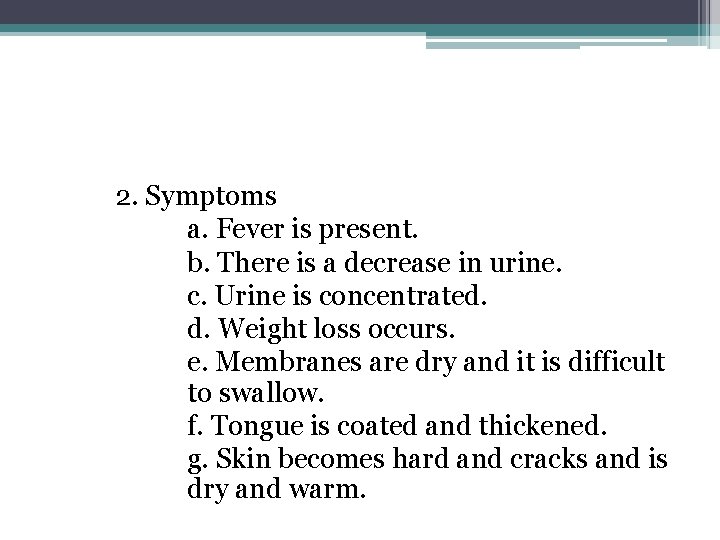
2. Symptoms a. Fever is present. b. There is a decrease in urine. c. Urine is concentrated. d. Weight loss occurs. e. Membranes are dry and it is difficult to swallow. f. Tongue is coated and thickened. g. Skin becomes hard and cracks and is dry and warm.

B. Edema – fluid intake exceeds fluid output. 1. Causes: a. High salt intake b. Infections c. Injuries or burns d. Certain kidney diseases e. Certain heart diseases or heart inefficiencies f. Sitting too long in one position g. Infiltration of IV fluid

2. Symptoms: a. Decrease in urine output b. Gain in weight c. Puffiness or swelling d. Sometimes shortness of breath
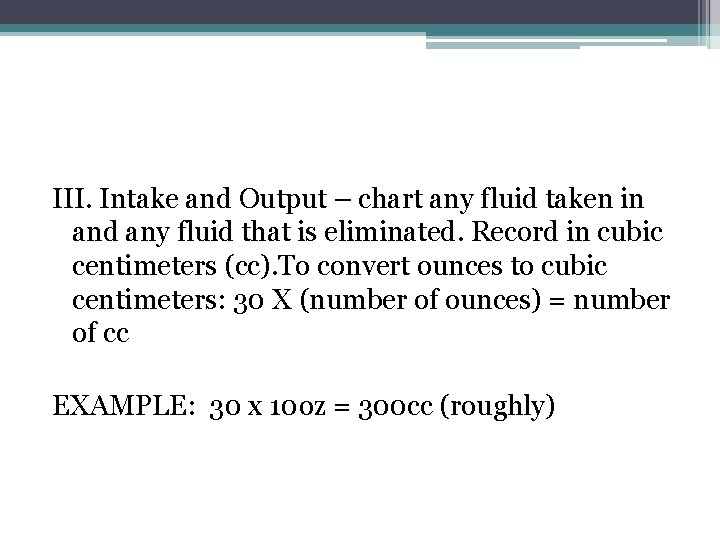
III. Intake and Output – chart any fluid taken in and any fluid that is eliminated. Record in cubic centimeters (cc). To convert ounces to cubic centimeters: 30 X (number of ounces) = number of cc EXAMPLE: 30 x 10 oz = 300 cc (roughly)

A. Intake: 1. All liquid taken by mouth 2. Any food item that turns to liquid at room temperature (e. g. , gelatin, including cream, ice, etc. ) 3. All fluid taken by IV or tube feeding
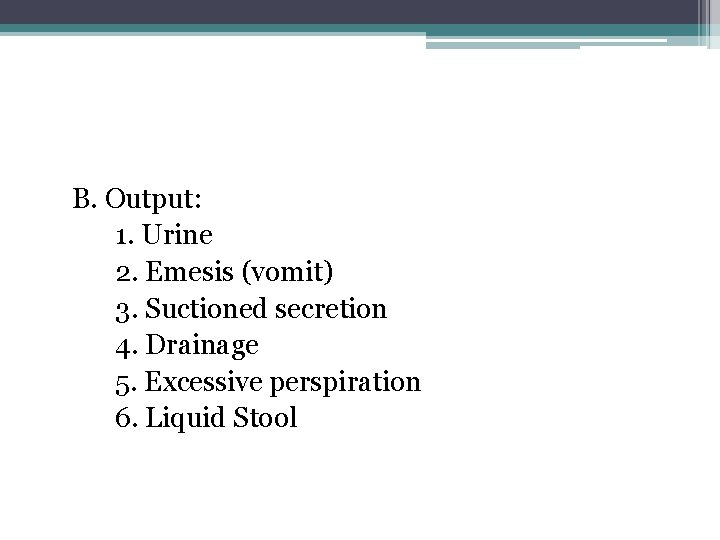
B. Output: 1. Urine 2. Emesis (vomit) 3. Suctioned secretion 4. Drainage 5. Excessive perspiration 6. Liquid Stool
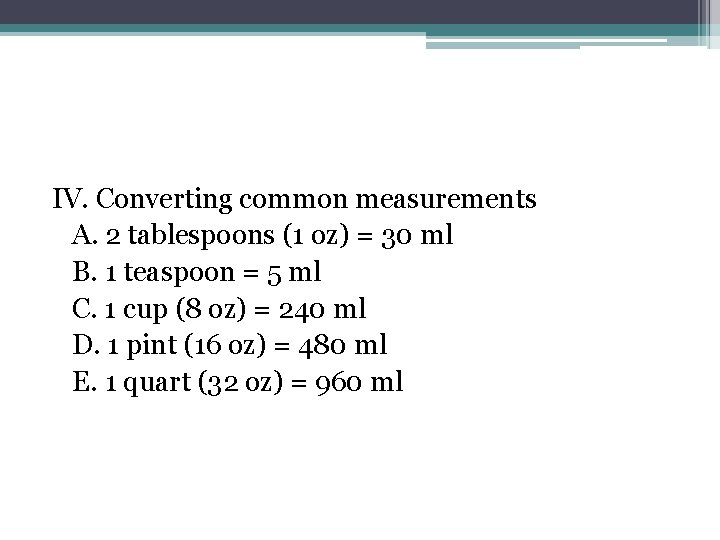
IV. Converting common measurements A. 2 tablespoons (1 oz) = 30 ml B. 1 teaspoon = 5 ml C. 1 cup (8 oz) = 240 ml D. 1 pint (16 oz) = 480 ml E. 1 quart (32 oz) = 960 ml
- Slides: 13