
Inorganic Materials Faience Faience Ancient material known from



- Slides: 36
Inorganic Materials Faience
Faience Ancient material known from at least 5000 years ago. It is the first man-made non-clay ceramic. The name ‘faience’ is derived from Medieval tin glazed product of Faenza Italy. Archaeologists talk about Egyptian faience. Problem with that name is that people have a tendency to assume that any ancient faience that has been found was from Egypt. We know that isn’t the case.
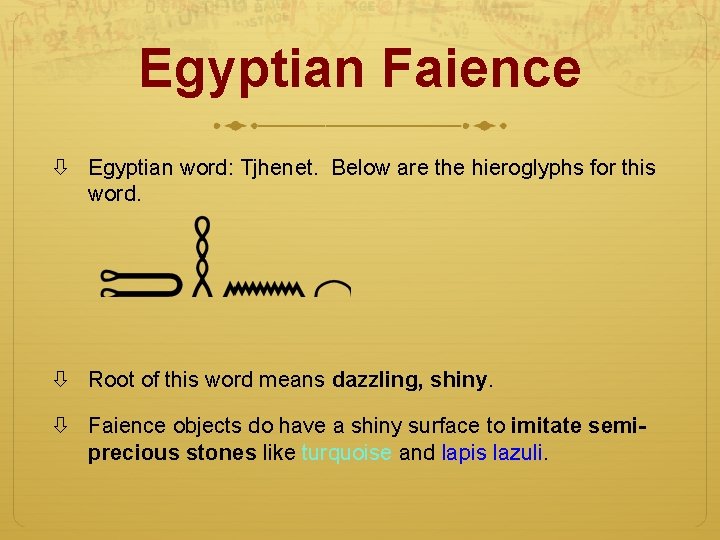
Egyptian Faience Egyptian word: Tjhenet. Below are the hieroglyphs for this word. Root of this word means dazzling, shiny. Faience objects do have a shiny surface to imitate semiprecious stones like turquoise and lapis lazuli.
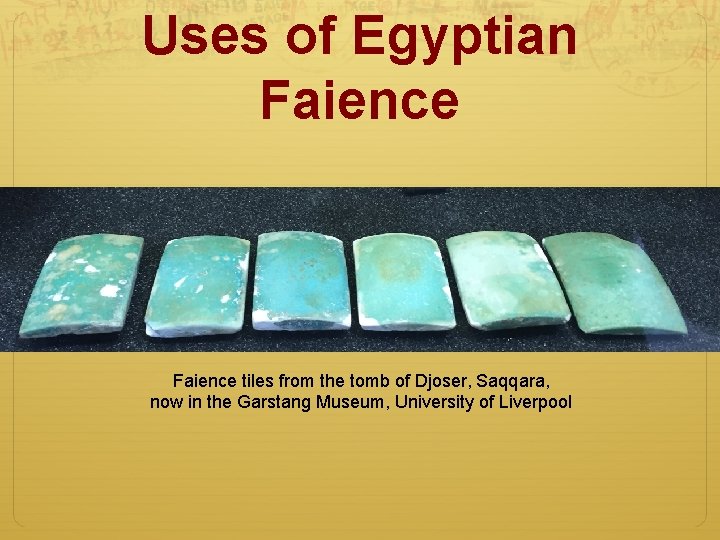
Uses of Egyptian Faience tiles from the tomb of Djoser, Saqqara, now in the Garstang Museum, University of Liverpool
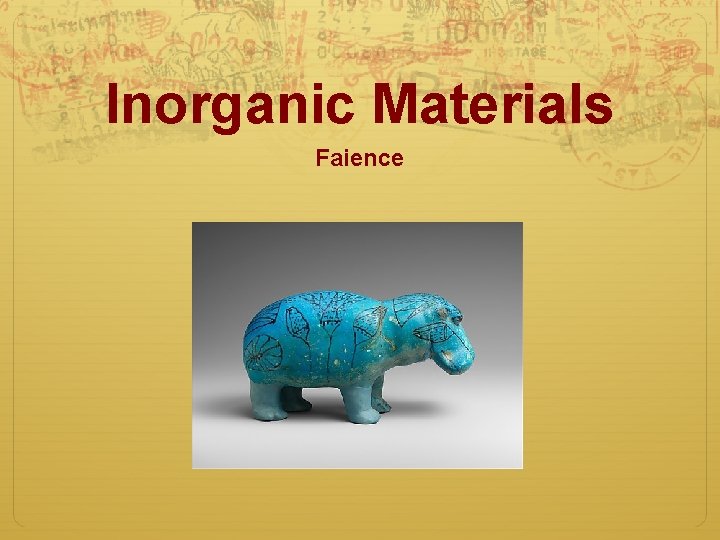
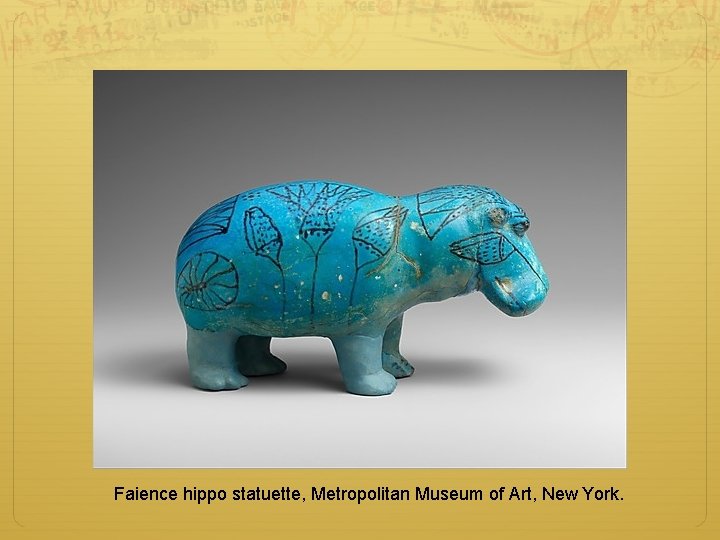
Faience hippo statuette, Metropolitan Museum of Art, New York.
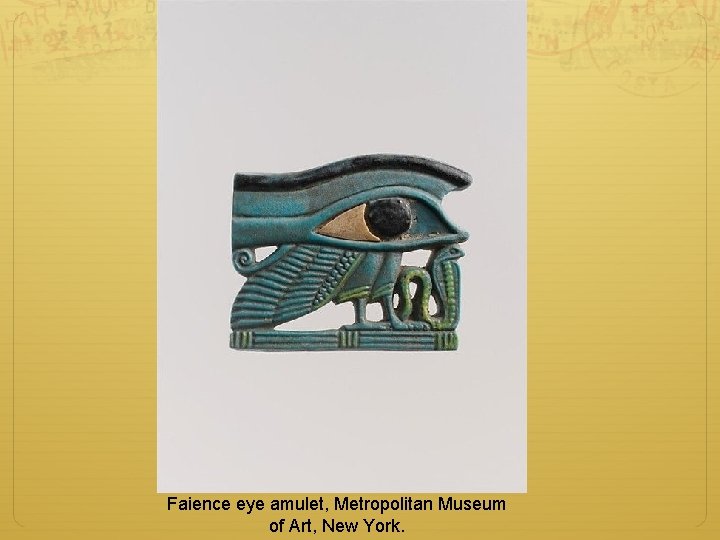
Faience eye amulet, Metropolitan Museum of Art, New York.
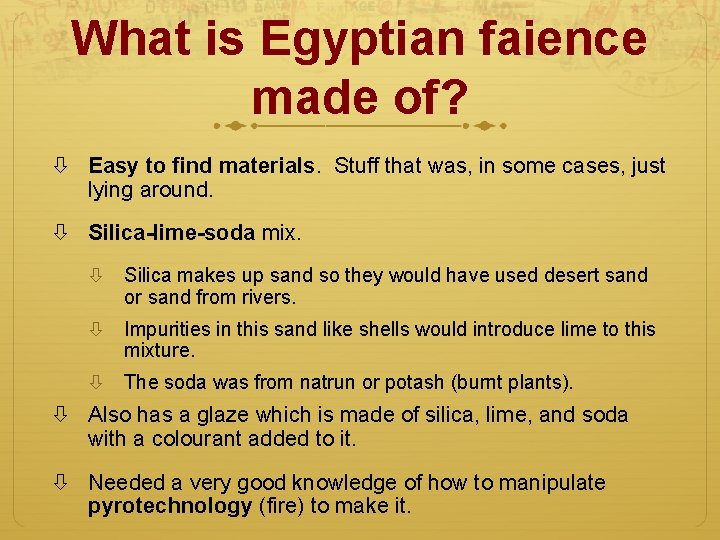
What is Egyptian faience made of? Easy to find materials. Stuff that was, in some cases, just lying around. Silica-lime-soda mix. Silica makes up sand so they would have used desert sand or sand from rivers. Impurities in this sand like shells would introduce lime to this mixture. The soda was from natrun or potash (burnt plants). Also has a glaze which is made of silica, lime, and soda with a colourant added to it. Needed a very good knowledge of how to manipulate pyrotechnology (fire) to make it.
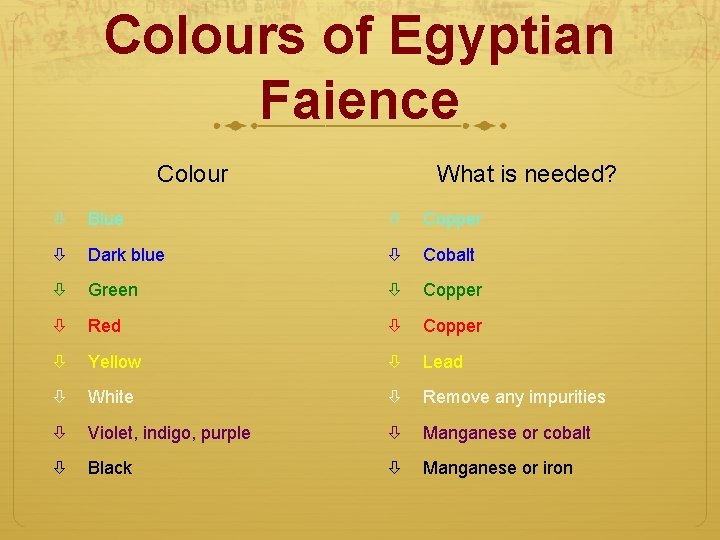
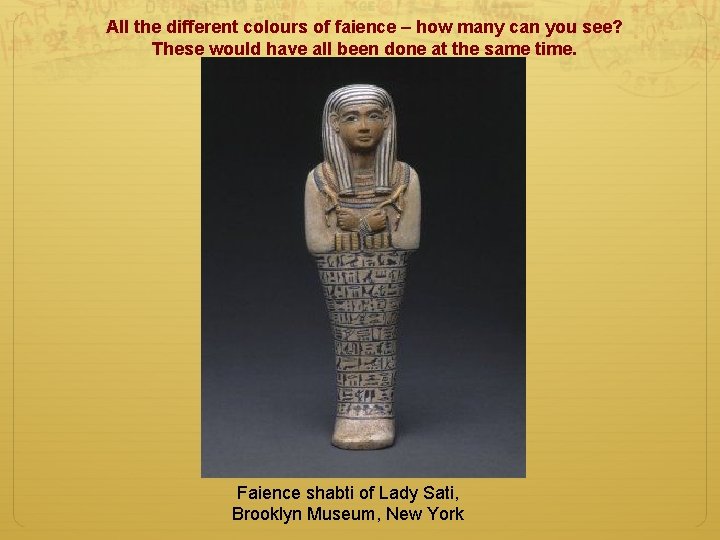
Colours of Egyptian Faience Colour What is needed? Blue Copper Dark blue Cobalt Green Copper Red Copper Yellow Lead White Remove any impurities Violet, indigo, purple Manganese or cobalt Black Manganese or iron
All the different colours of faience – how many can you see? These would have all been done at the same time. Faience shabti of Lady Sati, Brooklyn Museum, New York
Why these colours? To imitate semi-precious stones. In the ancient world having semi-precious stones showed your status as someone who was wealthy and able to afford luxuries. People liked to imitate this to give the appearance of being more wealthy than they were. Which semi-precious stones did they imitate? Blue faience was made to look like turquoise which can be found in the Sinai – makes it expensive to import into Egypt. Dark blue faience resembled lapis lazuli which can only be found in Afghanistan making it very rare and very valuable. Lapis lazuli was used on the funerary mask of Tutankhamun.
Production of Faience
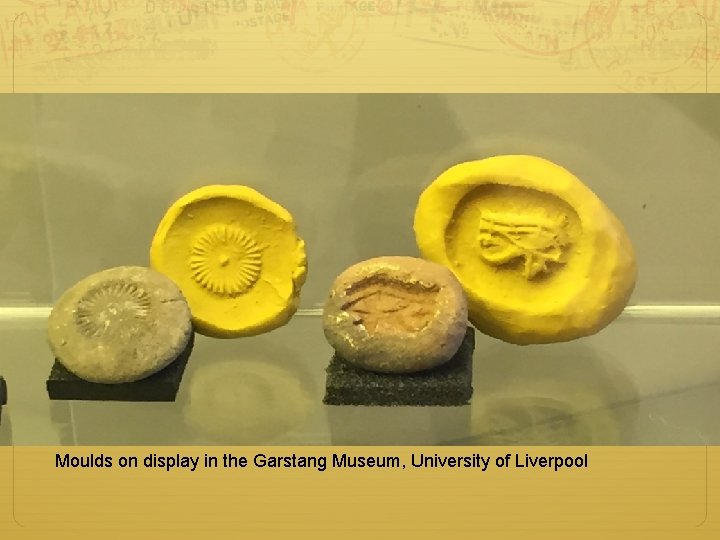
Shaping Faience Several methods for this. Model the core of the object by hand or pressed into a mould (see next slide for some real moulds that are 3000 years old). Can create a paste and then model it like a potter does clay or press it into a mould. There wasn’t a single method and these methods changed over time.
Moulds on display in the Garstang Museum, University of Liverpool
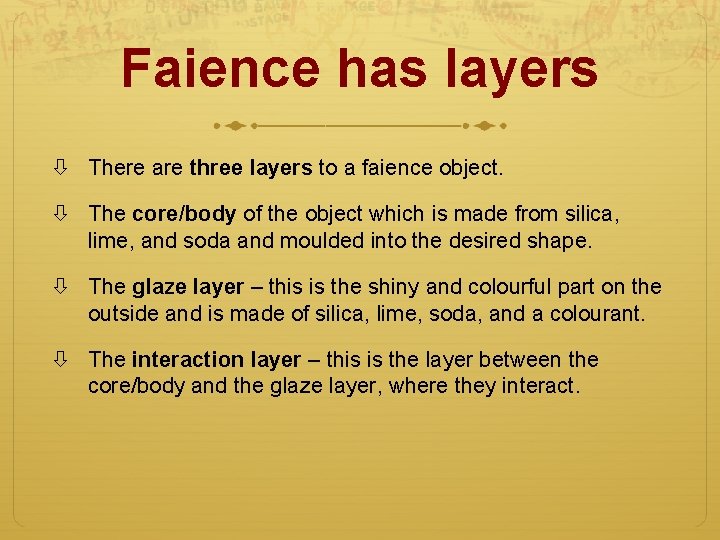
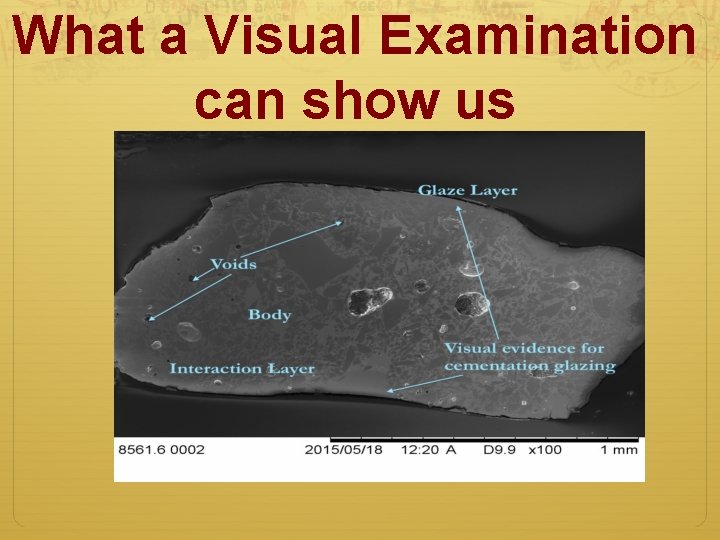
Faience has layers There are three layers to a faience object. The core/body of the object which is made from silica, lime, and soda and moulded into the desired shape. The glaze layer – this is the shiny and colourful part on the outside and is made of silica, lime, soda, and a colourant. The interaction layer – this is the layer between the core/body and the glaze layer, where they interact.
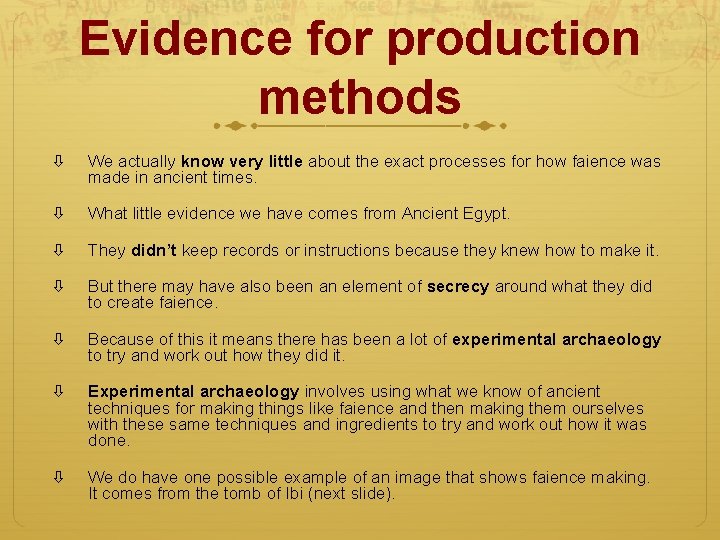
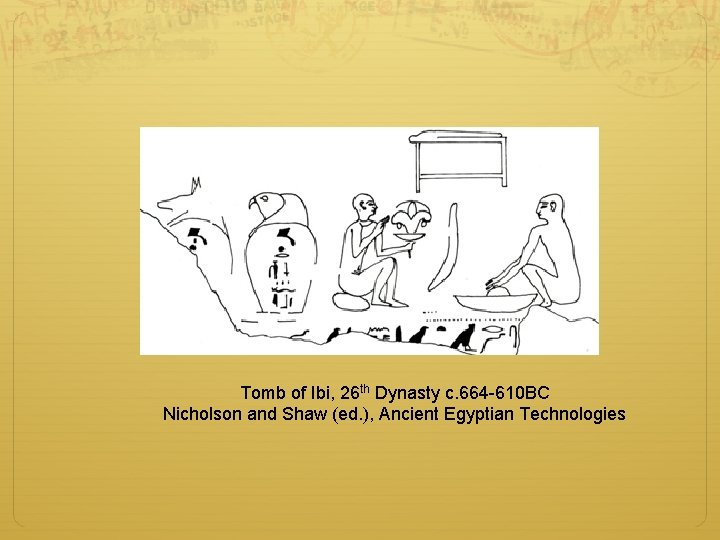
Evidence for production methods We actually know very little about the exact processes for how faience was made in ancient times. What little evidence we have comes from Ancient Egypt. They didn’t keep records or instructions because they knew how to make it. But there may have also been an element of secrecy around what they did to create faience. Because of this it means there has been a lot of experimental archaeology to try and work out how they did it. Experimental archaeology involves using what we know of ancient techniques for making things like faience and then making them ourselves with these same techniques and ingredients to try and work out how it was done. We do have one possible example of an image that shows faience making. It comes from the tomb of Ibi (next slide).
Tomb of Ibi, 26 th Dynasty c. 664 -610 BC Nicholson and Shaw (ed. ), Ancient Egyptian Technologies
Glazing
Application Simplest glazing method. Create a slurry (liquid) mixture of the glaze which is made up of silica, lime, soda, and the colourant (usually copper). Apply this slurry to the core, usually by dipping the object in the slurry mixture. Then the objects were fired in a kiln whose temperature had to be 800 -1000°C.
Efflorescence This is known as a self glazing method. Because unlike with application where you create a separate mixture to make the glaze, with efflorescence you mix the glazing materials in with the body material. As the object dries out the salts are drawn to the surface of the object. This leaves a powdery coating on the surface which when fired will give a glassy layer to the object’s surface.
Cementation/Qom This is also a self glazing method. It is sometimes called Qom technique after the holy city in Iran where this technique is still used and was first observed by western scholars in the 19 th century. Cementation glazing is a two-stage process. Have the core of the object which has been moulded into the desired shape but instead of creating a slurry, like in application method, you make a glazing powder. You then bury the object in this powder and heat it. When heated this powder adheres to the surface of the object to give you the glaze layer.
Choice Why use one method over another? Cementation method lets you make a lot of small objects very quickly, for example beads. Efflorescence method on the other hand is great for much larger objects like figures or bowls. But people of the past didn’t always use the method that looks to a modern eye to be the easier method. We need to work out why that might be.
Examining Faience
Identifying the different glazing methods There are two types of examination you can do on faience to identify the glazing methods. A visual examination. This involves using a scanning electron microscope (SEM) to look at the object in greater detail than a normal microscope would allow. A chemical examination. Here you analyse the object, again with a scanning electron microscope, to determine what is in it but also where the components of the faience (e. g. colourant) are located across the sample.
What a Visual Examination can show us
Application Use visual examination. Can sometimes tell if faience has been glazed by application just by looking at it with the naked eye. The things you could see that would tell you application method has been used. Runs and drips on surface. Pooling – shows it was stood up as it was fired letting the slurry run over the surface to pool at the bottom or in uneven parts of the object’s surface.
Efflorescence Can’t tell with the naked eye like application method. Have to look chemically with a scanning electron microscope. This would show the presence of the colourant consistently through the whole object across the body/core, interaction, and glaze layers.
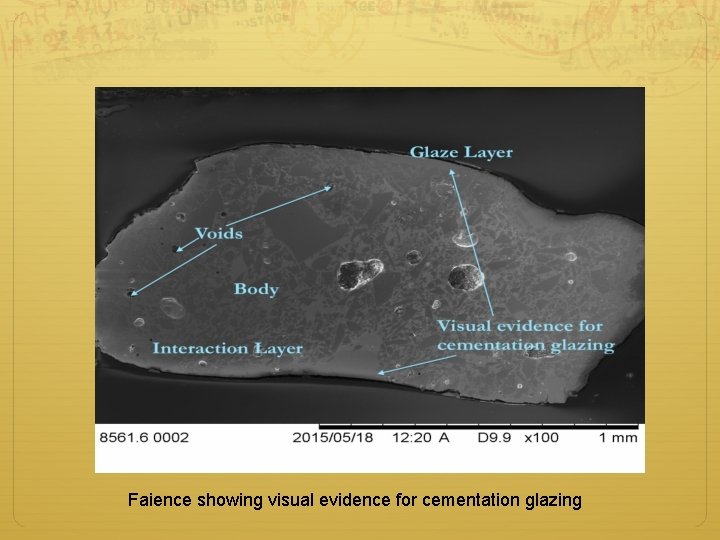
Cementation Can use both visual and chemical examinations for this one. Need to use the scanning electron microscope to get an image and see if you can identify a clear glaze layer (see next slide). And/or use a chemical examination with a scanning electron microscope. Concentration of the colourant is high in the glaze layer and then quickly reduces as you look at the interaction layer and the body/core.
Faience showing visual evidence for cementation glazing
Glazing method is one choice. Another is the colour of the finished object.
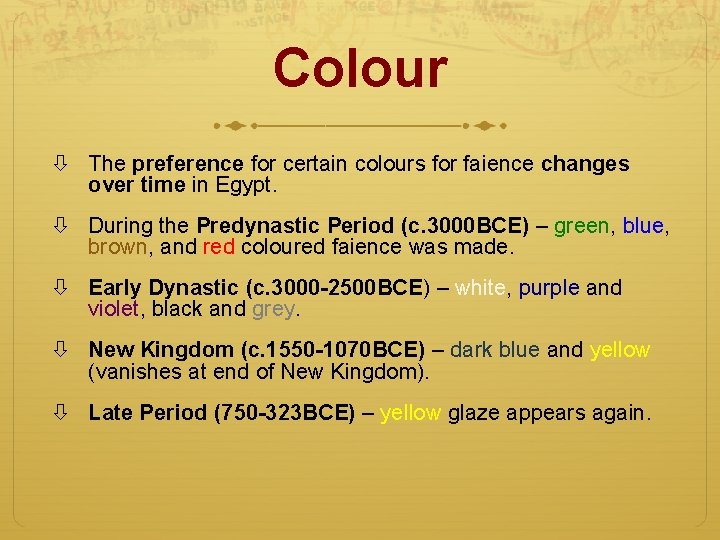
Colour The preference for certain colours for faience changes over time in Egypt. During the Predynastic Period (c. 3000 BCE) – green, blue, brown, and red coloured faience was made. Early Dynastic (c. 3000 -2500 BCE) – white, purple and violet, black and grey. New Kingdom (c. 1550 -1070 BCE) – dark blue and yellow (vanishes at end of New Kingdom). Late Period (750 -323 BCE) – yellow glaze appears again.
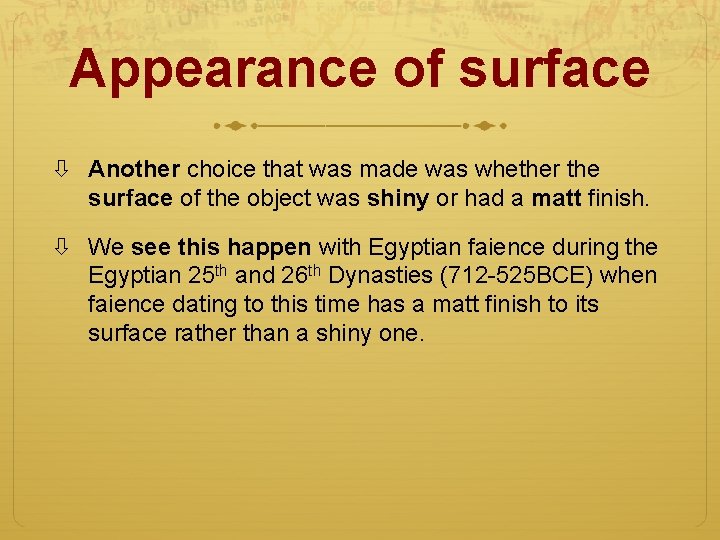
Appearance of surface Another choice that was made was whether the surface of the object was shiny or had a matt finish. We see this happen with Egyptian faience during the Egyptian 25 th and 26 th Dynasties (712 -525 BCE) when faience dating to this time has a matt finish to its surface rather than a shiny one.
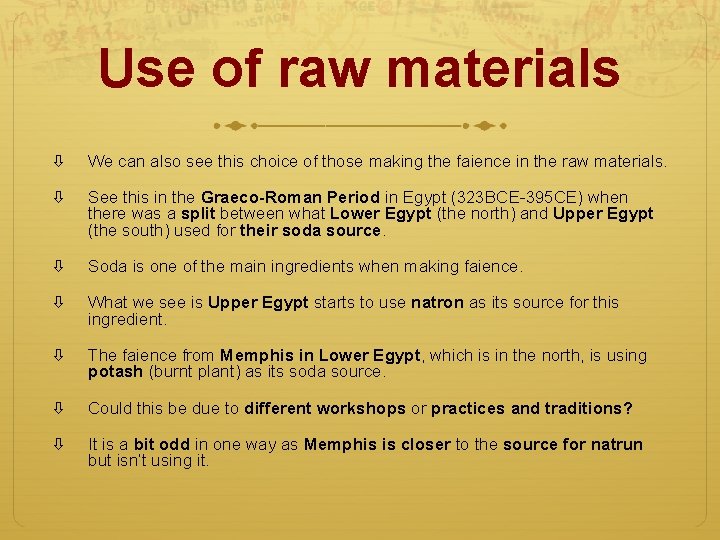
Use of raw materials We can also see this choice of those making the faience in the raw materials. See this in the Graeco-Roman Period in Egypt (323 BCE-395 CE) when there was a split between what Lower Egypt (the north) and Upper Egypt (the south) used for their soda source. Soda is one of the main ingredients when making faience. What we see is Upper Egypt starts to use natron as its source for this ingredient. The faience from Memphis in Lower Egypt, which is in the north, is using potash (burnt plant) as its soda source. Could this be due to different workshops or practices and traditions? It is a bit odd in one way as Memphis is closer to the source for natrun but isn’t using it.
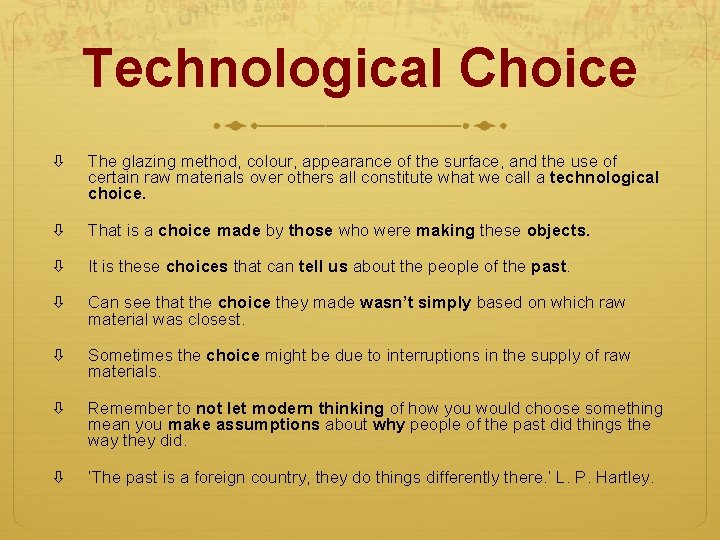
Technological Choice The glazing method, colour, appearance of the surface, and the use of certain raw materials over others all constitute what we call a technological choice. That is a choice made by those who were making these objects. It is these choices that can tell us about the people of the past. Can see that the choice they made wasn’t simply based on which raw material was closest. Sometimes the choice might be due to interruptions in the supply of raw materials. Remember to not let modern thinking of how you would choose something mean you make assumptions about why people of the past did things the way they did. ‘The past is a foreign country, they do things differently there. ’ L. P. Hartley.
Worksheet! Use what you’ve just seen to answer these eleven questions about faience
Worksheet Answers!
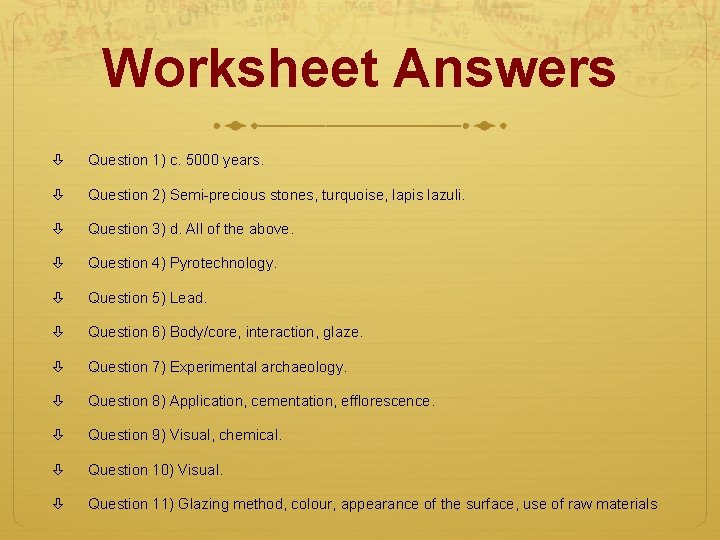
Worksheet Answers Question 1) c. 5000 years. Question 2) Semi-precious stones, turquoise, lapis lazuli. Question 3) d. All of the above. Question 4) Pyrotechnology. Question 5) Lead. Question 6) Body/core, interaction, glaze. Question 7) Experimental archaeology. Question 8) Application, cementation, efflorescence. Question 9) Visual, chemical. Question 10) Visual. Question 11) Glazing method, colour, appearance of the surface, use of raw materials