
Innovative ways to improve access to finance Digital
- Slides: 32
Innovative ways to improve access to finance Digital Finance Nitin MADAN Economic Affairs Consultant United Nations ESCAP
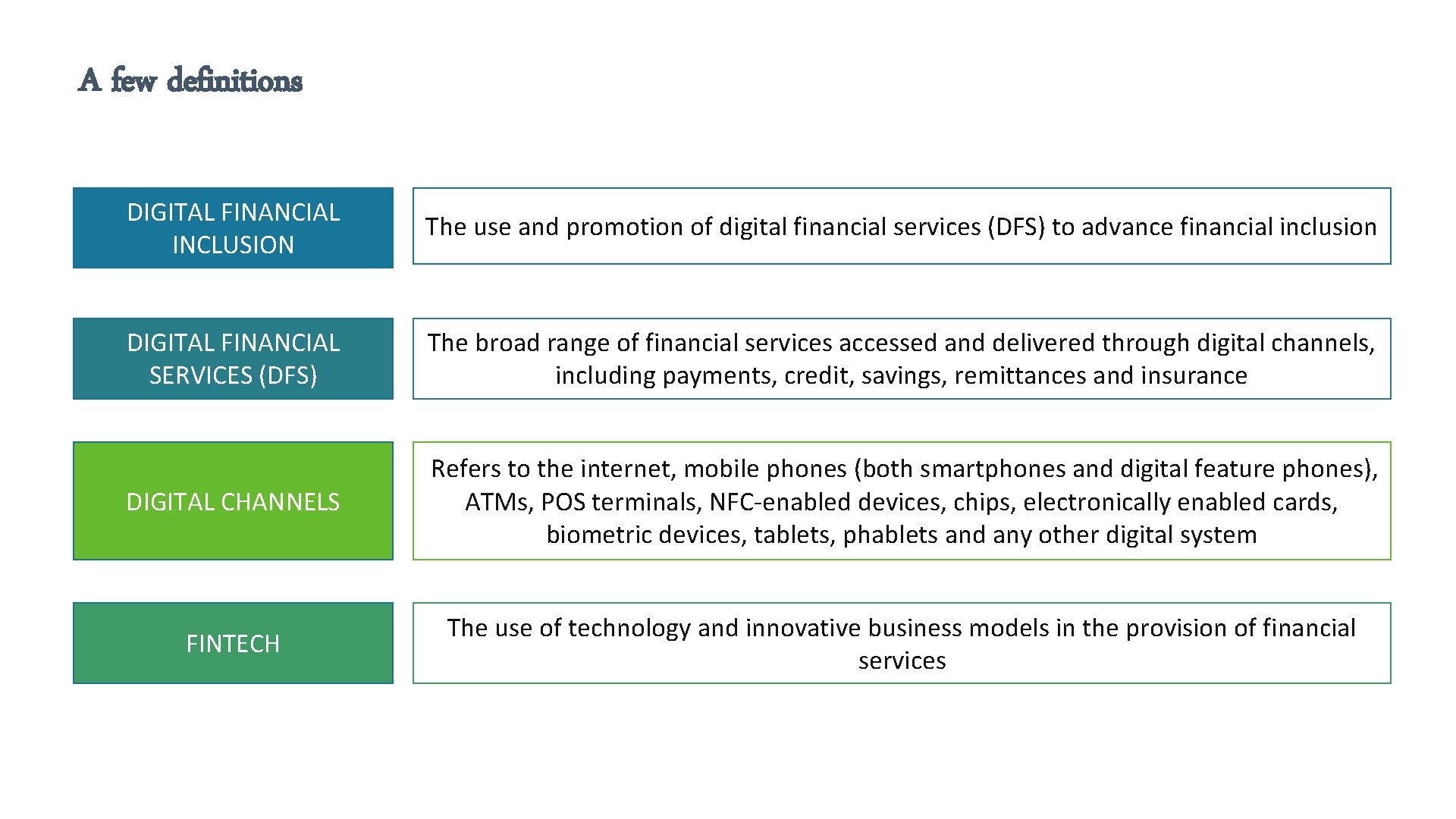
A few definitions DIGITAL FINANCIAL INCLUSION The use and promotion of digital financial services (DFS) to advance financial inclusion DIGITAL FINANCIAL SERVICES (DFS) The broad range of financial services accessed and delivered through digital channels, including payments, credit, savings, remittances and insurance DIGITAL CHANNELS Refers to the internet, mobile phones (both smartphones and digital feature phones), ATMs, POS terminals, NFC-enabled devices, chips, electronically enabled cards, biometric devices, tablets, phablets and any other digital system FINTECH The use of technology and innovative business models in the provision of financial services
Digital financial inclusion Driven by Payment Services
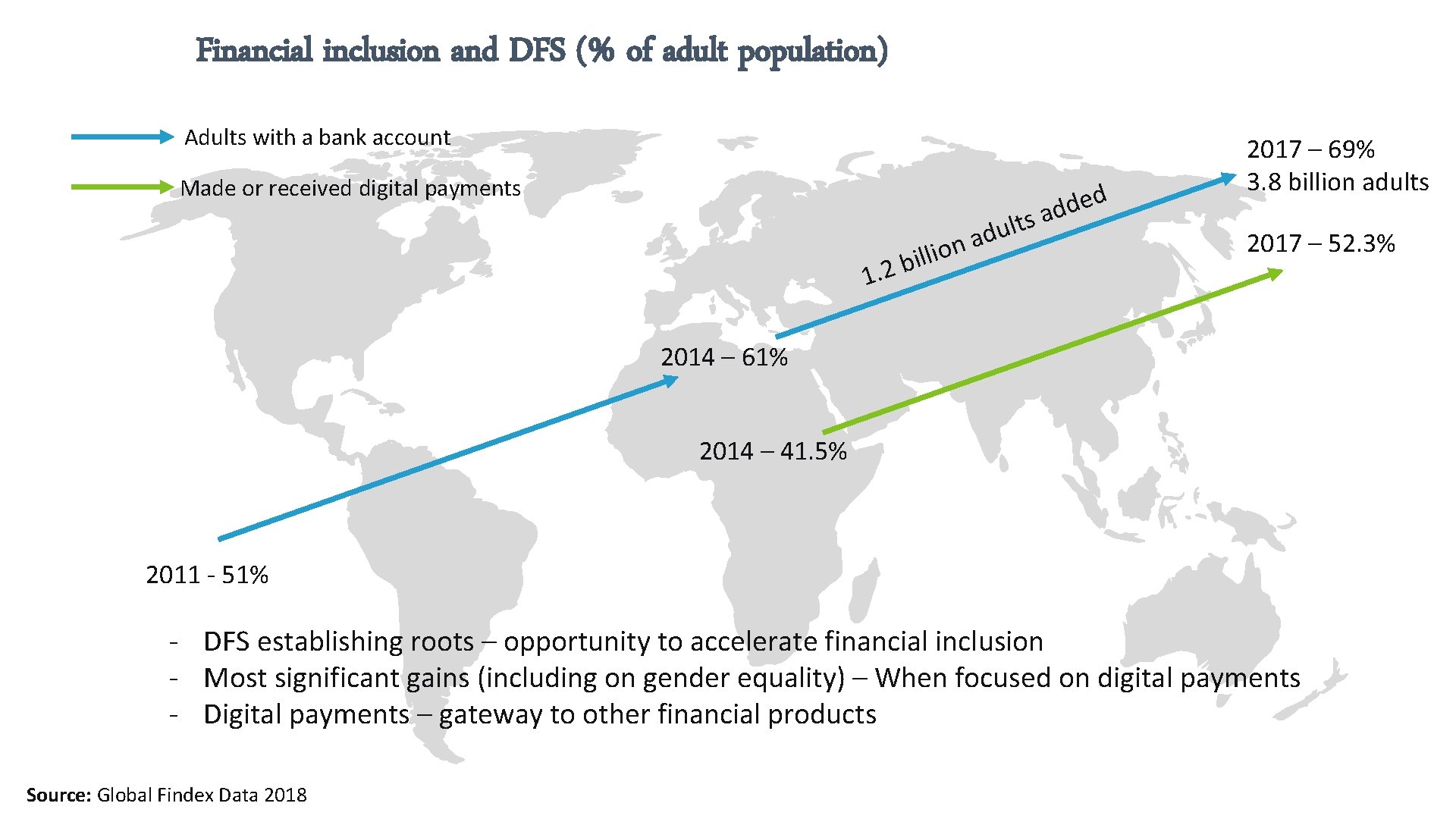
Financial inclusion and DFS (% of adult population) Adults with a bank account Made or received digital payments 1. 2 n o i l bil s t l u ad d e d ad 2017 – 69% 3. 8 billion adults 2017 – 52. 3% 2014 – 61% 2014 – 41. 5% 2011 - 51% - DFS establishing roots – opportunity to accelerate financial inclusion - Most significant gains (including on gender equality) – When focused on digital payments - Digital payments – gateway to other financial products Source: Global Findex Data 2018
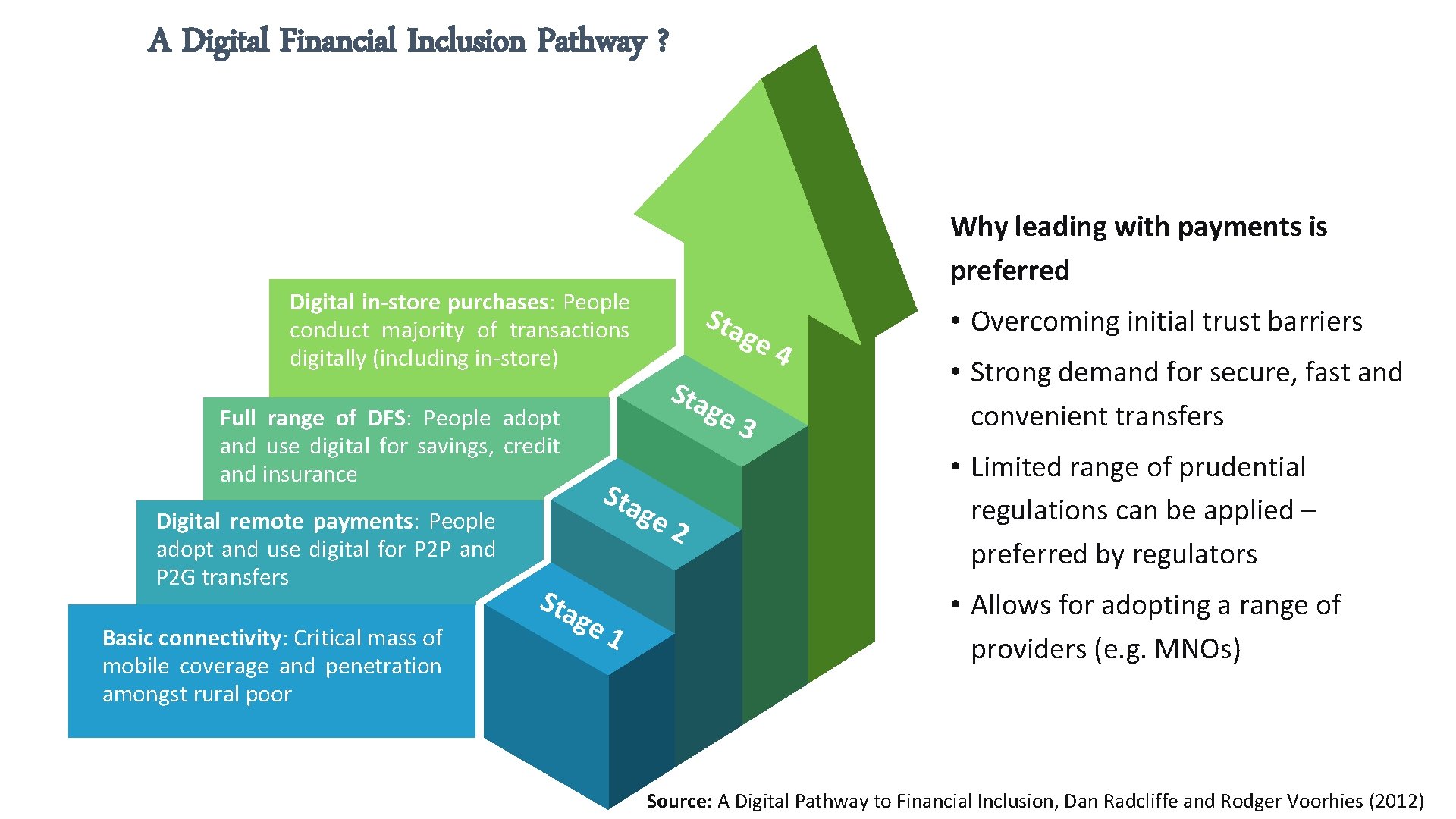
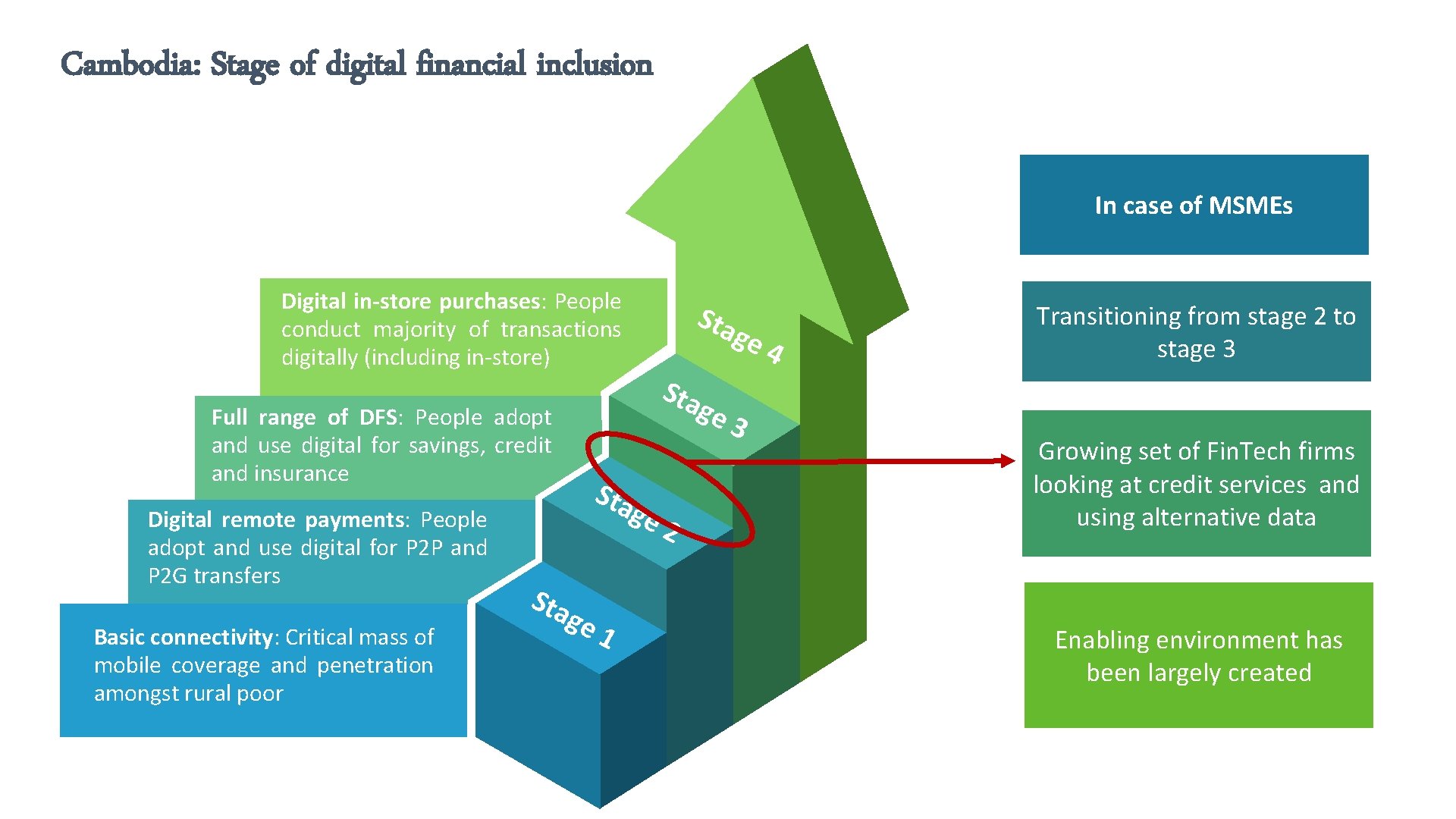
A Digital Financial Inclusion Pathway ? Why leading with payments is preferred Digital in-store purchases: People conduct majority of transactions digitally (including in-store) Basic connectivity: Critical mass of mobile coverage and penetration amongst rural poor Sta ge ge 3 Full range of DFS: People adopt and use digital for savings, credit and insurance Digital remote payments: People adopt and use digital for P 2 P and P 2 G transfers Sta ge 1 2 4 • Overcoming initial trust barriers • Strong demand for secure, fast and convenient transfers • Limited range of prudential regulations can be applied – preferred by regulators • Allows for adopting a range of providers (e. g. MNOs) Source: A Digital Pathway to Financial Inclusion, Dan Radcliffe and Rodger Voorhies (2012)
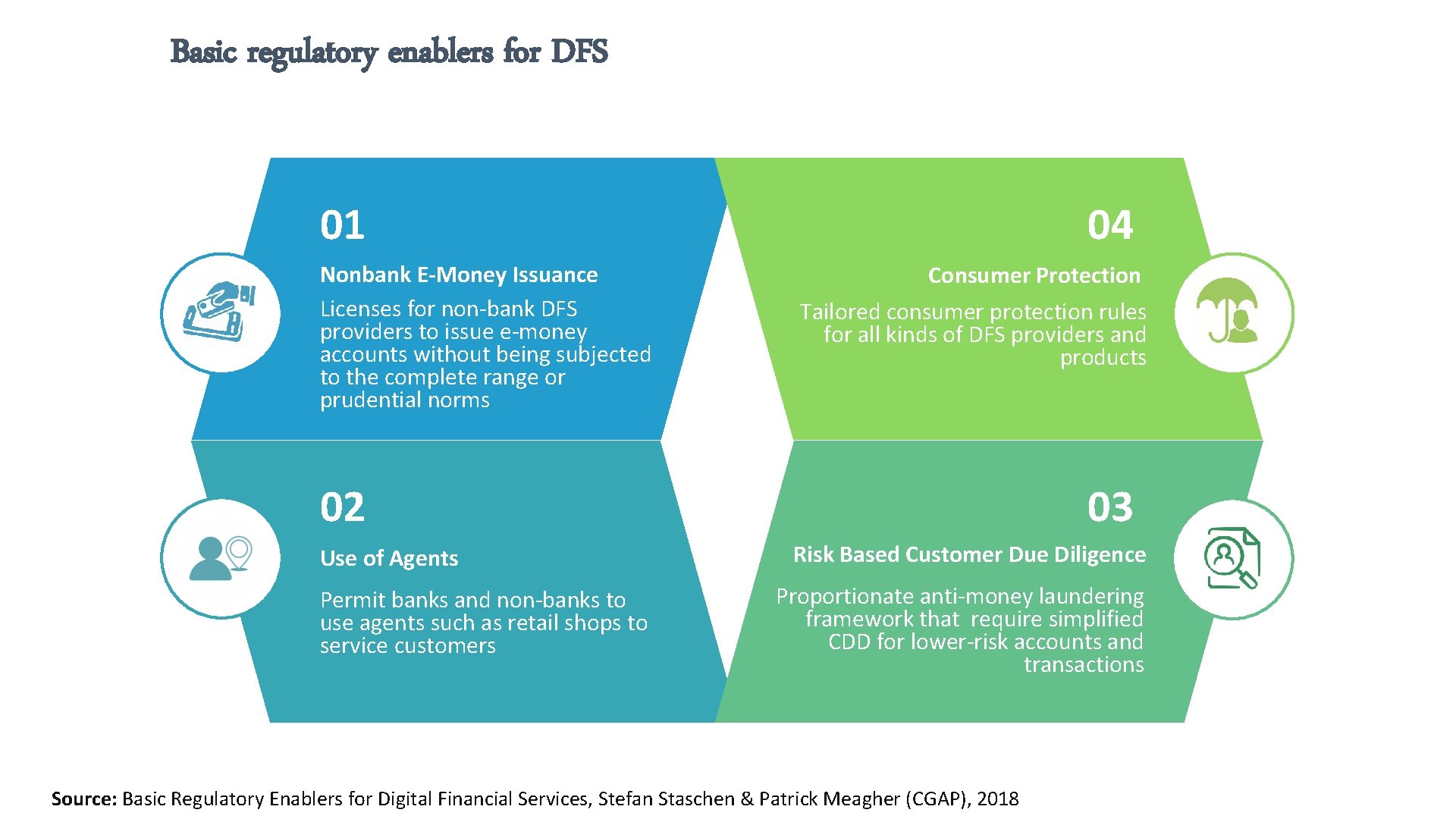
Basic regulatory enablers for DFS 01 Nonbank E-Money Issuance Licenses for non-bank DFS providers to issue e-money accounts without being subjected to the complete range or prudential norms 04 Consumer Protection Tailored consumer protection rules for all kinds of DFS providers and products 02 Use of Agents Permit banks and non-banks to use agents such as retail shops to service customers 03 Risk Based Customer Due Diligence Proportionate anti-money laundering framework that require simplified CDD for lower-risk accounts and transactions Source: Basic Regulatory Enablers for Digital Financial Services, Stefan Staschen & Patrick Meagher (CGAP), 2018
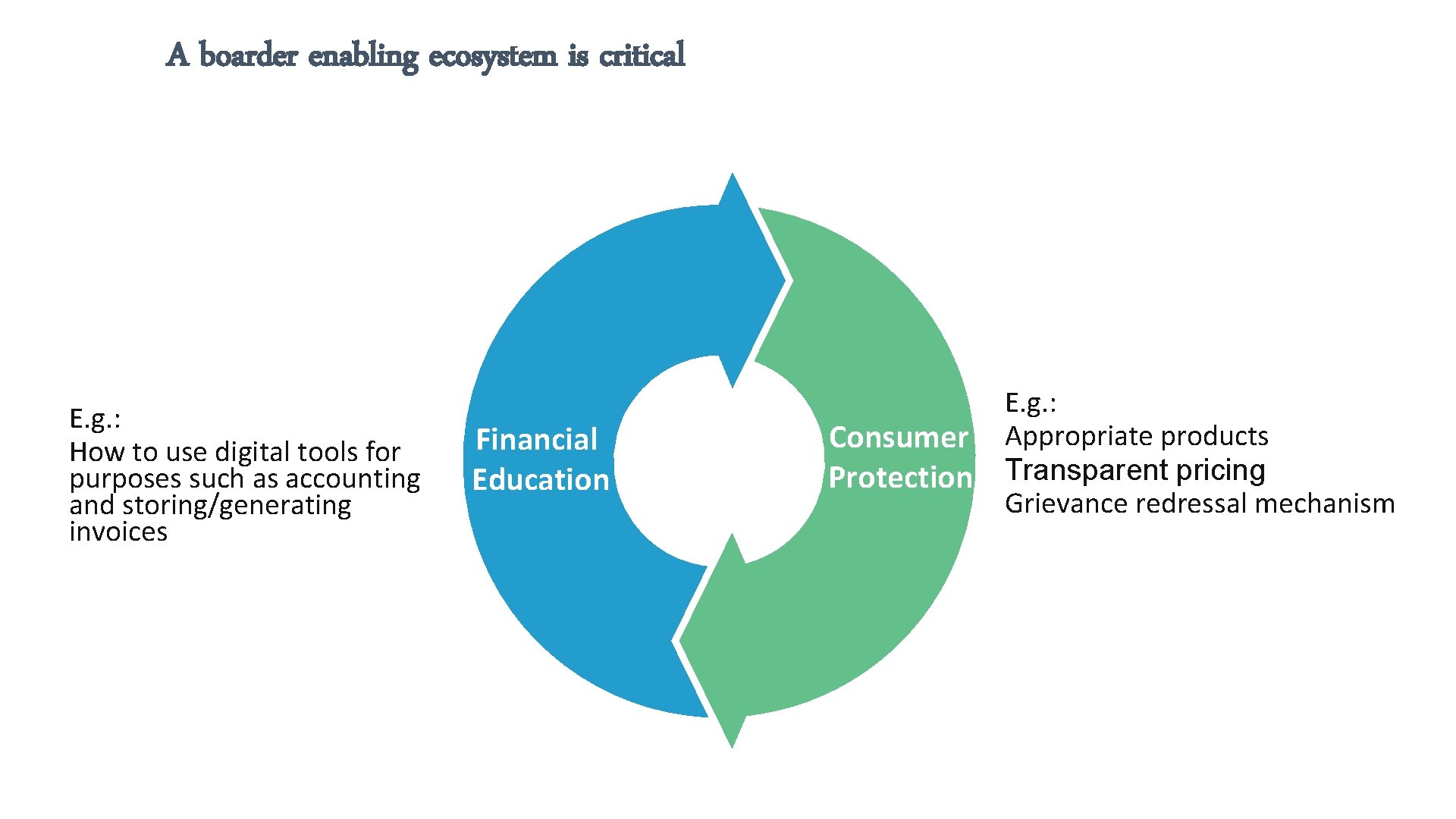
A boarder enabling ecosystem is critical E. g. : How to use digital tools for purposes such as accounting and storing/generating invoices Financial Education Consumer Protection E. g. : Appropriate products Transparent pricing Grievance redressal mechanism
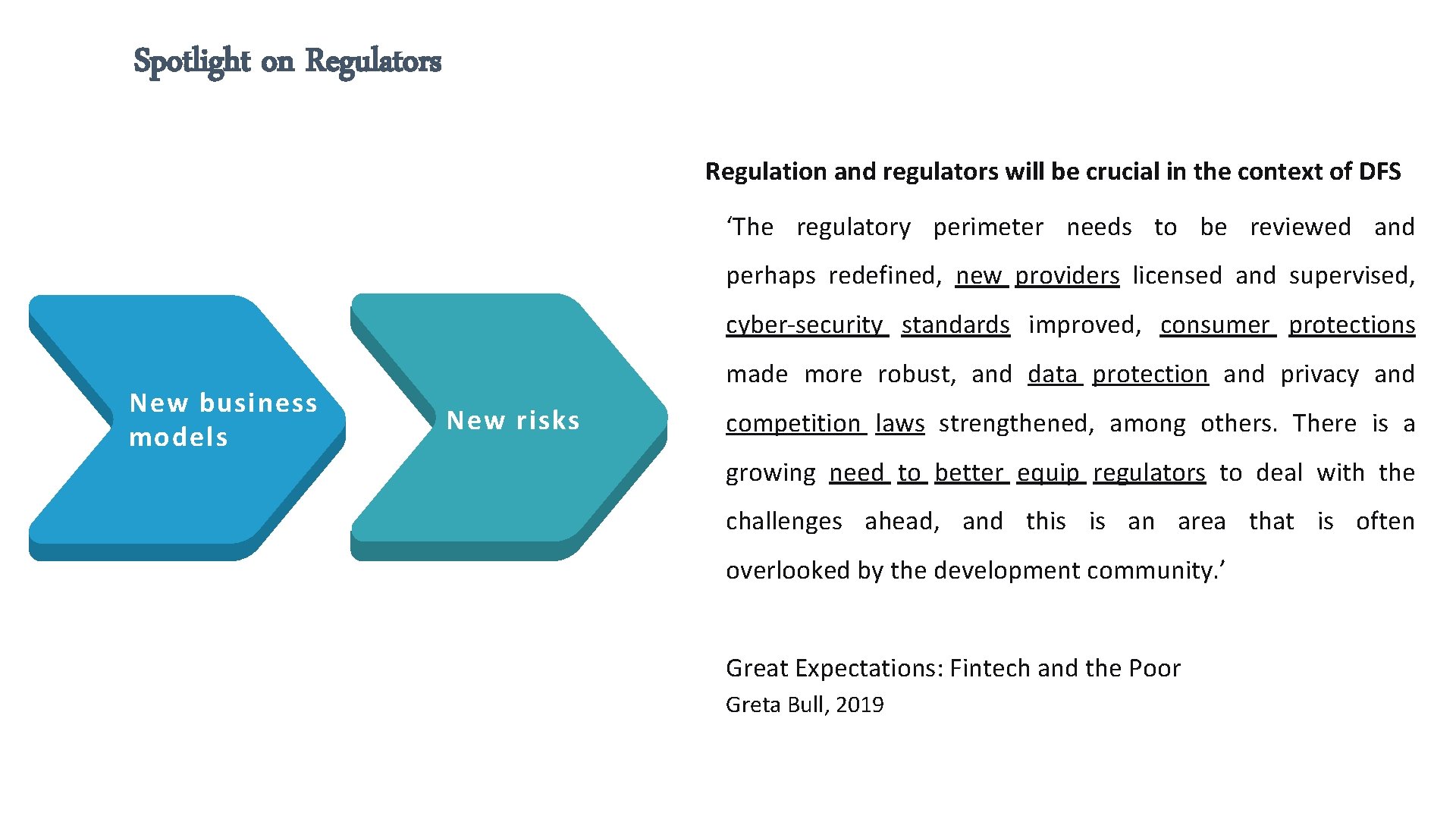
Spotlight on Regulators Regulation and regulators will be crucial in the context of DFS ‘The regulatory perimeter needs to be reviewed and perhaps redefined, new providers licensed and supervised, cyber-security standards improved, consumer protections New business models made more robust, and data protection and privacy and New risks competition laws strengthened, among others. There is a growing need to better equip regulators to deal with the challenges ahead, and this is an area that is often overlooked by the development community. ’ Great Expectations: Fintech and the Poor Greta Bull, 2019
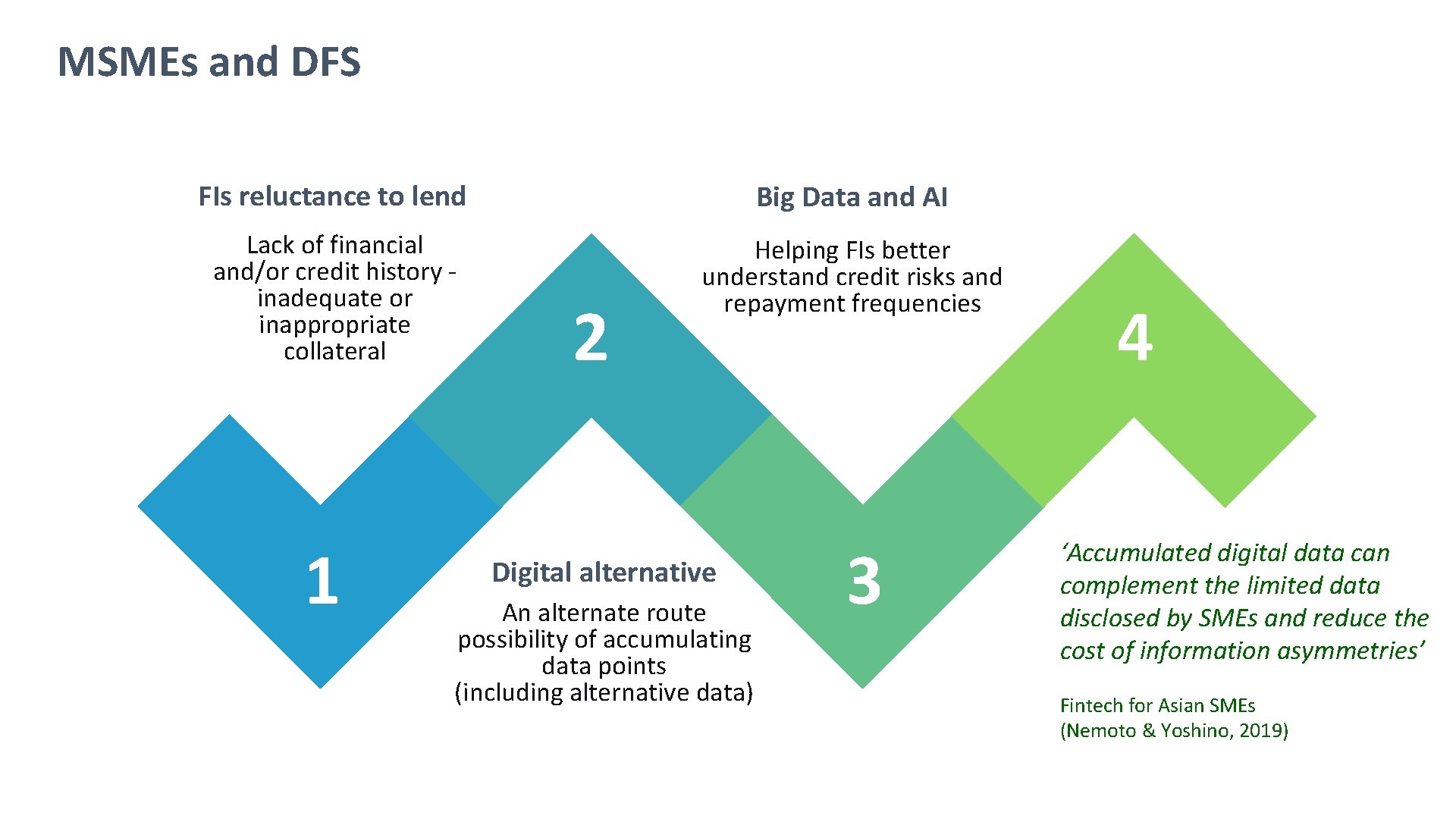
MSMEs and DFS FIs reluctance to lend Big Data and AI Lack of financial and/or credit history inadequate or inappropriate collateral Helping FIs better understand credit risks and repayment frequencies 1 2 Digital alternative An alternate route possibility of accumulating data points (including alternative data) 3 4 ‘Accumulated digital data can complement the limited data disclosed by SMEs and reduce the cost of information asymmetries’ Fintech for Asian SMEs (Nemoto & Yoshino, 2019)
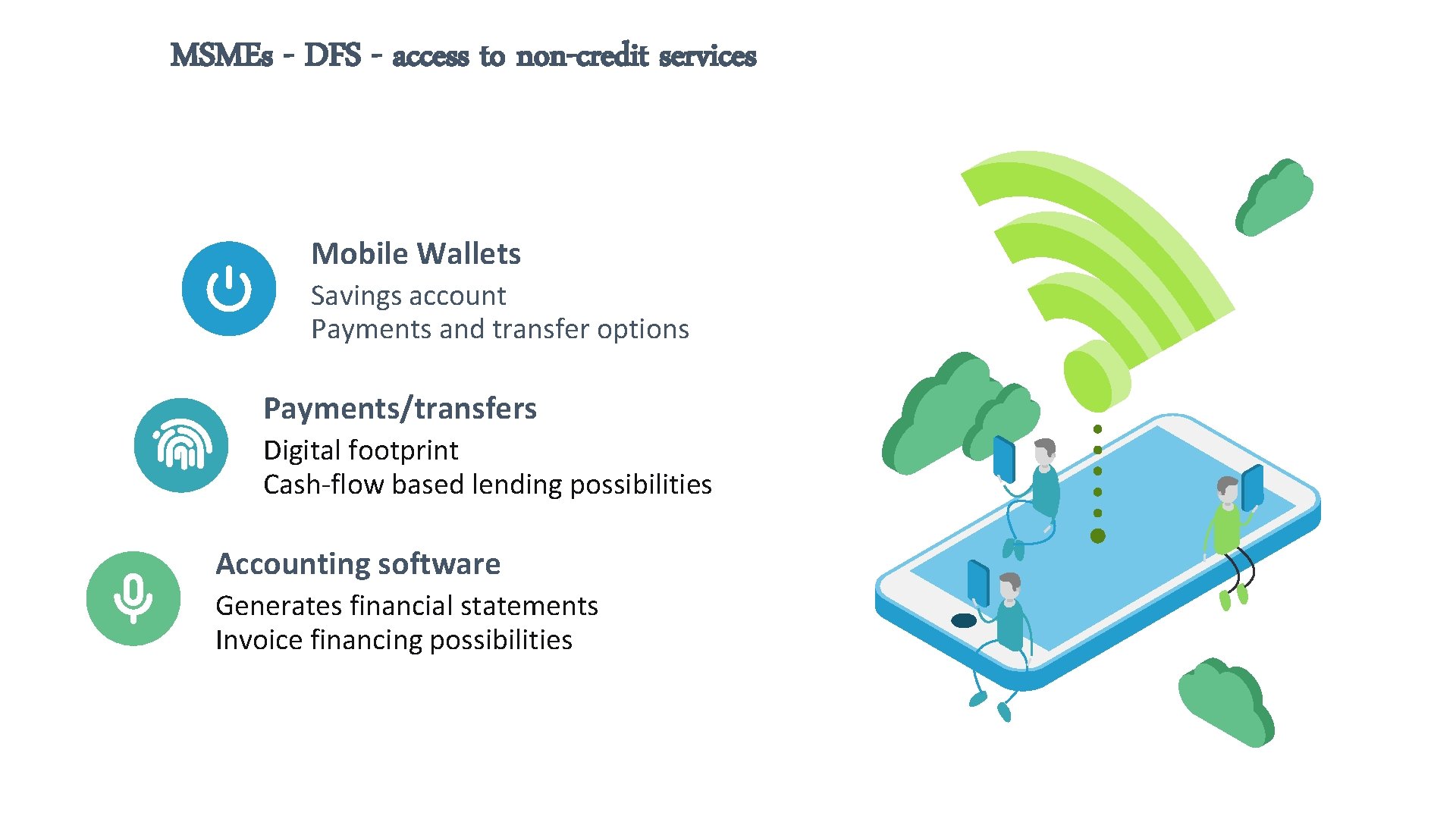
MSMEs - DFS - access to non-credit services Mobile Wallets Savings account Payments and transfer options Payments/transfers Digital footprint Cash-flow based lending possibilities Accounting software Generates financial statements Invoice financing possibilities
Cambodia’s financial inclusion landscape
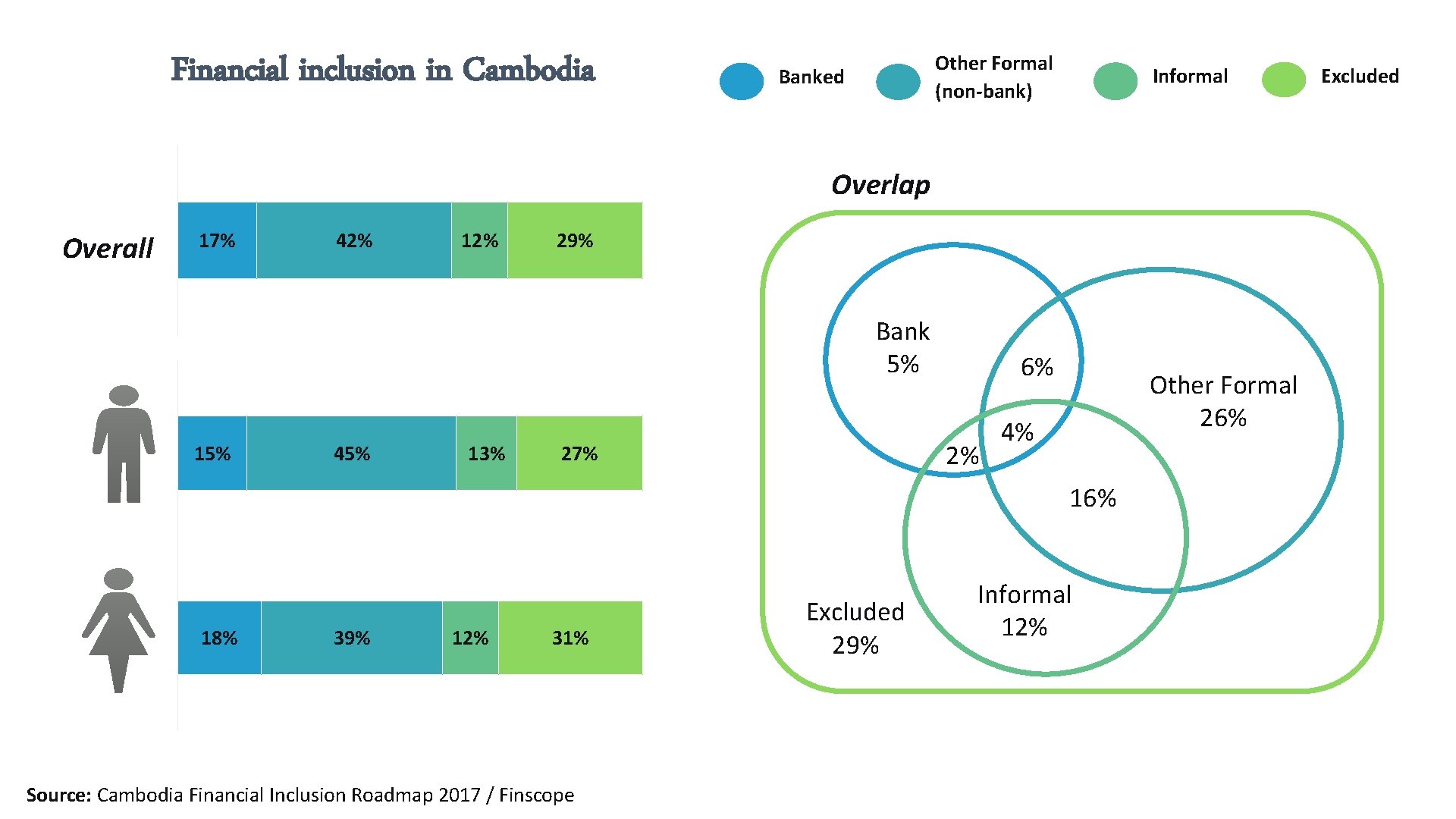
Financial inclusion in Cambodia Other Formal (non-bank) Banked Informal Overlap Overall 17% 42% 12% 29% Bank 5% 15% 45% 13% 6% 2% 27% Other Formal 26% 4% 16% 18% 39% 12% 31% Source: Cambodia Financial Inclusion Roadmap 2017 / Finscope Excluded 29% Informal 12% Excluded
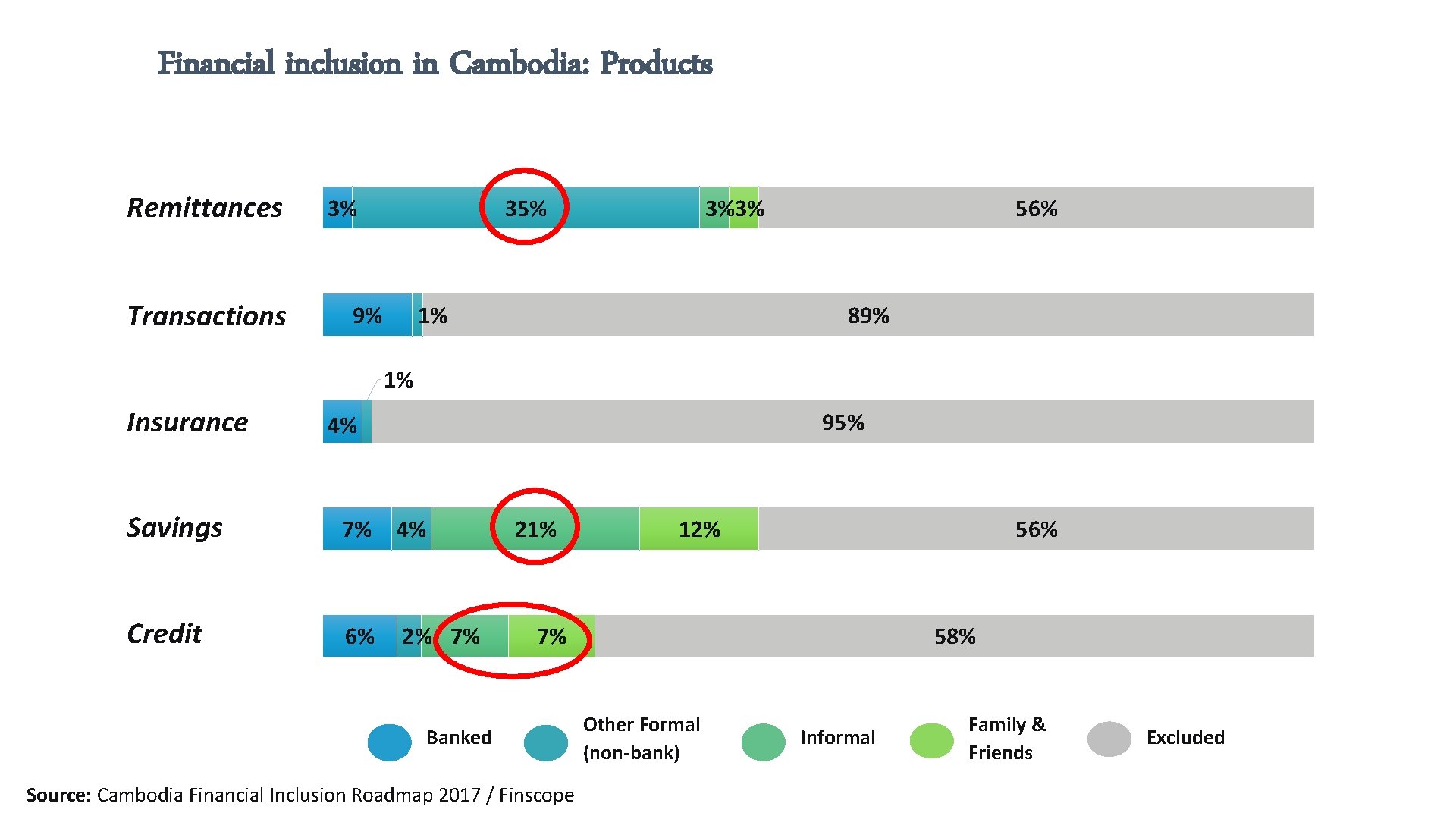
Financial inclusion in Cambodia: Products Remittances Transactions 3% 35% 9% 3%3% 1% 56% 89% 1% Insurance 95% 4% Savings 7% 4% Credit 6% 2% 7% 21% 12% 56% 7% Banked Source: Cambodia Financial Inclusion Roadmap 2017 / Finscope 58% Other Formal (non-bank) Informal Family & Friends Excluded
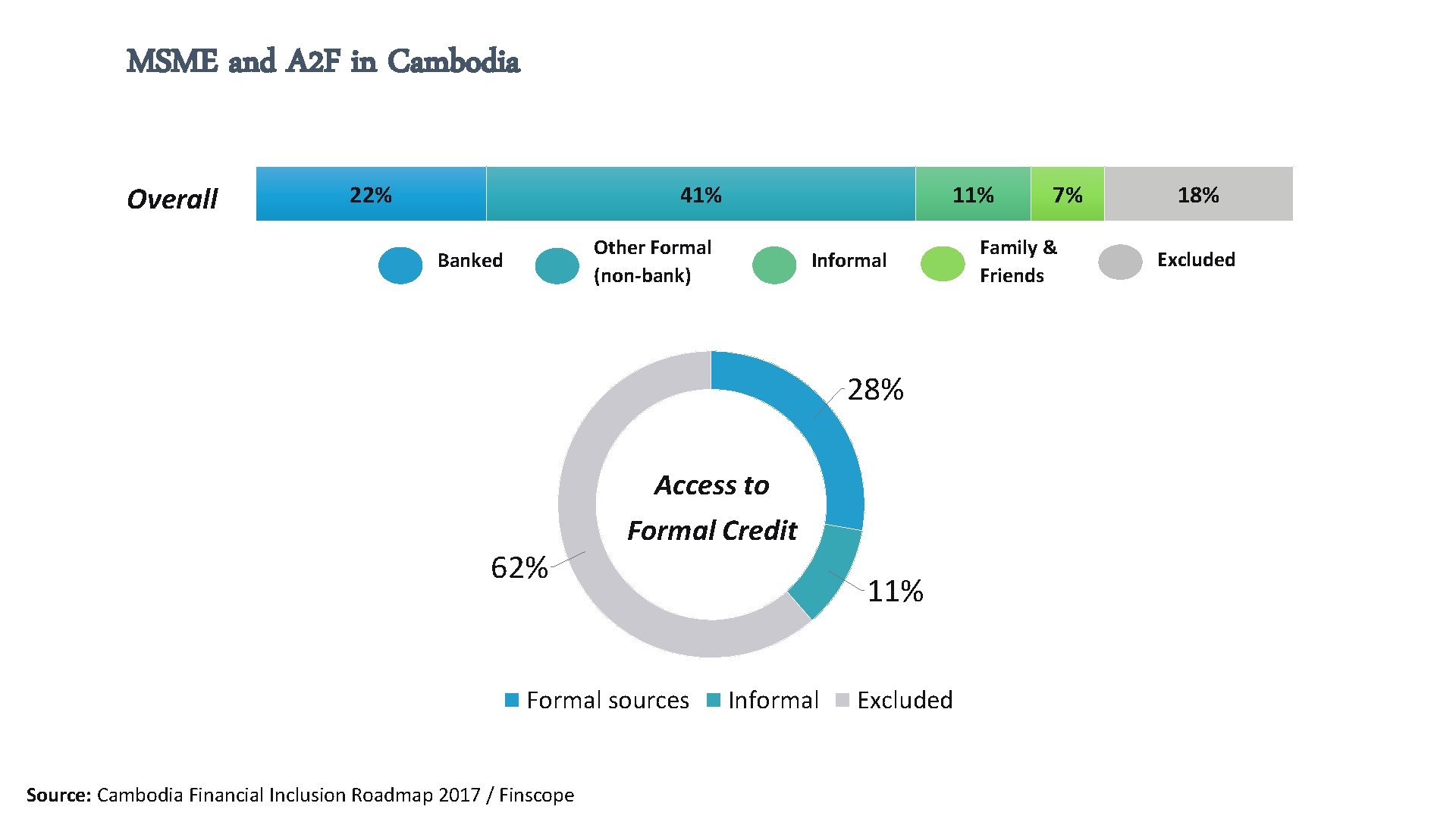
MSME and A 2 F in Cambodia Overall 22% 41% 11% Other Formal (non-bank) Banked Informal 28% 62% Access to Formal Credit Formal sources Source: Cambodia Financial Inclusion Roadmap 2017 / Finscope 11% Informal Excluded 7% Family & Friends 18% Excluded
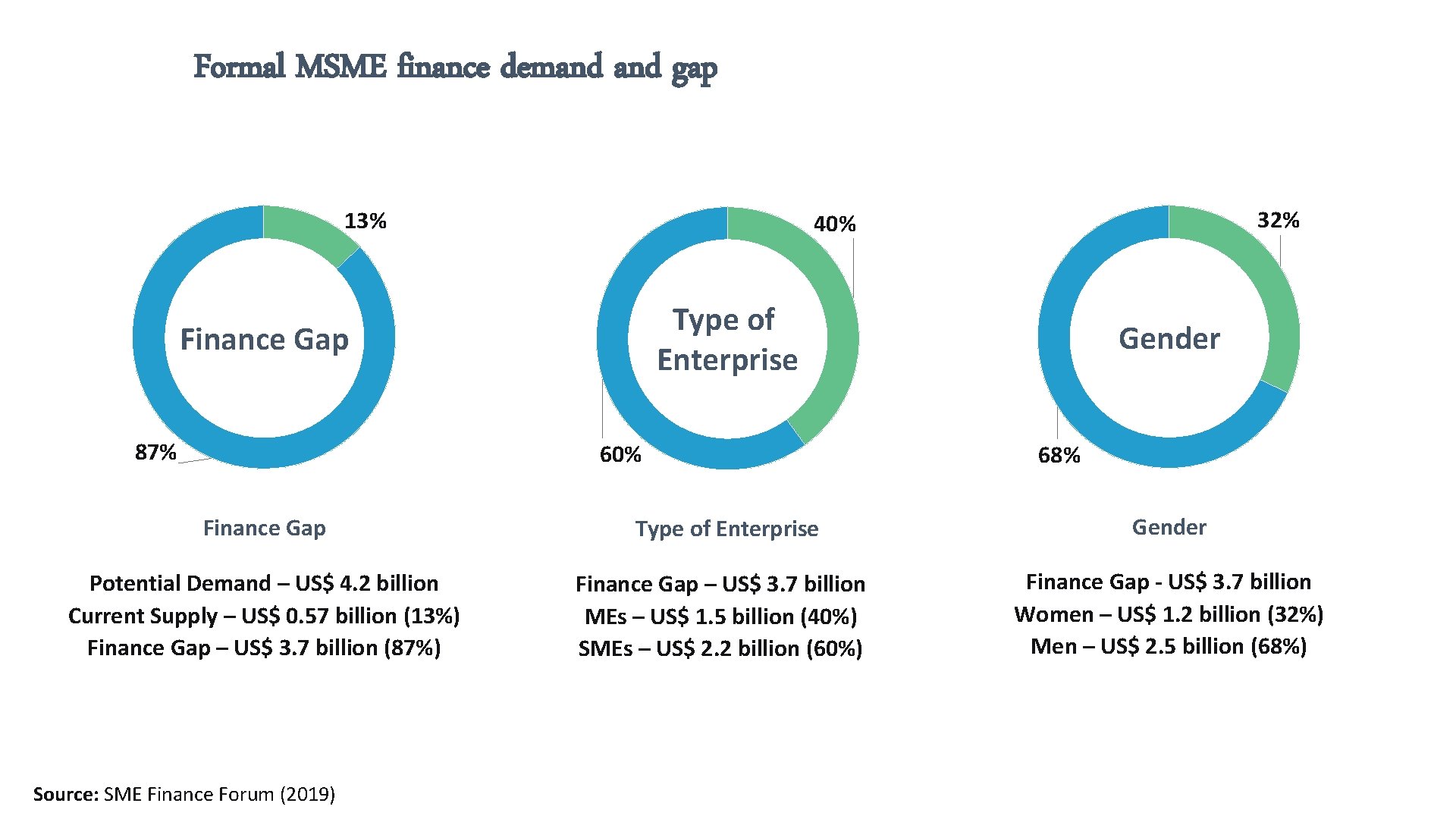
Formal MSME finance demand gap 13% Type of Enterprise Finance Gap 87% 32% 40% 60% Gender 68% Finance Gap Type of Enterprise Gender Potential Demand – US$ 4. 2 billion Current Supply – US$ 0. 57 billion (13%) Finance Gap – US$ 3. 7 billion (87%) Finance Gap – US$ 3. 7 billion MEs – US$ 1. 5 billion (40%) SMEs – US$ 2. 2 billion (60%) Finance Gap - US$ 3. 7 billion Women – US$ 1. 2 billion (32%) Men – US$ 2. 5 billion (68%) Source: SME Finance Forum (2019)
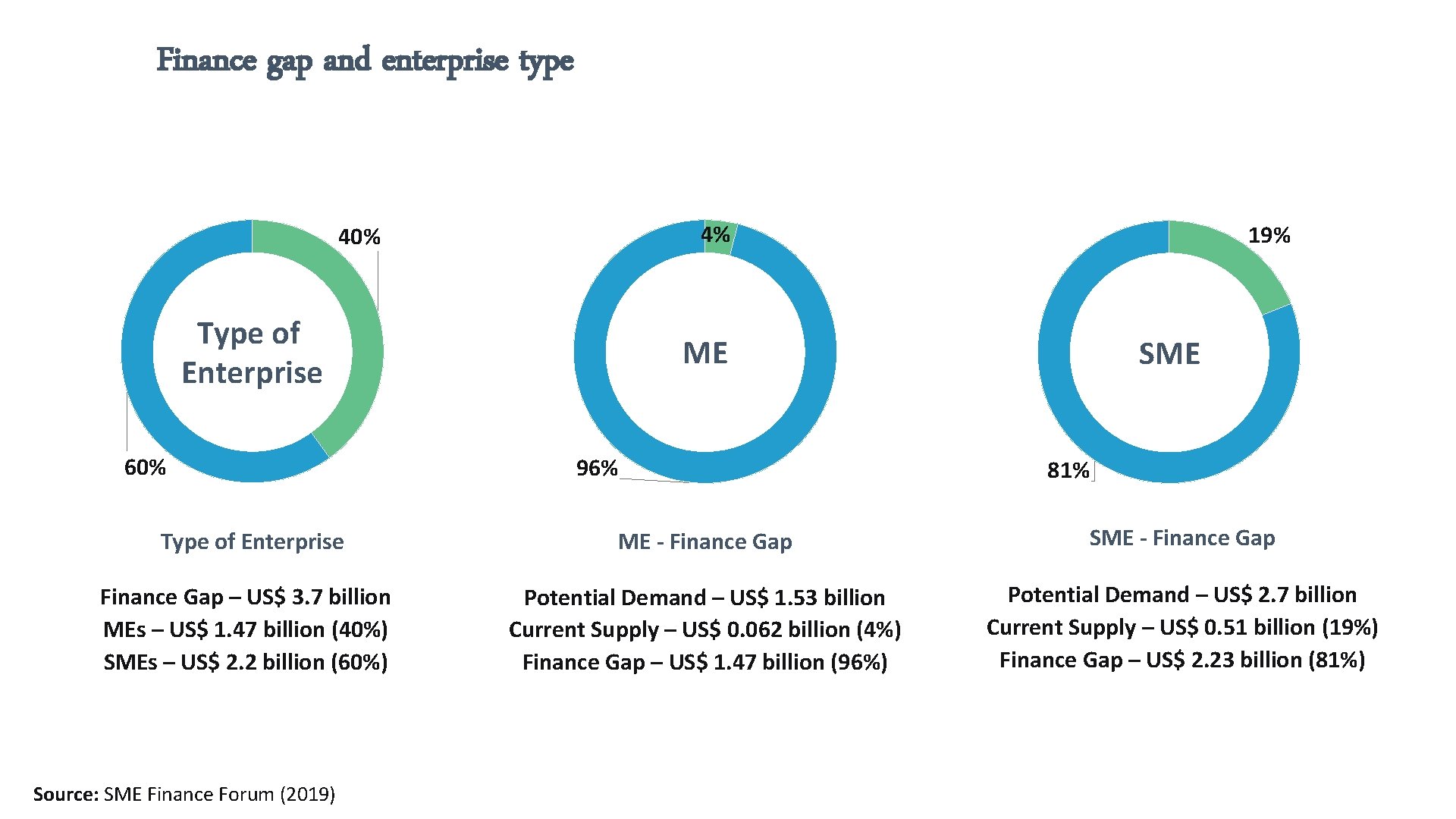
Finance gap and enterprise type 4% 40% Type of Enterprise 60% 19% ME 96% SME 81% Type of Enterprise ME - Finance Gap SME - Finance Gap – US$ 3. 7 billion MEs – US$ 1. 47 billion (40%) SMEs – US$ 2. 2 billion (60%) Potential Demand – US$ 1. 53 billion Current Supply – US$ 0. 062 billion (4%) Finance Gap – US$ 1. 47 billion (96%) Potential Demand – US$ 2. 7 billion Current Supply – US$ 0. 51 billion (19%) Finance Gap – US$ 2. 23 billion (81%) Source: SME Finance Forum (2019)
Exploring demand, supply and reasons for constraints
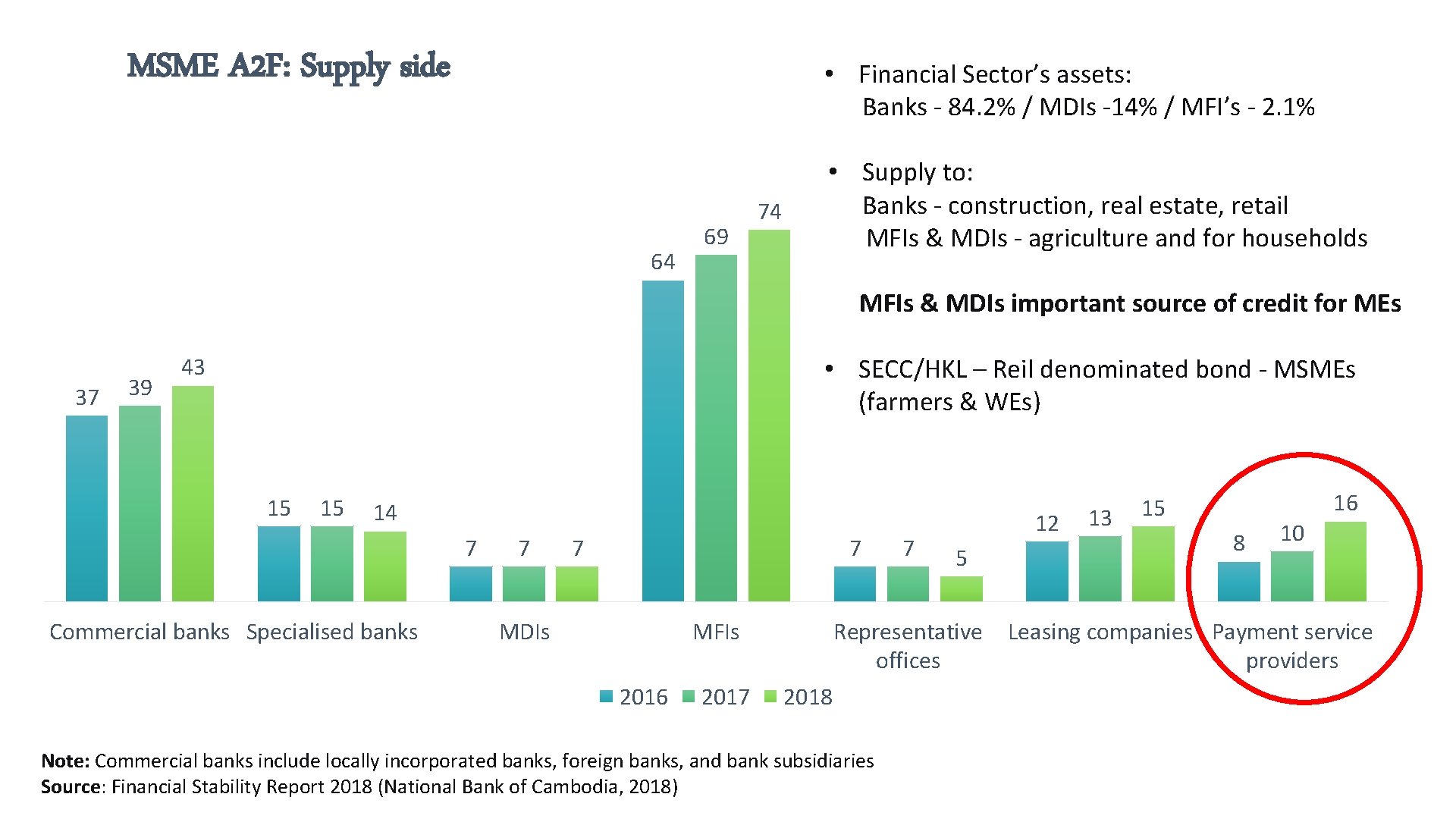
MSME A 2 F: Supply side • Financial Sector’s assets: Banks - 84. 2% / MDIs -14% / MFI’s - 2. 1% 64 69 74 • Supply to: Banks - construction, real estate, retail MFIs & MDIs - agriculture and for households MFIs & MDIs important source of credit for MEs 37 39 • SECC/HKL – Reil denominated bond - MSMEs (farmers & WEs) 43 15 15 14 7 Commercial banks Specialised banks 7 7 7 MDIs MFIs 2016 2017 7 12 5 Representative offices 2018 Note: Commercial banks include locally incorporated banks, foreign banks, and bank subsidiaries Source: Financial Stability Report 2018 (National Bank of Cambodia, 2018) 13 16 15 8 10 Leasing companies Payment service providers
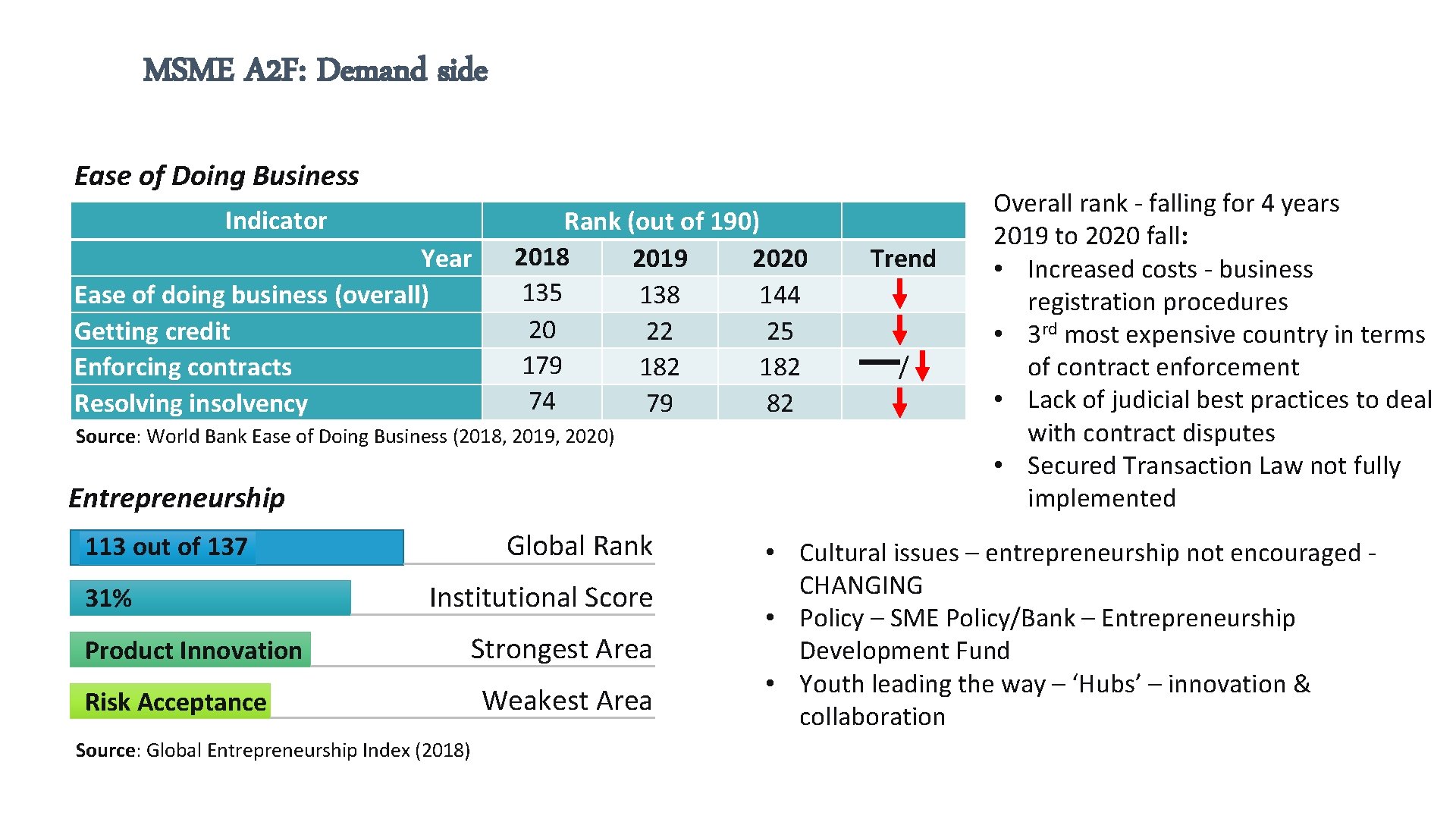
MSME A 2 F: Demand side Ease of Doing Business Indicator Year Ease of doing business (overall) Getting credit Enforcing contracts Resolving insolvency Rank (out of 190) 2018 2019 2020 135 138 144 20 22 25 179 182 74 79 82 Source: World Bank Ease of Doing Business (2018, 2019, 2020) Entrepreneurship Global Rank 113 out of 137 31% Institutional Score Product Innovation Risk Acceptance Source: Global Entrepreneurship Index (2018) Strongest Area Weakest Area Trend / Overall rank - falling for 4 years 2019 to 2020 fall: • Increased costs - business registration procedures • 3 rd most expensive country in terms of contract enforcement • Lack of judicial best practices to deal with contract disputes • Secured Transaction Law not fully implemented • Cultural issues – entrepreneurship not encouraged CHANGING • Policy – SME Policy/Bank – Entrepreneurship Development Fund • Youth leading the way – ‘Hubs’ – innovation & collaboration
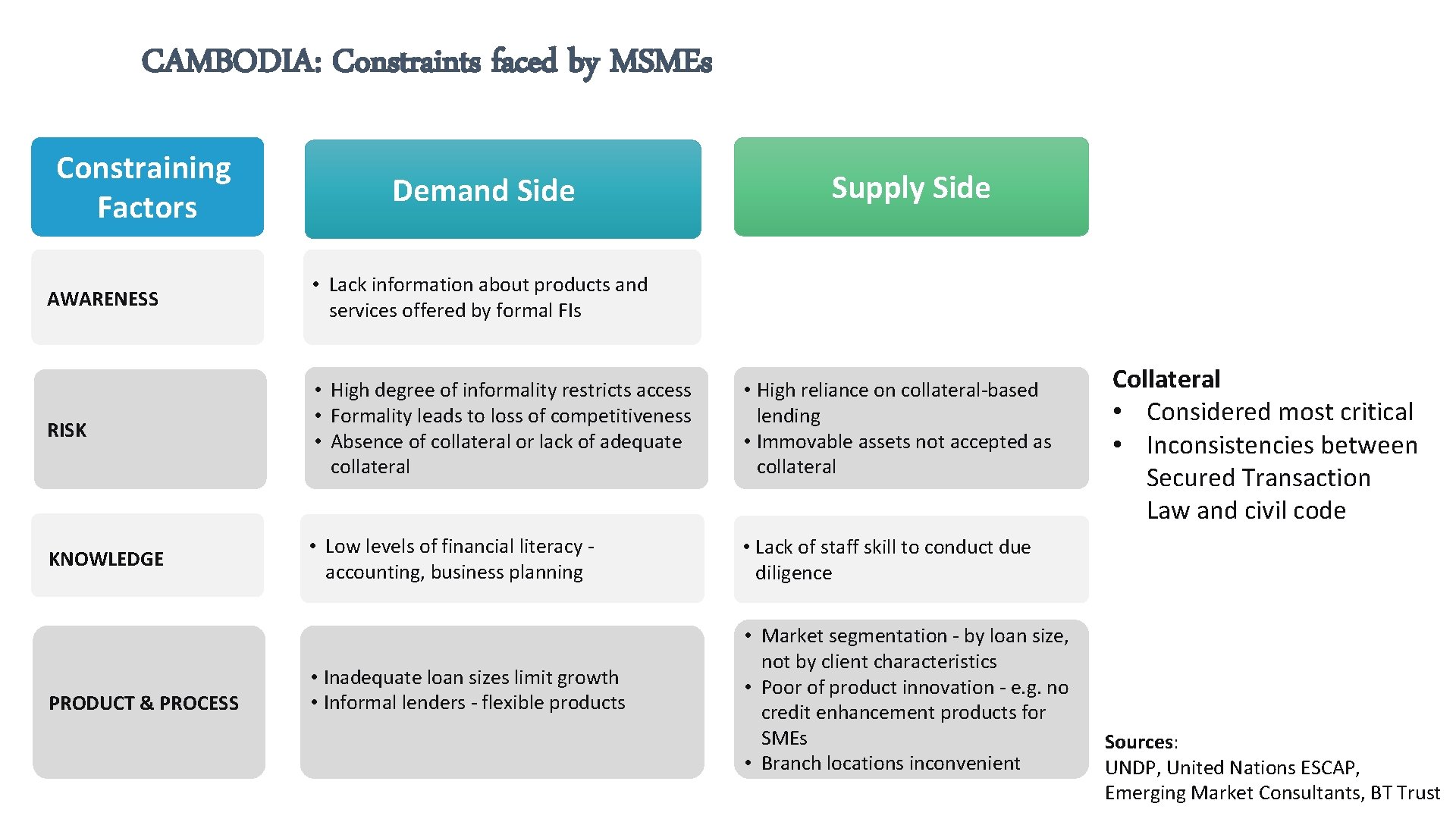
CAMBODIA: Constraints faced by MSMEs Constraining Factors Demand Side Supply Side AWARENESS • Lack information about products and services offered by formal FIs RISK • High degree of informality restricts access • Formality leads to loss of competitiveness • Absence of collateral or lack of adequate collateral • High reliance on collateral-based lending • Immovable assets not accepted as collateral KNOWLEDGE • Low levels of financial literacy accounting, business planning • Lack of staff skill to conduct due diligence • Inadequate loan sizes limit growth • Informal lenders - flexible products • Market segmentation - by loan size, not by client characteristics • Poor of product innovation - e. g. no credit enhancement products for SMEs • Branch locations inconvenient PRODUCT & PROCESS Collateral • Considered most critical • Inconsistencies between Secured Transaction Law and civil code Sources: UNDP, United Nations ESCAP, Emerging Market Consultants, BT Trust
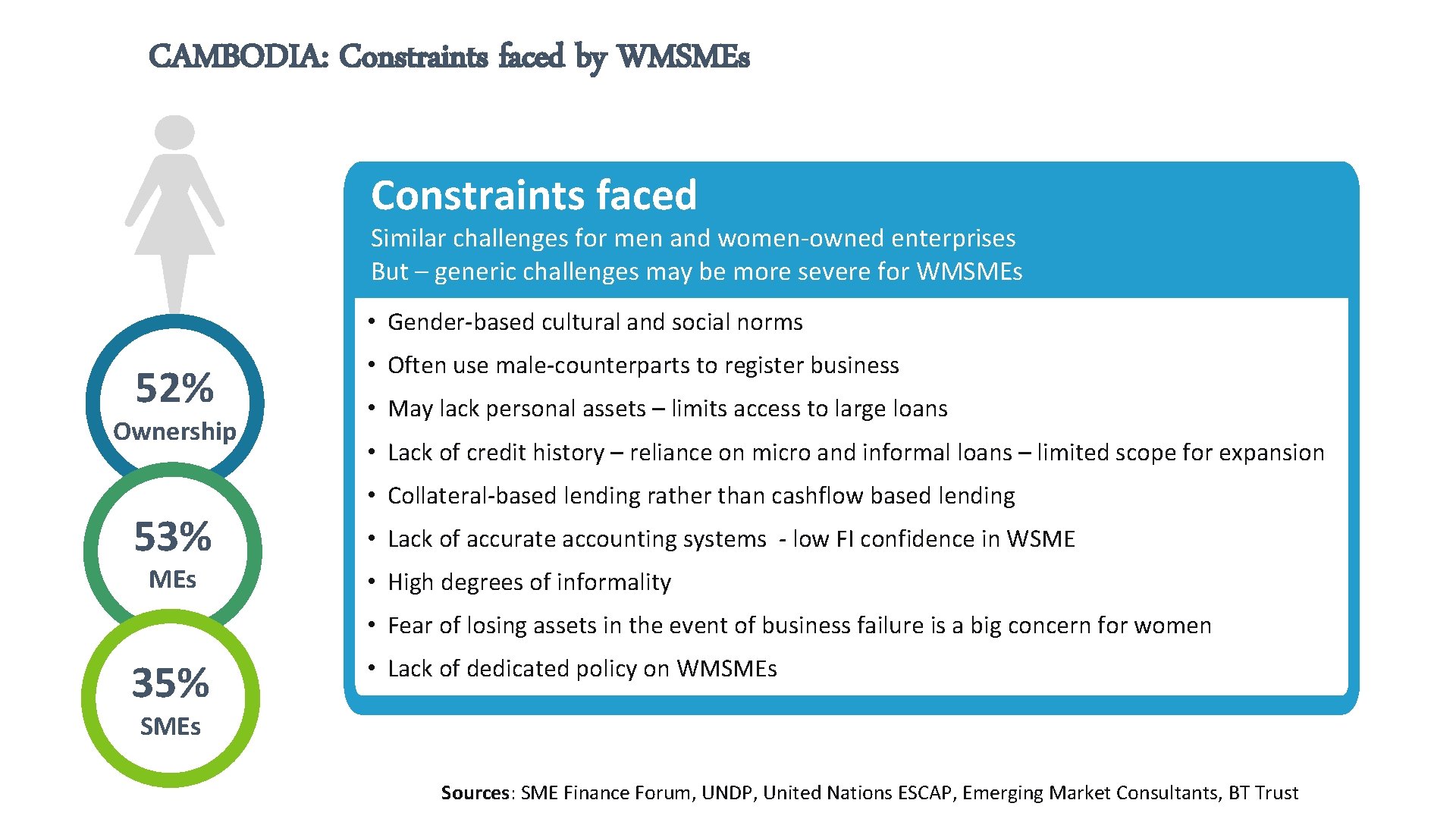
CAMBODIA: Constraints faced by WMSMEs Constraints faced Similar challenges for men and women-owned enterprises But – generic challenges may be more severe for WMSMEs • Gender-based cultural and social norms 52% Ownership 53% MEs • Often use male-counterparts to register business • May lack personal assets – limits access to large loans • Lack of credit history – reliance on micro and informal loans – limited scope for expansion • Collateral-based lending rather than cashflow based lending • Lack of accurate accounting systems - low FI confidence in WSME • High degrees of informality • Fear of losing assets in the event of business failure is a big concern for women 35% • Lack of dedicated policy on WMSMEs Sources: SME Finance Forum, UNDP, United Nations ESCAP, Emerging Market Consultants, BT Trust
‘The match has been lit’ DFS and MSME A 2 F in Cambodia
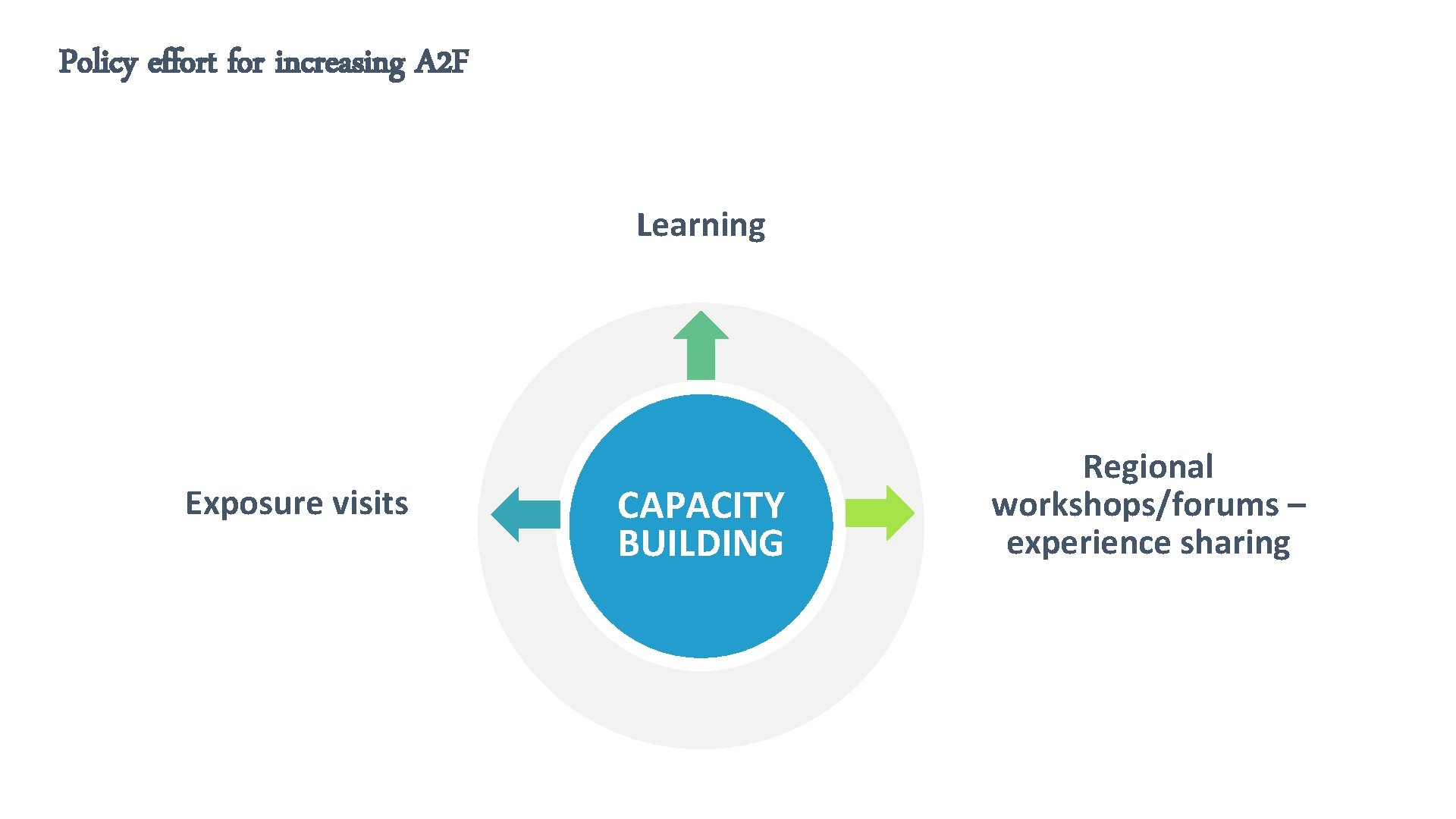
Policy effort for increasing A 2 F Learning Exposure visits CAPACITY BUILDING Regional workshops/forums – experience sharing
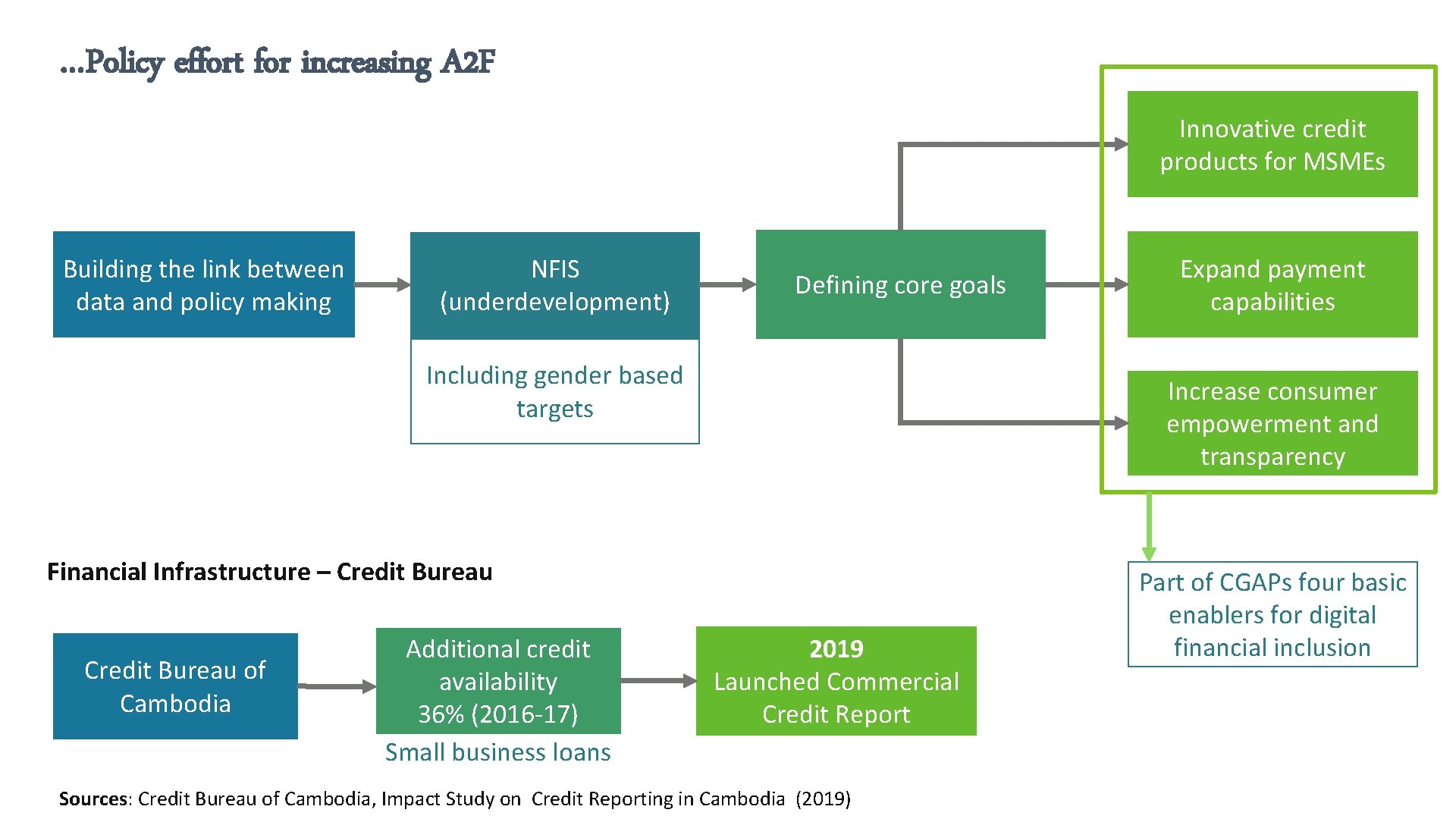
…Policy effort for increasing A 2 F Innovative credit products for MSMEs Building the link between data and policy making NFIS (underdevelopment) Defining core goals Including gender based targets Increase consumer empowerment and transparency Financial Infrastructure – Credit Bureau of Cambodia Additional credit availability 36% (2016 -17) Small business loans Expand payment capabilities 2019 Launched Commercial Credit Report Sources: Credit Bureau of Cambodia, Impact Study on Credit Reporting in Cambodia (2019) Part of CGAPs four basic enablers for digital financial inclusion
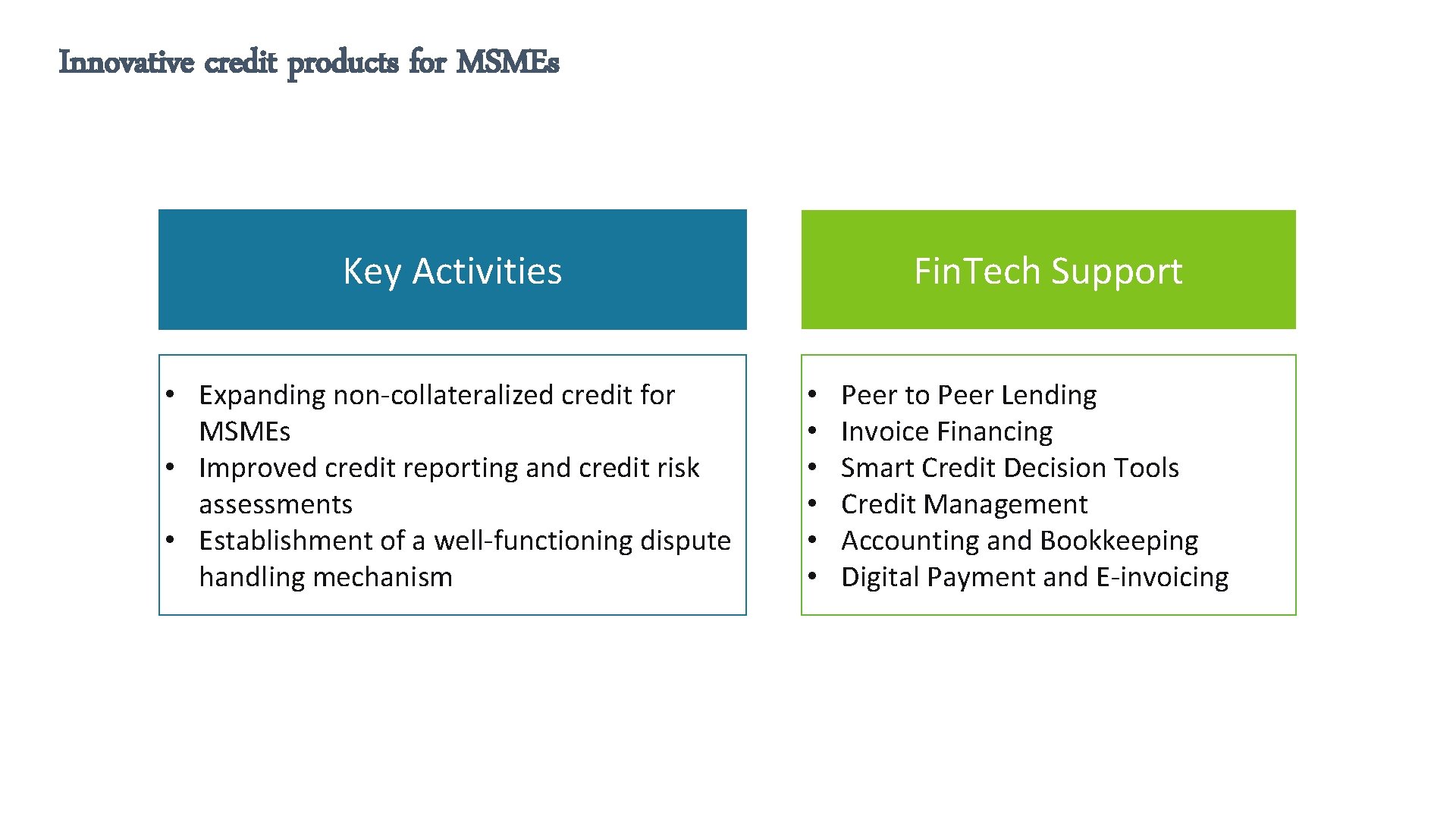
Innovative credit products for MSMEs Key Activities • Expanding non-collateralized credit for MSMEs • Improved credit reporting and credit risk assessments • Establishment of a well-functioning dispute handling mechanism Fin. Tech Support • • • Peer to Peer Lending Invoice Financing Smart Credit Decision Tools Credit Management Accounting and Bookkeeping Digital Payment and E-invoicing
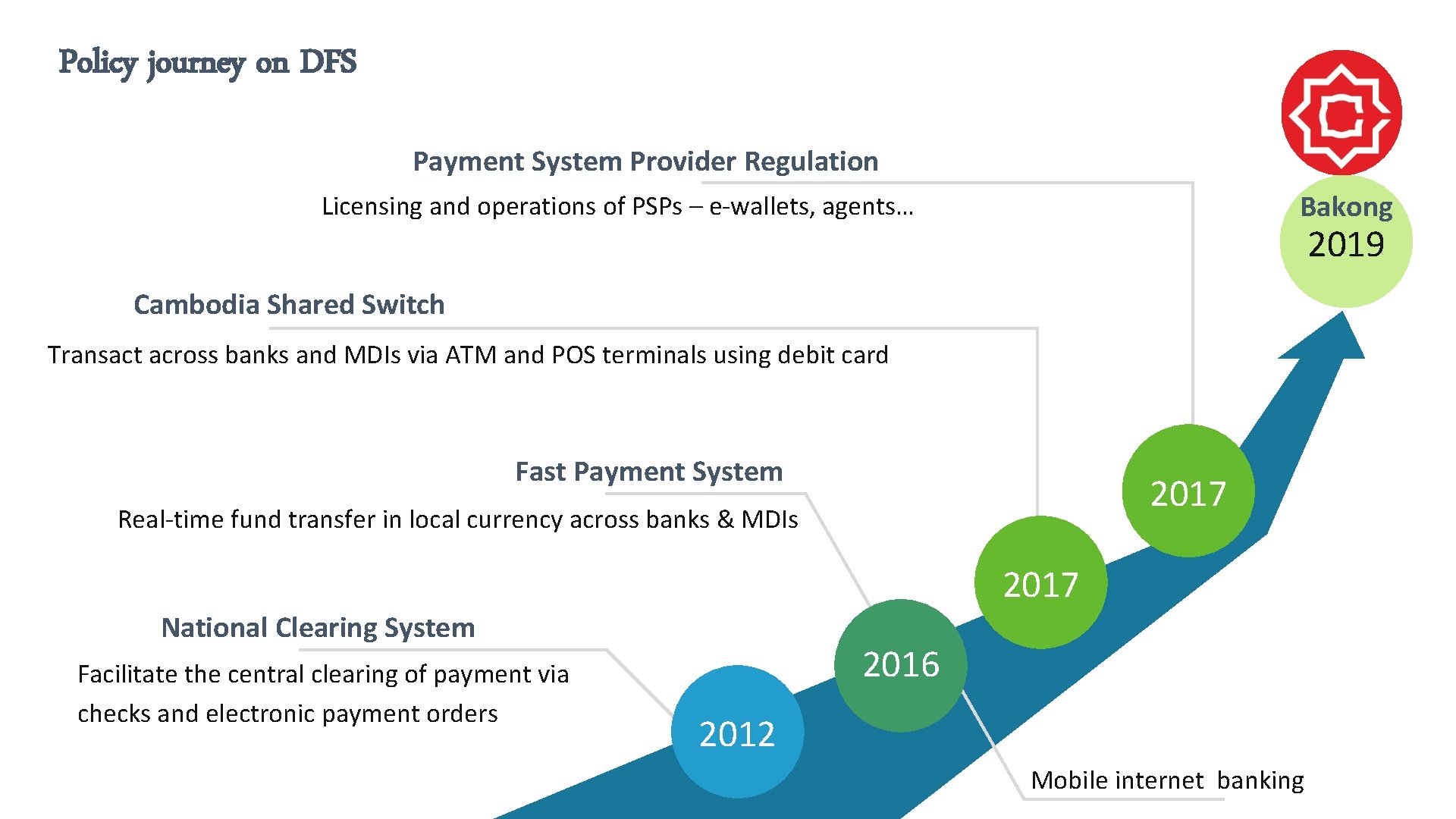
Policy journey on DFS Payment System Provider Regulation Bakong Licensing and operations of PSPs – e-wallets, agents… 2019 Cambodia Shared Switch Transact across banks and MDIs via ATM and POS terminals using debit card Fast Payment System 2017 Real-time fund transfer in local currency across banks & MDIs 2017 National Clearing System Facilitate the central clearing of payment via checks and electronic payment orders 2016 2012 Mobile internet banking
Cambodia: Stage of digital financial inclusion In case of MSMEs Digital in-store purchases: People conduct majority of transactions digitally (including in-store) Full range of DFS: People adopt and use digital for savings, credit and insurance Digital remote payments: People adopt and use digital for P 2 P and P 2 G transfers Basic connectivity: Critical mass of mobile coverage and penetration amongst rural poor Sta Sta ge 1 2 ge ge 3 4 Transitioning from stage 2 to stage 3 Growing set of Fin. Tech firms looking at credit services and using alternative data Enabling environment has been largely created
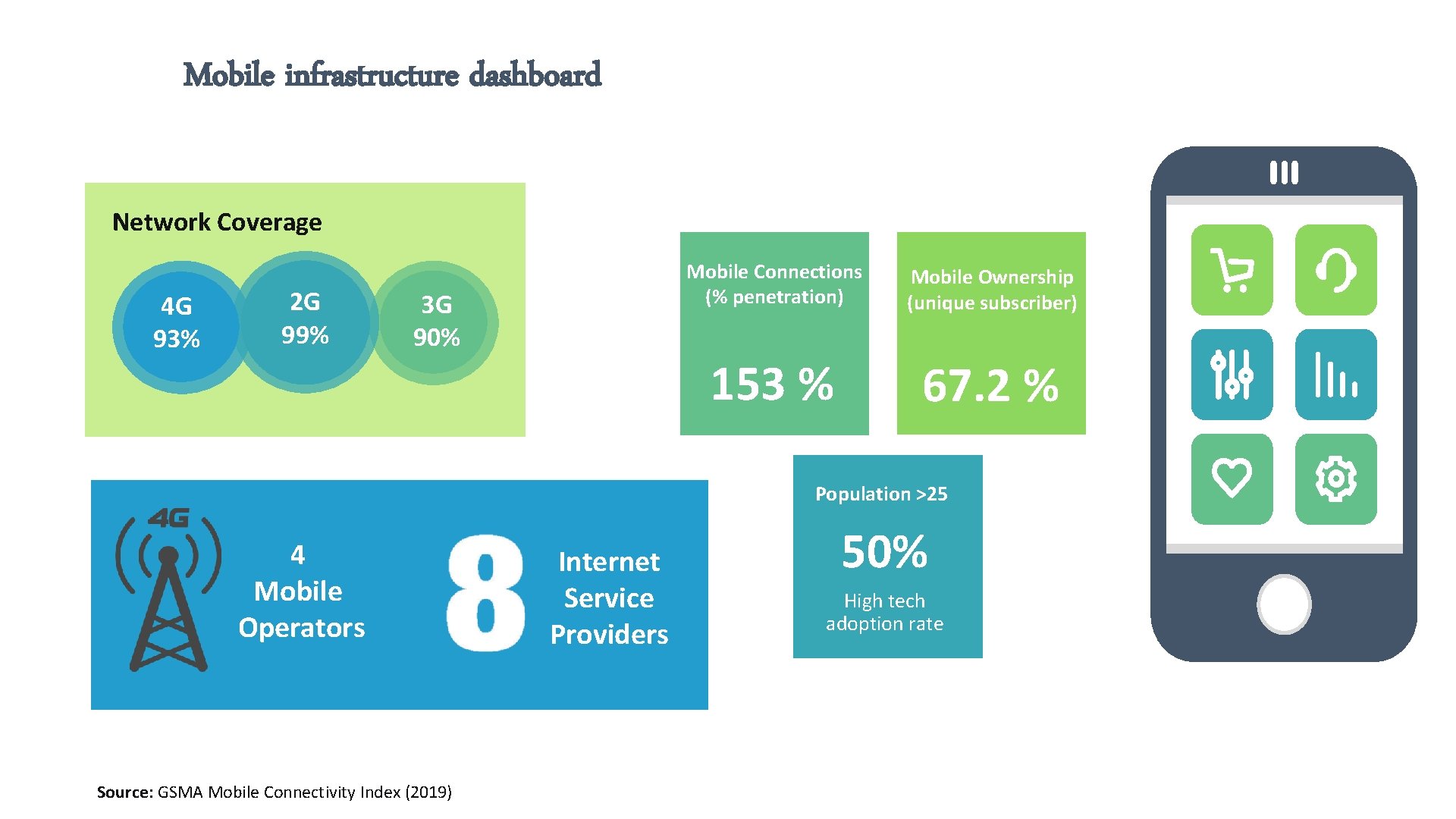
Mobile infrastructure dashboard Network Coverage 4 G 93% 2 G 99% 3 G 90% Mobile Connections (% penetration) Mobile Ownership (unique subscriber) 153 % 67. 2 % Population >25 4 Mobile Operators Source: GSMA Mobile Connectivity Index (2019) Internet Service Providers 50% High tech adoption rate
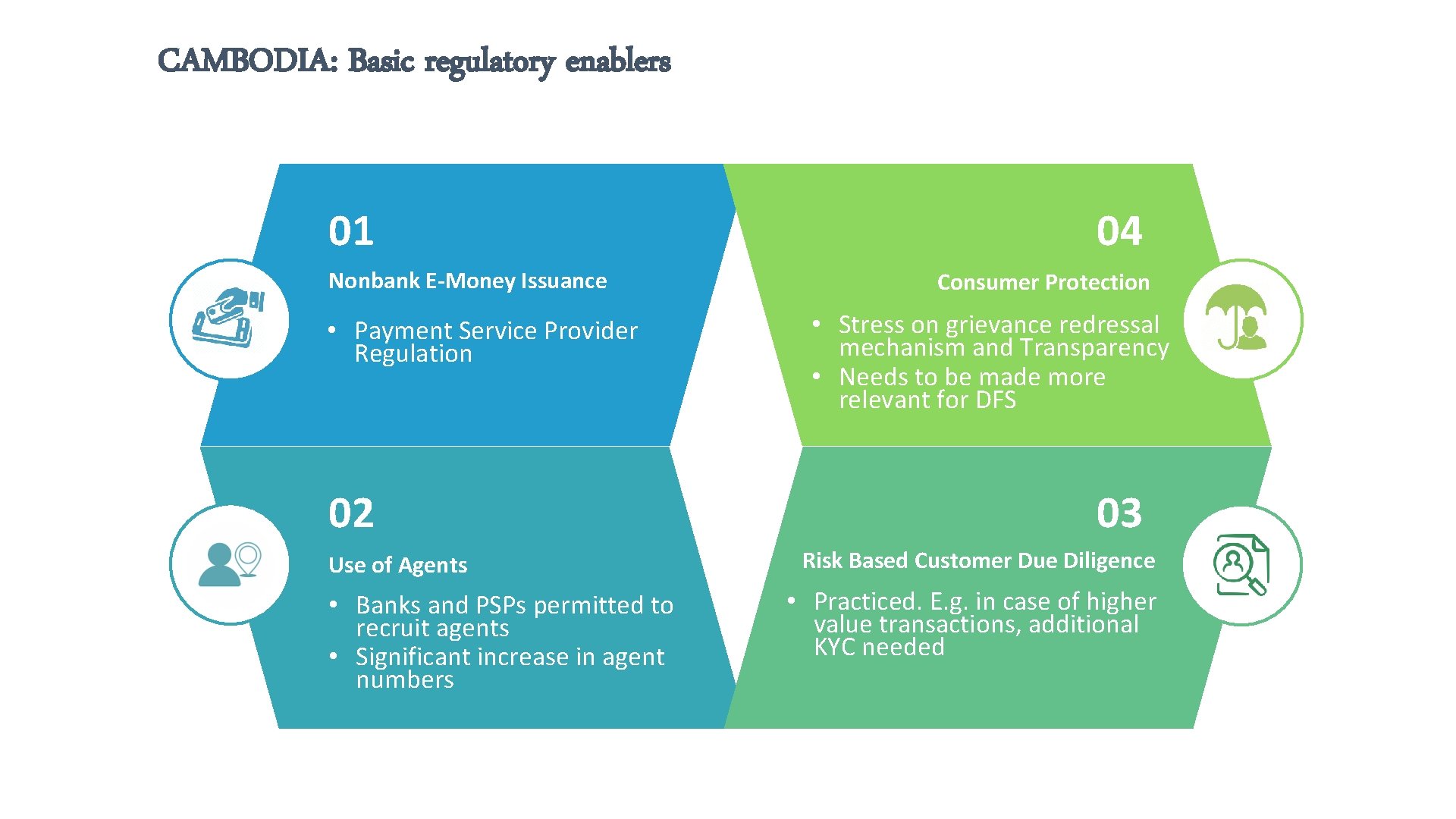
CAMBODIA: Basic regulatory enablers 01 Nonbank E-Money Issuance • Payment Service Provider Regulation 02 Use of Agents • Banks and PSPs permitted to recruit agents • Significant increase in agent numbers 04 Consumer Protection • Stress on grievance redressal mechanism and Transparency • Needs to be made more relevant for DFS 03 Risk Based Customer Due Diligence • Practiced. E. g. in case of higher value transactions, additional KYC needed
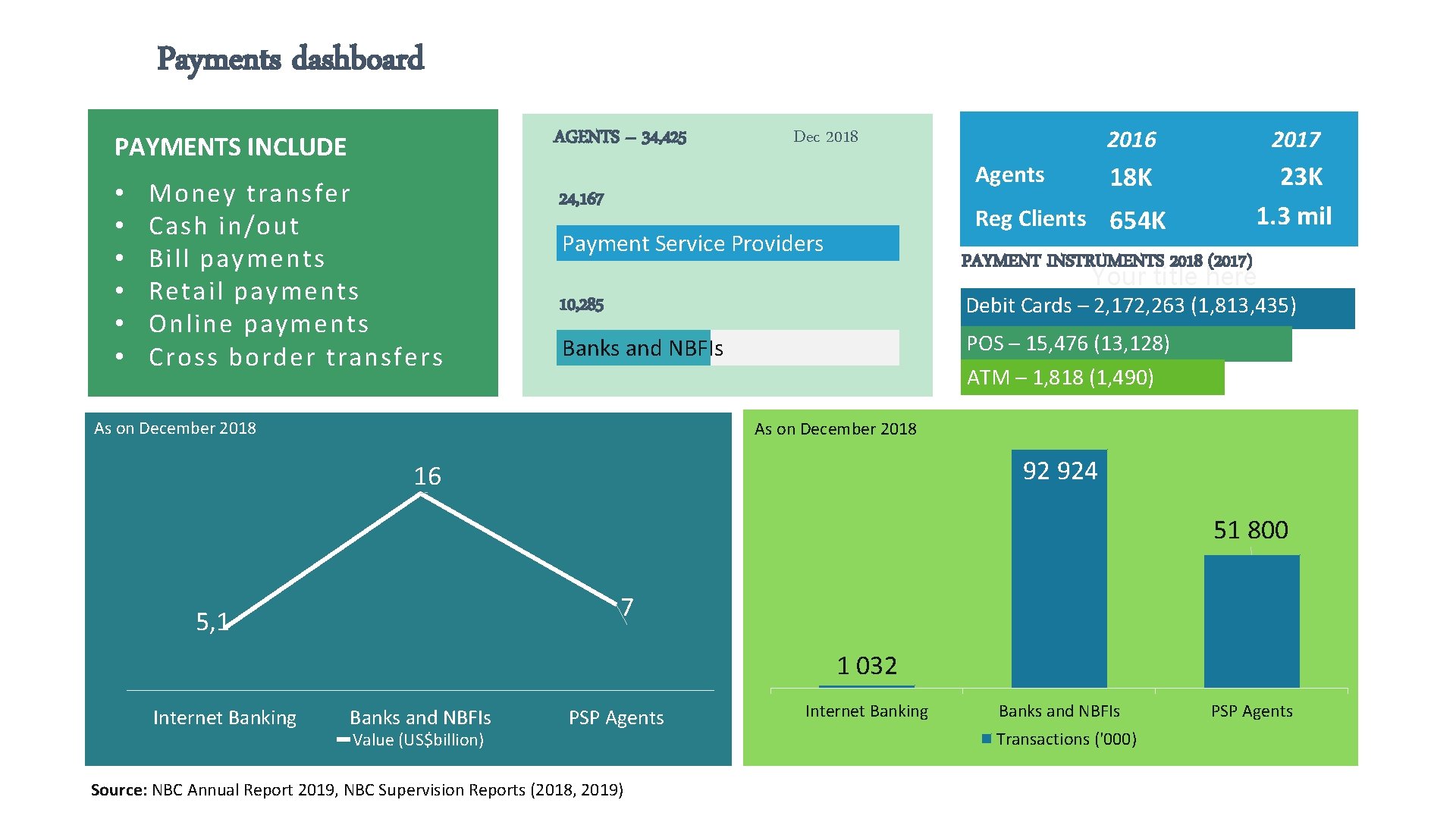
Payments dashboard AGENTS – 34, 425 PAYMENTS INCLUDE • • • Money transfer Cash in/out Bill payments Retail payments Online payments Cross border transfers Dec 2018 Agents 24, 167 2016 2017 18 K 23 K 1. 3 mil Reg Clients 654 K Payment Service Providers 79 PAYMENT INSTRUMENTS 2018 (2017) Your title here 10, 285 Debit Cards – 2, 172, 263 (1, 813, 435) Banks and NBFIs POS – 15, 476 (13, 128) ATM – 1, 818 (1, 490) As on December 2018 92 924 16 51 800 7 5, 1 1 032 Internet Banking Banks and NBFIs Value (US$billion) PSP Agents Source: NBC Annual Report 2019, NBC Supervision Reports (2018, 2019) Internet Banking Banks and NBFIs Transactions ('000) PSP Agents
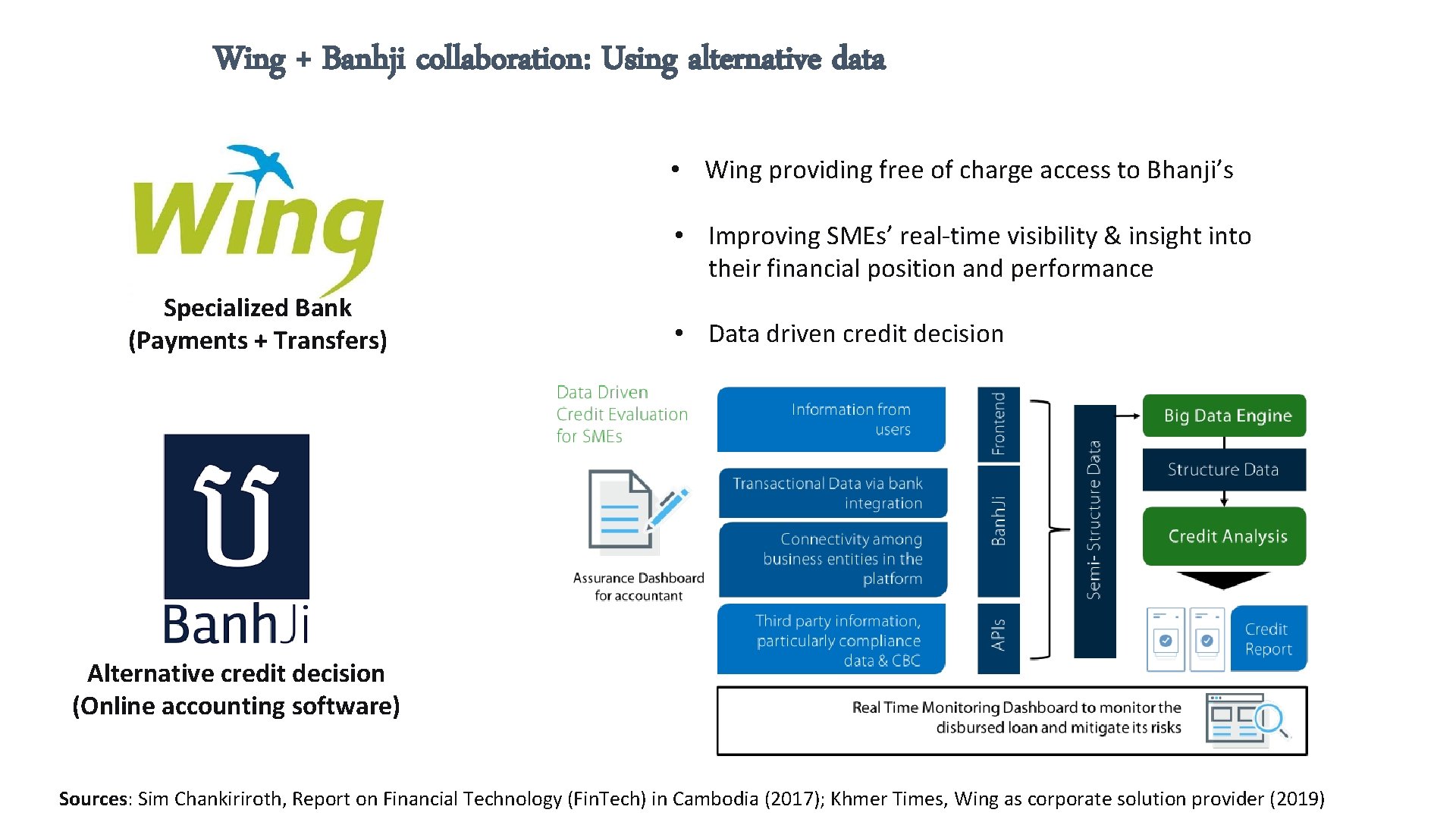
Wing + Banhji collaboration: Using alternative data • Wing providing free of charge access to Bhanji’s • Improving SMEs’ real-time visibility & insight into their financial position and performance Specialized Bank (Payments + Transfers) • Data driven credit decision Alternative credit decision (Online accounting software) Sources: Sim Chankiriroth, Report on Financial Technology (Fin. Tech) in Cambodia (2017); Khmer Times, Wing as corporate solution provider (2019)