
Innovative Technology in Science Inquiry Scale Up ITSISU
- Slides: 10
Innovative Technology in Science Inquiry: Scale Up ITSI-SU Carolyn Staudt - Concord Consortium carolyn@concord. org Megan Bouch megan. concord@gmail. com http: //www. concord. org/projects/itsi-su This material is based upon work supported by the National Science Foundation under Grant No. DRL-0929540. Any opinions, findings, conclusions or recommendations expressed in this material are those of the author(s) and do not necessarily reflect the views of the National Science Foundation.
Concord Consortium • Nonprofit research and development organization • Dedicated to transforming education through technology • Pioneers of learning innovations for STEM • Dedicated to Open Source software • Primarily funded by NSF since starting in 1994
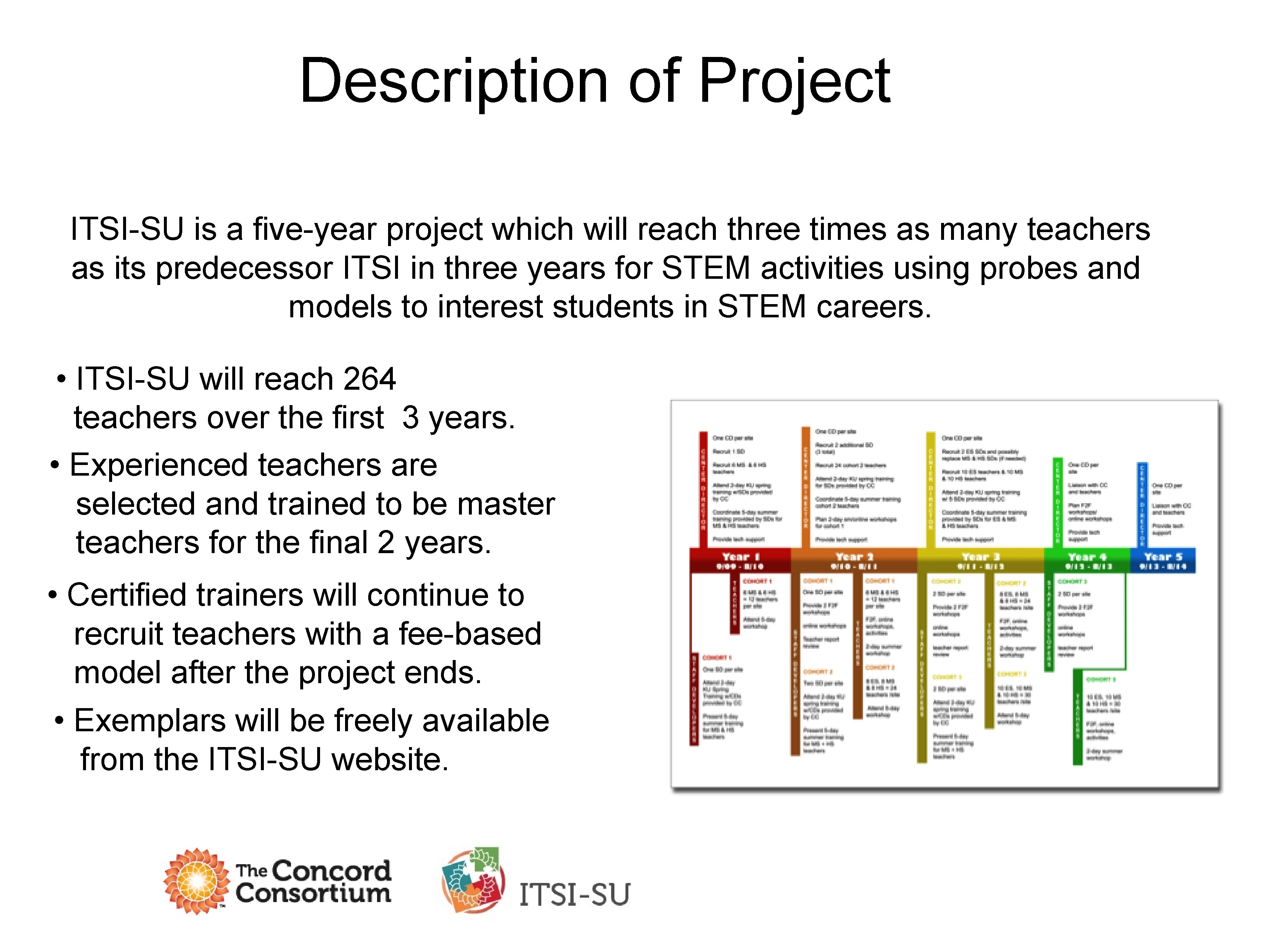
Description of Project ITSI-SU is a five-year project which will reach three times as many teachers as its predecessor ITSI in three years for STEM activities using probes and models to interest students in STEM careers. • ITSI-SU will reach 264 teachers over the first 3 years. • Experienced teachers are selected and trained to be master teachers for the final 2 years. • Certified trainers will continue to recruit teachers with a fee-based model after the project ends. • Exemplars will be freely available from the ITSI-SU website.
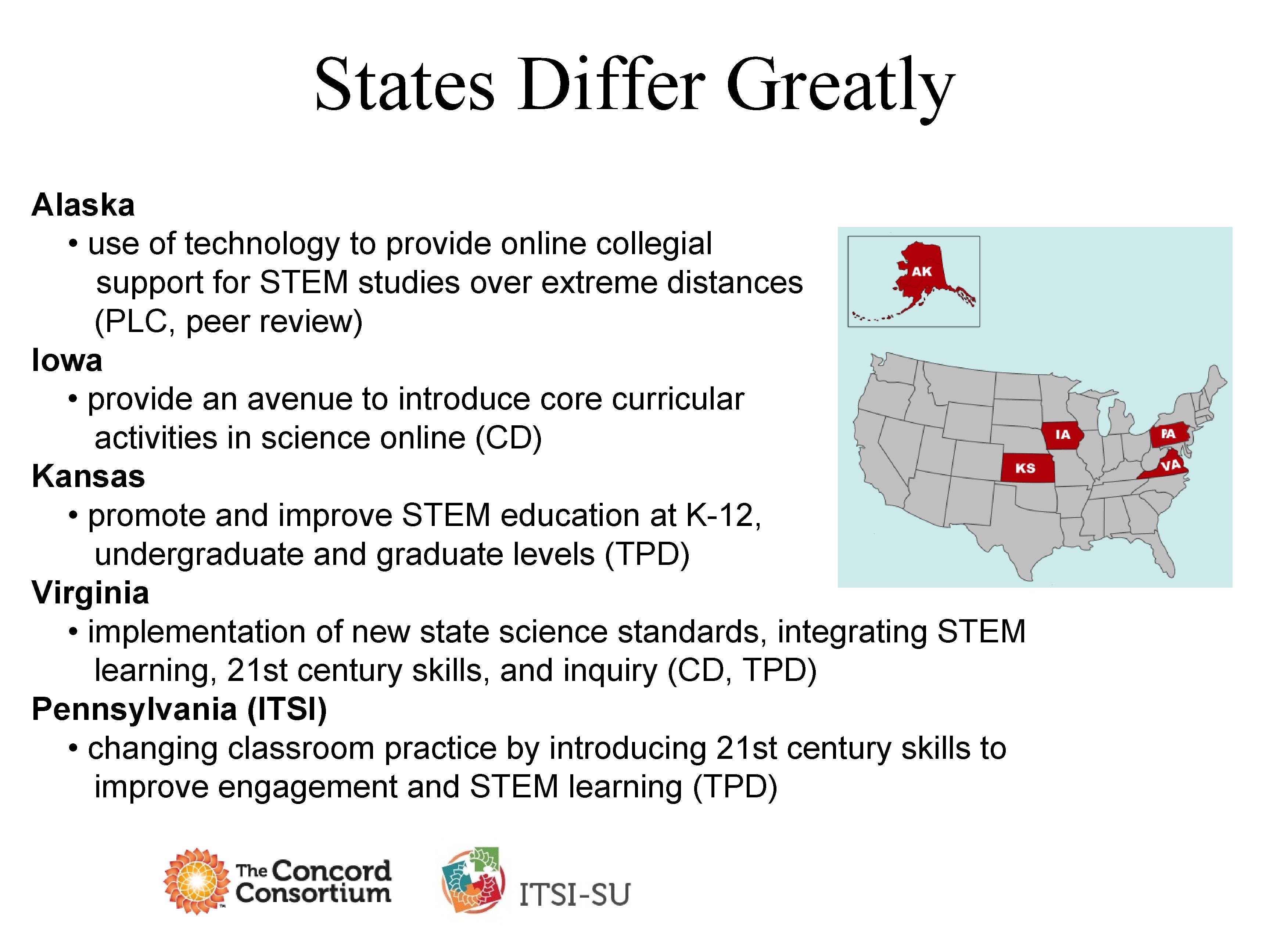
States Differ Greatly Alaska • use of technology to provide online collegial support for STEM studies over extreme distances (PLC, peer review) Iowa • provide an avenue to introduce core curricular activities in science online (CD) Kansas • promote and improve STEM education at K-12, undergraduate and graduate levels (TPD) Virginia • implementation of new state science standards, integrating STEM learning, 21 st century skills, and inquiry (CD, TPD) Pennsylvania (ITSI) • changing classroom practice by introducing 21 st century skills to improve engagement and STEM learning (TPD)
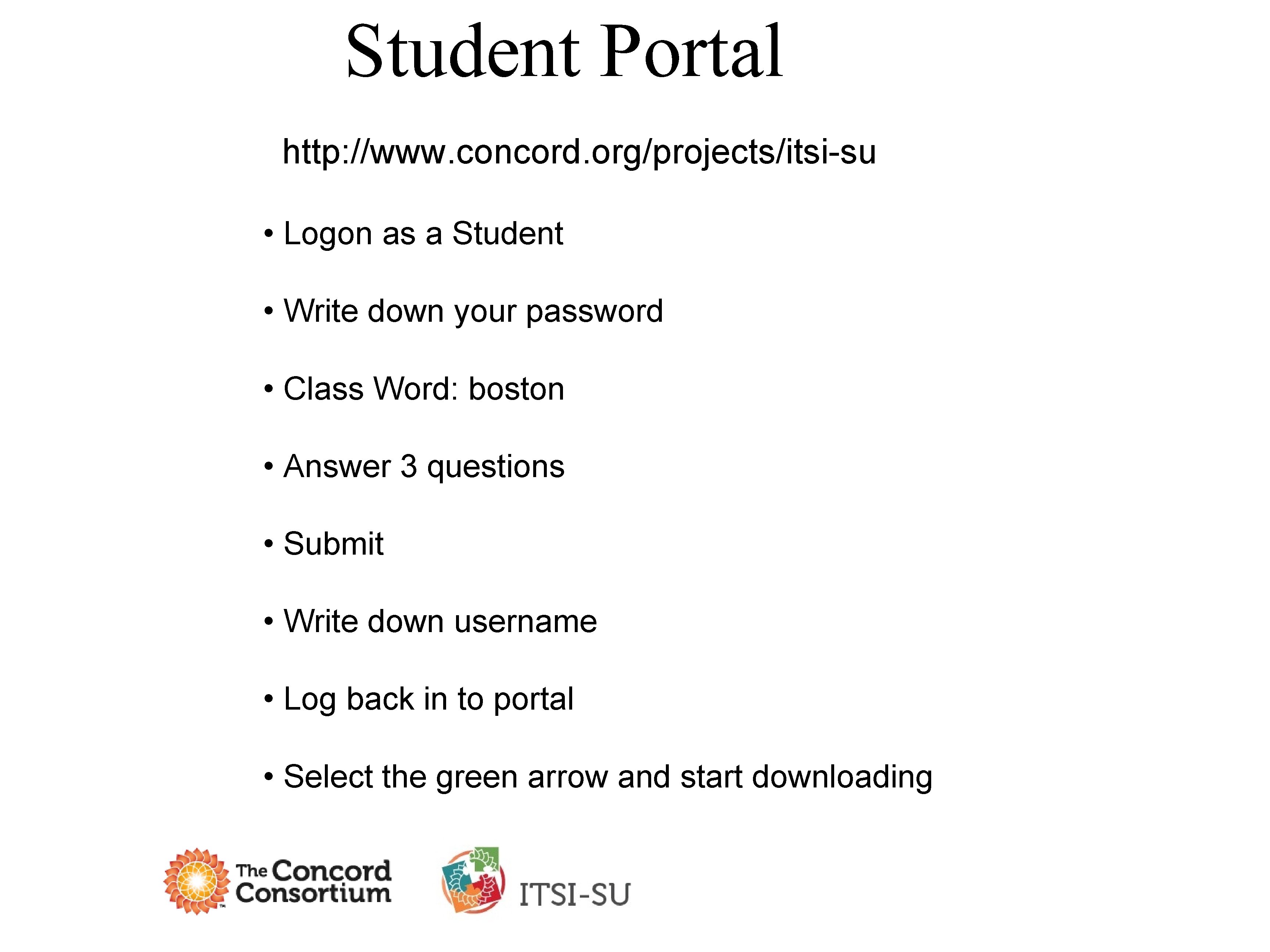
Student Portal http: //www. concord. org/projects/itsi-su • Logon as a Student • Write down your password • Class Word: boston • Answer 3 questions • Submit • Write down username • Log back in to portal • Select the green arrow and start downloading
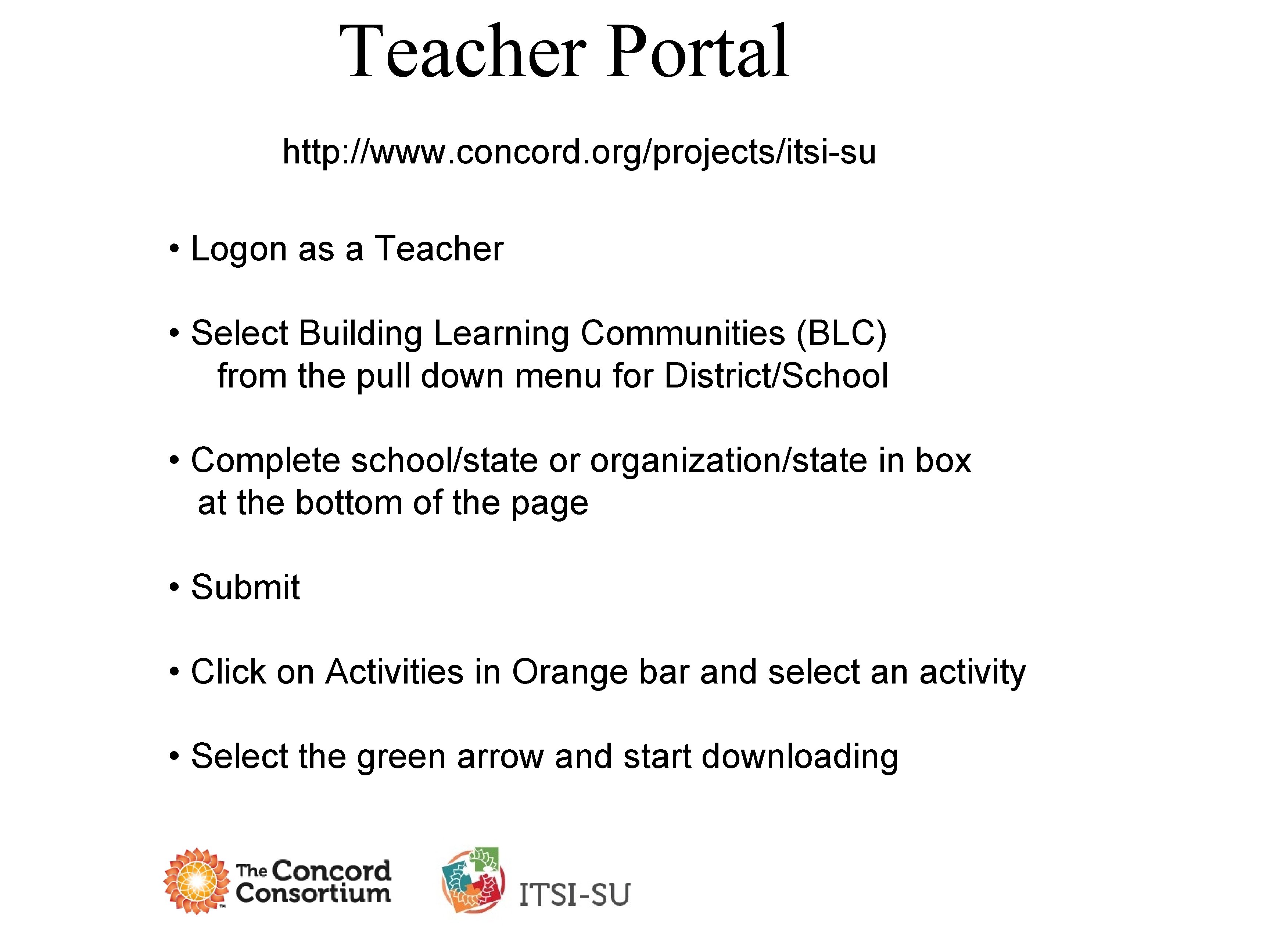
Teacher Portal http: //www. concord. org/projects/itsi-su • Logon as a Teacher • Select Building Learning Communities (BLC) from the pull down menu for District/School • Complete school/state or organization/state in box at the bottom of the page • Submit • Click on Activities in Orange bar and select an activity • Select the green arrow and start downloading
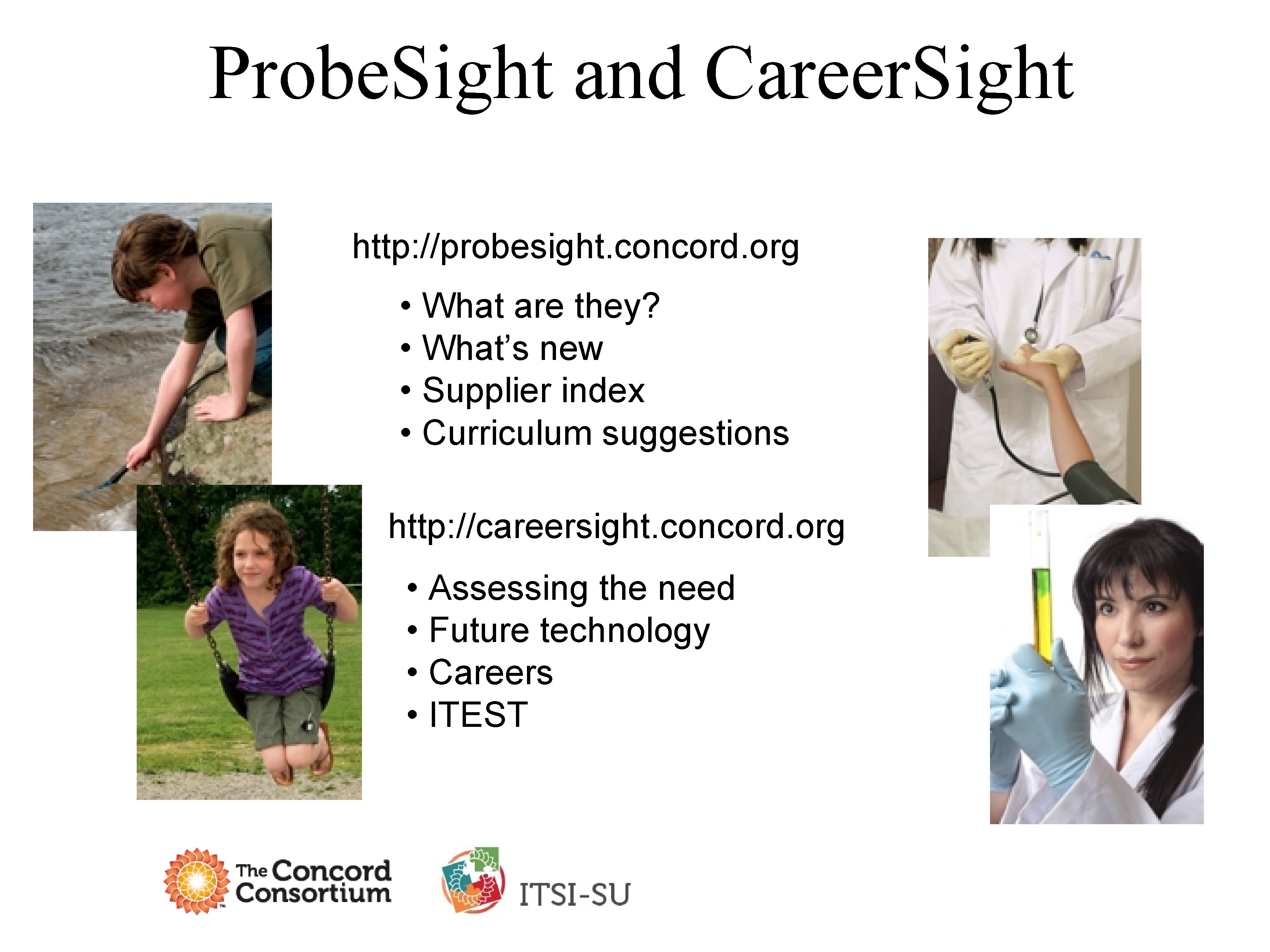
Probe. Sight and Career. Sight http: //probesight. concord. org • What are they? • What’s new • Supplier index • Curriculum suggestions http: //careersight. concord. org • Assessing the need • Future technology • Careers • ITEST
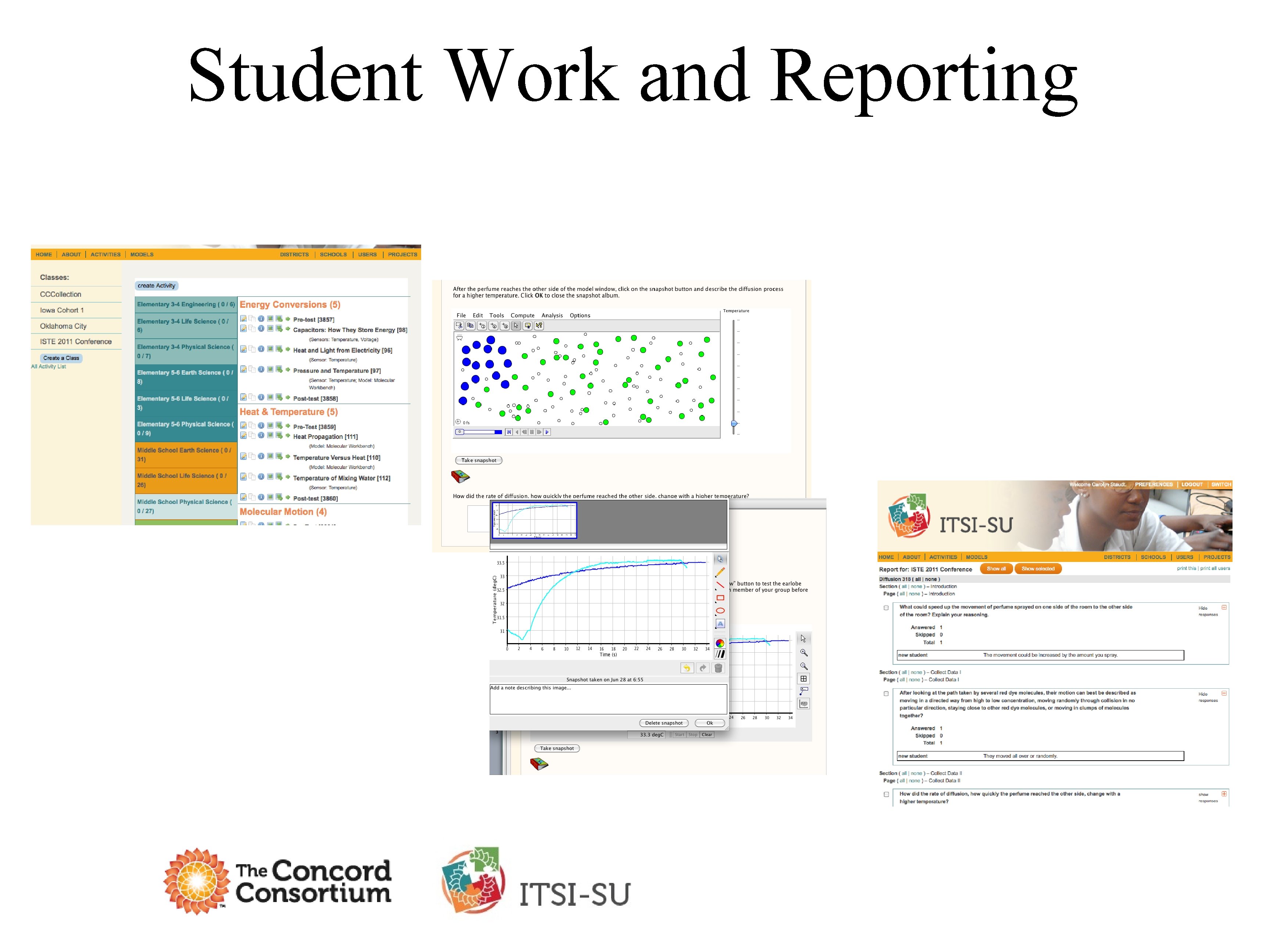
Student Work and Reporting
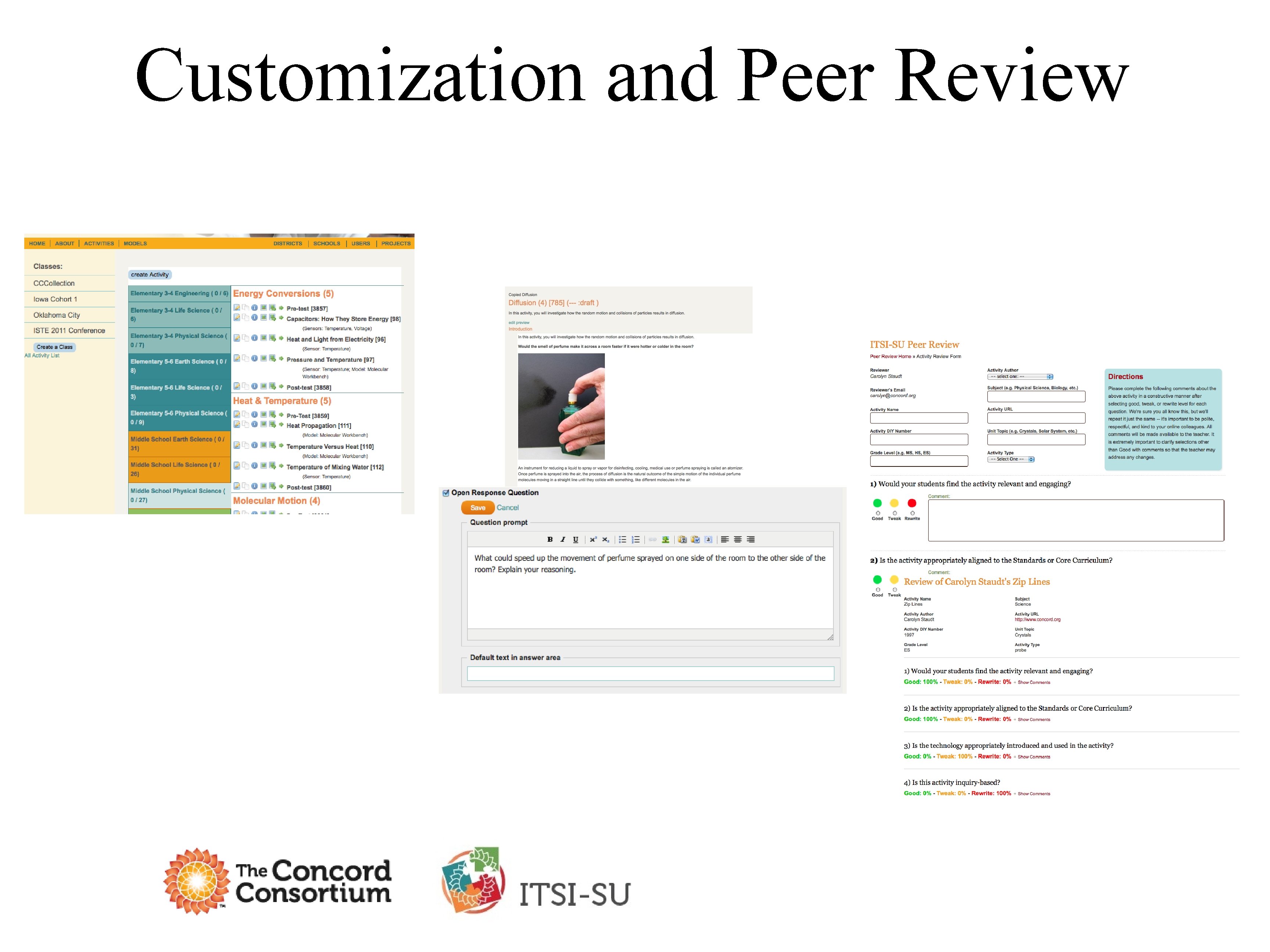
Customization and Peer Review
Innovative Technology in Science Inquiry: Scale Up ITSI-SU Carolyn Staudt - Concord Consortium carolyn@concord. org Megan Bouch megan. concord@gmail. com This material is based upon work supported by the National Science Foundation under Grant No. DRL-0929540. Any opinions, findings, conclusions or recommendations expressed in this material are those of the author(s) and do not necessarily reflect the views of the National Science Foundation.