
Innovative Surface Water Systems for Nutrient Removal to
- Slides: 29
Innovative Surface Water Systems for Nutrient Removal to Control Algal Blooms: Grand Lake St. Mary’s Presented by, Chris Overcash, PE, BCEE, ENV SP For USGS Maryland-Delaware-D. C. Water Science Center Baltimore, Maryland March 15, 2016 `
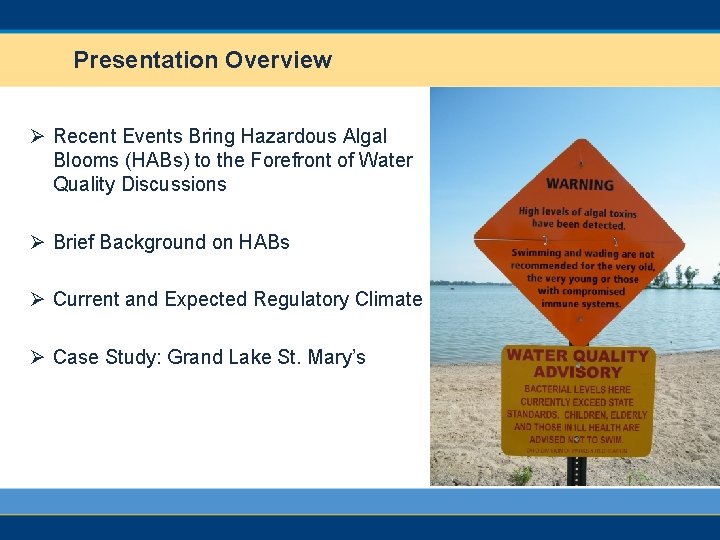
Presentation Overview Ø Recent Events Bring Hazardous Algal Blooms (HABs) to the Forefront of Water Quality Discussions Ø Brief Background on HABs Ø Current and Expected Regulatory Climate Ø Case Study: Grand Lake St. Mary’s
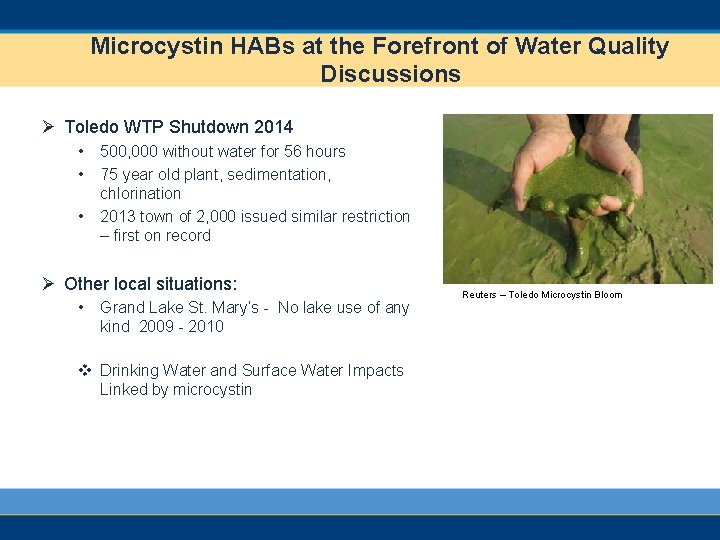
Microcystin HABs at the Forefront of Water Quality Discussions Ø Toledo WTP Shutdown 2014 • • • 500, 000 without water for 56 hours 75 year old plant, sedimentation, chlorination 2013 town of 2, 000 issued similar restriction – first on record Ø Other local situations: • Grand Lake St. Mary’s - No lake use of any kind 2009 - 2010 v Drinking Water and Surface Water Impacts Linked by microcystin Reuters – Toledo Microcystin Bloom
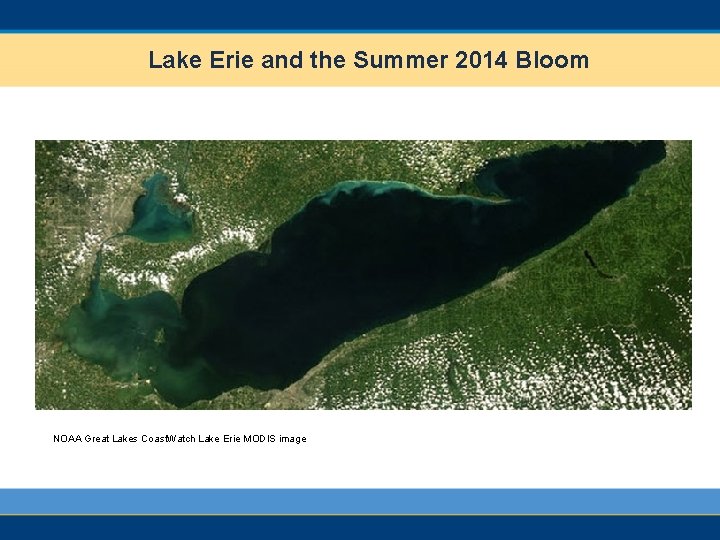
Lake Erie and the Summer 2014 Bloom NOAA Great Lakes Coast. Watch Lake Erie MODIS image
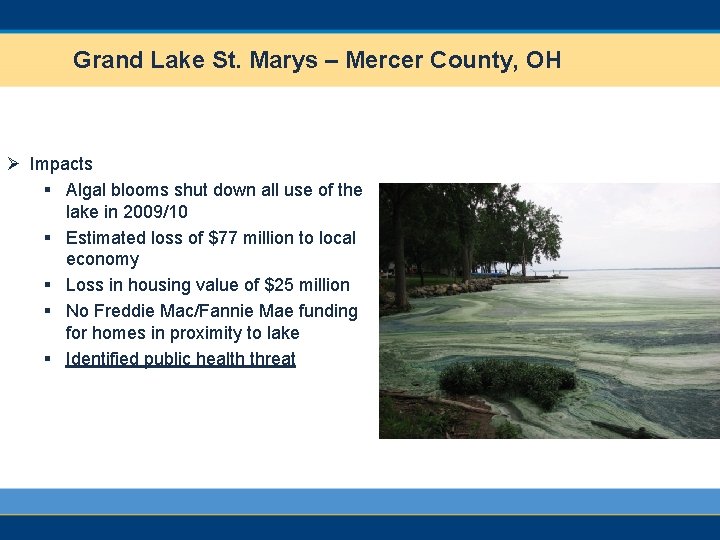
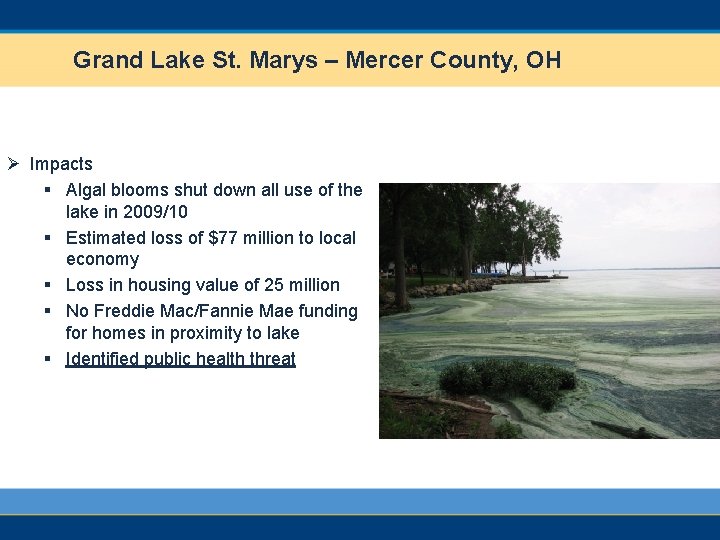
Grand Lake St. Marys – Mercer County, OH Ø Impacts § Algal blooms shut down all use of the lake in 2009/10 § Estimated loss of $77 million to local economy § Loss in housing value of $25 million § No Freddie Mac/Fannie Mae funding for homes in proximity to lake § Identified public health threat
Grand Lake St. Marys – Mercer County, OH Ø Ohio Governor Strickland News Conference – July 30, 2010 The Daily Standard Celina, Ohio
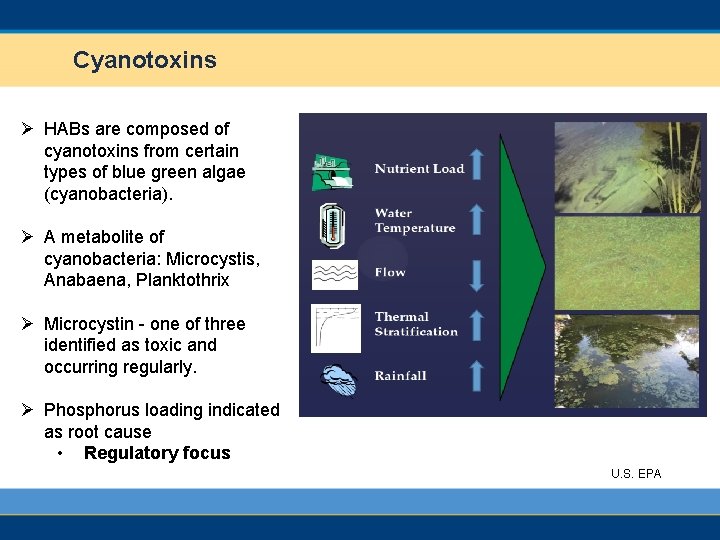
Cyanotoxins Ø HABs are composed of cyanotoxins from certain types of blue green algae (cyanobacteria). Ø A metabolite of cyanobacteria: Microcystis, Anabaena, Planktothrix Ø Microcystin - one of three identified as toxic and occurring regularly. Ø Phosphorus loading indicated as root cause • Regulatory focus U. S. EPA
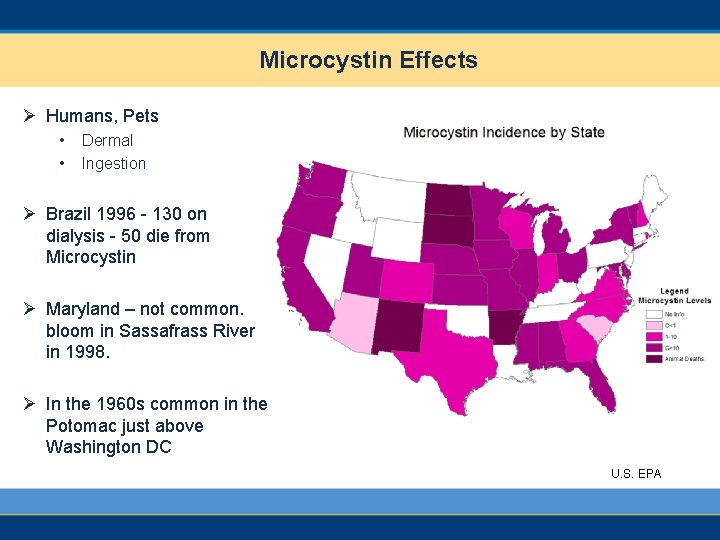
Microcystin Effects Ø Humans, Pets • • Dermal Ingestion Ø Brazil 1996 - 130 on dialysis - 50 die from Microcystin Ø Maryland – not common. bloom in Sassafrass River in 1998. Ø In the 1960 s common in the Potomac just above Washington DC U. S. EPA
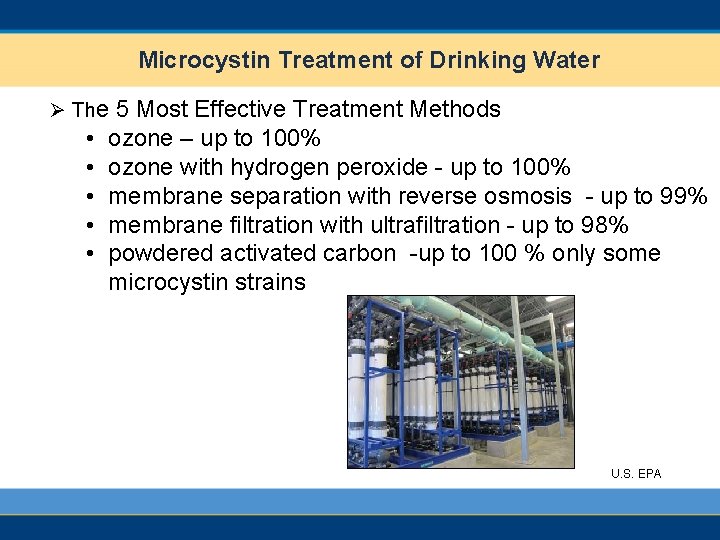
Microcystin Treatment of Drinking Water Ø The 5 Most Effective Treatment Methods • • • ozone – up to 100% ozone with hydrogen peroxide - up to 100% membrane separation with reverse osmosis - up to 99% membrane filtration with ultrafiltration - up to 98% powdered activated carbon -up to 100 % only some microcystin strains U. S. EPA
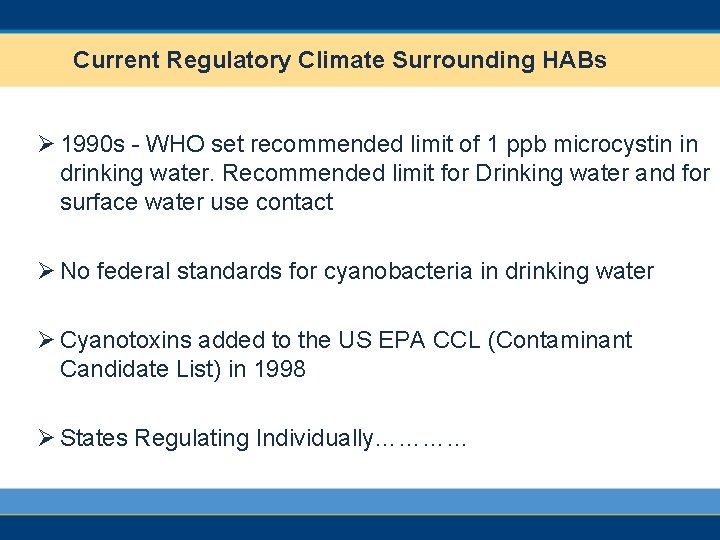
Current Regulatory Climate Surrounding HABs Ø 1990 s - WHO set recommended limit of 1 ppb microcystin in drinking water. Recommended limit for Drinking water and for surface water use contact Ø No federal standards for cyanobacteria in drinking water Ø Cyanotoxins added to the US EPA CCL (Contaminant Candidate List) in 1998 Ø States Regulating Individually…………
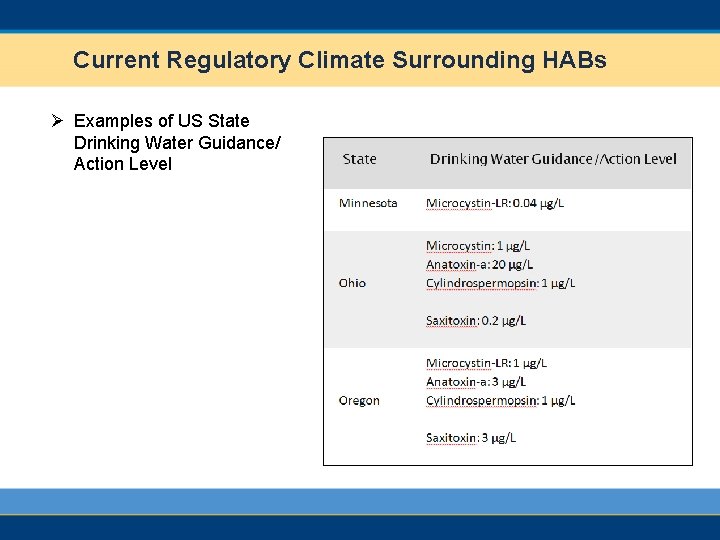
Current Regulatory Climate Surrounding HABs Ø Examples of US State Drinking Water Guidance/ Action Level
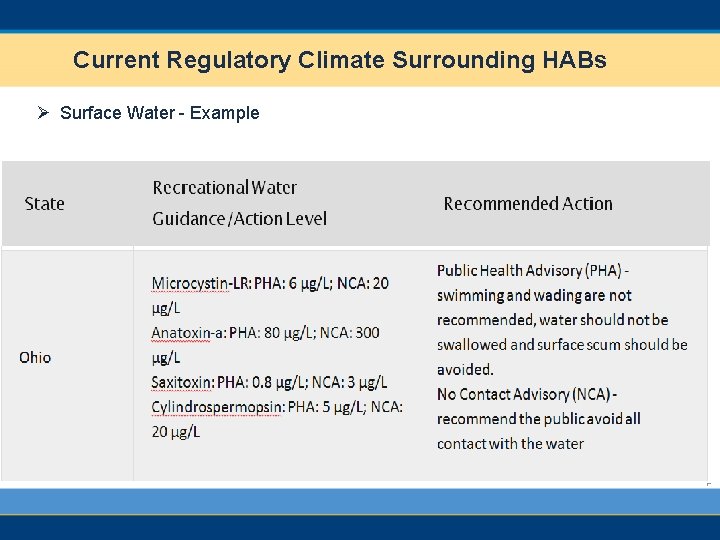
Current Regulatory Climate Surrounding HABs Ø Surface Water - Example
HAB Regulatory Climate – What’s Next? Ø HAB and Hypoxia Research and Control Amendments Act of 2014 • • • Comprehensive HAB and Hypoxia Research Plan and Action Strategy $20. 5 M per year through 2018 Report on Implementation of the HAB and Hypoxia Action Strategy Great Lakes Hypoxia and HAB Integrated Assessment Great Lakes HAB and Hypoxia Plan Progress Report on Northern Gulf of Mexico Hypoxia Ø AWWA Feb 2015 – Source Reduction of Nutrients is the key …. . EPA and USDA, should use existing authorities to give much higher priority to nutrient reduction projects that protect downstream drinking water supplies and therefore, public health. Ø More information necessary to define Regulatory approach at Federal Level
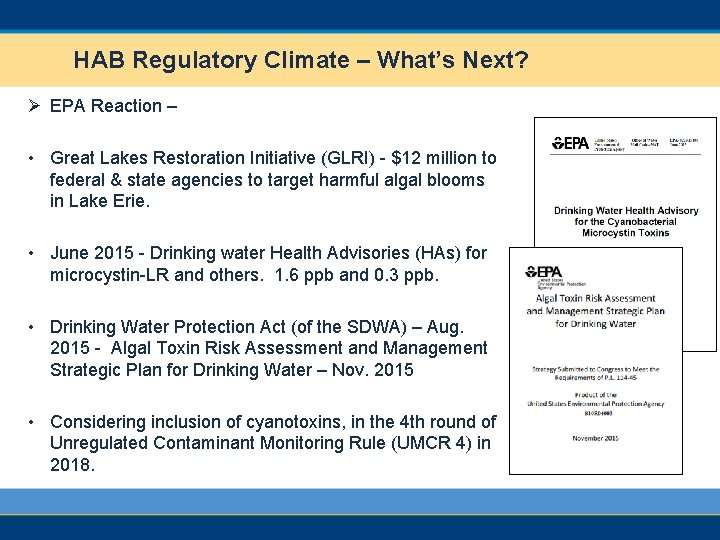
HAB Regulatory Climate – What’s Next? Ø EPA Reaction – • Great Lakes Restoration Initiative (GLRI) - $12 million to federal & state agencies to target harmful algal blooms in Lake Erie. • June 2015 - Drinking water Health Advisories (HAs) for microcystin-LR and others. 1. 6 ppb and 0. 3 ppb. • Drinking Water Protection Act (of the SDWA) – Aug. 2015 - Algal Toxin Risk Assessment and Management Strategic Plan for Drinking Water – Nov. 2015 • Considering inclusion of cyanotoxins, in the 4 th round of Unregulated Contaminant Monitoring Rule (UMCR 4) in 2018.
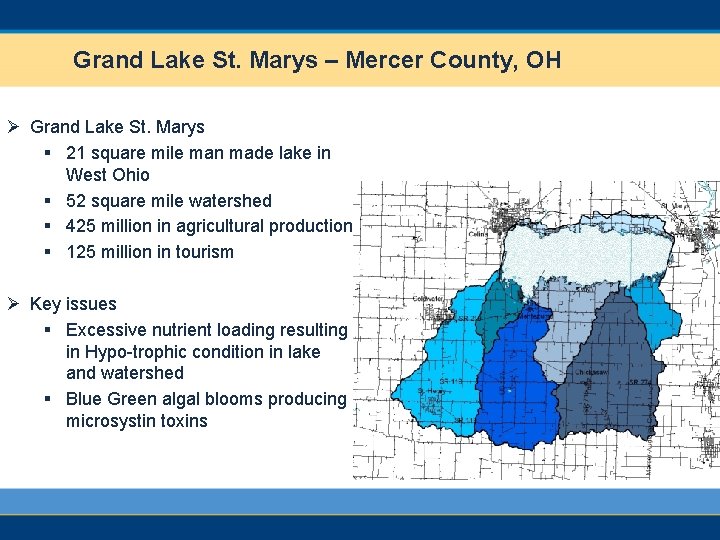
Grand Lake St. Marys – Mercer County, OH Ø Grand Lake St. Marys § 21 square mile man made lake in West Ohio § 52 square mile watershed § 425 million in agricultural production § 125 million in tourism Ø Key issues § Excessive nutrient loading resulting in Hypo-trophic condition in lake and watershed § Blue Green algal blooms producing microsystin toxins
Grand Lake St. Marys – Mercer County, OH Ø Impacts § Algal blooms shut down all use of the lake in 2009/10 § Estimated loss of $77 million to local economy § Loss in housing value of 25 million § No Freddie Mac/Fannie Mae funding for homes in proximity to lake § Identified public health threat
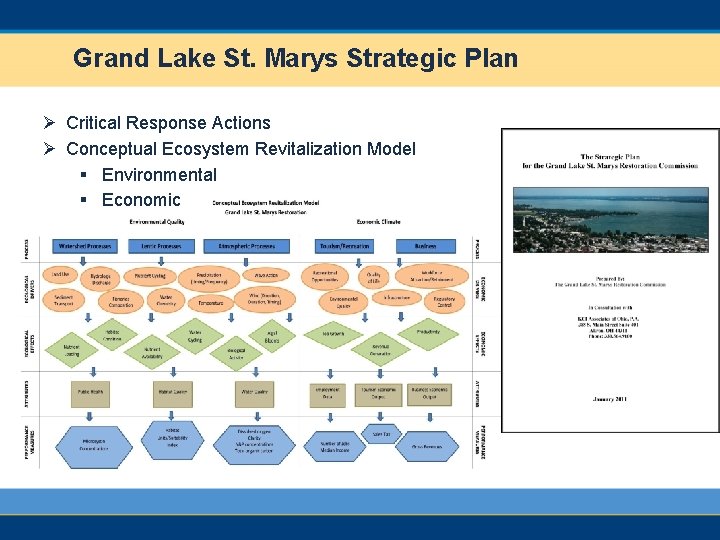
Grand Lake St. Marys Strategic Plan Ø Critical Response Actions Ø Conceptual Ecosystem Revitalization Model § Environmental § Economic
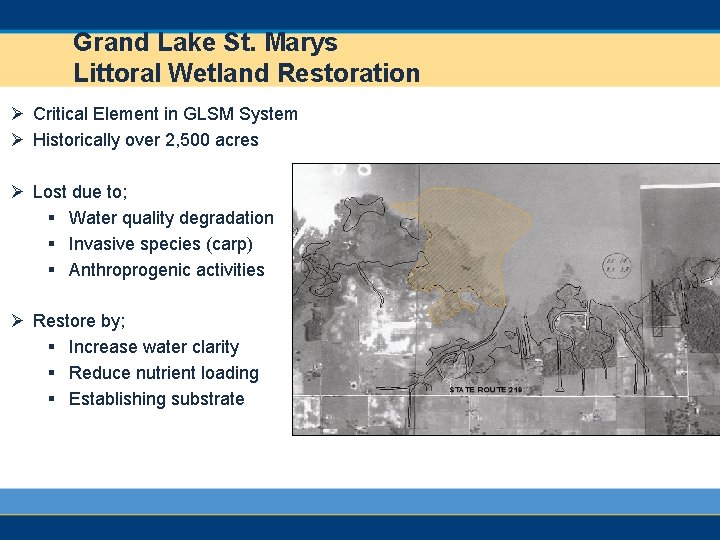
Grand Lake St. Marys Littoral Wetland Restoration Ø Critical Element in GLSM System Ø Historically over 2, 500 acres Ø Lost due to; § Water quality degradation § Invasive species (carp) § Anthroprogenic activities Ø Restore by; § Increase water clarity § Reduce nutrient loading § Establishing substrate
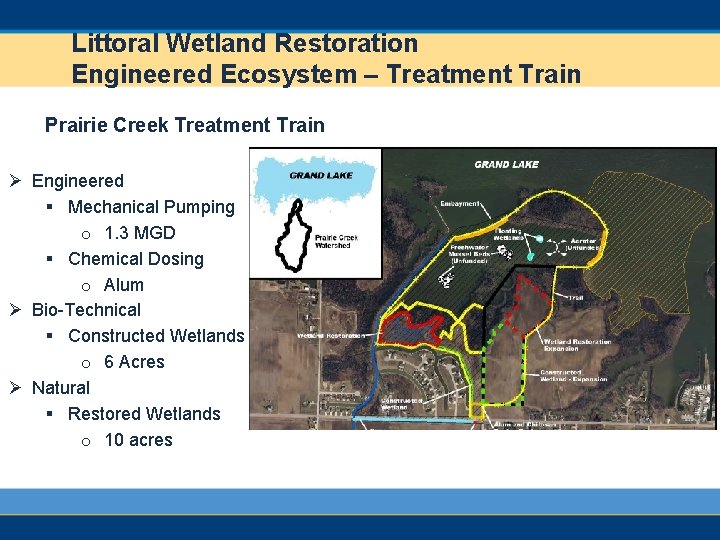
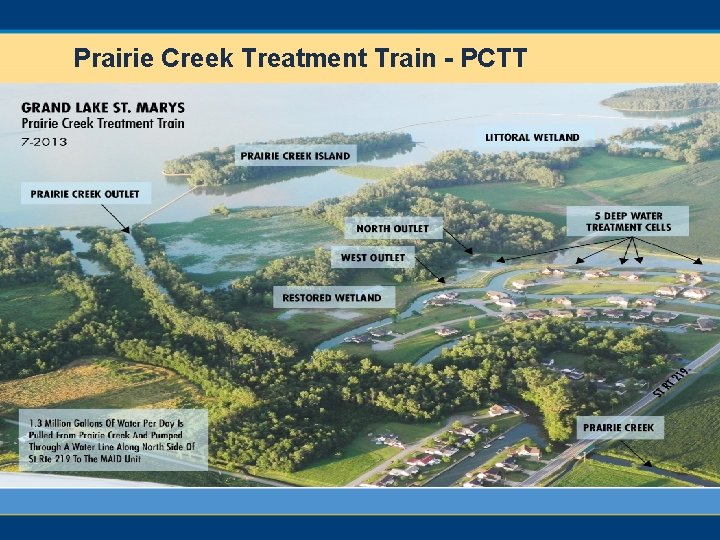
Littoral Wetland Restoration Engineered Ecosystem – Treatment Train Prairie Creek Treatment Train Ø Engineered § Mechanical Pumping o 1. 3 MGD § Chemical Dosing o Alum Ø Bio-Technical § Constructed Wetlands o 6 Acres Ø Natural § Restored Wetlands o 10 acres
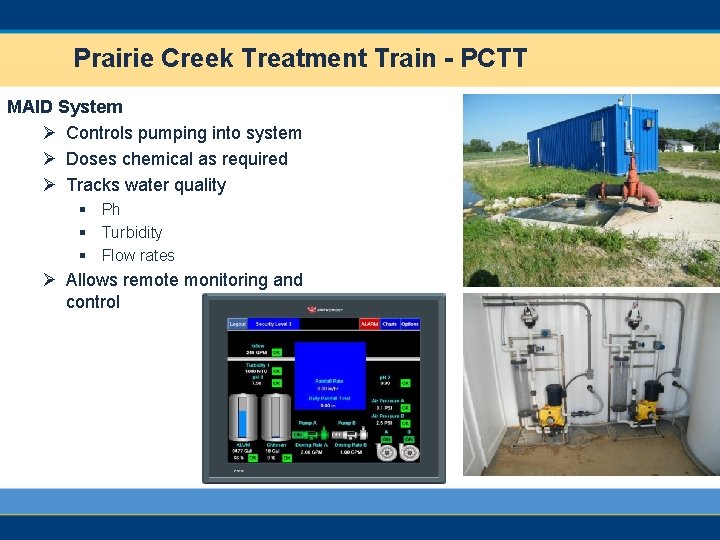
Prairie Creek Treatment Train - PCTT MAID System Ø Controls pumping into system Ø Doses chemical as required Ø Tracks water quality § Ph § Turbidity § Flow rates Ø Allows remote monitoring and control
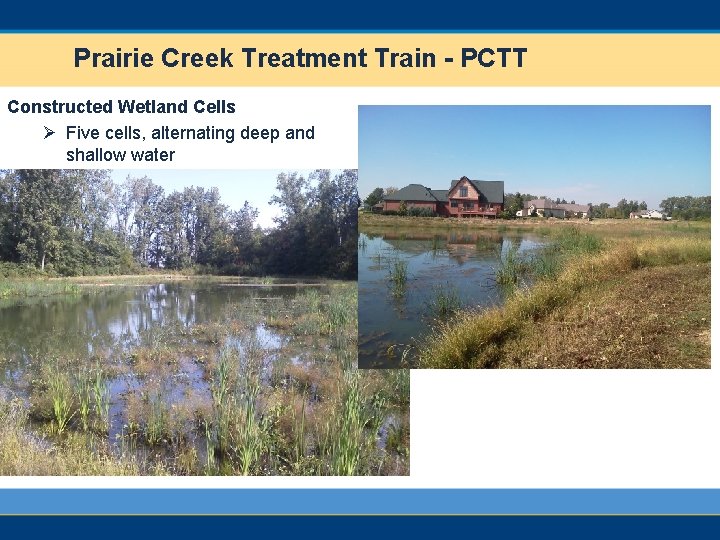
Prairie Creek Treatment Train - PCTT Constructed Wetland Cells Ø Five cells, alternating deep and shallow water
Prairie Creek Treatment Train - PCTT
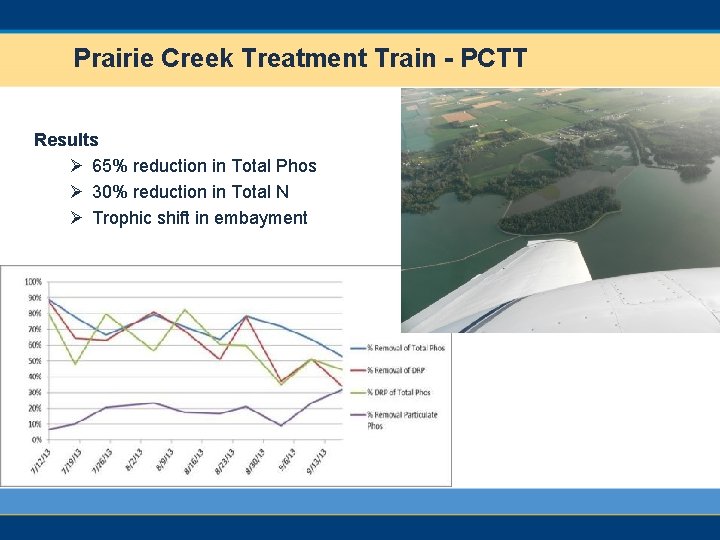
Prairie Creek Treatment Train - PCTT Results Ø 65% reduction in Total Phos Ø 30% reduction in Total N Ø Trophic shift in embayment
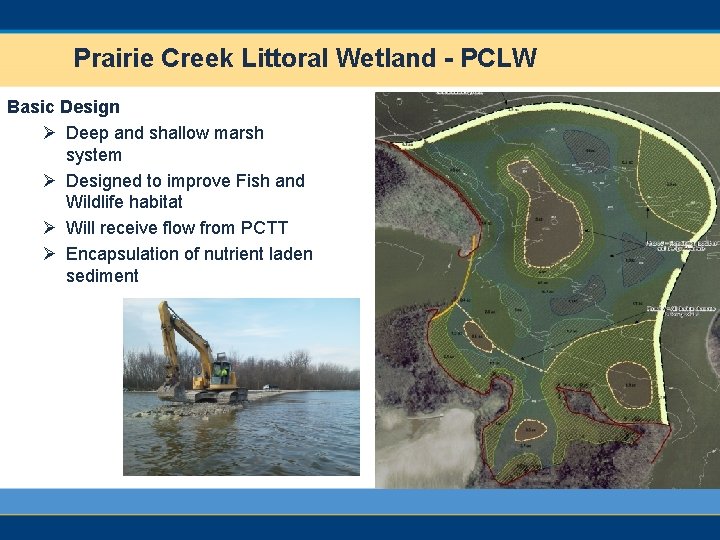
Prairie Creek Littoral Wetland - PCLW Basic Design Ø Deep and shallow marsh system Ø Designed to improve Fish and Wildlife habitat Ø Will receive flow from PCTT Ø Encapsulation of nutrient laden sediment
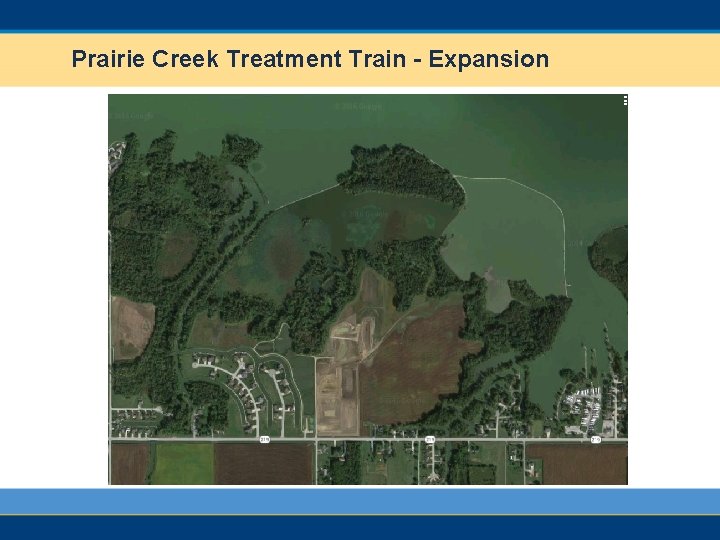
Prairie Creek Treatment Train - Expansion
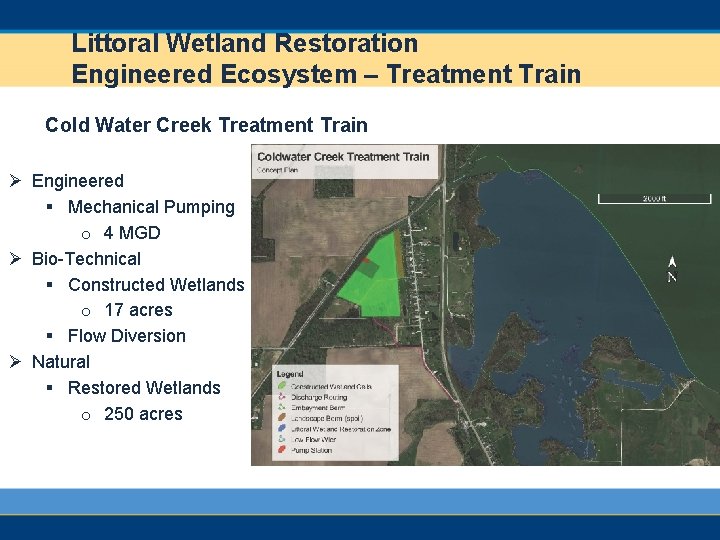
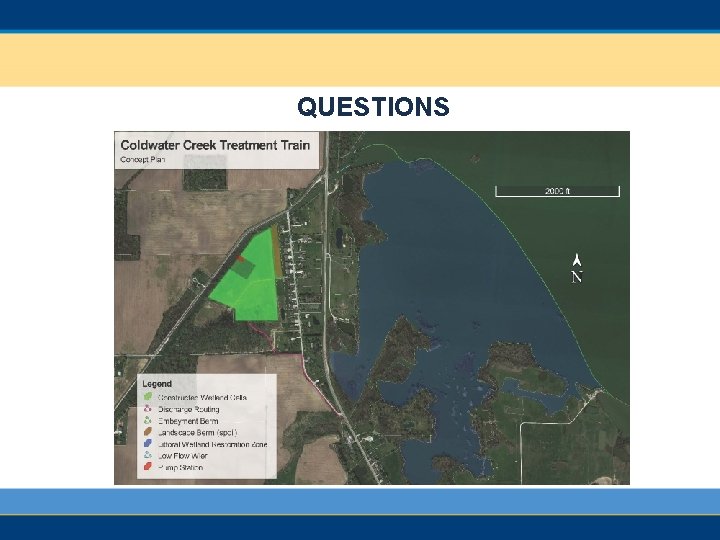
Littoral Wetland Restoration Engineered Ecosystem – Treatment Train Cold Water Creek Treatment Train Ø Engineered § Mechanical Pumping o 4 MGD Ø Bio-Technical § Constructed Wetlands o 17 acres § Flow Diversion Ø Natural § Restored Wetlands o 250 acres
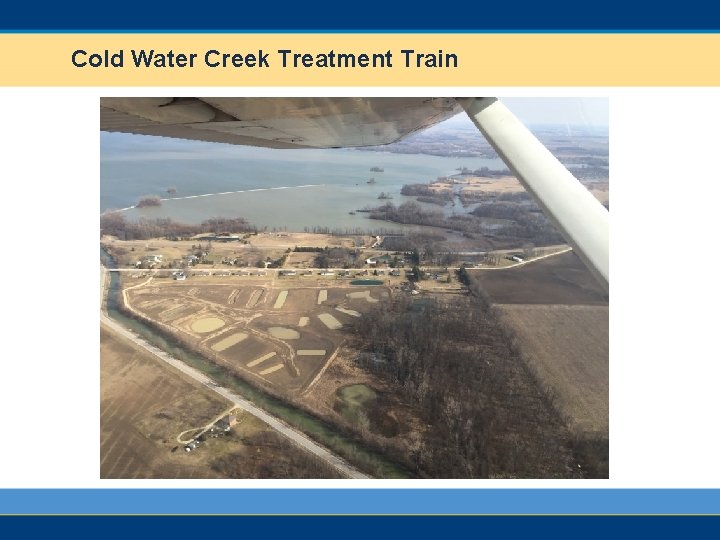
Cold Water Creek Treatment Train
Grand Lake St. Mary’s Status Current Ø Engineered Ecosystems on GLSM have shown; § Observed and measured improvements in water quality § Observed expansion of existing littoral wetland system On-going Ø Ecosystem response to re-establishment in historic wetland zones is being monitored Future Ø One more Treatment Train under construction and one in design, four more in planning
QUESTIONS