
Innovative Strategies in Motivational Interviewing for Substance Abuse
Innovative Strategies in Motivational Interviewing for Substance Abuse Intervention with At-Risk Youth Michelle Coleman, LMSW, LCDC PH. D. Candidate
WARNING! This is an INTERACTIVE SESSION! YOU WILL BE ASKED TO PARTICIPATE! YOU MAY BE APPREHENSIVE AND AMBIVALENT! IT’s OK. We accept you AS YOU ARE How willing are you to TAKE A RISK? How ready are you to CHANGE?
AGENDA Discuss motivational interviewing and strengths-based approaches for at-risk youth. What works and doesn’t work according to current research and trends. Develop curriculum and resources using hands-on interventions. Current trends among youth in the Drug & Alcohol Field. Conduct Practical Hands-On Exercises
Most successful National Employment and Vocational Training Program for At-Risk Youth. Gary Job Corps in San Marcos, TX is located in central Texas between Austin and San Antonio and is the largest center currently serving over 1, 085 students. Offers vocational training in 18 vocational trades in 3 areas and 4 advanced training programs. Current stats are: HSE 57. 92% CTT 65. 44% Combo 51. 51% Current graduate average wage is $9. 86
Current Research on Youth According to Botvin & Botvin (1997), social skills training in combination with other approaches has the most effective impact on substance use behavior. The average brain isn’t developed until age 25. Therefore, due to adolescents unique developmental issues, differences in priorities, and susceptibility to peer influence, they must be approached differently from adults. (Wormer & Davis, 2008).
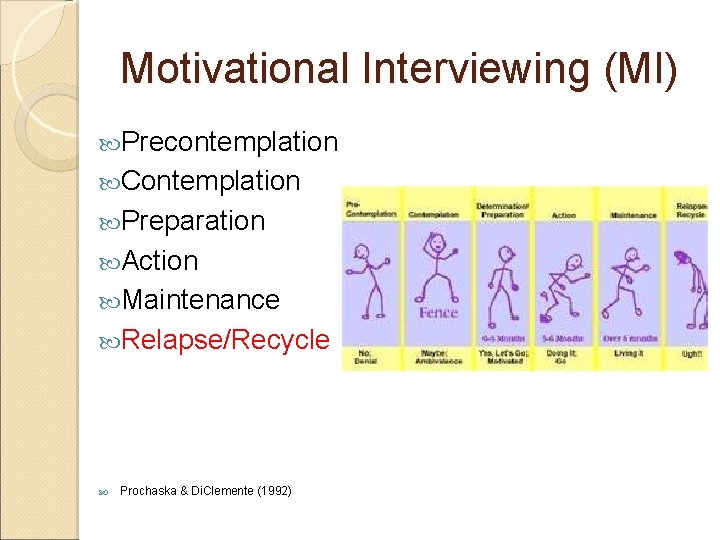
Motivational Interviewing (MI) Precontemplation Contemplation Preparation Action Maintenance Relapse/Recycle Prochaska & Di. Clemente (1992)
Practical Exercise The Stages of Change Worksheet: I refuse to participate I don’t like to participate. Unsure, Don’t know I’m curious? I love to How willing are you to Change? On a Scale of 0 – 10, rate your readiness to change.
Current Research on Youth What Doesn’t Work: “If we’re encouraged to take a position, we become motivated to defend that position” (Aronson, 2002 p. 85). Focusing on Addictive Behavior Confrontation of Denial Labeling or Blaming The Question/Answer Game The Expert Trap (opposite of collaboration)
Current Research on Youth What Works: ◦ A collaborative strengths-based approach. ◦ Developing techniques for coping with cravings and urges. ◦ Learning more adaptive methods for coping with life’s problems. ◦ Using hands-on learning models vs. just teaching or talking. ◦ (W. R. Miller & Rollnick, 1998)
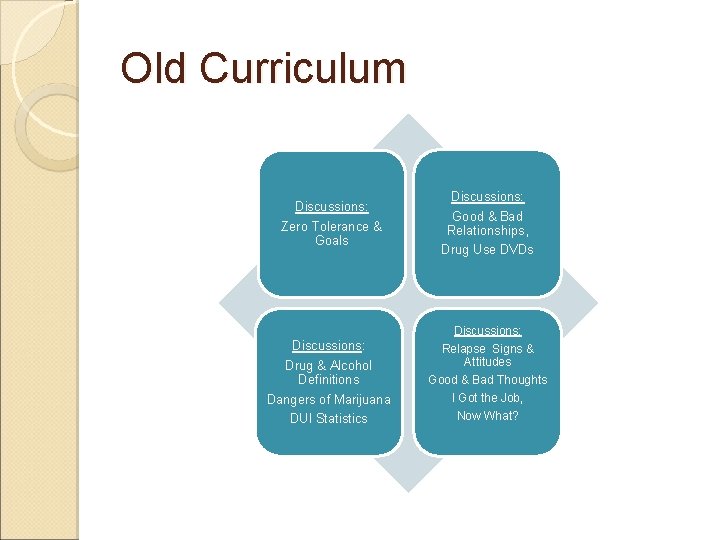
Old Curriculum Discussions: Zero Tolerance & Goals Discussions: Good & Bad Relationships, Drug Use DVDs Discussions: Drug & Alcohol Definitions Dangers of Marijuana DUI Statistics Relapse Signs & Attitudes Good & Bad Thoughts I Got the Job, Now What?
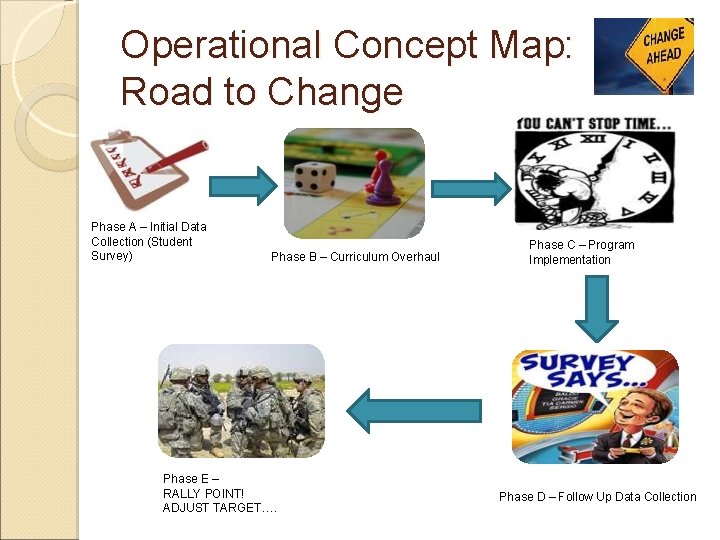
Operational Concept Map: Road to Change Phase A – Initial Data Collection (Student Survey) Phase B – Curriculum Overhaul Phase E – RALLY POINT! ADJUST TARGET…. Phase C – Program Implementation Phase D – Follow Up Data Collection
Survey of Groups 267 Pre Surveys 382 Post Surveys were collected Over the period of 6 months between May – Dec 2011 in order to determine: Awareness of Zero Tolerance Policies Identify participant attitudes and ambivalence Establish a baseline upon program entry Evaluate program impact and effectiveness. Limitations of the Survey: Validity based on self report Pre-survey implemented after post -survey was initiated.
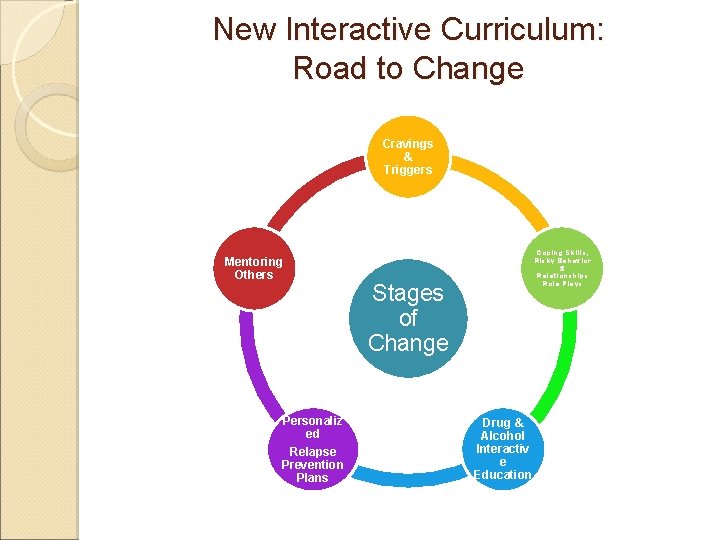
New Interactive Curriculum: Road to Change Cravings & Triggers Mentoring Others Personaliz ed Relapse Prevention Plans Coping Skills, Risky Behavior & Relationships Role Plays Stages of Change Drug & Alcohol Interactiv e Education
Intro to New Curriculum “I will be open to change” Week 1 – Intro. to Program and Stages of Change Week 2 –Relationships and Coping Skills Week 3 – Drug & Alcohol Abuse Week 4 – Relapse Prevention Week 5 – Wrapping It All Up Week 6 – Mentoring Program
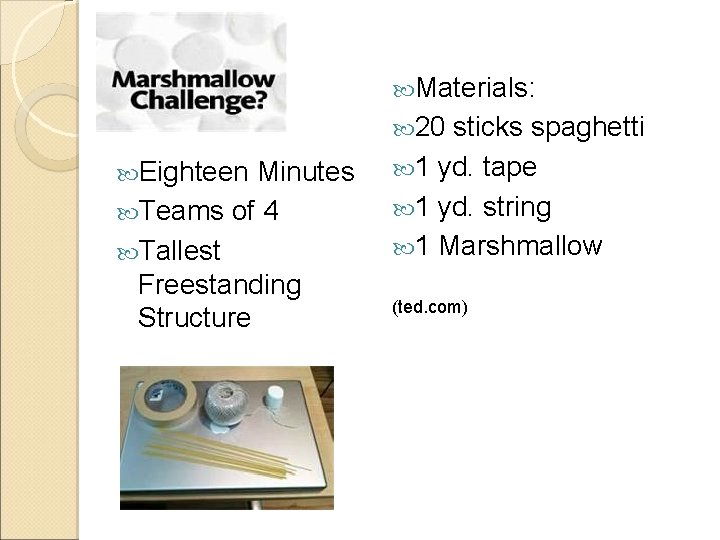
Materials: 20 Eighteen Minutes Teams of 4 Tallest Freestanding Structure sticks spaghetti 1 yd. tape 1 yd. string 1 Marshmallow (ted. com)
Practical Exercise – Role Play “You Broke The Law, You Be the Judge” 1 Defendant 1 Parent 1 Judge The Other Group Members are the Jury You have 15 minutes to act out the case. The judge may call on jury members for suggestions for interventions.
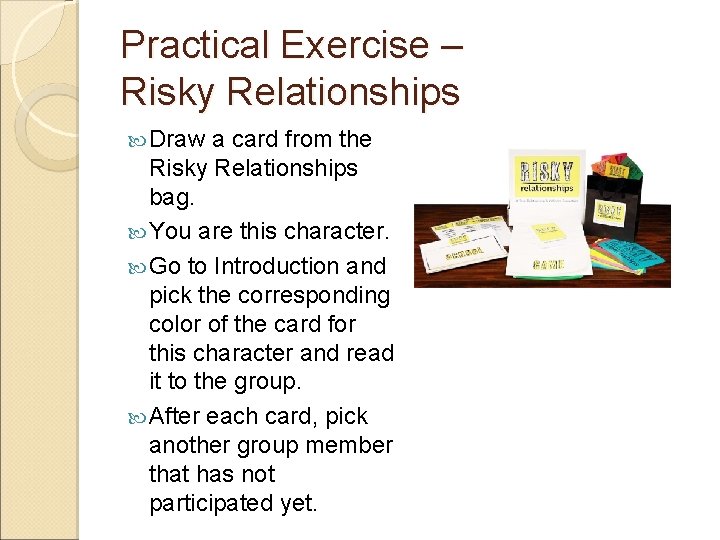
Practical Exercise – Risky Relationships Draw a card from the Risky Relationships bag. You are this character. Go to Introduction and pick the corresponding color of the card for this character and read it to the group. After each card, pick another group member that has not participated yet.
Practical Exercise – Temper Tamers Each person draws a card You must wait your turn Read and discuss the card Share only what you feel comfortable sharing. Group members are encouraged to provide feedback.
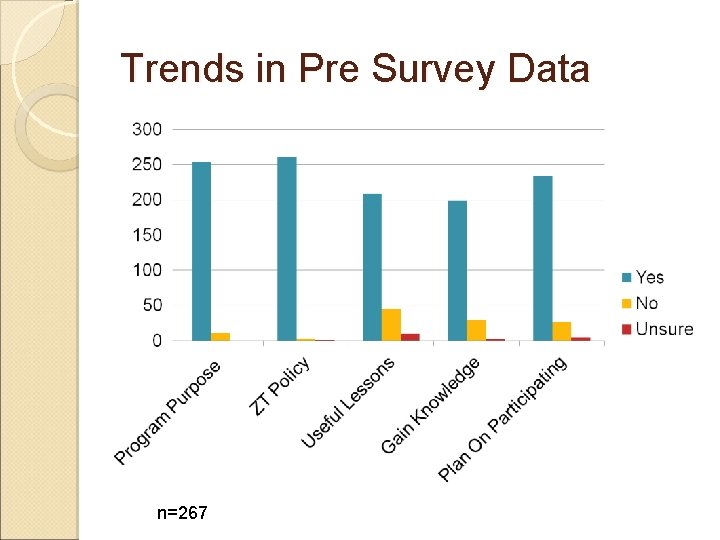
Trends in Pre Survey Data n=267
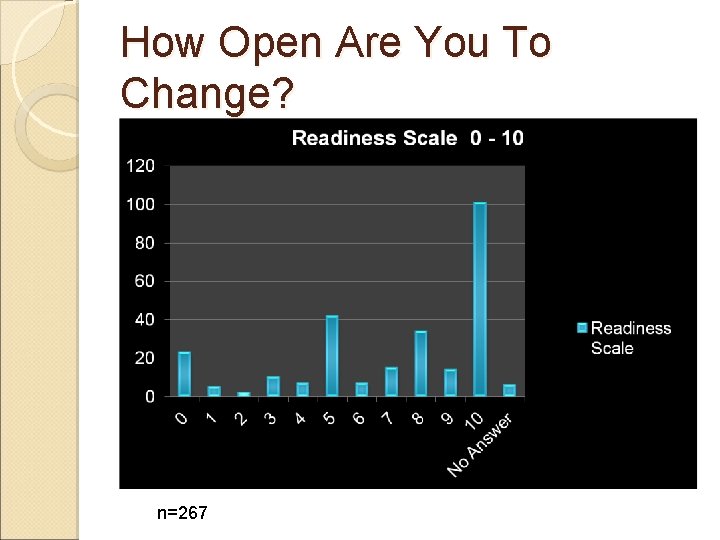
How Open Are You To Change? n=267
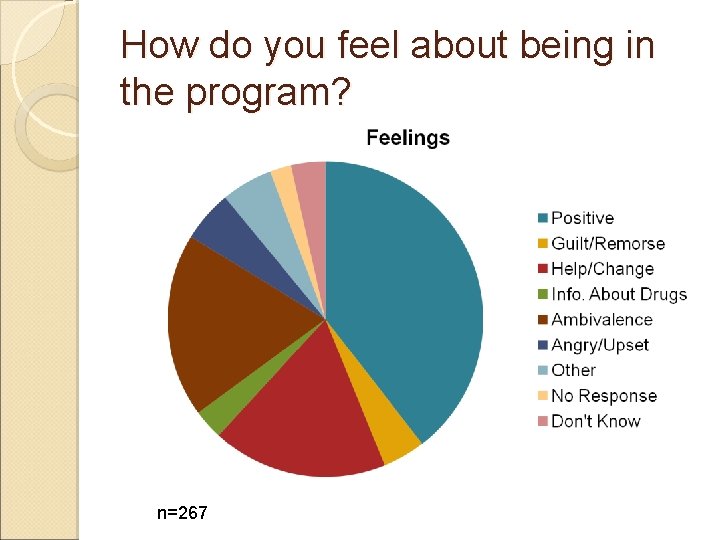
How do you feel about being in the program? n=267
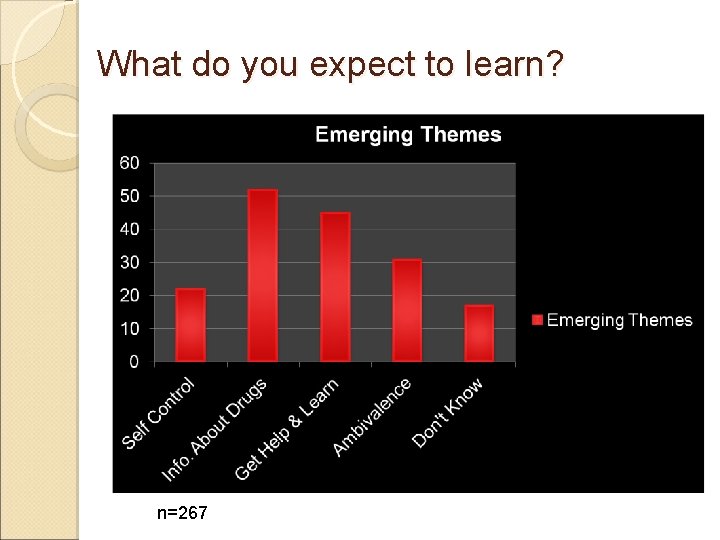
What do you expect to learn? n=267
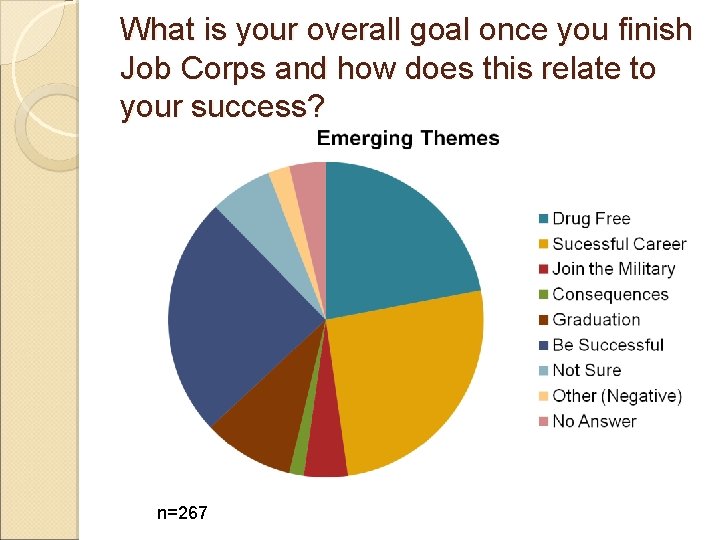
What is your overall goal once you finish Job Corps and how does this relate to your success? n=267
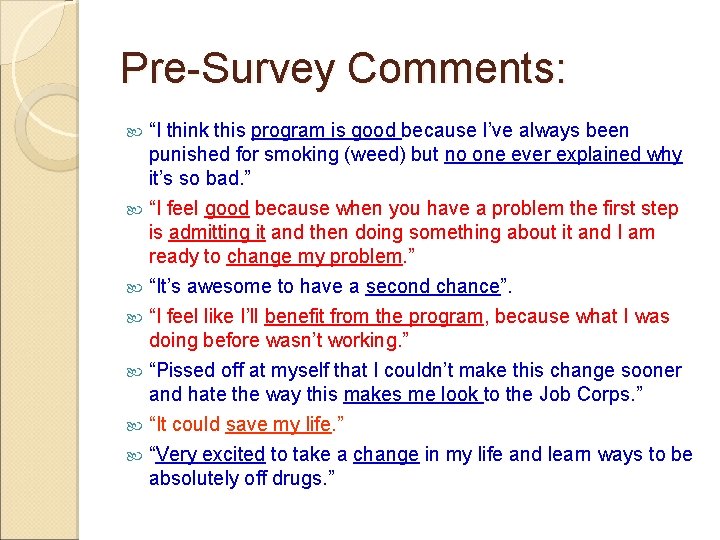
Pre-Survey Comments: “I think this program is good because I’ve always been punished for smoking (weed) but no one ever explained why it’s so bad. ” “I feel good because when you have a problem the first step is admitting it and then doing something about it and I am ready to change my problem. ” “It’s awesome to have a second chance”. “I feel like I’ll benefit from the program, because what I was doing before wasn’t working. ” “Pissed off at myself that I couldn’t make this change sooner and hate the way this makes me look to the Job Corps. ” “It could save my life. ” “Very excited to take a change in my life and learn ways to be absolutely off drugs. ”
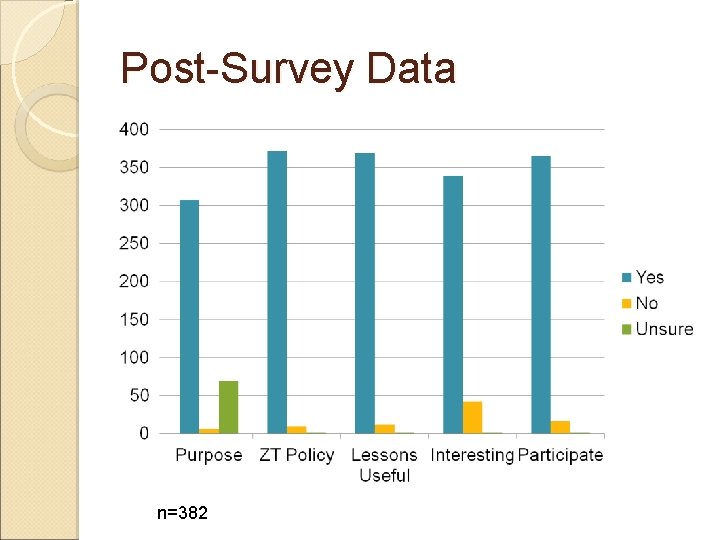
Post-Survey Data n=382
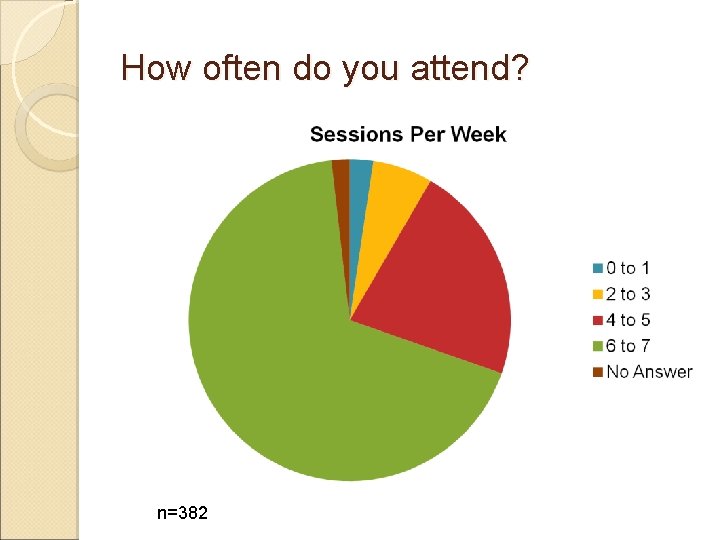
How often do you attend? n=382
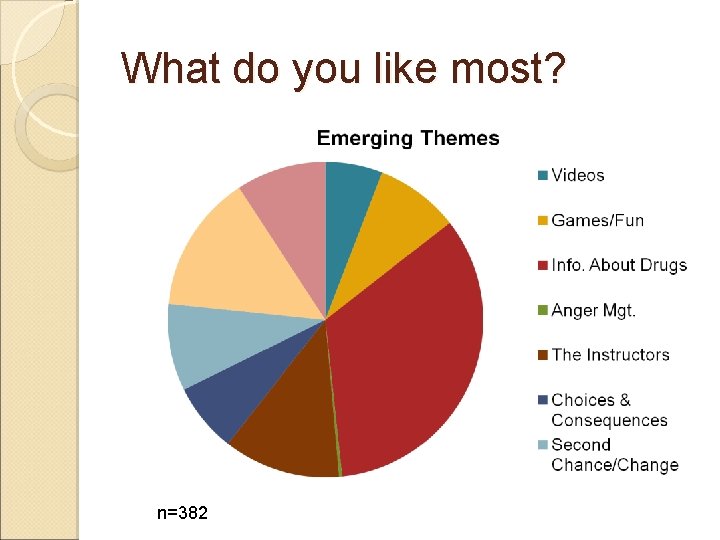
What do you like most? n=382
Post-Survey Comments “The insightful board games, as you are able to interact and learn at the same time. ” “Talking to teachers and staff about drugs was helpful. ” “Every lesson made me wanna stop smoking (weed) even more. ” “The teachers were great at what they do. ” “I am thankful for this program. It really helped me find myself without drugs. ” “This has been an excellent program. Before I used to think that drugs made me feel better but now with the help of my peers and fellow instructors I see what matters in life. I hope to be able to mentor people and stop drug use and view the world the same way I now see it. I love this excellent and very beneficial program! Thank you!”
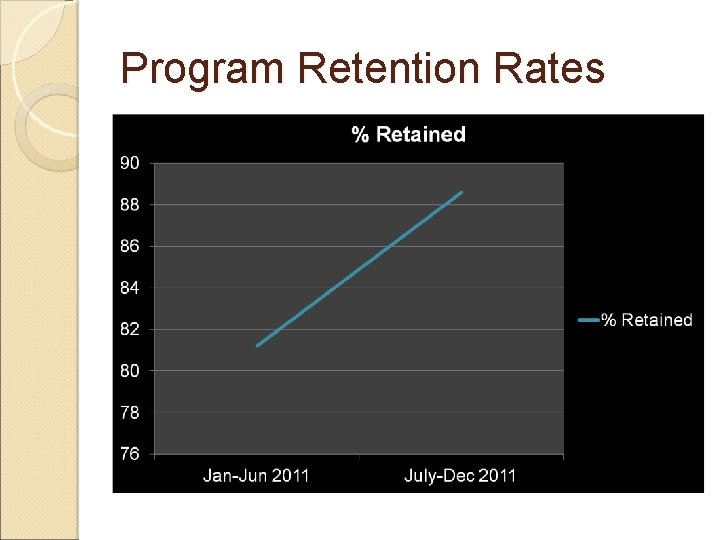
Program Retention Rates
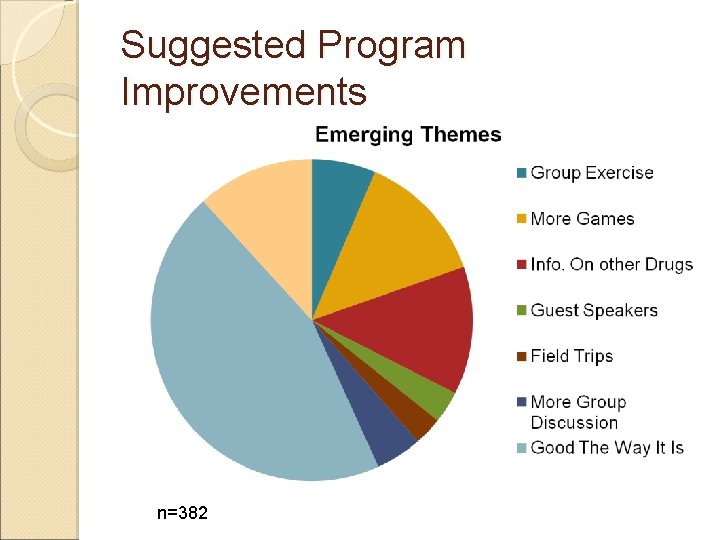
Suggested Program Improvements n=382
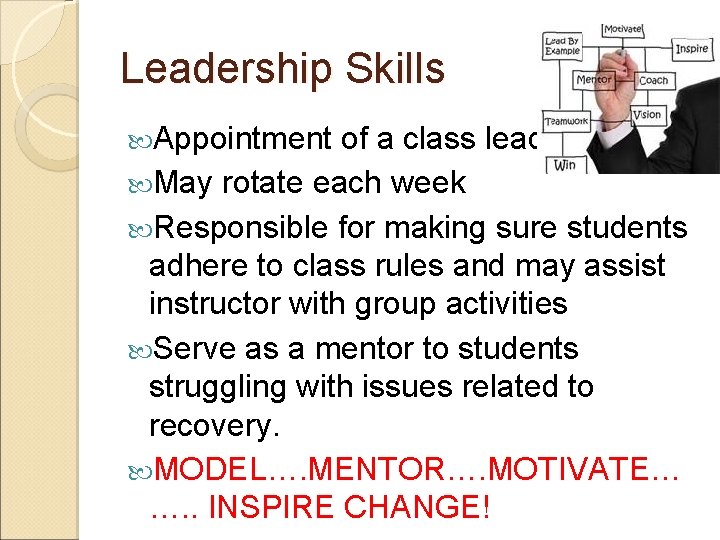
Leadership Skills Appointment of a class leader May rotate each week Responsible for making sure students adhere to class rules and may assist instructor with group activities Serve as a mentor to students struggling with issues related to recovery. MODEL…. MENTOR…. MOTIVATE… …. . INSPIRE CHANGE!
Practical Exercise – Leadership Skills Each member draws a card You must wait your turn Read and discuss the card Share only what you feel comfortable sharing. Group members are encouraged to provide feedback.
Awards & Incentives Request incentives for Awards for Completers Announced in Orientation Best Attendance Best Participation Most Improved Student Best Leadership Skills Be certain to stress follow up care
Resources for Curriculum Marshmallow Challenge www. marshmallow. com Adolescent Relapse Prevention Workbook www. relapse. org Marijuana: Your Personal Recovery Plan www. hazelden. com 100 Interactive Activities Book with CD www. therapeuticresources. co m The Coping Game www. therapeuticresources. co m Drug Prevention Bingo for Teens www. therapeuticresources. c om In the Know: Tobacco, Alcohol & Marijuana DVD www. prtpress. com In the Know: Herbal Incense Fake Marijuana Pamphlet www. prtpress. com Temper Tamers, Chill Skills, Leadership Skills in a Ja www. freespirit. com
Resources for Curriculum The Use, Relapse & Recovery Journey Game www. therapeuticresources. c om Risky Relationships-Teen Violence Simulation www. cafeprevention. com They Broke the Law - You Be The Judge: Role Plays (FREE DOWNLOAD) http: //www. freespirit. com/files /OTHER/They_Broke_the_La w_roleplays. pdf • The Marshmallow Challenge http: //marshmallowchallenge. c om/Welcome. html
FREE Resources Drug Free World http: //www. drugfreeworld. org/ Texas Alcohol Beverage Commission (TABC) http: //www. tabc. state. tx. us/ Mothers Against Drunk Drivers (MADD) http: //www. madd. org Above the Influence http: //www. abovetheinfluence. com National Institute on Drug Abuse (NIDA) http: //www. drugabuse. gov/ SAMHSA http: //www. samhsa. gov/ Motivational Interviewing Techniques: www. motivationalinterviewing. org
FREE Resources Network with local colleges and universities and actively recruit Interns. Become familiar with agencies and resources in your community you may be able to establish partnerships with: United Way American Red Cross 12 Step Support Groups – NA & AA Local State Troopers & Law Enforcement Local Women’s Centers HIV & AIDS Organizations PROVIDE A HOLISTIC PREVENTION INTERVENTION MODEL FOCUSED ON RESILIENCE & A STRENGTHS PERSPECTIVE
References Beck, A. T. , Wright, F. D. Newman, C. F. & Liese, B. S (1993). Cognitive Therapy of substance abuse. The Guilford Press. Botvin, G. , & Botvin, E. (1997). School-based programs. J. H. Lowinson, P. Ruiz, R. Mulliman, & J. G. Langrod (Eds. ), Substance abuse: A comprehensive textbook (pp. 764 -775). Lawson, G, Lawson, A. & rivers, P. (2001). Essentials of chemical dependency counseling. (3 rd ed. ). Gaithersburg, MD: Aspen Publishers. Miller, W. R. , & Rollnick, S. (2002). Motivational Interviewing: Preparing people to change addictive behavior. (2 nd ed. ) New York: Guilford Press. Wormer, K. V. & Davis, D. R. (2008). Addiction treatment: a strengths perspective. (2 nd ed. ) Belmont, CA: Brooks/Cole.
Contact Information Michelle R. Coleman, LMSW, LCDC TEAP Specialist Gary Job Corps 2800 Airport Hwy. 21 San Marcos, TX 78664 (512) 396 -6416 coleman. michelle@jobcorps. org
- Slides: 39