
Innovation Innovation The successful exploitation of new ideas


- Slides: 14
Innovation
Innovation The successful exploitation of new ideas, allowing businesses to compete effectively in an increasingly competitive global market
Innovation • What is it? • What constitutes innovation?
Innovation active companies. . . • • Introduce new or significantly improved goods or services Introduce new processes for making or supplying a product Support continued research & development (R&D) Are committed to training linked to innovation activities
Strategic innovation • When a business undertakes major changes in its • • management practices business structure organisational structure, or marketing strategy in order to improve its competitiveness
Why innovate?
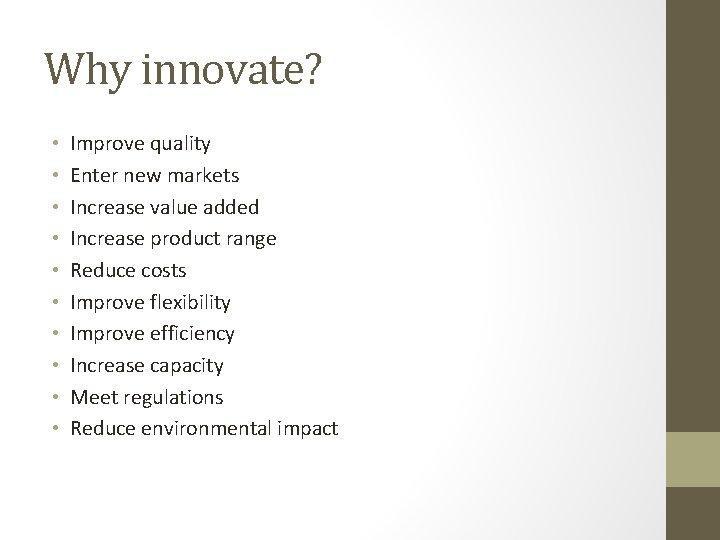
Why innovate? • • • Improve quality Enter new markets Increase value added Increase product range Reduce costs Improve flexibility Improve efficiency Increase capacity Meet regulations Reduce environmental impact
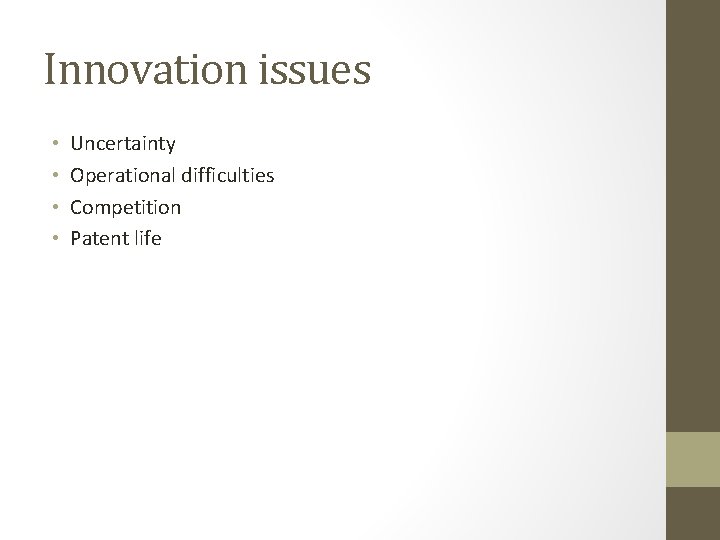
Innovation issues • • Uncertainty Operational difficulties Competition Patent life
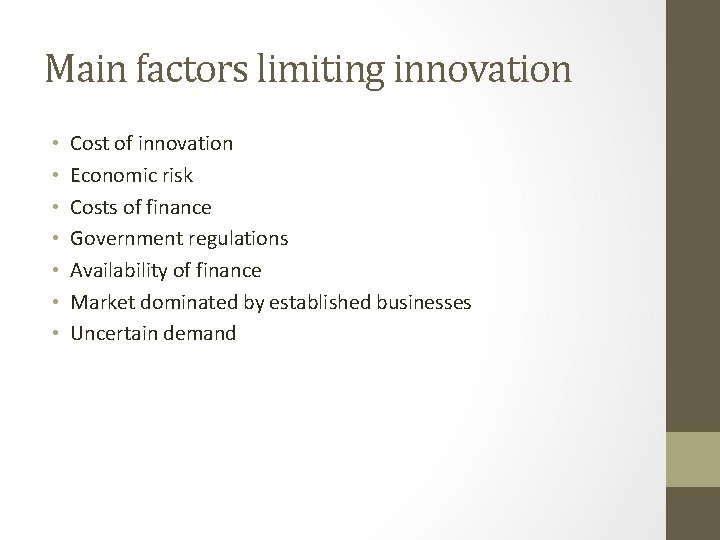
Main factors limiting innovation • • Cost of innovation Economic risk Costs of finance Government regulations Availability of finance Market dominated by established businesses Uncertain demand
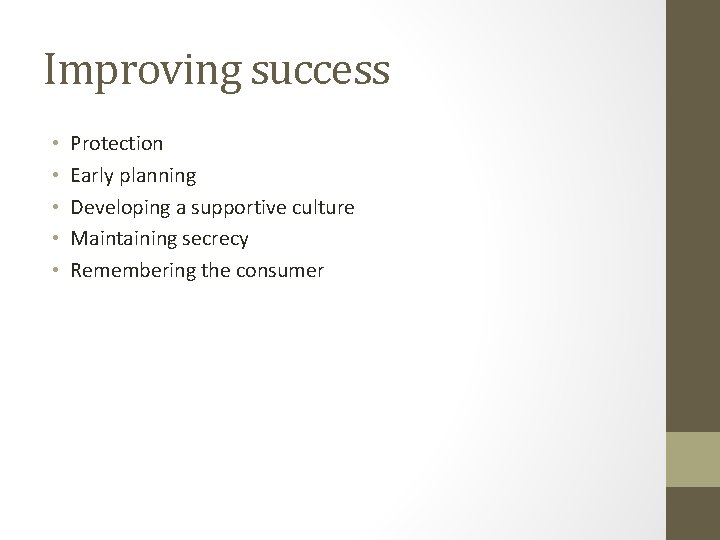
Improving success • • • Protection Early planning Developing a supportive culture Maintaining secrecy Remembering the consumer
UK R&D Spending • See Table 13. 3, page 194
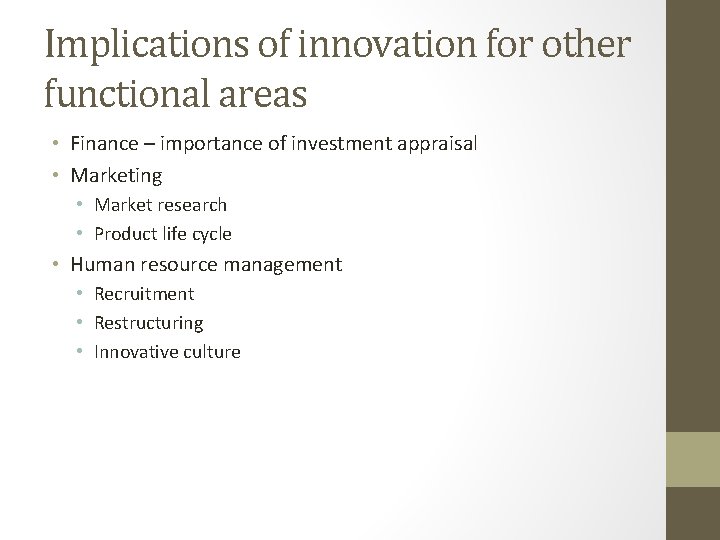
Implications of innovation for other functional areas • Finance – importance of investment appraisal • Marketing • Market research • Product life cycle • Human resource management • Recruitment • Restructuring • Innovative culture
Factors influencing financial commitment to R&D • What are they?
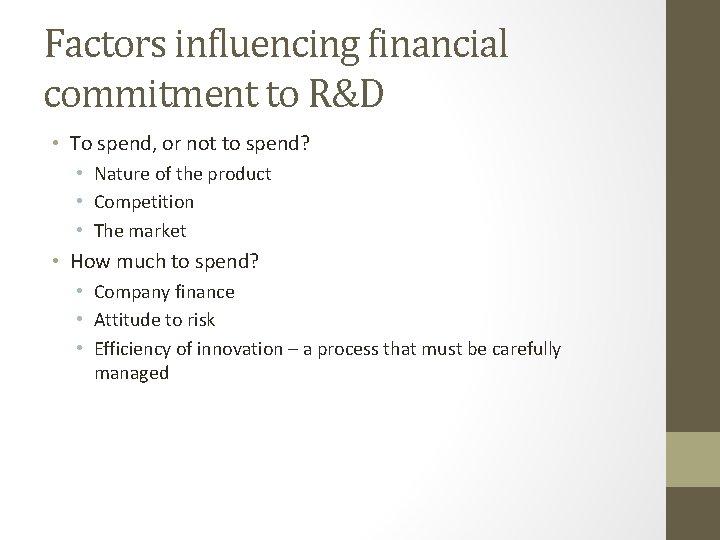
Factors influencing financial commitment to R&D • To spend, or not to spend? • Nature of the product • Competition • The market • How much to spend? • Company finance • Attitude to risk • Efficiency of innovation – a process that must be carefully managed