
Innovation in TTM The Gibney Presented by Mike
Innovation in TTM ~”The Gibney” Presented by Mike Gibney www. fultonhogan. com C Copyright
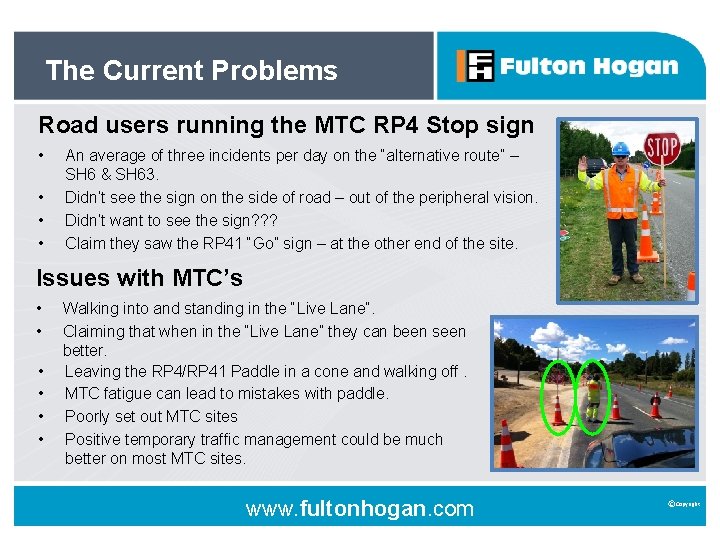
The Current Problems Road users running the MTC RP 4 Stop sign • • An average of three incidents per day on the “alternative route” – SH 6 & SH 63. Didn’t see the sign on the side of road – out of the peripheral vision. Didn’t want to see the sign? ? ? Claim they saw the RP 41 “Go” sign – at the other end of the site. Issues with MTC’s • • • Walking into and standing in the “Live Lane”. Claiming that when in the “Live Lane” they can been seen better. Leaving the RP 4/RP 41 Paddle in a cone and walking off. MTC fatigue can lead to mistakes with paddle. Poorly set out MTC sites Positive temporary traffic management could be much better on most MTC sites. www. fultonhogan. com C Copyright
MTC site ~ Done well Optional download of video W-08 a MTC site done well www. fultonhogan. com C Copyright
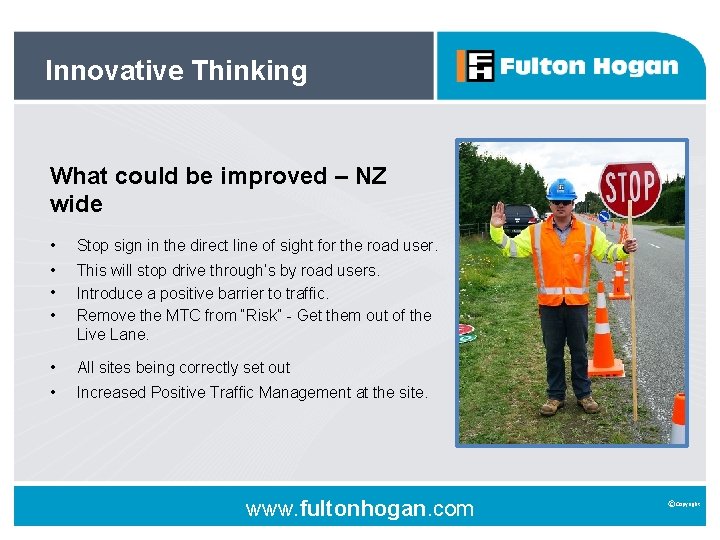
Innovative Thinking What could be improved – NZ wide • Stop sign in the direct line of sight for the road user. • • • This will stop drive through’s by road users. Introduce a positive barrier to traffic. Remove the MTC from “Risk” - Get them out of the Live Lane. • All sites being correctly set out • Increased Positive Traffic Management at the site. www. fultonhogan. com C Copyright
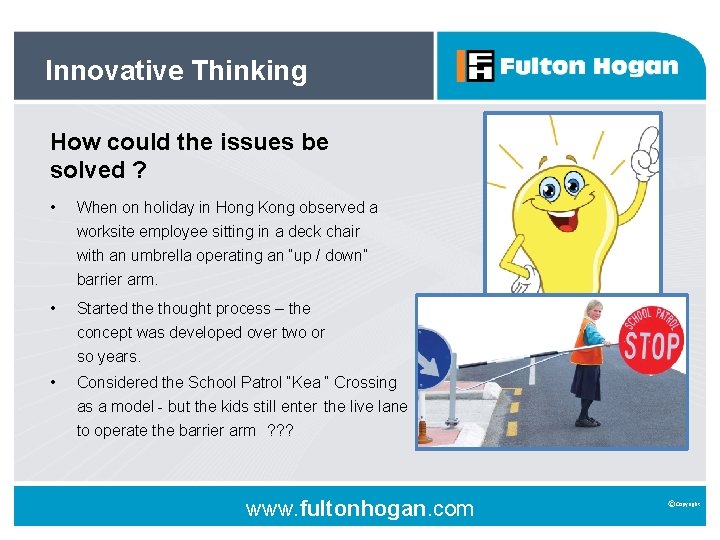
Innovative Thinking How could the issues be solved ? • When on holiday in Hong Kong observed a worksite employee sitting in a deck chair with an umbrella operating an “up / down” barrier arm. • Started the thought process – the concept was developed over two or so years. • Considered the School Patrol “Kea “ Crossing as a model - but the kids still enter the live lane to operate the barrier arm ? ? ? www. fultonhogan. com C Copyright

An Early Solution “The Gibney” Barrier Prototype Development • • • Developed in the Fulton Hogan Nelson workshop. Two or three early prototypes. Settled on a foot operated version. This was trialled on local roads with the Tasman District Council approval as an experimental sign. Demonstrated to the Fulton Hogan Traffic Critical Risk Group. www. fultonhogan. com C Copyright
An Early Solution Optional download of video W-08 b An early solution www. fultonhogan. com C Copyright
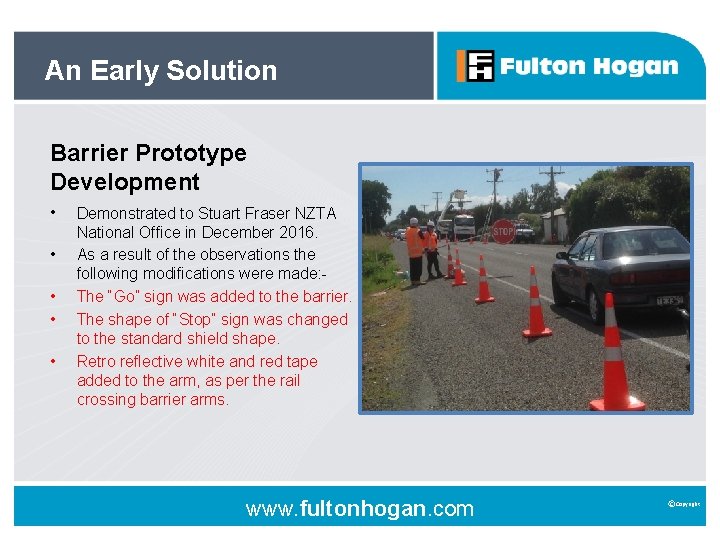
An Early Solution Barrier Prototype Development • • • Demonstrated to Stuart Fraser NZTA National Office in December 2016. As a result of the observations the following modifications were made: The “Go” sign was added to the barrier. The shape of “Stop” sign was changed to the standard shield shape. Retro reflective white and red tape added to the arm, as per the rail crossing barrier arms. www. fultonhogan. com C Copyright
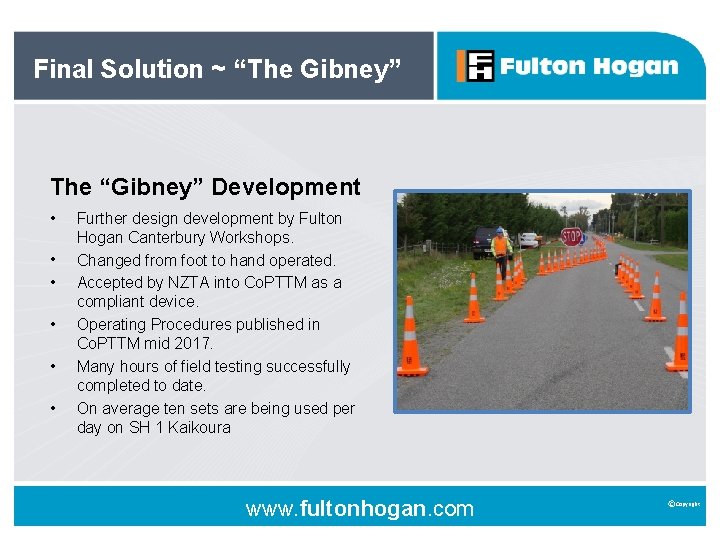
Final Solution ~ “The Gibney” The “Gibney” Development • • • Further design development by Fulton Hogan Canterbury Workshops. Changed from foot to hand operated. Accepted by NZTA into Co. PTTM as a compliant device. Operating Procedures published in Co. PTTM mid 2017. Many hours of field testing successfully completed to date. On average ten sets are being used per day on SH 1 Kaikoura www. fultonhogan. com C Copyright
Final Solution ~ “The Gibney” Optional download of video W-08 c The Gibney www. fultonhogan. com C Copyright
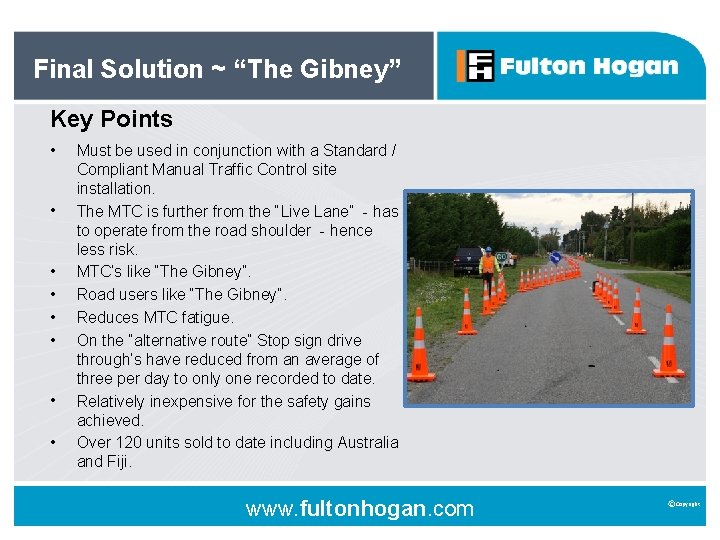
Final Solution ~ “The Gibney” Key Points • • Must be used in conjunction with a Standard / Compliant Manual Traffic Control site installation. The MTC is further from the “Live Lane” - has to operate from the road shoulder - hence less risk. MTC’s like “The Gibney”. Road users like “The Gibney”. Reduces MTC fatigue. On the “alternative route” Stop sign drive through’s have reduced from an average of three per day to only one recorded to date. Relatively inexpensive for the safety gains achieved. Over 120 units sold to date including Australia and Fiji. www. fultonhogan. com C Copyright
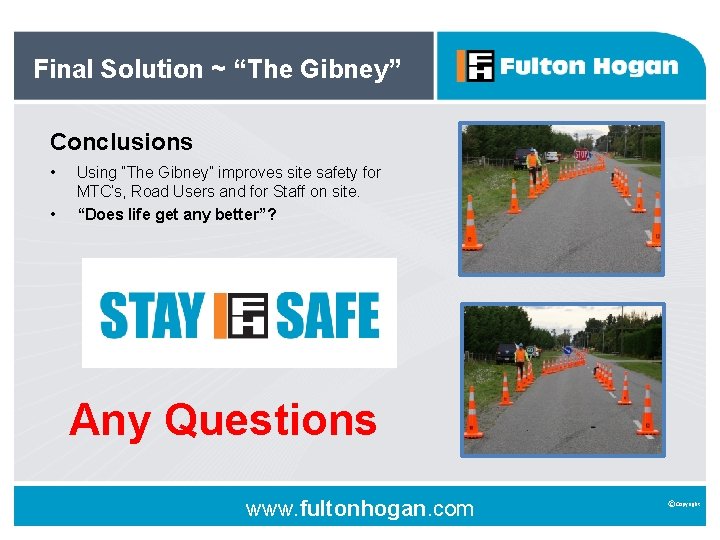
Final Solution ~ “The Gibney” Conclusions • • Using “The Gibney” improves site safety for MTC’s, Road Users and for Staff on site. “Does life get any better”? Any Questions www. fultonhogan. com C Copyright
- Slides: 13