
Innovation in Educational Technology Stephen Downes Bayonne France
Innovation in Educational Technology Stephen Downes Bayonne, France January 24, 2018
Innovation • “Innovation means creating value from ideas. ” http: //www. downes. ca/post/67693 • “As a consensus summary definition, innovation is – something fresh (new, original, or improved) – that creates value” https: //www. freshconsulting. com/what-isinnovation/ • “Executing an idea which addresses a specific challenge and achieves value for both the company and customer” https: //www. ideatovalue. com/inno/nickskillicorn/2016/03/innovation-15 -experts-shareinnovation-definition/
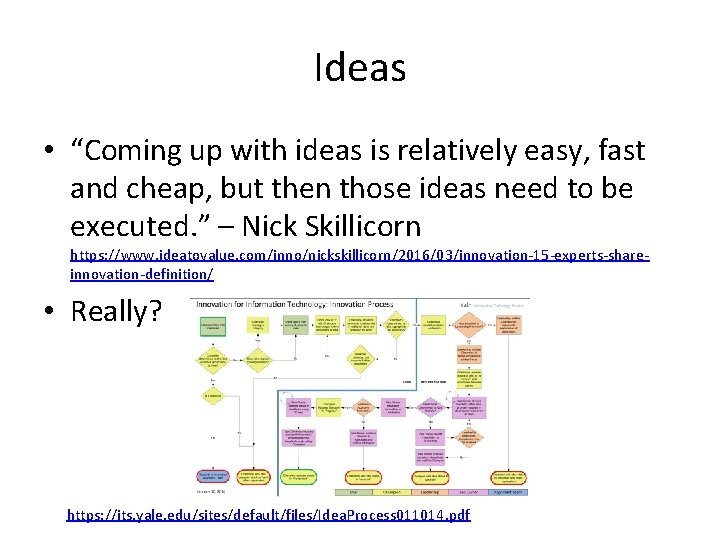
Ideas • “Coming up with ideas is relatively easy, fast and cheap, but then those ideas need to be executed. ” – Nick Skillicorn https: //www. ideatovalue. com/inno/nickskillicorn/2016/03/innovation-15 -experts-shareinnovation-definition/ • Really? https: //its. yale. edu/sites/default/files/Idea. Process 011014. pdf
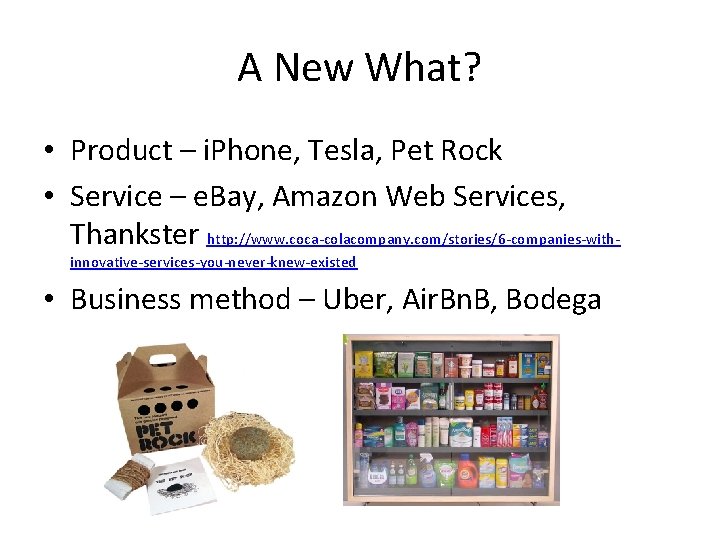
A New What? • Product – i. Phone, Tesla, Pet Rock • Service – e. Bay, Amazon Web Services, Thankster http: //www. coca-colacompany. com/stories/6 -companies-withinnovative-services-you-never-knew-existed • Business method – Uber, Air. Bn. B, Bodega
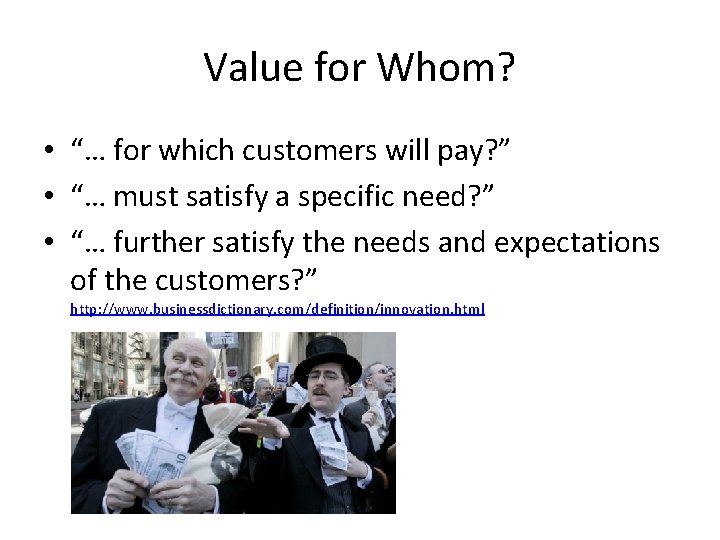
Value for Whom? • “… for which customers will pay? ” • “… must satisfy a specific need? ” • “… further satisfy the needs and expectations of the customers? ” http: //www. businessdictionary. com/definition/innovation. html
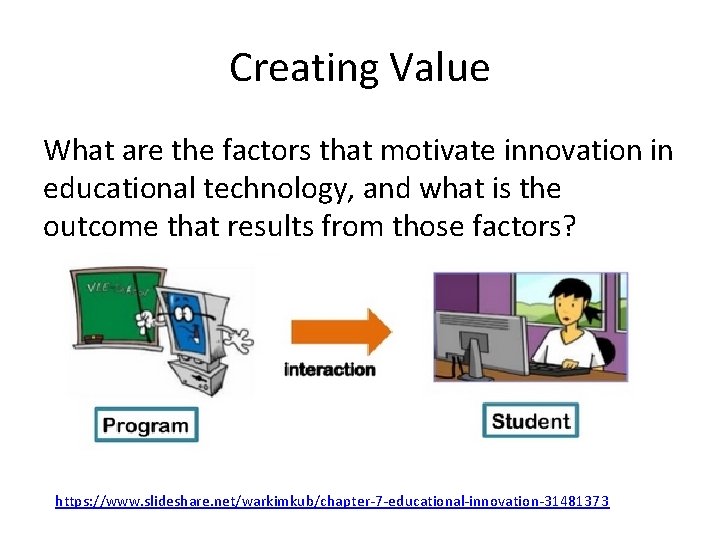
Creating Value What are the factors that motivate innovation in educational technology, and what is the outcome that results from those factors? https: //www. slideshare. net/warkimkub/chapter-7 -educational-innovation-31481373
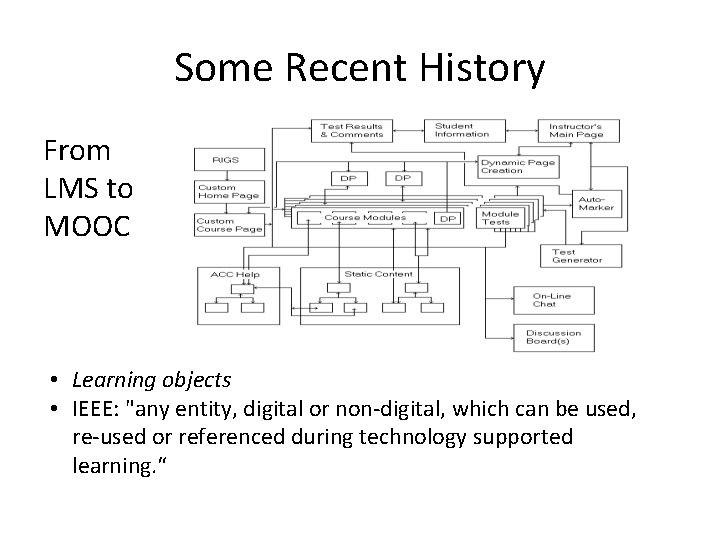
Some Recent History From LMS to MOOC • Learning objects • IEEE: "any entity, digital or non-digital, which can be used, re-used or referenced during technology supported learning. “
Content and Open Educational Resources Stop thinking of learning objects as though they were classes or lessons or some such thing with built-in intent. It is preferable to think of them as a greatly enhanced vocabulary that can be used in a multidimensional (as opposed to merely linear) language
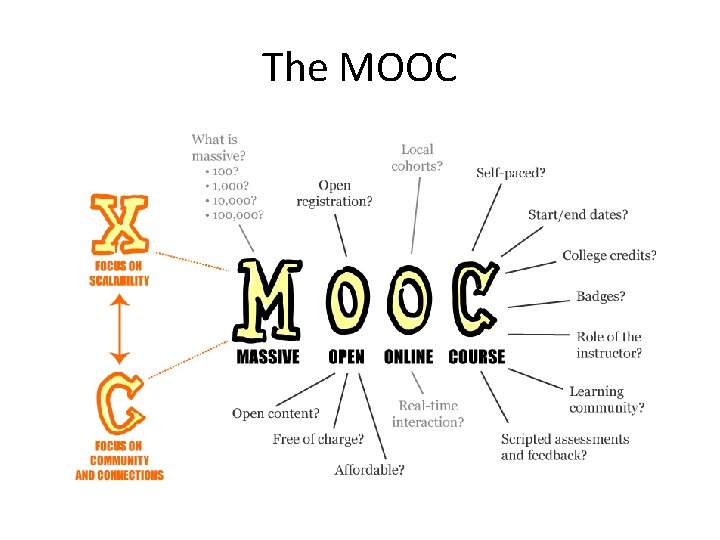
The MOOC
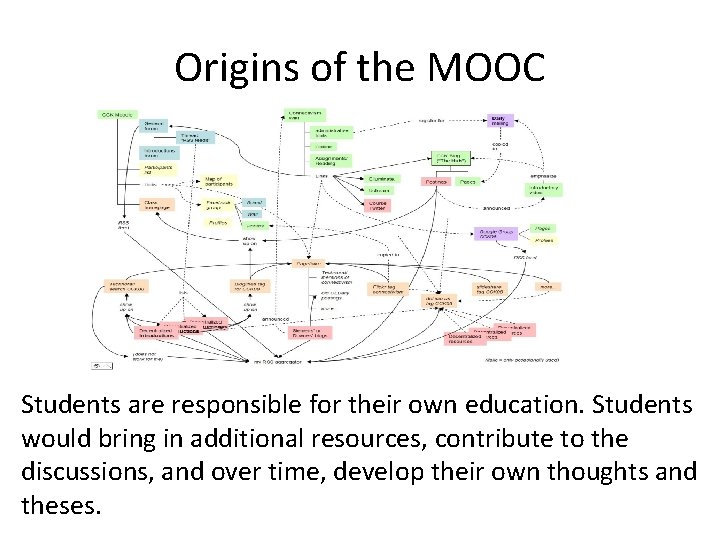
Origins of the MOOC Students are responsible for their own education. Students would bring in additional resources, contribute to the discussions, and over time, develop their own thoughts and theses.
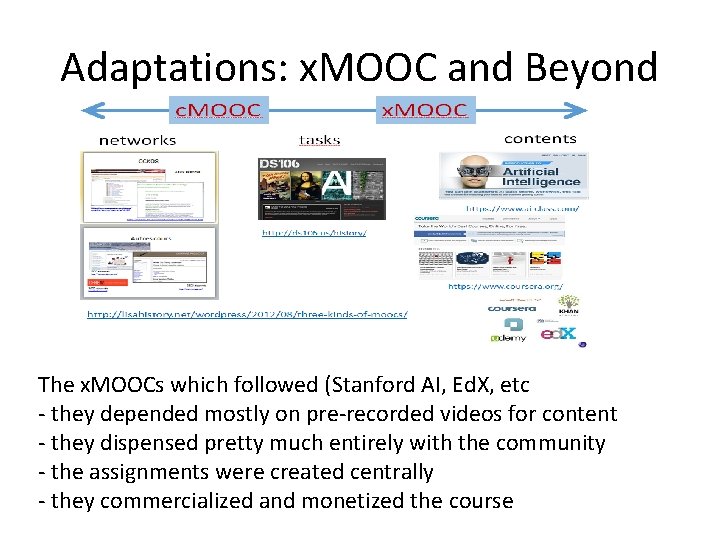
Adaptations: x. MOOC and Beyond The x. MOOCs which followed (Stanford AI, Ed. X, etc - they depended mostly on pre-recorded videos for content - they dispensed pretty much entirely with the community - the assignments were created centrally - they commercialized and monetized the course
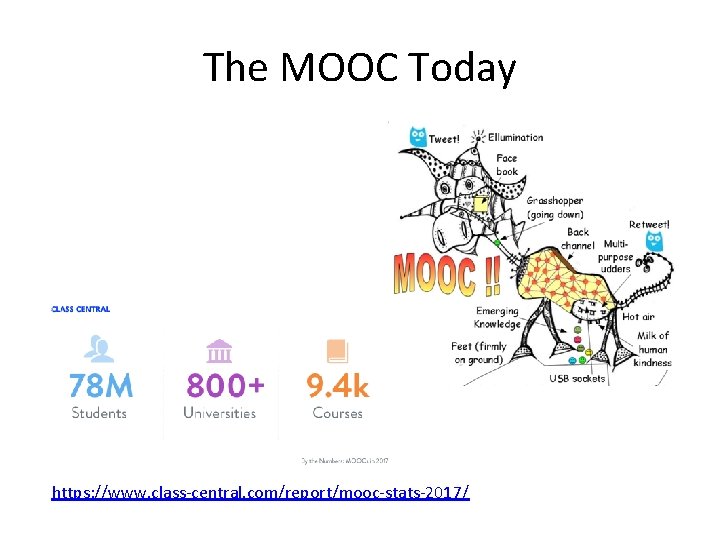
The MOOC Today https: //www. class-central. com/report/mooc-stats-2017/
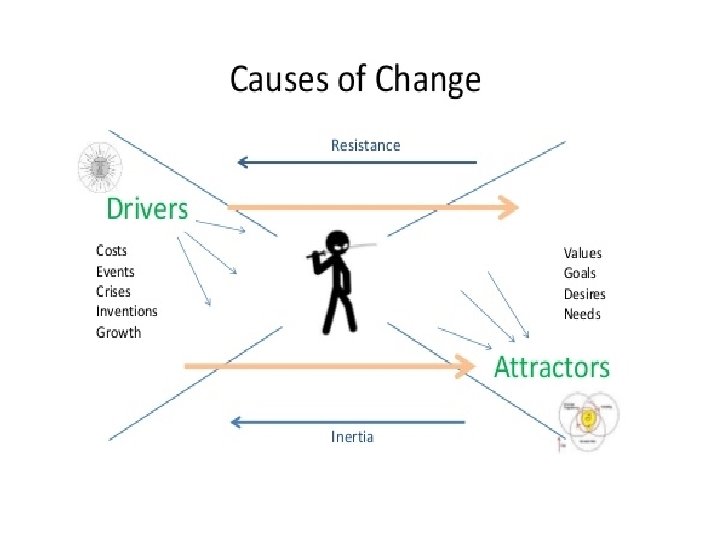
Causes of Change
Drivers A ‘driver’ is a force operating on schools and society pushing us toward change. ‘Drivers’ include factors ranging from demographic change to economic restraint to technology development.
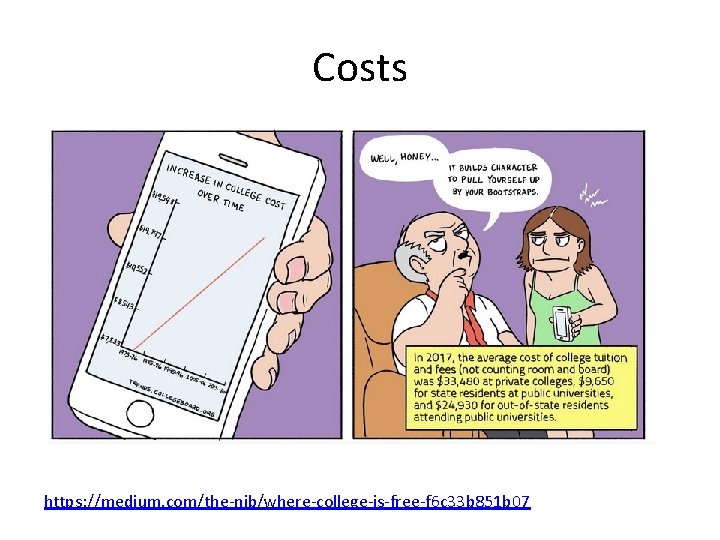
Costs https: //medium. com/the-nib/where-college-is-free-f 6 c 33 b 851 b 07
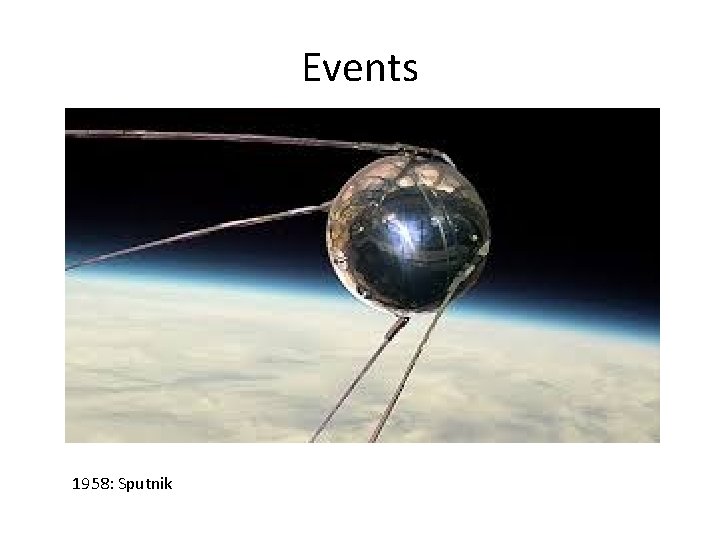
Events 1958: Sputnik
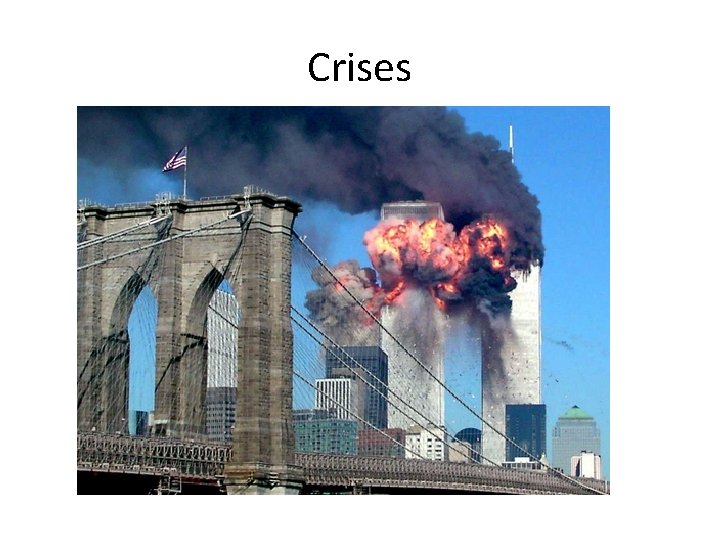
Crises
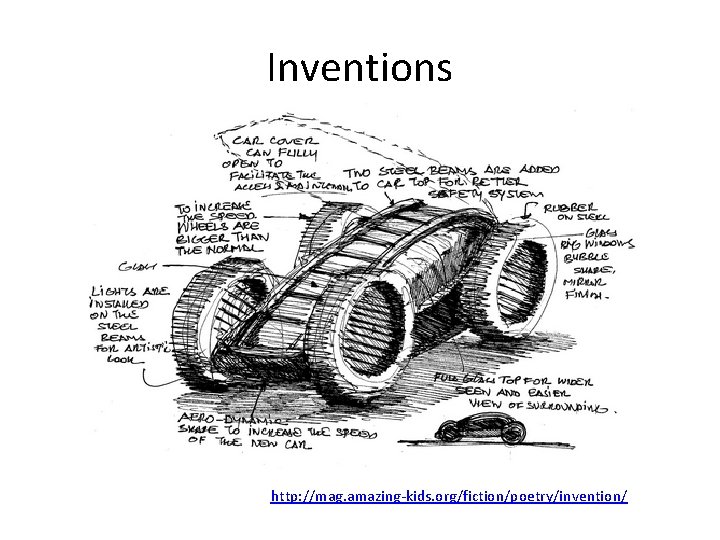
Inventions http: //mag. amazing-kids. org/fiction/poetry/invention/
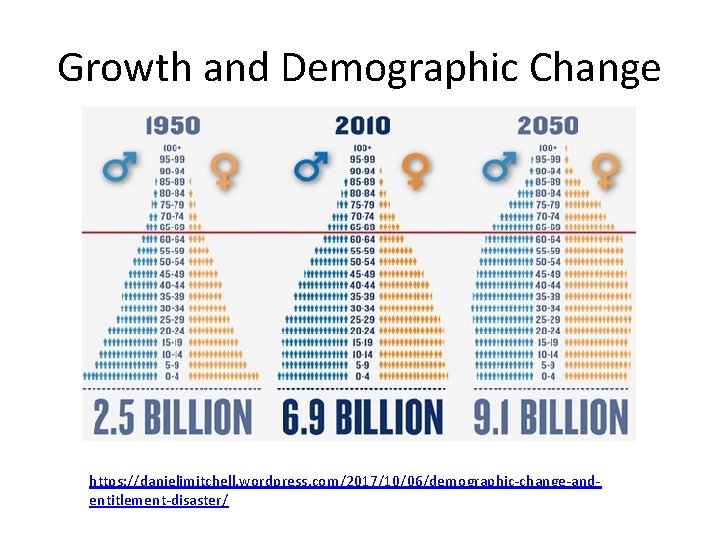
Growth and Demographic Change https: //danieljmitchell. wordpress. com/2017/10/06/demographic-change-andentitlement-disaster/
Attributes of Drivers • They are presented as inevitable and irresistible • They are external • They tend to be constant • They are directionless
Attractors • ‘Attractors’ are the factors that define what we want to accomplish through education, factors that range from personal selfimprovement to workplace training to social and cultural development.
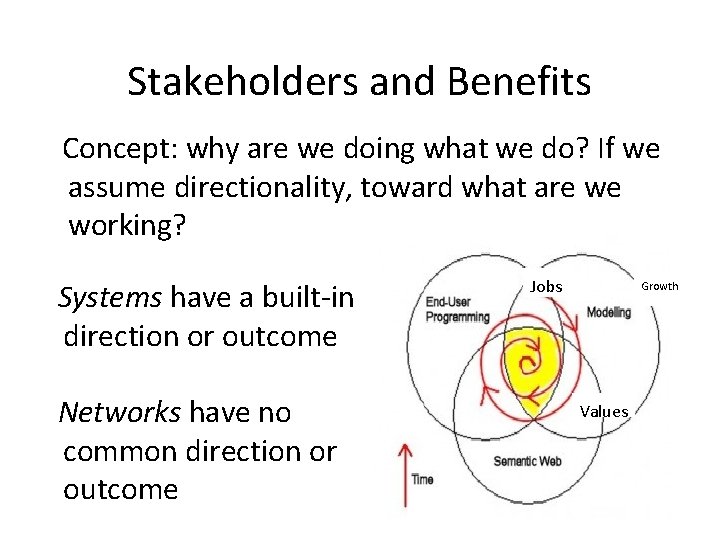
Stakeholders and Benefits Concept: why are we doing what we do? If we assume directionality, toward what are we working? Systems have a built-in direction or outcome Networks have no common direction or outcome Jobs Growth Values
Core Questions Who do we serve? (students, industry, governments, society, etc) - but we want to focus - ‘government’ eg. is too vague, do we mean ‘support the party in power’, ‘further a policy agenda’, ‘work for broad social goods’ etc? What is the benefit - not just the good that is produced (graduates, certifications, etc) but the value that is produced (jobs, growth, prosperity)?
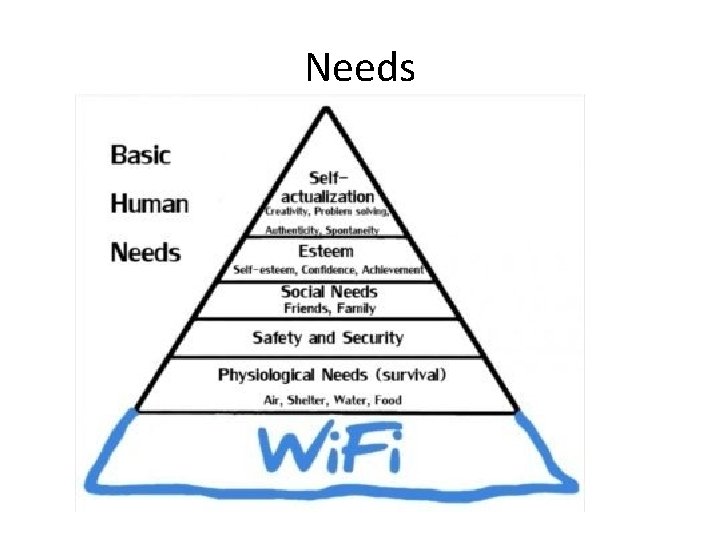
Needs
Values • • • Education & Learning? Religion & Spirituality Development Compassion & Healing Sharing
Aspirations… • • 1950 s – soldier 1960 s – scientist 1970 s – athlete / activist 1980 s – banker & investor 1990 s – celebrity 2000 s – entrepreneur 2010 s – startup
Goals • • Employment? Or sustenance? Fame, fortune The success of children and family Preserving heritage and culture
Attributes of Attractors • • They are personal or individual They are not always rational They depend a lot on models or examples They are variable (strange attractors)
Perspective From the perspective of these factors we can comprehend not only the recent history of educational technology, but also gain perspectives on the future as well. We can also comment on what we want, need and value in an education system, and thus frame the decisions that we will need to take in the short term in order to prepare for the long term.
Today’s Innovations • • • Machine learning and artificial intelligence Handheld and Mobile Computing Badges and Blockchain Internet of Things Games, Sims and Virtual Reality Translation and Collaborative Technology http: //teachonline. ca/tools-trends/exploring-future-education/2016 -look-futureonline-learning-part-1 http: //halfanhour. blogspot. com. tr/2016/03/the-2016 -look-atfuture-of-online. html
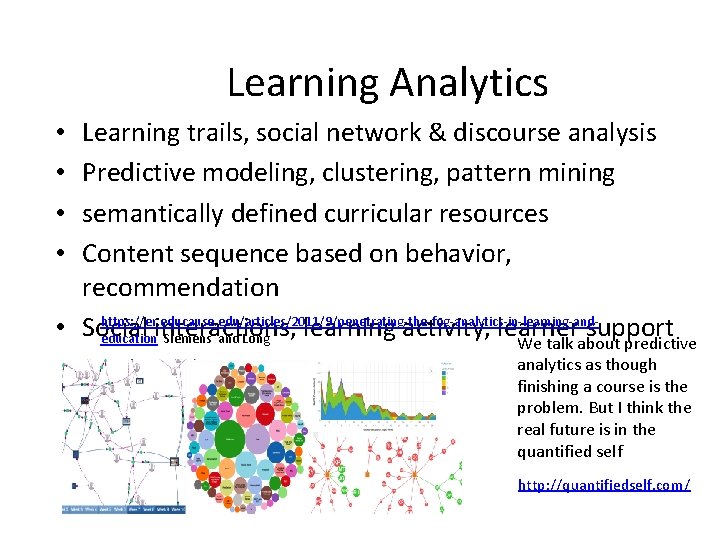
Learning Analytics Learning trails, social network & discourse analysis Predictive modeling, clustering, pattern mining semantically defined curricular resources Content sequence based on behavior, recommendation https: //er. educause. edu/articles/2011/9/penetrating-the-fog-analytics-in-learning-and • Social interactions, learning activity, learner support education Siemens and Long We talk about predictive • • analytics as though finishing a course is the problem. But I think the real future is in the quantified self http: //quantifiedself. com/
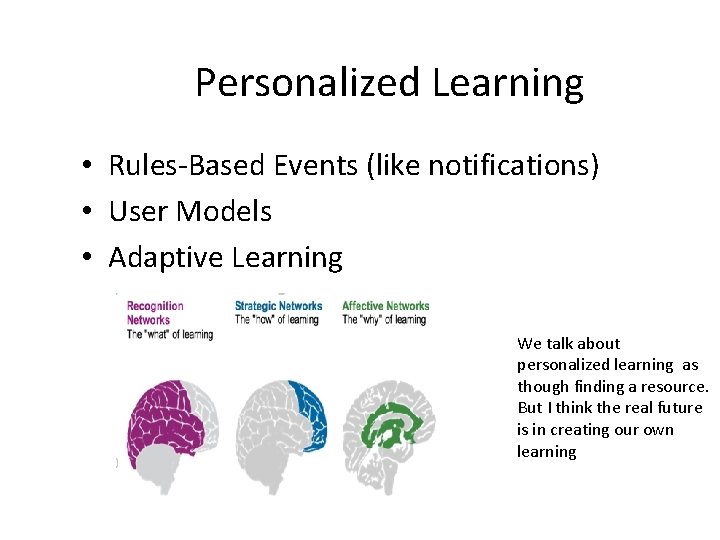
Personalized Learning • Rules-Based Events (like notifications) • User Models • Adaptive Learning We talk about personalized learning as though finding a resource. But I think the real future is in creating our own learning
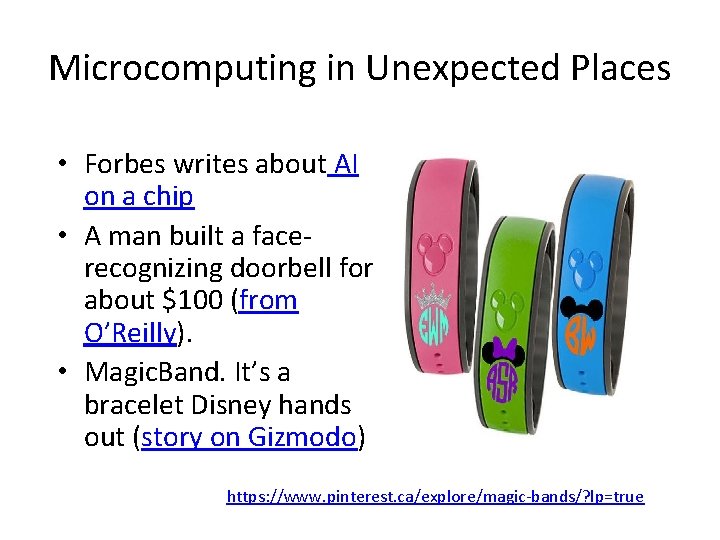
Microcomputing in Unexpected Places • Forbes writes about AI on a chip • A man built a facerecognizing doorbell for about $100 (from O’Reilly). • Magic. Band. It’s a bracelet Disney hands out (story on Gizmodo) https: //www. pinterest. ca/explore/magic-bands/? lp=true
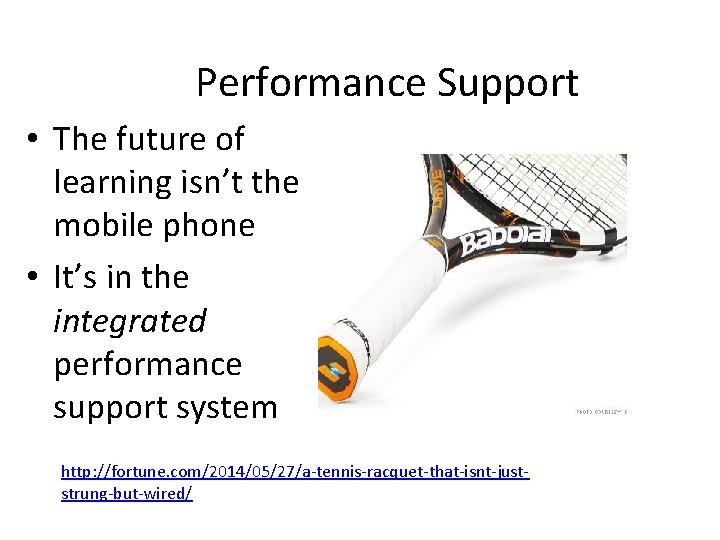
Performance Support • The future of learning isn’t the mobile phone • It’s in the integrated performance support system http: //fortune. com/2014/05/27/a-tennis-racquet-that-isnt-juststrung-but-wired/
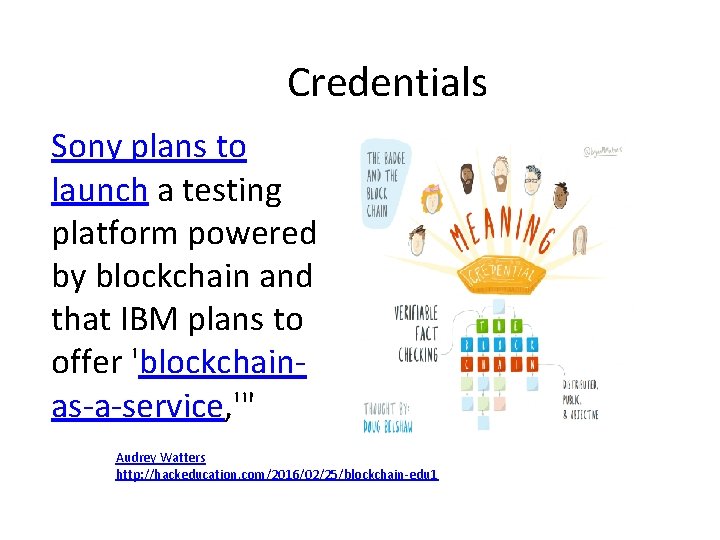
Credentials Sony plans to launch a testing platform powered by blockchain and that IBM plans to offer 'blockchainas-a-service, '" Audrey Watters http: //hackeducation. com/2016/02/25/blockchain-edu 1
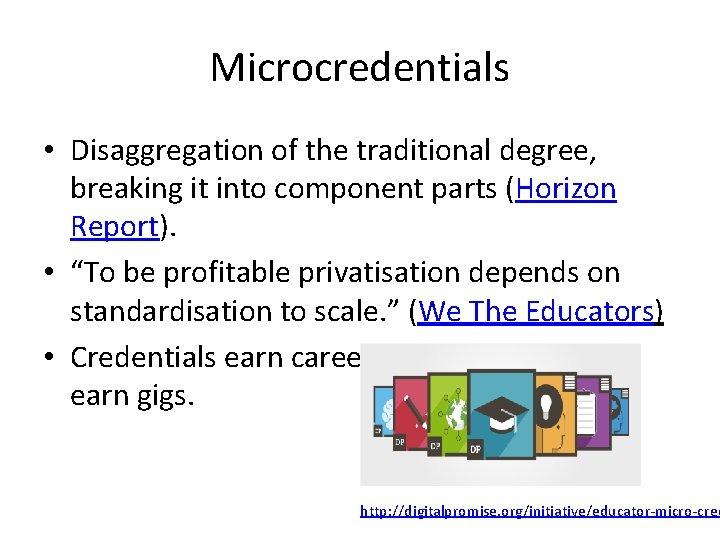
Microcredentials • Disaggregation of the traditional degree, breaking it into component parts (Horizon Report). • “To be profitable privatisation depends on standardisation to scale. ” (We The Educators) • Credentials earn careers, but competencies earn gigs. http: //digitalpromise. org/initiative/educator-micro-cred
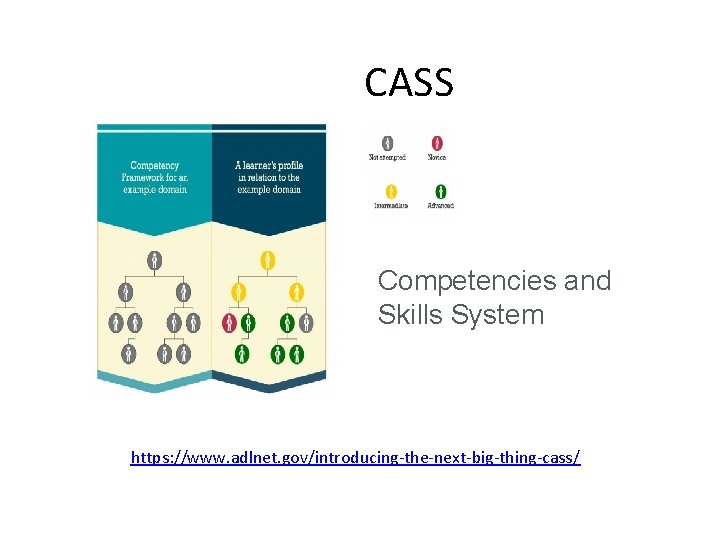
CASS Competencies and Skills System https: //www. adlnet. gov/introducing-the-next-big-thing-cass/
The Assessment Dilemma • How can we design assessment systems that accurately and honestly measure a student’s achievement? • Even more to the point, how can create incentives for honest academic behaviour? http: //pagecentertraining. psu. edu/public-relationsethics/core-ethicalprinciples/lesson-2 -sample -title/the-pillars-of-publicrelations-ethics/
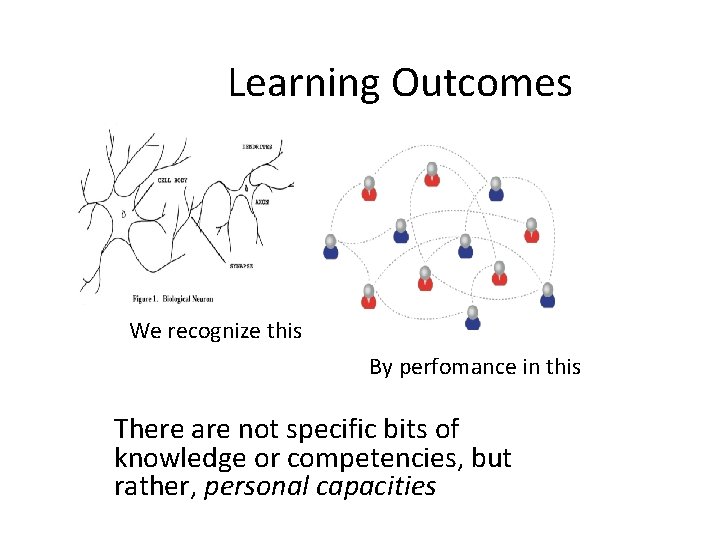
Learning Outcomes We recognize this By perfomance in this There are not specific bits of knowledge or competencies, but rather, personal capacities
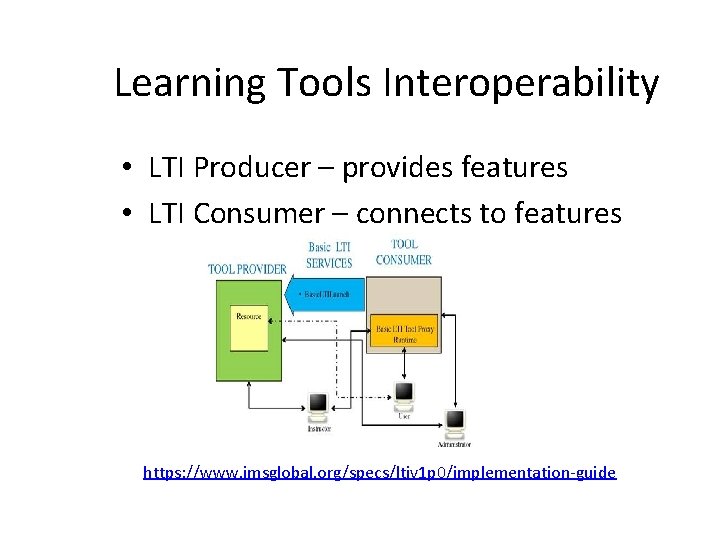
Learning Tools Interoperability • LTI Producer – provides features • LTI Consumer – connects to features https: //www. imsglobal. org/specs/ltiv 1 p 0/implementation-guide
Games and Gamification ‘Gamification’ – adds game elements to learning ‘Serious Games’ – employs a game to facilitate learning https: //badgeville. com/wiki/Gamification
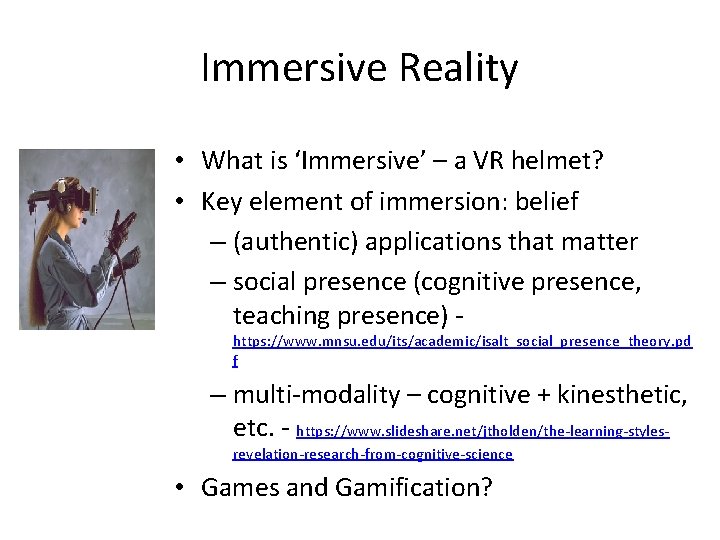
Immersive Reality • What is ‘Immersive’ – a VR helmet? • Key element of immersion: belief – (authentic) applications that matter – social presence (cognitive presence, teaching presence) - https: //www. mnsu. edu/its/academic/isalt_social_presence_theory. pd f – multi-modality – cognitive + kinesthetic, etc. - https: //www. slideshare. net/jtholden/the-learning-stylesrevelation-research-from-cognitive-science • Games and Gamification?
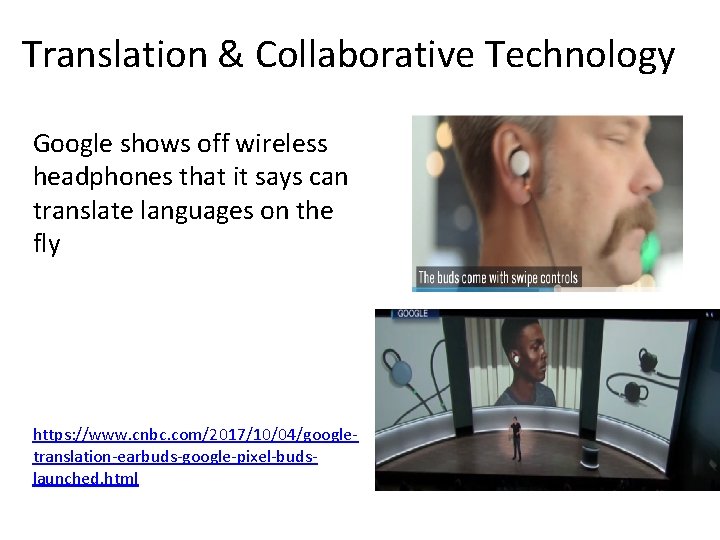
Translation & Collaborative Technology Google shows off wireless headphones that it says can translate languages on the fly https: //www. cnbc. com/2017/10/04/googletranslation-earbuds-google-pixel-budslaunched. html
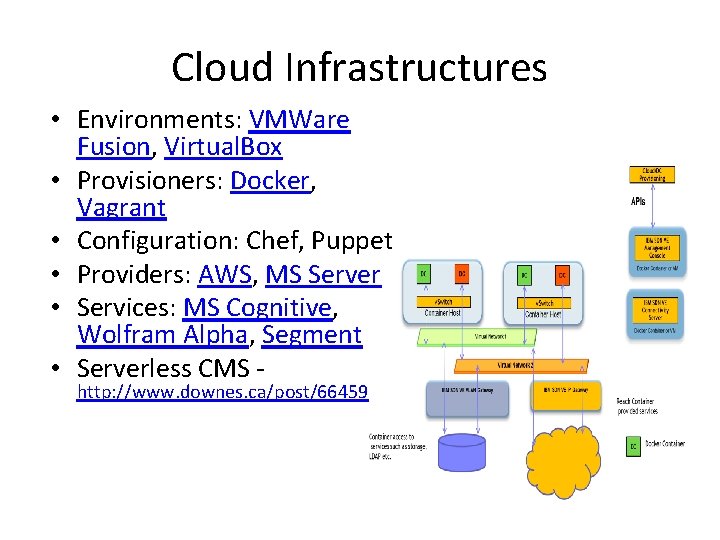
Cloud Infrastructures • Environments: VMWare Fusion, Virtual. Box • Provisioners: Docker, Vagrant • Configuration: Chef, Puppet • Providers: AWS, MS Server • Services: MS Cognitive, Wolfram Alpha, Segment • Serverless CMS - http: //www. downes. ca/post/66459
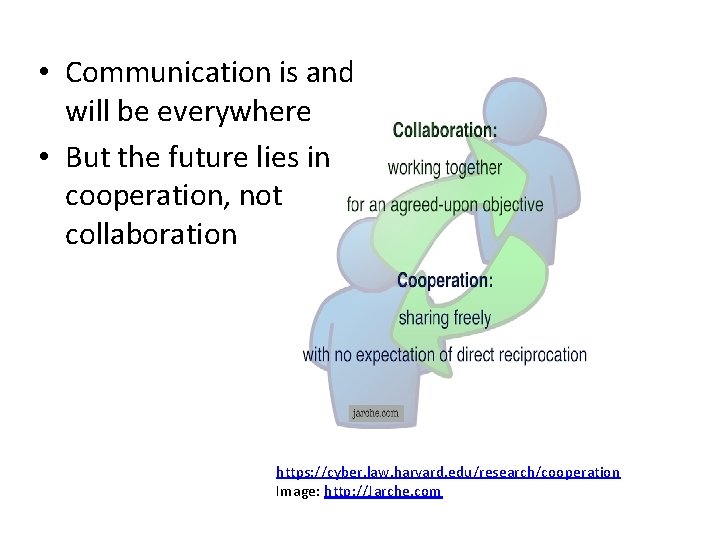
• Communication is and will be everywhere • But the future lies in cooperation, not collaboration https: //cyber. law. harvard. edu/research/cooperation Image: http: //Jarche. com

What is the good?
What Does Learning Become? 1. Context-Sensitive 2. Engaging 3. Personal
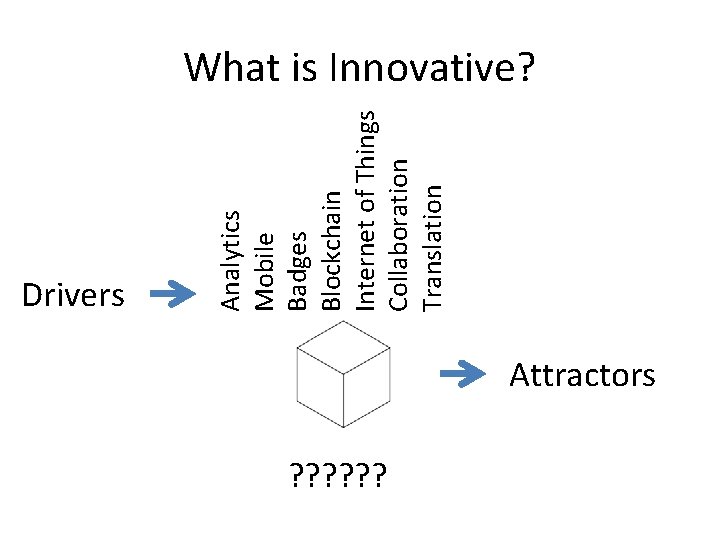
Drivers Analytics Mobile Badges Blockchain Internet of Things Collaboration Translation What is Innovative? Attractors ? ? ?
• The truly innovative ideas are not rooted in creating value – The drivers they respond to are generally understood only after the fact – The attractors they realize are actually created by the innovation
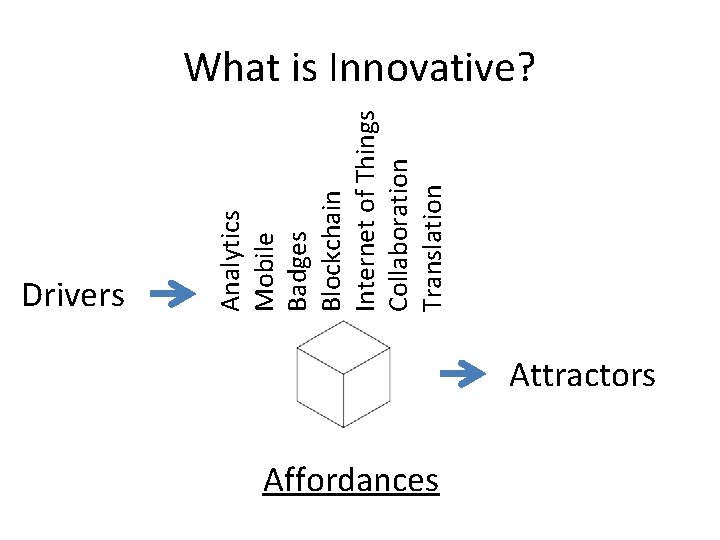
Drivers Analytics Mobile Badges Blockchain Internet of Things Collaboration Translation What is Innovative? Attractors Affordances
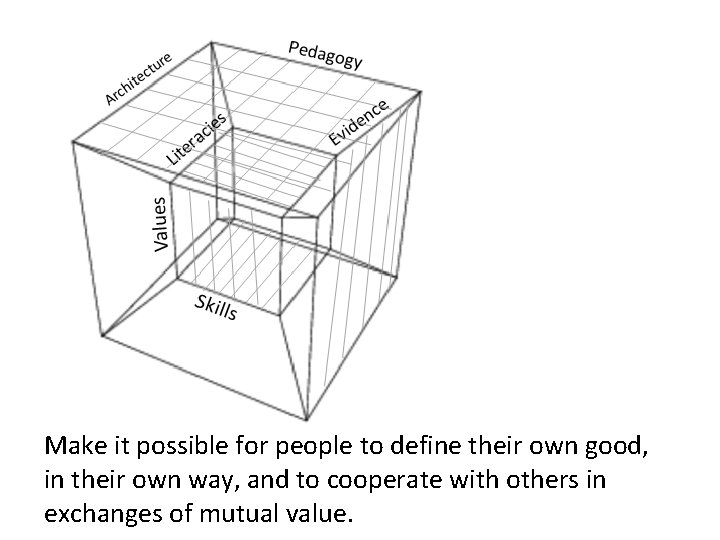
Make it possible for people to define their own good, in their own way, and to cooperate with others in exchanges of mutual value.
Stephen Downes http: //www. downes. ca Moncton, Canada, 2005 http: //www. downes. ca/presentation/486
- Slides: 52