
Innovation in Concrete Steve Waalkes P E Director
- Slides: 28
Innovation in Concrete Steve Waalkes, P. E. Director of Engineering – W. Michigan Concrete Association
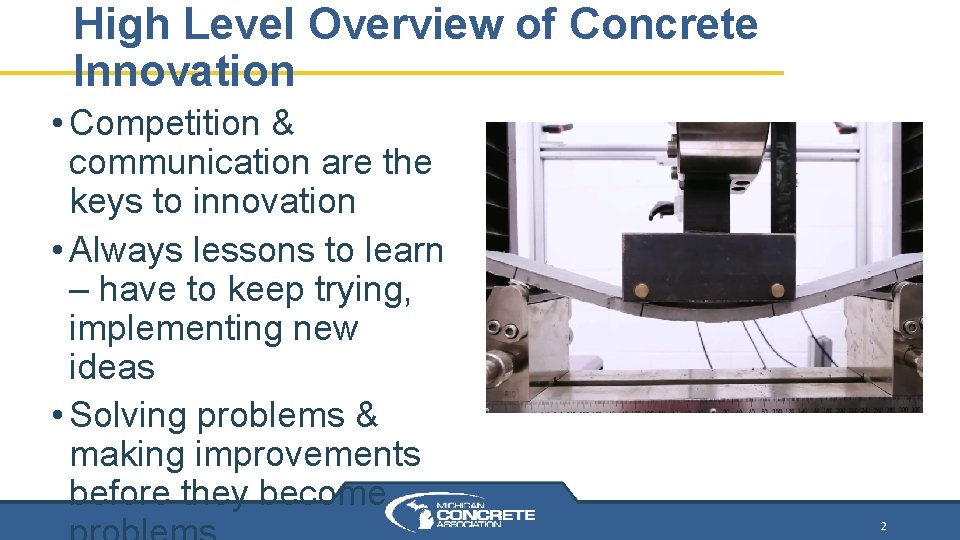
High Level Overview of Concrete Innovation • Competition & communication are the keys to innovation • Always lessons to learn – have to keep trying, implementing new ideas • Solving problems & making improvements before they become 2
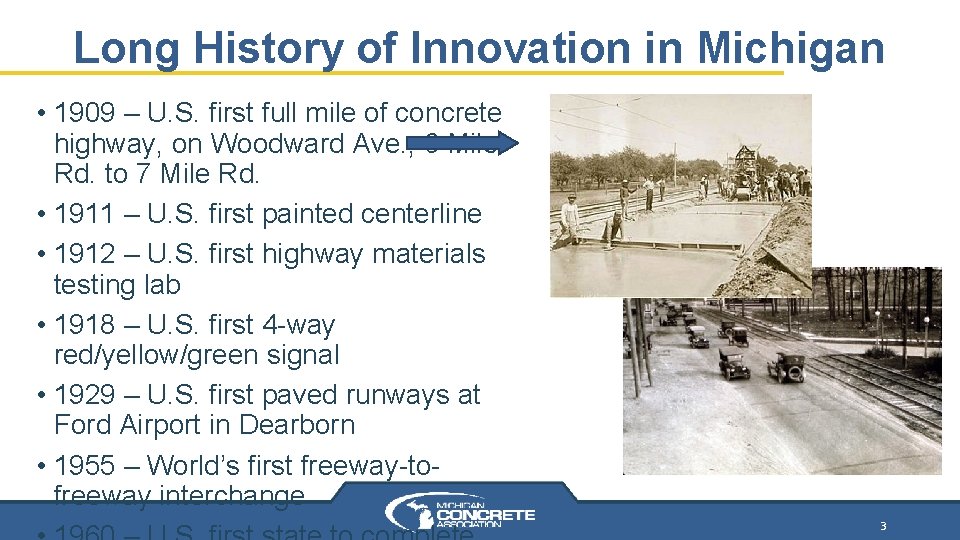
Long History of Innovation in Michigan • 1909 – U. S. first full mile of concrete highway, on Woodward Ave. , 6 Mile Rd. to 7 Mile Rd. • 1911 – U. S. first painted centerline • 1912 – U. S. first highway materials testing lab • 1918 – U. S. first 4 -way red/yellow/green signal • 1929 – U. S. first paved runways at Ford Airport in Dearborn • 1955 – World’s first freeway-tofreeway interchange 3
Recent History of Concrete Innovation in Michigan Mid- • Movement towards Performance Related 1990’s Specifications 1997 • Midwest Concrete Consortium started (precursor to NC 2) – state DOT’s and industry collaboration • Increase in state gas tax funding; included are requirements for pavement warranties and LCCA 2004 • P 1 Mod spec first developed by MDOT concrete engineers • Re-tooling of the P 1 Mod spec; requires 3 4
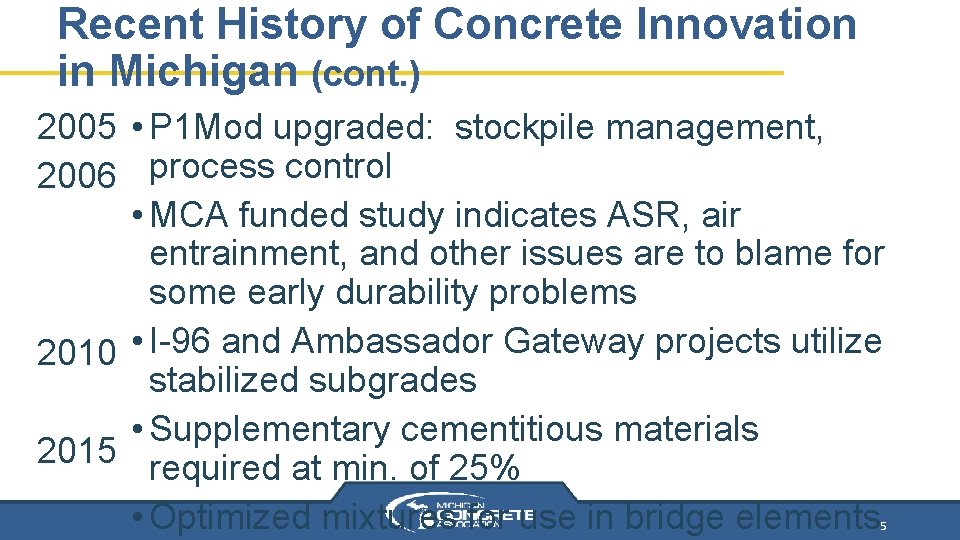
Recent History of Concrete Innovation in Michigan (cont. ) 2005 • P 1 Mod upgraded: stockpile management, 2006 process control • MCA funded study indicates ASR, air entrainment, and other issues are to blame for some early durability problems 2010 • I-96 and Ambassador Gateway projects utilize stabilized subgrades • Supplementary cementitious materials 2015 required at min. of 25% • Optimized mixtures for use in bridge elements 5
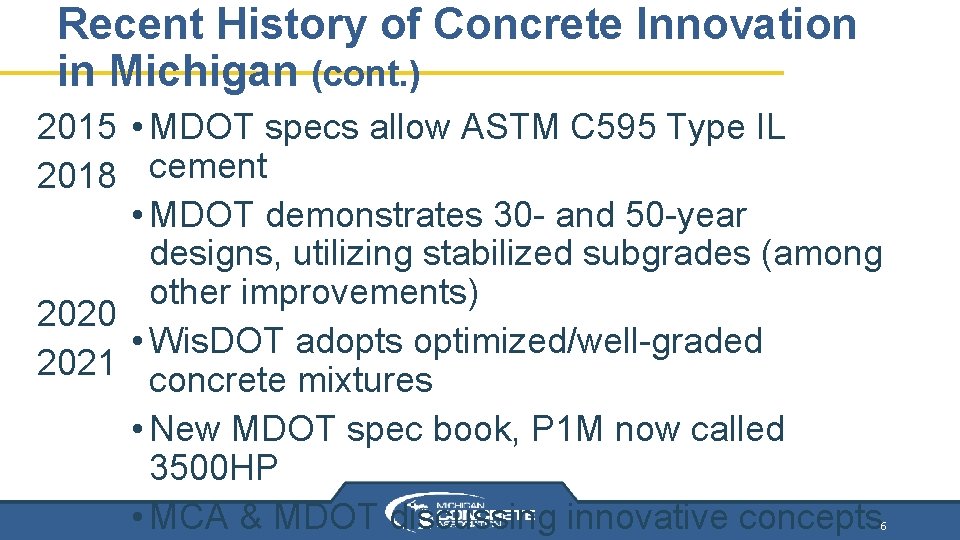
Recent History of Concrete Innovation in Michigan (cont. ) 2015 • MDOT specs allow ASTM C 595 Type IL 2018 cement • MDOT demonstrates 30 - and 50 -year designs, utilizing stabilized subgrades (among other improvements) 2020 • Wis. DOT adopts optimized/well-graded 2021 concrete mixtures • New MDOT spec book, P 1 M now called 3500 HP • MCA & MDOT discussing innovative concepts 6
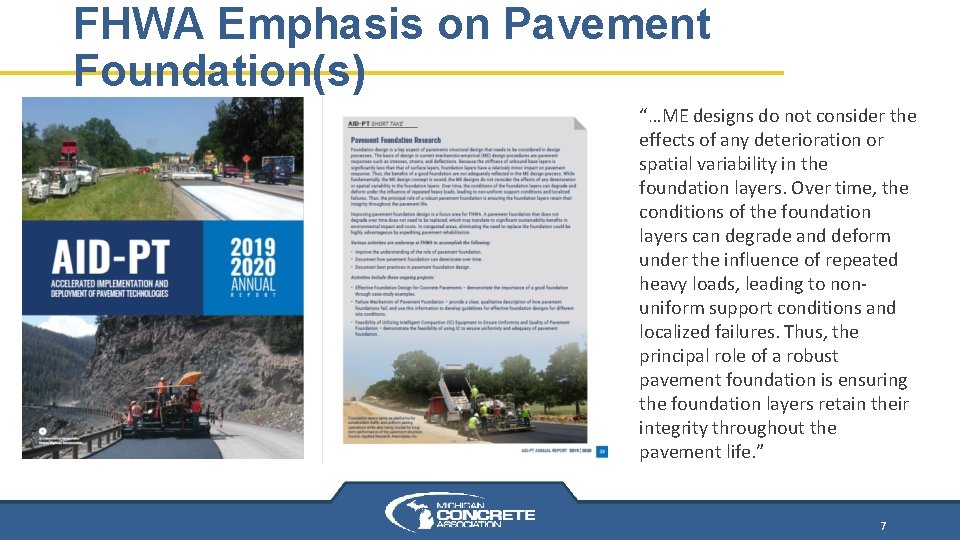
FHWA Emphasis on Pavement Foundation(s) “…ME designs do not consider the effects of any deterioration or spatial variability in the foundation layers. Over time, the conditions of the foundation layers can degrade and deform under the influence of repeated heavy loads, leading to nonuniform support conditions and localized failures. Thus, the principal role of a robust pavement foundation is ensuring the foundation layers retain their integrity throughout the pavement life. ” 7
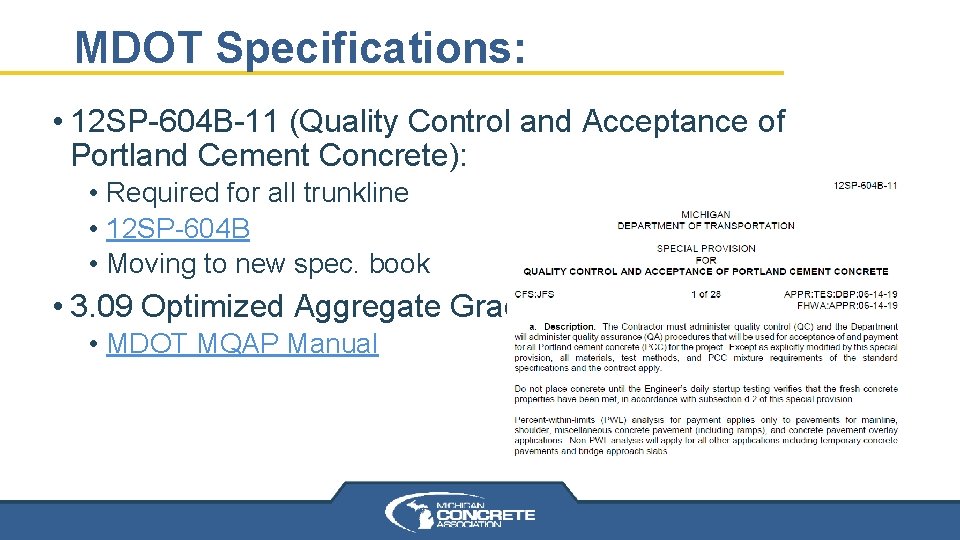
MDOT Specifications: • 12 SP-604 B-11 (Quality Control and Acceptance of Portland Cement Concrete): • Required for all trunkline • 12 SP-604 B • Moving to new spec. book • 3. 09 Optimized Aggregate Gradation • MDOT MQAP Manual
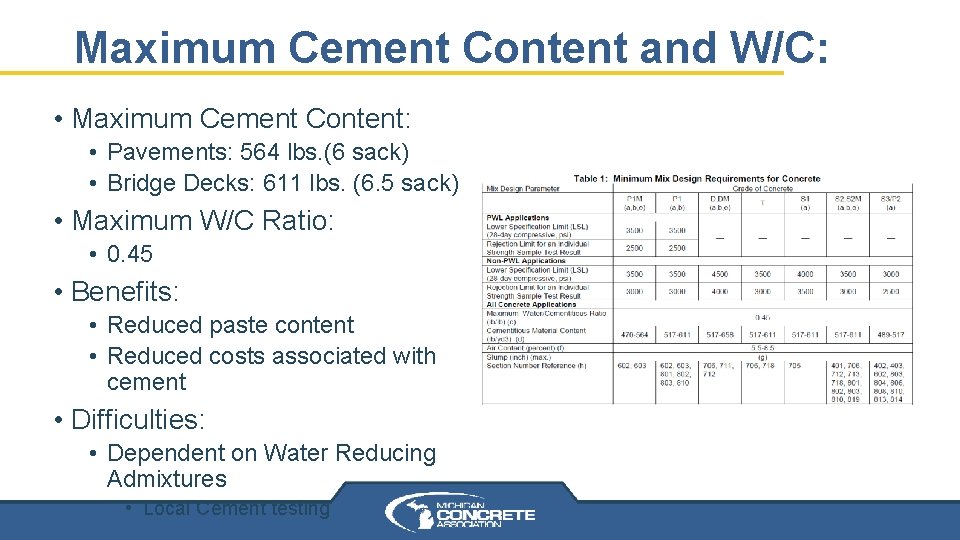
Maximum Cement Content and W/C: • Maximum Cement Content: • Pavements: 564 lbs. (6 sack) • Bridge Decks: 611 lbs. (6. 5 sack) • Maximum W/C Ratio: • 0. 45 • Benefits: • Reduced paste content • Reduced costs associated with cement • Difficulties: • Dependent on Water Reducing Admixtures • Local Cement testing
Supplementary Cementitious Materials: • Replacement rates: • 25%-40% replacement of Portland cement • Replacement amount is determined by the Contractor • 40% total replacement • Improvements: • Permeability • Resistance to Freezethaw damage • Consistency • Difficulties: • Initial pushback/learning curve • Can cause air issues • Slower initial strength gains
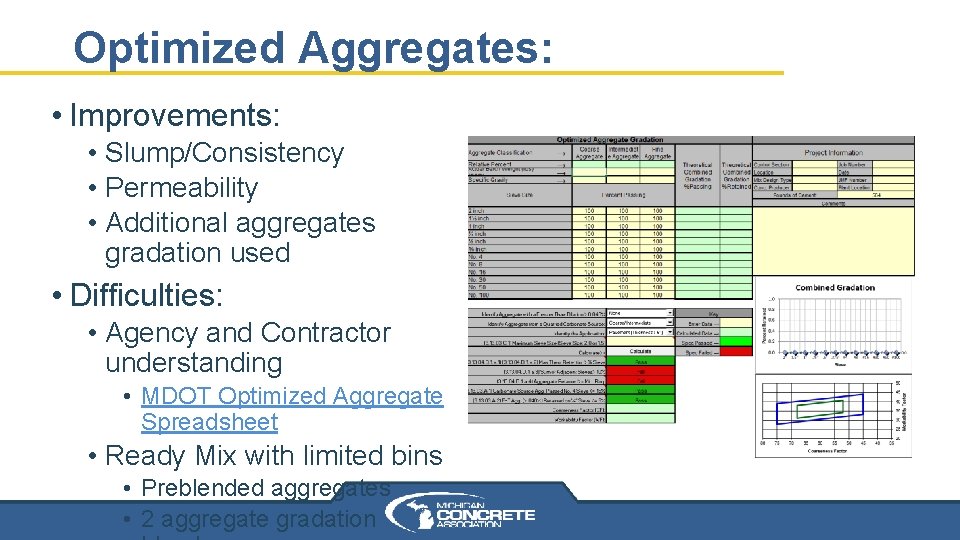
Optimized Aggregates: • Improvements: • Slump/Consistency • Permeability • Additional aggregates gradation used • Difficulties: • Agency and Contractor understanding • MDOT Optimized Aggregate Spreadsheet • Ready Mix with limited bins • Preblended aggregates • 2 aggregate gradation
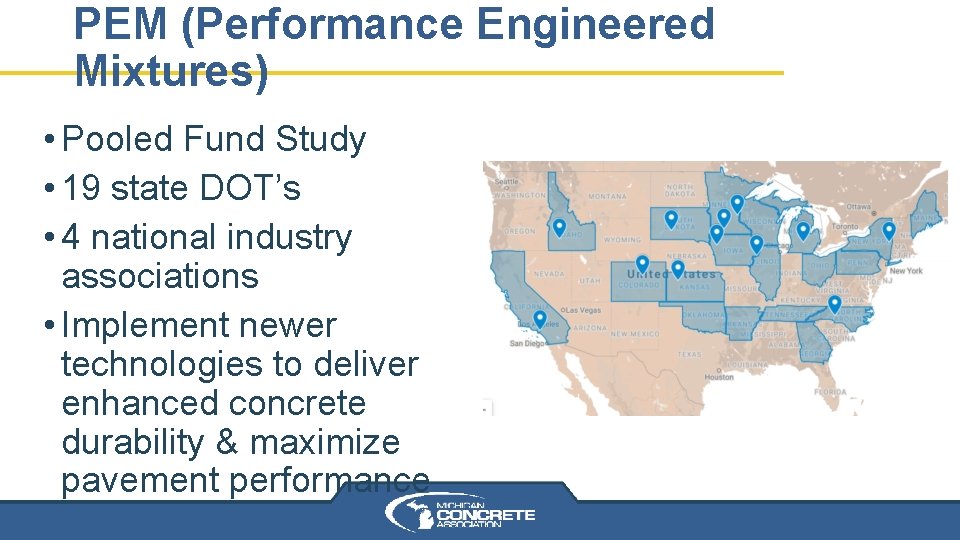
PEM (Performance Engineered Mixtures) • Pooled Fund Study • 19 state DOT’s • 4 national industry associations • Implement newer technologies to deliver enhanced concrete durability & maximize pavement performance
PEM (Performance Engineered Mixtures) • V-Kelly Ball (V-Kelly) • Box Test • Maturity Method • Formation Factor • Surface Resistivity • Bulk Resistivity • Sequential Air Metric Apparatus/Super Air Meter (SAM)
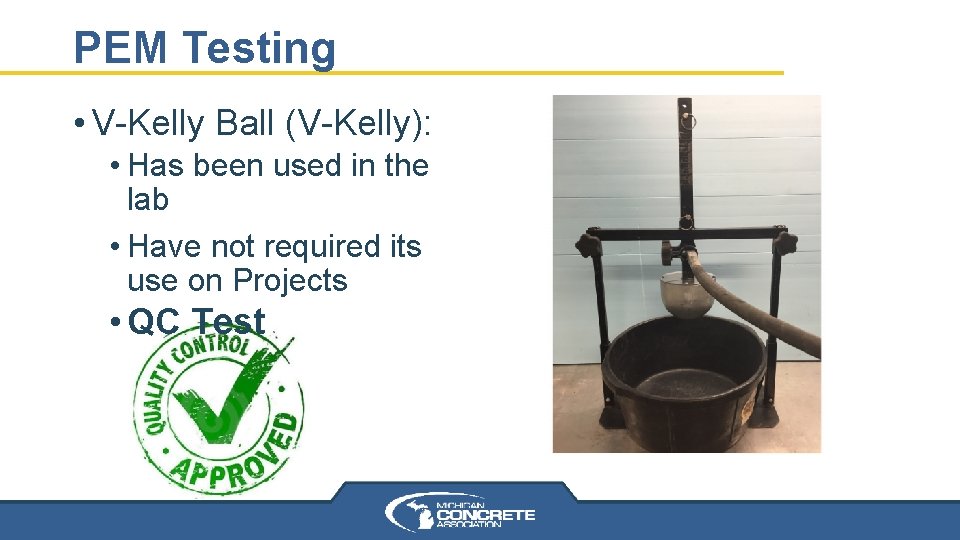
PEM Testing • V-Kelly Ball (V-Kelly): • Has been used in the lab • Have not required its use on Projects • QC Test
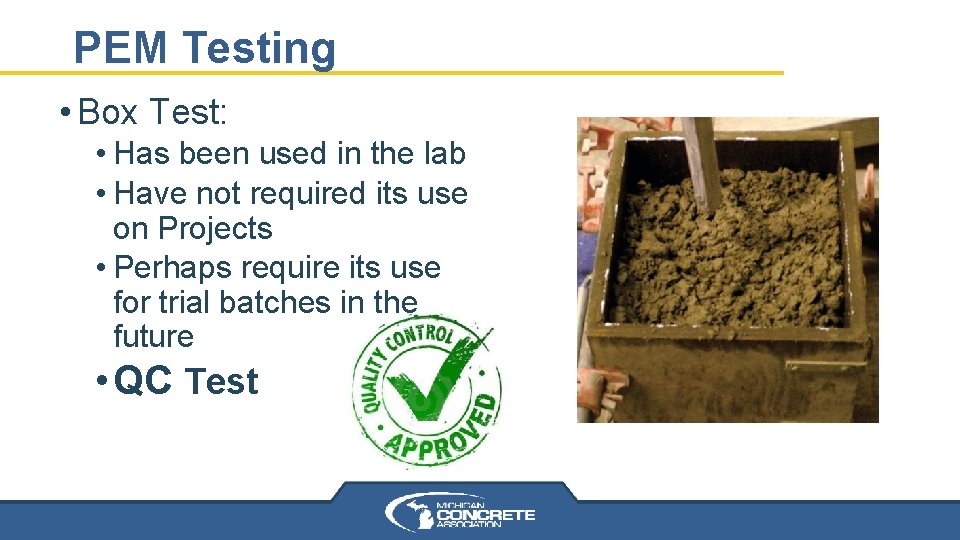
PEM Testing • Box Test: • Has been used in the lab • Have not required its use on Projects • Perhaps require its use for trial batches in the future • QC Test
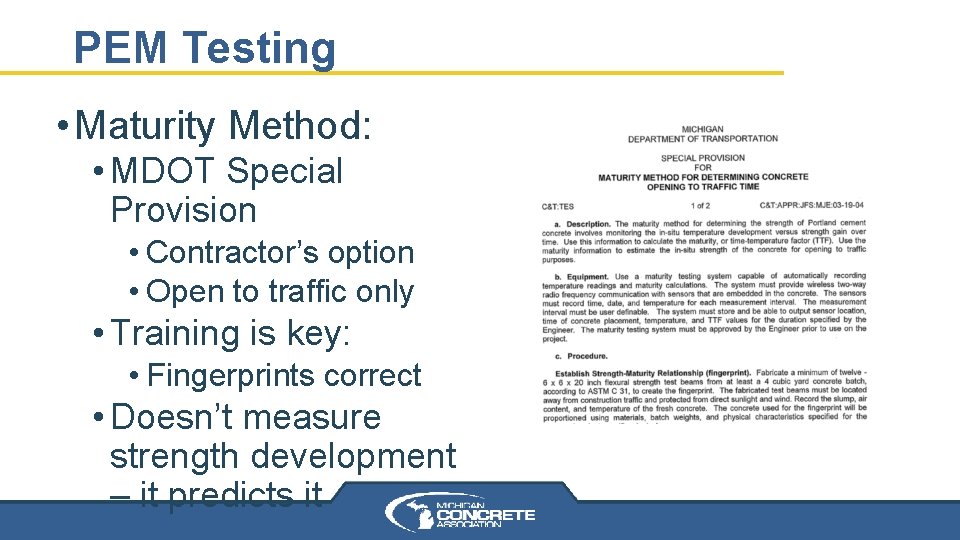
PEM Testing • Maturity Method: • MDOT Special Provision • Contractor’s option • Open to traffic only • Training is key: • Fingerprints correct • Doesn’t measure strength development – it predicts it
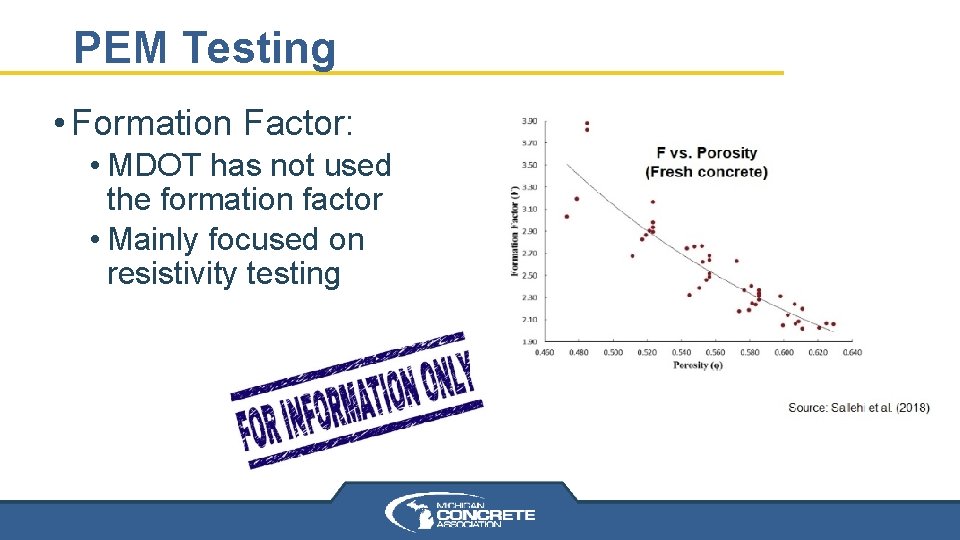
PEM Testing • Formation Factor: • MDOT has not used the formation factor • Mainly focused on resistivity testing
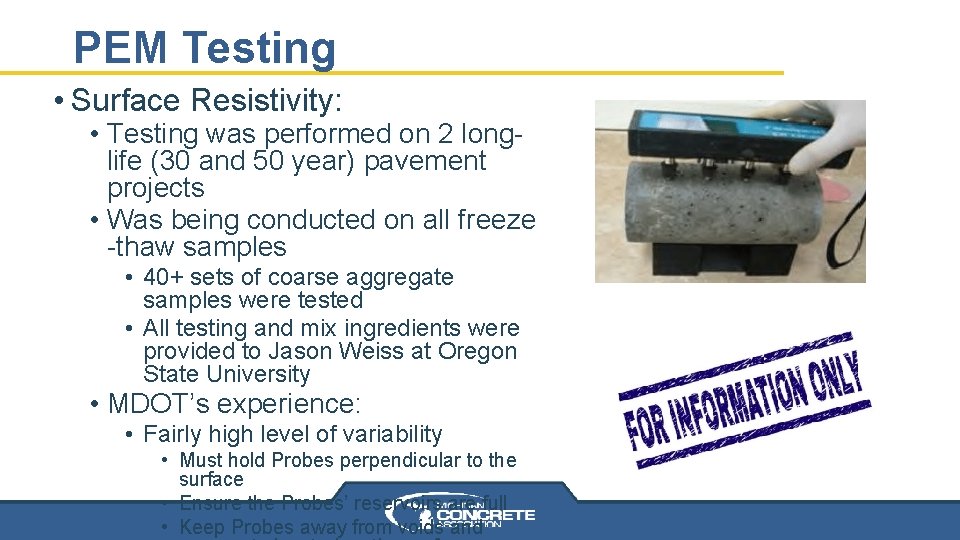
PEM Testing • Surface Resistivity: • Testing was performed on 2 longlife (30 and 50 year) pavement projects • Was being conducted on all freeze -thaw samples • 40+ sets of coarse aggregate samples were tested • All testing and mix ingredients were provided to Jason Weiss at Oregon State University • MDOT’s experience: • Fairly high level of variability • Must hold Probes perpendicular to the surface • Ensure the Probes’ reservoirs are full • Keep Probes away from voids and
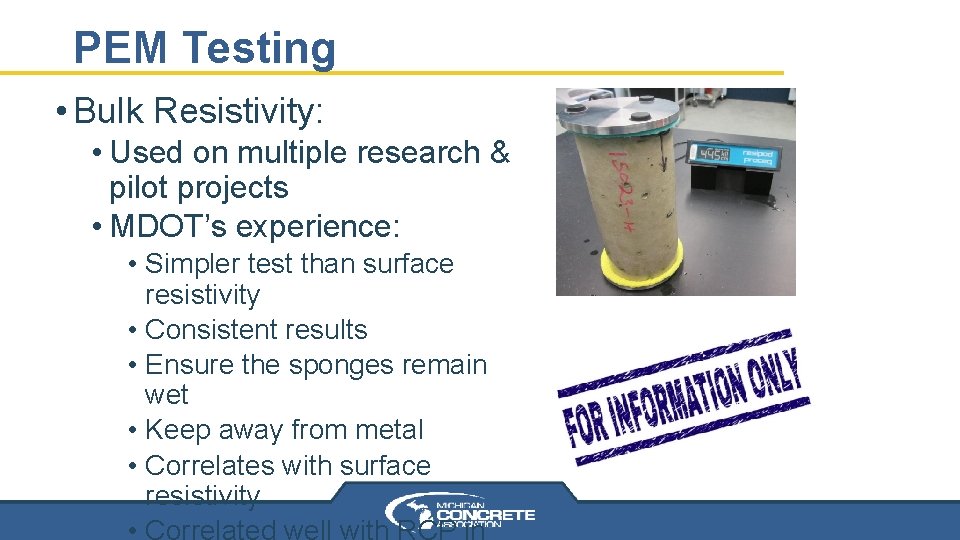
PEM Testing • Bulk Resistivity: • Used on multiple research & pilot projects • MDOT’s experience: • Simpler test than surface resistivity • Consistent results • Ensure the sponges remain wet • Keep away from metal • Correlates with surface resistivity
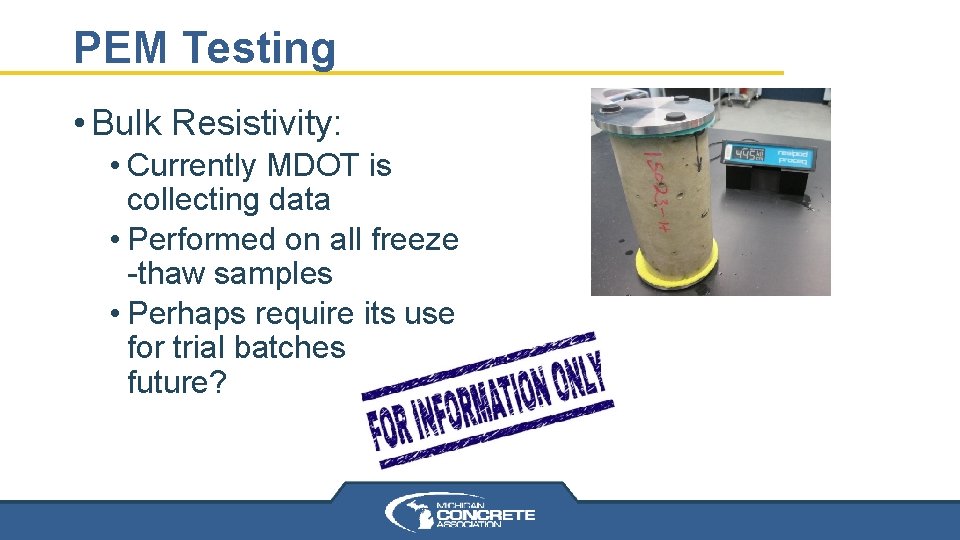
PEM Testing • Bulk Resistivity: • Currently MDOT is collecting data • Performed on all freeze -thaw samples • Perhaps require its use for trial batches in the future?
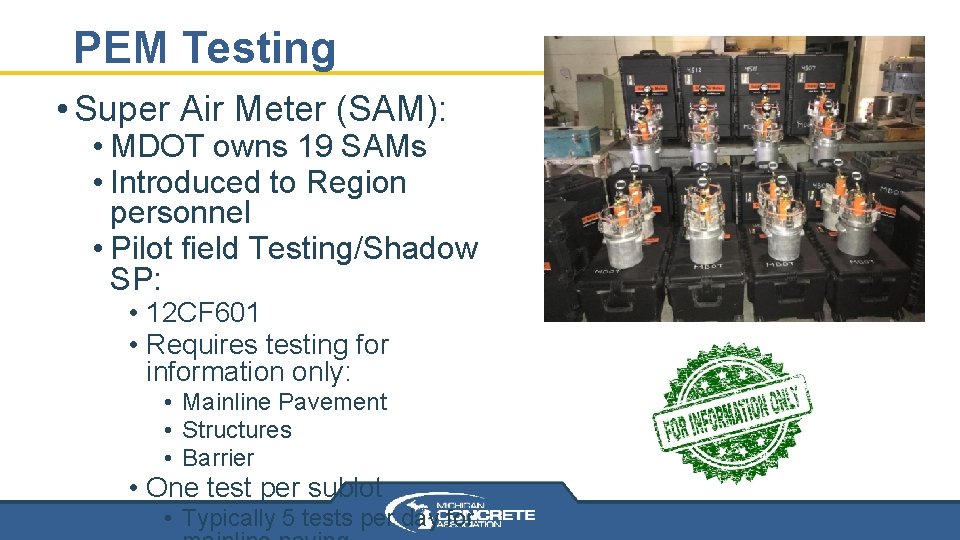
PEM Testing • Super Air Meter (SAM): • MDOT owns 19 SAMs • Introduced to Region personnel • Pilot field Testing/Shadow SP: • 12 CF 601 • Requires testing for information only: • Mainline Pavement • Structures • Barrier • One test per sublot • Typically 5 tests per day for
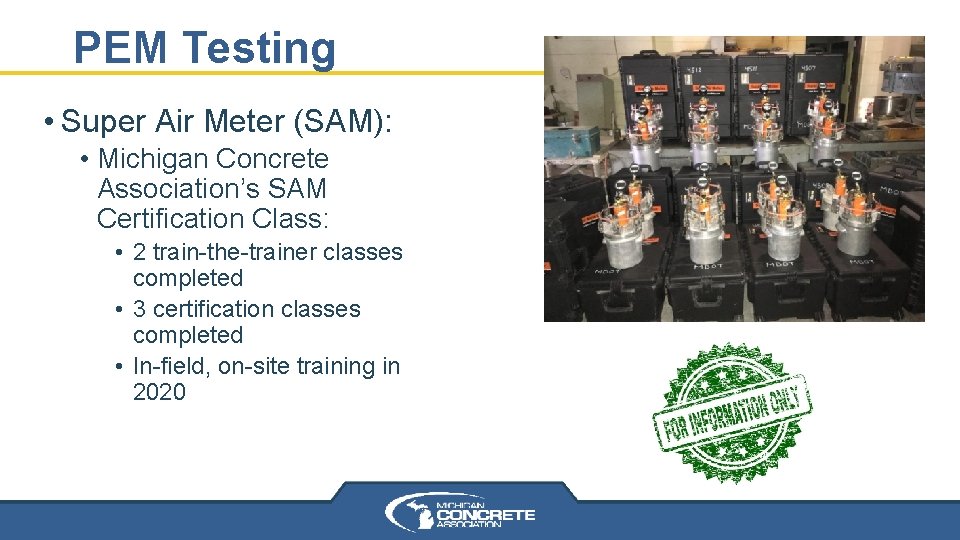
PEM Testing • Super Air Meter (SAM): • Michigan Concrete Association’s SAM Certification Class: • 2 train-the-trainer classes completed • 3 certification classes completed • In-field, on-site training in 2020
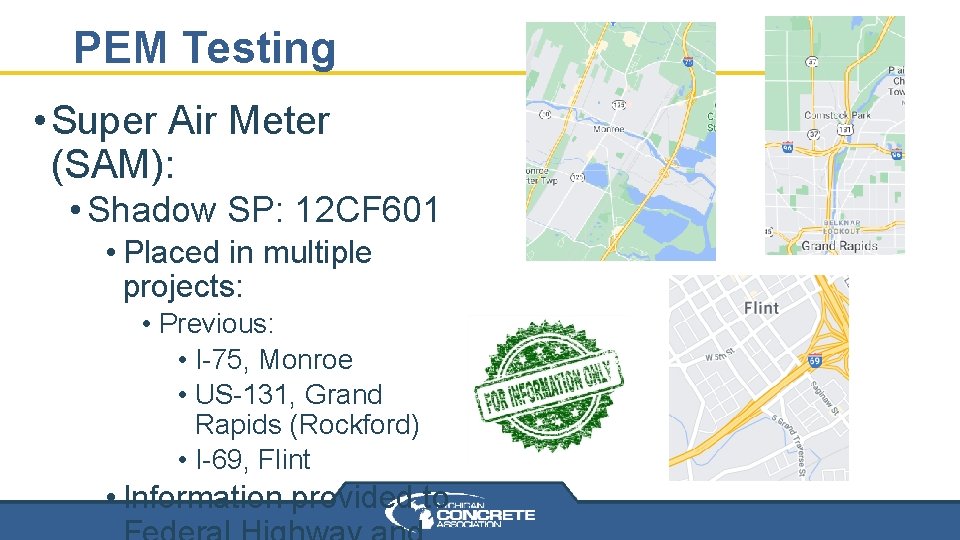
PEM Testing • Super Air Meter (SAM): • Shadow SP: 12 CF 601 • Placed in multiple projects: • Previous: • I-75, Monroe • US-131, Grand Rapids (Rockford) • I-69, Flint • Information provided to
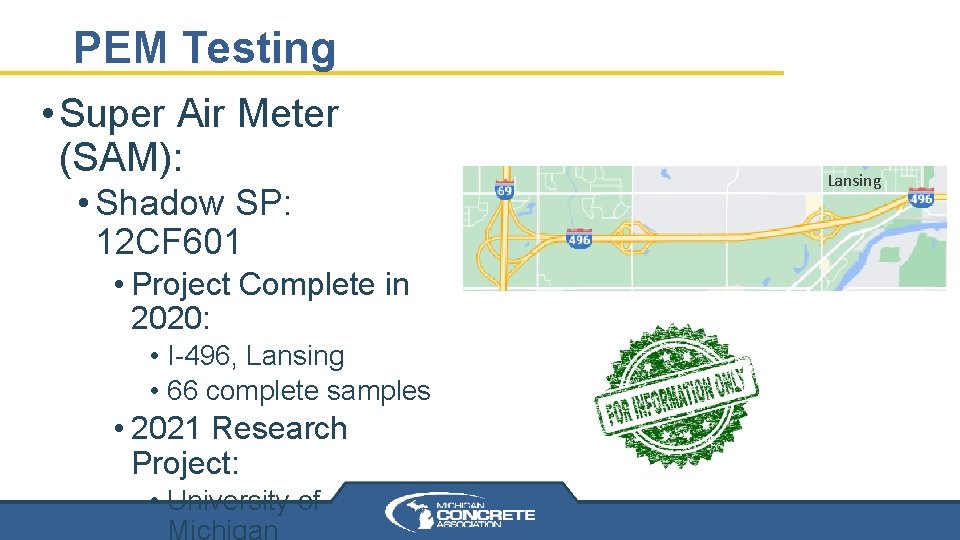
PEM Testing • Super Air Meter (SAM): • Shadow SP: 12 CF 601 • Project Complete in 2020: • I-496, Lansing • 66 complete samples • 2021 Research Project: • University of Lansing
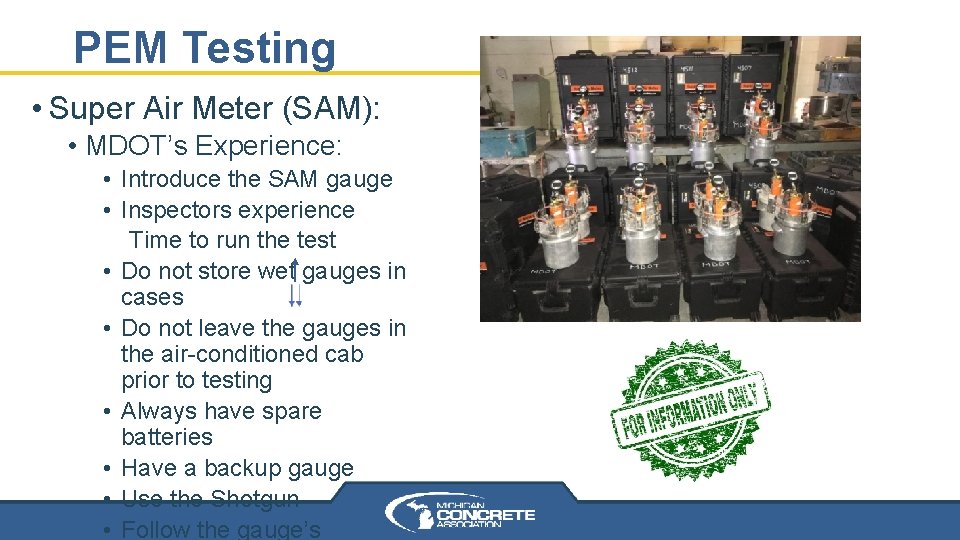
PEM Testing • Super Air Meter (SAM): • MDOT’s Experience: • Introduce the SAM gauge • Inspectors experience Time to run the test • Do not store wet gauges in cases • Do not leave the gauges in the air-conditioned cab prior to testing • Always have spare batteries • Have a backup gauge • Use the Shotgun • Follow the gauge’s
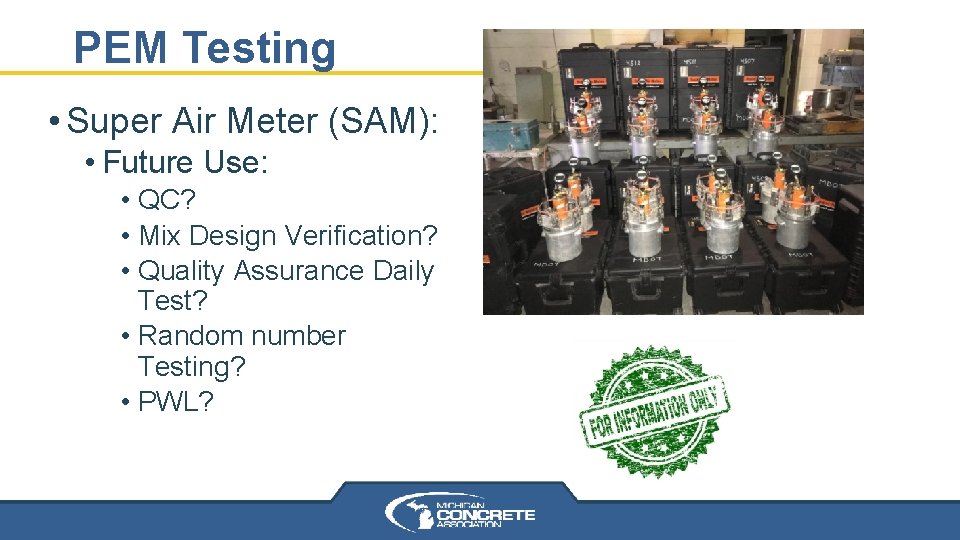
PEM Testing • Super Air Meter (SAM): • Future Use: • QC? • Mix Design Verification? • Quality Assurance Daily Test? • Random number Testing? • PWL?
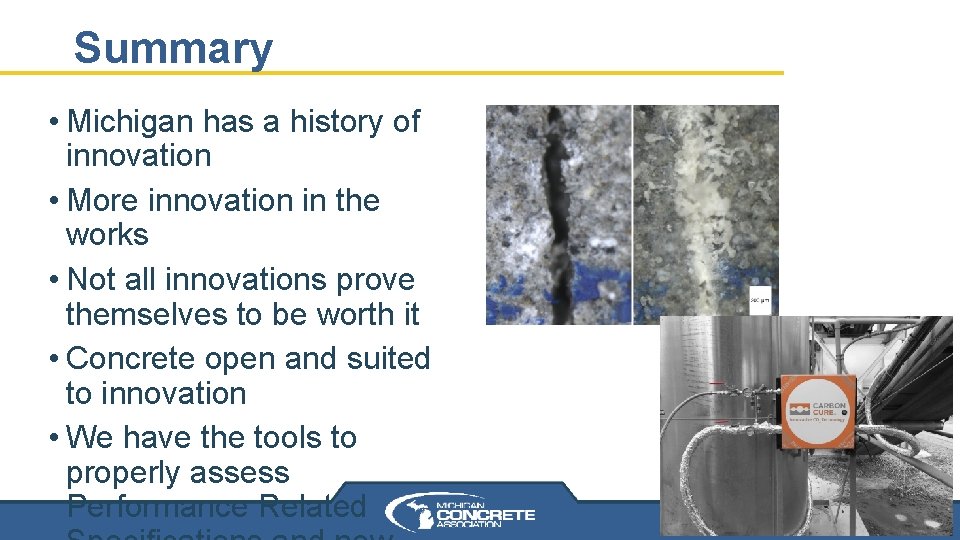
Summary • Michigan has a history of innovation • More innovation in the works • Not all innovations prove themselves to be worth it • Concrete open and suited to innovation • We have the tools to properly assess Performance Related 27
Special Thanks To: Ethan Bahmer, MDOT CFS Bahmert 1@Michigan. gov (517) 230 -0190