
INNOVATION ECOSYSTEM OF SECONDGENERATION ETHANOL DANIELLA FARTES S
- Slides: 17
INNOVATION ECOSYSTEM OF SECOND-GENERATION ETHANOL DANIELLA FARTES S. E SILVA JOSÉ VITOR BOMTEMPO FLÁVIA ALVES
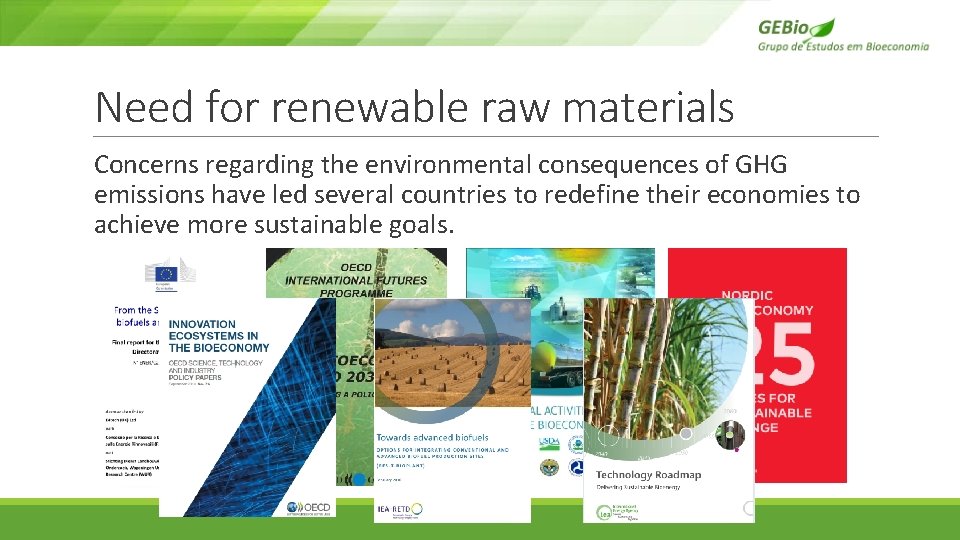
Need for renewable raw materials Concerns regarding the environmental consequences of GHG emissions have led several countries to redefine their economies to achieve more sustainable goals.
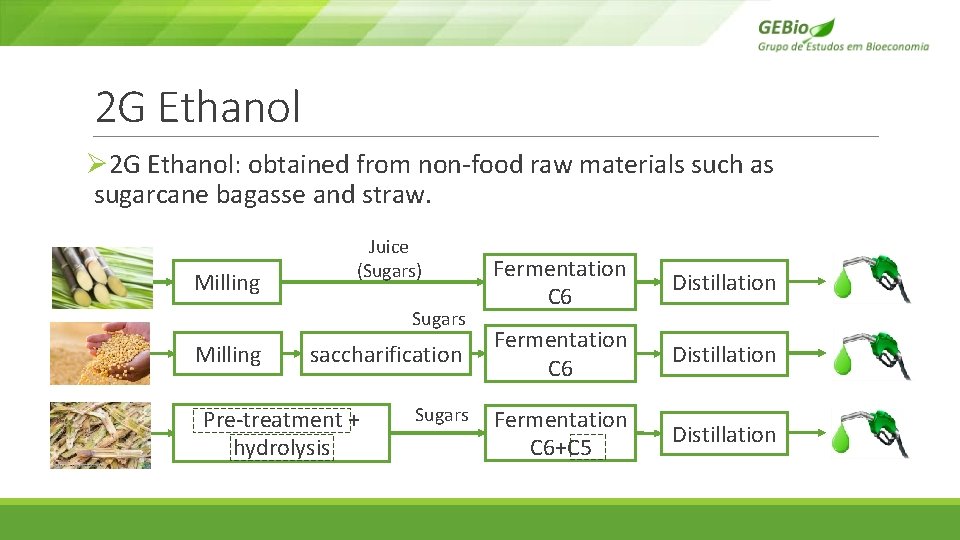
2 G Ethanol Ø 2 G Ethanol: obtained from non-food raw materials such as sugarcane bagasse and straw. Milling Juice (Sugars) Sugars Milling saccharification Pre-treatment + hydrolysis Sugars Fermentation C 6 Distillation Fermentation C 6+C 5 Distillation
2 G Ethanol Challenges ØAccess raw material; ØDevelop new varieties; ØHow to transform this material? ØWhich technology? ØHow to sell?
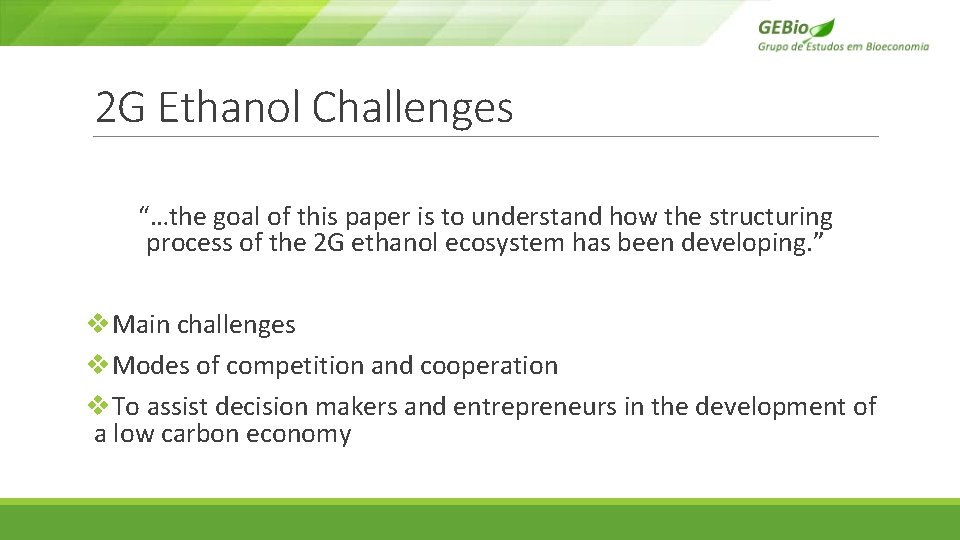
2 G Ethanol Challenges “…the goal of this paper is to understand how the structuring process of the 2 G ethanol ecosystem has been developing. ” v. Main challenges v. Modes of competition and cooperation v. To assist decision makers and entrepreneurs in the development of a low carbon economy
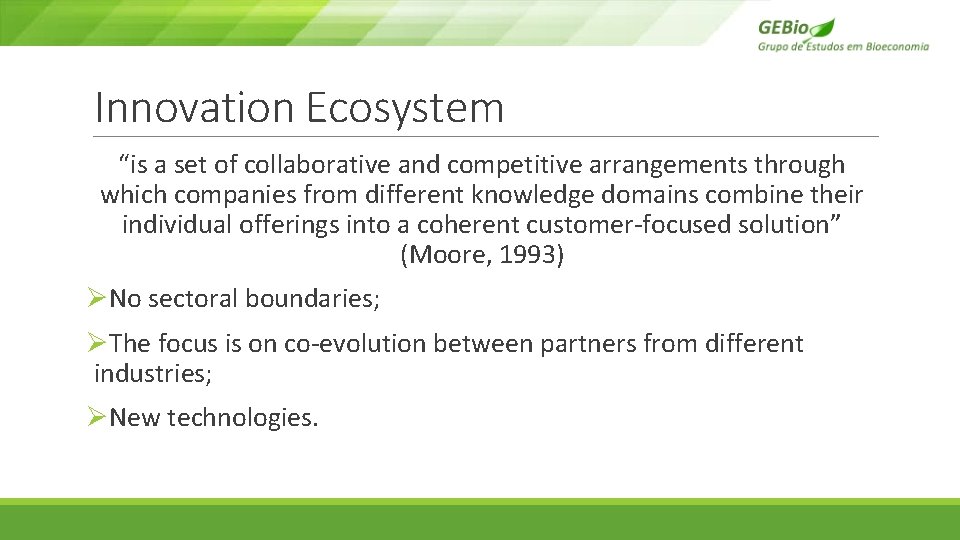
Innovation Ecosystem “is a set of collaborative and competitive arrangements through which companies from different knowledge domains combine their individual offerings into a coherent customer-focused solution” (Moore, 1993) ØNo sectoral boundaries; ØThe focus is on co-evolution between partners from different industries; ØNew technologies.
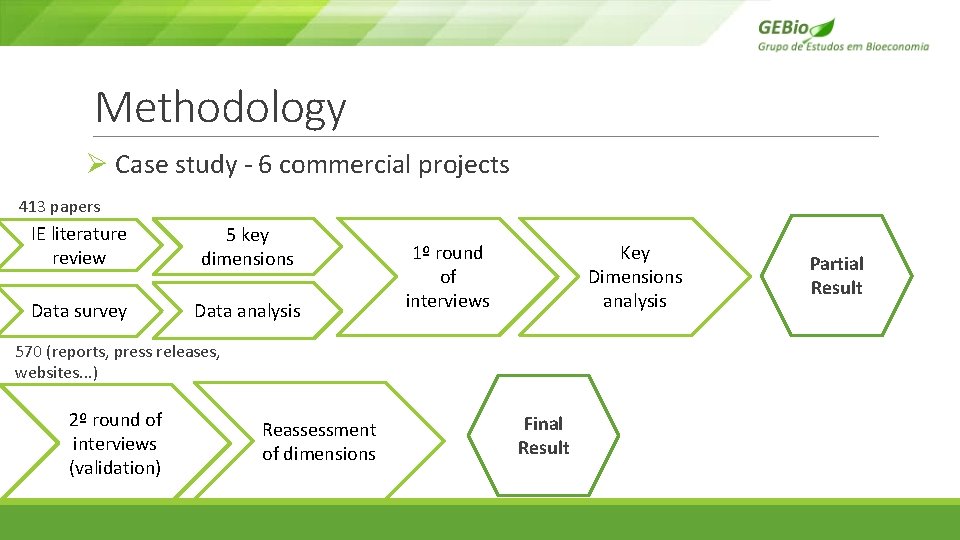
Methodology Ø Case study - 6 commercial projects 413 papers IE literature review 5 key dimensions Data survey Data analysis Key Dimensions analysis 1º round of interviews 570 (reports, press releases, websites. . . ) 2º round of interviews (validation) Reassessment of dimensions Final Result Partial Result
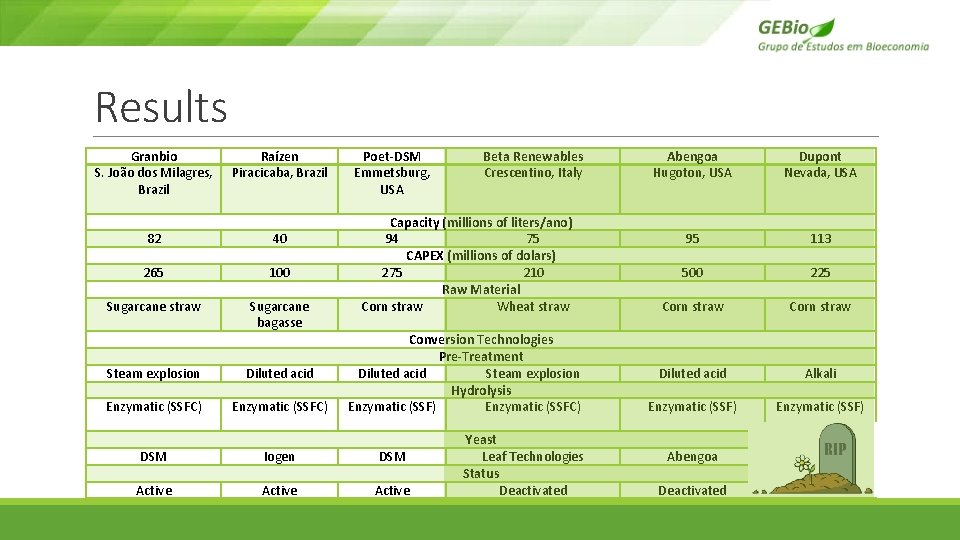
Results Granbio S. João dos Milagres, Brazil Raízen Piracicaba, Brazil 82 40 265 100 Sugarcane straw Sugarcane bagasse Steam explosion Diluted acid Enzymatic (SSFC) Poet-DSM Emmetsburg, USA Beta Renewables Crescentino, Italy Capacity (millions of liters/ano) 94 75 CAPEX (millions of dolars) 275 210 Raw Material Corn straw Wheat straw Conversion Technologies Pre-Treatment Diluted acid Steam explosion Hydrolysis Enzymatic (SSF) Enzymatic (SSFC) DSM Iogen DSM Active Yeast Leaf Technologies Status Deactivated Abengoa Hugoton, USA Dupont Nevada, USA 95 113 500 225 Corn straw Diluted acid Alkali Enzymatic (SSF) Abengoa Dupont Deactivated
Results ØIndividuals - for each Focal Ecosystem (projects) ØTimeline ØEcosystem Structure ØValue Blueprint Ø General Ecosystem
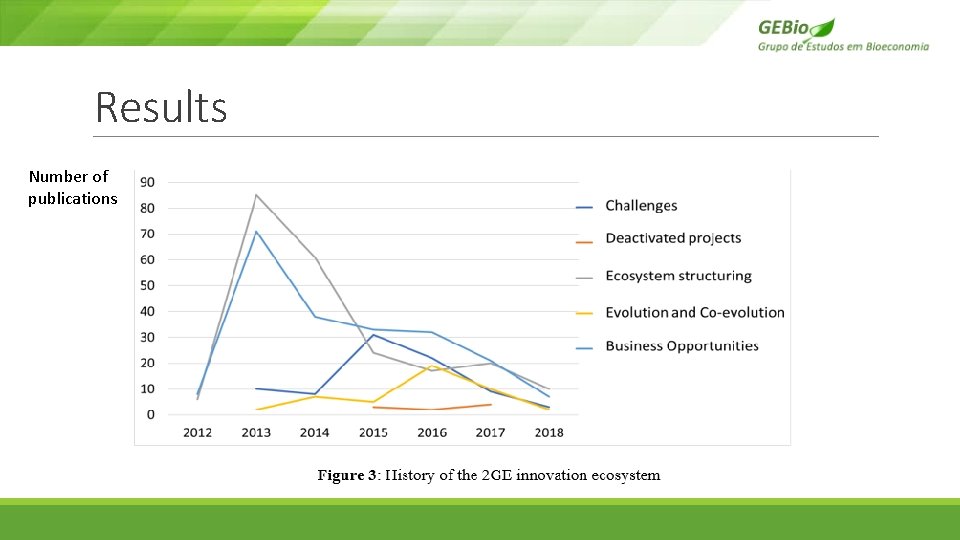
Results Number of publications
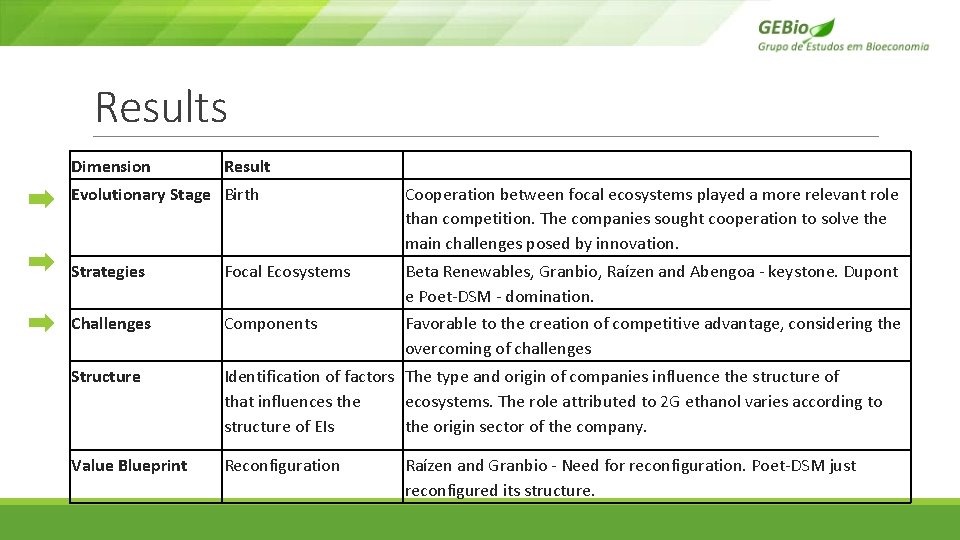
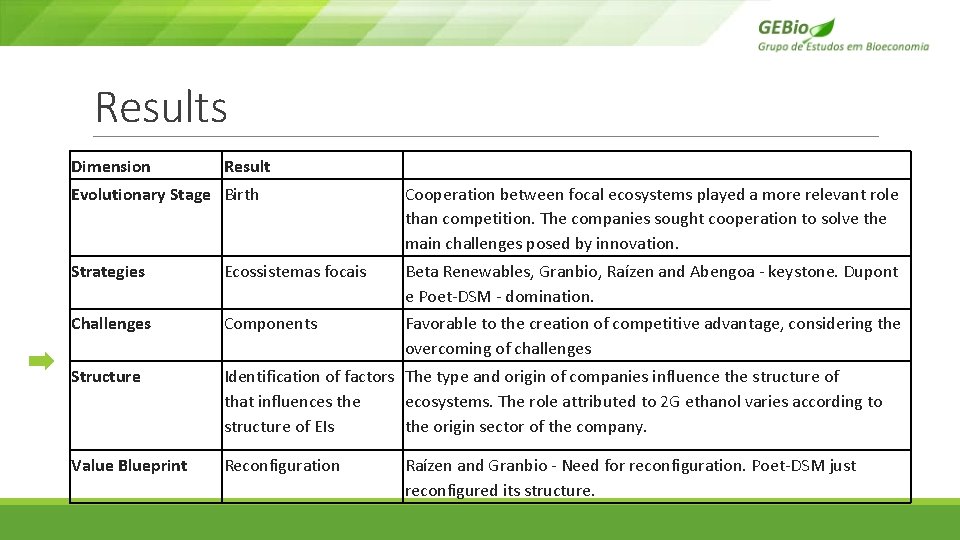
Results Dimension Result Evolutionary Stage Birth Cooperation between focal ecosystems played a more relevant role than competition. The companies sought cooperation to solve the main challenges posed by innovation. Strategies Focal Ecosystems Beta Renewables, Granbio, Raízen and Abengoa - keystone. Dupont e Poet-DSM - domination. Challenges Components Favorable to the creation of competitive advantage, considering the overcoming of challenges Structure Identification of factors The type and origin of companies influence the structure of that influences the ecosystems. The role attributed to 2 G ethanol varies according to structure of EIs the origin sector of the company. Value Blueprint Reconfiguration Raízen and Granbio - Need for reconfiguration. Poet-DSM just reconfigured its structure.
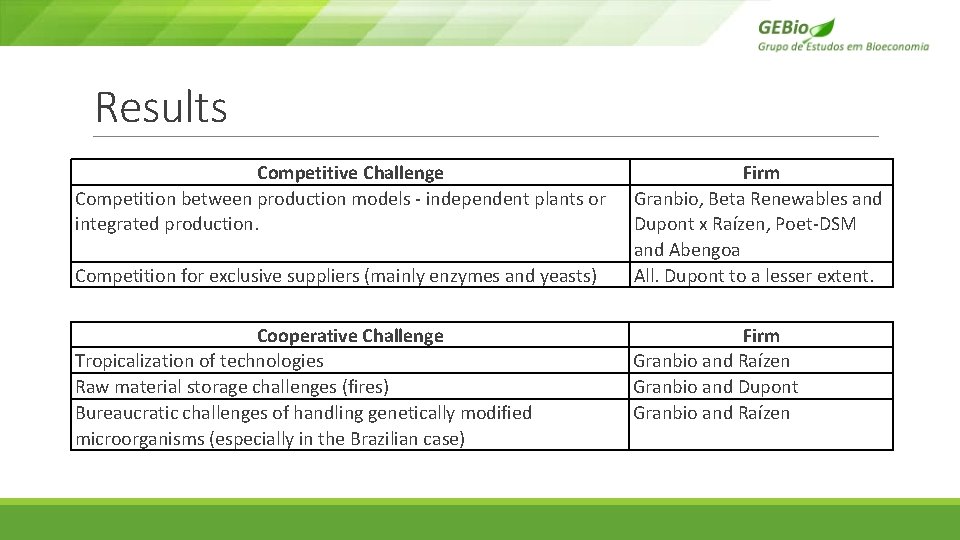
Results Competitive Challenge Competition between production models - independent plants or integrated production. Competition for exclusive suppliers (mainly enzymes and yeasts) Cooperative Challenge Tropicalization of technologies Raw material storage challenges (fires) Bureaucratic challenges of handling genetically modified microorganisms (especially in the Brazilian case) Firm Granbio, Beta Renewables and Dupont x Raízen, Poet-DSM and Abengoa All. Dupont to a lesser extent. Firm Granbio and Raízen Granbio and Dupont Granbio and Raízen
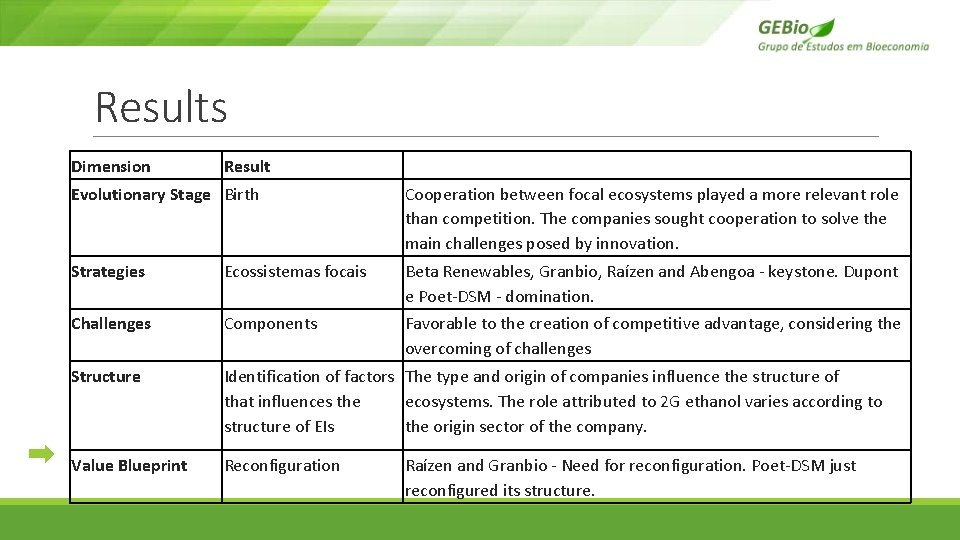
Results Dimension Result Evolutionary Stage Birth Cooperation between focal ecosystems played a more relevant role than competition. The companies sought cooperation to solve the main challenges posed by innovation. Strategies Ecossistemas focais Beta Renewables, Granbio, Raízen and Abengoa - keystone. Dupont e Poet-DSM - domination. Challenges Components Favorable to the creation of competitive advantage, considering the overcoming of challenges Structure Identification of factors The type and origin of companies influence the structure of that influences the ecosystems. The role attributed to 2 G ethanol varies according to structure of EIs the origin sector of the company. Value Blueprint Reconfiguration Raízen and Granbio - Need for reconfiguration. Poet-DSM just reconfigured its structure.
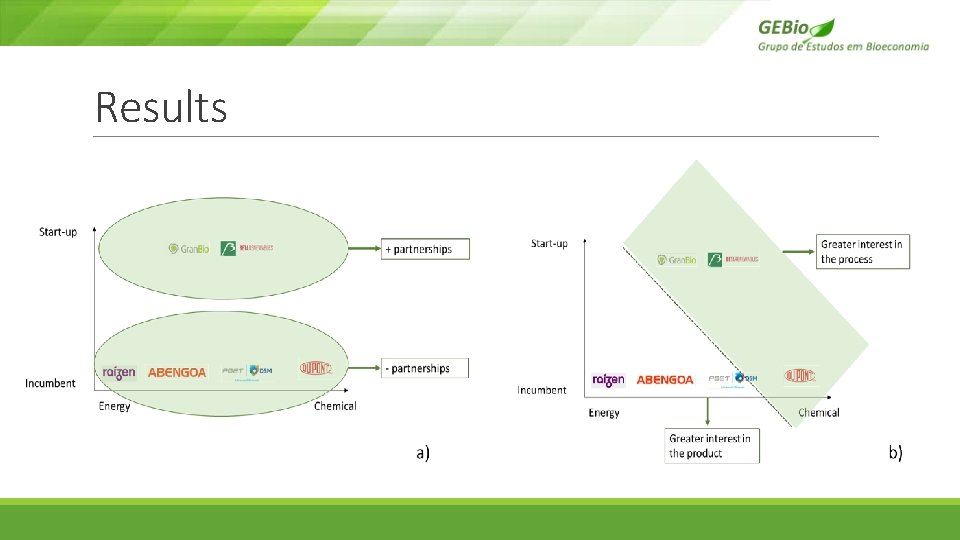
Results
Results Dimension Result Evolutionary Stage Birth Cooperation between focal ecosystems played a more relevant role than competition. The companies sought cooperation to solve the main challenges posed by innovation. Strategies Ecossistemas focais Beta Renewables, Granbio, Raízen and Abengoa - keystone. Dupont e Poet-DSM - domination. Challenges Components Favorable to the creation of competitive advantage, considering the overcoming of challenges Structure Identification of factors The type and origin of companies influence the structure of that influences the ecosystems. The role attributed to 2 G ethanol varies according to structure of EIs the origin sector of the company. Value Blueprint Reconfiguration Raízen and Granbio - Need for reconfiguration. Poet-DSM just reconfigured its structure.
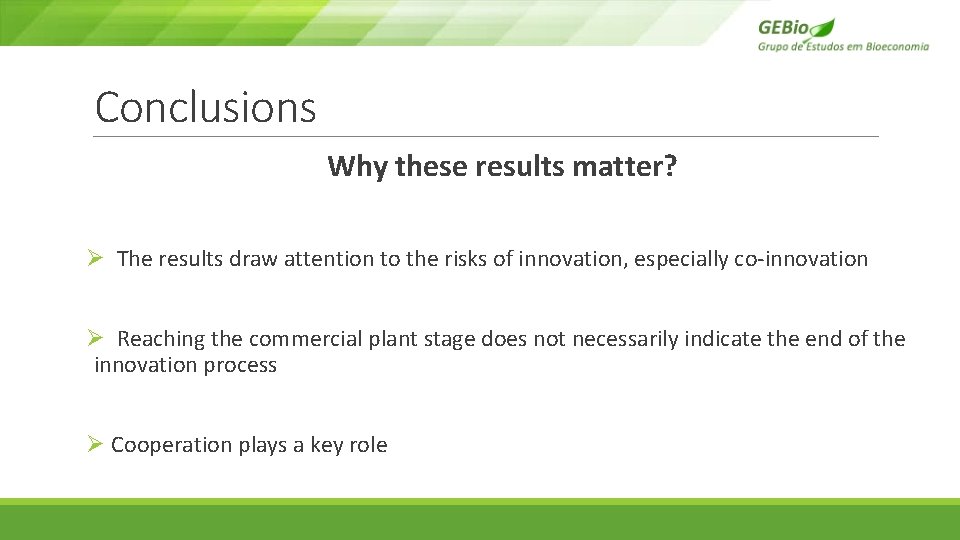
Conclusions Why these results matter? Ø The results draw attention to the risks of innovation, especially co-innovation Ø Reaching the commercial plant stage does not necessarily indicate the end of the innovation process Ø Cooperation plays a key role
INNOVATION ECOSYSTEM OF SECOND-GENERATION ETHANOL DANIELLA FARTES S. E SILVA DANIELLA. FARTES@HOTMAIL. COM