
Innovation ecology and entrepreneurship Michael J Cima Great
- Slides: 7
Innovation ecology and entrepreneurship Michael J. Cima
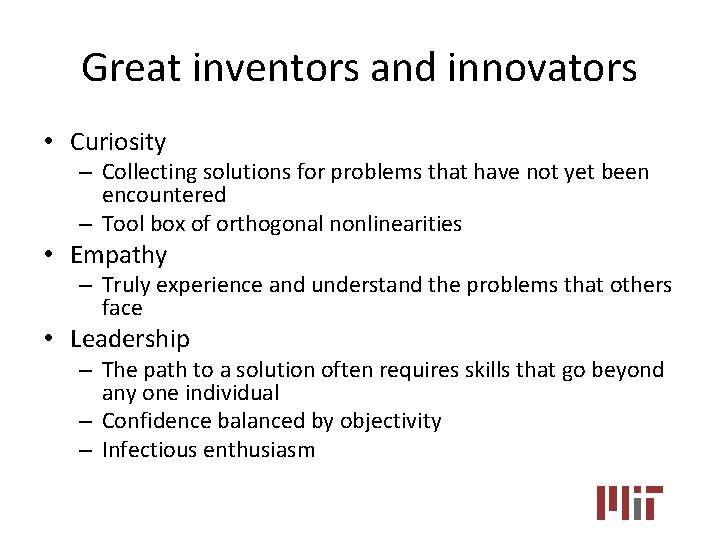
Great inventors and innovators • Curiosity – Collecting solutions for problems that have not yet been encountered – Tool box of orthogonal nonlinearities • Empathy – Truly experience and understand the problems that others face • Leadership – The path to a solution often requires skills that go beyond any one individual – Confidence balanced by objectivity – Infectious enthusiasm
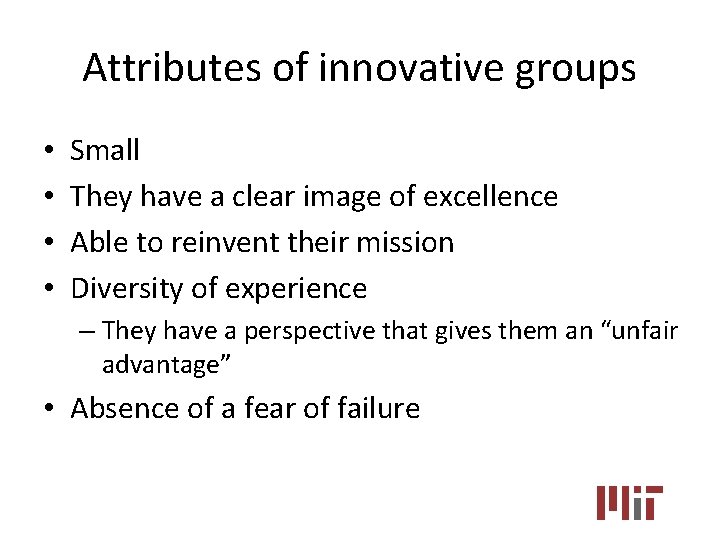
Attributes of innovative groups • • Small They have a clear image of excellence Able to reinvent their mission Diversity of experience – They have a perspective that gives them an “unfair advantage” • Absence of a fear of failure
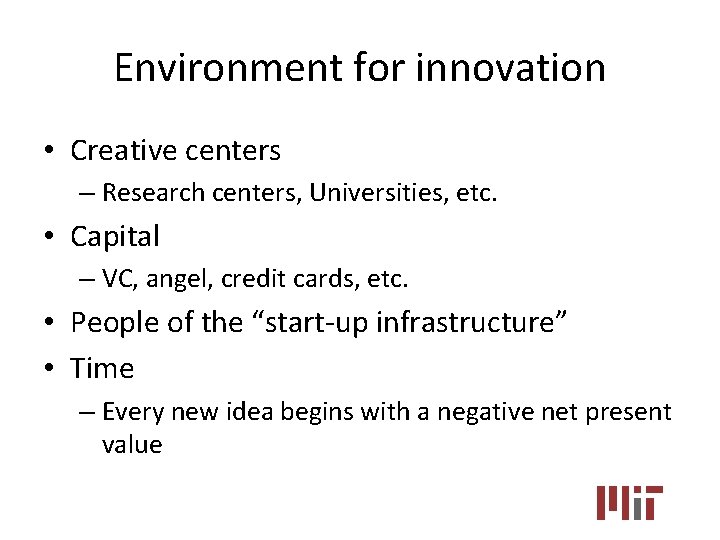
Environment for innovation • Creative centers – Research centers, Universities, etc. • Capital – VC, angel, credit cards, etc. • People of the “start-up infrastructure” • Time – Every new idea begins with a negative net present value
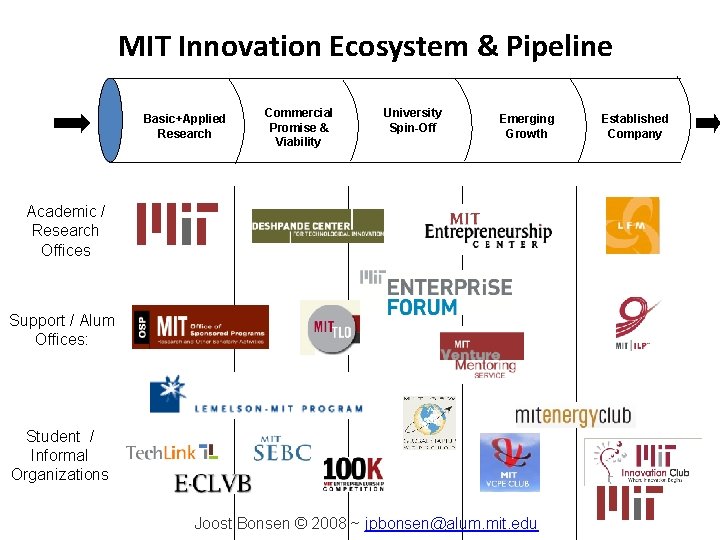
MIT Innovation Ecosystem & Pipeline Basic+Applied Research Commercial Promise & Viability University Spin-Off Emerging Growth Academic / Research Offices Support / Alum Offices: Student / Informal Organizations Joost Bonsen © 2008 ~ jpbonsen@alum. mit. edu Established Company
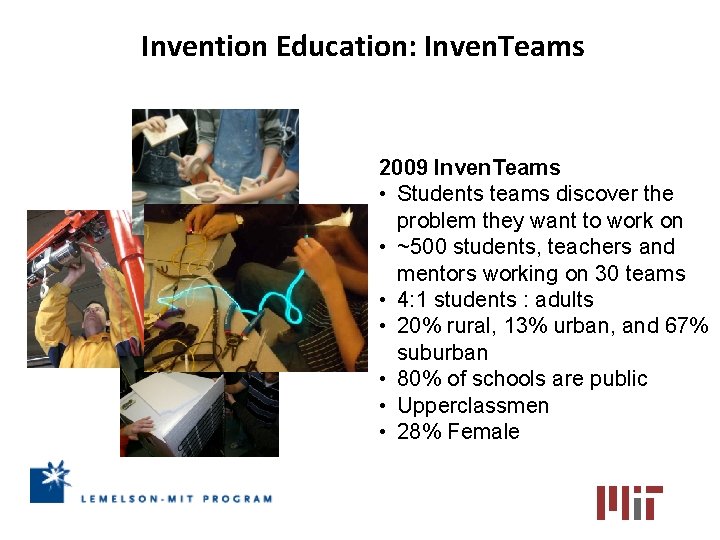
Invention Education: Inven. Teams 2009 Inven. Teams • Students teams discover the problem they want to work on • ~500 students, teachers and mentors working on 30 teams • 4: 1 students : adults • 20% rural, 13% urban, and 67% suburban • 80% of schools are public • Upperclassmen • 28% Female
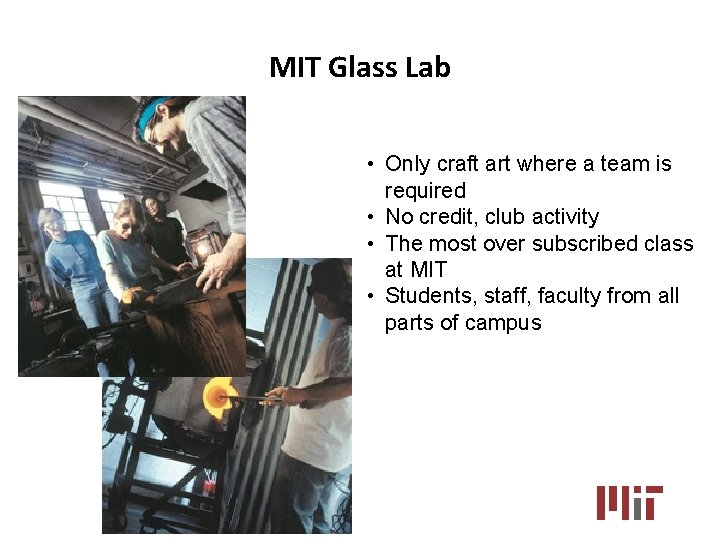
MIT Glass Lab • Only craft art where a team is required • No credit, club activity • The most over subscribed class at MIT • Students, staff, faculty from all parts of campus