
INNOVATING FARMTOMARKET ROAD DESIGN IN UPLAND PHILIPPINES FOR
- Slides: 15
INNOVATING FARM-TO-MARKET ROAD DESIGN IN UPLAND PHILIPPINES FOR RURAL SUSTAINABILITY AND SOCIO-ECONOMIC TRANSFORMATION by Raffy M. Espiritu, Jaime I. Manuel Jr, Adriano T. Esguerra Don Mariano Marcos Memorial State University Bacnotan, La Union Philippines Presented during the Chula-UNESCO CONFERENCE: Greening Agri-food Systems, Ensuring Rural Sustainability and Promoting Healthy Socioeconomic Transformation in Southeast Asia 23 -25 January 2018 Chulalongkorn University, Bangkok, Thailand
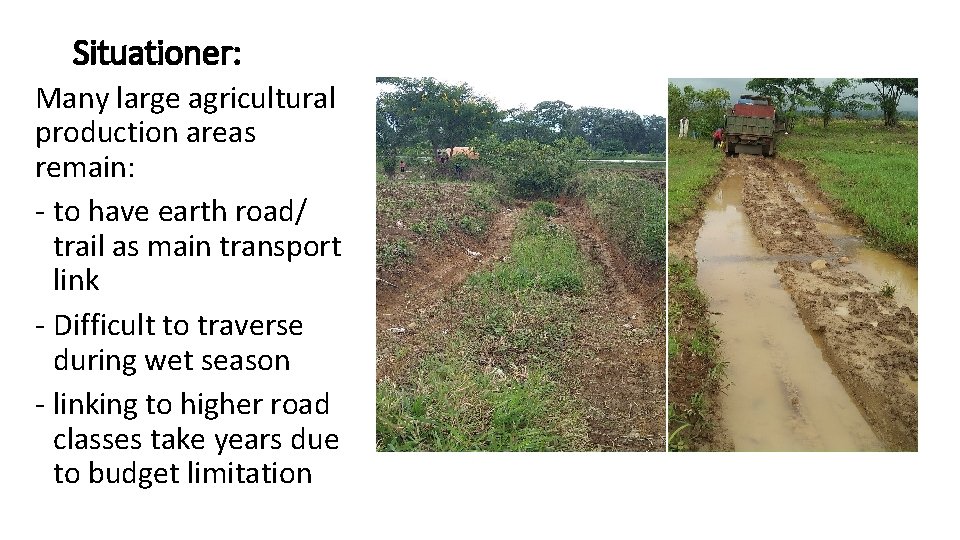
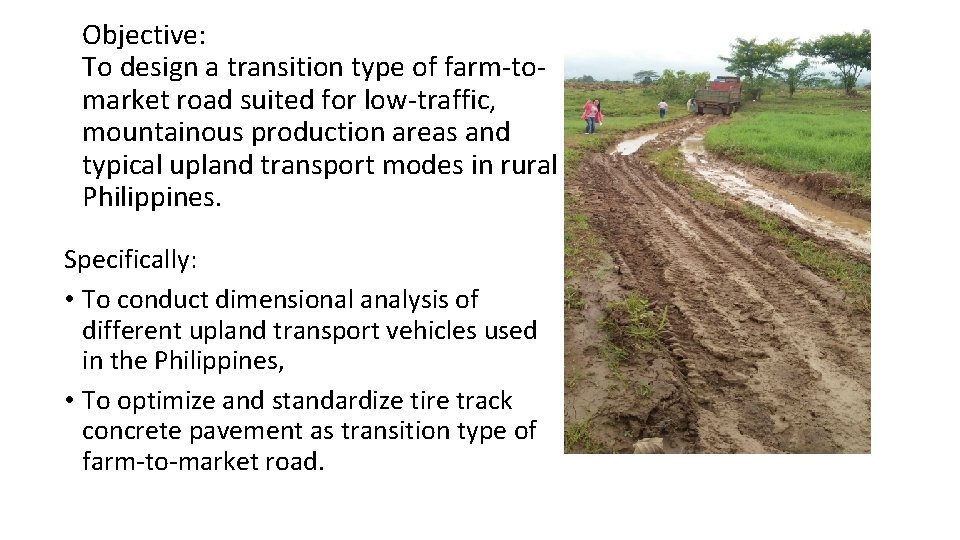
Situationer: Many large agricultural production areas remain: - to have earth road/ trail as main transport link - Difficult to traverse during wet season - linking to higher road classes take years due to budget limitation
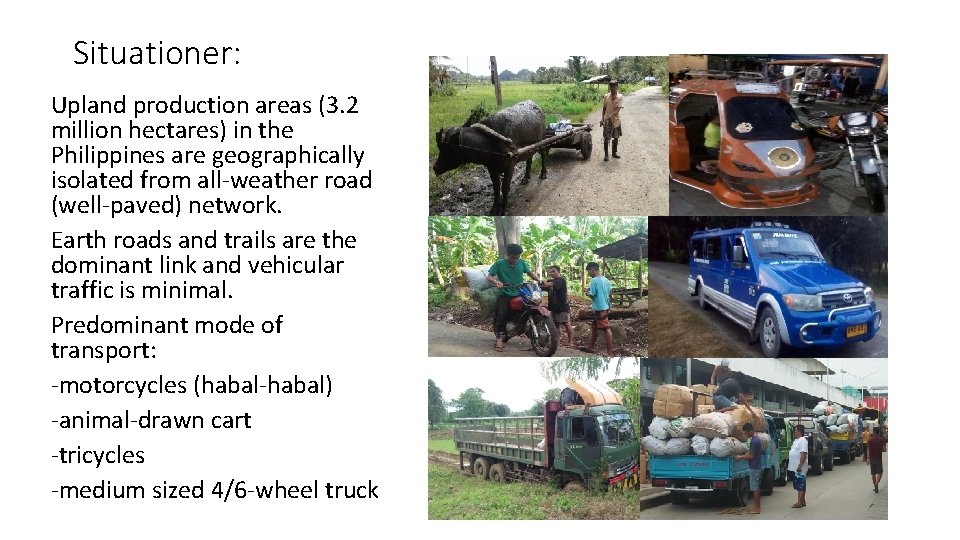
Situationer: Upland production areas (3. 2 million hectares) in the Philippines are geographically isolated from all-weather road (well-paved) network. Earth roads and trails are the dominant link and vehicular traffic is minimal. Predominant mode of transport: -motorcycles (habal-habal) -animal-drawn cart -tricycles -medium sized 4/6 -wheel truck
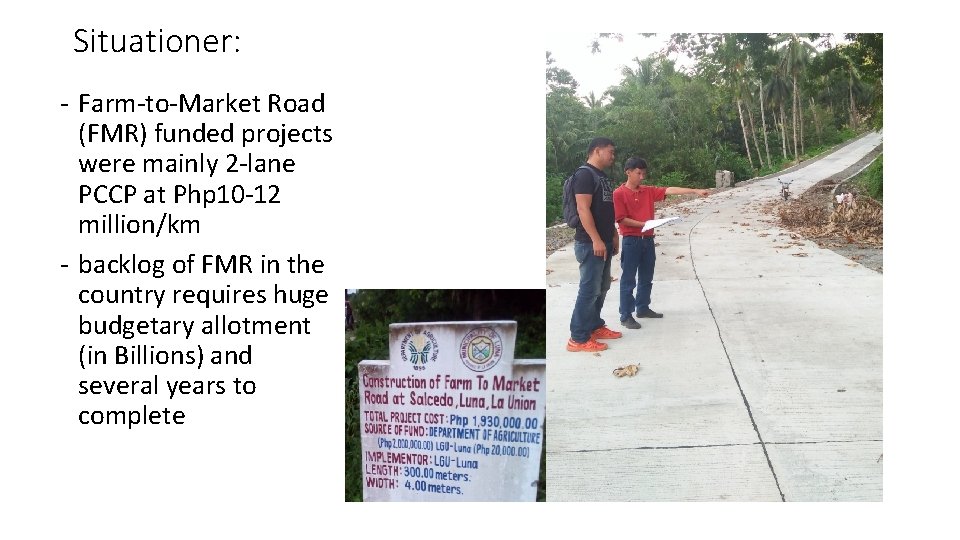
Situationer: - Farm-to-Market Road (FMR) funded projects were mainly 2 -lane PCCP at Php 10 -12 million/km - backlog of FMR in the country requires huge budgetary allotment (in Billions) and several years to complete
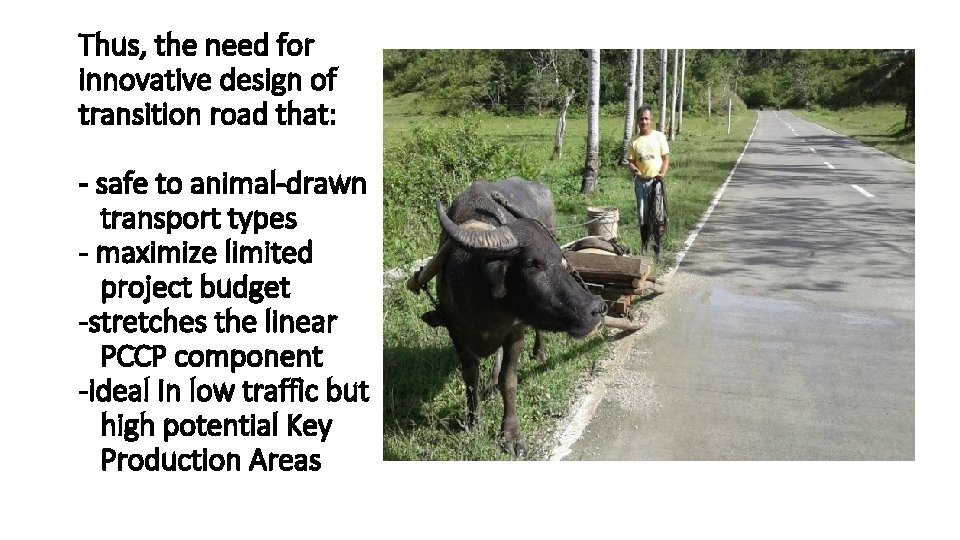
Thus, the need for innovative design of transition road that: - safe to animal-drawn transport types - maximize limited project budget -stretches the linear PCCP component -ideal In low traffic but high potential Key Production Areas
Objective: To design a transition type of farm-tomarket road suited for low-traffic, mountainous production areas and typical upland transport modes in rural Philippines. Specifically: • To conduct dimensional analysis of different upland transport vehicles used in the Philippines, • To optimize and standardize tire track concrete pavement as transition type of farm-to-market road.
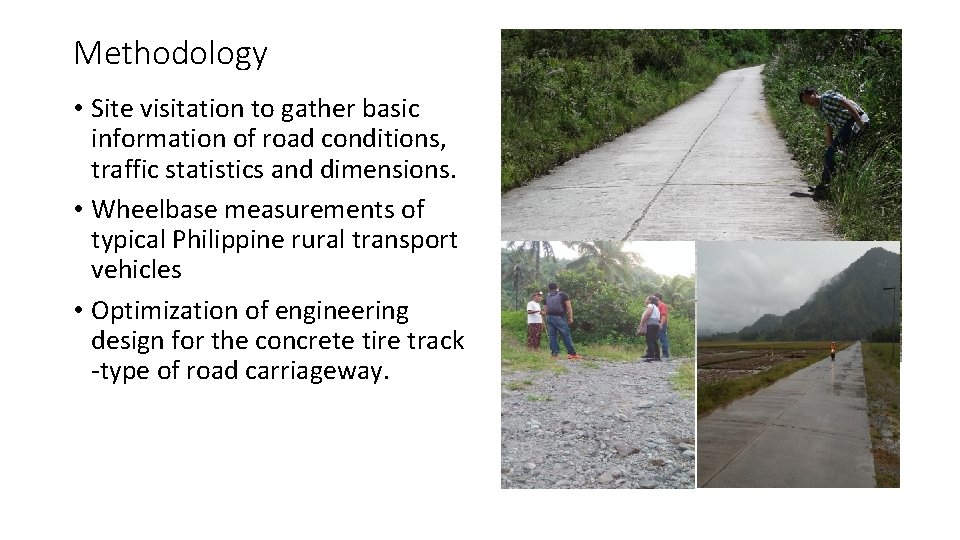
Methodology • Site visitation to gather basic information of road conditions, traffic statistics and dimensions. • Wheelbase measurements of typical Philippine rural transport vehicles • Optimization of engineering design for the concrete tire track -type of road carriageway.
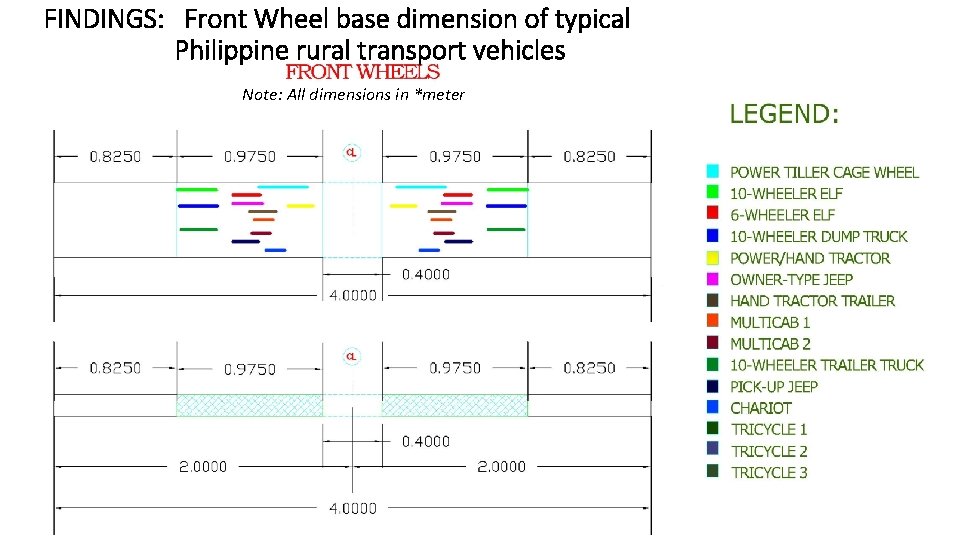
FINDINGS: Front Wheel base dimension of typical Philippine rural transport vehicles Note: All dimensions in *meter
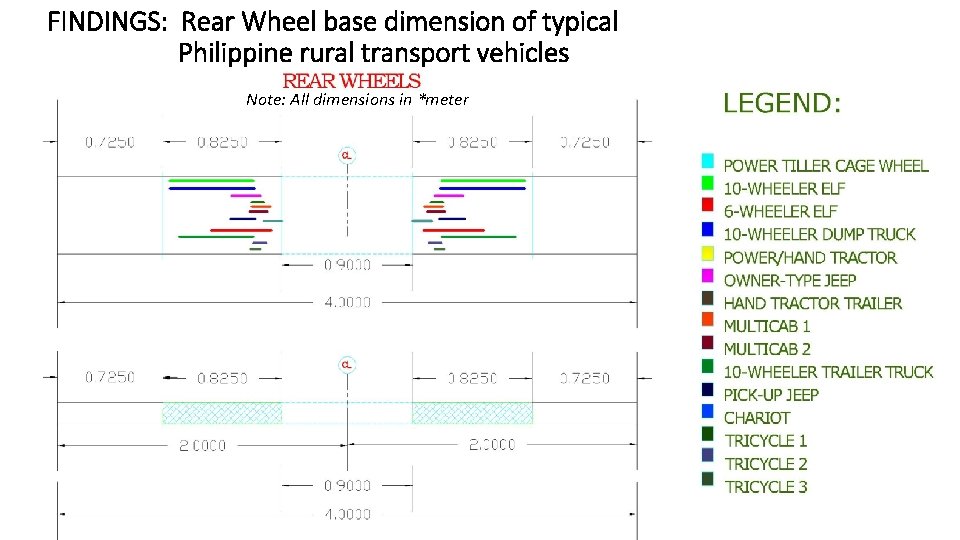
FINDINGS: Rear Wheel base dimension of typical Philippine rural transport vehicles Note: All dimensions in *meter
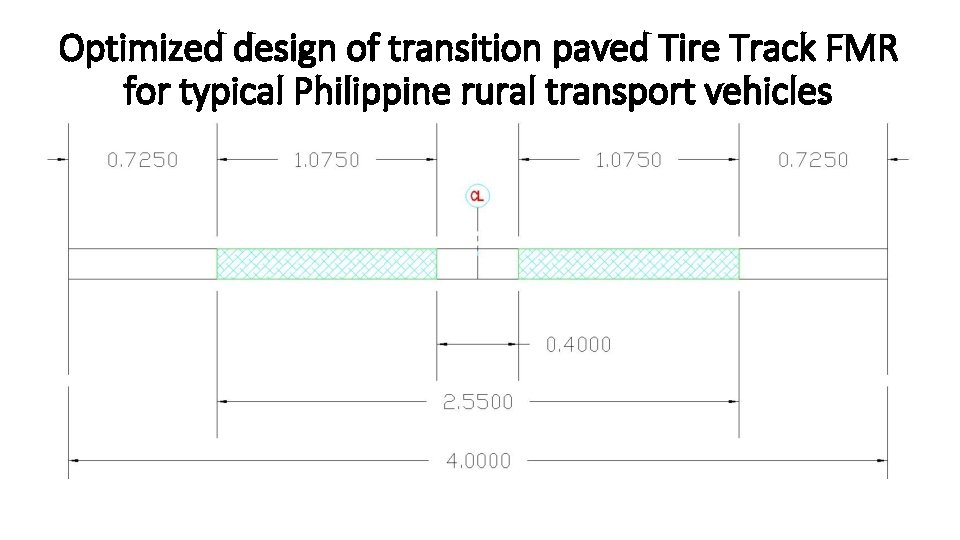
Optimized design of transition paved Tire Track FMR for typical Philippine rural transport vehicles
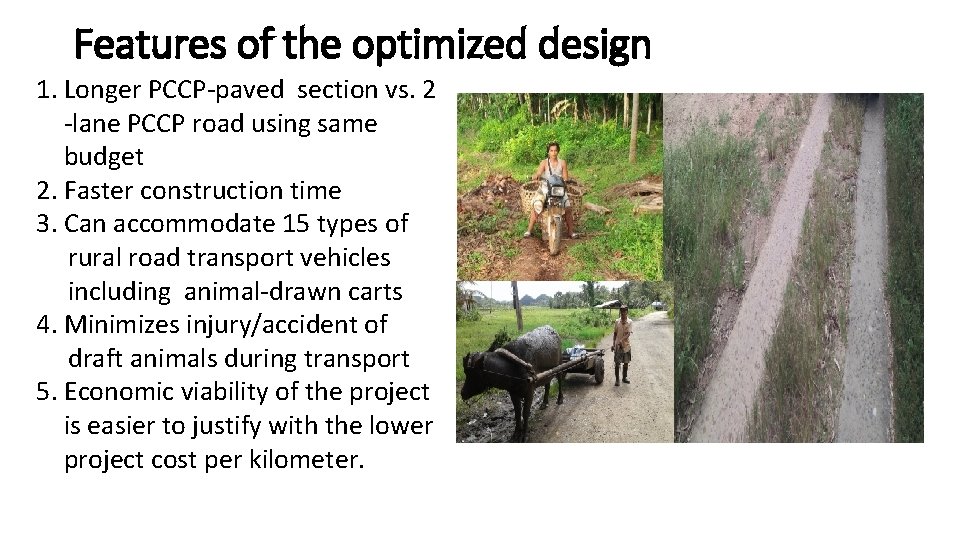
Features of the optimized design 1. Longer PCCP-paved section vs. 2 -lane PCCP road using same budget 2. Faster construction time 3. Can accommodate 15 types of rural road transport vehicles including animal-drawn carts 4. Minimizes injury/accident of draft animals during transport 5. Economic viability of the project is easier to justify with the lower project cost per kilometer.
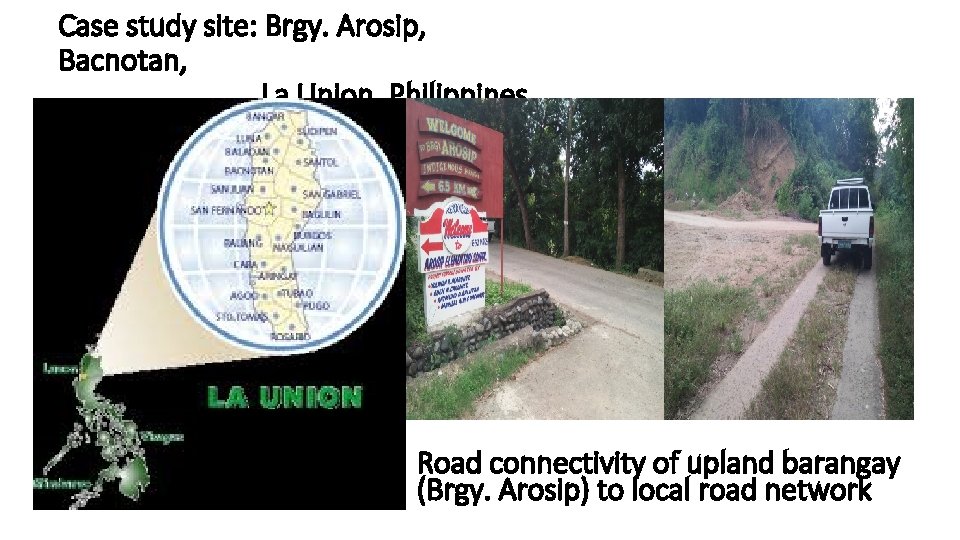
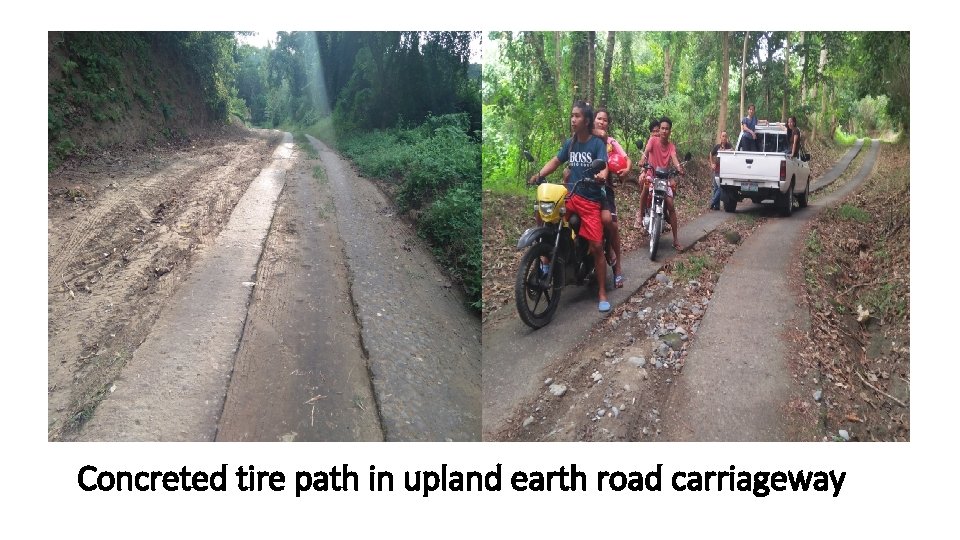
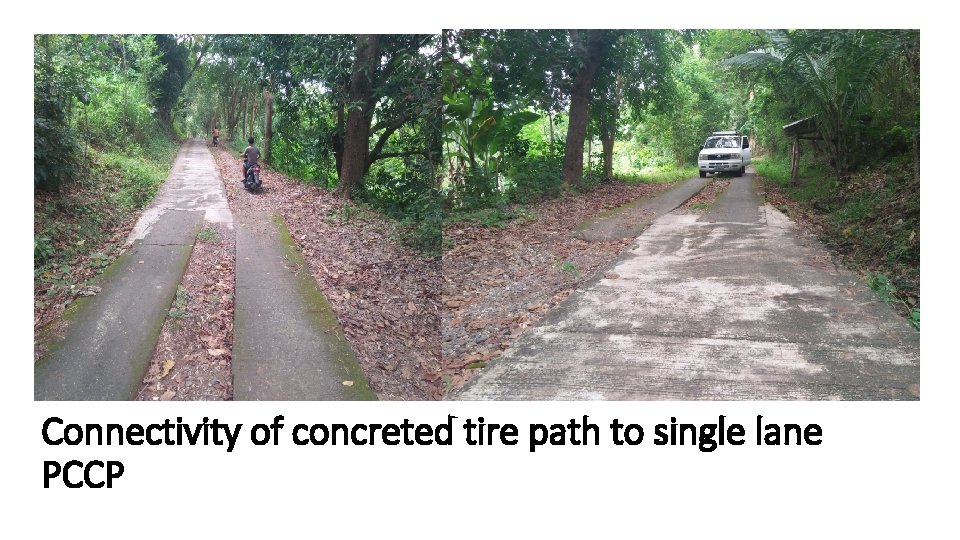
Case study site: Brgy. Arosip, Bacnotan, La Union, Philippines Road connectivity of upland barangay (Brgy. Arosip) to local road network
Concreted tire path in upland earth road carriageway
Connectivity of concreted tire path to single lane PCCP
Recommendation: 1. For adoption as another FMR type in the Philippine Agricultural Engineering Standard 2. For funding consideration by National Government Agencies and Local Government Units sourced from tobacco excise tax share