
Inner Transition Metals Cerium The Element Cerium is

- Slides: 13
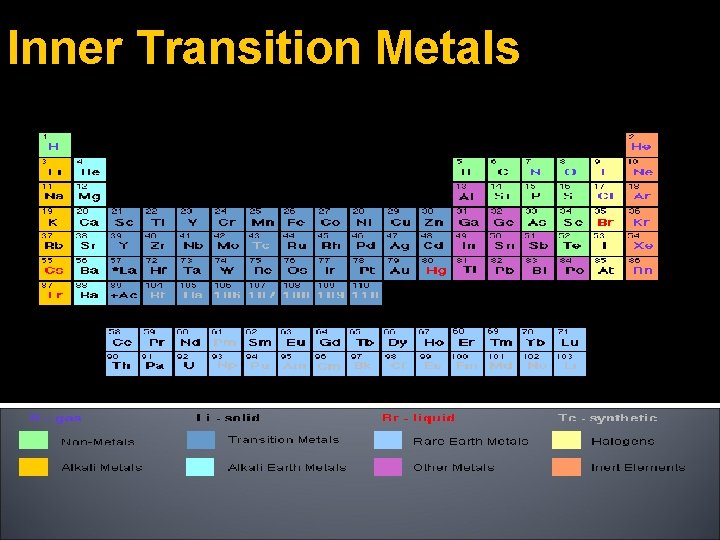
Inner Transition Metals
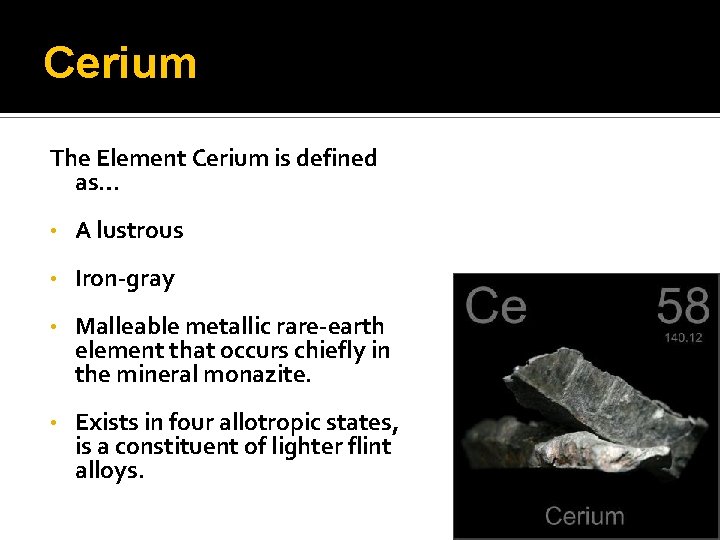
Cerium The Element Cerium is defined as… • A lustrous • Iron-gray • Malleable metallic rare-earth element that occurs chiefly in the mineral monazite. • Exists in four allotropic states, is a constituent of lighter flint alloys.
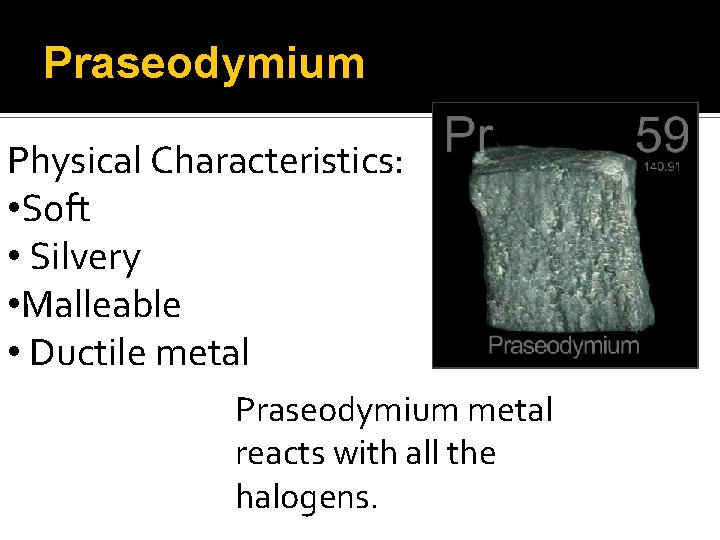
Praseodymium Physical Characteristics: • Soft • Silvery • Malleable • Ductile metal Praseodymium metal reacts with all the halogens.
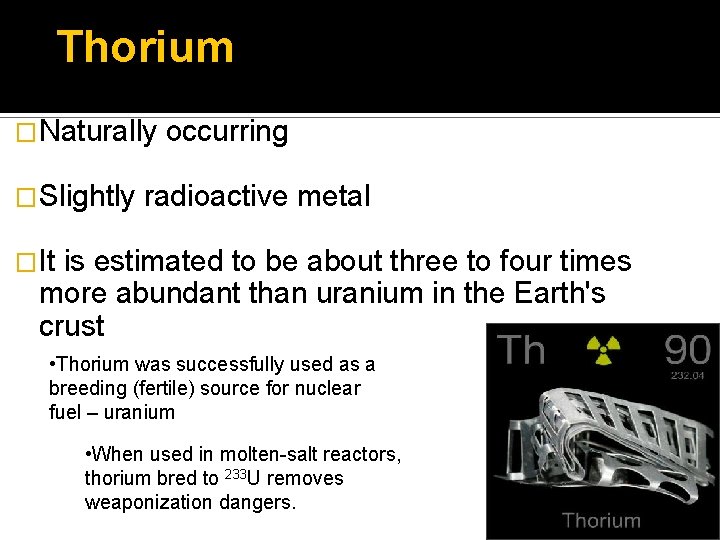
Thorium �Naturally �Slightly occurring radioactive metal �It is estimated to be about three to four times more abundant than uranium in the Earth's crust • Thorium was successfully used as a breeding (fertile) source for nuclear fuel – uranium • When used in molten-salt reactors, thorium bred to 233 U removes weaponization dangers.
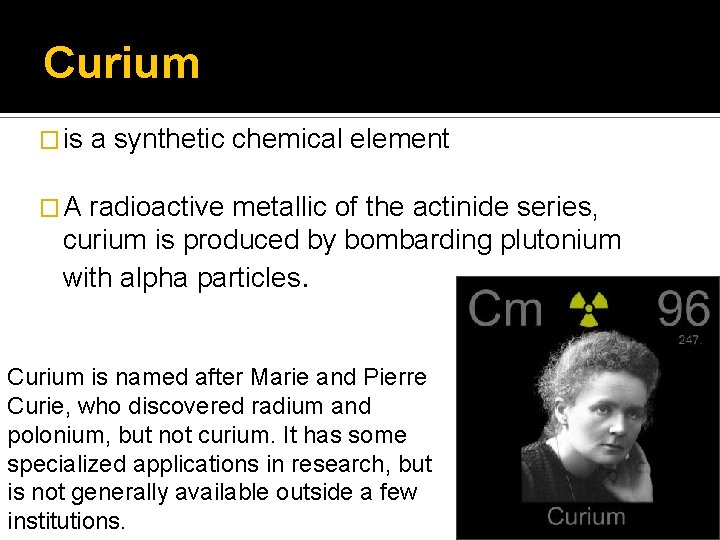
Curium � is a synthetic chemical element �A radioactive metallic of the actinide series, curium is produced by bombarding plutonium with alpha particles. Curium is named after Marie and Pierre Curie, who discovered radium and polonium, but not curium. It has some specialized applications in research, but is not generally available outside a few institutions.
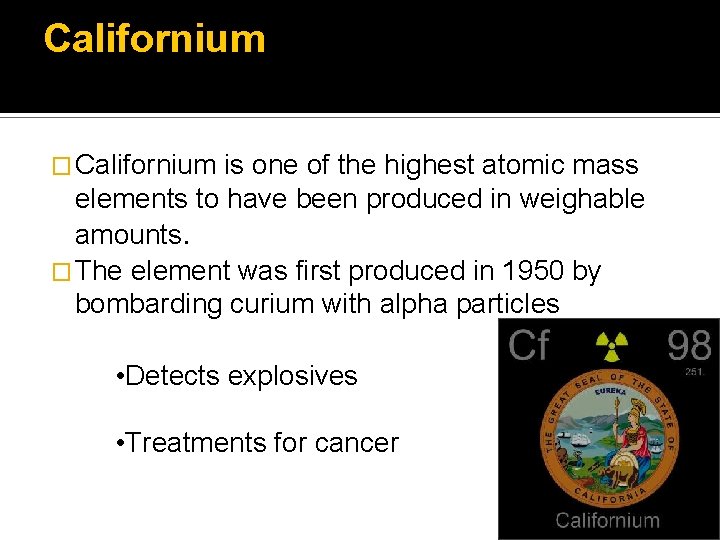
Californium � Californium is one of the highest atomic mass elements to have been produced in weighable amounts. � The element was first produced in 1950 by bombarding curium with alpha particles • Detects explosives • Treatments for cancer
Video �Plutonium
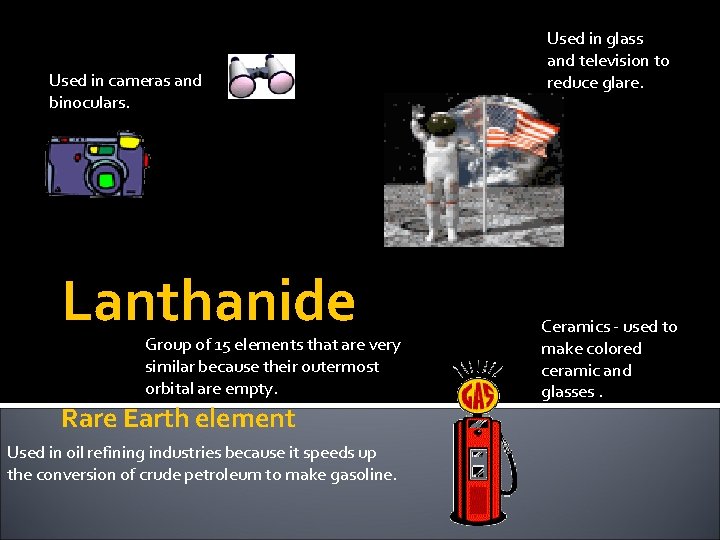
Used in cameras and binoculars. Lanthanide Group of 15 elements that are very similar because their outermost orbital are empty. Rare Earth element Used in oil refining industries because it speeds up the conversion of crude petroleum to make gasoline. Used in glass and television to reduce glare. Ceramics - used to make colored ceramic and glasses.
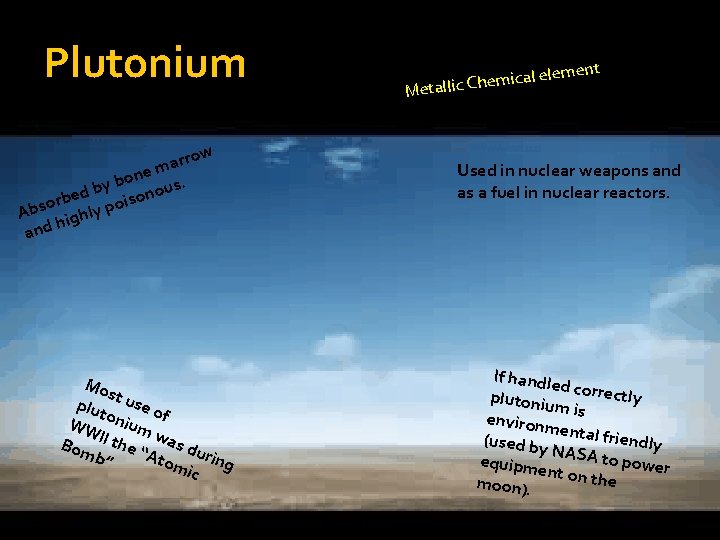
Plutonium rro a m one s. b y d b isonou e b r o Abs ighly po h and w Mo s plu t use o t WW onium f Bom ll the “ was du Ato r b” mic ing ent M al elem c i m e h C c i l etal Used in nuclear weapons and as a fuel in nuclear reactors. If handl ed plutoniu correctly m is environ me (used by ntal friendly N equipm ASA to power ent on t he moon).
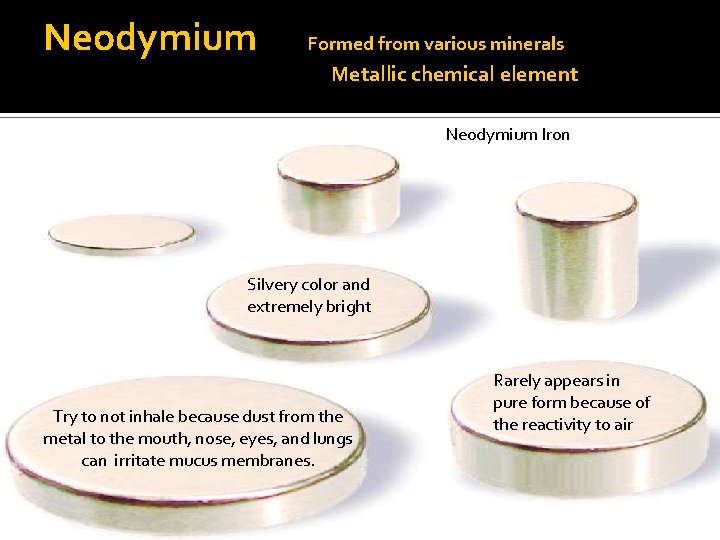
Neodymium Formed from various minerals Metallic chemical element Neodymium Iron Silvery color and extremely bright Try to not inhale because dust from the metal to the mouth, nose, eyes, and lungs can irritate mucus membranes. Rarely appears in pure form because of the reactivity to air
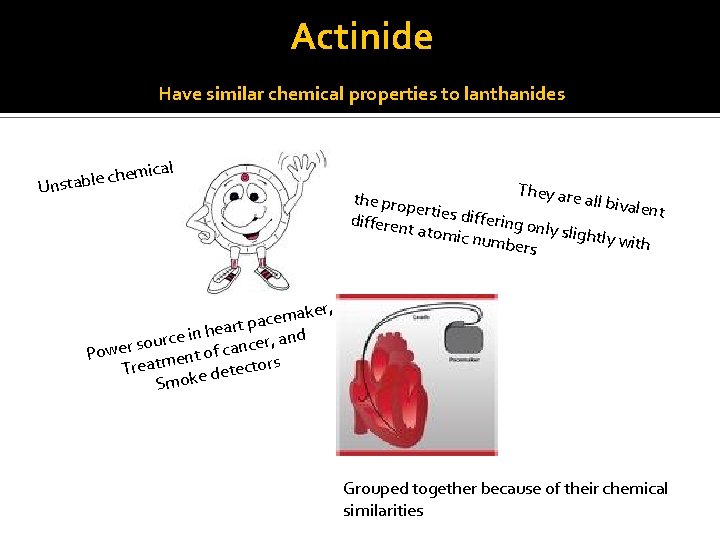
Actinide Have similar chemical properties to lanthanides emical h c e l b a Unst They are the prop all bivale erties di nt ffering o differen nly sligh t atomic tly with number s aker, m e c a eart p h n i e , and urc r o e s c r n e a c Pow nt of e m t a tors c Tre e t e d Smoke Grouped together because of their chemical similarities
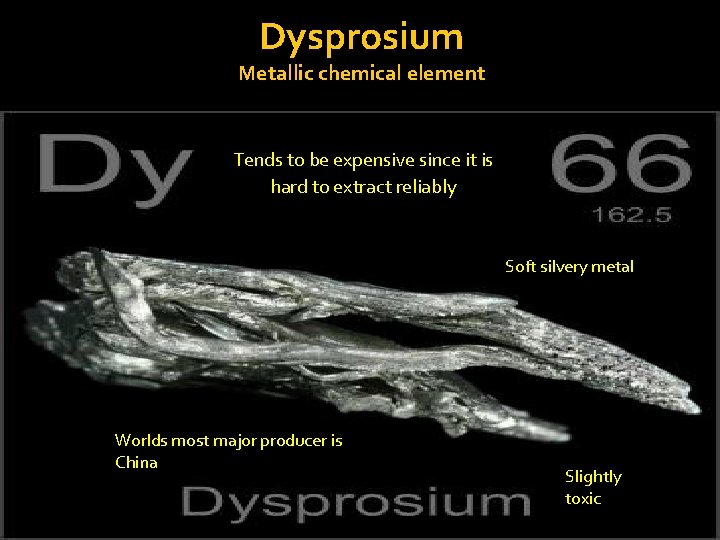
Dysprosium Metallic chemical element Tends to be expensive since it is hard to extract reliably Soft silvery metal Worlds most major producer is China Slightly toxic
By: Zac and Camie