
Innate vices of the heart The cathedra of

- Slides: 28
Innate vices of the heart The cathedra of the faculty and hospital surgery of the treatment faculty of the Tashkent medical academy
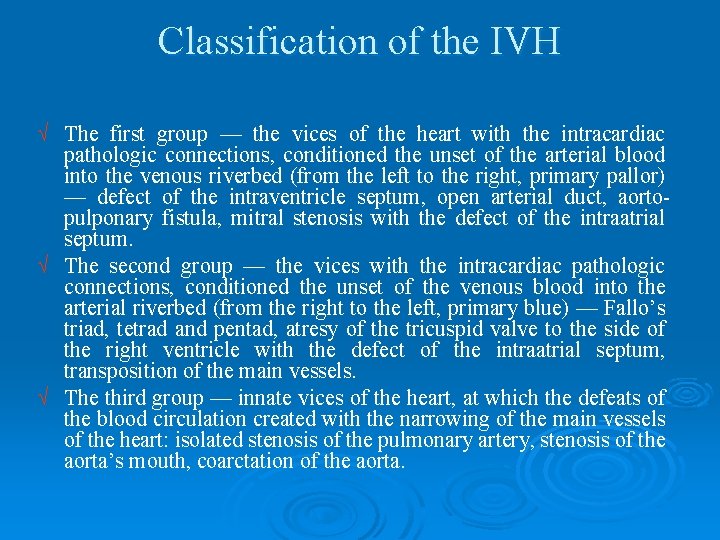
Classification of the IVH Ö The first group — the vices of the heart with the intracardiac pathologic connections, conditioned the unset of the arterial blood into the venous riverbed (from the left to the right, primary pallor) — defect of the intraventricle septum, open arterial duct, aortopulponary fistula, mitral stenosis with the defect of the intraatrial septum. Ö The second group — the vices with the intracardiac pathologic connections, conditioned the unset of the venous blood into the arterial riverbed (from the right to the left, primary blue) — Fallo’s triad, tetrad and pentad, atresy of the tricuspid valve to the side of the right ventricle with the defect of the intraatrial septum, transposition of the main vessels. Ö The third group — innate vices of the heart, at which the defeats of the blood circulation created with the narrowing of the main vessels of the heart: isolated stenosis of the pulmonary artery, stenosis of the aorta’s mouth, coarctation of the aorta.
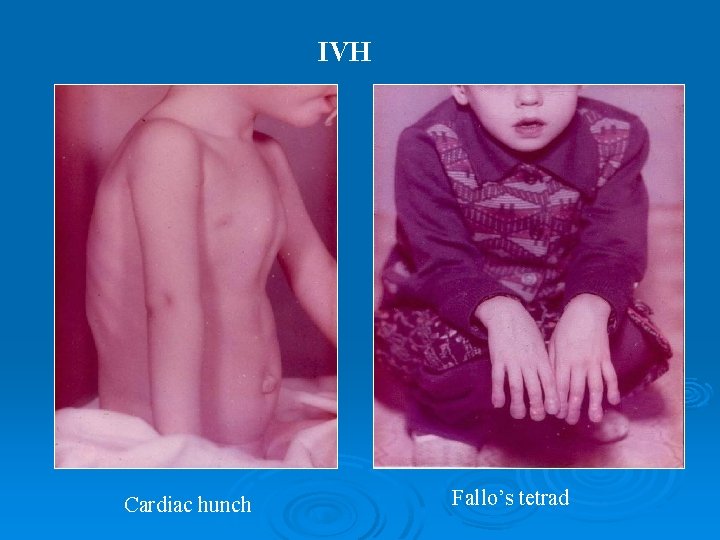
IVH Cardiac hunch Fallo’s tetrad
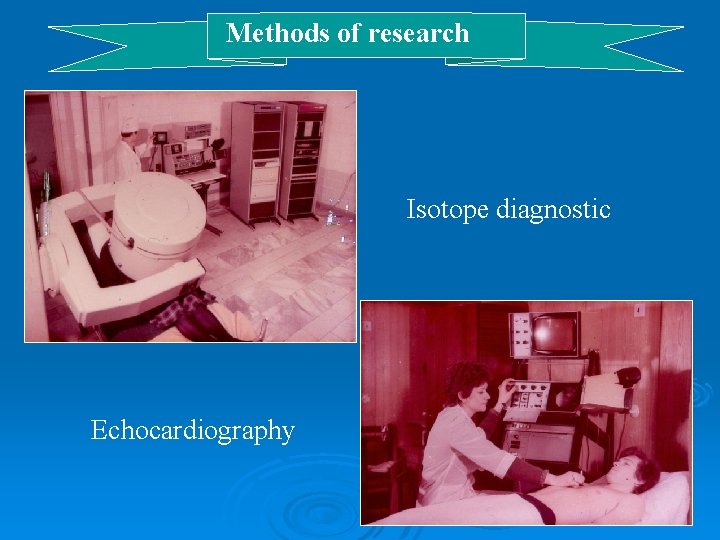
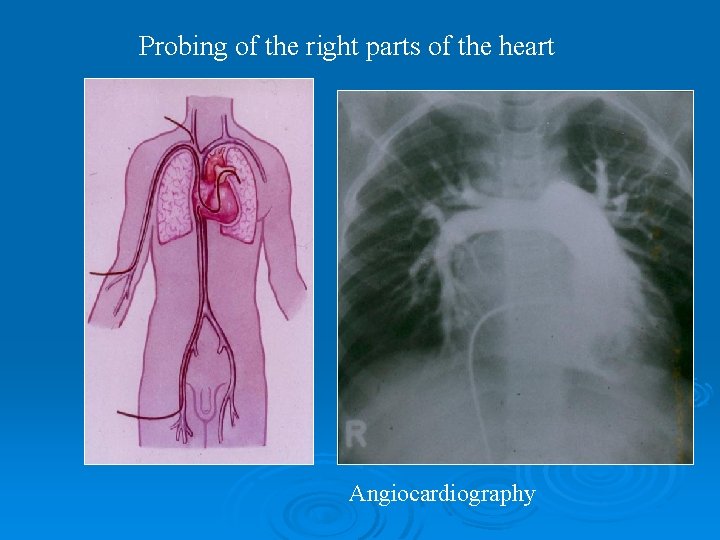
Special methods of research Ø echocardiography Ø X-ray Ø CT Ø NMT Ø Probing of the cardiac cavities Ø angiocardiography
Methods of research Isotope diagnostic Echocardiography
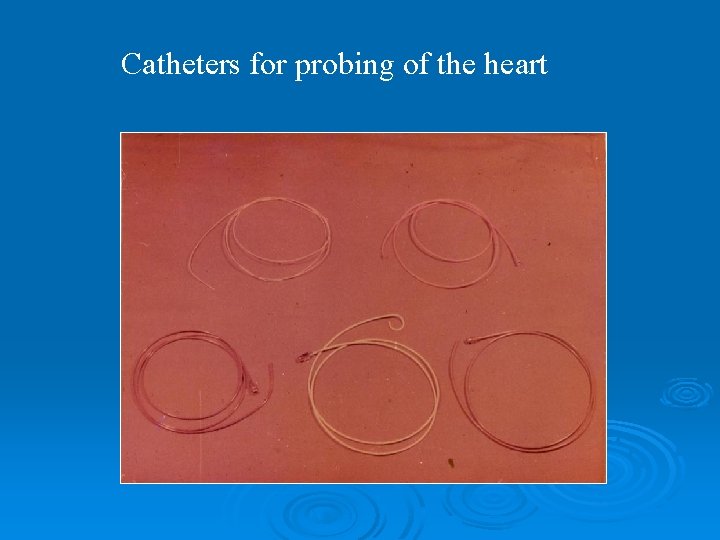
Catheters for probing of the heart
Probing of the right parts of the heart Angiocardiography
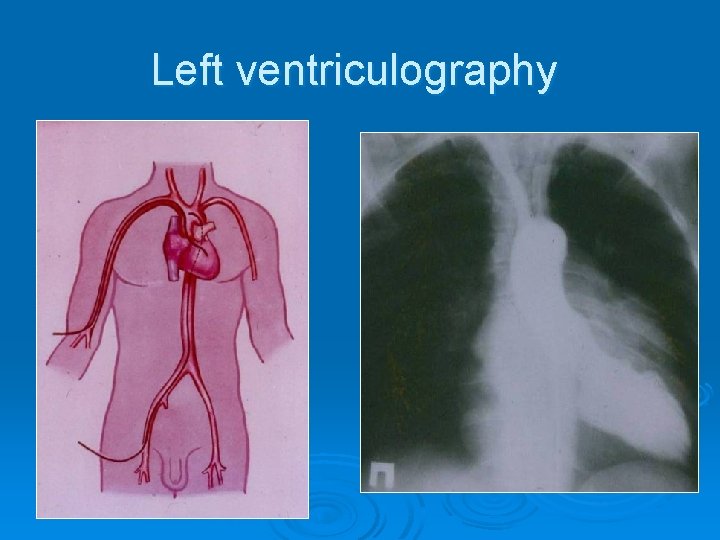
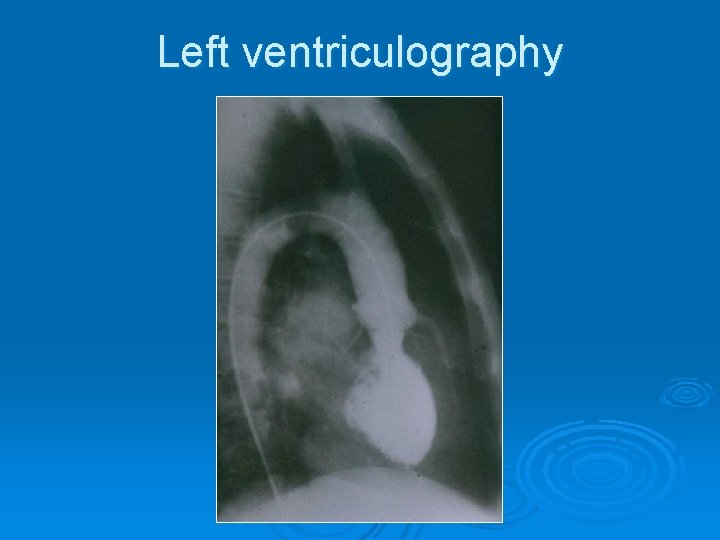
Left ventriculography
Left ventriculography
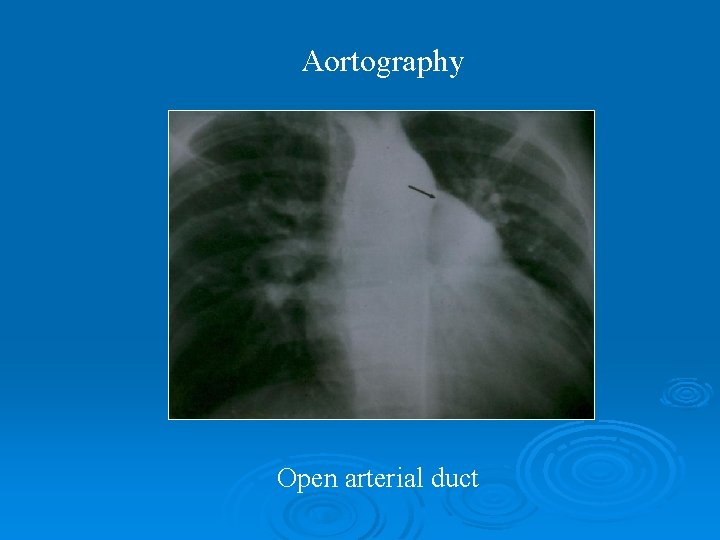
Aortography Open arterial duct
Open arterial duct ü fast weakness ü shortness of breath, increasing at the effort ü heartbeat ü reducing in the physical development ü frequently pneumonias ü pallor skin ü cyanosis of the lower half of the body at the exerting
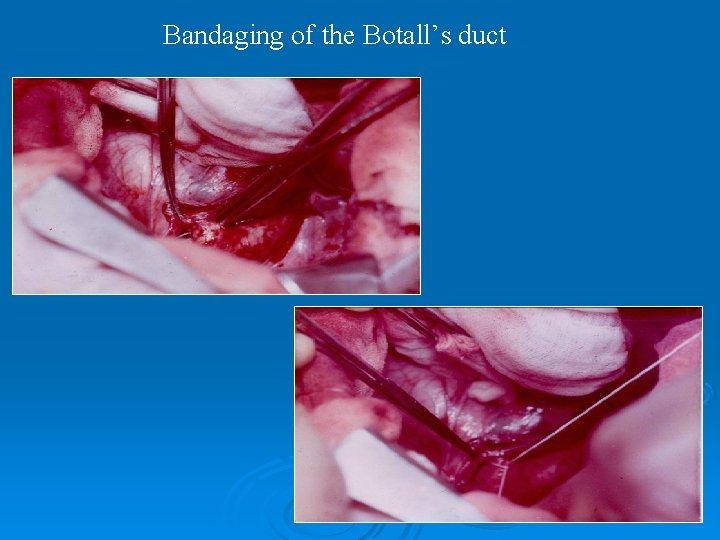
Bandaging of the Botall’s duct
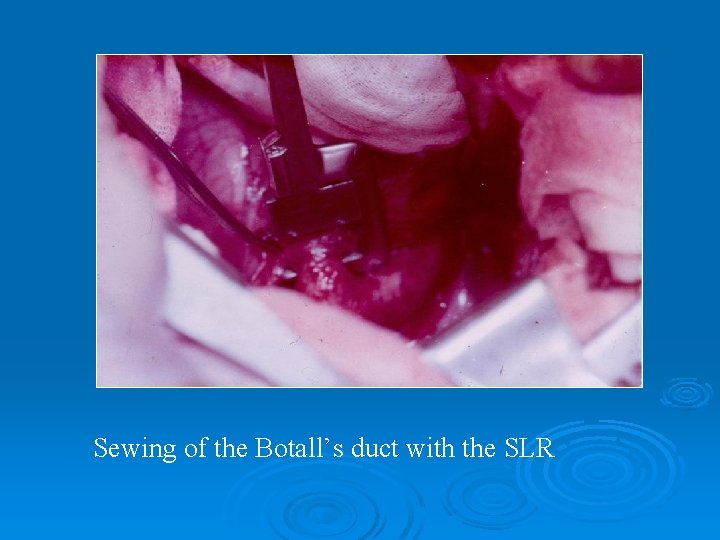
Sewing of the Botall’s duct with the SLR
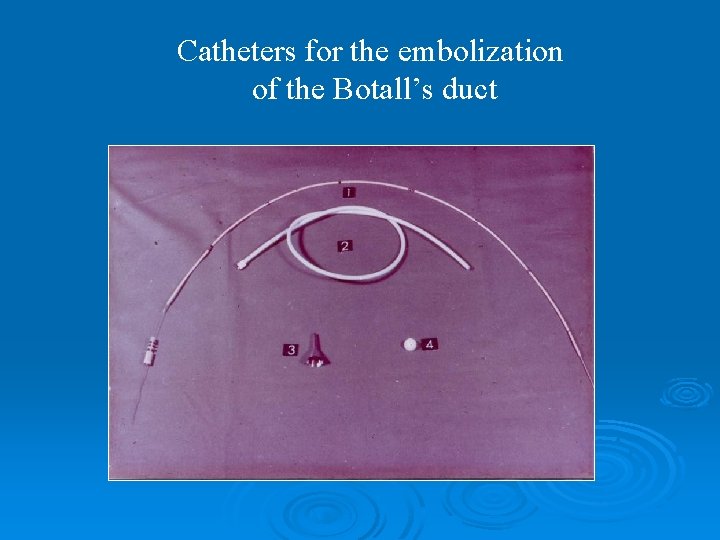
Catheters for the embolization of the Botall’s duct
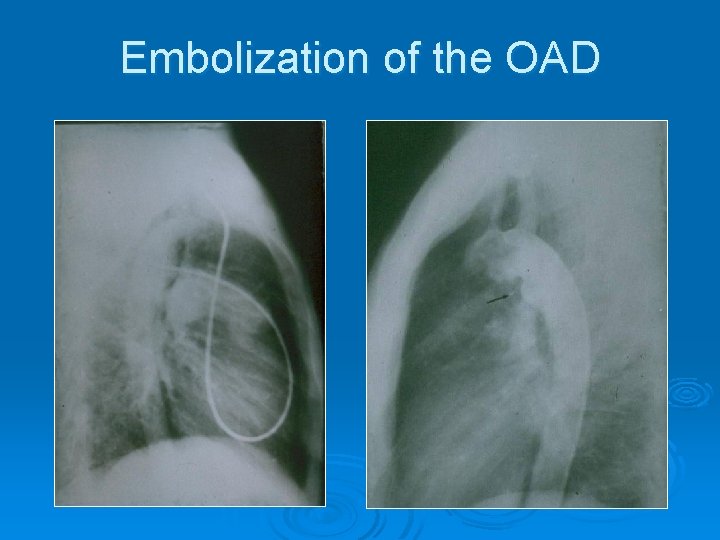
Embolization of the OAD
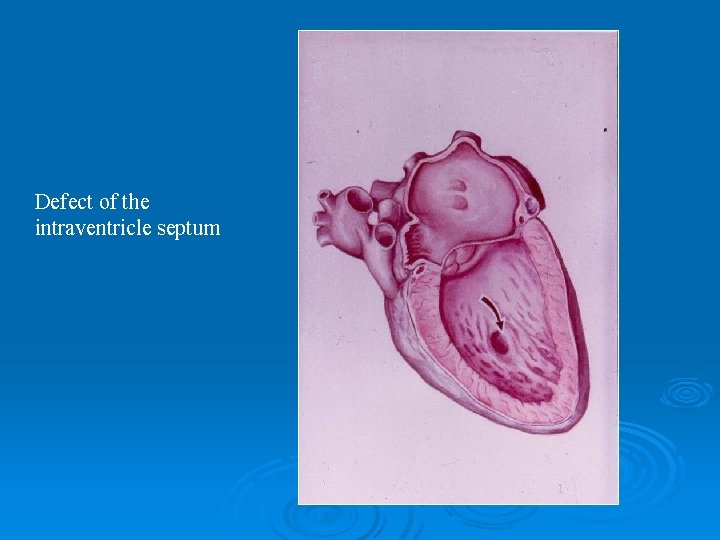
Defect of the intraventricle septum
Defect of the intraventricle septum Øshortness of breath Øpallor skin ØIncreased liver Øhypotrophy Øreducing in the physical development ØDeformation of the chest (cardiac hump) ØRough systolic noise at the III i/s to the left from the sternum
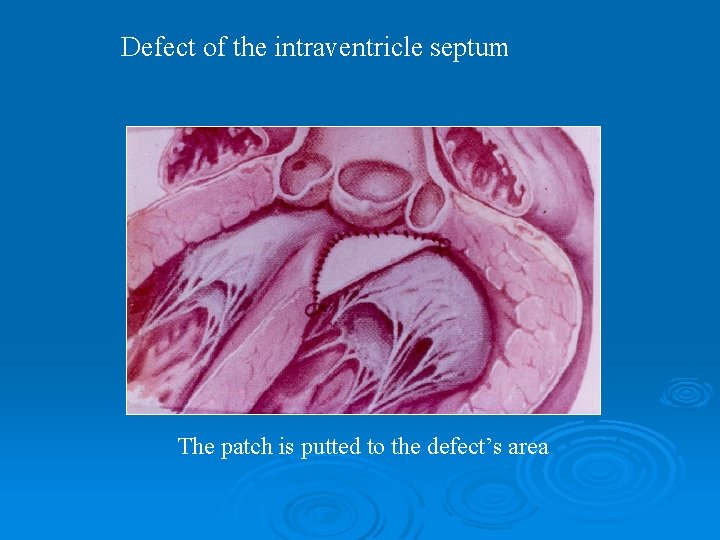
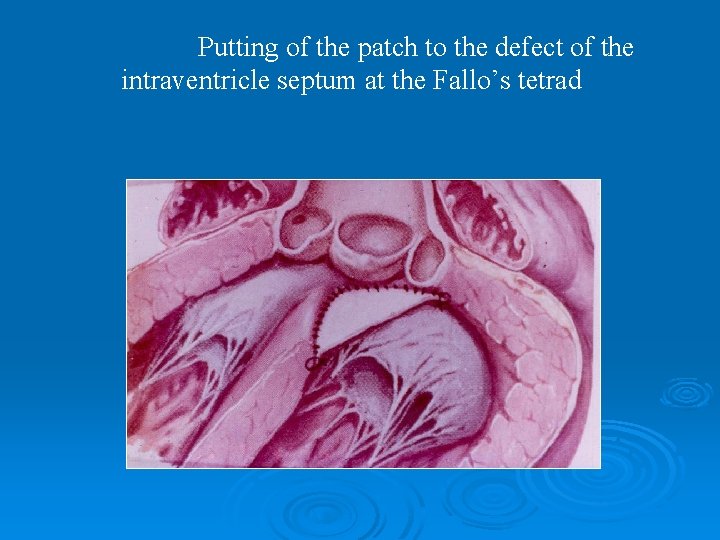
Defect of the intraventricle septum The patch is putted to the defect’s area
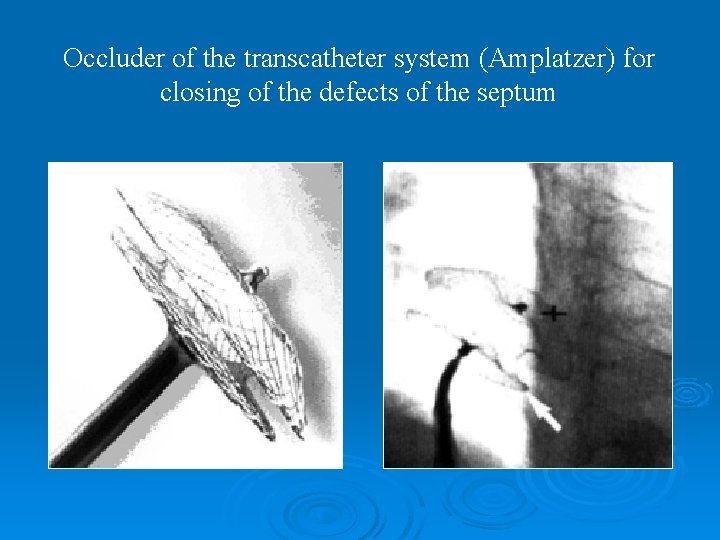
Occluder of the transcatheter system (Amplatzer) for closing of the defects of the septum
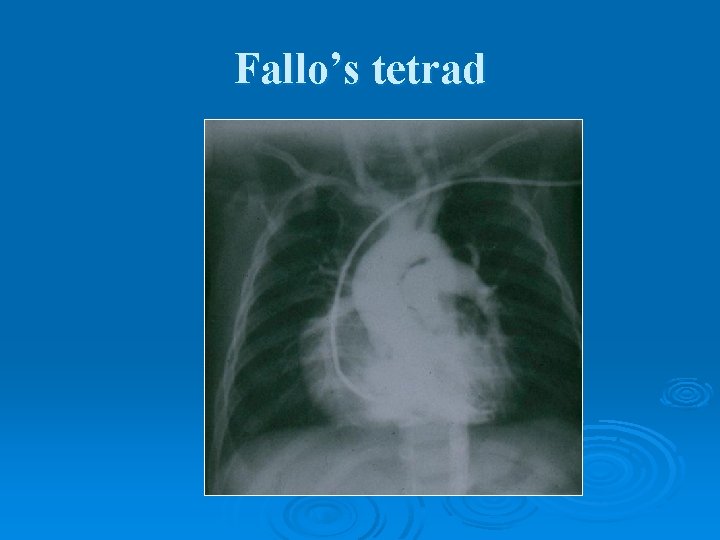
Fallo’s tetrad Narrowing of the pulmonary artery, Ø High defect of the intraventricular septum, Ø Dislocation of the aorta to the right and location of its mouth above the defect of the intraventricular septum Ø Hypertrophy of the right ventricule’s wall Ø
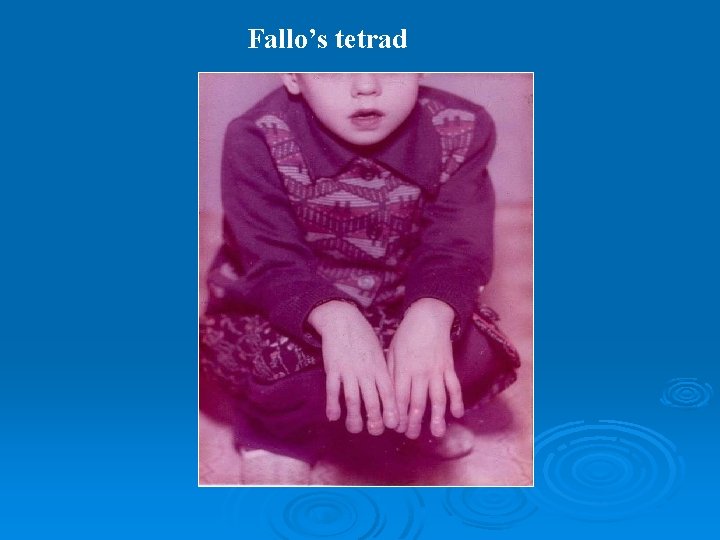
Fallo’s tetrad ØConstant cyanosis of the skin ØShort breathing-cyanotic attacks Ø Short breathing Ø Tachycardia Ø Sharp weakness Ø Loss of the consciousness Ø Finger as the “drum sticks” Ø reducing physical developement
Fallo’s tetrad
Fallo’s tetrad
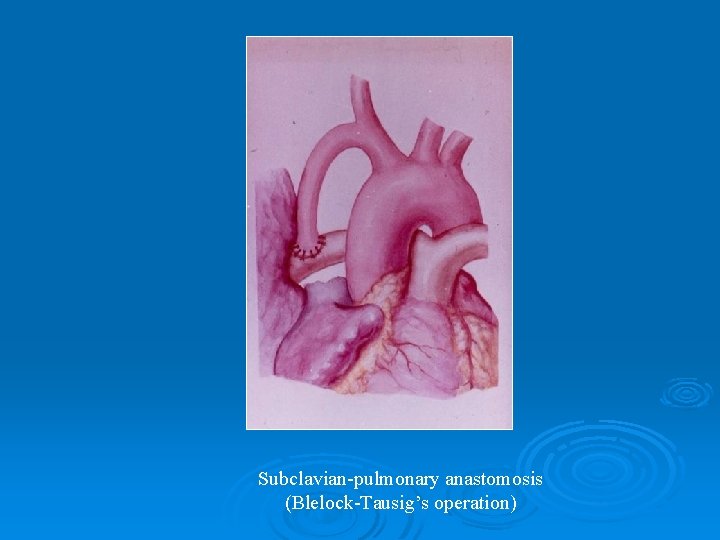
Subclavian-pulmonary anastomosis (Blelock-Tausig’s operation)
Putting of the patch to the defect of the intraventricle septum at the Fallo’s tetrad
Coarctation of the aorta ü ü ü ü ü headaches Increasing blood pressure at hands Petulance Gravity and sensitivity of pulsation in a head Nose bleedings Deterioration of the memory and vision Pain in the cardiac area heartbeat Heart defeats Sometimes short breathing
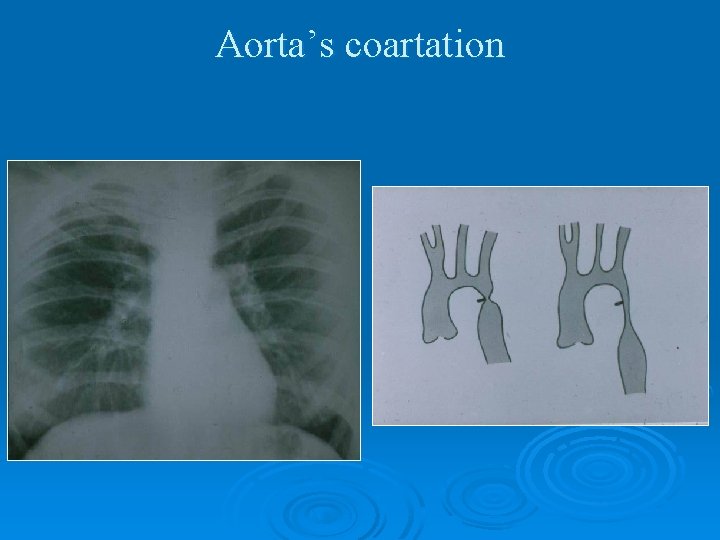
Aorta’s coartation
Innate aorta’s stenosis Ø Attacks of headaches Ø Dizziness Ø Swoons Ø Pain in the cardiac area