
Innate Immunity Inflammation Chapter 6 1 Immunity o
- Slides: 52
Innate Immunity: Inflammation Chapter 6 1
Immunity o First line of defense n o Second line of defense n o Innate resistance – physical (skin/epithelial layer, GI & Resp Tract), , mechanical (Cough, sneeze, vomit, cilia action in trachea) & biochemical barriers (antimicrobial peptides, lung secretions, mucus, saliva, tears, earwax) Inflammation – vascular response – dilation, histamines increase vessel leakage, wbc action, cytokines, leucokines, fever. Usually redness and heat with swelling. Third line of defense n Adaptive (acquired) immunity – antibody production 2
First Line of Defense o Physical and mechanical barriers n n Skin Linings of the gastrointestinal, genitourinary, and respiratory tracts o o o Sloughing off of cells Coughing and sneezing Flushing Vomiting Mucus and cilia 3
First Line of Defense o Biochemical barriers n n Synthesized and secreted saliva, tears, earwax, sweat, and sebum Antimicrobial peptides o n Cathelicidins, defensins, and collectins Normal bacterial flora 4
Second Line of Defense o Inflammatory response n Caused by a variety of materials o n n Infection, mechanical damage, ischemia, nutrient deprivation, temperature extremes, radiation, etc. Local manifestations Vascular response o Blood vessel dilation, increased vascular permeability and leakage, white blood cell adherence to the inner walls of the vessels and migration through the vessels 5
Inflammation o Goals n n Limit and control the inflammatory process Prevent and limit infection and further damage Interact with components of the adaptive immune system Prepare the area of injury for healing 6
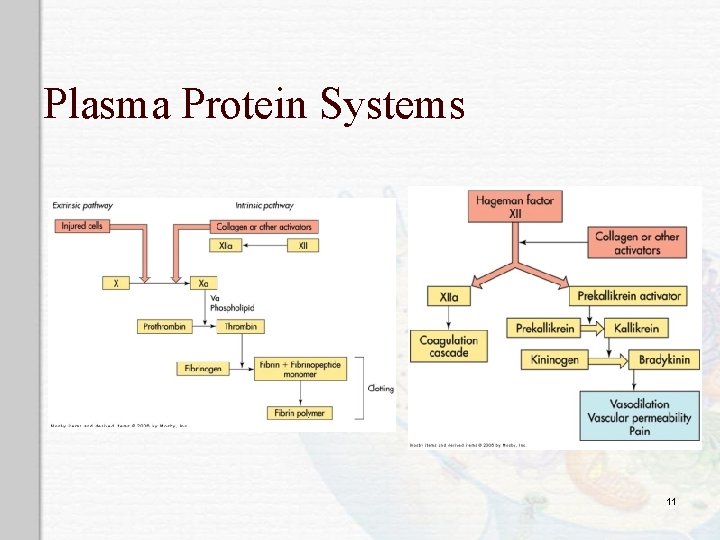
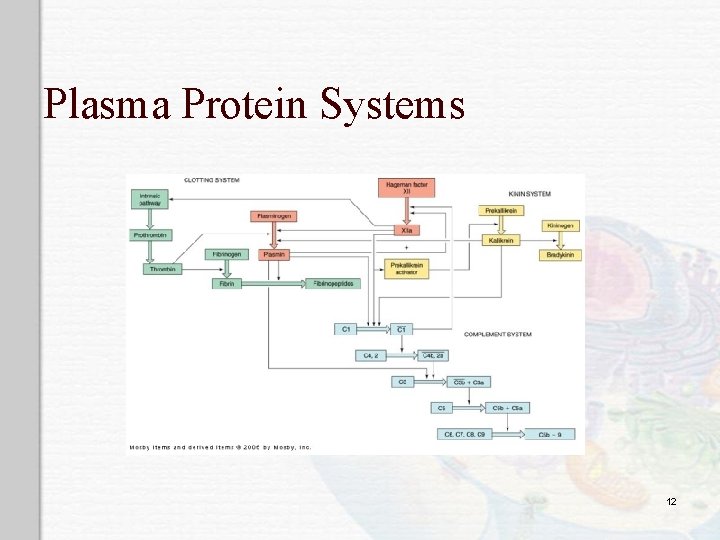
Plasma Protein Systems o Protein systems n n n o Complement system Coagulation system Kinin system All contain inactive enzymes (proenzymes) n Sequentially activated o o First proenzyme is converted to an active enzyme Substrate of the activated enzyme becomes the next component in the series 7
Plasma Protein Systems o Complement system n n n Can destroy pathogens directly Activates or collaborates with every other component of the inflammatory response Pathways o o o Classical Lectin Alternative 8
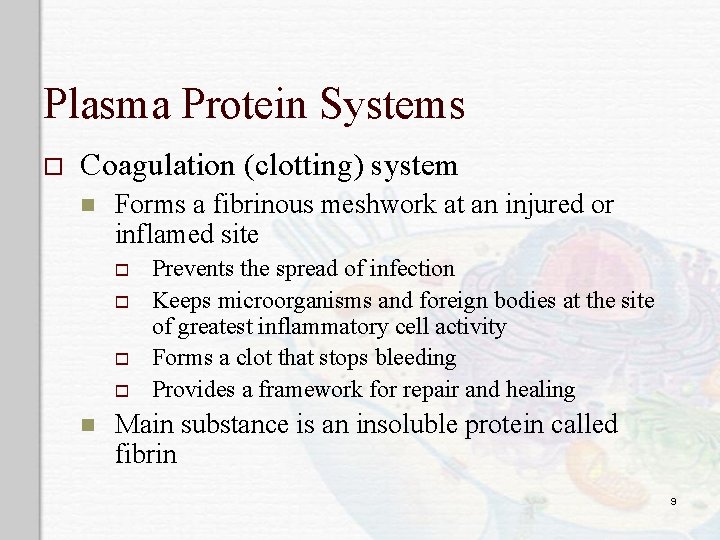
Plasma Protein Systems o Coagulation (clotting) system n Forms a fibrinous meshwork at an injured or inflamed site o o n Prevents the spread of infection Keeps microorganisms and foreign bodies at the site of greatest inflammatory cell activity Forms a clot that stops bleeding Provides a framework for repair and healing Main substance is an insoluble protein called fibrin 9
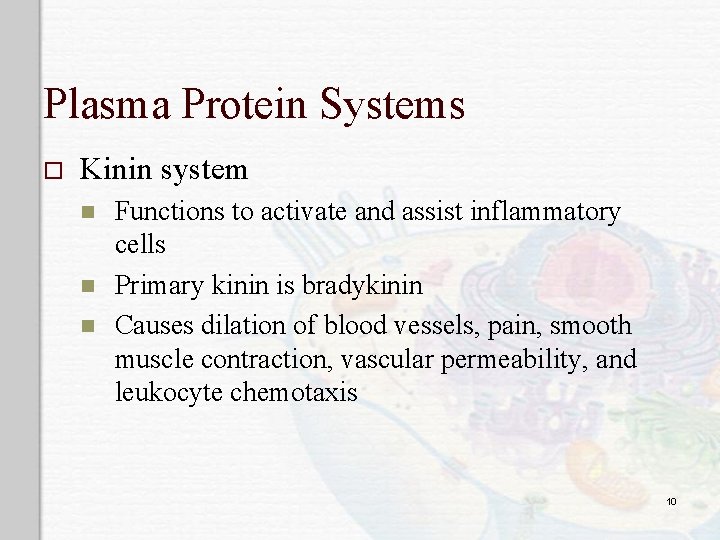
Plasma Protein Systems o Kinin system n n n Functions to activate and assist inflammatory cells Primary kinin is bradykinin Causes dilation of blood vessels, pain, smooth muscle contraction, vascular permeability, and leukocyte chemotaxis 10
Plasma Protein Systems 11
Plasma Protein Systems 12
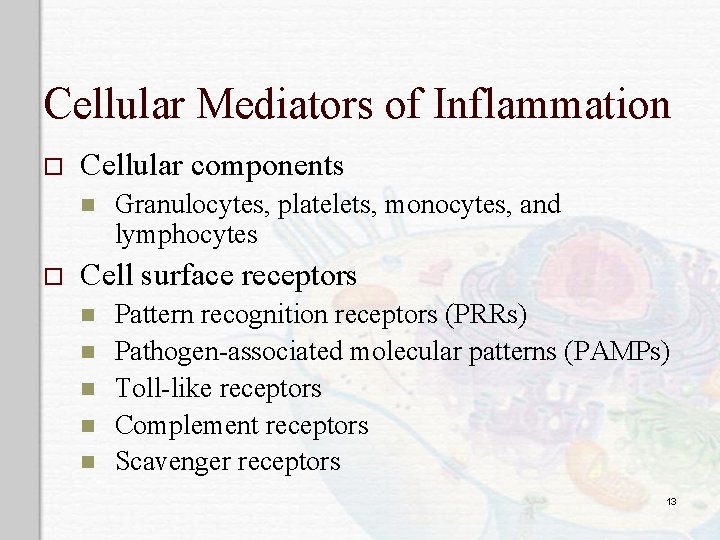
Cellular Mediators of Inflammation o Cellular components n o Granulocytes, platelets, monocytes, and lymphocytes Cell surface receptors n n n Pattern recognition receptors (PRRs) Pathogen-associated molecular patterns (PAMPs) Toll-like receptors Complement receptors Scavenger receptors 13
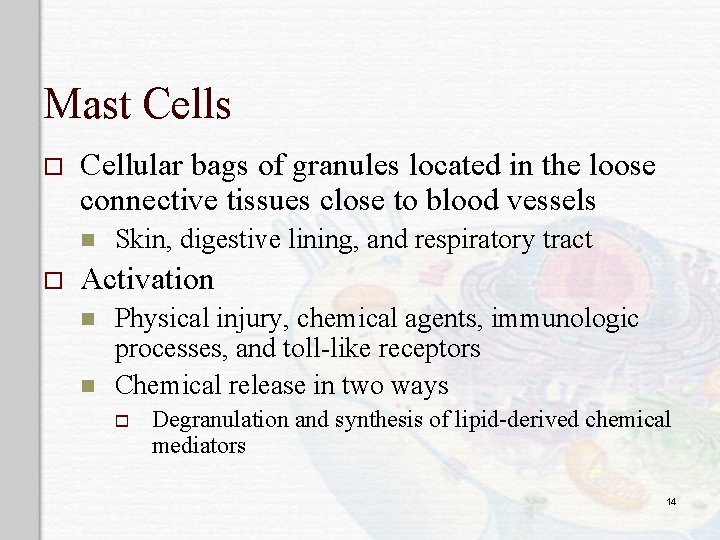
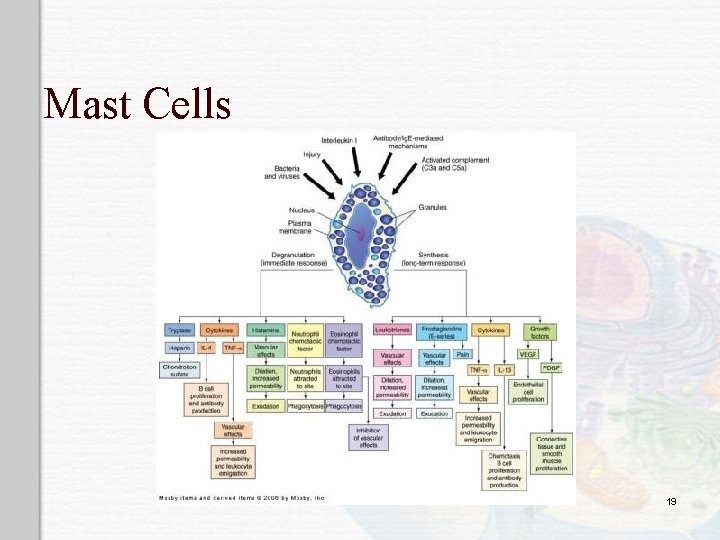
Mast Cells o Cellular bags of granules located in the loose connective tissues close to blood vessels n o Skin, digestive lining, and respiratory tract Activation n n Physical injury, chemical agents, immunologic processes, and toll-like receptors Chemical release in two ways o Degranulation and synthesis of lipid-derived chemical mediators 14
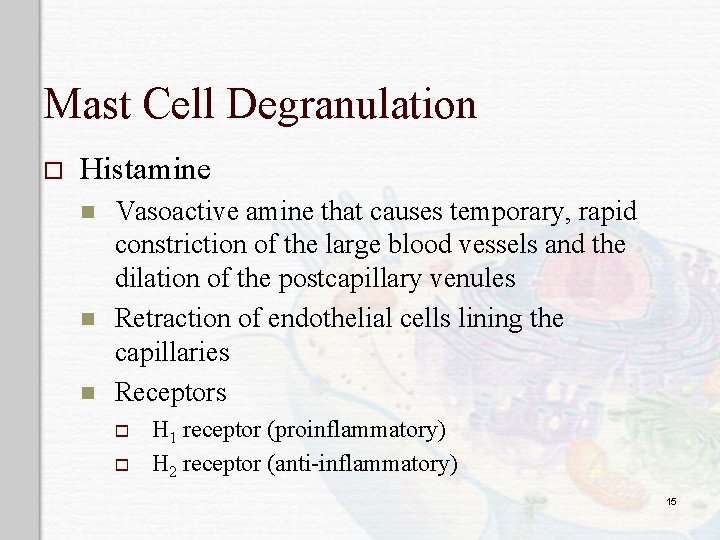
Mast Cell Degranulation o Histamine n n n Vasoactive amine that causes temporary, rapid constriction of the large blood vessels and the dilation of the postcapillary venules Retraction of endothelial cells lining the capillaries Receptors o o H 1 receptor (proinflammatory) H 2 receptor (anti-inflammatory) 15
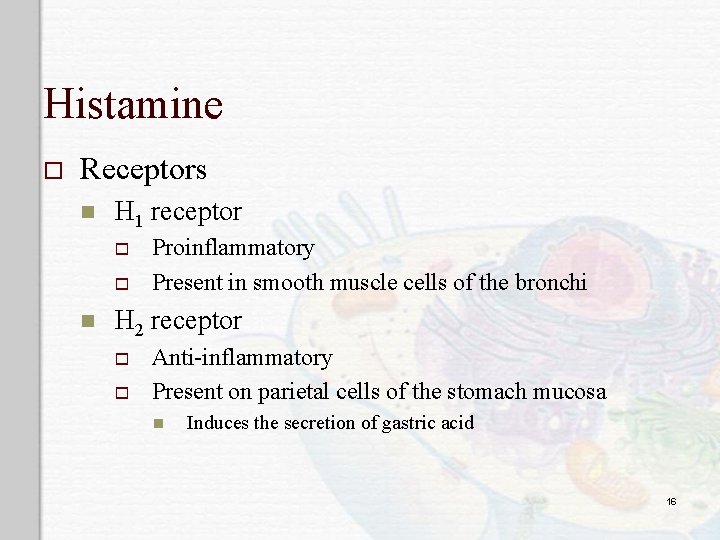
Histamine o Receptors n H 1 receptor o o n Proinflammatory Present in smooth muscle cells of the bronchi H 2 receptor o o Anti-inflammatory Present on parietal cells of the stomach mucosa n Induces the secretion of gastric acid 16
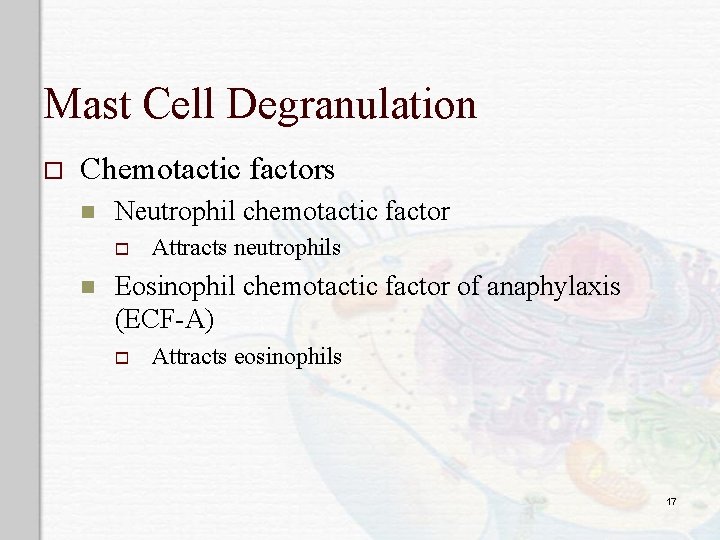
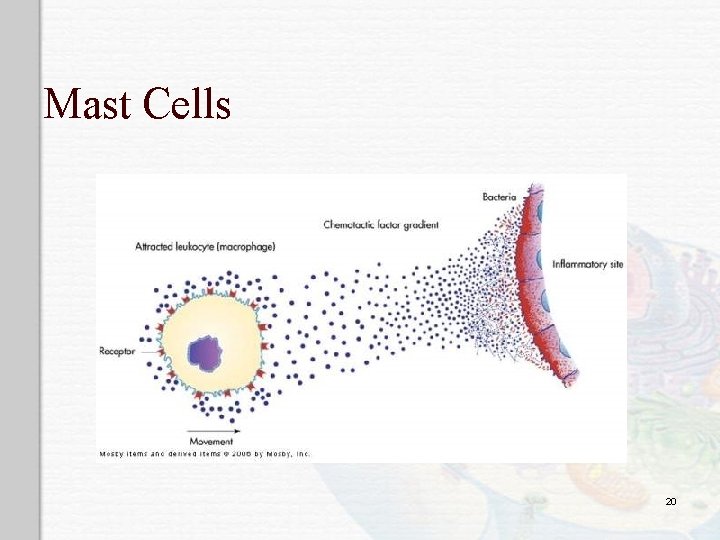
Mast Cell Degranulation o Chemotactic factors n Neutrophil chemotactic factor o n Attracts neutrophils Eosinophil chemotactic factor of anaphylaxis (ECF-A) o Attracts eosinophils 17
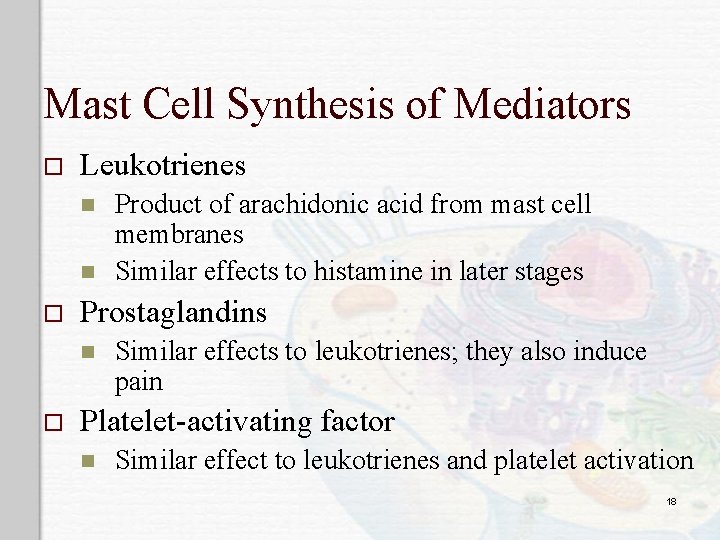
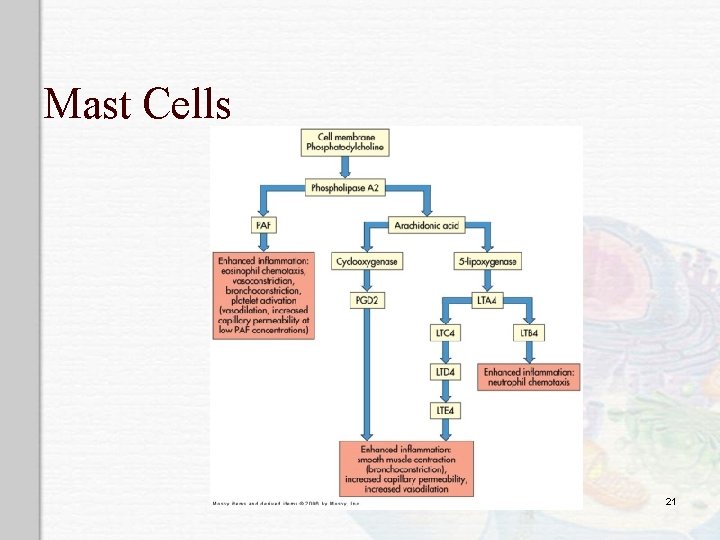
Mast Cell Synthesis of Mediators o Leukotrienes n n o Prostaglandins n o Product of arachidonic acid from mast cell membranes Similar effects to histamine in later stages Similar effects to leukotrienes; they also induce pain Platelet-activating factor n Similar effect to leukotrienes and platelet activation 18
Mast Cells 19
Mast Cells 20
Mast Cells 21
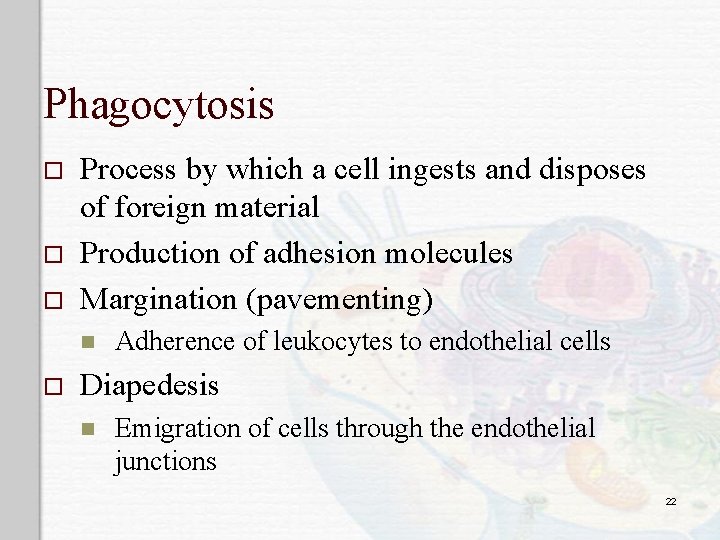
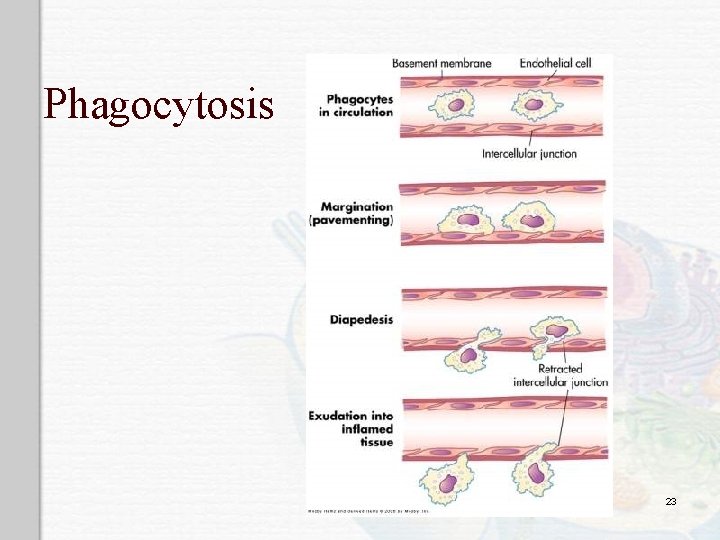
Phagocytosis o o o Process by which a cell ingests and disposes of foreign material Production of adhesion molecules Margination (pavementing) n o Adherence of leukocytes to endothelial cells Diapedesis n Emigration of cells through the endothelial junctions 22
Phagocytosis 23
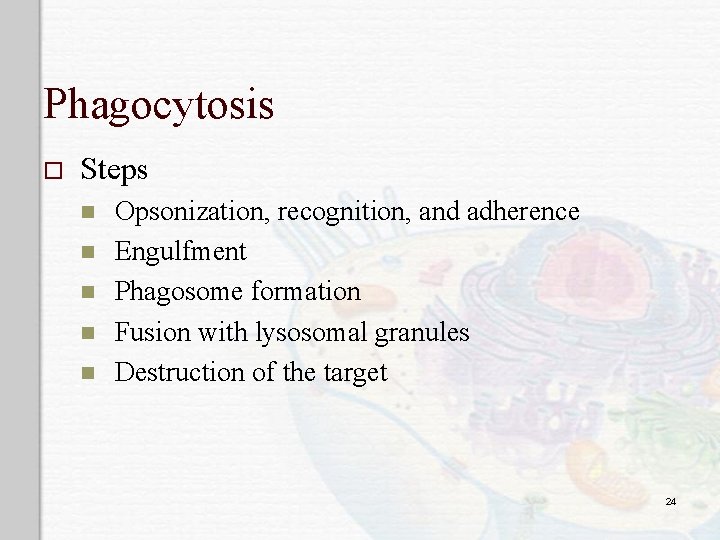
Phagocytosis o Steps n n n Opsonization, recognition, and adherence Engulfment Phagosome formation Fusion with lysosomal granules Destruction of the target 24
Phagocytes o Neutrophils n n Also referred to as polymorphonuclear neutrophils (PMNs) Predominate in early inflammatory responses Ingest bacteria, dead cells, and cellular debris Cells are short lived and become a component of the purulent exudate 25
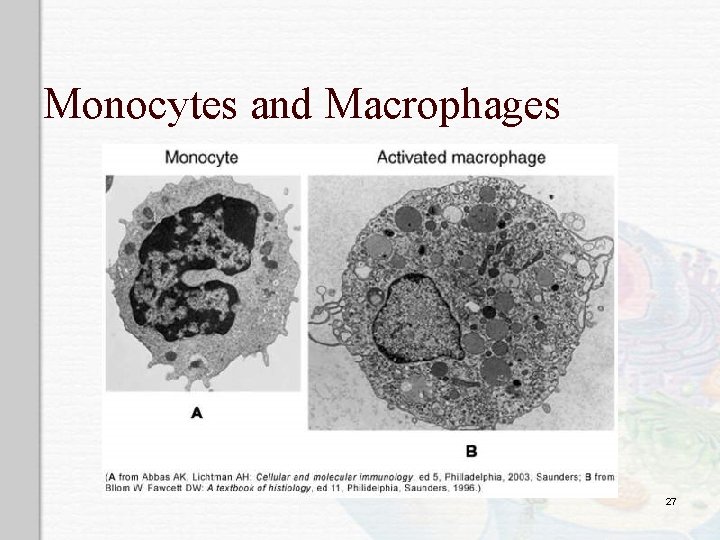
Phagocytes o Monocytes and macrophages n n n Monocytes are produced in the bone marrow, enter the circulation, and migrate to the inflammatory site, where they develop into macrophages Macrophages typically arrive at the inflammatory site 3 to 7 days after neutrophils Macrophage activation results in increased size, plasma membrane area, glucose metabolism, number of lysosomes, and secretory products 26
Monocytes and Macrophages 27
Phagocytes o Eosinophils n n Mildly phagocytic Duties o Defense against parasites and regulation of vascular mediators 28
Phagocytes o Natural killer (NK) cells n o Function is to recognize and eliminate cells infected with viruses and some function in eliminating cancer cells Platelets n Activation results in degranulation and interaction with components of the coagulation system 29
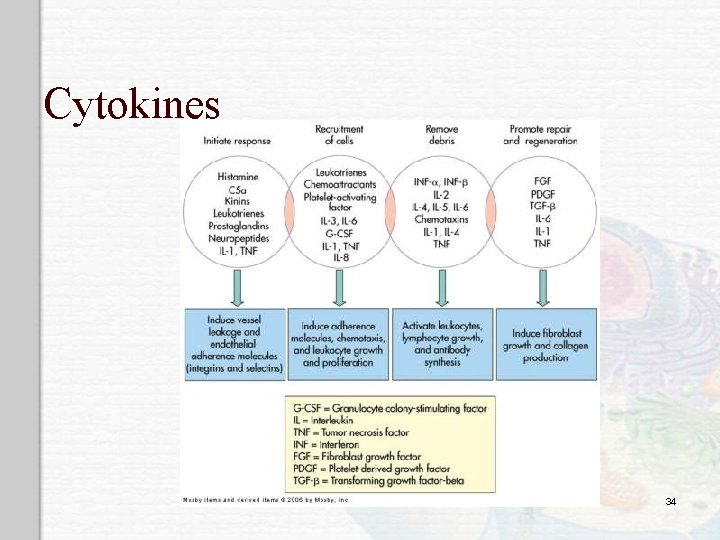
Cytokines o Interleukins n n n Produced primarily by macrophages and lymphocytes in response to a pathogen or stimulation by other products of inflammation Many types Examples o o IL-1 is a proinflammatory cytokine IL-10 is an anti-inflammatory cytokine 30
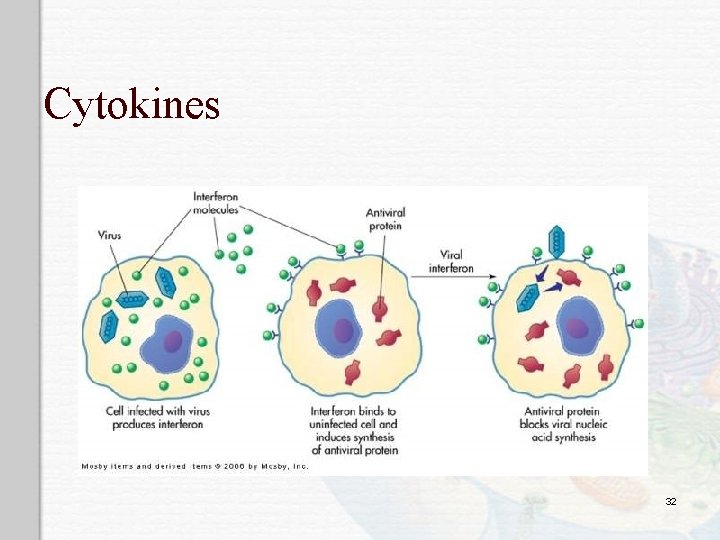
Cytokines o Interferon n Protects against viral infections Produced and released by virally infected host cells in response to viral double-stranded RNA Types o IFN-alpha and IFN-beta n o Induce production of antiviral proteins IFN-gamma n Increases microbiocidal activity of macrophages 31
Cytokines 32
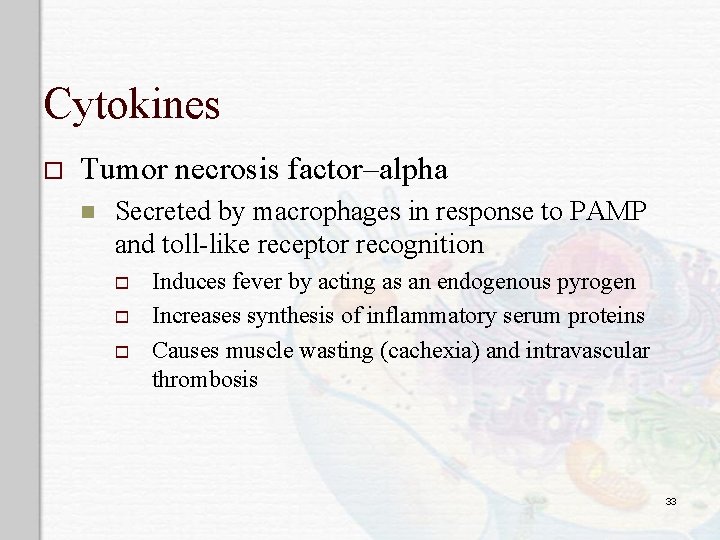
Cytokines o Tumor necrosis factor–alpha n Secreted by macrophages in response to PAMP and toll-like receptor recognition o o o Induces fever by acting as an endogenous pyrogen Increases synthesis of inflammatory serum proteins Causes muscle wasting (cachexia) and intravascular thrombosis 33
Cytokines 34
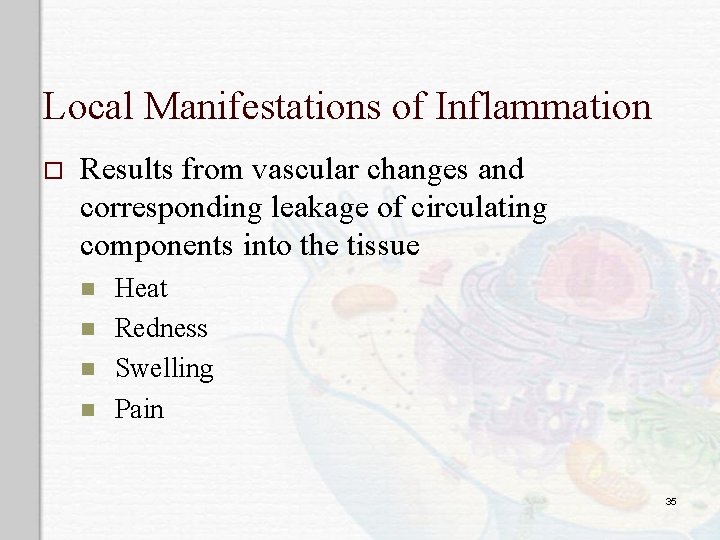
Local Manifestations of Inflammation o Results from vascular changes and corresponding leakage of circulating components into the tissue n n Heat Redness Swelling Pain 35
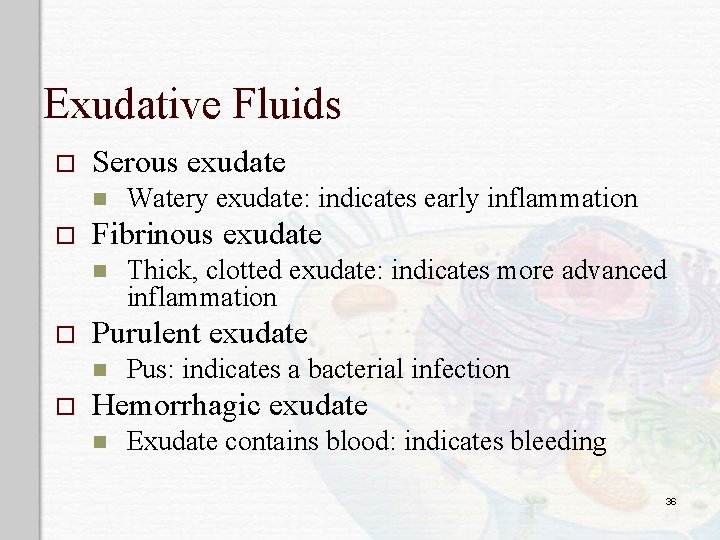
Exudative Fluids o Serous exudate n o Fibrinous exudate n o Thick, clotted exudate: indicates more advanced inflammation Purulent exudate n o Watery exudate: indicates early inflammation Pus: indicates a bacterial infection Hemorrhagic exudate n Exudate contains blood: indicates bleeding 36
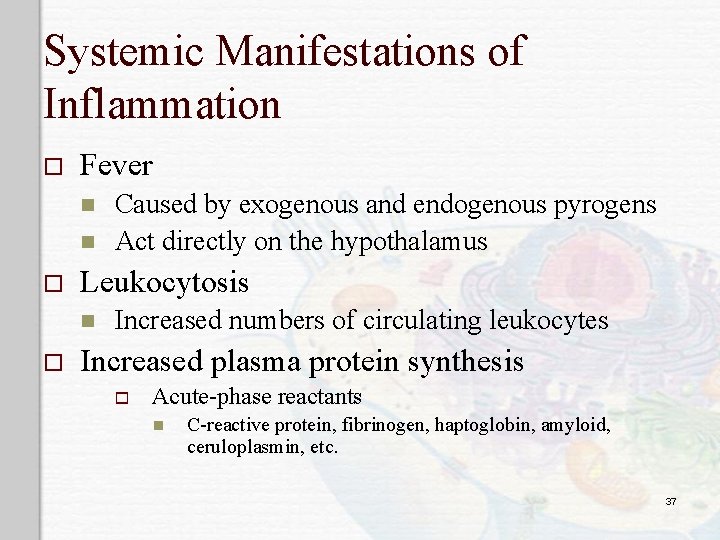
Systemic Manifestations of Inflammation o Fever n n o Leukocytosis n o Caused by exogenous and endogenous pyrogens Act directly on the hypothalamus Increased numbers of circulating leukocytes Increased plasma protein synthesis o Acute-phase reactants n C-reactive protein, fibrinogen, haptoglobin, amyloid, ceruloplasmin, etc. 37
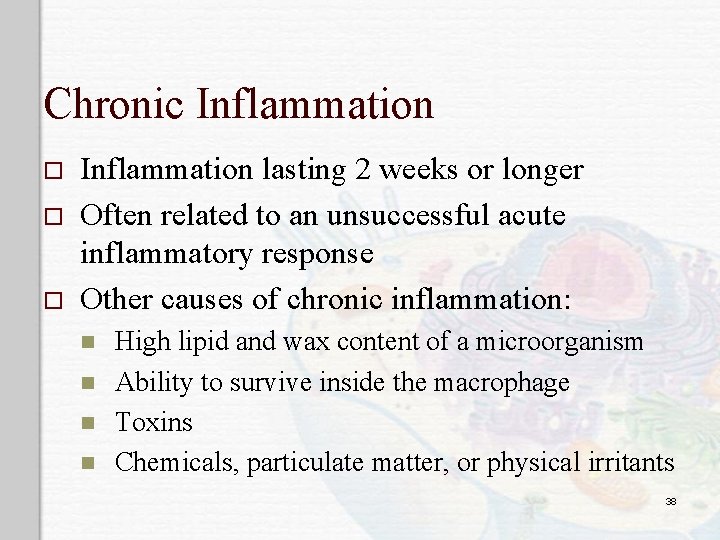
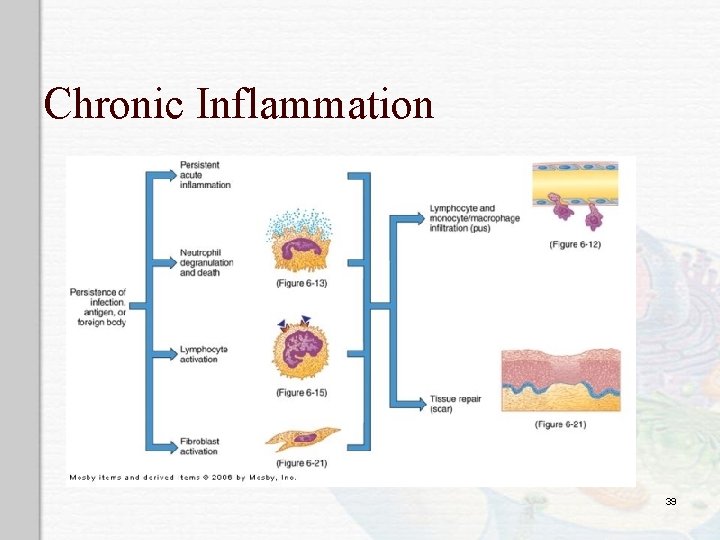
Chronic Inflammation o o o Inflammation lasting 2 weeks or longer Often related to an unsuccessful acute inflammatory response Other causes of chronic inflammation: n n High lipid and wax content of a microorganism Ability to survive inside the macrophage Toxins Chemicals, particulate matter, or physical irritants 38
Chronic Inflammation 39
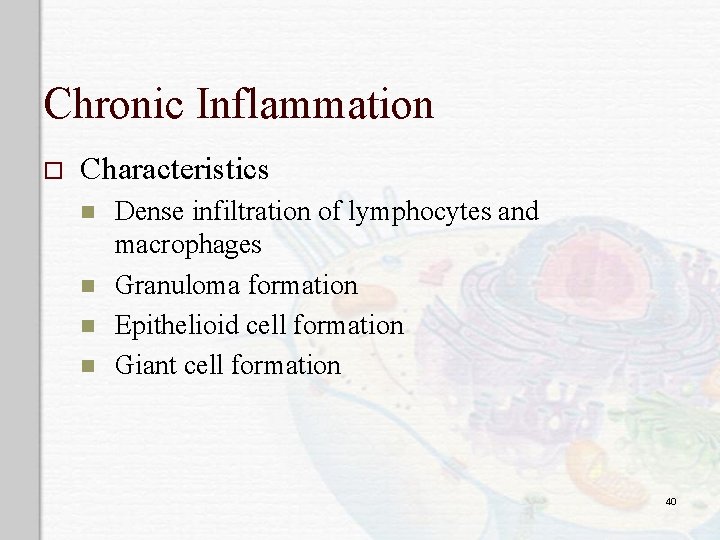
Chronic Inflammation o Characteristics n n Dense infiltration of lymphocytes and macrophages Granuloma formation Epithelioid cell formation Giant cell formation 40
Resolution and Repair o o Regeneration Resolution n o Returning injured tissue to the original structure and function Repair n n Replacement of destroyed tissue with scar tissue Scar tissue o Composed primarily of collagen to restore the tensile strength of the tissue 41
Resolution and Repair o Débridement n o Cleaning up the dissolved clots, microorganisms, erythrocytes, and dead tissue cells Healing n n n Filling in the wound Sealing the wound (epithelialization) Shrinking the wound (contraction) 42
Healing o Primary intention n o Wounds that heal under conditions of minimal tissue loss Secondary intention n Wounds that require a great deal more tissue replacement o Open wound 43
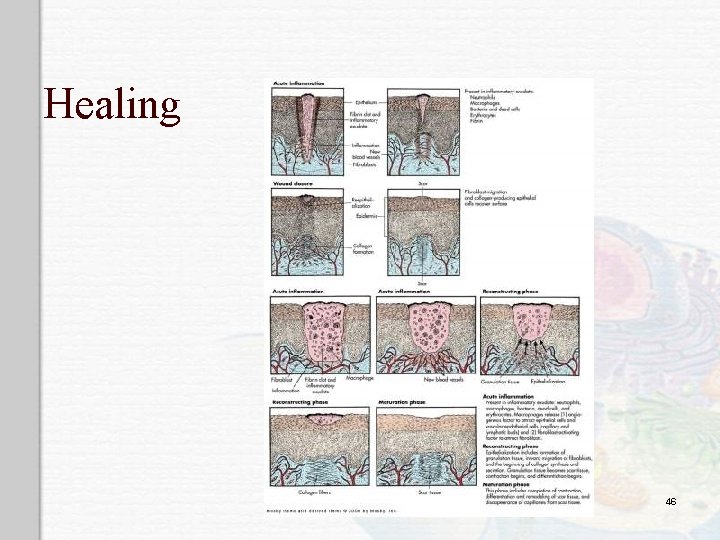
Healing o Reconstructive phase n n Fibroblast proliferation Collagen synthesis Epithelialization Contraction o n Myofibroblasts Cellular differentiation 44
Healing o Maturation phase n n n Continuation of cellular differentiation Scar tissue formation Scar remodeling 45
Healing 46
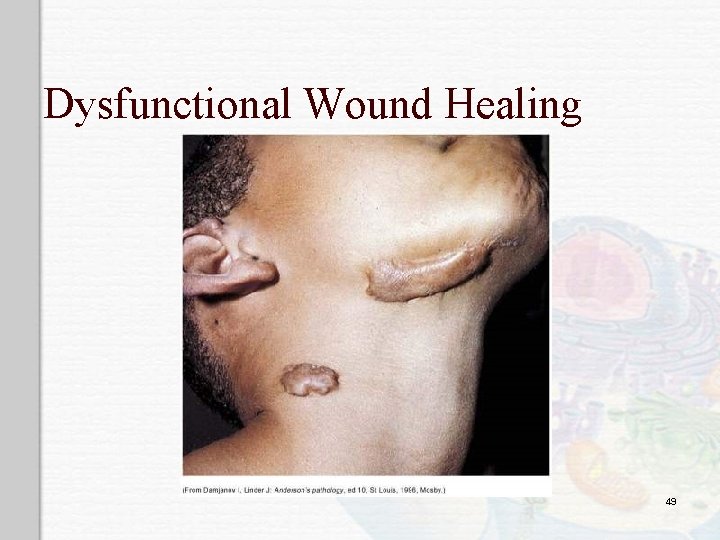
Dysfunctional Wound Healing o Dysfunction during inflammatory response n n n n Hemorrhage Fibrous adhesion Infection Excess scar formation Wound sepsis Hypovolemia Hypoproteinemia Anti-inflammatory steroids 47
Dysfunctional Wound Healing o Dysfunctional during reconstructive phase n Impaired collagen matrix assembly o o n Impaired epithelialization o n Keloid scar Hypertrophic scar Anti-inflammatory steroids, hypoxemia, and nutritional deficiencies Impaired contraction o Contracture 48
Dysfunctional Wound Healing 49
Dysfunctional Wound Healing o Wound disruption n Dehiscence o Wound pulls apart at the suture line n o Excessive strain and obesity are causes Increases risk of wound sepsis 50
Pediatrics o o Neonates have transiently depressed inflammatory and immune function Neutrophils are not capable of efficient chemotaxis Neonates express complement deficiency Deficient in collectins and collectin-like proteins 51
Elderly o Impaired inflammation is likely a result of chronic illness n o o o Diabetes, cardiovascular disease, etc. Chronic medication intake decreases the inflammatory response Healing response is diminished due to loss of the regenerative ability of the skin Infections are more common in the elderly 52