
Innate Immunity Fever is an abnormally high body
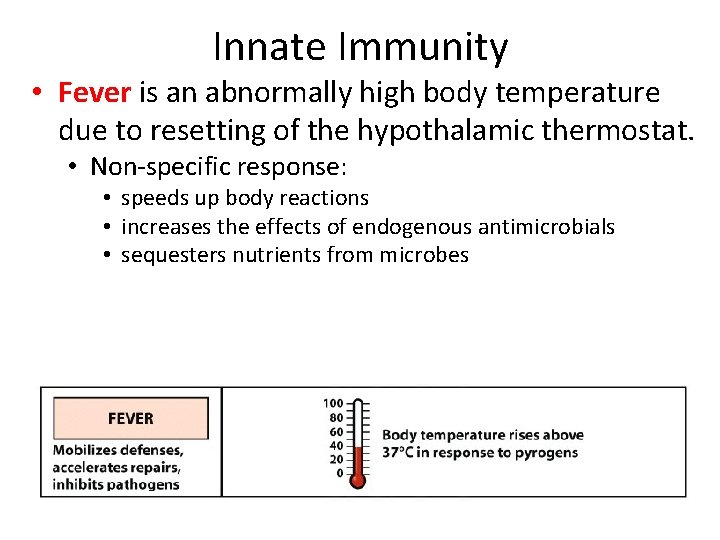
Innate Immunity • Fever is an abnormally high body temperature due to resetting of the hypothalamic thermostat. • Non-specific response: • speeds up body reactions • increases the effects of endogenous antimicrobials • sequesters nutrients from microbes

Innate Immunity • Inflammation is defensive response of almost all body tissues to damage of any kind (infection, burns, cuts, etc. ). • The four characteristic signs and symptoms of inflammation are redness, pain, heat, and swelling. • It is a non-specific attempt to dispose of microbes and foreign materials, dilute toxins, and prepare for healing.
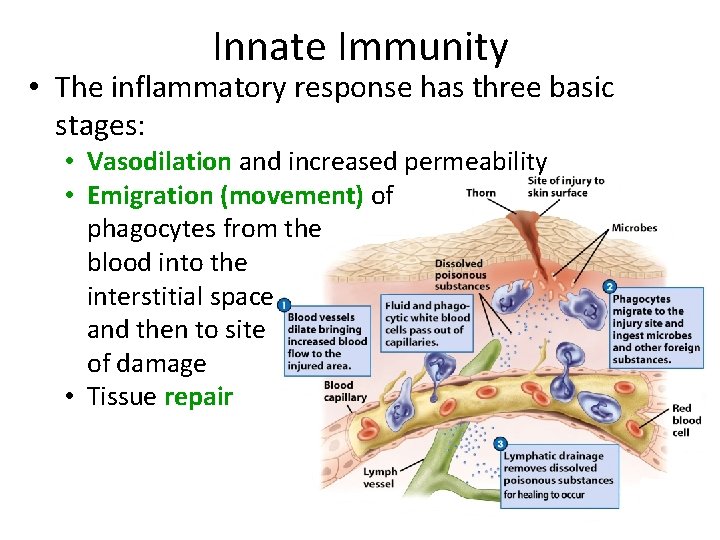
Innate Immunity • The inflammatory response has three basic stages: • Vasodilation and increased permeability • Emigration (movement) of phagocytes from the blood into the interstitial space and then to site of damage • Tissue repair
Innate Immunity Vasodilation allows more blood to flow to the damaged area which helps remove toxins and debris. • Increased permeability permits entrance of defensive proteins (antibodies and clotting factors) to site of injury v • Other inflammatory mediators include histamine, kinins, prostaglandins (PGs), leukotrienes (LTs), and complement.
Innate Immunity • Emigration of phagocytes depends on chemotaxis • Neutrophils predominate in early stages but die off quickly. • Monocytes transform into macrophages and become more potent phagocytes than neutrophils. • Pus is a mass of dead phagocytes and damaged tissue. • Pus formation occurs in most inflammatory responses and usually continues until the infection subside.
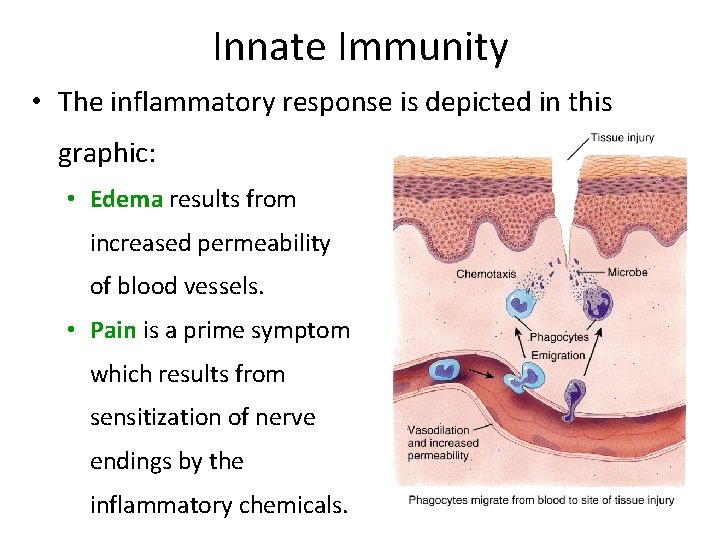
Innate Immunity • The inflammatory response is depicted in this graphic: • Edema results from increased permeability of blood vessels. • Pain is a prime symptom which results from sensitization of nerve endings by the inflammatory chemicals.
- Slides: 7