
Injuries to the Muscles Bones and Joints MUSCLES
Injuries to the Muscles, Bones and Joints
MUSCLES �Over 600 muscles in the body �They are attached to the bones by TENDONS �They work together to provide movement and stability �When one muscle contracts the opposite must relax � Example: Bicep curl – triceps relax �Provides a source of heat for the body
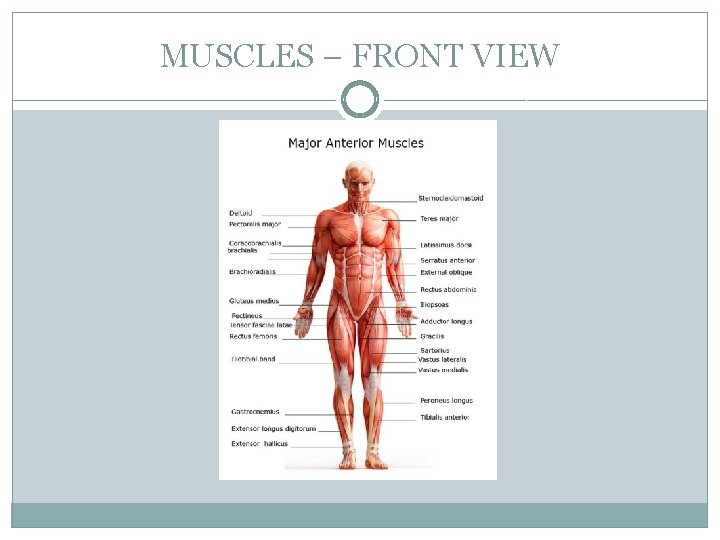
MUSCLES – FRONT VIEW
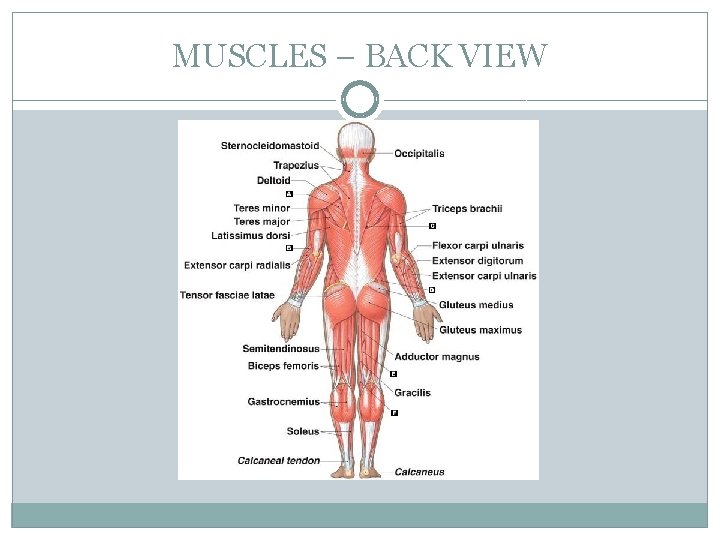
MUSCLES – BACK VIEW
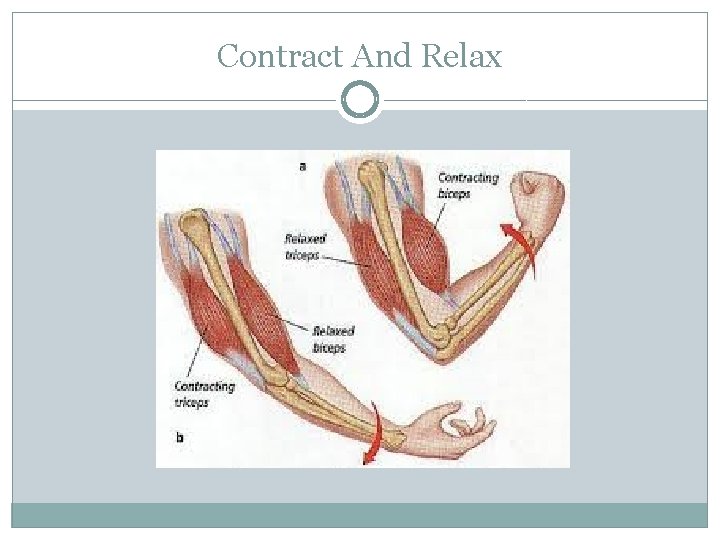
Contract And Relax
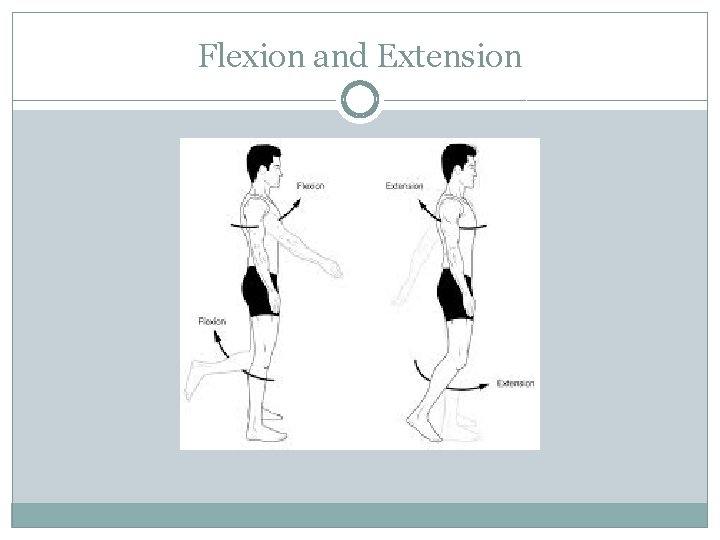
Flexion and Extension
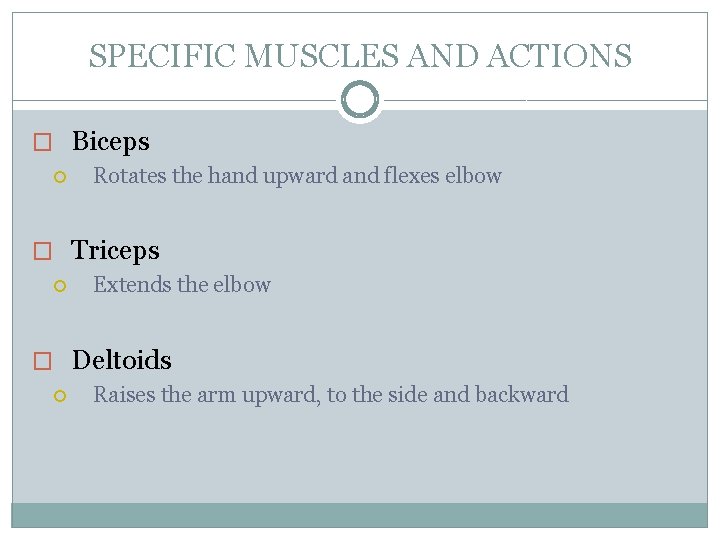
SPECIFIC MUSCLES AND ACTIONS � Biceps Rotates the hand upward and flexes elbow � Triceps Extends the elbow � Deltoids Raises the arm upward, to the side and backward
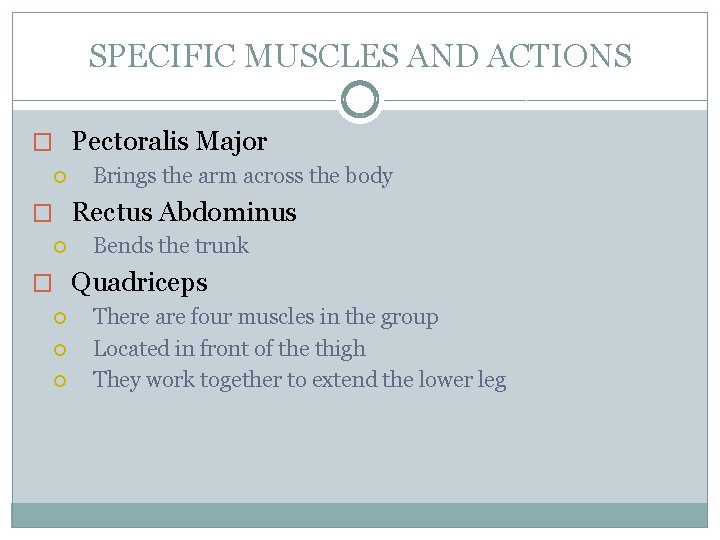
SPECIFIC MUSCLES AND ACTIONS � Pectoralis Major Brings the arm across the body � Rectus Abdominus Bends the trunk � Quadriceps There are four muscles in the group Located in front of the thigh They work together to extend the lower leg
SPECIFIC MUSCLES AND ACTIONS �Hamstring There are three muscles in the group Located in the back of the thigh Work together to bend the lower lef �Gastroc Neimius This is the calf muscle It allows you to stand on your toes (Plantar Flexion) �Anterior Tibialis Muscle in front of the shin Brings the foot upward (dorsi flexion)
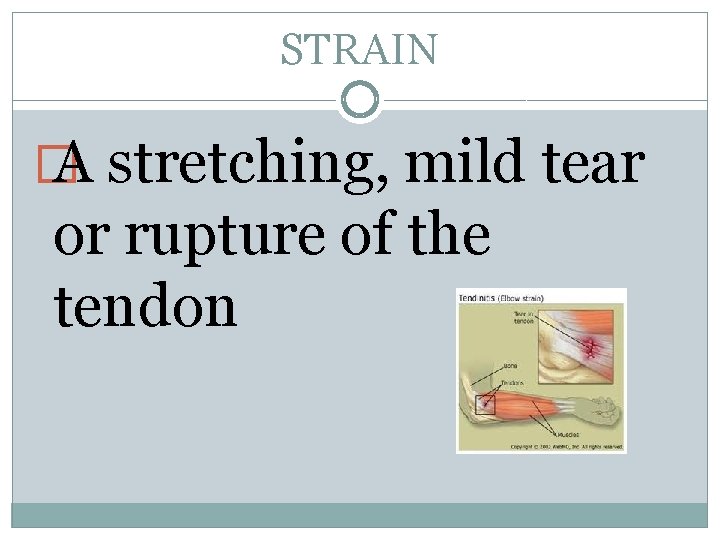
STRAIN � A stretching, mild tear or rupture of the tendon
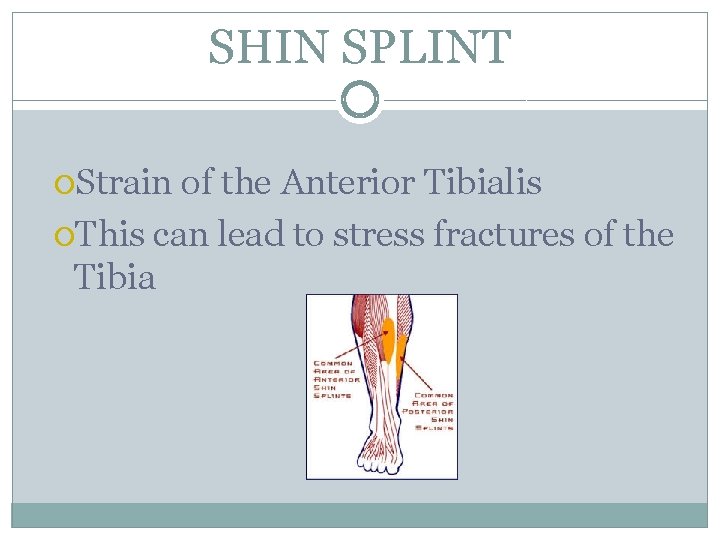
SHIN SPLINT Strain of the Anterior Tibialis This can lead to stress fractures of the Tibia
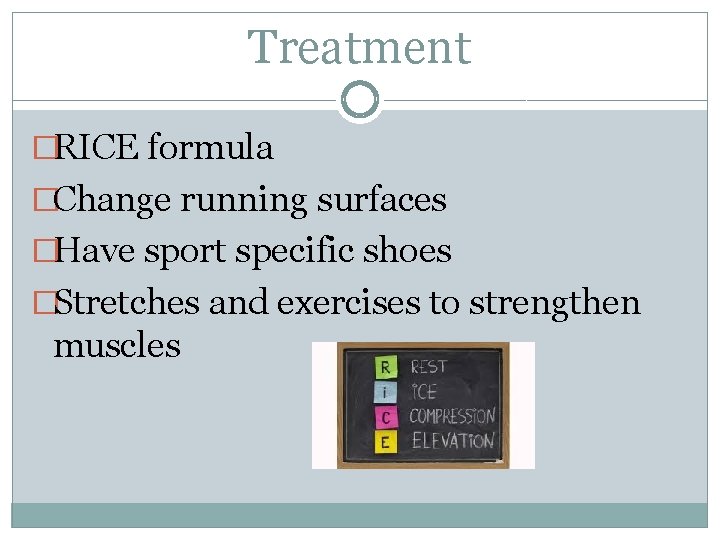
Treatment �RICE formula �Change running surfaces �Have sport specific shoes �Stretches and exercises to strengthen muscles
BONES �Approx. 200 bones make up the skeletal system � �-Acts as the frame work of the body � �-Gives protein to many organs � �-Has rich supply of blood and nerves
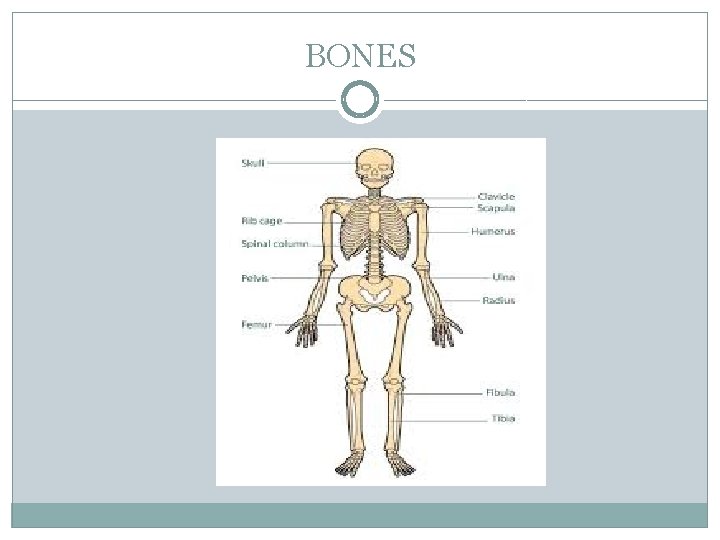
BONES

Growth Plate �Area of the bone where growth takes place
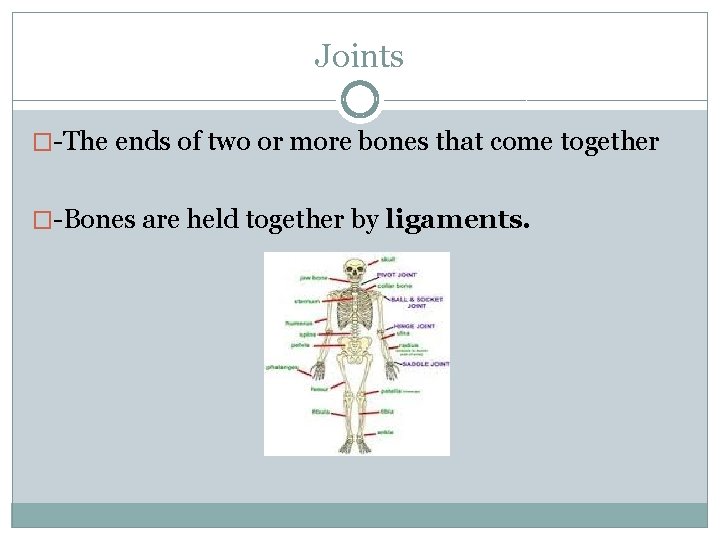
Joints �-The ends of two or more bones that come together �-Bones are held together by ligaments.
TYPES OF JOINTS �Ball and socket (hip, shoulder) �Hinge (Knee, elbow, finger) �Saddle (thumb)
Injuries to Bones �Fracture- complete or partial break of bone �Open fracture skin is open �Closed Fracture skin is not broken, more common �Osteoporosis Gradual weakening of bone due to age, poor diet, lack of exercise and decrease in hormone levels
INJURIES TO JOINTS AND MUSCLES �Dislocation when a bone is moved out of its normal position �Sprain tearing or partial tearing of a ligament �Strain tearing or partial tearing of a tendon
Signs and symptoms of muscle, bone, and joint injuries �possible deformity �bruising or swelling �inability to use the affected part normally �person felt or heard a “snapping or popping” sound �injured area is cold or numb �history of injury may suggest the injury may be severe
TRATMENT OF MUSCLE, BONE AND JOINT INJURIES �RICE formula – Rest, Ice, Compression, Elevation
Splinting Types �Anatomic splints Person’s body is the splint (finger-to-finger) �Soft splints Material such as pillow, blanket, towel can be used as a splint �Rigid splints Material such as boards, folded magazine or newspaper can be used as a splint
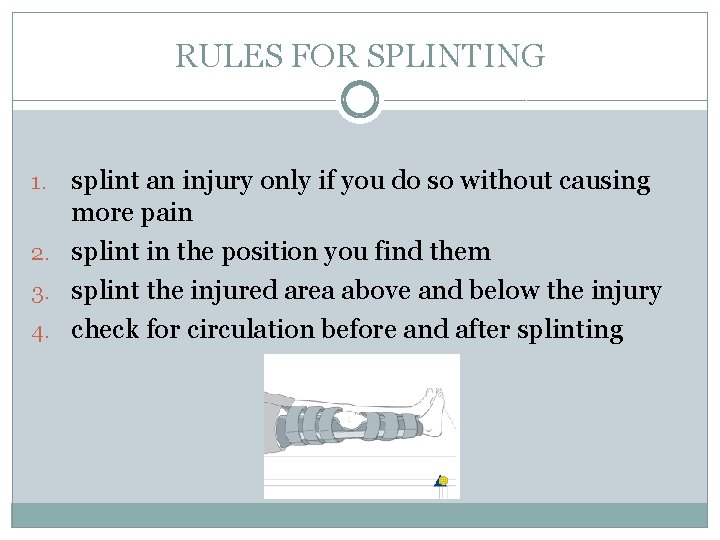
RULES FOR SPLINTING splint an injury only if you do so without causing more pain 2. splint in the position you find them 3. splint the injured area above and below the injury 4. check for circulation before and after splinting 1.
Signs and Symptoms of head or back injury complains of tingling or weakness in the extremities 2. is not fully alert 3. appears to be intoxicated 4. in and out of consciousness 1.
Treatment of head, neck and back injury 1. 2. 3. 4. 5. monitor vitals call 911 minimize movement of head try to keep airway open control bleeding
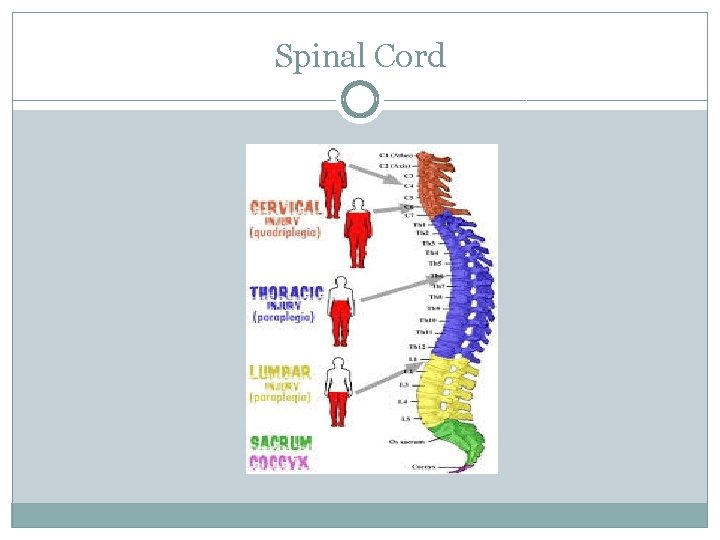
Spinal Cord
- Slides: 26