
Injuries to the Lower leg Ankle and Foot
- Slides: 48
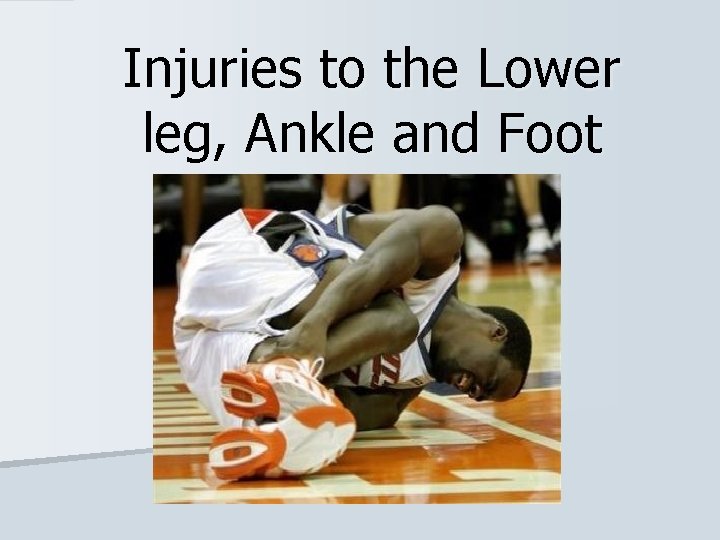
Injuries to the Lower leg, Ankle and Foot
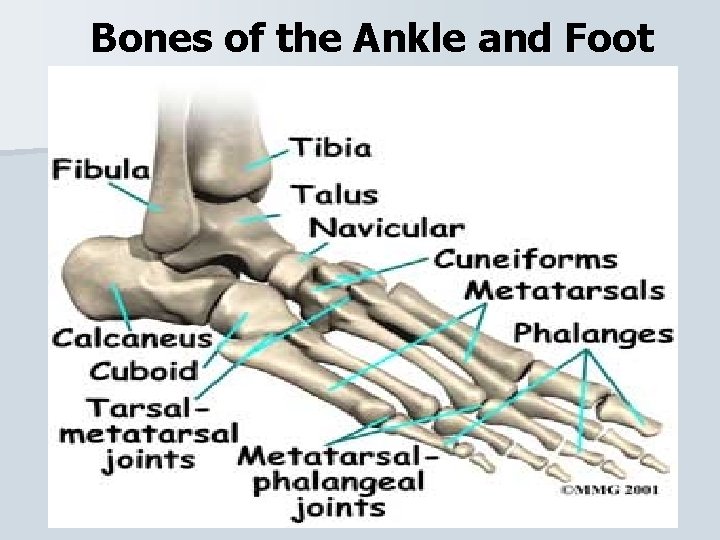
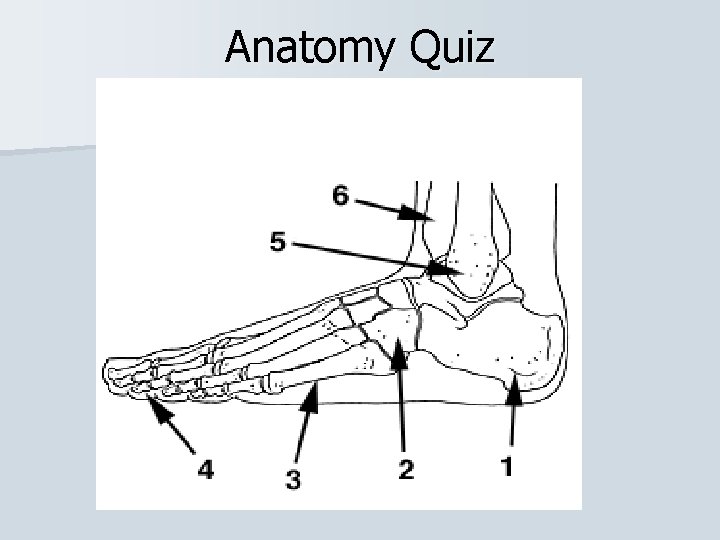
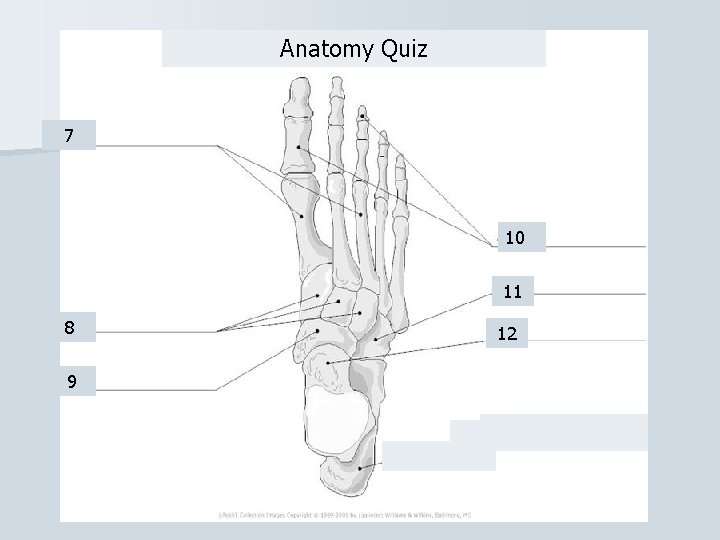
Bones of the Ankle and Foot
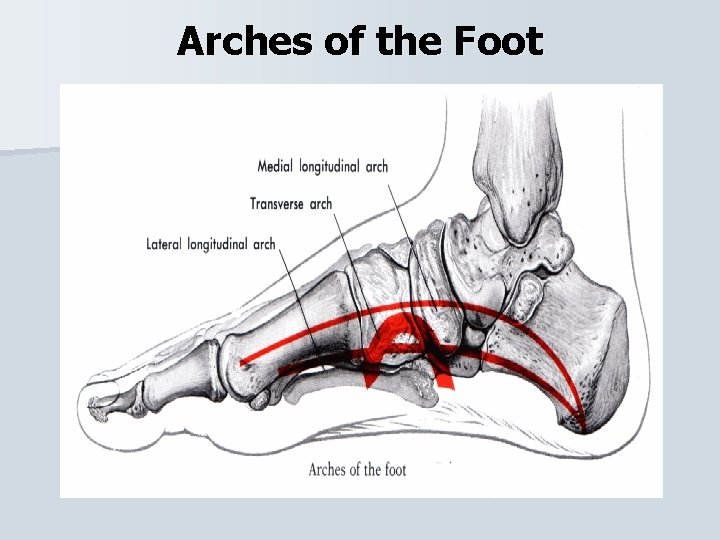
Arches of the Foot
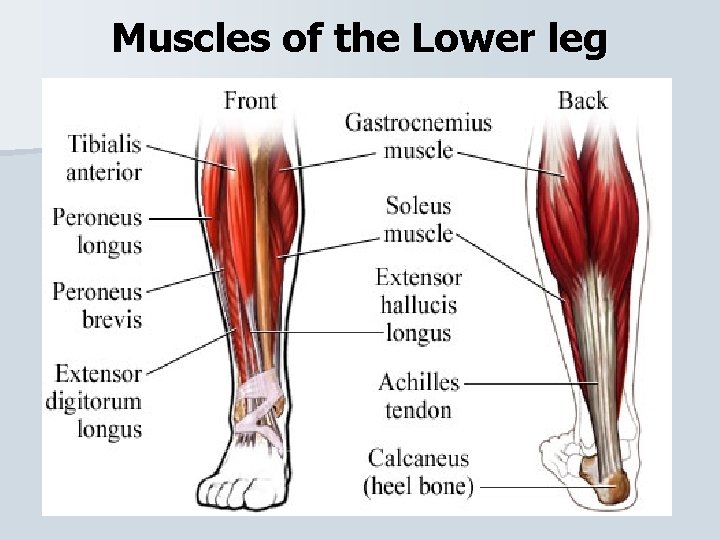
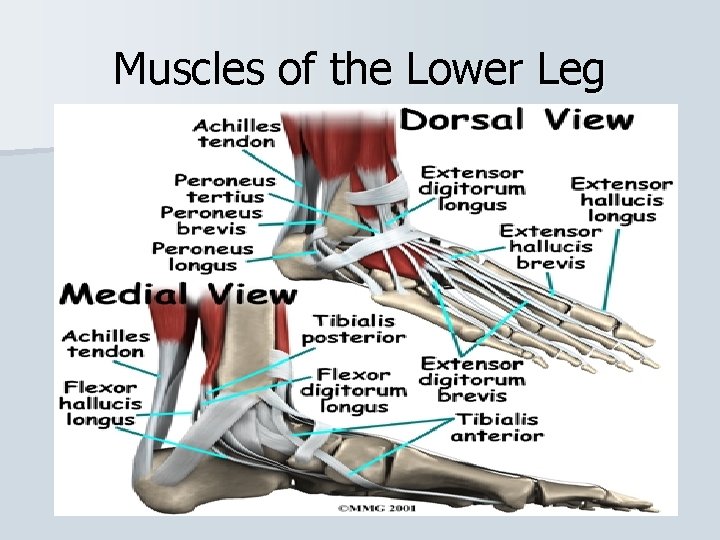
Muscles of the Lower leg
Muscles of the Lower Leg
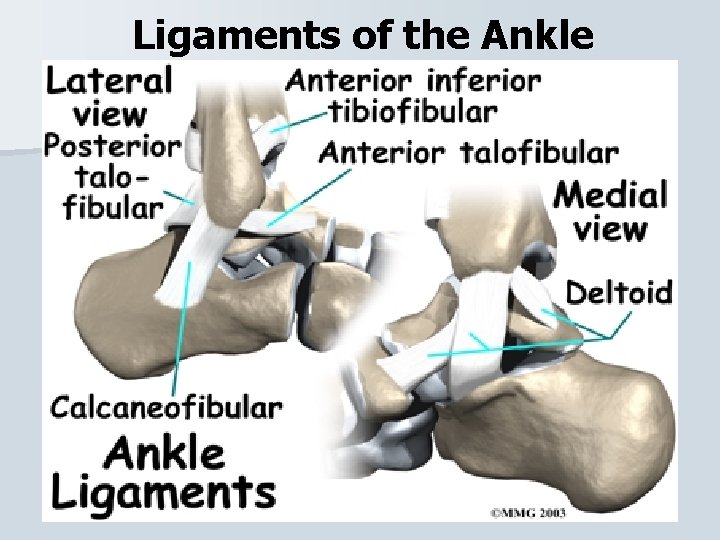
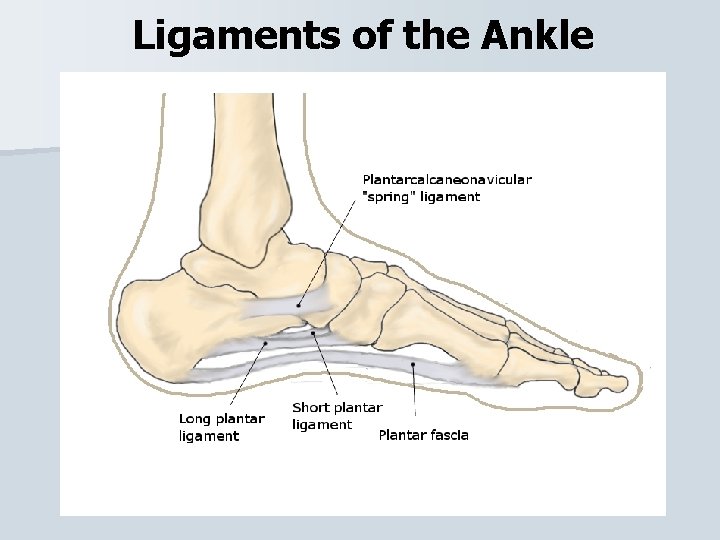
Ligaments of the Ankle
Ligaments of the Ankle
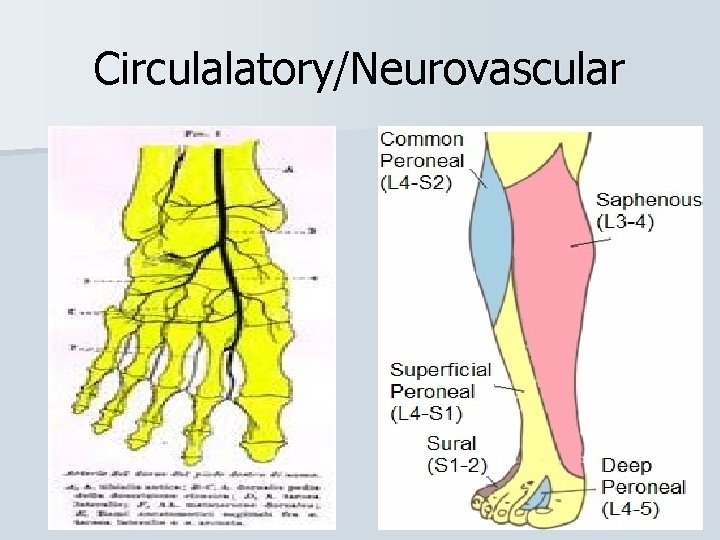
Circulalatory/Neurovascular
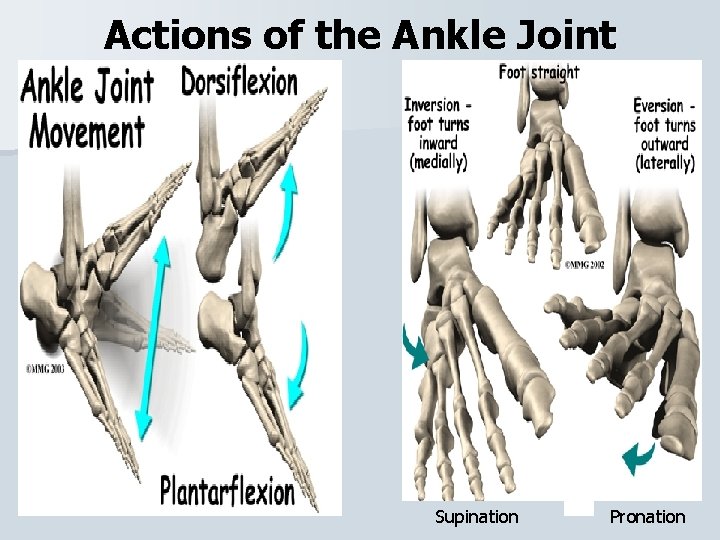
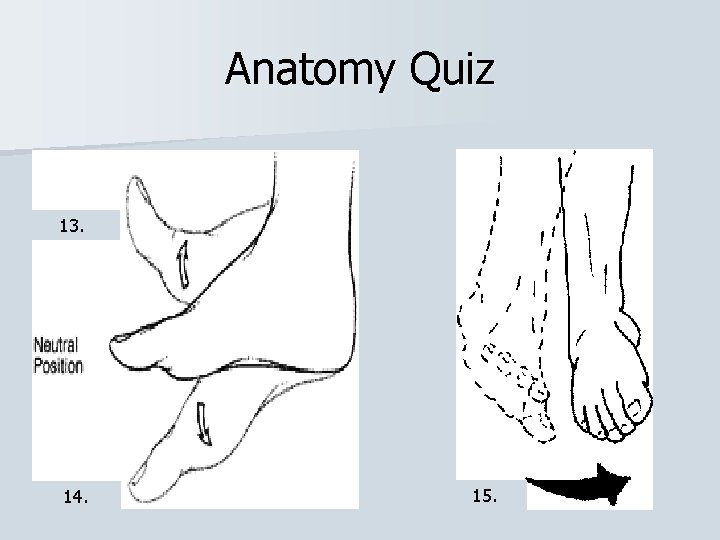
Actions of the Ankle Joint Supination Pronation
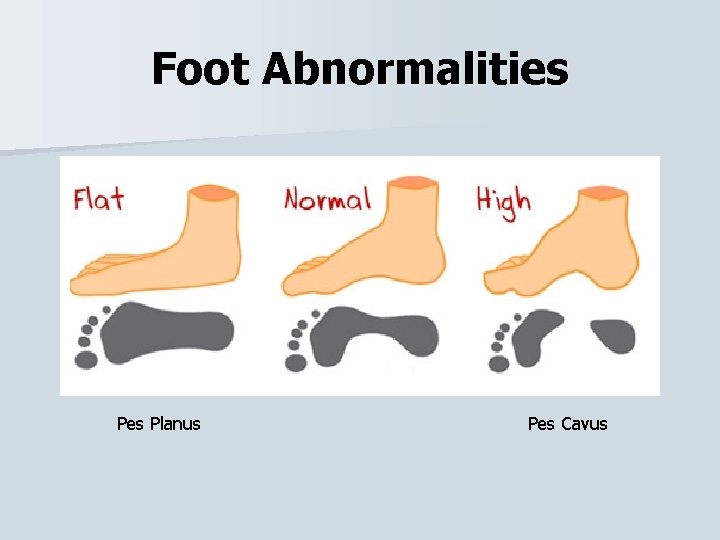
Foot Abnormalities Planus Pes Cavus
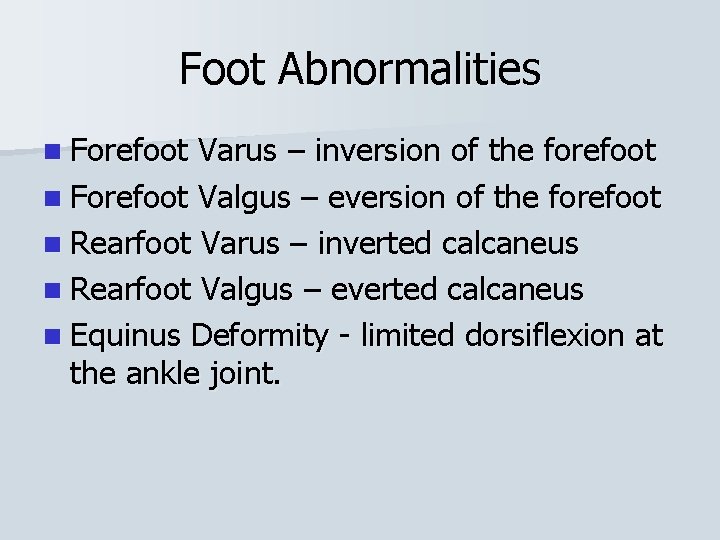
Foot Abnormalities n Forefoot Varus – inversion of the forefoot n Forefoot Valgus – eversion of the forefoot n Rearfoot Varus – inverted calcaneus n Rearfoot Valgus – everted calcaneus n Equinus Deformity - limited dorsiflexion at the ankle joint.
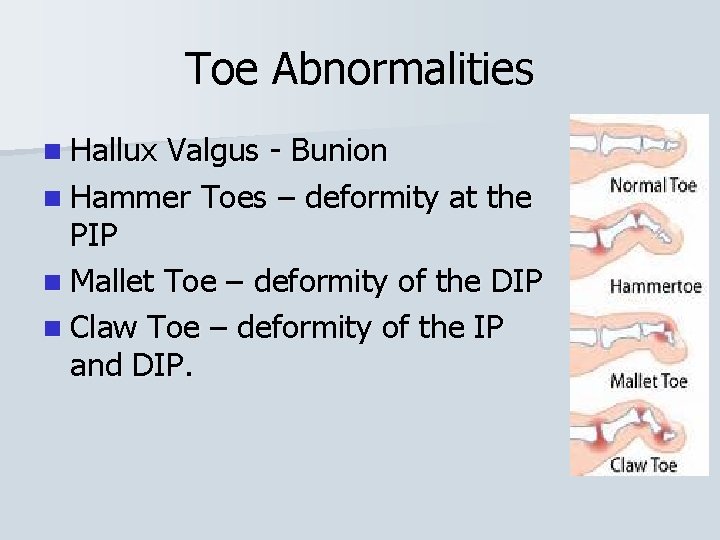
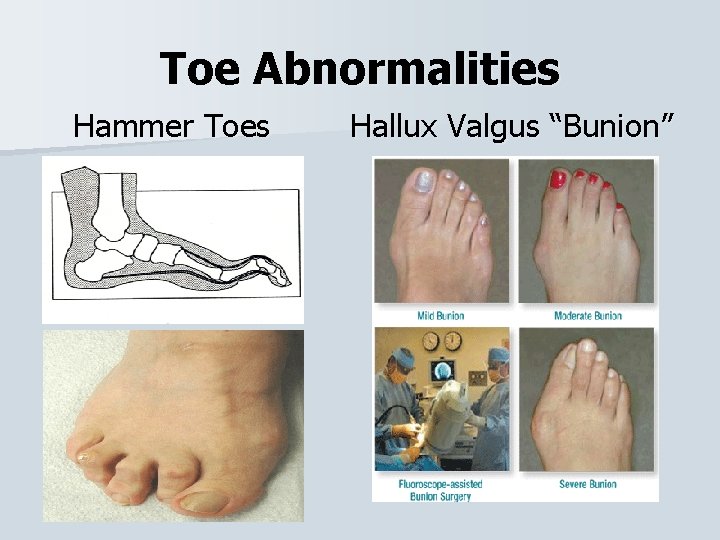
Toe Abnormalities n Hallux Valgus - Bunion n Hammer Toes – deformity at the PIP n Mallet Toe – deformity of the DIP n Claw Toe – deformity of the IP and DIP.
Toe Abnormalities Hammer Toes Hallux Valgus “Bunion”
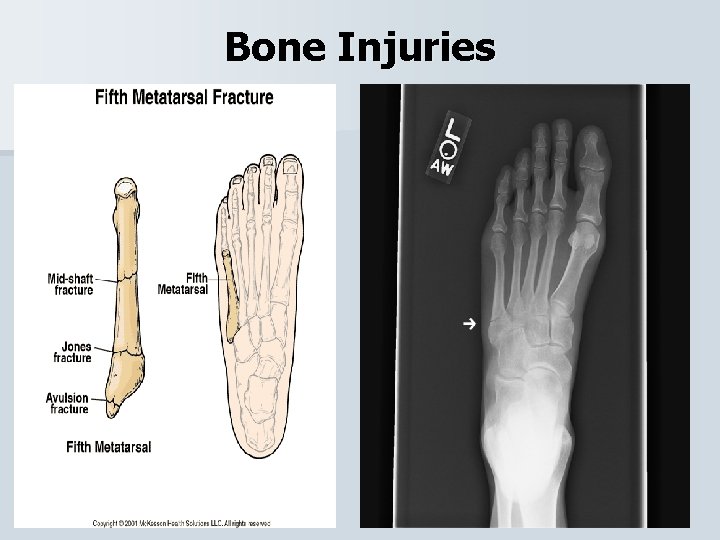
Bone Injuries
Bone Injuries Jones Fx • The most common avulsion fracture is of the 5 th metatarsal. • When the ankle is forced into inversion, the muscle contracts forcefully to stabilize the ankle and the peroneus brevis tendon pulls part of the bone away. • Refer
Bone Injuries
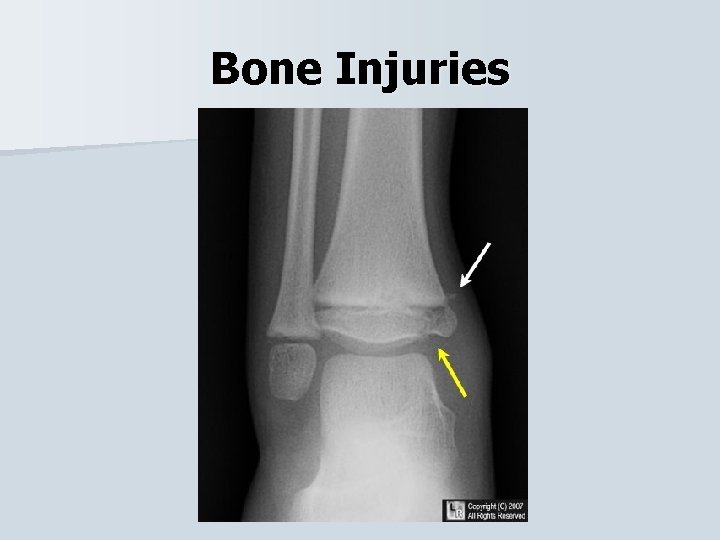
Bone Injuries Epiphyseal Fx • Distal tibia and fibula fracture of the epiphysis, or growth plates can become injured when the ankle is forced into plantar flexion and eversion. • The athlete will experience pain & swelling over the epiphysis and difficulty walking/running. • Splint the injury and refer to physician.
Bone Injuries
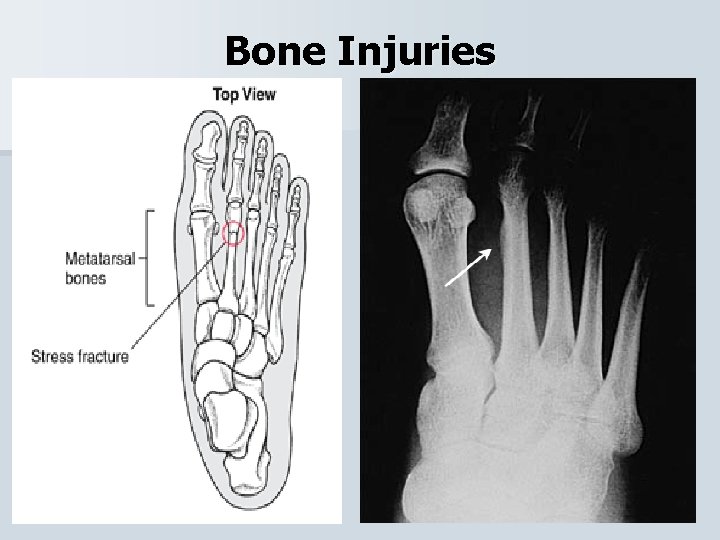
Bone Injuries Stress Fx • Most commonly occur to the tibia, fibula, and metatarsals. • Caused from repetitive stress (running). • Athlete will experience pain and swelling and the pain will be more intense at night and following activity. • X-Ray & Tuning Fork
Muscle and Tendon Injuries
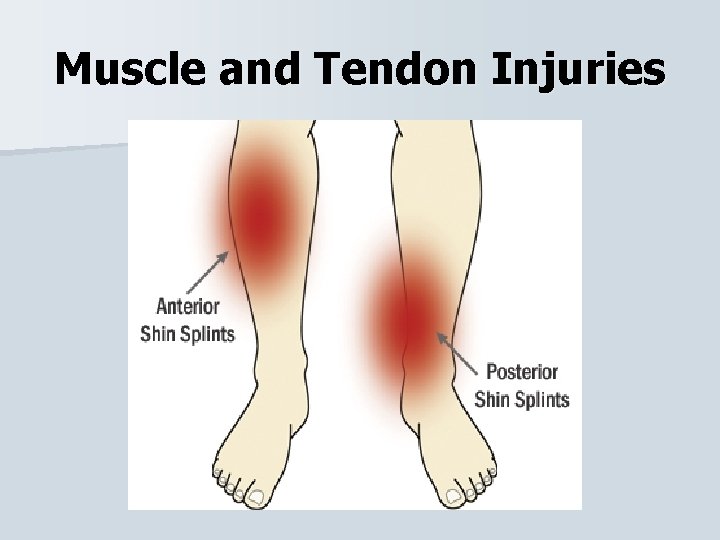
Muscle and Tendon Injuries Shin Splints “Medial tibial stress syndrome” A common term for lower leg pain that involves muscle fibers on medial side of the tibia to become irritated and torn. • Pain will be on the distal medial aspect of the shin. • This is generally caused from tight calves, older shoes, or out of shape. Pain can be relieved from PRICE. •
Muscle and Tendon Injuries
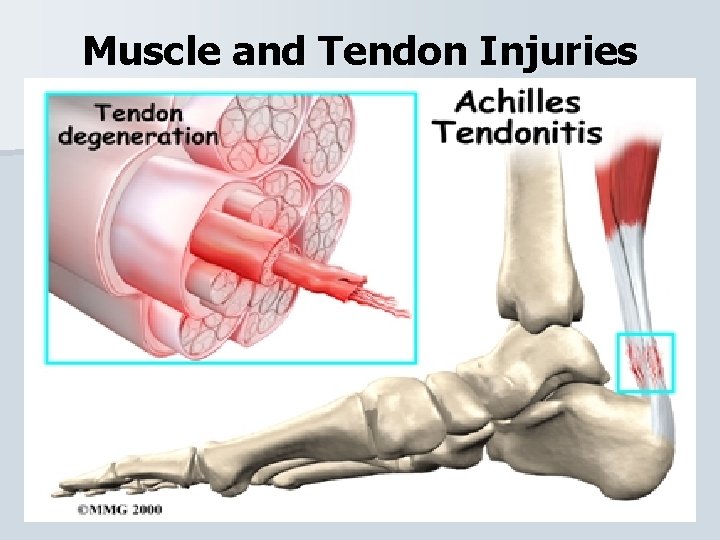
Muscle and Tendon Injuries Achilles Tendinitis Inflammation of the achilles tendon caused from repetitive stress (running and jumping) that cause the tendon to break down. • The athlete will have swelling tenderness, and crepitus and pain with dorsiflexion and palpation over tendon. • PRICE followed by stretching/strengthening. •
Muscle and Tendon Injuries
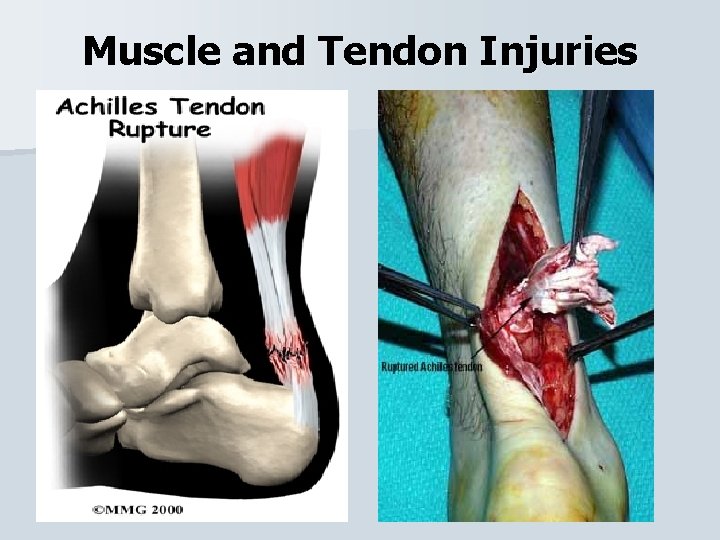
Muscle and Tendon Injuries Achilles Tendon Rupture The rupture occurs when the ankle is forced into dorsiflexion, a blow to the back of the leg, or a sudden forceful contraction. • The athlete will have difficulty walking, weakness, and a loss of function (plantarfelxion). There will be swelling and an obvious depression over the tendon attachment. •
Ligament Injuries
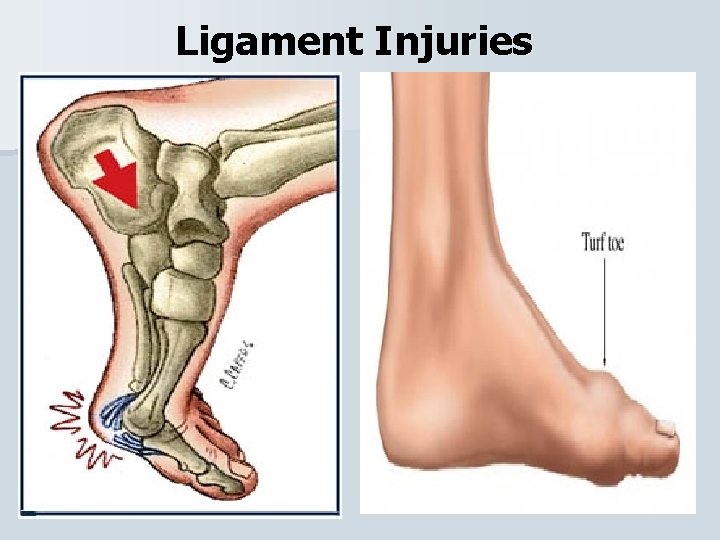
Ligament Injuries Great-Toe Sprain “Turf Toe” A sprain to the hallux that is caused by excessive force, such as forced flexion or extension. • The athlete will experience pain swelling, discoloration, and an inability to walk or run. • PRICE and taping and padding. •
Ligament Injuries
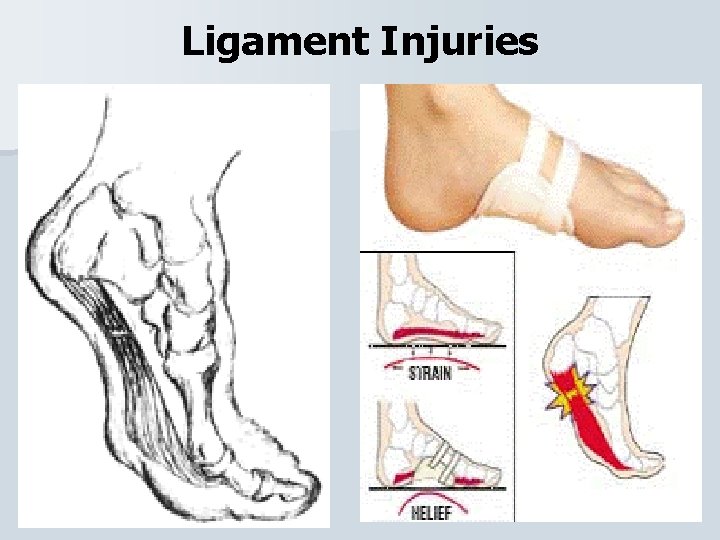
Ligament Injuries Arch Sprain An arch sprain can be caused by running on a hard surface, wearing improper footwear, or repetitive stress. • The athlete will report pain over the involved arch except the metatarsal arch will cause pain at the ball of the foot. • PRICES, strengthening and arch support. •
Ligament Injuries
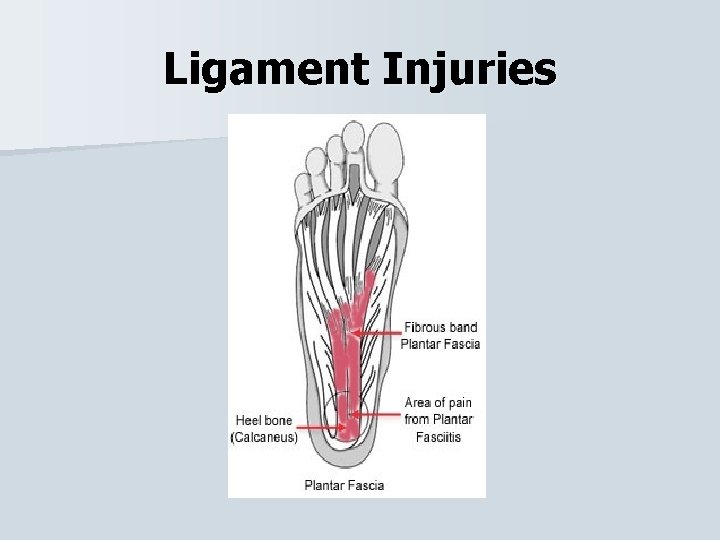
Ligament Injuries Plantar Fasciitis • The plantar surface of the foot has a thick layer of fascia that becomes injured from chronic stress. • It begins with tenderness at the bottom of the calcaneus and progresses to the toes. • Some cases the plantar fascia pulls on the calcaneus and causes a heel spur.
Ligament Injuries
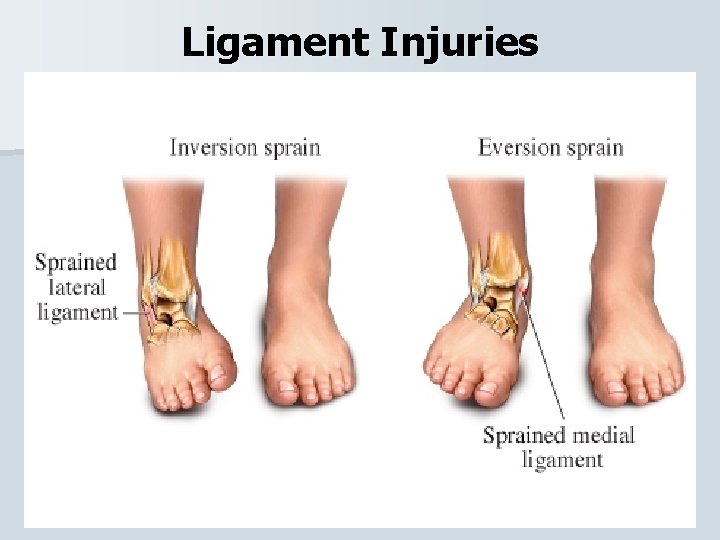
Ligament Injuries Lateral and Medial Ankle Sprain Majority of ankle sprains occur Inversion (85%) where Eversion (15%). • When the ankle inverts the lateral ligament are injured (ATF and calcaneofibular) and when it everts the medial ligamant (deltoid) is injured. •
Ligament Injuries
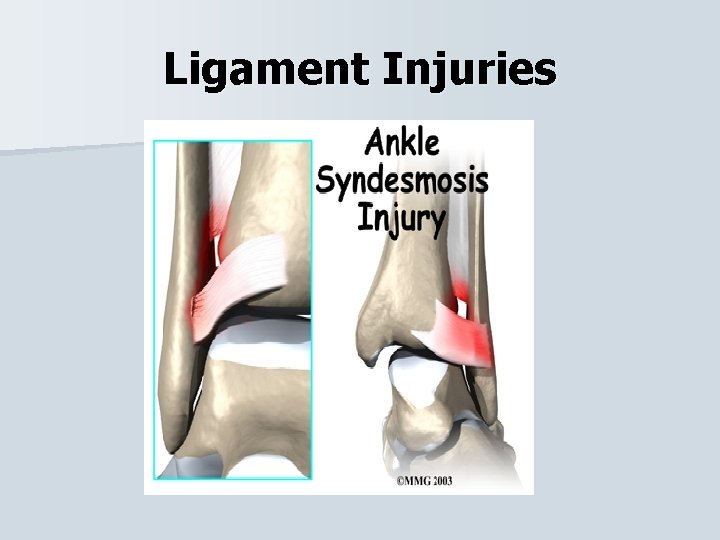
Ligament Injuries Syndesmosis – another type of ankle sprain that is a high ankle sprain injures the syndesmosis that binds the tibia and fibula together. When the ankle is either severely, everted or rotated, the talus can force the tibia and fibula to spread apart. Syndesmotic sprains take longer to heal.
Ligament Injuries
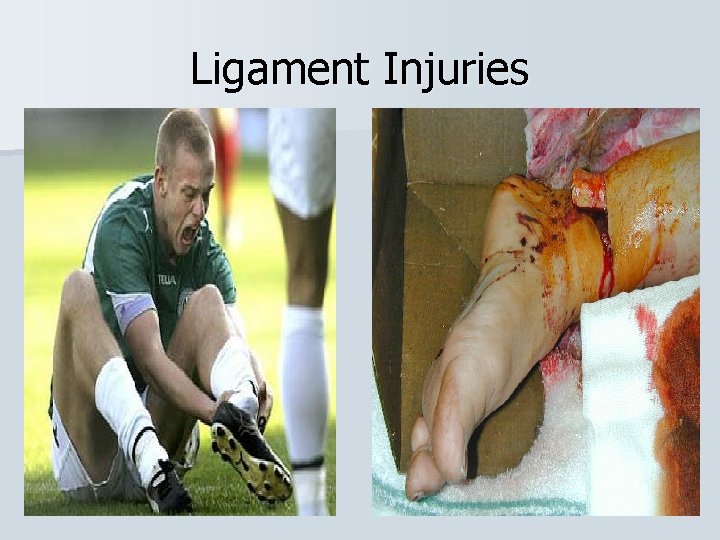
Ligament Injuries Ankle Dislocation – occurs anteriorly or posteriorly. Anterior dislocation occurs from a forceful impact of the heel of the foot on the ground. Posterior occurs with a blow to the anterior aspect of the lower leg while the ankle is in plantarflexion. The athlete will have an obvious deformity with loss of function and swelling will be rapid.
Tissue Injuries Contusions Lower Leg – common in soccer and field hockey from impact of the ball, stick, or another foot. Heel – beneath the calcaneus is a thick fat pad that absorbs shock. Too much impact will cause a heel bruise.
Tissue Injuries
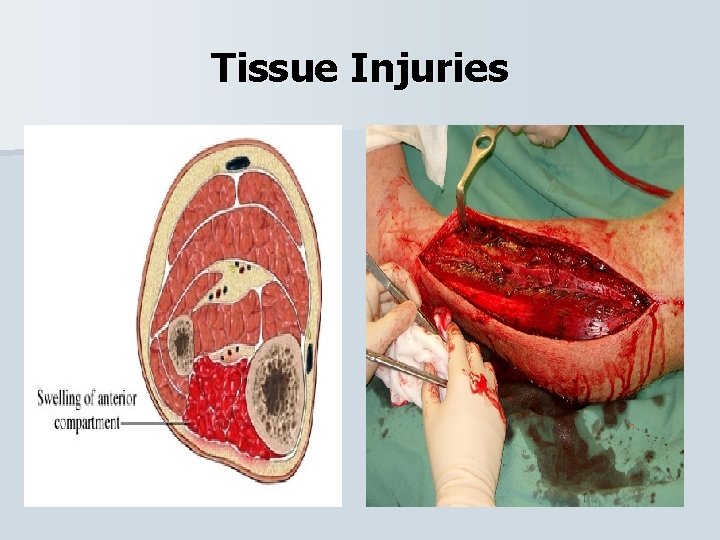
Tissue Injuries Anterior Compartment Syndrome Sometimes mistaken for shin splints, this injury involves the muscles anterior to the tibia that are enclosed in connective tissue. An impact or overuse can cause pressure (swelling) within the compartment and severe pain. The athlete will experience heat, red skin, loss of function and hardness in the area.
Ankle Evaluation HOPS n History n Observation n Palpation n Special Testing
History n How did you hurt it? MOI n How is your pain? (1 -10 scale) n Have you hurt it before? n Did you feel anything when you hurt it? n What have you been doing for your injury? n What changes in your training have you made recently?
Observation n Swelling, deformity, abnormal contours, discoloration, scars, calluses, blisters, exostosis. n Observe gait pattern, ankle motion n Overall position and alignment of ankle and foot. n Muscular development n Inspect shoes
Palpation n Soft Tissue – Gastocnemius, soleus, and Achilles tendon – Ligaments n Bone – Tibia, fibula, tarsals, metatarsals, and phalanges.
Special Tests n Potts Compression n Thompson Test n Anterior Drawer n Talar Tilt n Feiss Line
Anatomy Quiz
Anatomy Quiz 7 10 11 8 9 12
Anatomy Quiz 13. 14. 15.