
Injuries to the athletic shoulder impingement syndrom Dr

- Slides: 43
Injuries to the athletic shoulder (impingement syndrom) Dr. H. Saremi Orthopaedic surgeon, Hand & Shoulder fellowship Hamedan university of medical sciences Hamedan, IRAN www. shoulderclinic. ir
Sport injuries • Sport specific injuries • Regional Injuries
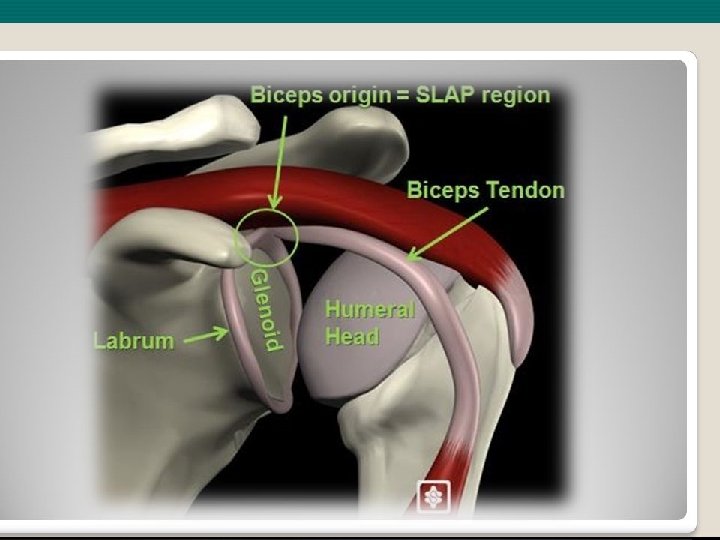
Injuries to the athletic shoulder • • Instability Impingement and rotator cuff problems Biceps labral complex injuries Ac joint injuries S. c joint injuries Fractures Neurovascular injuries
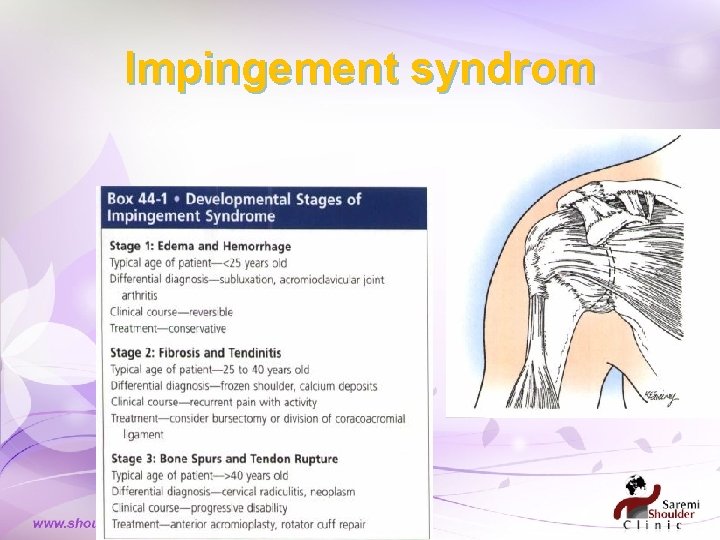
Impingement syndrom The term impingement syndrome was fi rst used by. Neer in 1972 to describe a condition of shoulder pain associated with chronic bursitis and partial tearing of the rotator cuff. Impingement comes froma Latin root impingo, which means “to strike against.
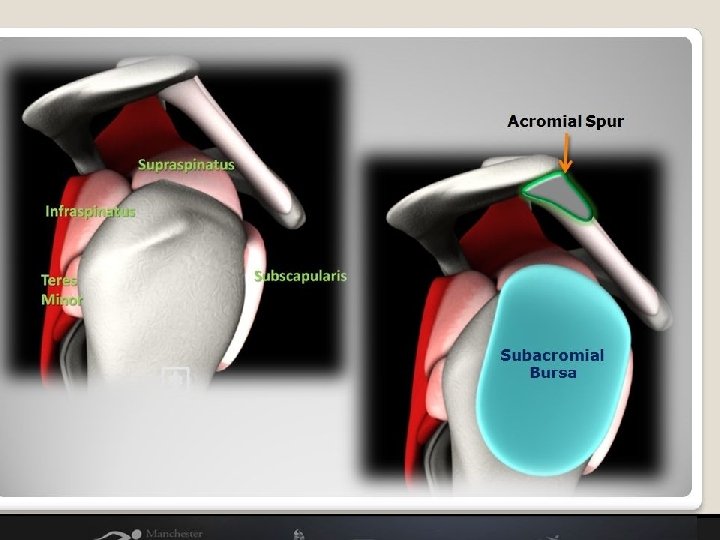
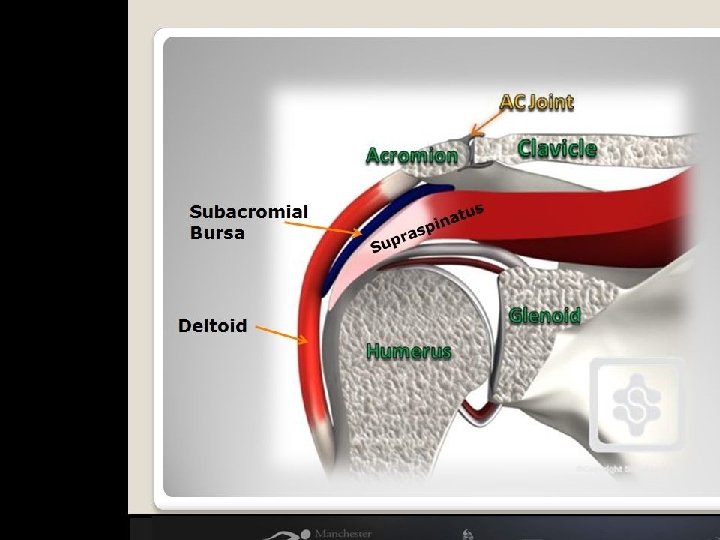
Impingement and rotator cuff problems • Subacromial impingement is one of the most common couse s of shoulder pain in athletes
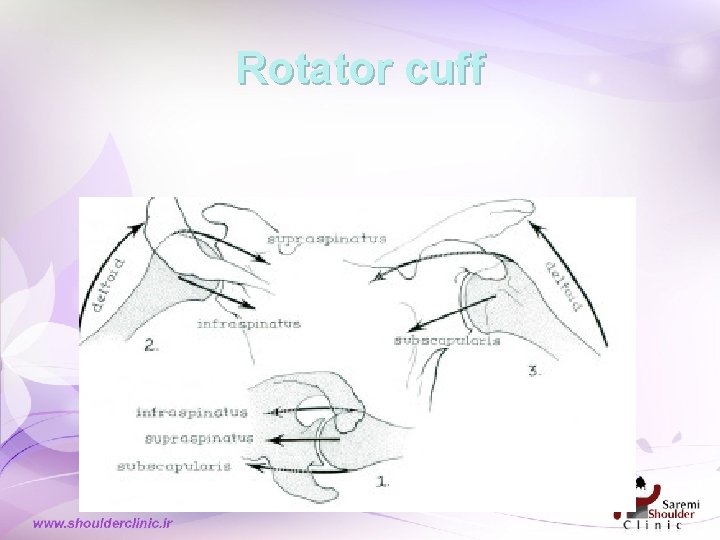
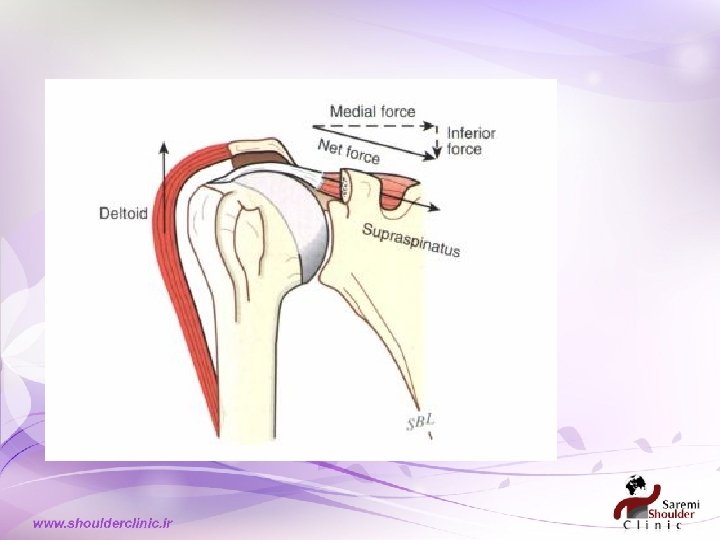
Rotator cuff
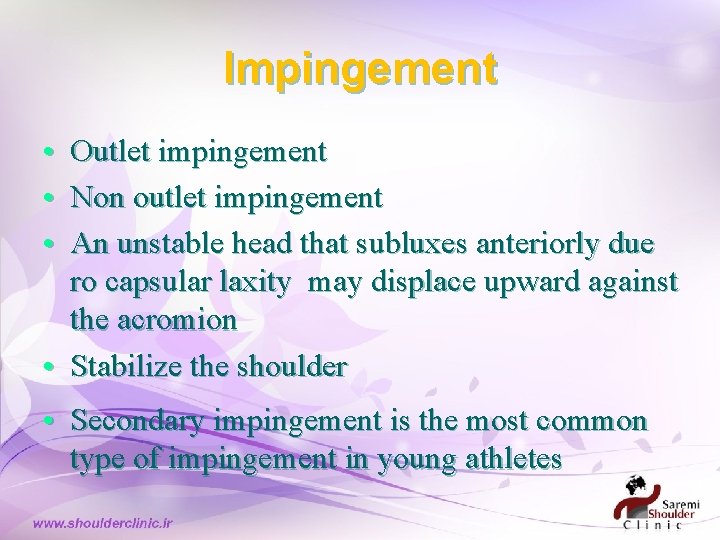
Impingement • Outlet impingement • Non outlet impingement • An unstable head that subluxes anteriorly due ro capsular laxity may displace upward against the acromion • Stabilize the shoulder • Secondary impingement is the most common type of impingement in young athletes
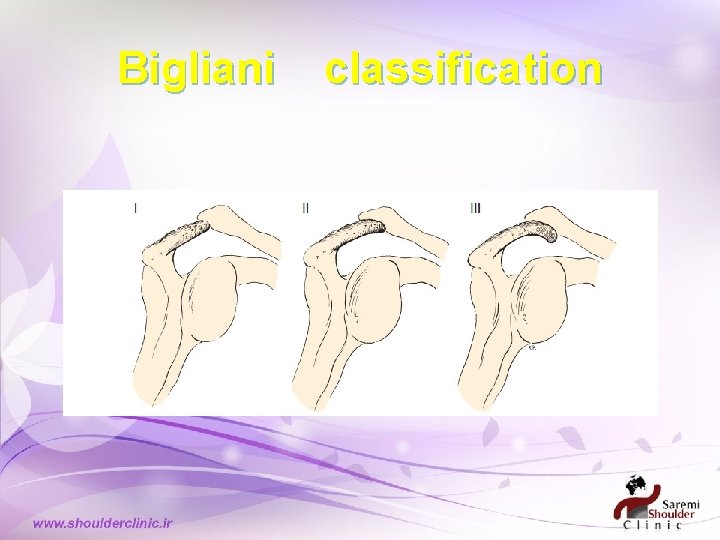
Bigliani classification
Sign &symtoms • Pain with overhead activities, and internal rotation • Partial cuff tear symptoms
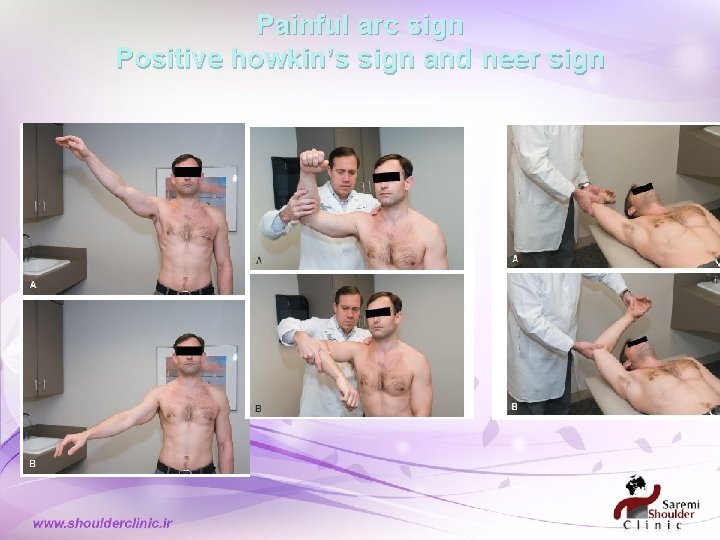
Painful arc sign Positive howkin’s sign and neer sign
Impingement syndrom
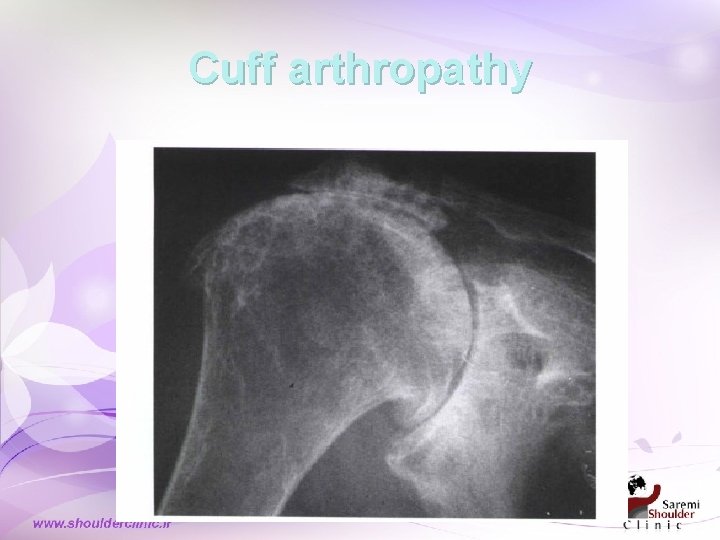
Cuff arthropathy
Impingement syndrom • Non operative treatment • Operative treatment(arthroscopic)
Non operative treatment • Physio therapy • NASAID • Corticoid injection
Non operative Treatment • STEP 1 : Avoid repeated injury • Work • Sport
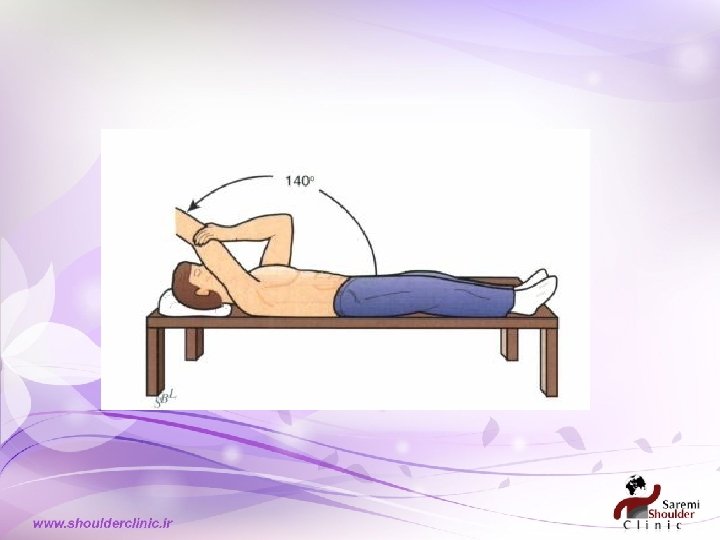
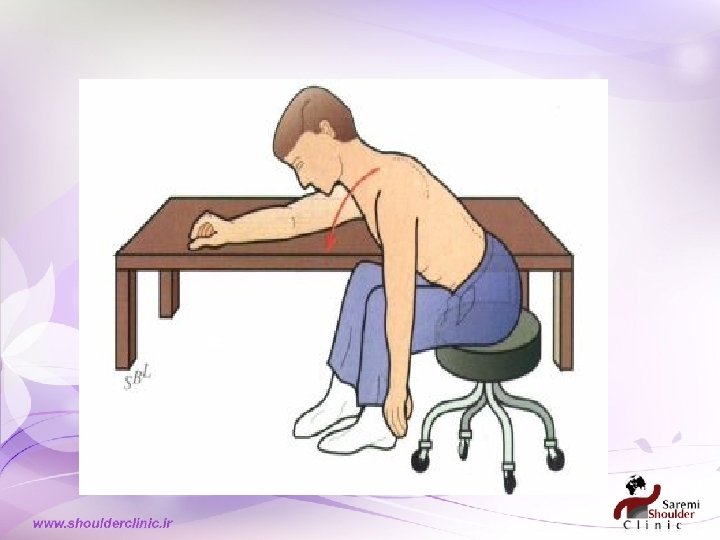
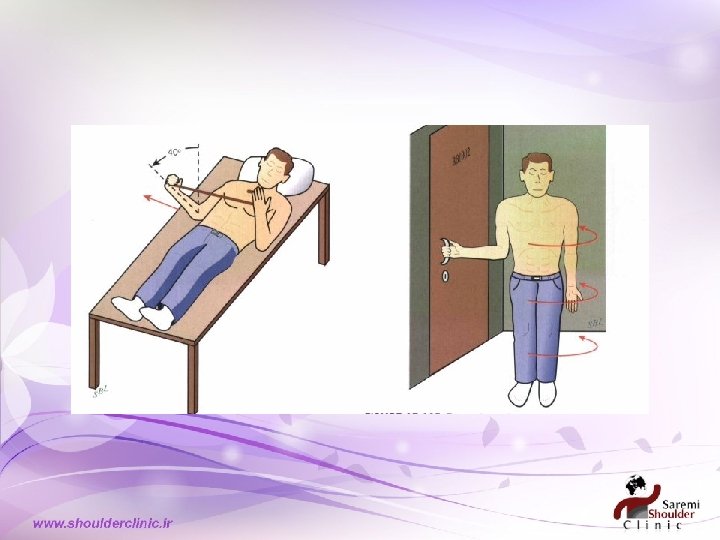
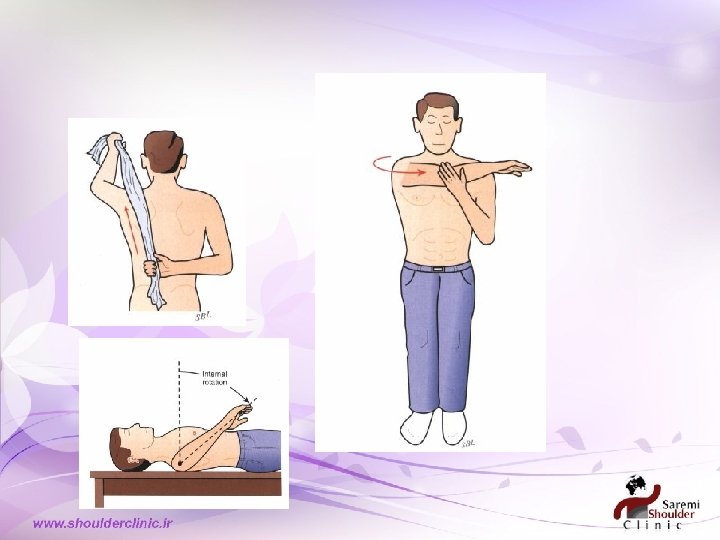
Non operative treatment • STEP 2: Restore normal flexibility • Stretch out all the direction of tightnessspecially posterior • Most effective by the patient • Gentle stretched five times a day by patient • To the point of pull of tightness not to the point of pain • Each stretche for 1 min----30 min a day • Obvious improvement---1 m may be 3 m full
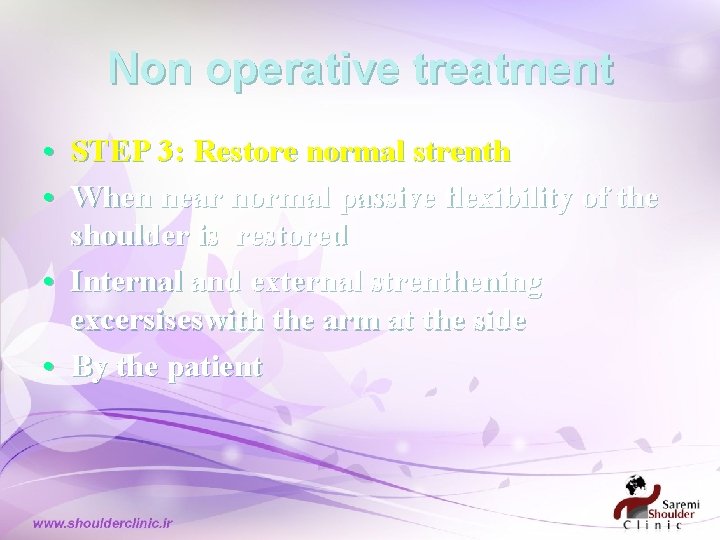
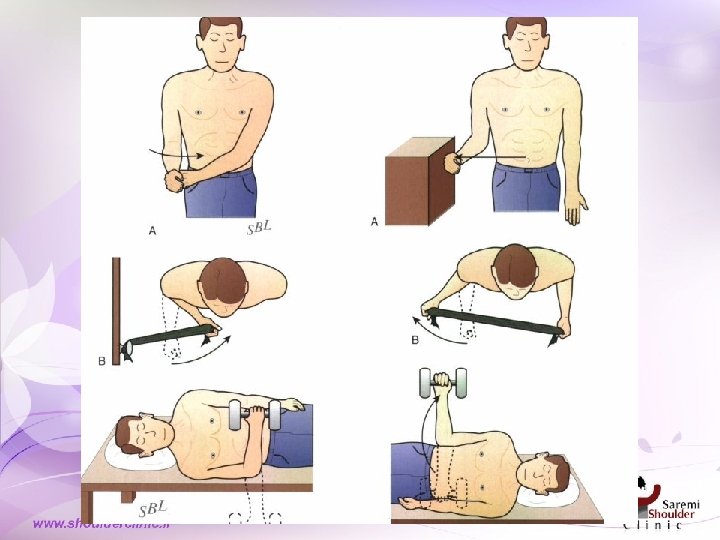
Non operative treatment • STEP 3: Restore normal strenth • When near normal passive flexibility of the shoulder is restored • Internal and external strenthening excersiseswith the arm at the side • By the patient
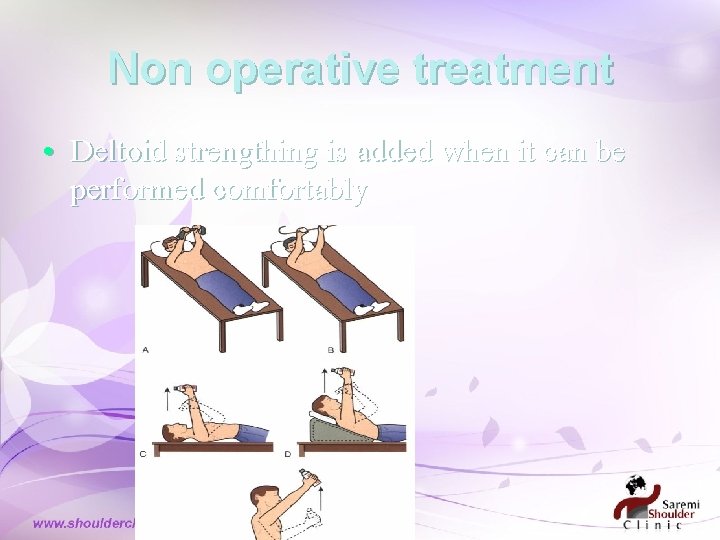
Non operative treatment • Deltoid strengthing is added when it can be performed comfortably
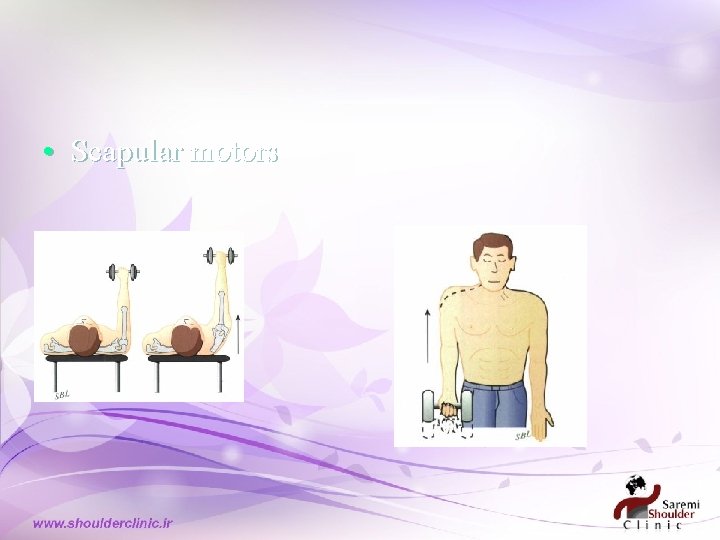
• Scapular motors
Non operative treatment • STEP 4: Perform aerobic exercise • To get back in shape and improve the sense of well being • 5 days a week, sweaty ex 30 min
Non operative treatment • STEP 5: Modify work or sport • Reviewe the technique of sport • Modifiy the job
Operative treatment • Sub acromial decompression • Rotator cuff repair
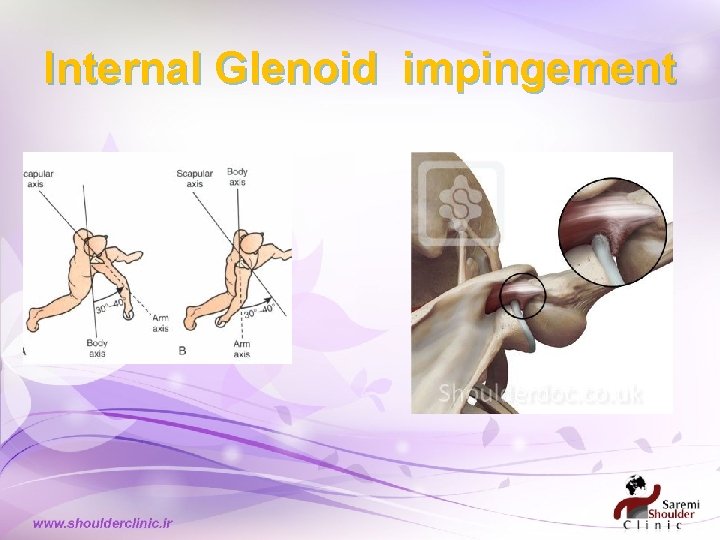
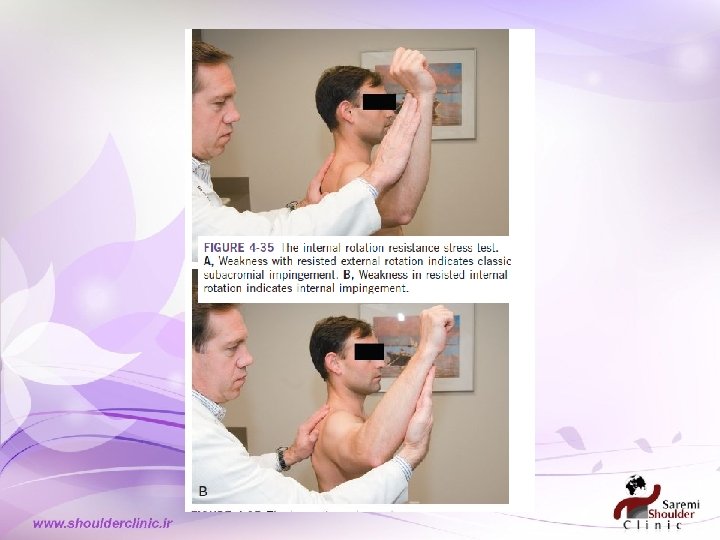
Internal Glenoid impingement
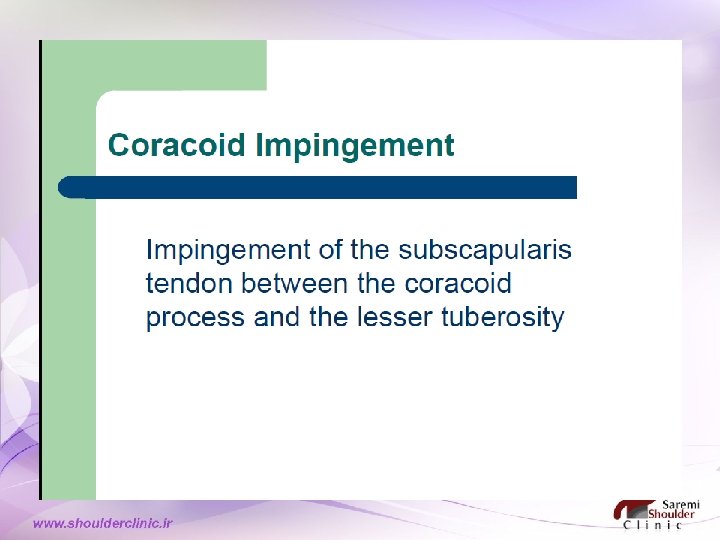
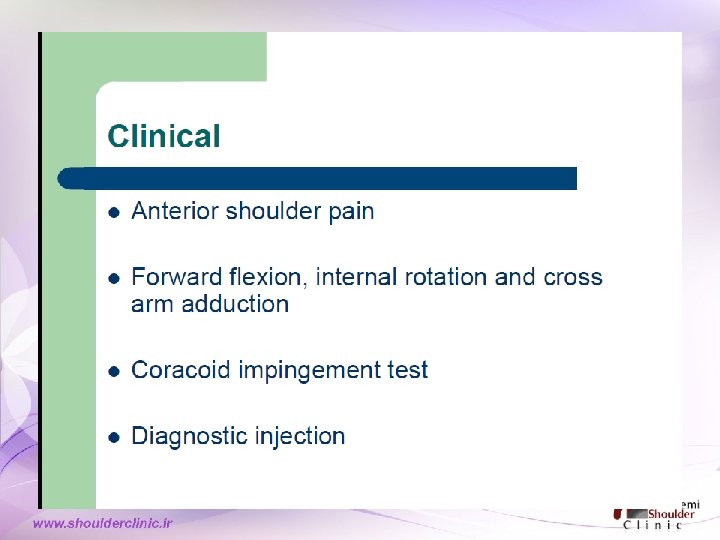
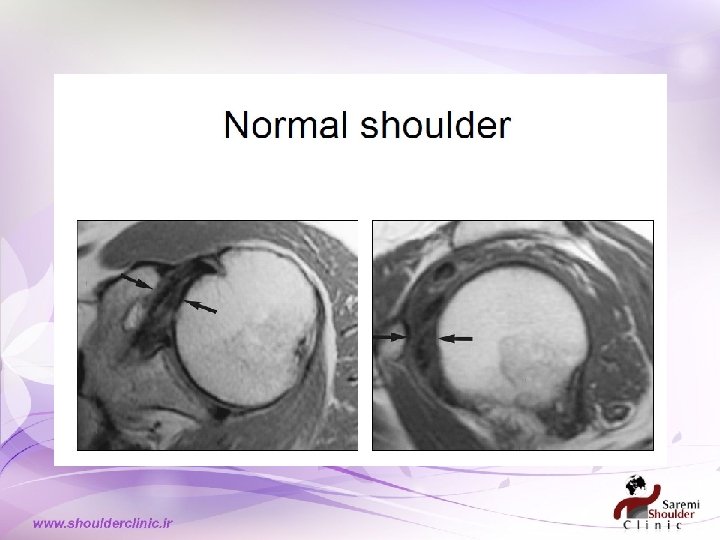
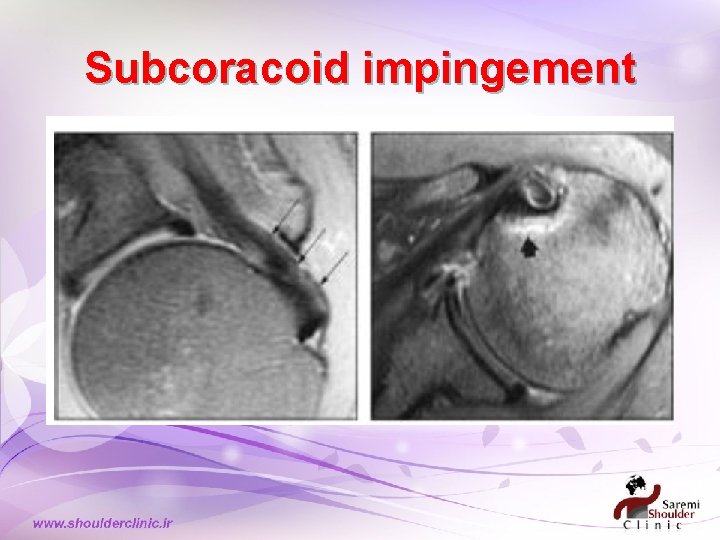
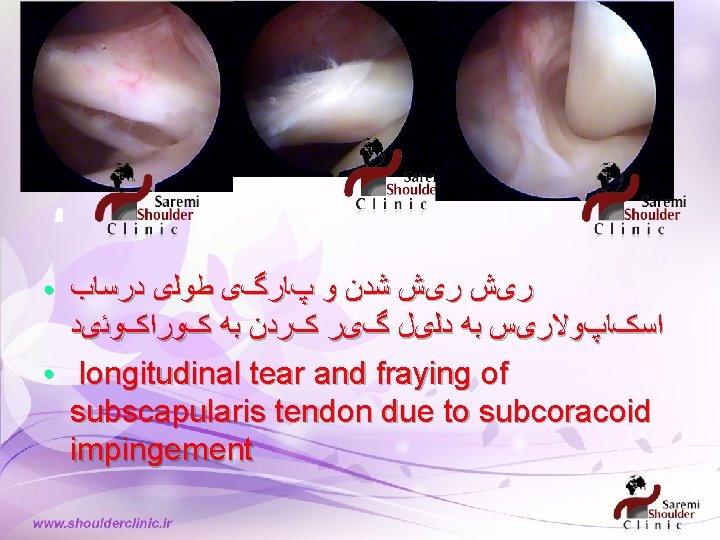
Subcoracoid impingement