
Injection Techniques Requirement needed to perform an injection
- Slides: 16
Injection Techniques
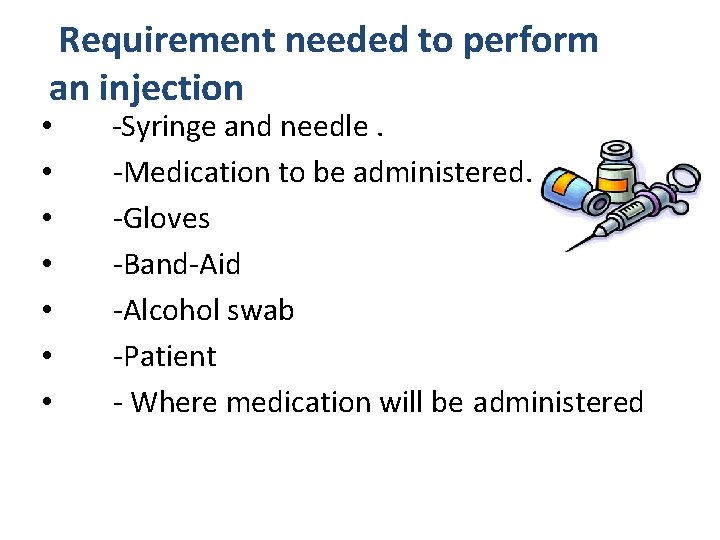
Requirement needed to perform an injection • -Syringe and needle. • -Medication to be administered. • -Gloves • -Band-Aid • -Alcohol swab • -Patient • - Where medication will be administered
dlerqader 74@yahoo. com
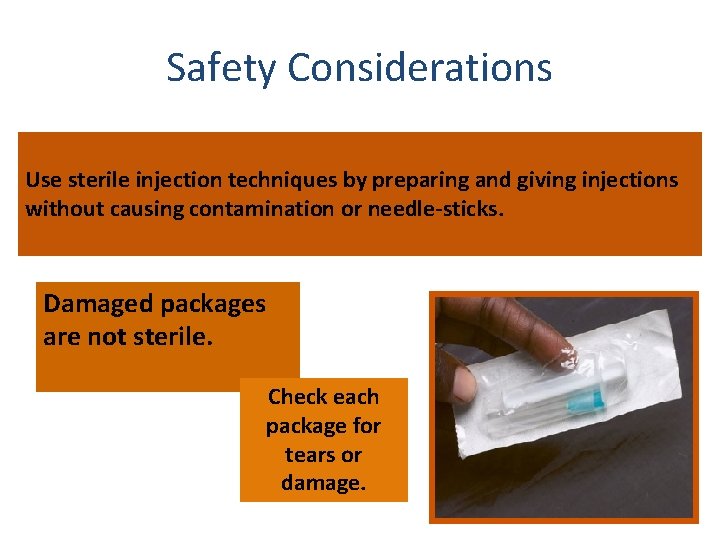
Safety Considerations Use sterile injection techniques by preparing and giving injections without causing contamination or needle-sticks. Damaged packages are not sterile. Check each package for tears or damage.
Prior to Giving The Injection 1. Disinfect the work area (where the drug and syringe will be set up) 2. Check the drug label: – Is it what has been prescribed? – Check medication to ensure is correct dose for patient – Check the expiration date on the vial. *Do not use a drug if: – It is past the expiration date – Precipitate is noted floating in the solution. – The solution is discolored. • 3 -Removal of air bubbles is necessary to ensure accurate dose of medication.
-Choosing the site to administer medication-There are several different injection sites can be given. Site determination: • -Stage of patients development. • -Body build • -Physical condition • -Amount of the medication to be given
Common types of injections • 1 -Subcutaneous (SC) injection • 2 -Intramuscular (IM) injection • 3 -Intravenous (IV) injection
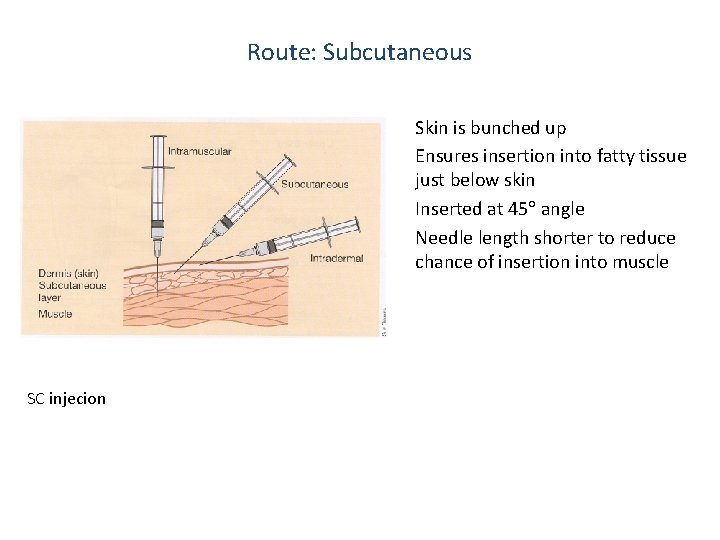
Route: Subcutaneous Skin is bunched up Ensures insertion into fatty tissue just below skin Inserted at 45 angle Needle length shorter to reduce chance of insertion into muscle SC injecion
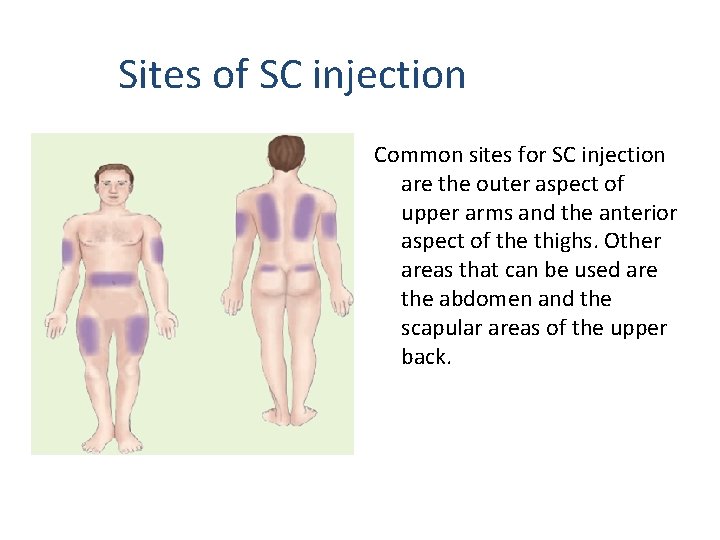
Sites of SC injection Common sites for SC injection are the outer aspect of upper arms and the anterior aspect of the thighs. Other areas that can be used are the abdomen and the scapular areas of the upper back.
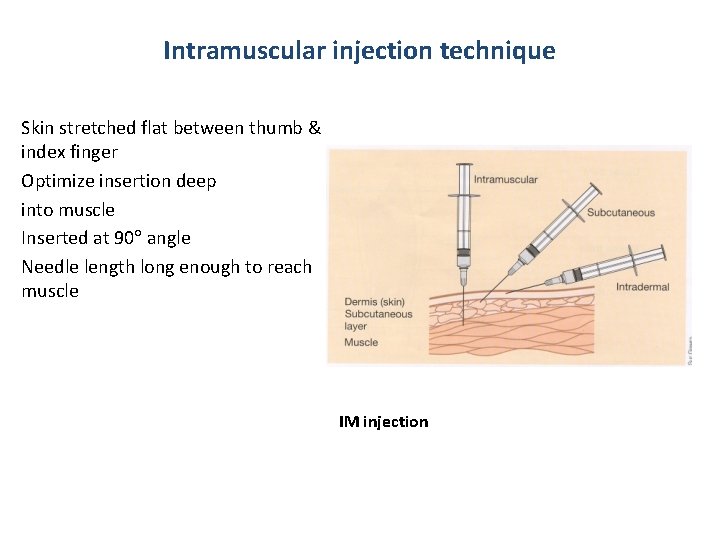
Intramuscular injection technique Skin stretched flat between thumb & index finger Optimize insertion deep into muscle Inserted at 90 angle Needle length long enough to reach muscle IM injection
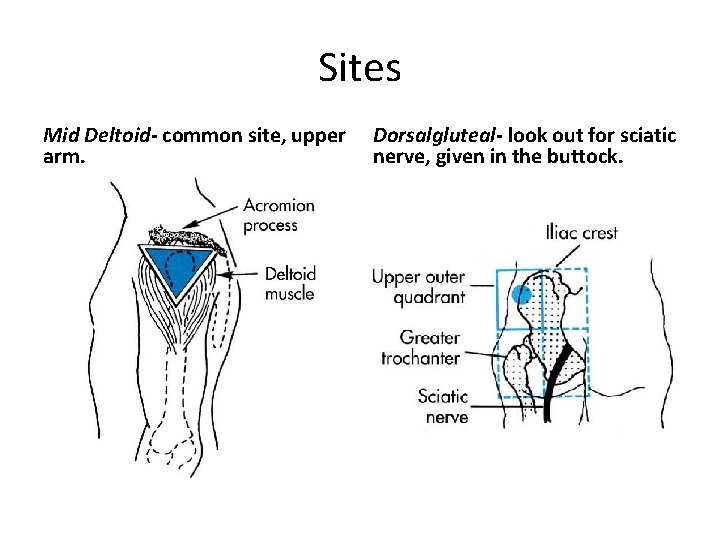
Sites Mid Deltoid- common site, upper arm. Dorsalgluteal- look out for sciatic nerve, given in the buttock.
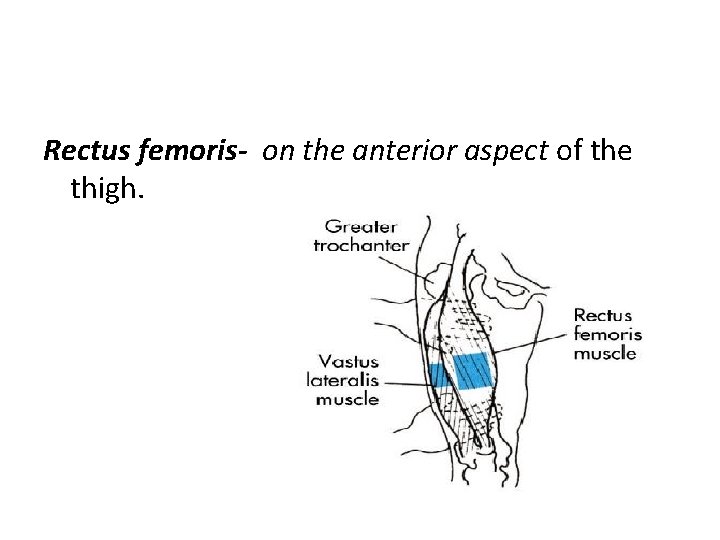
Rectus femoris- on the anterior aspect of the thigh.
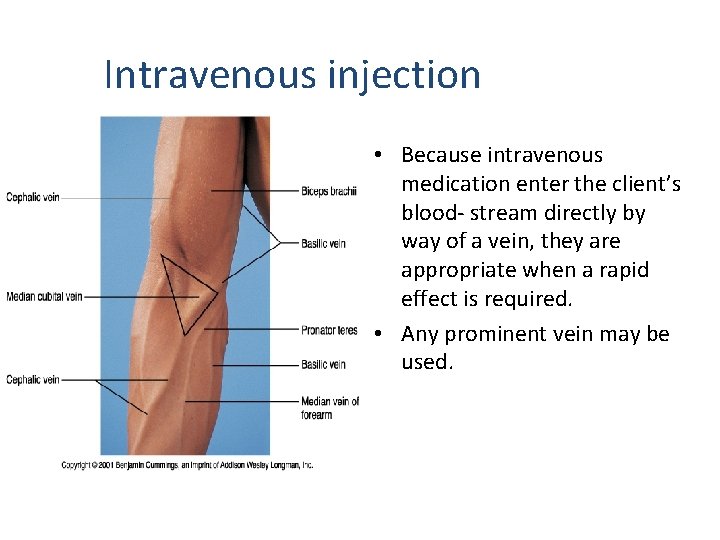
Intravenous injection • Because intravenous medication enter the client’s blood- stream directly by way of a vein, they are appropriate when a rapid effect is required. • Any prominent vein may be used.
Uncommon types of injections: 1. Intradermal. 2. Intracardial. 3. Intra-articular. 4. Intraspinal. 5. Intrapleural. ……etc. dlerqader 74@yahoo. com
Thank you