
INITIATE AN INTRAVENOUS INFUSION RIFLES LIFESAVERS Invasive Procedures

- Slides: 24
INITIATE AN INTRAVENOUS INFUSION RIFLES LIFESAVERS Invasive Procedures Intravenous Infusion
Introduction • Prompt use of IV therapy could make the difference between a casualty dying of wounds and surviving Invasive Procedures Intravenous Infusion 2
Indications for IV fluids • Replace fluid losses –Hemorrhage from injury –Dehydration from heat or illness –Plasma loss from burns Invasive Procedures Intravenous Infusion 3
Complications of IV Therapy • Infiltration • Air embolism • Can easily avoid with attention during IV placement Invasive Procedures Intravenous Infusion 4
Infiltration • Infusion of fluid into tissues at IV site • Signs & Symptoms – Poor or no IV flow – Swelling and pale appearance at site – Fluid leaking around site – Pain, tenderness, and/or burning at site • Stop IV, restart at another site Invasive Procedures Intravenous Infusion 5
Venous Air Embolism • Obstruction of blood vessel by air in the blood causing symptoms such as chest pain and dizziness • Caused by large volume of air infused into blood vessels • Preventive measures – Elevate IV bag – Prime tubing adequately – Saline lock when IV infusion finished Invasive Procedures Intravenous Infusion 6
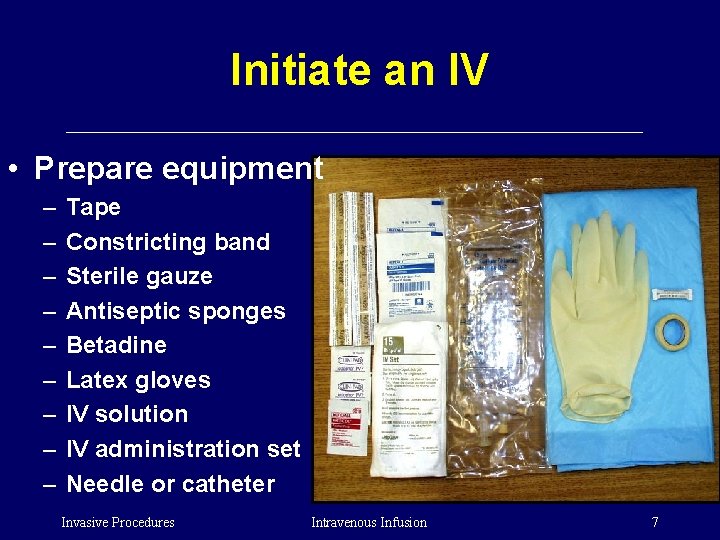
Initiate an IV • Prepare equipment – – – – – Tape Constricting band Sterile gauze Antiseptic sponges Betadine Latex gloves IV solution IV administration set Needle or catheter Invasive Procedures Intravenous Infusion 7
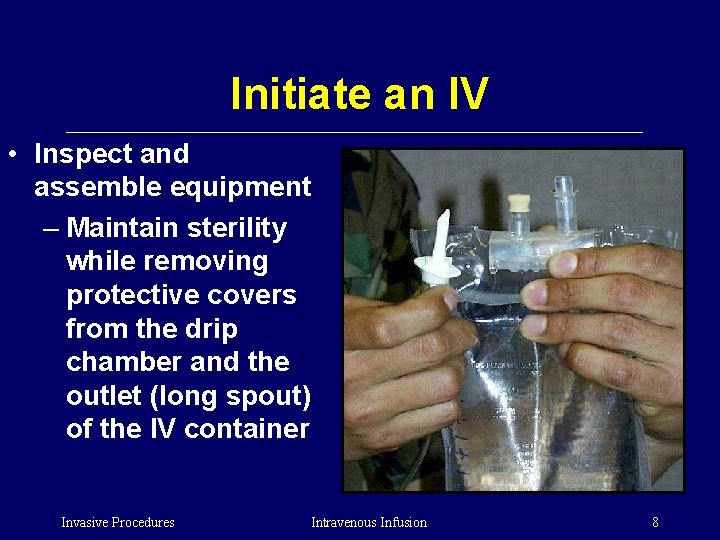
Initiate an IV • Inspect and assemble equipment – Maintain sterility while removing protective covers from the drip chamber and the outlet (long spout) of the IV container Invasive Procedures Intravenous Infusion 8
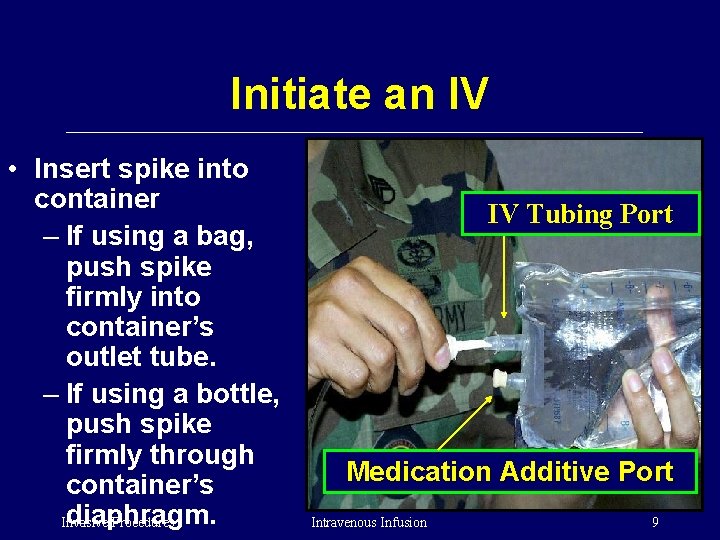
Initiate an IV • Insert spike into container – If using a bag, push spike firmly into container’s outlet tube. – If using a bottle, push spike firmly through container’s diaphragm. Invasive Procedures IV Tubing Port Medication Additive Port Intravenous Infusion 9
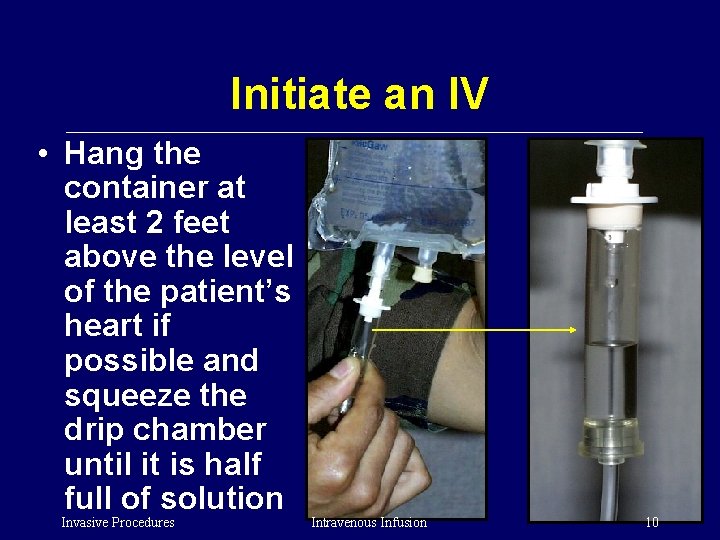
Initiate an IV • Hang the container at least 2 feet above the level of the patient’s heart if possible and squeeze the drip chamber until it is half full of solution Invasive Procedures Intravenous Infusion 10
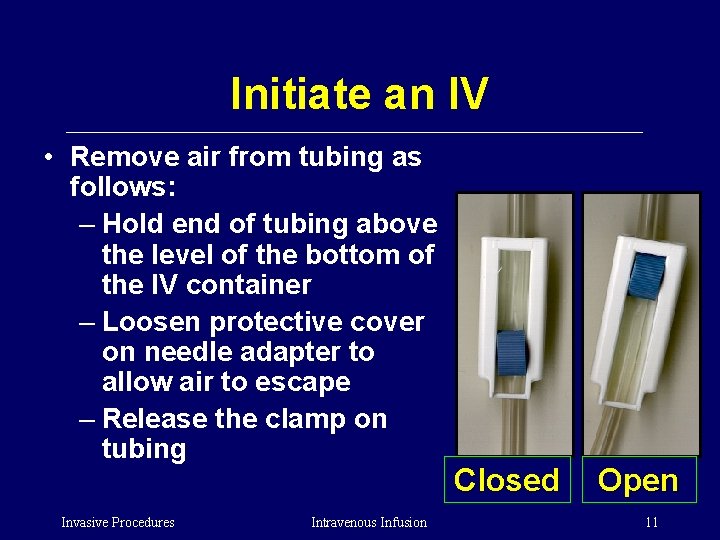
Initiate an IV • Remove air from tubing as follows: – Hold end of tubing above the level of the bottom of the IV container – Loosen protective cover on needle adapter to allow air to escape – Release the clamp on tubing Invasive Procedures Intravenous Infusion Closed Open 11
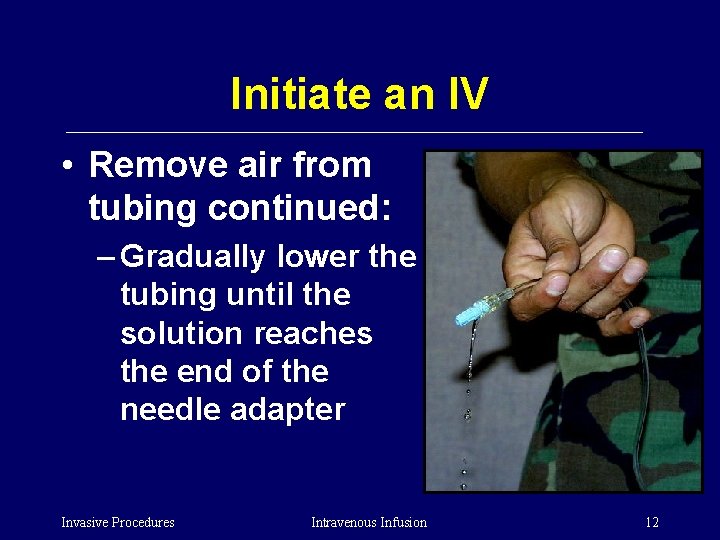
Initiate an IV • Remove air from tubing continued: – Gradually lower the tubing until the solution reaches the end of the needle adapter Invasive Procedures Intravenous Infusion 12
Initiate an IV • Select the infusion site – Choose the most accessible site – Avoid veins that are infected or injured or irritated areas – Select a vein large enough to accommodate the needle/catheter Invasive Procedures Intravenous Infusion 13
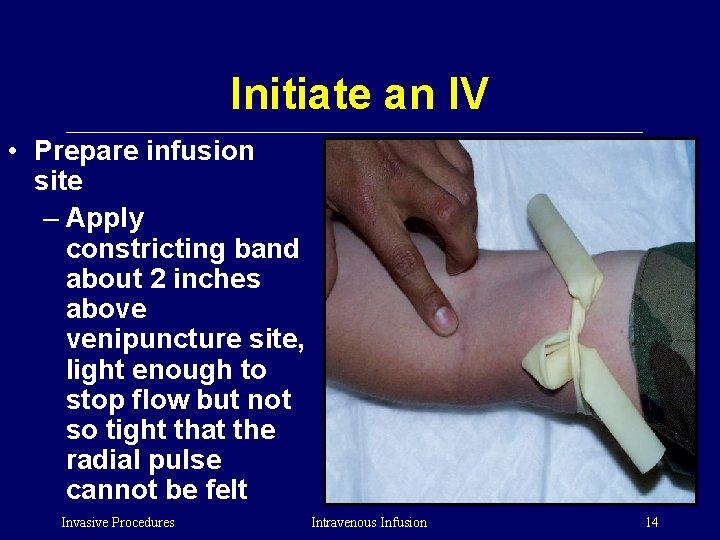
Initiate an IV • Prepare infusion site – Apply constricting band about 2 inches above venipuncture site, light enough to stop flow but not so tight that the radial pulse cannot be felt Invasive Procedures Intravenous Infusion 14
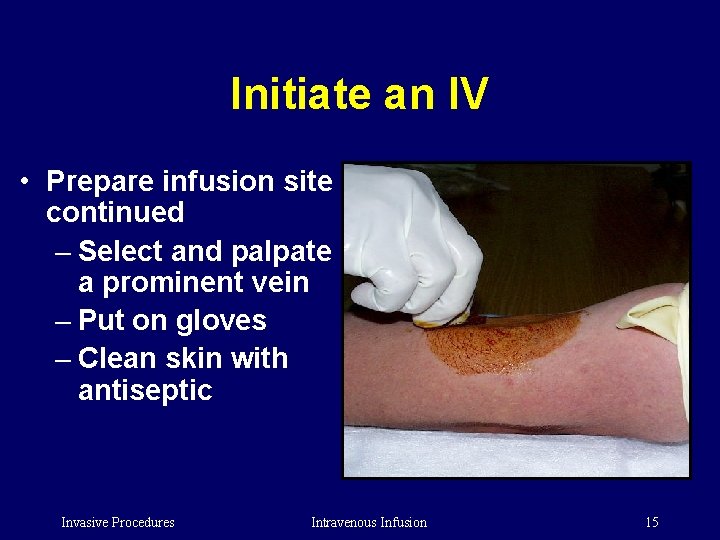
Initiate an IV • Prepare infusion site continued – Select and palpate a prominent vein – Put on gloves – Clean skin with antiseptic Invasive Procedures Intravenous Infusion 15
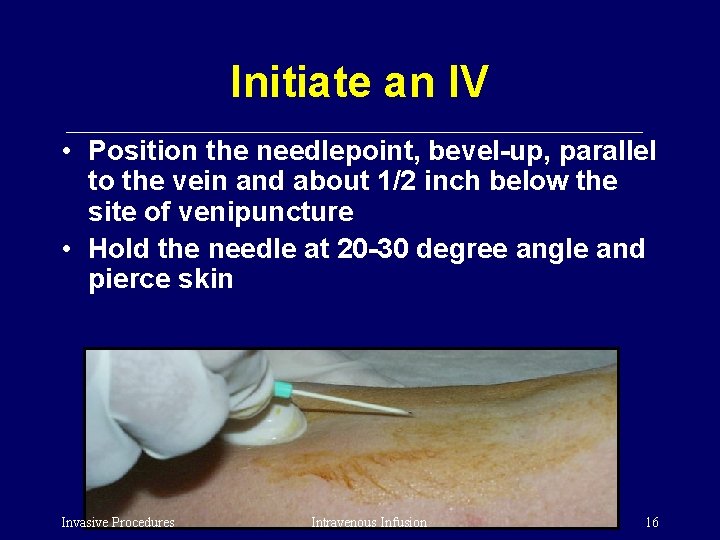
Initiate an IV • Position the needlepoint, bevel-up, parallel to the vein and about 1/2 inch below the site of venipuncture • Hold the needle at 20 -30 degree angle and pierce skin Invasive Procedures Intravenous Infusion 16
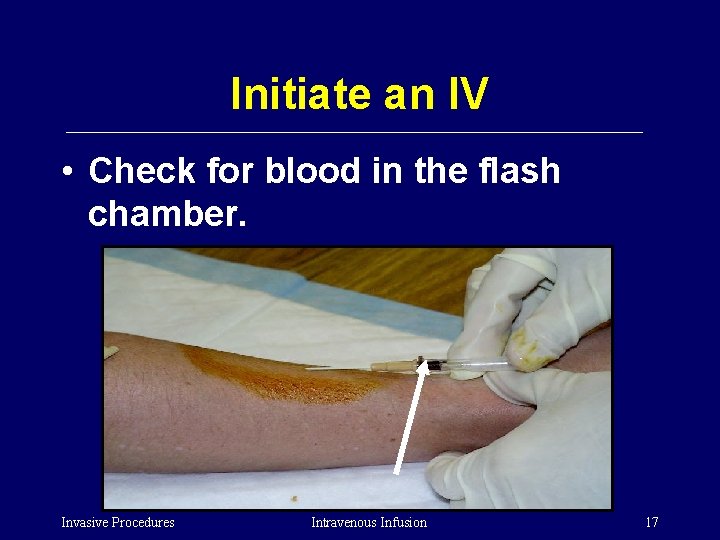
Initiate an IV • Check for blood in the flash chamber. Invasive Procedures Intravenous Infusion 17
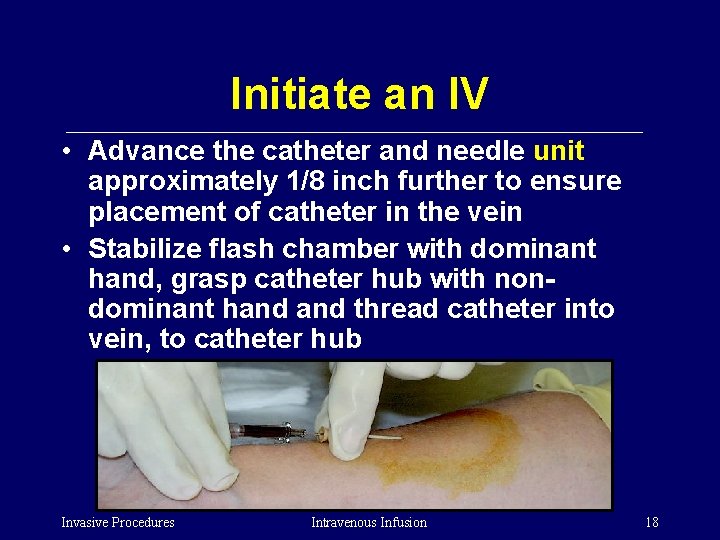
Initiate an IV • Advance the catheter and needle unit approximately 1/8 inch further to ensure placement of catheter in the vein • Stabilize flash chamber with dominant hand, grasp catheter hub with nondominant hand thread catheter into vein, to catheter hub Invasive Procedures Intravenous Infusion 18
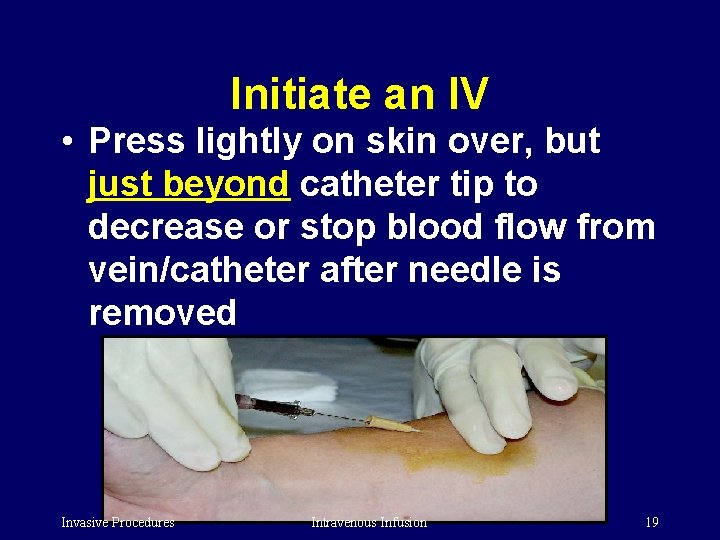
Initiate an IV • Press lightly on skin over, but just beyond catheter tip to decrease or stop blood flow from vein/catheter after needle is removed Invasive Procedures Intravenous Infusion 19
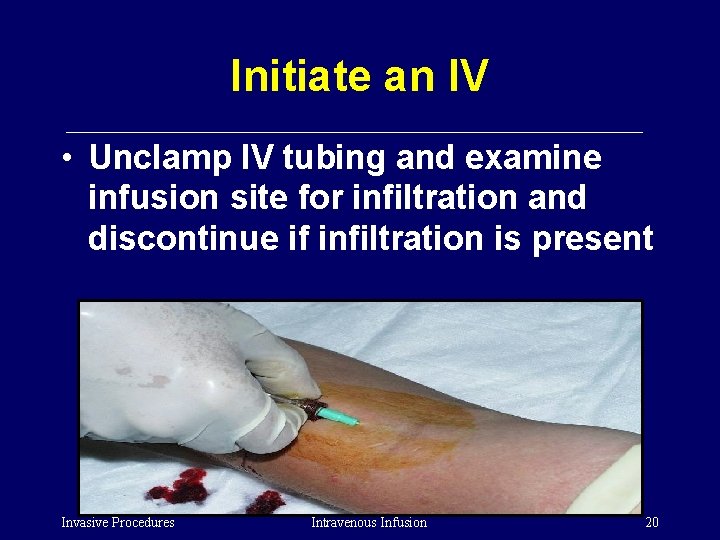
Initiate an IV • Unclamp IV tubing and examine infusion site for infiltration and discontinue if infiltration is present Invasive Procedures Intravenous Infusion 20
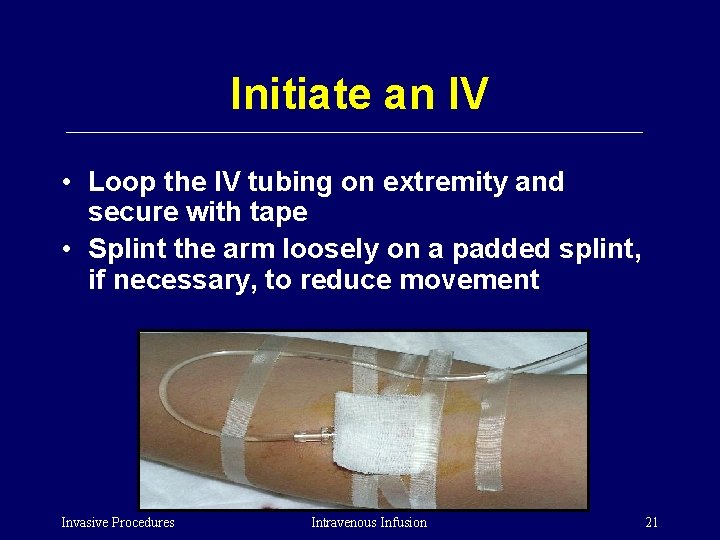
Initiate an IV • Loop the IV tubing on extremity and secure with tape • Splint the arm loosely on a padded splint, if necessary, to reduce movement Invasive Procedures Intravenous Infusion 21
Initiate a Saline Lock • Advantages – Maintains IV access – Eliminates administration of unneeded fluids • Equipment needed – IV catheter – Saline lock adapter plug – Syringe filled with 5 cc sterile saline for flush – Alcohol wipes Invasive Procedures Intravenous Infusion 22
Initiate a Saline Lock • Procedure for establishing a saline lock – Gather equipment – Put on gloves – Insert catheter same as with an IV – Attach saline lock instead of IV tubing – Inject 1 -5 cc of saline into the lock – Secure site and cover with dressing Invasive Procedures Intravenous Infusion 23
Questions? Invasive Procedures Intravenous Infusion