
Initial Steps of Newborn Care Initial Steps of
Initial Steps of Newborn Care
Initial Steps of Newborn Care �Rapid Assessment of the NB �Initial Steps of NB Care �How to determine if additional steps required �What to do if baby has: • Persistent cyanosis/labored breathing �How to use a Pulse Oximeter �How to give supplemental O 2 �When to consider PPV �What to do when meconium stained amniotic fluid present
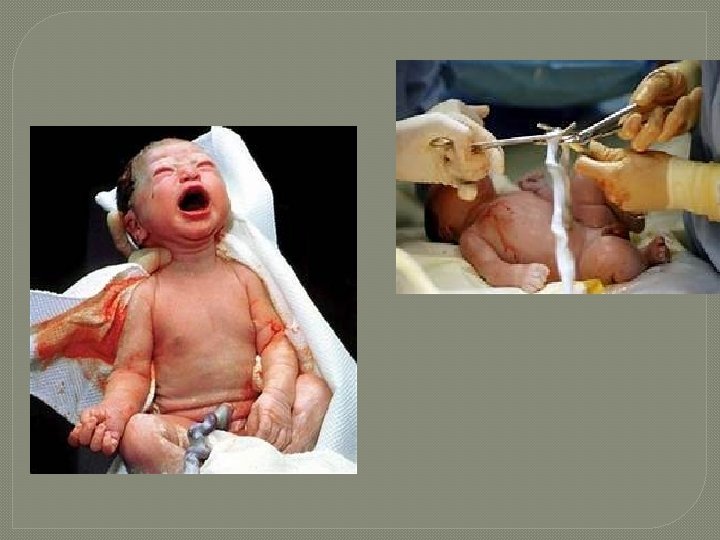
Case 1: Uncomplicated Birth �Healthy woman at 39 wks • uncomplicated single pregnancy �Membranes rupture, amniotic fluid clear �RN assigned to baby checks equipment and supplies. �Baby born, FT, good muscle tone, crying �Positioned on mother skin to skin, covered with worm blanket and dried �RN stimulates her. �Cord clamped at 1 min. Color pink �Successful transition to NB circulation
Case 2: Delayed Transition �Multiparous woman at 39 wks, active labor and ruptured membranes. �After admission mother develops fever, and given antibiotics �Fetal HR monitoring: Category II �NN resuscitation team called • • Introduce team 4 pre birth questions for risk factors Re resuscitation team briefing Equipment check
Case 2: Delayed Transition Baby born • Poor tone, no cry. OB holds in warm blanket, suctions mouth and nose, stimulates, no change in status, cord cut � Brought to radiant warmer • Position/open airway, stimulate. Tone and respiratory effort improves. HR 120 bpm and good BS � 5 min • Central cyanosis and Pulse Ox on right hand < minute specific value, so given supplemental O 2 � 10 min • Breathing regularly, Pulse Ox in normal range, O 2 stopped • Placed skin to skin on mother and monitored • Team conducts short debriefing: preparation, team work, communication �
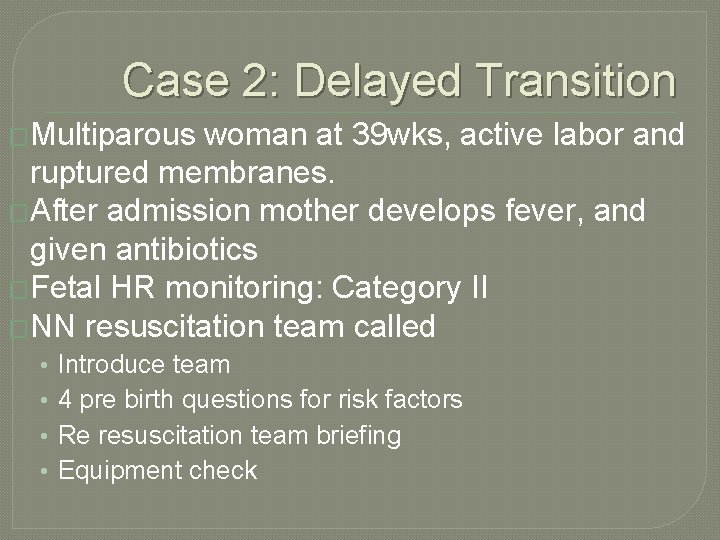
Time of birth and clamping the umbilical cord �Evidence supports clamping at 30 -60 sec for most vigorous term and preterm NB �If placental circulation not intact, cord should be clamped immediately
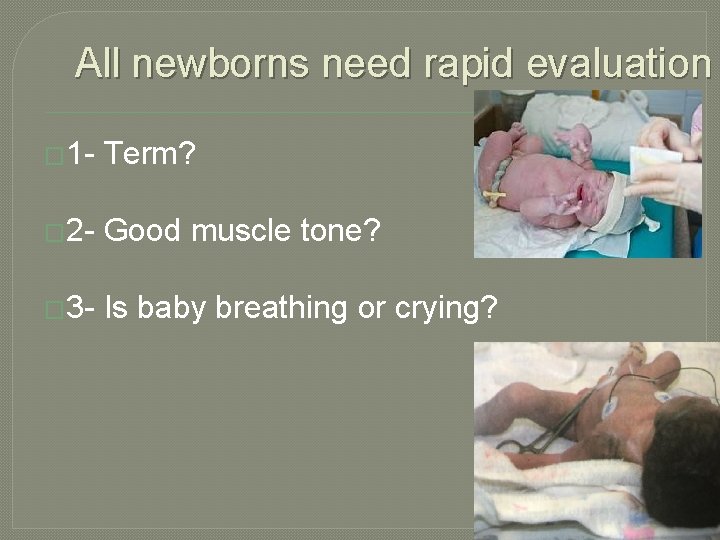
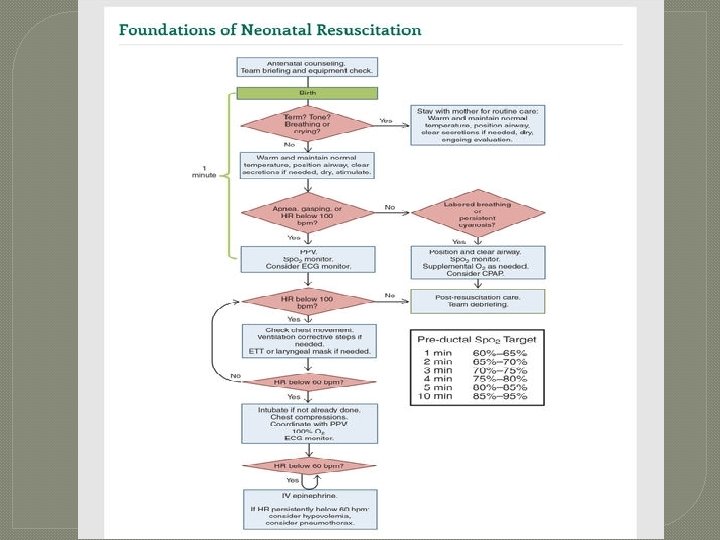
All newborns need rapid evaluation � 1 - Term? � 2 - Good muscle tone? � 3 - Is baby breathing or crying?
Initial Steps for Newborn Care �Provide warmth �Position head and neck �Clear secretions, if needed �Dry �Stimulate
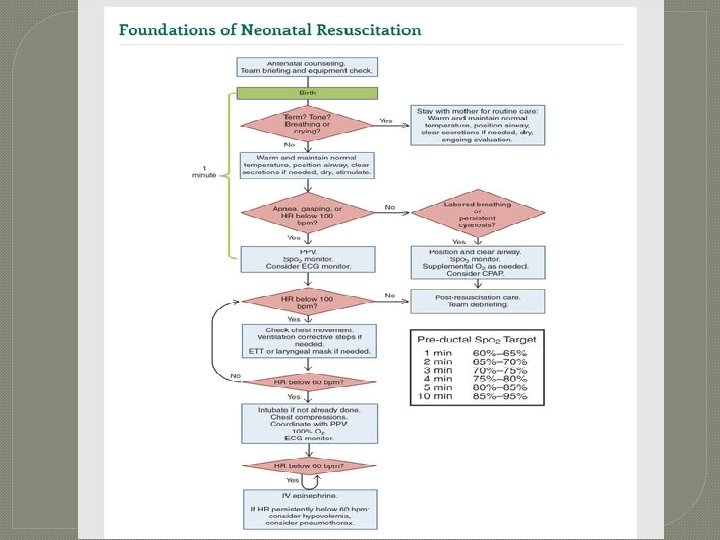
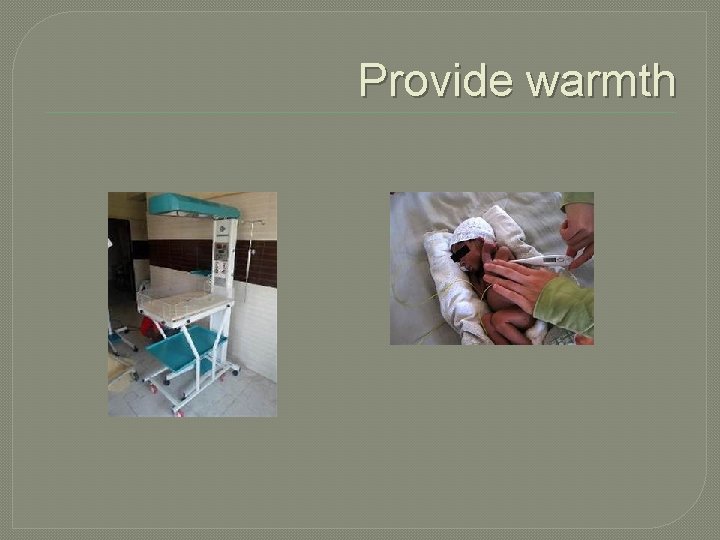
Provide warmth
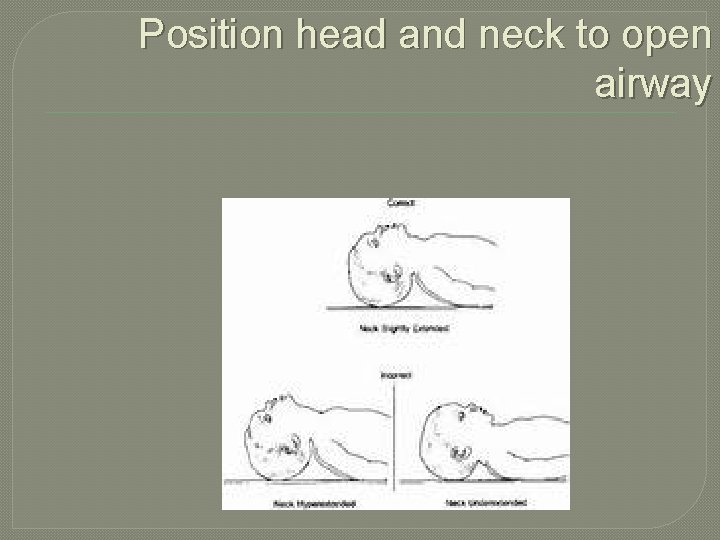
Position head and neck to open airway
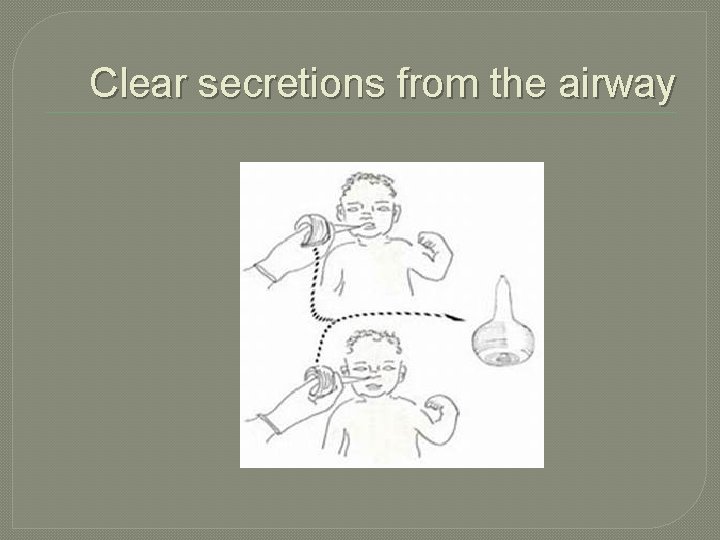
Clear secretions from the airway
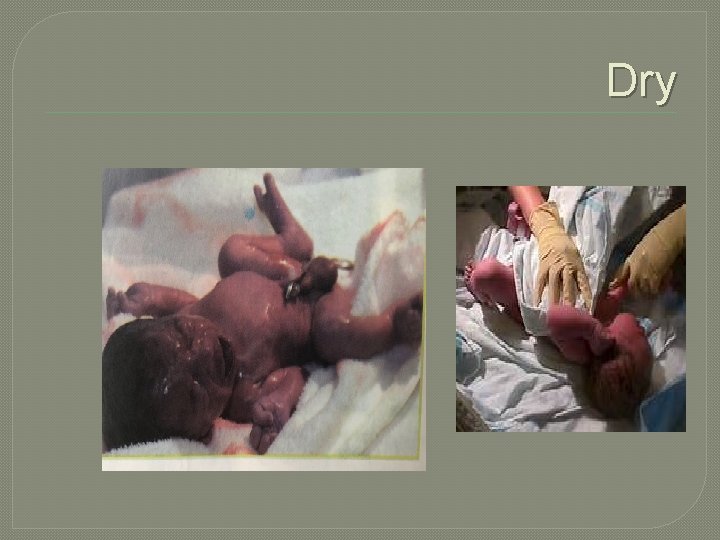
Dry
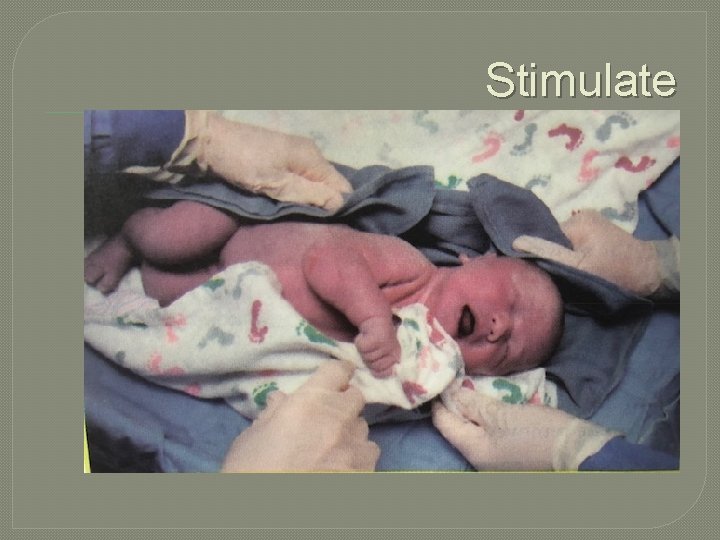
Stimulate
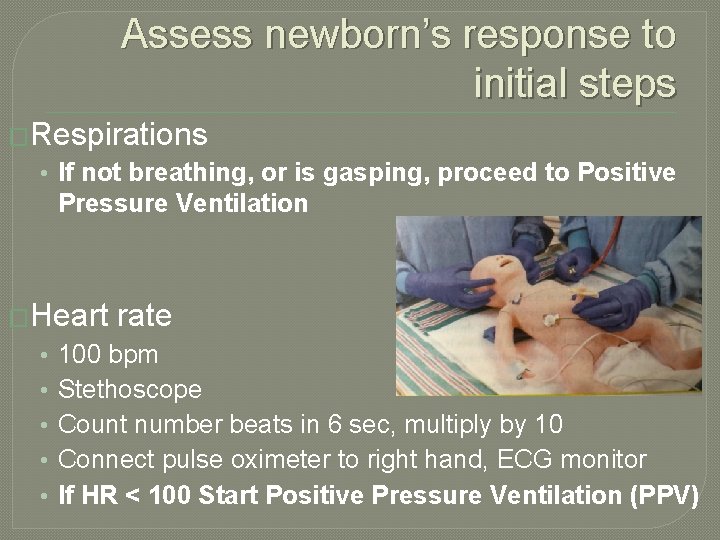
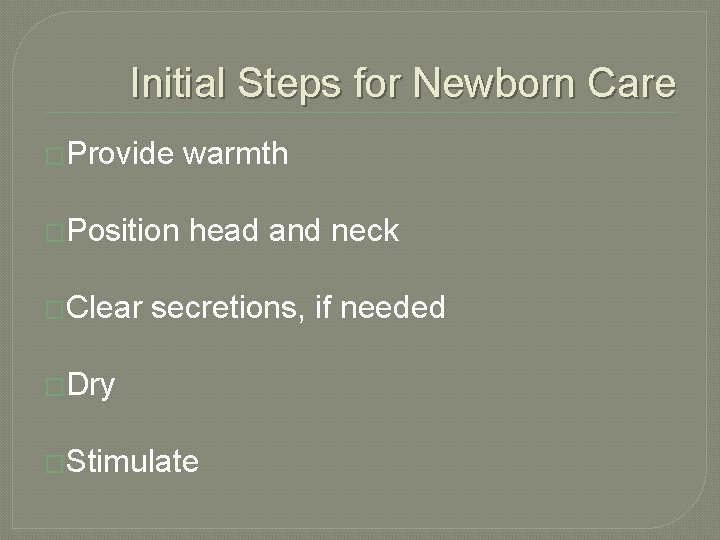
Assess newborn’s response to initial steps �Respirations • If not breathing, or is gasping, proceed to Positive Pressure Ventilation �Heart • • • rate 100 bpm Stethoscope Count number beats in 6 sec, multiply by 10 Connect pulse oximeter to right hand, ECG monitor If HR < 100 Start Positive Pressure Ventilation (PPV)
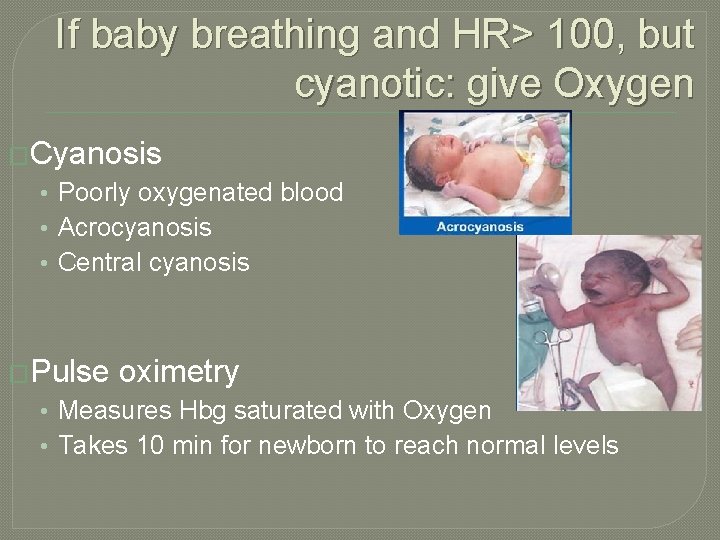
If baby breathing and HR> 100, but cyanotic: give Oxygen �Cyanosis • Poorly oxygenated blood • Acrocyanosis • Central cyanosis �Pulse oximetry • Measures Hbg saturated with Oxygen • Takes 10 min for newborn to reach normal levels
Pulse Oximetry �When resuscitation �Confirm central cyanosis �When giving supplemental O 2 �When giving PPV �Pre ductal: right wrist/hand • Artery to right arm attaches to aorta before the ductus arteriosus • Values change after birth

Pulse Oximetry
When is supplemental O 2 given? �Oximeter reading is < target range for baby’s age in minutes �If baby spontaneously breathing • Free flowing oxygen �O 2 tubing �O 2 mask �Flow inflating bag and mask �T-piece resuscitator and mask �Open reservoir on self inflating bag �If baby not breathing or gasping • PPV
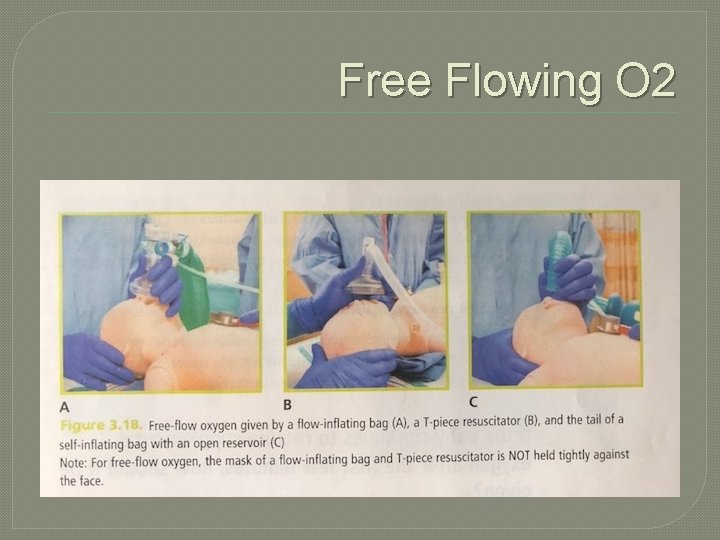
Free Flowing O 2

Adjusting O 2 Concentration �Goal • Maintain baby’s minute specific O 2 saturation • Prevent hypoxia and hyperoxia • �Adjust delivered O 2 using • Compressed air and O 2 • Oxygen blender (21 -30%) • Flowmeter (adjust to 10 L/min)

What if baby has labored breathing or persistently low O 2 saturation? �CPAP: continuous positive airway pressure • Continuous low gas pressure to keep a spontaneously breathing baby’s lungs open • Baby must be breathing and have HR > 100 bpm • Flow inflating bag • T-piece resuscitator with mask • • Both tightly fitted to baby’s face
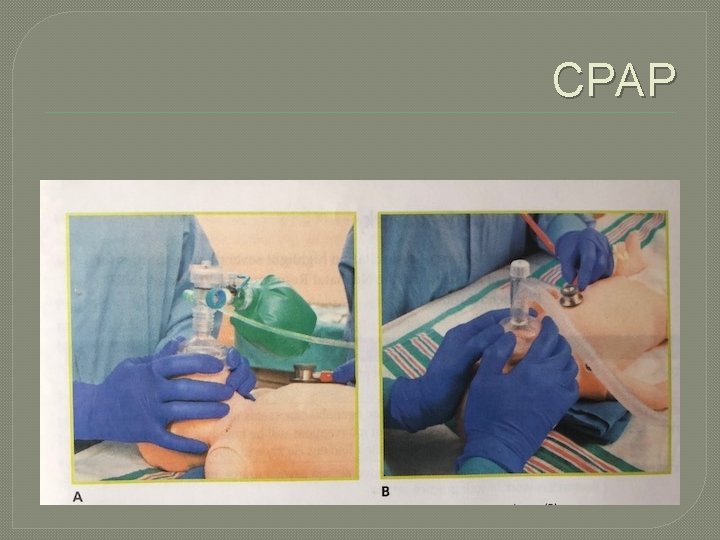
CPAP
Meconimum stained amniotic fluid �Vigorous Newborn • Good respiratory effort and muscle tone • Stay with mother, initial steps • Gently bulb suction mouth and nose �Non-vigorous Newborn • Bring to radiant warmer for initial steps • Bulb suction mouth and nose • If baby not breathing, or HR < 100 bpm after initial steps, proceed to PPV
Case Scenario �You are called to attend a vaginal birth. The mother is in active labor with ruptured membranes. �How would you prepare for this baby?
- Slides: 27