
Initial Burn Care Lee D Faucher MD FACS
Initial Burn Care Lee D. Faucher, MD FACS Director UW Burn Center Associate Professor of Surgery & Pediatrics
Objectives • Discuss burn pathophysiology • Outline treatment modalities • Understand why some treatments better than others
What is a burn? • Cutaneous injury caused by heat, electricity, chemicals, friction, or radiation.
First Degree Burns • • • Epidermis only No blisters Erythema Mild to absent systemic response Heals in 3 -4 days
Superficial partial thickness • • Papillary dermis Blisters Homogenous pink Painful, hypersensitive Blanches Hair usually intact Does not scar, may pigment differently
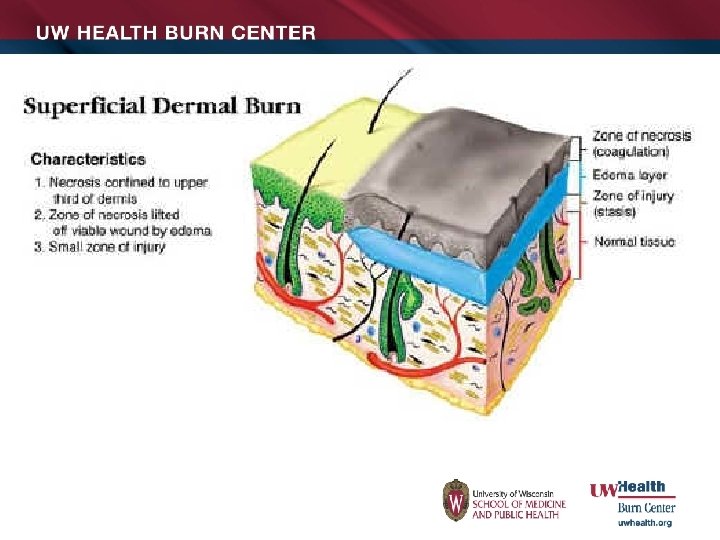
Sup 2 nd degree
Deep partial thickness • • Reticular dermis Mottled red and white Not painful to pinprick or pressure Does not blanch Heals > 3 weeks Usually scars Need to excise and graft
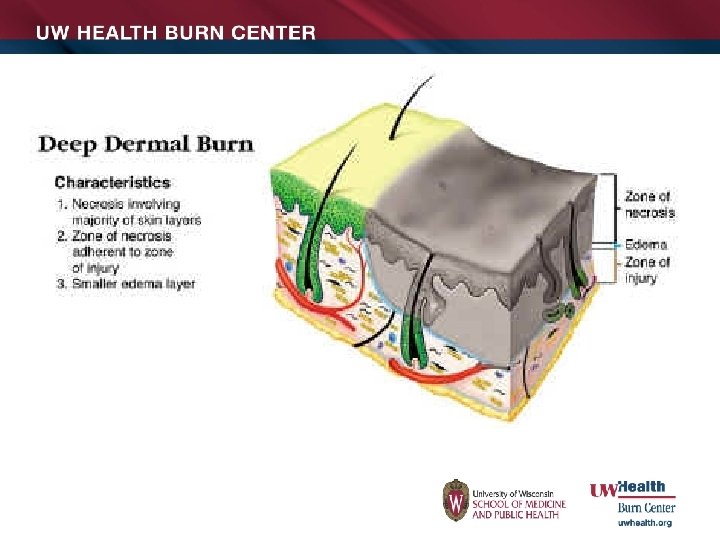
Deep dermal
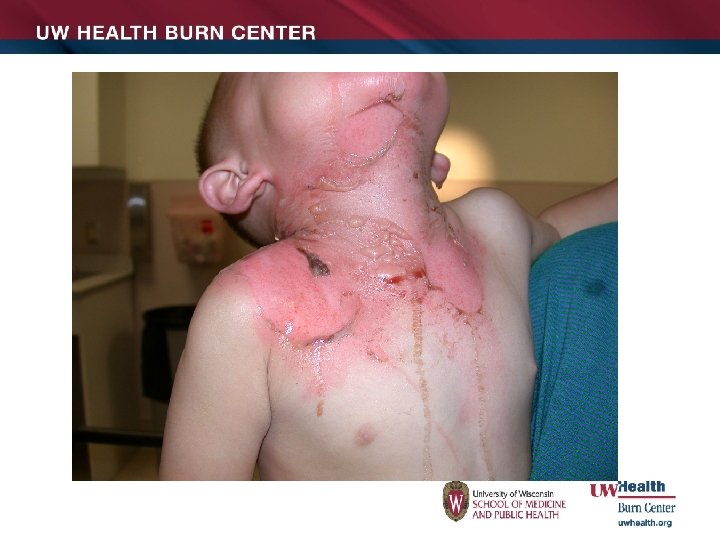
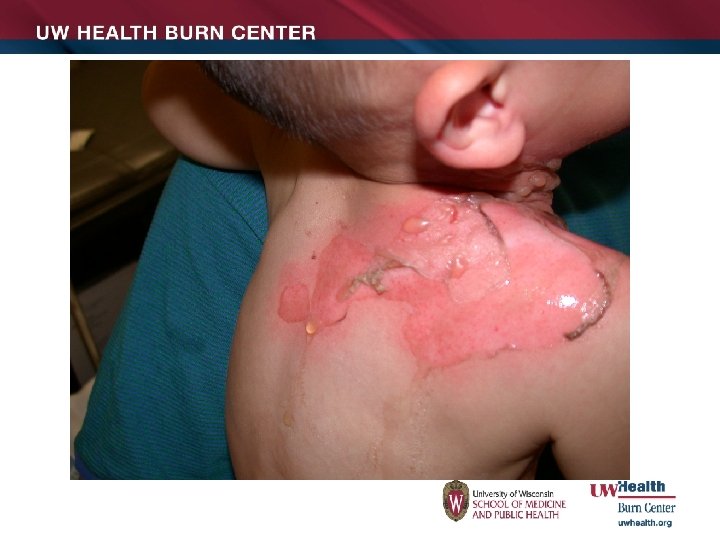
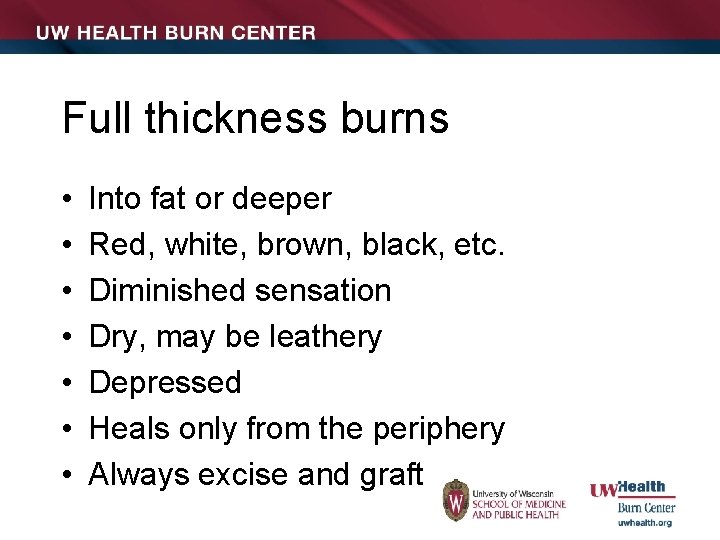
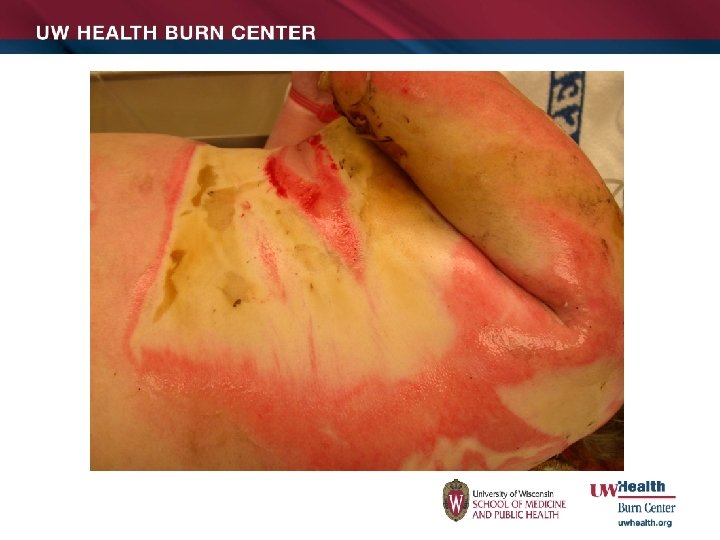
Full thickness burns • • Into fat or deeper Red, white, brown, black, etc. Diminished sensation Dry, may be leathery Depressed Heals only from the periphery Always excise and graft

Full-thickness
Etiology
Types of burns
Where do burns occur
Circumstances of injury
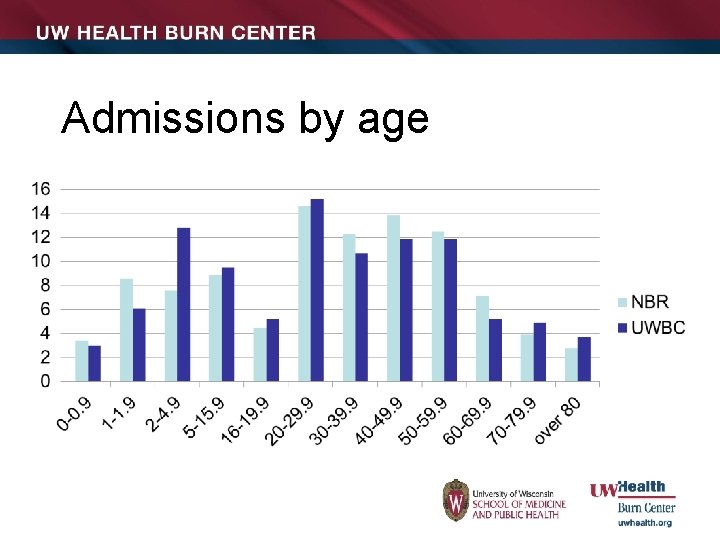
Admissions by age
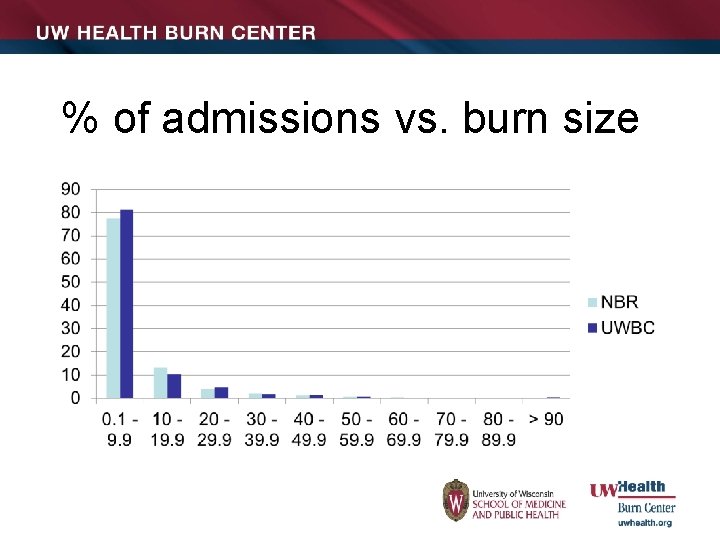
% of admissions vs. burn size
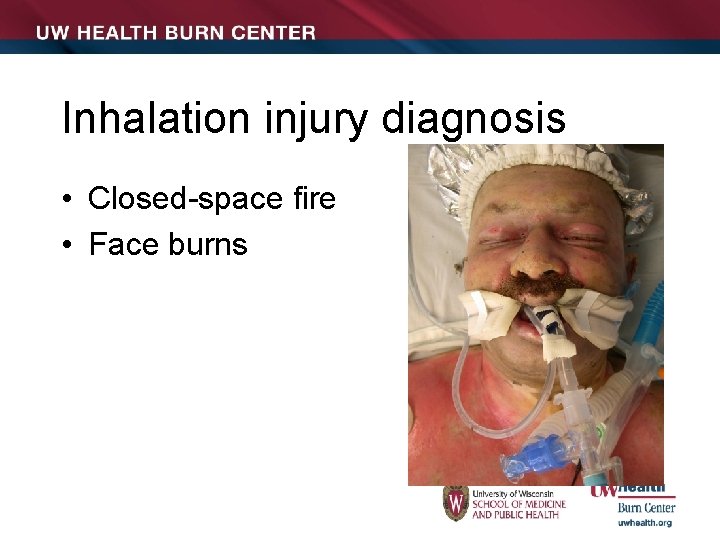
Inhalation injury diagnosis • Closed-space fire • Face burns
Terminology • Inhalation injury “nonspecific” – Thermal injury • Upper airway – Local chemical irritation • Throughout airway – Systemic toxicity • CO
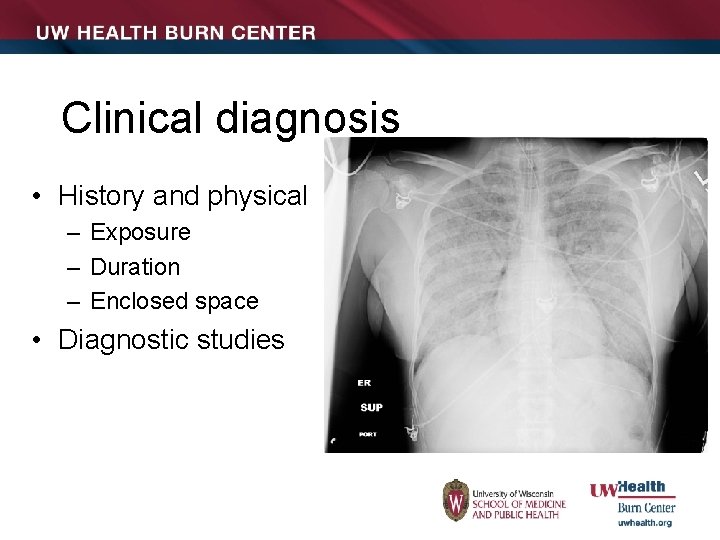
Clinical diagnosis • History and physical – Exposure – Duration – Enclosed space • Diagnostic studies
Other signs and symptoms • • Lacrimation Cough Hoarseness Dyspnea Disorientation Anxiety Wheezing • Conjunctivitis • Carbonaceous sputum • Singed hairs • Stridor • Bronchorrhea
Poison management = CO • 500 unintentional deaths each year • Persistent Neurologic Sequelae – May improve over time • Delayed Neurologic Sequelae – Relapse later
Poison management = CO • Treatment – CO level means nothing to predict outcome – Length of hypoxia is the determining factor – Oxygen – HBO • No studies show benefit in treatment
Pathophysiology • The main factor responsible for mortality in thermally injured patients • Carbon monoxide the most common toxin – 200 times greater affinity – Competitive inhibition with cytochrome P 450
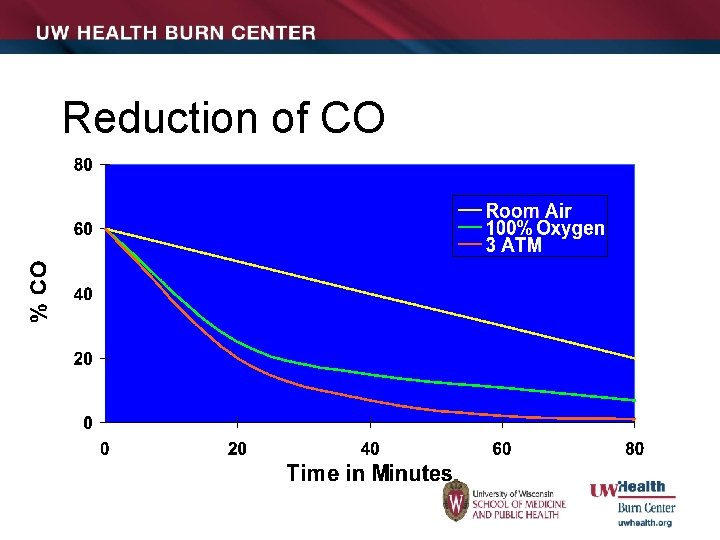
Reduction of CO
Objective data • Bronchoscopy – Edema – Infraglottic soot – Hyperemia – Mucosal sloughing • Sensitivity near 100% under IDEAL circumstances
Grading of injury • No reliable indicators of progressive respiratory failures • No studies have found any correlation with initial findings and clinical outcomes and progress
Resuscitation
Field resuscitation • Start IV with LR, in burn OK – < 6 years = 125 m. L/hr – 6 -13 years = 250 m. L/hr – >13 years = 500 m. L/hr
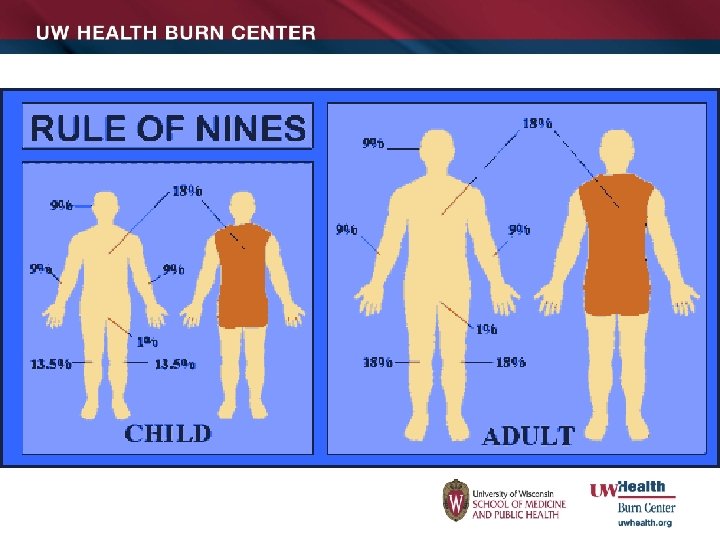
Rule of Nines
Lund and Browder Chart
IV access • • • < 15% TBSA – oral resuscitation 15 – 40% TBSA – one large bore IV > 40% -- two large bore IV’s should be in the upper extremities Suture IV’s started through burns
![Crystalloid solution • Ringer’s Lactate – [Na+] 130 m. Eq (serum 140 m. Eq)](http://slidetodoc.com/presentation_image_h2/e1684e761deb01cb14a9bb15f0b68b7c/image-35.jpg "Crystalloid solution • Ringer’s Lactate – [Na+] 130 m. Eq (serum 140 m. Eq)")
Crystalloid solution • Ringer’s Lactate – [Na+] 130 m. Eq (serum 140 m. Eq) – Osmolality 272 m. Osm (serum 300 m. Osm) • Advantages of crystalloid – Effective in maintaining perfusion – Costs less than colloids – Can be mobilized with a diuretic
Resuscitation first 24 hours • Baxter formula – 4 m. L/kg/% TBSA burned • Give ½ the volume in first 8 hours and other ½ over next 16 hours.
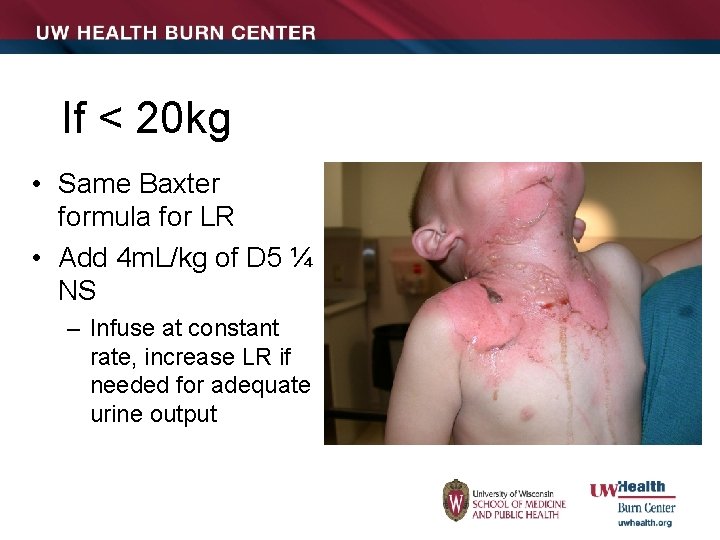
If < 20 kg • Same Baxter formula for LR • Add 4 m. L/kg of D 5 ¼ NS – Infuse at constant rate, increase LR if needed for adequate urine output
Monitor urine output • Place foley if > 20% TBSA • Urine output goal – 2 m. L/kg/hr very young – 1 m. L/kg/hr child – 0. 5 m. L/kg/hr adult • Diuretics are NEVER used to increase urine output • Increase urine output to > 100 m. L/hr if pigment present
How to do this • Maintain continuous IV fluid replacements • AVOID boluses • Only bolus IV fluids if hypotensive
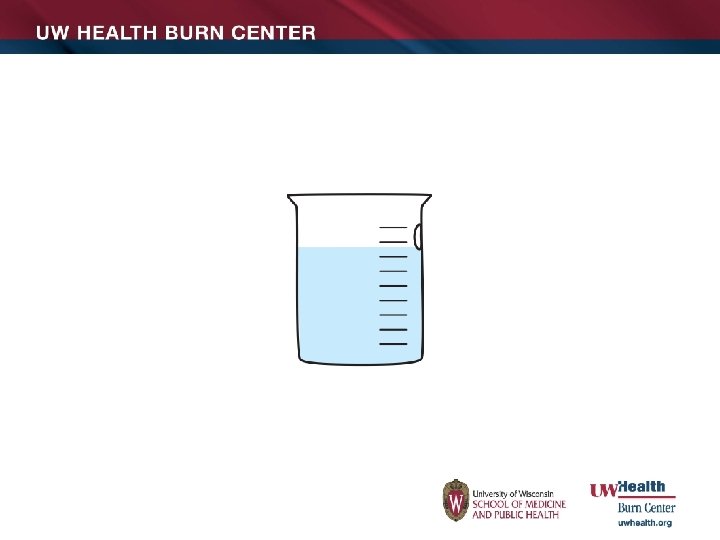
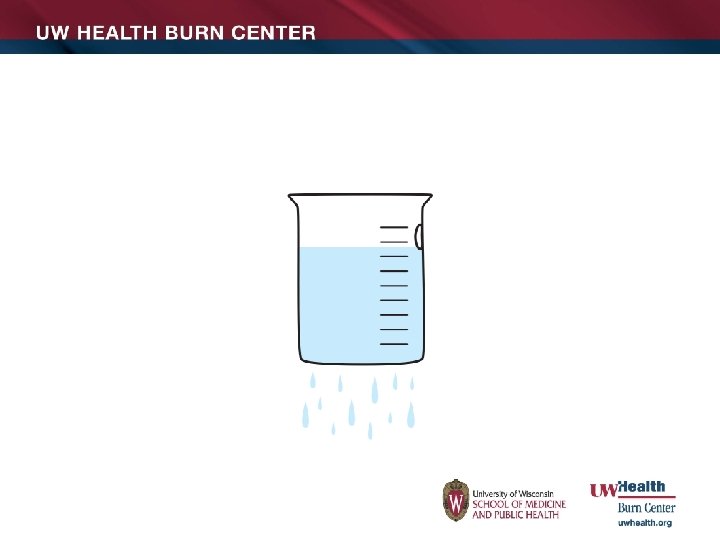
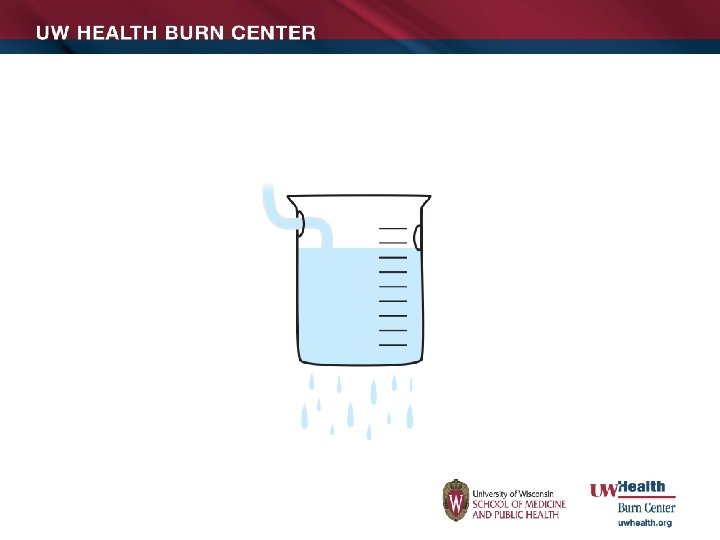
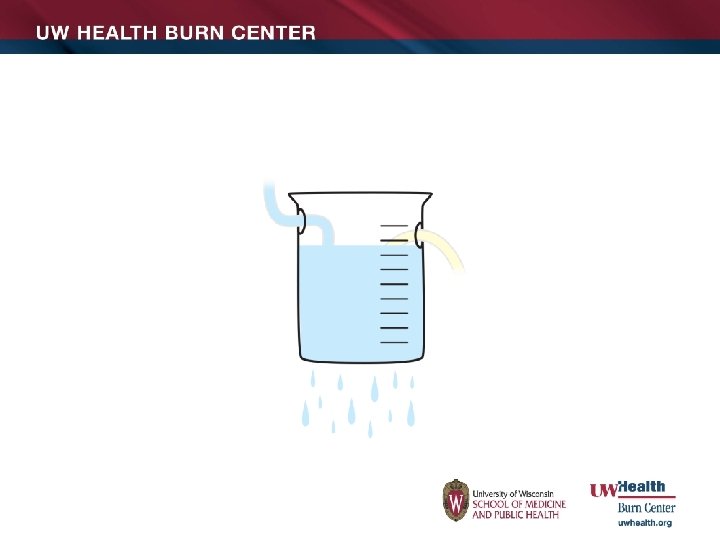
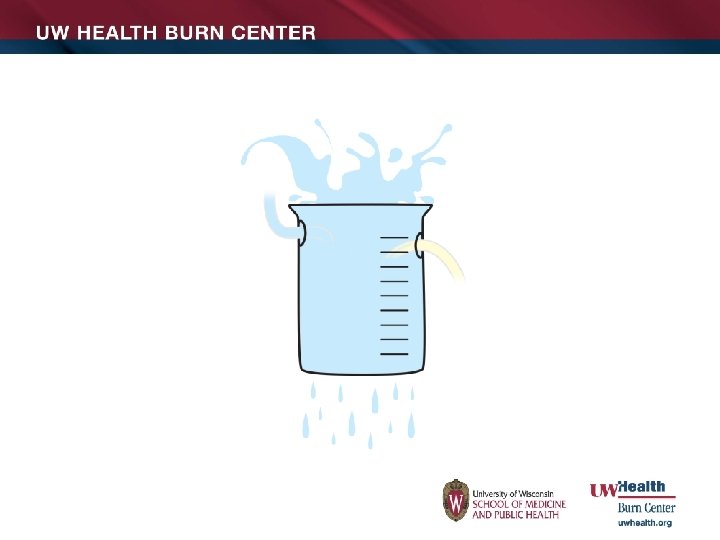
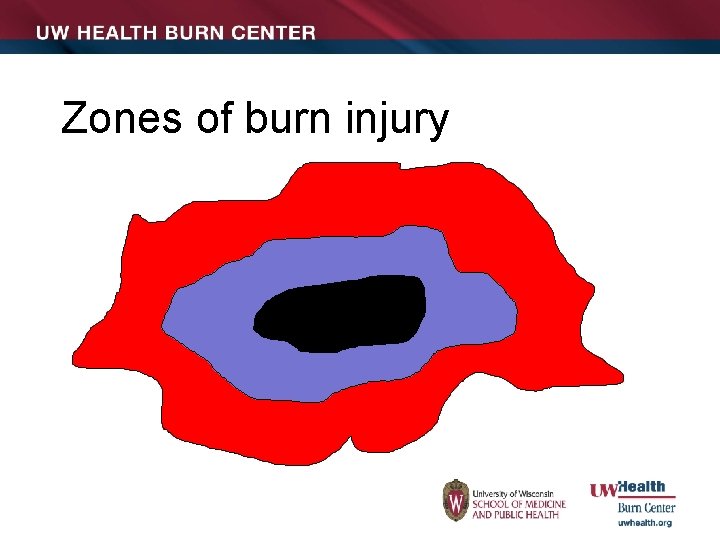
Zones of burn injury
Pain control
Non-medication methods • Cover burns with plastic wrap – Wet dressings will stick and cause more pain – Other burn dressings are expensive and not necessary – Quik Clot is expensive and will not provide any patient benefit
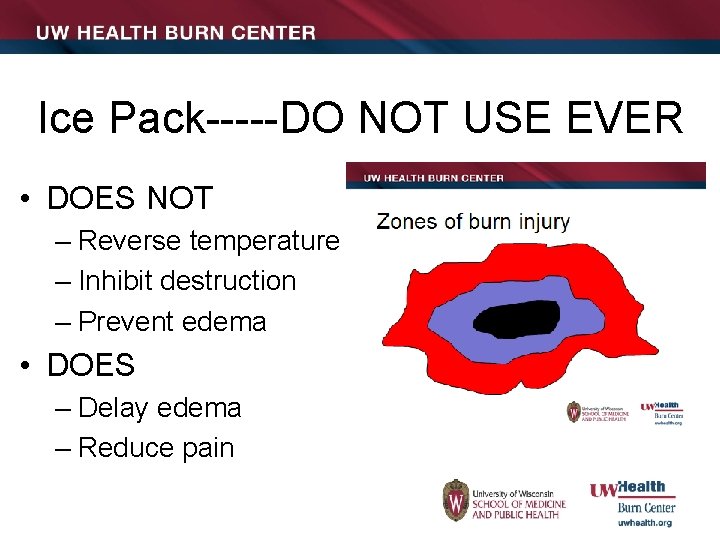
Ice Pack-----DO NOT USE EVER • DOES NOT – Reverse temperature – Inhibit destruction – Prevent edema • DOES – Delay edema – Reduce pain
Medication • Medications – Opioids – Narcotics – Pain medications – IV Analgesia
Summary • Airway • Circulation/Resuscitation • Pain control
Questions?
- Slides: 51