
Initial assessment SUZIE SIMPSON Learning objectives To identify
Initial assessment SUZIE SIMPSON
Learning objectives To identify what is involved in the initial assessment process To understand the reason for each part of the process To identify clinical methods to assess state of health To explain what these clinical methods can result in
Recap: Initial assessment The first and most crucial thing to do is make an initial decision about whether the animal is requiring assistance to survive, or just needs assistance. Initial assessment must take into account the species, age and sex of the animal. A decision needs to be made as early as possible about the best option for the animal. These include: Release: Immediate return to wild (e. g. for a fit and healthy animal which has been trapped for a short time but is uninjured) Rapid treatment and release within hours to days (e. g. for a mildly concussed animal) Treatment and release within days to weeks (e. g. a badger with snare wounds) Prolonged rehabilitation required prior to release (e. g. fracture management, hand-reared young) Permanent care Euthanasia

Initial assessment It is important to remember whenever an assessment is being made that: Observe without handling and without it knowing (unless in immediate danger) Assess if intervention needed Do you have the training and resources to deal with the rehabilitation needed (if not refer to a suitably trained or well equipped organization) Transfer animal accordingly ‘Triage’ (French meaning ‘sorting’) term used to basically categorize animal Ø "wait for treatment" Ø "immediate attention" Ø "unlikely to survive - do not attempt treatment" (euthanasia is required for animals in this category).
Group task Think of wildlife rescue scenarios which would require each of the following decisions: Immediate return to wild. Rapid treatment and release (hours-days) Treatment and release (days-weeks) Prolonged rehabilitation Permanent care Euthanasia
Assessment methods Clinical tests Vet/qualified technician health check to assess physical state i. e. feeling the organs, checking movement, bones Blood tests Either tested in house (if equipment available) or send away to labs Urine analysis Dip stick method Faecal analysis Can check visually or send away h c r a e s Re task 15 mins
Urinary, blood and faecal analysis All need further investigation Urine and faecal samples collected whilst animal is an in-patient Urine tests carried out using dipsticks and microscopic analysis Colour, consistency and frequency can be indicators for various illnesses/conditions Blood taken by a vet and analysed either in-house or sent away
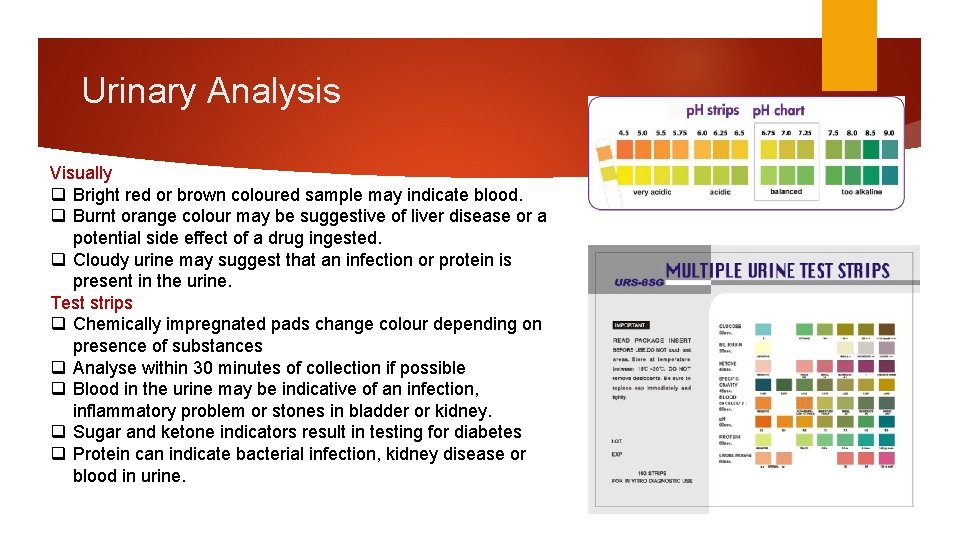
Urinary Analysis Visually q Bright red or brown coloured sample may indicate blood. q Burnt orange colour may be suggestive of liver disease or a potential side effect of a drug ingested. q Cloudy urine may suggest that an infection or protein is present in the urine. Test strips q Chemically impregnated pads change colour depending on presence of substances q Analyse within 30 minutes of collection if possible q Blood in the urine may be indicative of an infection, inflammatory problem or stones in bladder or kidney. q Sugar and ketone indicators result in testing for diabetes q Protein can indicate bacterial infection, kidney disease or blood in urine.
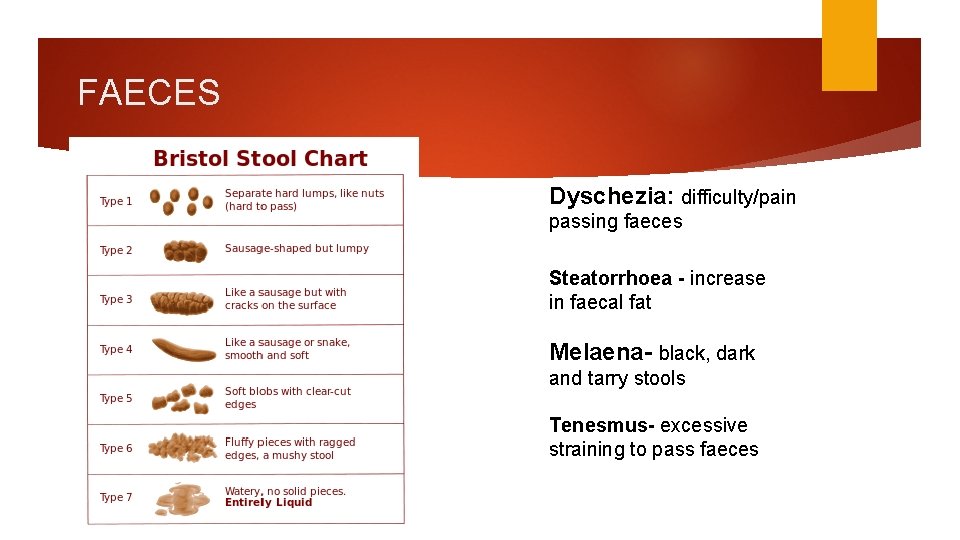
FAECES Dyschezia: difficulty/pain passing faeces Steatorrhoea - increase in faecal fat Melaena- black, dark and tarry stools Tenesmus- excessive straining to pass faeces
Results: So many questions to answer What will the results determine? Treatment? Euthanasia? Long term rehab? Short term rehab? Release? Altered accommodation dependent on results? i. e. quarantine, dry housing, smaller/larger housing eg. Bone breaks/restricted movement
Intensive care, hospitalisation, recovery, rehabilitation Immediate treatment, intensive care and monitoring, can be post surgery Kept in hospital to be treated The process of getting back to normal after an illness or surgery The process between getting the animal

Any questions?
- Slides: 12