
Inherited diseases To show examples of diseases inherited
- Slides: 23
Inherited diseases �To show examples of diseases inherited through dominant and recessive alleles. �To be able to correctly predict the outcome of various combinations of parent genotypes.
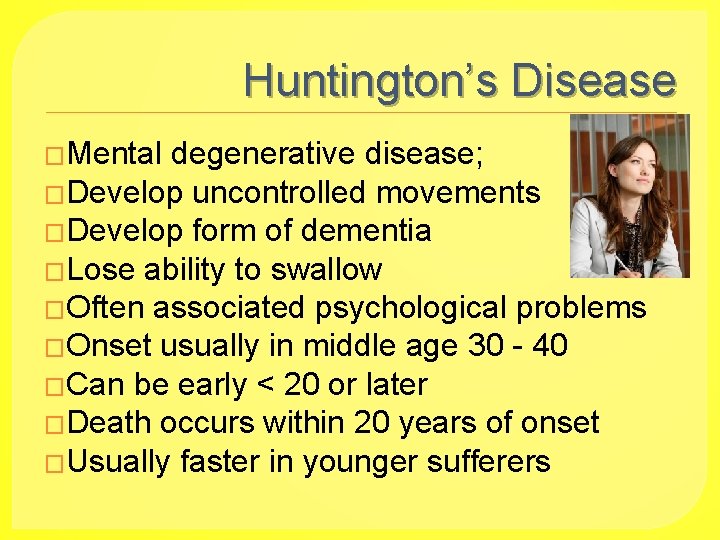
Huntington’s Disease �Mental degenerative disease; �Develop uncontrolled movements �Develop form of dementia �Lose ability to swallow �Often associated psychological problems �Onset usually in middle age 30 - 40 �Can be early < 20 or later �Death occurs within 20 years of onset �Usually faster in younger sufferers
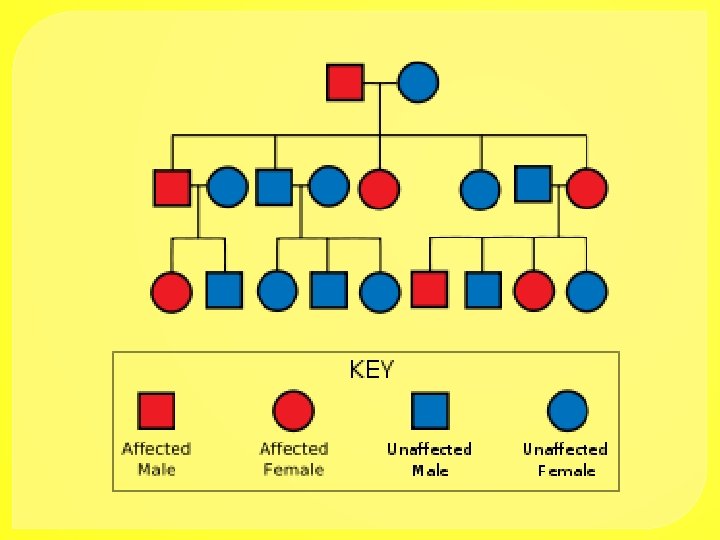
Inheritance � It is autosomal dominant � Need only one allele from one parent � If you have the gene you will inherit the disease; � Can get worse from generation to generation � Especially if carrier is father � Some people have only very mild version with no obvious signs � Thus a person with no family history can develop the disease
Pathology � Mutant gene affects the production of a protein called Huntingtin; � Role of Huntingtin in body not well understood; mostly present in brain and testes � Interacts with proteins involved in transcription, cell transport and cell signaling � May be important in gene transcription and the development of nerve cells especially in embryos � Mutant Huntingtin damages the nerve cells in the brain gradually causing the development of symptoms
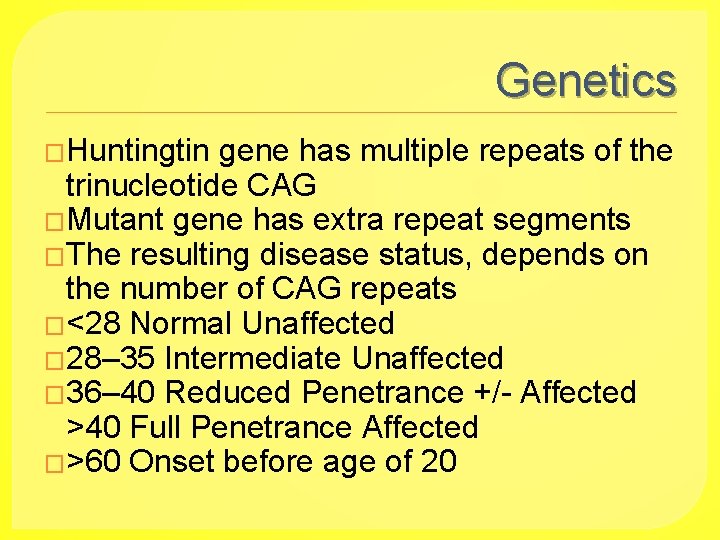
Genetics �Huntingtin gene has multiple repeats of the trinucleotide CAG �Mutant gene has extra repeat segments �The resulting disease status, depends on the number of CAG repeats �<28 Normal Unaffected � 28– 35 Intermediate Unaffected � 36– 40 Reduced Penetrance +/- Affected >40 Full Penetrance Affected �>60 Onset before age of 20
What this means �An unmutated gene has less than 28 – most people �Full penetrance means you will have it and have a 50% change of passing it to your child �Intermediate will either be weak and very late onset or not at all �Often noticed
Passing it on �Gene is unstable �Especially in spermatogenesis it can get longer �How is this relevant to which parent has it? �How might this affect families with intermediate genes?
Prevalence � 5 – 10 cases per 100 000 people world wide �Much commoner in people of western European origin – mixed race 7 per 100 000 �Very rare in Asians and Africans 0. 1 per 100 000 �Clusters in certain isolated populations: Lake Maracaibo Venezuela, 700 per 100 000.
Treatment and Cure �No cure �Treatment can alleviate symptoms �Some medications to reduce involuntary actions �Some mediations to tackle psychological issues.
Cystic Fibrosis � Also known as mucoviscidosis (sticky mucus) � Developmental disease � Lungs do not develop properly � Digestive system does not absorb food � Pancreas stops functioning � Observed in infancy � Untreated leads to very early death � Treated increases survival but likely to reduce growth � Some people seem very healthy � Others seriously compromised
Complications �Many respiratory infections �Poor growth due to malnutrition �Diabetes due to damage to pancreas �Intestinal blockage in newborns �Sterility due to blockage of sperm duct (sperms fine) �Cirrhosis of the liver
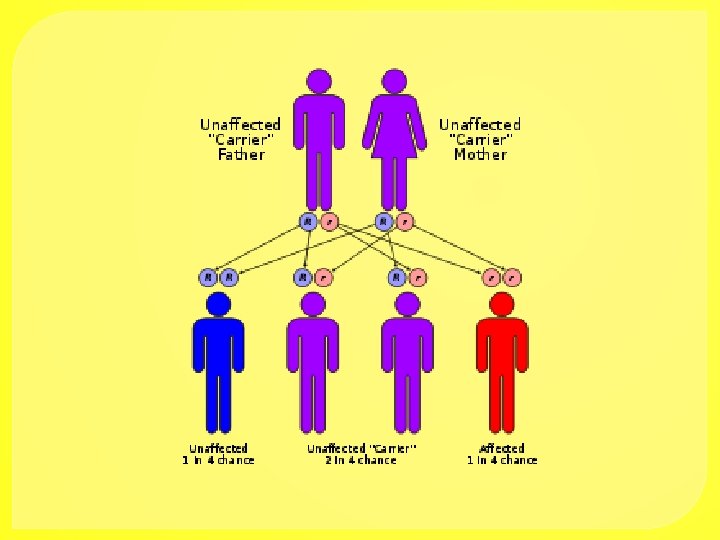
Inheritance �This is a recessive disease �This means you must have both alleles to have the disease; �If you have one allele you are a carrier and do not show the disease; �Both parents must be carriers for a child to have a disease �Chance of having disease is 1 in 4
Pathology �CF is caused by a mutation in the gene for the protein cystic fibrosis transmembrane conductance regulator (CFTR); �This protein regulates the components of digestive juices, sweat and mucus; �Only one healthy gene is needed for this to function
Genetics �There are over 1500 possible mutations to the CFTR gene that can lead to CF �Over 60% of cases worldwide are due to one specific mutation; �Screening usually tests for up to 32 different mutations, but this does mean that some cases can be missed by screening.
Prevalence � Commonest in western European Caucasians (1 in 25 are carriers) � Highest prevalence in Ireland � Non European populations much rarer and usually a different mutation (1 in 46 Hispanics in US, 1 in 65 African Americans) � In 1959 median age of survival was 6 months � The median survival age in Canada has increased from 24 in 1982 to 47. 7 in 2007
Treatment and cure � Possible cure through introduction of gene to airways – early stages � Treatment of lung diseases through antibiotics � Preventative use of antibiotics � Physiotherapy to help clear lungs of fluid � Replacement of digestive enzymes (pills) � Insulin � Healthy diet and exercise � May need lung, liver and pancreas transplants � Assisted reproduction
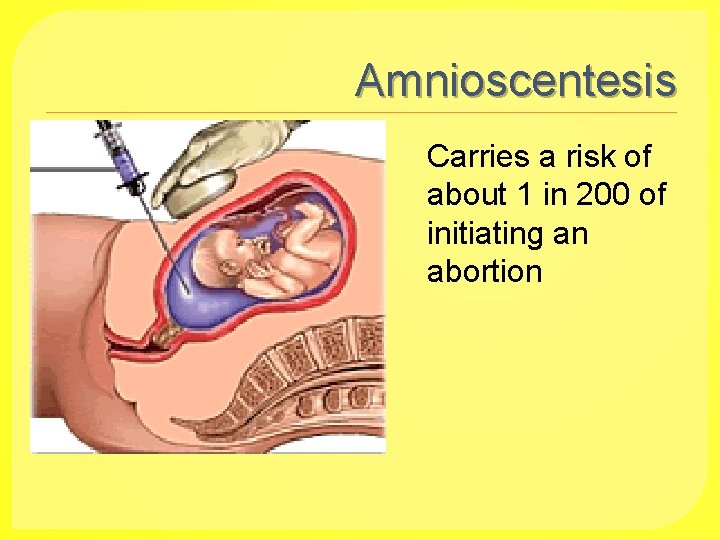
Prevention � At risk adults may get genetic testing. � Expensive so usually one parent done at first (many mutations screened for) � Pre-implantation genetic diagnosis � Testing of foetus in utero by amniocentesis or chorionic villus sampling of placenta � Screening of new born: test sweat � Parents may notice baby tastes salty � Worst option wait till respiratory complications and poor growth show; � Best prognosis with earliest diagnosis
Amnioscentesis Carries a risk of about 1 in 200 of initiating an abortion
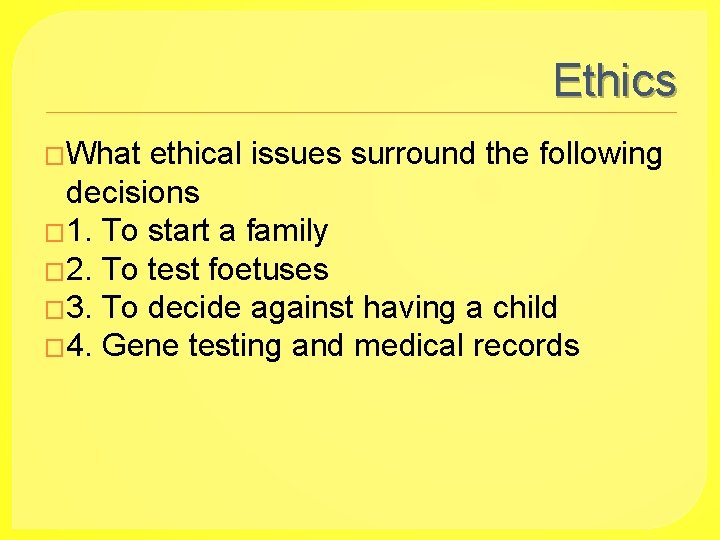
Ethics �What ethical issues surround the following decisions � 1. To start a family � 2. To test foetuses � 3. To decide against having a child � 4. Gene testing and medical records
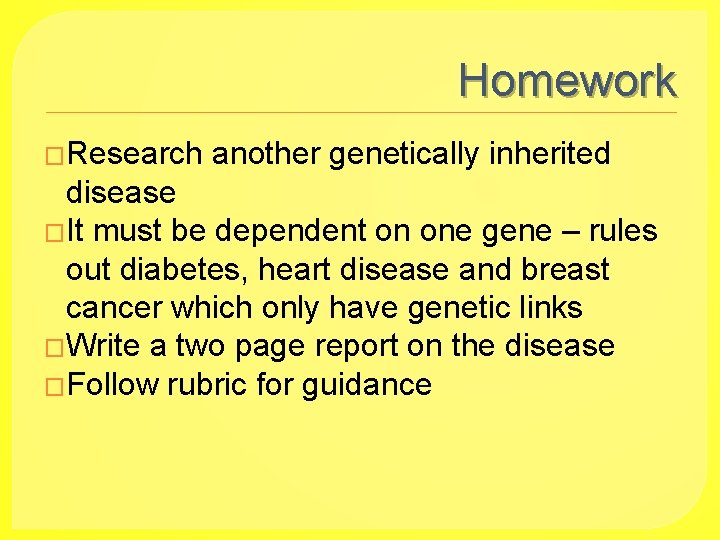
Homework �Research another genetically inherited disease �It must be dependent on one gene – rules out diabetes, heart disease and breast cancer which only have genetic links �Write a two page report on the disease �Follow rubric for guidance
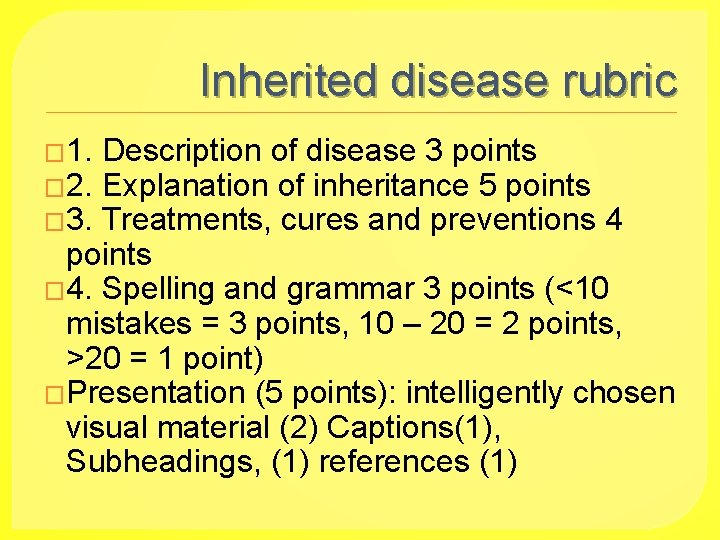
Inherited disease rubric � 1. Description of disease 3 points � 2. Explanation of inheritance 5 points � 3. Treatments, cures and preventions 4 points � 4. Spelling and grammar 3 points (<10 mistakes = 3 points, 10 – 20 = 2 points, >20 = 1 point) �Presentation (5 points): intelligently chosen visual material (2) Captions(1), Subheadings, (1) references (1)