
Inherited chromosomallyintegrated human herpesvirus 6 epidemiology and disease
- Slides: 12
Inherited chromosomally-integrated human herpesvirus 6: epidemiology and disease associations Ruth Jarrett MRC-University of Glasgow Centre for Virus Research
Human herpesvirus 6 • Two distinct but closely related herpesviruses – HHV-6 A and HHV-6 B • Most individuals are infected in early childhood • Virus persists for life and can be reactivated • HHV-6 B more prevalent in Europe, the USA and Japan • HHV-6 A relatively more common in Africa?
HHV-6 and disease • Primary infection by HHV-6 B causes roseola infantum and common cause of febrile seizures • Reactivation rarely problematic in immunocompetent individuals • In immunosuppressed individuals reactivation is associated with encephalitis, colitis, hepatitis etc. • Many other associations – mesial temporal lobe epilepsy, MS, myocarditis and cardiomyopathy, low Bayley scores – reported but not proven
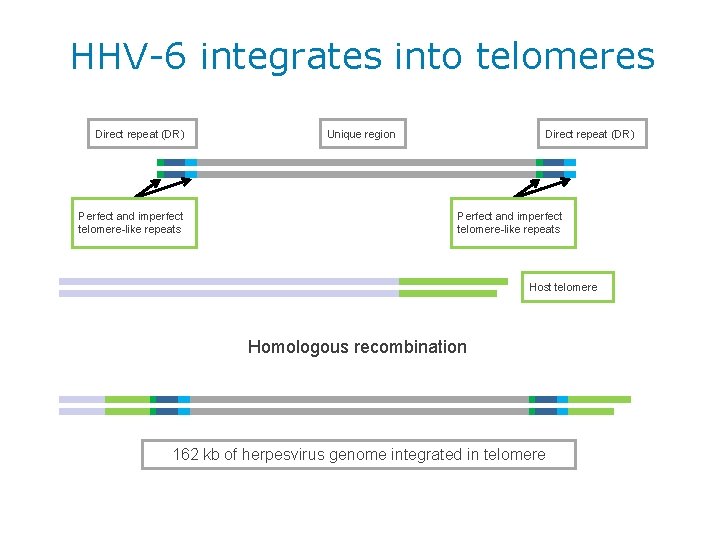
HHV-6 integrates into telomeres Direct repeat (DR) Perfect and imperfect telomere-like repeats Unique region Direct repeat (DR) Perfect and imperfect telomere-like repeats Host telomere Homologous recombination 162 kb of herpesvirus genome integrated in telomere
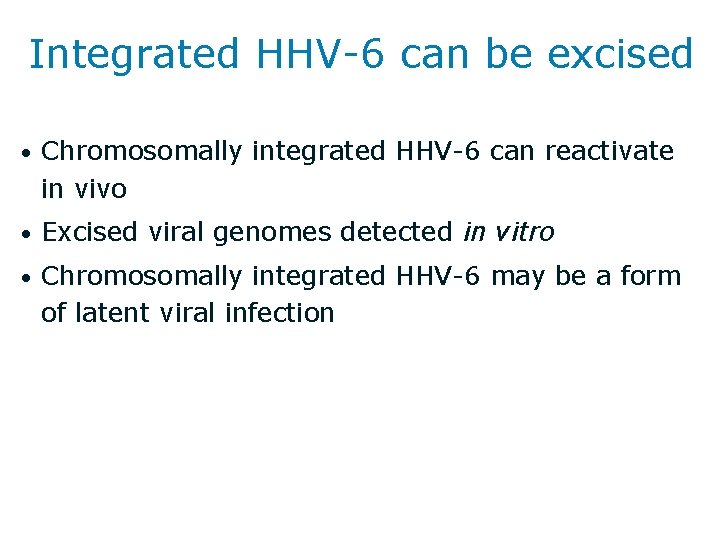
Integrated HHV-6 can be excised • Chromosomally integrated HHV-6 can reactivate in vivo • Excised viral genomes detected in vitro • Chromosomally integrated HHV-6 may be a form of latent viral infection
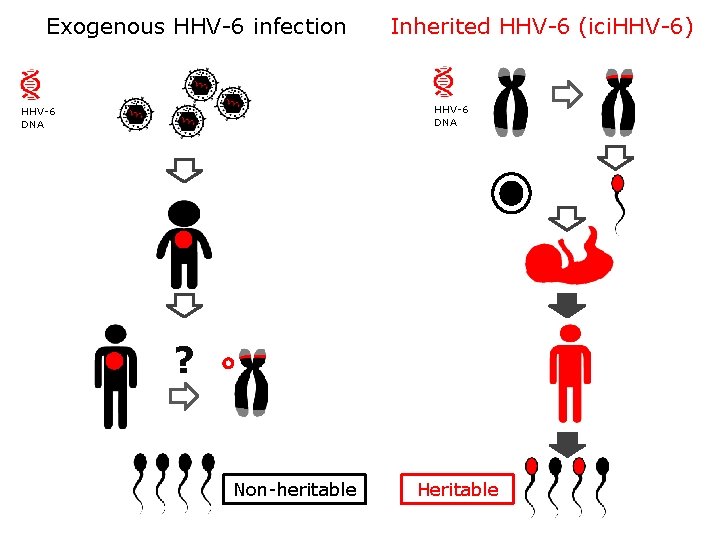
Exogenous HHV-6 infection Inherited HHV-6 (ici. HHV-6) HHV-6 DNA ? Non-heritable Heritable
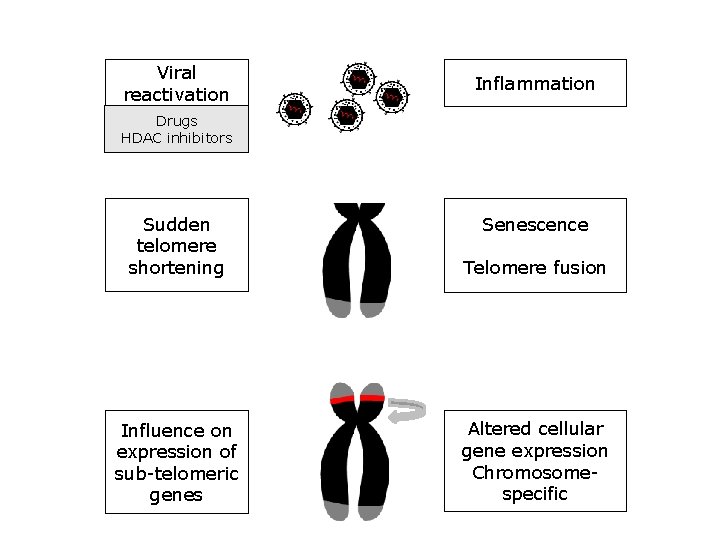
Viral reactivation Inflammation Drugs HDAC inhibitors Sudden telomere shortening Telomere fusion Influence on expression of sub-telomeric genes Altered cellular gene expression Chromosomespecific Senescence
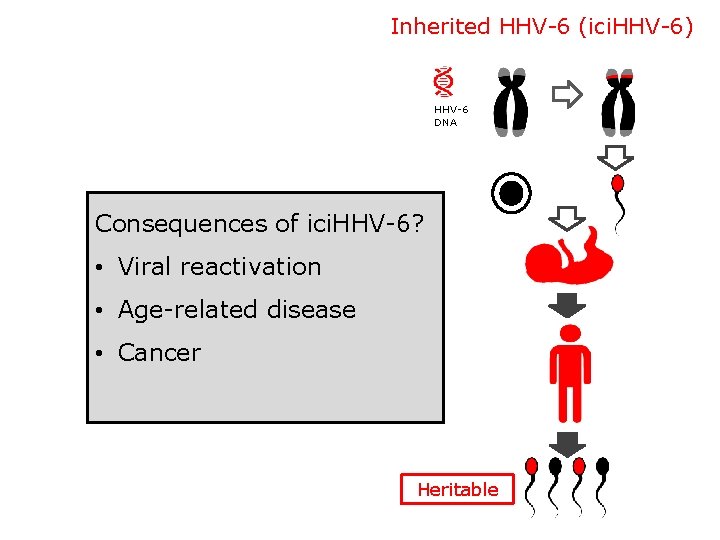
Inherited HHV-6 (ici. HHV-6) HHV-6 DNA Consequences of ici. HHV-6? • Viral reactivation • Age-related disease • Cancer Heritable
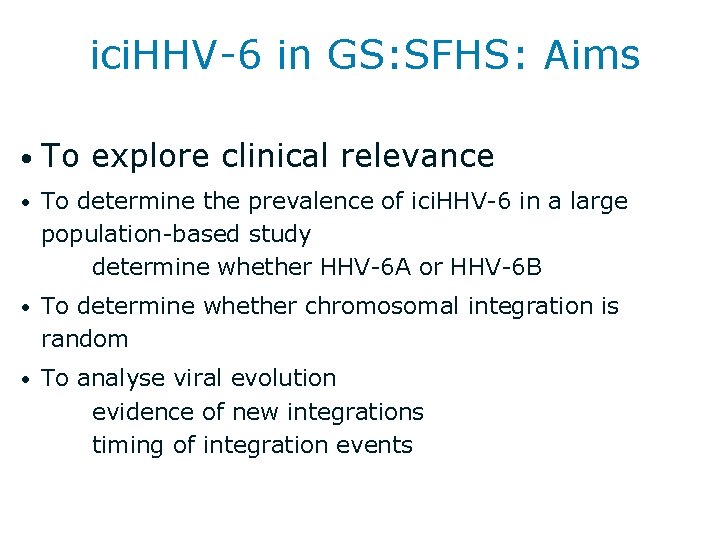
ici. HHV-6 in GS: SFHS: Aims • To explore clinical relevance • To determine the prevalence of ici. HHV-6 in a large population-based study determine whether HHV-6 A or HHV-6 B • To determine whether chromosomal integration is random • To analyse viral evolution evidence of new integrations timing of integration events
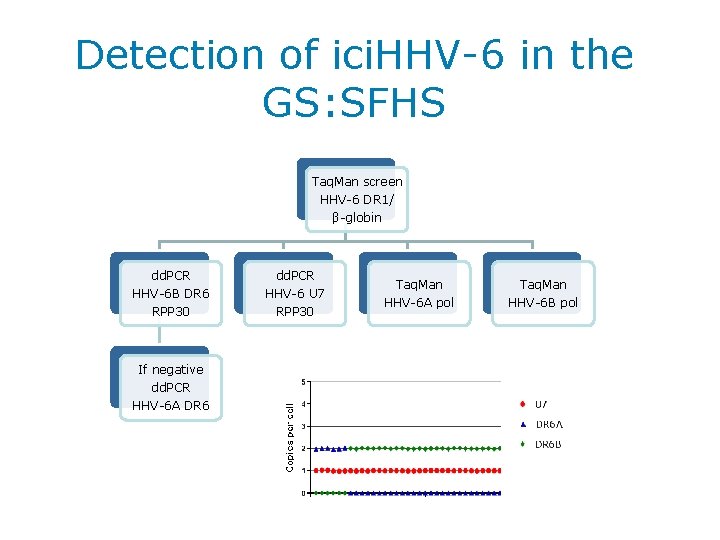
Detection of ici. HHV-6 in the GS: SFHS Taq. Man screen HHV-6 DR 1/ β-globin dd. PCR HHV-6 B DR 6 RPP 30 If negative dd. PCR HHV-6 A DR 6 dd. PCR HHV-6 U 7 RPP 30 Taq. Man HHV-6 A pol Taq. Man HHV-6 B pol
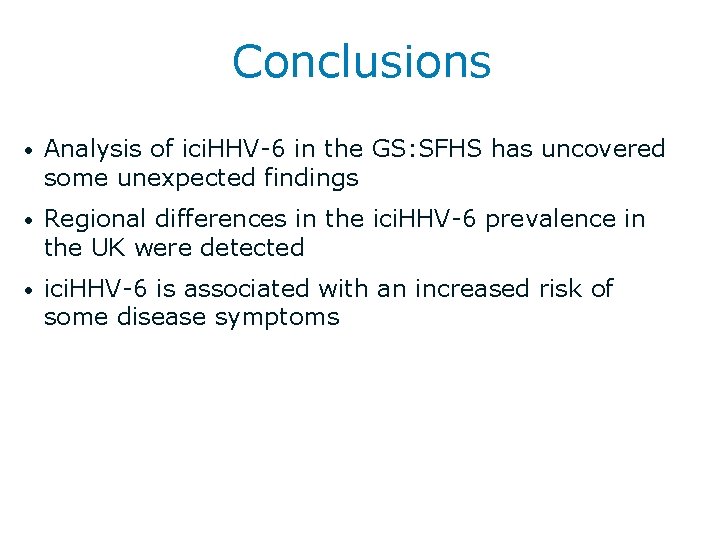
Conclusions • Analysis of ici. HHV-6 in the GS: SFHS has uncovered some unexpected findings • Regional differences in the ici. HHV-6 prevalence in the UK were detected • ici. HHV-6 is associated with an increased risk of some disease symptoms
Acknowledgements University of Glasgow CVR • Adam Bell • Chris Brownlie • Skye Storrie • Andrew Davison • Rob Gifford ICAMS • Christian Delles Barts Health NHS Trust • Duncan Clark BGS, ICR • Anthony Swerdlow • Nick Orr • • • Archie Campbell Caroline Hayward Carmen Amador Shona Kerr Pamela Linksted David J Porteous Blair H Smith Lynne Hocking Sandosh Padmanabhan Edinburgh Clinical Research Facility • Lee Murphy • Angie Fawkes