
INHERITANCE SUBTOPIC 3 4 GENETICS The scientific study
INHERITANCE SUBTOPIC 3. 4
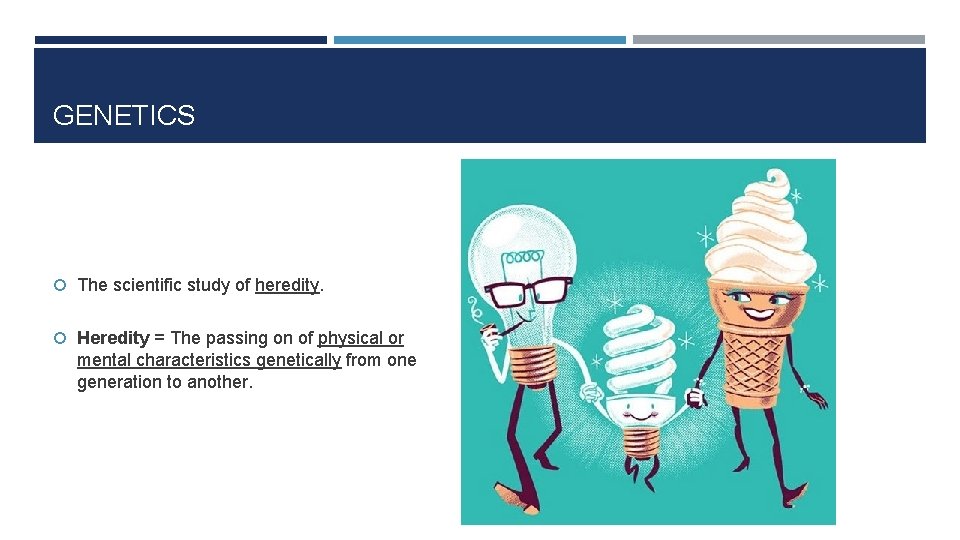
GENETICS The scientific study of heredity. Heredity = The passing on of physical or mental characteristics genetically from one generation to another.
EARLY PHILOSOPHY OF INHERITANCE Inheritance has been discussed since the time of Hippocrates and earlier. Aristotle observed that children sometimes resemble their grandparents more than their parents. Most common thought a the time was blending inheritance.
GREGOR MENDEL THE FATHER OF GENETICS
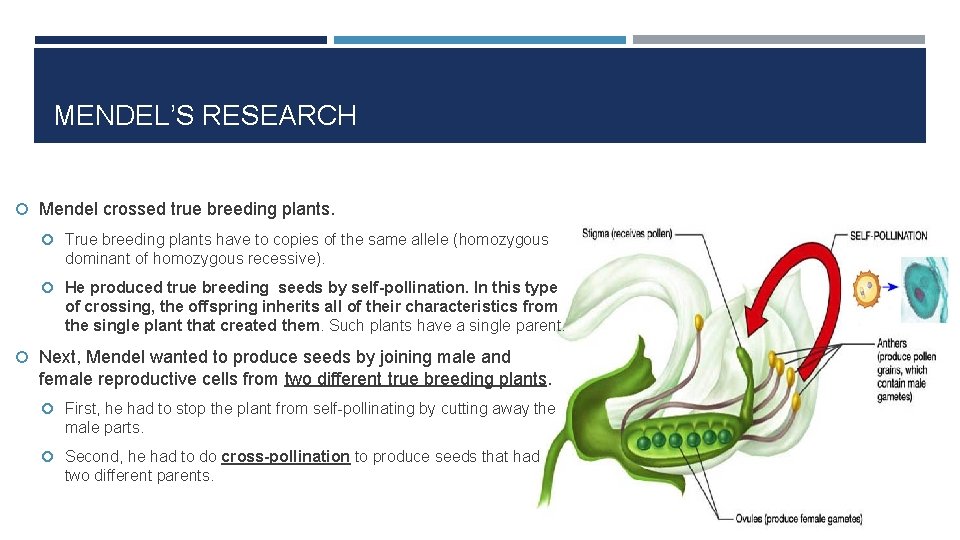
MENDEL’S RESEARCH Mendel crossed true breeding plants. True breeding plants have to copies of the same allele (homozygous dominant of homozygous recessive). He produced true breeding seeds by self-pollination. In this type of crossing, the offspring inherits all of their characteristics from the single plant that created them. Such plants have a single parent. Next, Mendel wanted to produce seeds by joining male and female reproductive cells from two different true breeding plants. First, he had to stop the plant from self-pollinating by cutting away the male parts. Second, he had to do cross-pollination to produce seeds that had two different parents.
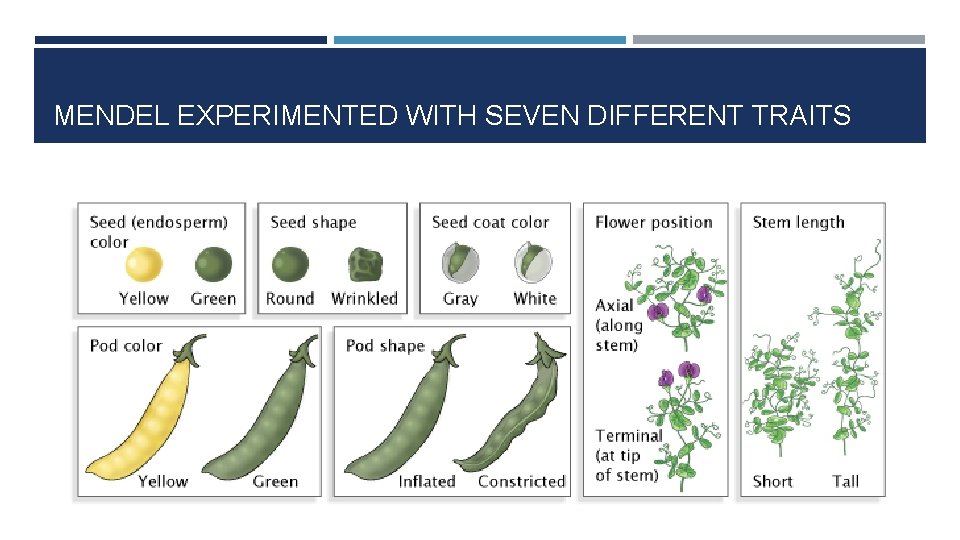
MENDEL EXPERIMENTED WITH SEVEN DIFFERENT TRAITS
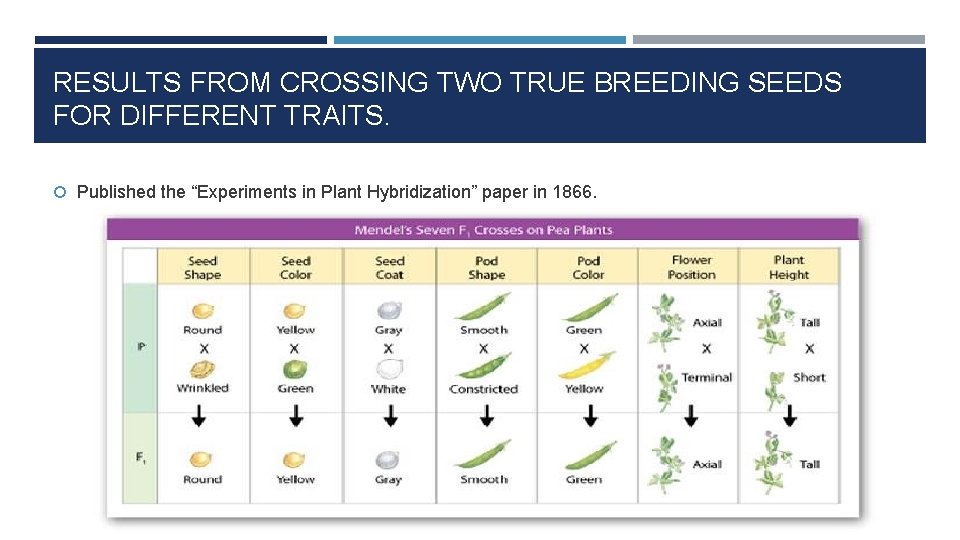
RESULTS FROM CROSSING TWO TRUE BREEDING SEEDS FOR DIFFERENT TRAITS. Published the “Experiments in Plant Hybridization” paper in 1866.
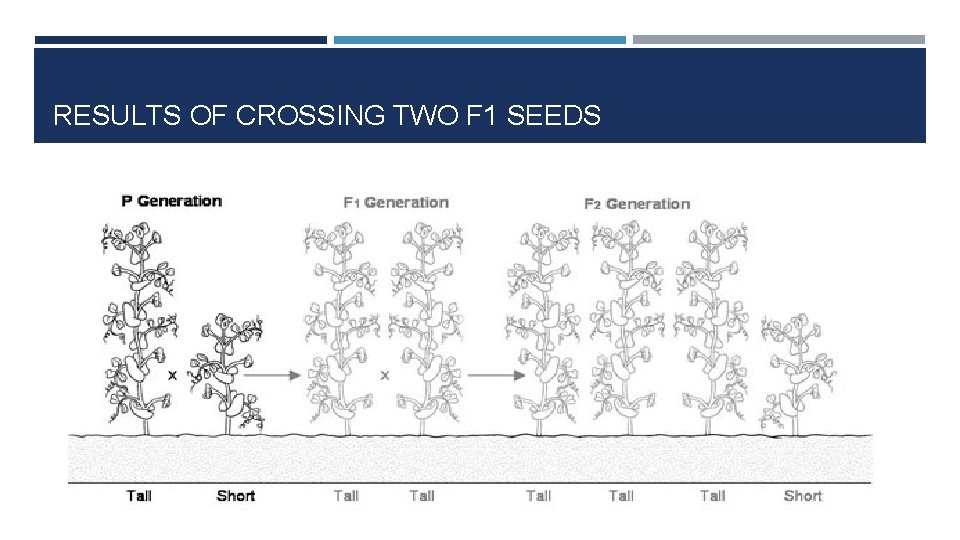
RESULTS OF CROSSING TWO F 1 SEEDS
DOMINANT, RECESSIVE AND CO-DOMINANT Dominant alleles mask the effects of recessive alleles. In order for the a recessive trait to be expressed, the individual must be homozygous recessive. In each of Mendel’s crosses one of the alleles was dominant and the other recessive. Some genes have pairs of alleles where both have an effect when they are present together. The usual reason for dominance of one allele is that this allele codes for a protein that is active and carries out a function, whereas the recessive allele codes for a non-functional protein.
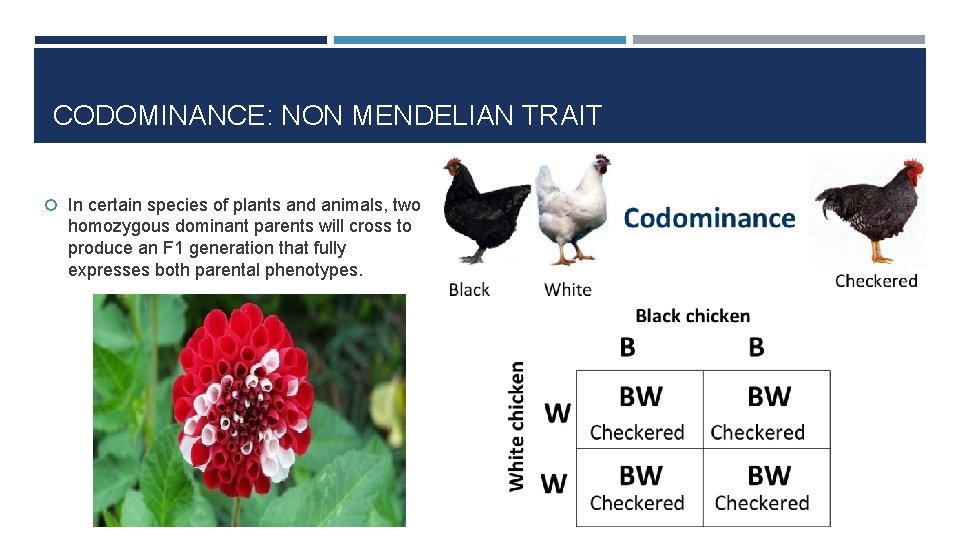
CODOMINANCE: NON MENDELIAN TRAIT In certain species of plants and animals, two homozygous dominant parents will cross to produce an F 1 generation that fully expresses both parental phenotypes.
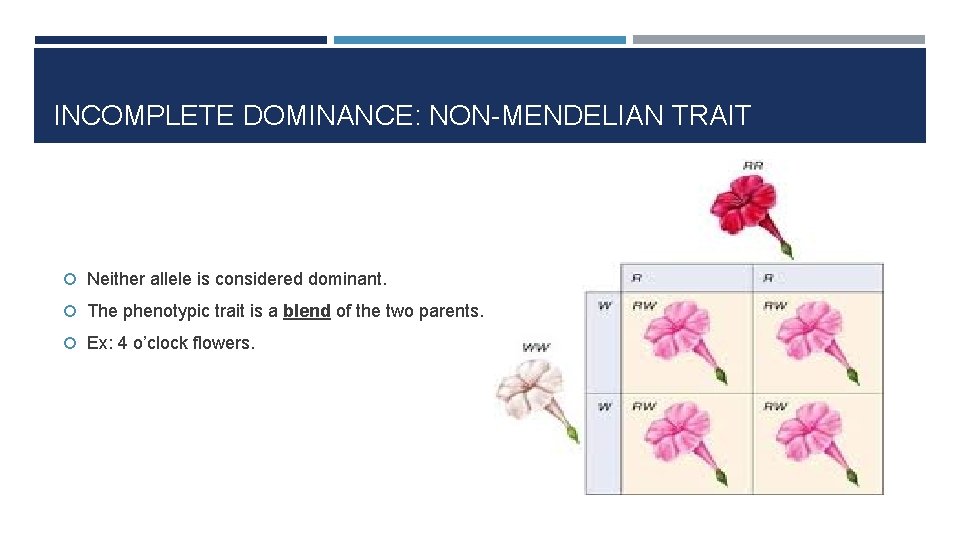
INCOMPLETE DOMINANCE: NON-MENDELIAN TRAIT Neither allele is considered dominant. The phenotypic trait is a blend of the two parents. Ex: 4 o’clock flowers.
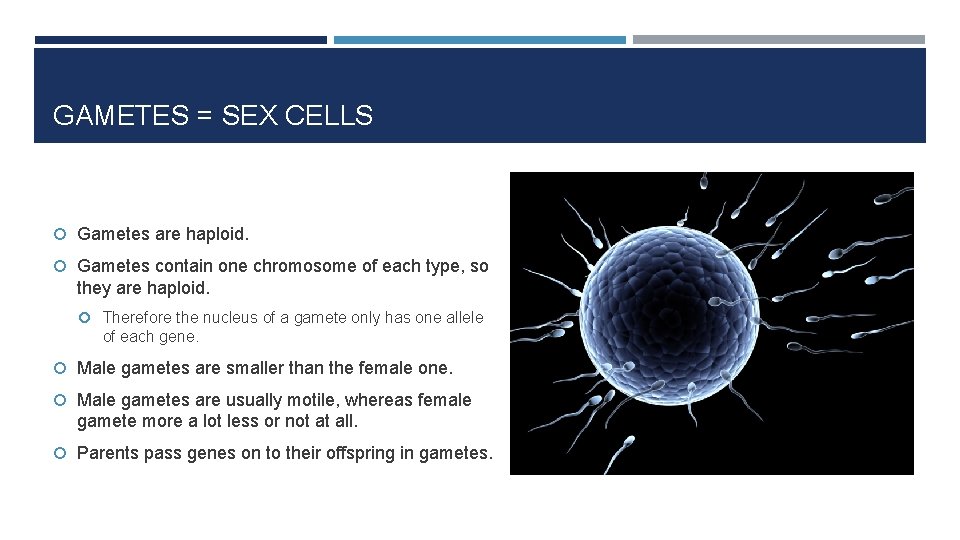
GAMETES = SEX CELLS Gametes are haploid. Gametes contain one chromosome of each type, so they are haploid. Therefore the nucleus of a gamete only has one allele of each gene. Male gametes are smaller than the female one. Male gametes are usually motile, whereas female gamete more a lot less or not at all. Parents pass genes on to their offspring in gametes.
ZYGOTE = FUSED EGG AND SPERM Zygotes are diploid, they have two chromosomes of each type. Therefore it also contains two alleles of each gene. When a male and female gamete fuse, their nuclei join together, doubling the chromosome number. If there were two alleles of a gene, A and a, the zygote could contain two copies of either allele or one of each, AA, Aa or aa. Some genes have more than two alleles. Ex. The gene for ABO blood groups in humans has three alleles: IA, IB and i.
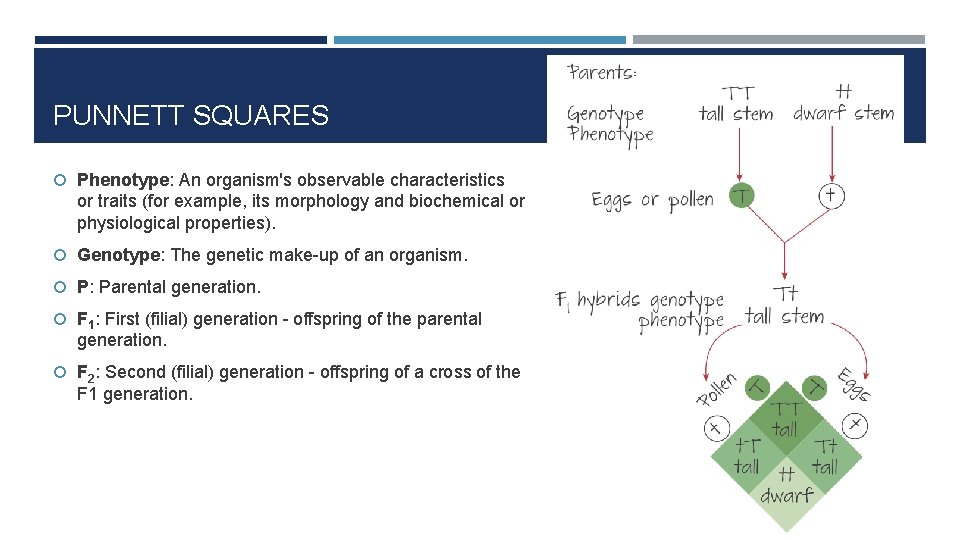
PUNNETT SQUARES Phenotype: An organism's observable characteristics or traits (for example, its morphology and biochemical or physiological properties). Genotype: The genetic make-up of an organism. P: Parental generation. F 1: First (filial) generation - offspring of the parental generation. F 2: Second (filial) generation - offspring of a cross of the F 1 generation.
GENOTYPES: Homozygous Dominant = two copies of the recessive allele. Homozygous Recessive = two copies of the dominant allele. Heterozygous = one copy of one allele, and one copy of the other.
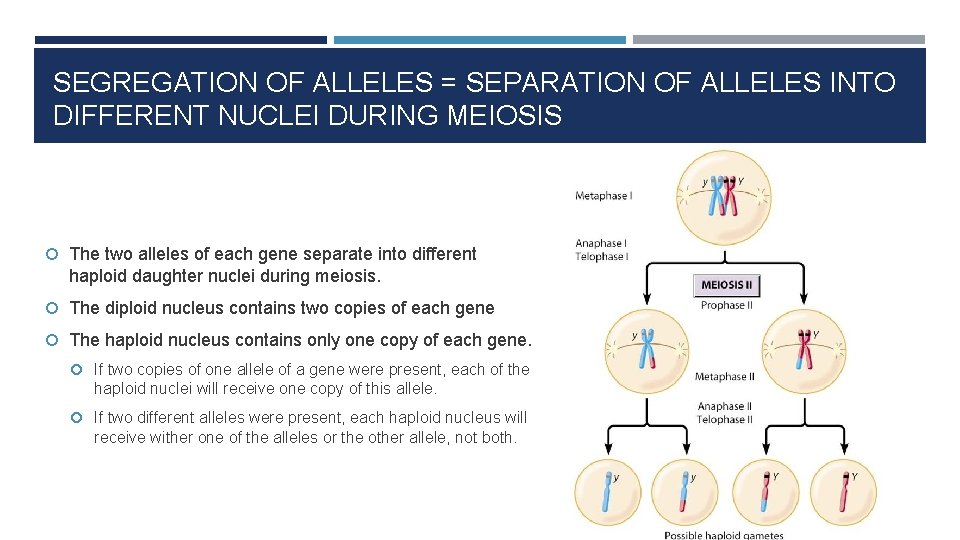
SEGREGATION OF ALLELES = SEPARATION OF ALLELES INTO DIFFERENT NUCLEI DURING MEIOSIS The two alleles of each gene separate into different haploid daughter nuclei during meiosis. The diploid nucleus contains two copies of each gene The haploid nucleus contains only one copy of each gene. If two copies of one allele of a gene were present, each of the haploid nuclei will receive one copy of this allele. If two different alleles were present, each haploid nucleus will receive wither one of the alleles or the other allele, not both.
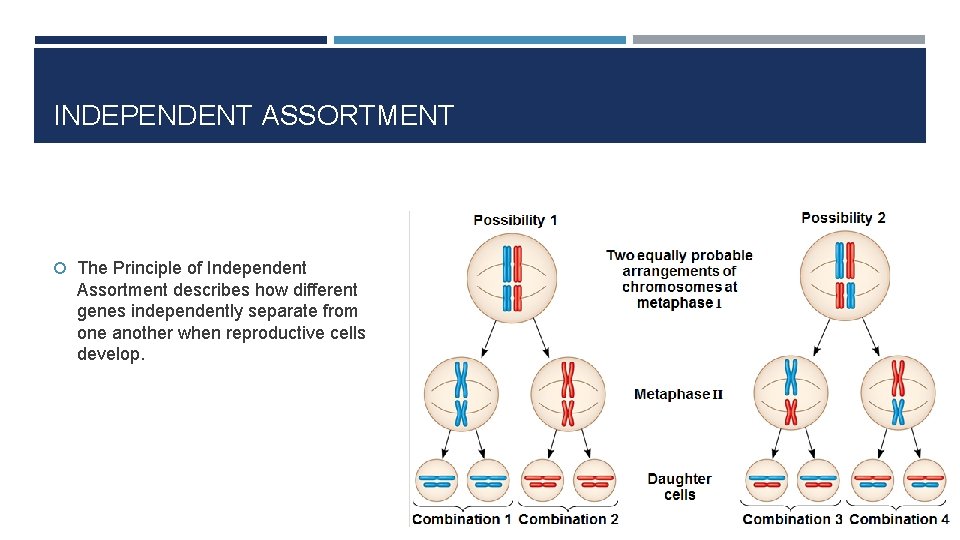
INDEPENDENT ASSORTMENT The Principle of Independent Assortment describes how different genes independently separate from one another when reproductive cells develop.
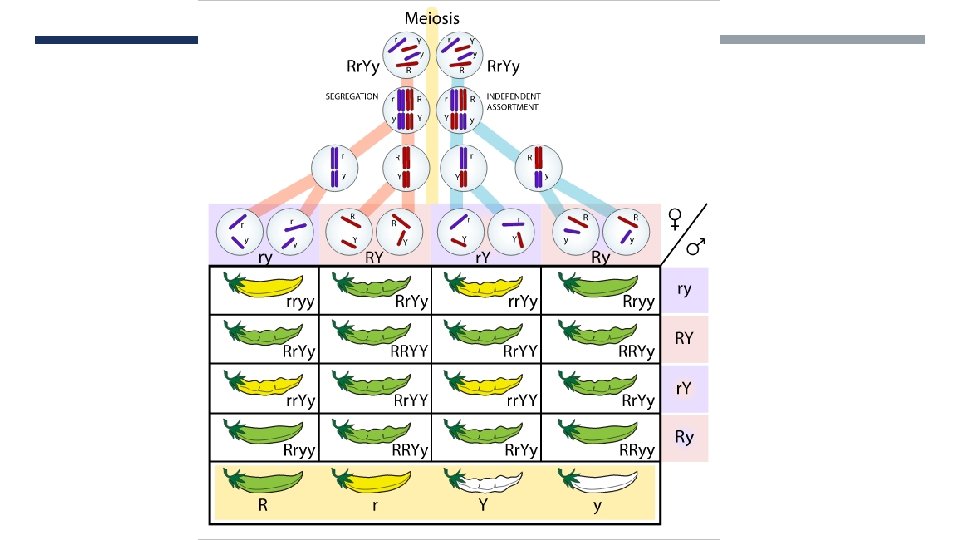
MENDEL AND THE PRINCIPLES OF INHERITANCE Mendel came up with three fundamental laws of inheritance (also known as Mendel's laws) which are as stated below: The law of segregation: The inheritance of each trait is controlled by a pair of alleles that are separated from each other during gamete formation so that sex cells contain only one allele from each gene. Alleles are passed from one generation to the next as distinct units. The law of independent assortment: The way alleles of one gene separate is independent of the separation of alleles of other genes. That is the inheritance of one trait is not dependent on the inheritance of another (this law does not hold true in case of linked genes). The law of dominance: An organism with two dissimilar alleles will express the form that is dominant (this law does not hold true in case of co-dominant alleles).
THOMAS ANDREW KNIGHT English Horticulturalist Conducted research in the late 18 th century and published his results in the Philosophical Transactions of the Royal Society. Important Discoveries: Male and female parents contribute equally to the offspring. Characters such as white flower color that apparently disappear in offspring can reappear in the next generation, showing that inheritance is discreet rather than blending. One character such as red flower color can show “a stronger tendency” than the alternative character.
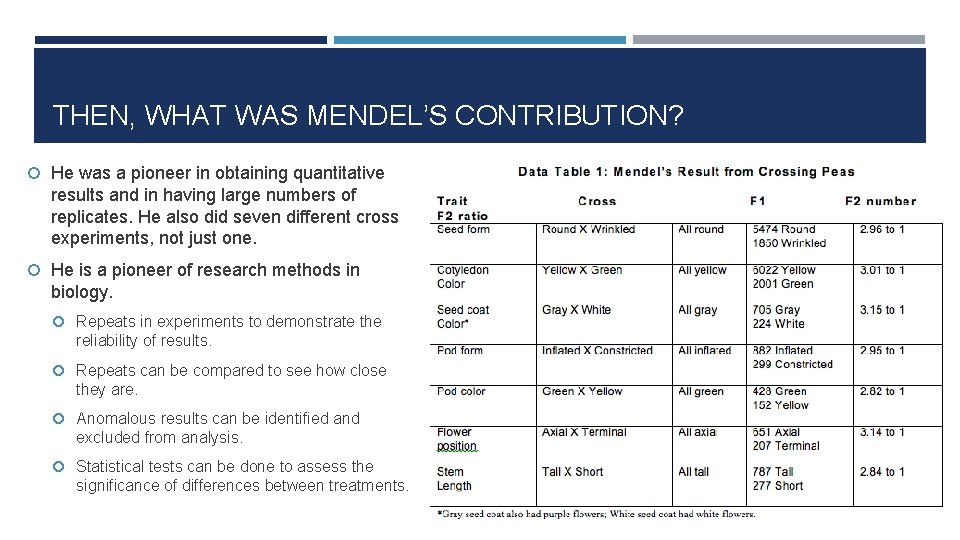
THEN, WHAT WAS MENDEL’S CONTRIBUTION? He was a pioneer in obtaining quantitative results and in having large numbers of replicates. He also did seven different cross experiments, not just one. He is a pioneer of research methods in biology. Repeats in experiments to demonstrate the reliability of results. Repeats can be compared to see how close they are. Anomalous results can be identified and excluded from analysis. Statistical tests can be done to assess the significance of differences between treatments.
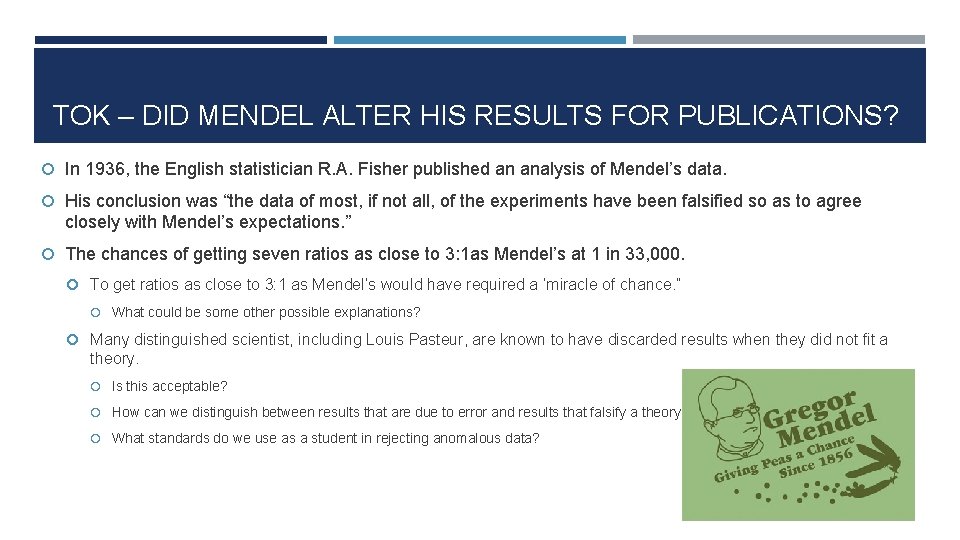
TOK – DID MENDEL ALTER HIS RESULTS FOR PUBLICATIONS? In 1936, the English statistician R. A. Fisher published an analysis of Mendel’s data. His conclusion was “the data of most, if not all, of the experiments have been falsified so as to agree closely with Mendel’s expectations. ” The chances of getting seven ratios as close to 3: 1 as Mendel’s at 1 in 33, 000. To get ratios as close to 3: 1 as Mendel’s would have required a ‘miracle of chance. ” What could be some other possible explanations? Many distinguished scientist, including Louis Pasteur, are known to have discarded results when they did not fit a theory. Is this acceptable? How can we distinguish between results that are due to error and results that falsify a theory? What standards do we use as a student in rejecting anomalous data?
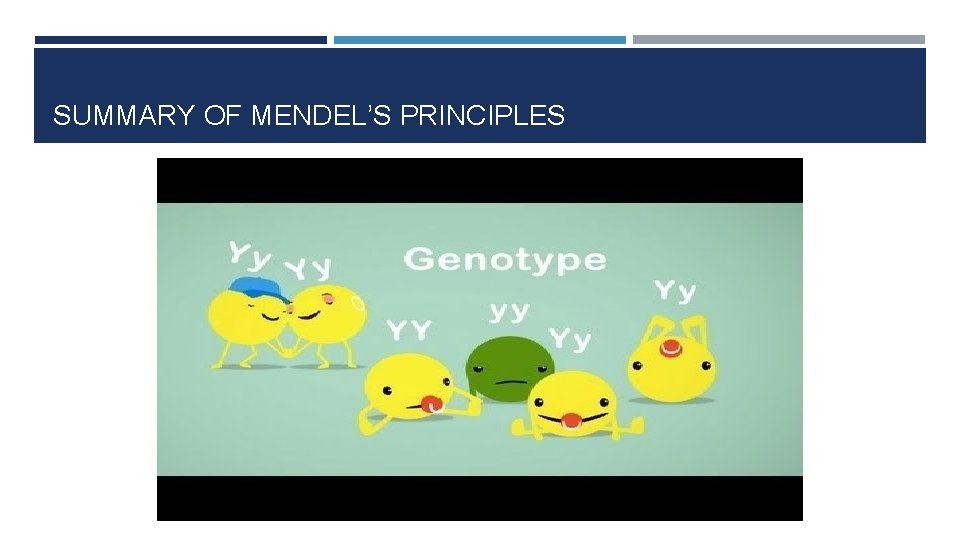
SUMMARY OF MENDEL’S PRINCIPLES
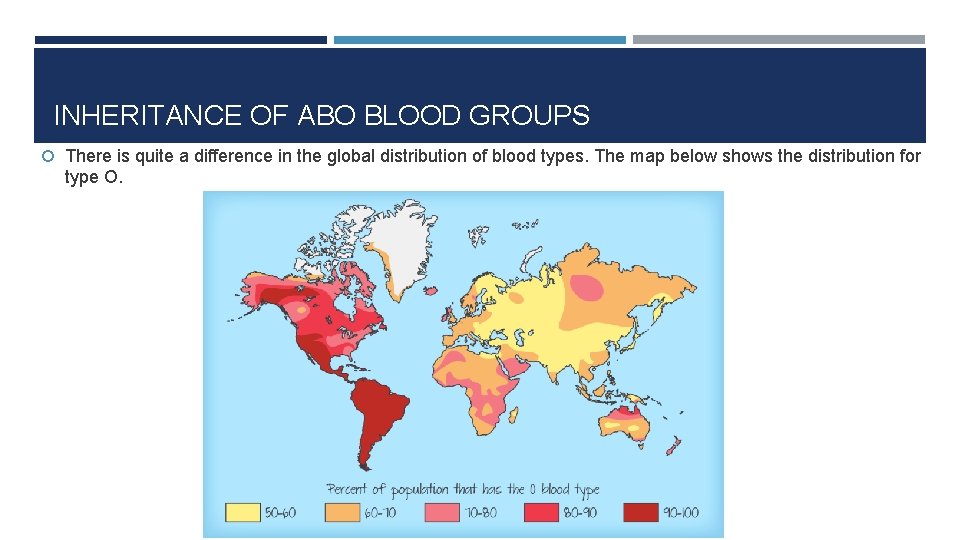
INHERITANCE OF ABO BLOOD GROUPS There is quite a difference in the global distribution of blood types. The map below shows the distribution for type O.
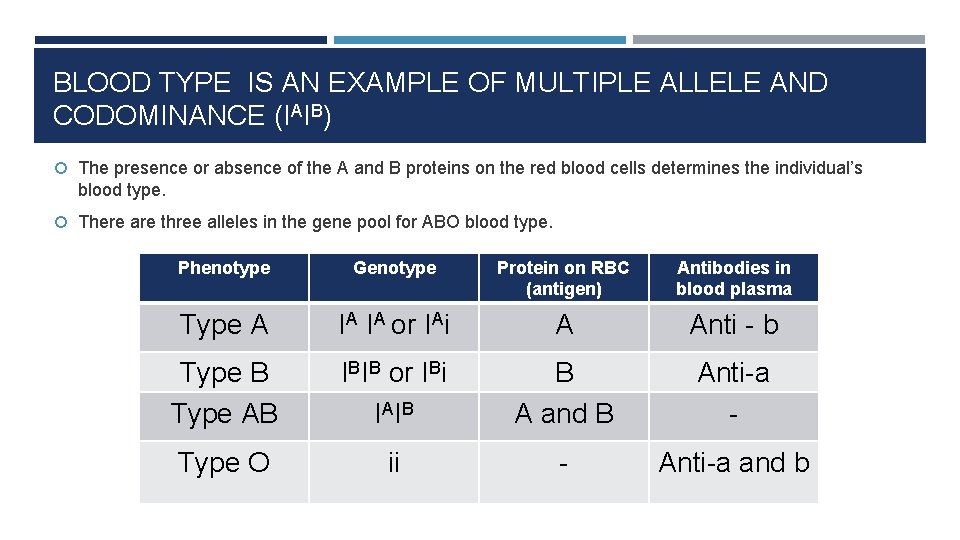
BLOOD TYPE IS AN EXAMPLE OF MULTIPLE ALLELE AND CODOMINANCE (IAIB) The presence or absence of the A and B proteins on the red blood cells determines the individual’s blood type. There are three alleles in the gene pool for ABO blood type. Phenotype Genotype Protein on RBC (antigen) Antibodies in blood plasma Type A IA IA or IAi A Anti - b Type B Type AB IBIB or IBi IAIB B A and B Anti-a - Type O ii - Anti-a and b
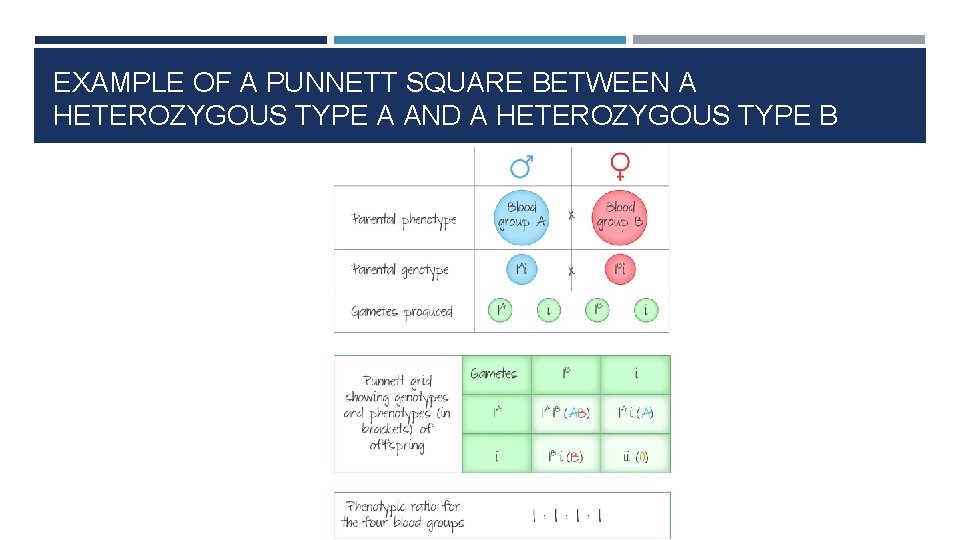
EXAMPLE OF A PUNNETT SQUARE BETWEEN A HETEROZYGOUS TYPE A AND A HETEROZYGOUS TYPE B
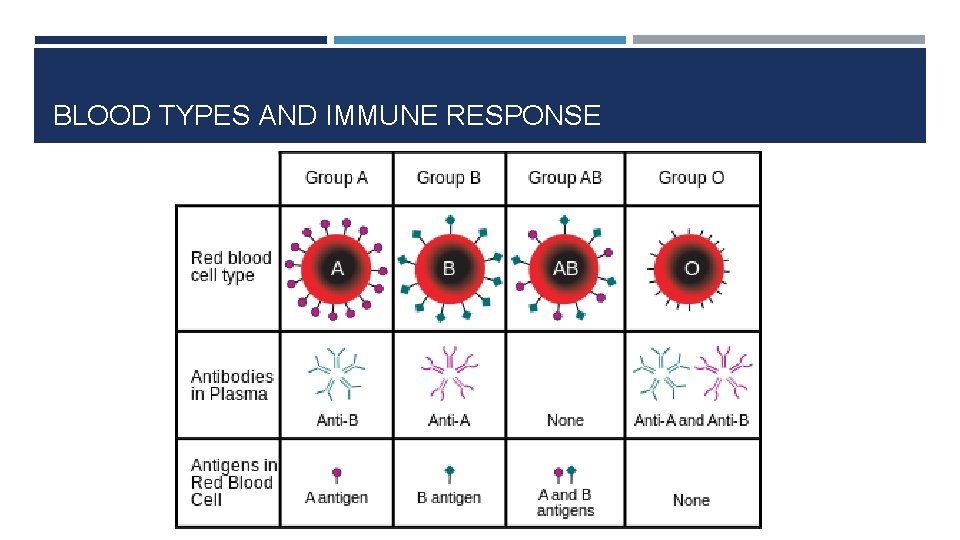
BLOOD TYPES AND IMMUNE RESPONSE
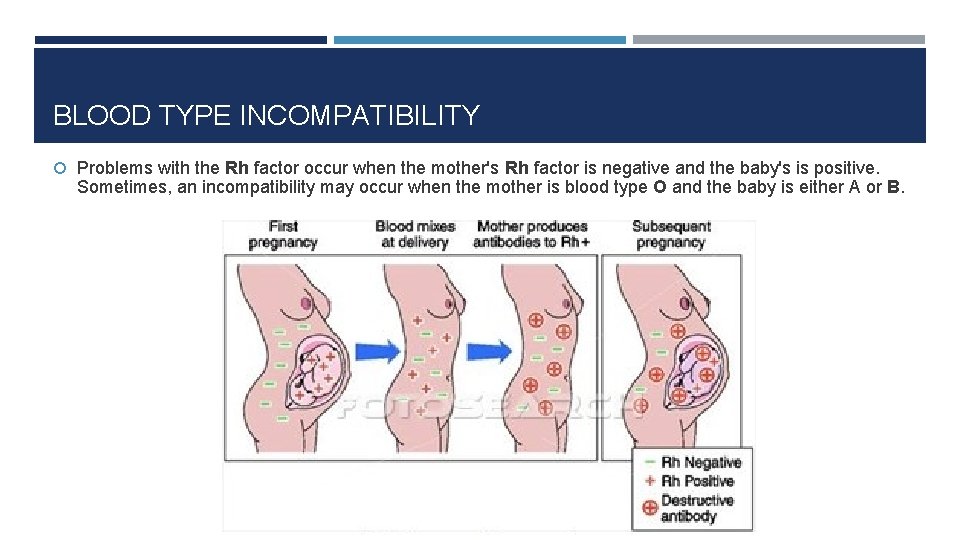
BLOOD TYPE INCOMPATIBILITY Problems with the Rh factor occur when the mother's Rh factor is negative and the baby's is positive. Sometimes, an incompatibility may occur when the mother is blood type O and the baby is either A or B.
GENETIC DISORDERS: AUTOSOMAL AND SEX-LINKED OMIM, the genetic database of all human genetic diseases, currently has information about more than 5, 000 genetic defects that can occur in humans. That is not to say that genetic diseases are common. On the contrary, most genetic disorders are rare.
WHY ARE GENETIC DISORDERS USUALLY RARE? People that are affected by such a disorder often do not have children; therefore, the defective allele that causes the disorder is not passed on to the next generation. Another reason is that many of these genetic defects are carried by recessive alleles. As you should know by now, you need two recessive alleles (a homozygous state) to express that phenotype, i. e. the disorder.
CLASSIFICATION OF GENETIC DISORDERS Autosomal recessive Autosomal dominant Autosomal co-dominant Sex-linked recessive Sex-linked dominant
AUTOSOMAL RECESSIVE Autosomal refers to all those chromosomes that are not involved in sex determination. In humans, that means chromosomes 1 to 22. Recessive means that two alleles are necessary for the phenotype to be expressed, i. e. for the individual to suffer from the disease. Many of the genetic diseases in humans are due to recessive alleles of autosomal genes.
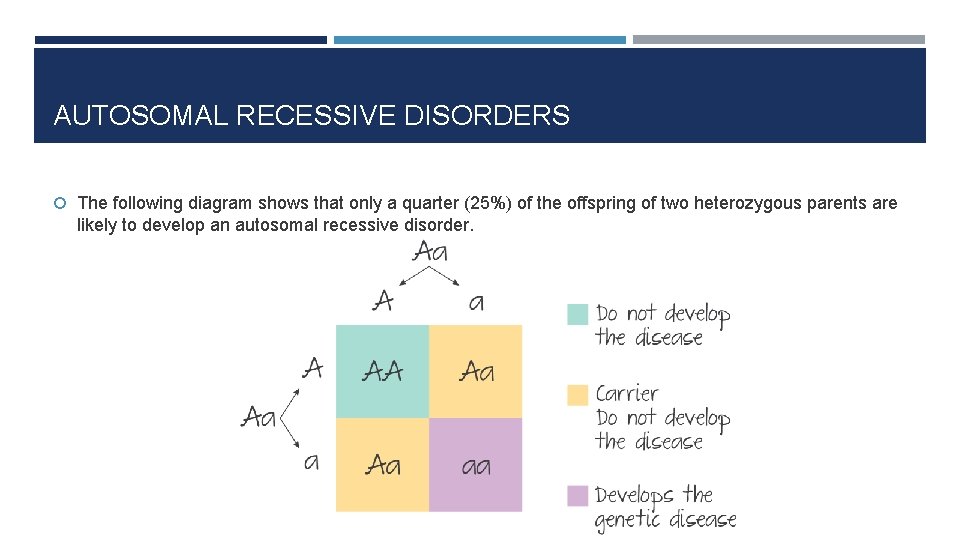
AUTOSOMAL RECESSIVE DISORDERS The following diagram shows that only a quarter (25%) of the offspring of two heterozygous parents are likely to develop an autosomal recessive disorder.
AUTOSOMAL DOMINANT AND CO-DOMINANT DISEASES A small number of genetic diseases are caused by a dominant allele. If such an allele is present in one of the parents, it means that there is a 50% chance their offspring will develop the disease. Huntington's disease is one such example. Even more rare co-dominant diseases. Sickle cell anemia is an example of a co-dominant genetic disorder.
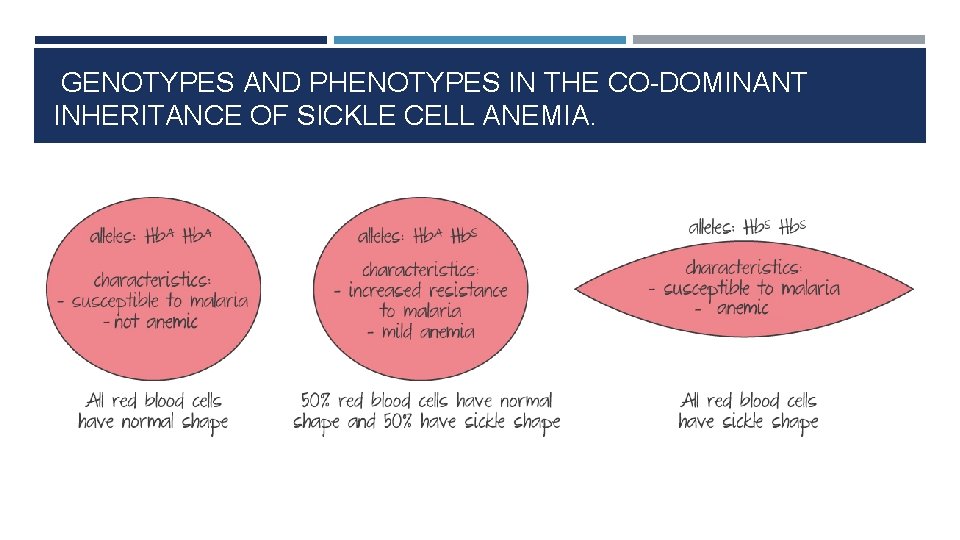
GENOTYPES AND PHENOTYPES IN THE CO-DOMINANT INHERITANCE OF SICKLE CELL ANEMIA.
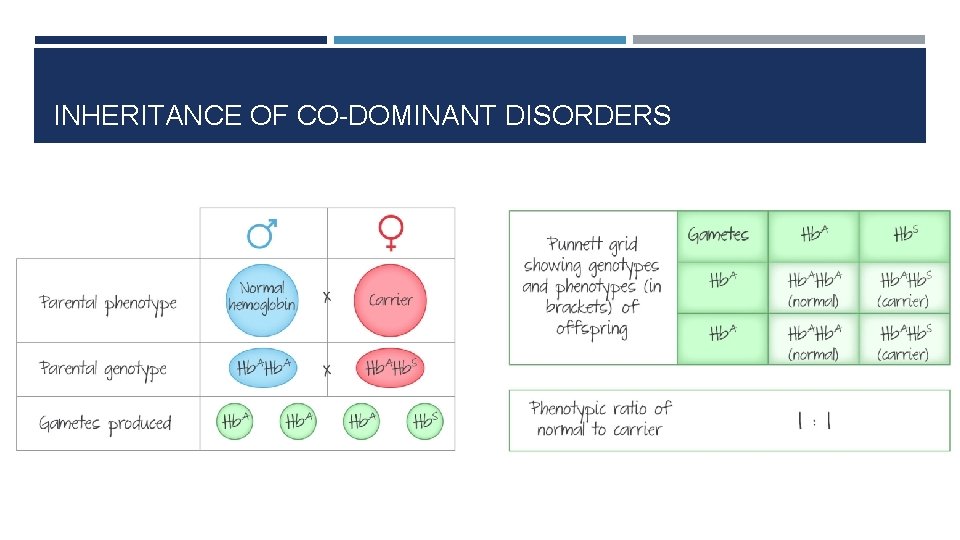
INHERITANCE OF CO-DOMINANT DISORDERS
SEX-LINKED DISEASES Sex-linked inheritance is linked to sex. A certain number of genes are located on the sex chromosomes, X and Y. The Y chromosome is much smaller and contains fewer genes than the X chromosome. In practice, this means that there is often no allele on the Y chromosome that corresponds to a particular allele on the X chromosome.
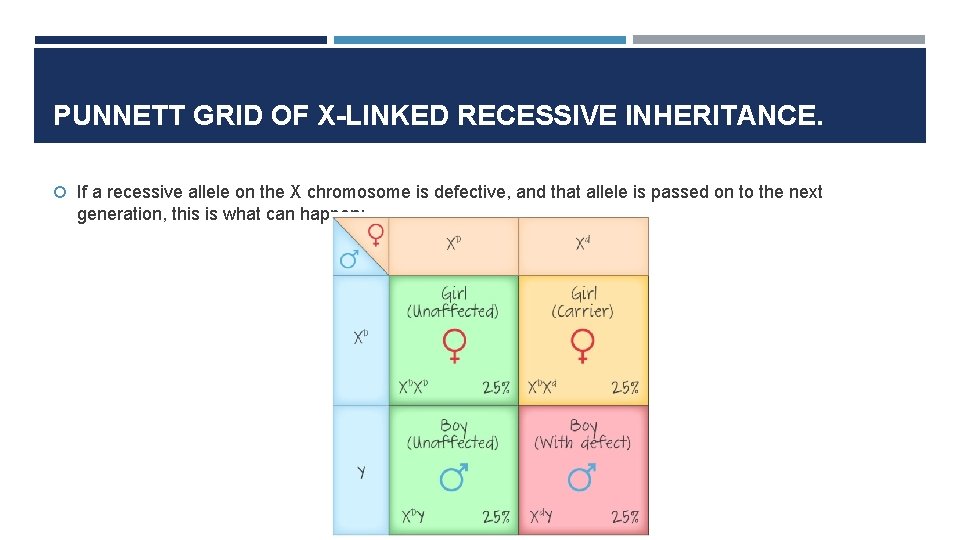
PUNNETT GRID OF X-LINKED RECESSIVE INHERITANCE. If a recessive allele on the X chromosome is defective, and that allele is passed on to the next generation, this is what can happen:
CAUSES OF MUTATION Radiation and mutagenic chemicals increase the mutation rate and can cause genetic disease and cancer.
VOCAB REVIEW: Gene = segment of DNA with a base sequence that can be hundreds or thousands of bases long. Alleles = different versions of a gene. Mutation = random change to the base sequence of a gene.
ALLELES AND GENETIC MUTATIONS The different alleles of a gene have slight vitiations in the base sequence. Usually one or a very small number of bases are different. New alleles are formed from other alleles by gene mutation.
FACTORS THAT CAN INCREASE MUTATION RATE Radiation Only if it has enough energy to cause chemical changes in DNA. Ex: gamma rays and alpha particles from radioactive isotopes, short-wave ultraviolet radiation and x-rays. Some chemical substances Ex: benzo[a]pyrene and nitrosamines found in tobacco smoke and mustard gas used as a chemical weapon in the First World War.
MUTATIONS ARE RANDOM CHANGES Beneficial mutations are extremely rare. A random change to an allele that has developed by evolution over perhaps millions of years is unlikely to be beneficial. Almost all mutations are either neutral or harmful. Ex. Mutations on genes that control cell division cause a cell to divide endlessly and develop into a tumor, therefore causing cancer.
MUTATIONS IN SOMATIC CELLS VERSUS GAMETES Mutations in somatic cells are eliminated when the individual dies. Mutations in cells that develop into gametes can be passed on to offspring, causing genetic disease. Current estimates are that one or two new mutations occur each generation in humans.
CONSEQUENCES OF NUCLEAR BOMBING AND ACCIDENTS AT NUCLEAR POWER STATIONS In either cases, radioactive isotopes were released into the environment, and as a result people were exposed to potentially dangerous levels of radiation.
HIROSHIMA & NAGASAKI 150, 000 – 250, 000 people either died directly or within a few months. The health of nearly 100, 000 survivors has been followed since then by the Radiation Effects Research Foundation in Japan. They used a group of 26, 000 people who were not exposed to radiation as the control group. By 2011 the survivors had developed 17, 448 tumors, but only 853 of these could be attributed to the effects of radiation from atomic bombs. Apart from cancer, another main effect of the radiation was mutations leading to stillbirths, malformation or death.
HIROSHIMA & NAGASAKI The health of 10, 000 children that were fetuses when the bomb was detonated, and 77, 000 children that were born later has been monitored. No evidence has been found of mutations caused by radiation due to the atomic bomb. More than likely there were some mutations but the sample size is too small to be statistically significant.
CHERNOBYL, UKRAINE 1986 Radiation released into the environment due to an explosion and fire in the core of a nuclear reactor. Workers quickly died due to fatal doses of radiation. Radioactive isotopes of xenon, krypton, iodine, cesium, and tellurium were released and spread over large parts of Europe.
CHERNOBYL Approximately 6 tons of uranium and other radioactive metals in fuel from the reactor was broken up into small particles by the explosions and escaped. About 5, 200 million GBq of radioactive material was released into the atmosphere in total.
CHERNOBYL ECOLOGICAL IMPACT 4 km 2 of pine forest downwind of the reactor turned ginger brown and died. Horses and cattle near the plant died from damage to their thyroid glands. Lynx, eagle owl, wild boar and other wildlife subsequently started to thrive in a zone around Chernobyl from which humans were excluded. Bioaccumulation caused high levels of radioactive cesium in fish as far as Scandinavia and Germany and consumption of lamb contaminated with radioactive cesium was banned for some time as far away as Wales. Concentrations of radioactive iodine in the environment rose and resulted in drinking water and milk with unacceptably high levels. More than 6, 000 cases of thyroid cancer have been reported that can be attributed to radioactive iodine released during the accident. According to the report “Chernobyl’s Legacy Health, Environmental and Socio-Economic Impacts”, produced by The Chernobyl Forum, there is no clearly demonstrated increase in solid cancers or leukemia due to radiation in the most affected populations.
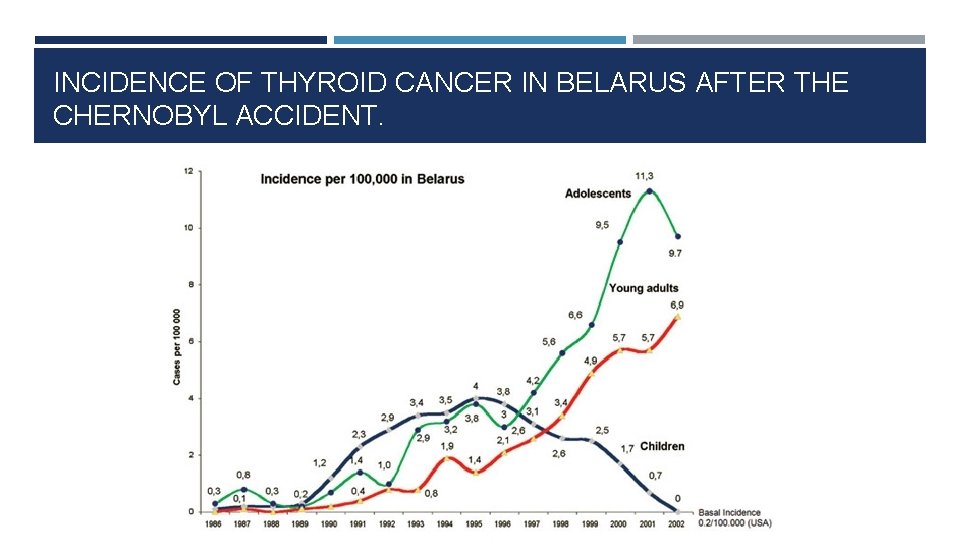
INCIDENCE OF THYROID CANCER IN BELARUS AFTER THE CHERNOBYL ACCIDENT.
- Slides: 51