
Infrastructure Operational Efficiency and Port Productivity Management in



- Slides: 9
Infrastructure & Operational Efficiency and Port Productivity Management in African Ports (South African Perspective) THE 7 TH PAPC CONFERENCE 2008 15 TH December 2008 DJIBOUTI
CONTENTS 1. Emerging story 2. Developments that support efficiency and productivity management 3. Stakeholders objectives on efficiency and productivity of ports 4. Complementary port strategic objectives on efficiency and productivity Next steps 1
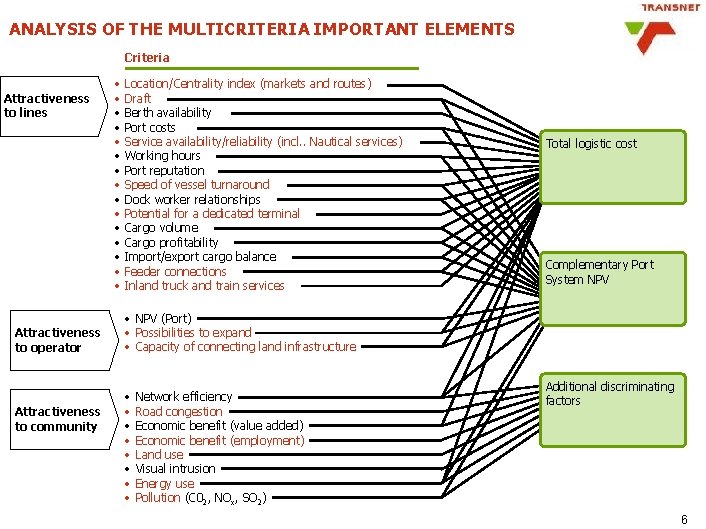
EMERGING STORY • Past and future economic growth of South Africa is enabled by strong growth in containerised import/export gateway traffic through the South African Ports and railroads, presenting most promising growth opportunities for Transnet, that could amount to around 20 million TEU in 2038. Market potential Self and Competitor landscape Objectives and criteria for Operational Efficiencies • In addition South African ports system faces an opportunity to attract additional coastal and transhipment business, building on steady growth of the Sub-Saharan economies as well as the South-South Trade lanes. These could potentially add between approximately 8 and 34 million TEU in 2038 with further transhipment potential from south-south interline volumes. The nature of the port productivity on commodities e. g. coal and iron ore has and it will remain a collaboration between the port system and the private sector regardless of the current economic condition • Capturing these opportunities (market potential) is time-critical as current productivity levels are low couple with capacities are reaching their limits within the short-term future. In addition, competing ports in the region envision to establish themselves in the transhipment market, in partnership with global terminal operators • In order to inform a decision on the future productivity improvement, the analyses done focused on two triggering criteria, (a) optimisation of the total logistic cost for the country, and (b) value creation for port users. These triggering criteria aggregate a multitude of input factors such as skilled personnel, measurable performance indicators, productivity management etc. 2
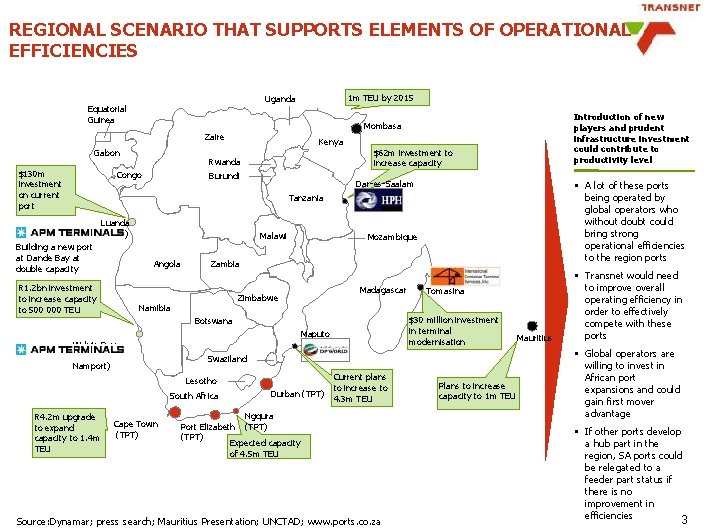
REGIONAL SCENARIO THAT SUPPORTS ELEMENTS OF OPERATIONAL EFFICIENCIES 1 m TEU by 2015 Uganda Equatorial Guinea Zaire Gabon $130 m investment on current port Kenya Rwanda Congo Burundi Tanzania Luanda (APM) Building a new port at Dande Bay at double capacity Malawi Angola R 1. 2 bn investment to increase capacity to 500 000 TEU $62 m investment to increase capacity Mozambique Zambia Madagascar Zimbabwe Namibia Walvis Bay (APM & Namport) Swaziland Lesotho South Africa Cape Town (TPT) • A lot of these ports being operated by global operators who without doubt could bring strong operational efficiencies to the region ports Dar-es-Saalam (HPH) Botswana R 4. 2 m upgrade to expand capacity to 1. 4 m TEU Introduction of new players and prudent infrastructure investment could contribute to productivity level Mombasa Maputo (DPW &Grindrod) Current plans to increase to Durban (TPT) 4. 3 m TEU Ngqura Port Elizabeth (TPT) Expected capacity of 4. 5 m TEU Source: Dynamar; press search; Mauritius Presentation; UNCTAD; www. ports. co. za Tomasina $30 million investment in terminal modernisation Plans to increase capacity to 1 m TEU Mauritius • Transnet would need to improve overall operating efficiency in order to effectively compete with these ports • Global operators are willing to invest in African port expansions and could gain first mover advantage • If other ports develop a hub part in the region, SA ports could be relegated to a feeder part status if there is no improvement in efficiencies 3
ELEMENTS OF CO-EXISTENCE WITH PORT PRODUCTIVITY MANAGEMENT Changing demand for freight • New markets conditions (reliance on global supply chains). • Tertiarization of the South African economy (gradual shift from manufacturing to services). Changing supply of freight • Development of intermodal transportation systems. • Integration of freight transport services (third party logistics). • Higher level of supply chain management. Public policy • Converging and diverging policies. • Investment, zoning, security and safety regulation. • Shift from a modal to multi-modal surface transportation policy. • Increased environmental accountability. 4
MULTIPLICITY OF STAKEHOLDERS WITH DIFFERENT OBJECTIVES TO SUPPORT EFFICIENCY AND PORT PRODUCTIVITY MANAGEMENT Stakeholders Objectives • • • Cargo owners Overall economy Transporters/ logistics players Transnet National Ports Authority Source: Minimise logistic cost Dispose of approximate capacity • Investors • Invest port infrastructure Maximise ROI • Shipping lines • Make calls at port with predictable services • • 3 PL/freight forwarders Rail/trucking companies • • Partner with T/Os on lowering cost structures • Efficiency and Port Producvity Management Efficient transport action system serving identified corridors Private port terminal operators • Improve productivity levels to serve the customer and meet regulations • Transnet • Reduce logistic cost for the country Be sustainably profitable Provide service that is satisfactory to customers Transnet Vulindlela Team 2007 Stakeholders • DOT Government • Reduce cost of doing business • DPE • Positive social impact • Community • Reduce environmental damage • Cities/local government • Maximise workers, benefit Promotes jobs • Trade union Collaborate with r port service providers with predictable service • • • Objectives • Civil society 5
ANALYSIS OF THE MULTICRITERIA IMPORTANT ELEMENTS Criteria Attractiveness to lines Attractiveness to operator Attractiveness to community • • • • Location/Centrality index (markets and routes) Draft Berth availability Port costs Service availability/reliability (incl. . Nautical services) Working hours Port reputation Speed of vessel turnaround Dock worker relationships Potential for a dedicated terminal Cargo volume Cargo profitability Import/export cargo balance Feeder connections Inland truck and train services Total logistic cost Complementary Port System NPV • NPV (Port) • Possibilities to expand • Capacity of connecting land infrastructure • • Network efficiency Road congestion Economic benefit (value added) Economic benefit (employment) Land use Visual intrusion Energy use Pollution (C 02, NOx, SO 2) Additional discriminating factors 6
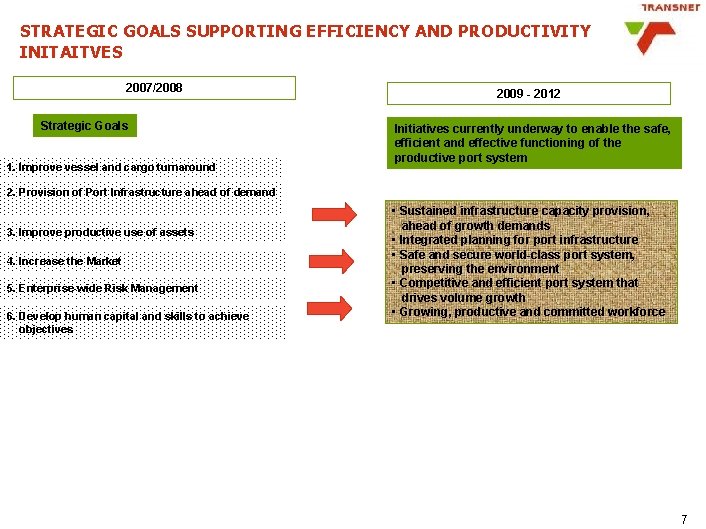
STRATEGIC GOALS SUPPORTING EFFICIENCY AND PRODUCTIVITY INITAITVES 2007/2008 Strategic Goals 1. Improve vessel and cargo turnaround 2009 - 2012 Initiatives currently underway to enable the safe, efficient and effective functioning of the productive port system 2. Provision of Port Infrastructure ahead of demand 3. Improve productive use of assets 4. Increase the Market 5. Enterprise-wide Risk Management 6. Develop human capital and skills to achieve objectives • Sustained infrastructure capacity provision, ahead of growth demands • Integrated planning for port infrastructure • Safe and secure world-class port system, preserving the environment • Competitive and efficient port system that drives volume growth • Growing, productive and committed workforce 7
I THANK YOU 8