
Infrasonic detection of meteoroid entries Ludwik Liszka Swedish

- Slides: 26
Infrasonic detection of meteoroid entries Ludwik Liszka Swedish Institute of Space Physics Umeå, Sweden
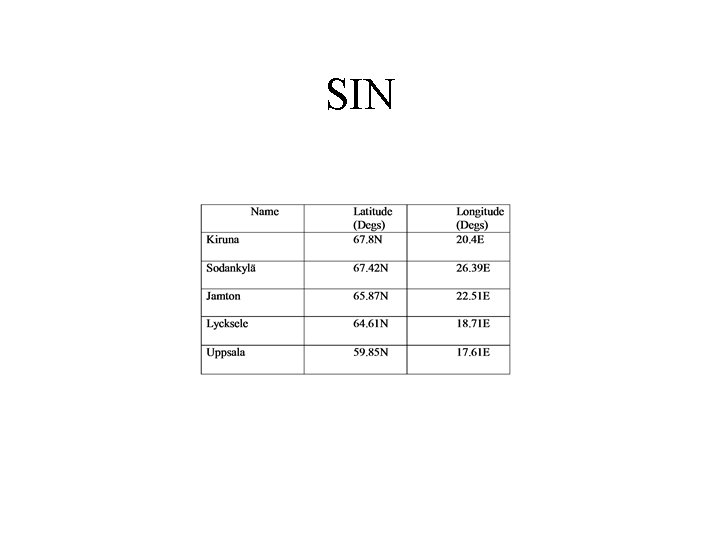
SIN
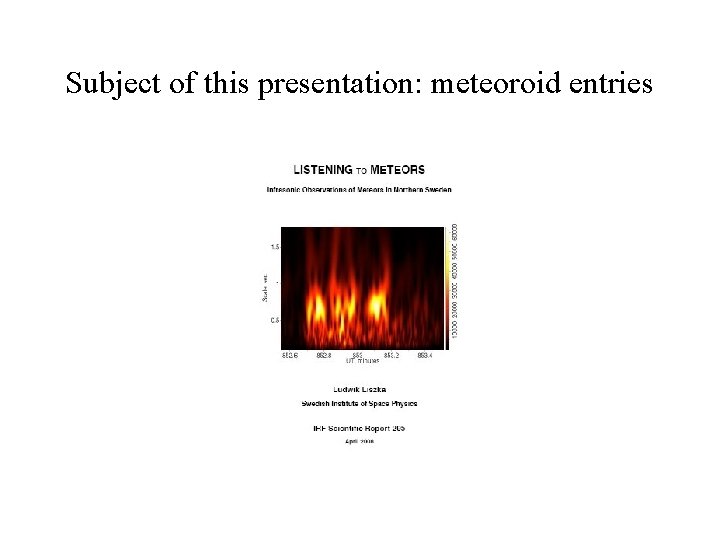
Subject of this presentation: meteoroid entries
Link to order the report
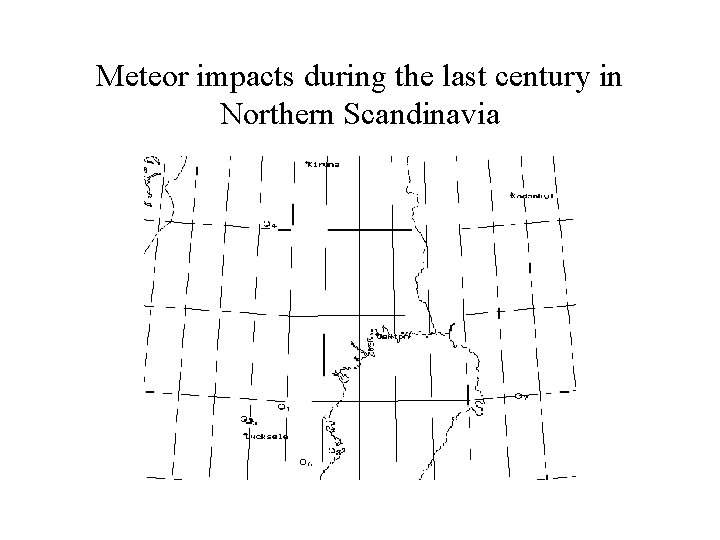
Meteor impacts during the last century in Northern Scandinavia
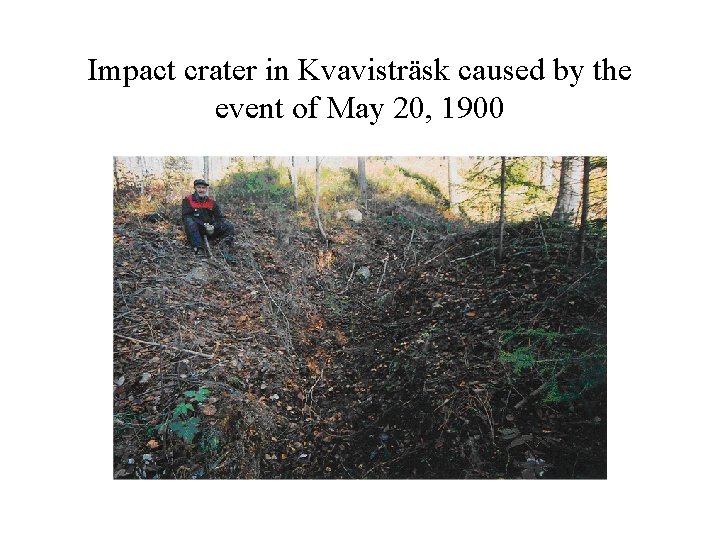
Impact crater in Kvavisträsk caused by the event of May 20, 1900
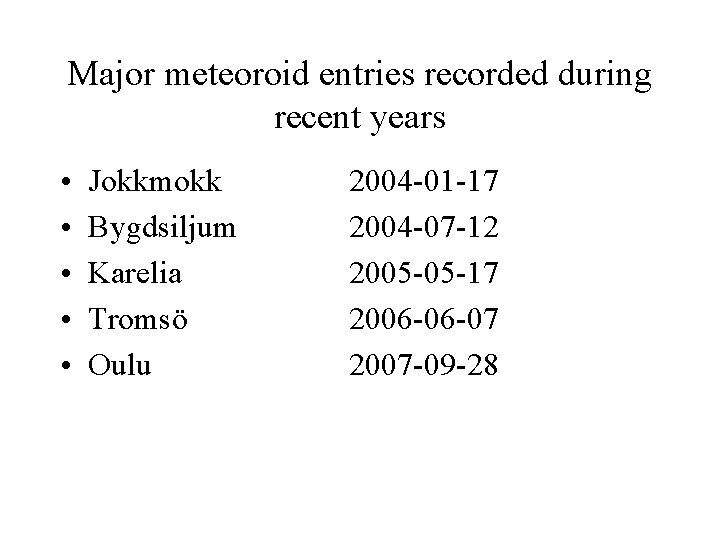
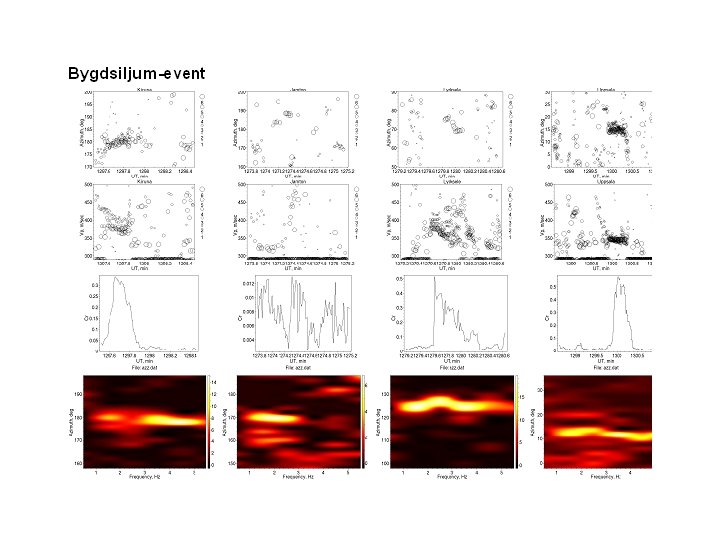
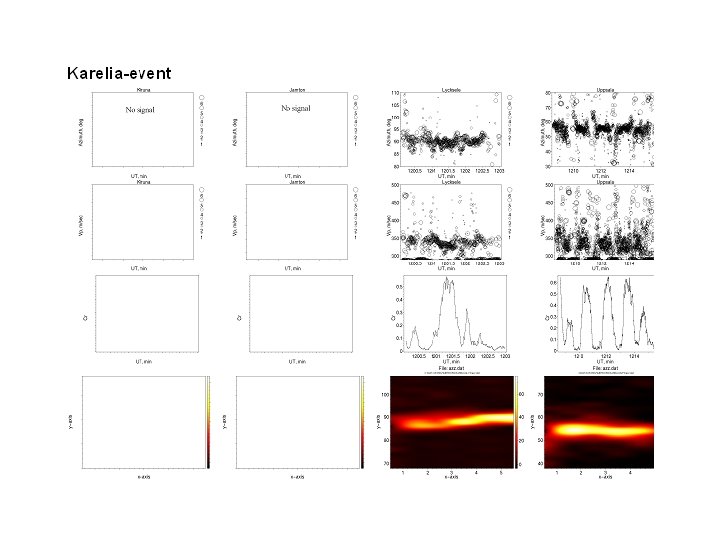
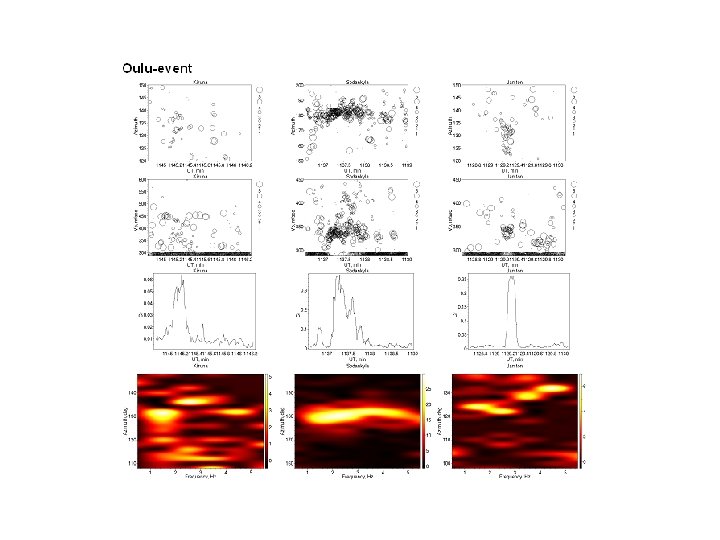
Major meteoroid entries recorded during recent years • • • Jokkmokk Bygdsiljum Karelia Tromsö Oulu 2004 -01 -17 2004 -07 -12 2005 -05 -17 2006 -06 -07 2007 -09 -28
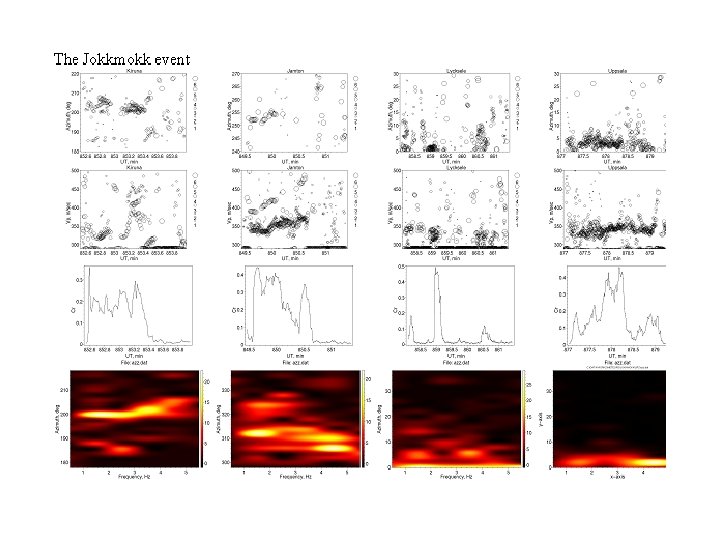
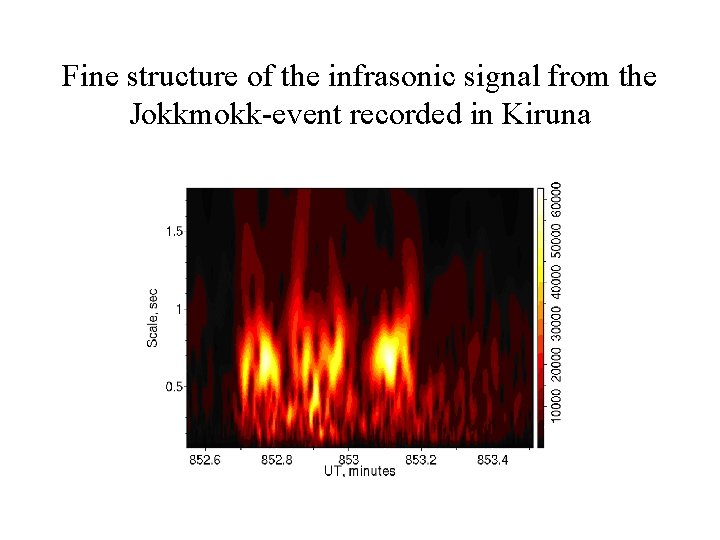
Fine structure of the infrasonic signal from the Jokkmokk-event recorded in Kiruna
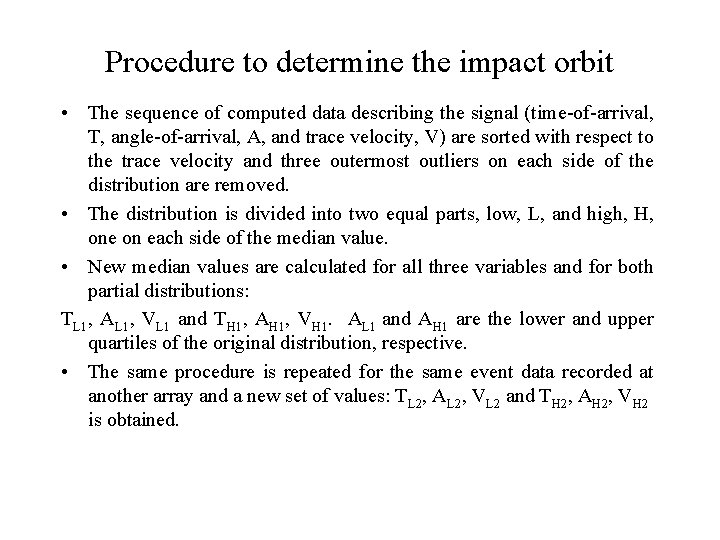
Procedure to determine the impact orbit • The sequence of computed data describing the signal (time-of-arrival, T, angle-of-arrival, A, and trace velocity, V) are sorted with respect to the trace velocity and three outermost outliers on each side of the distribution are removed. • The distribution is divided into two equal parts, low, L, and high, H, one on each side of the median value. • New median values are calculated for all three variables and for both partial distributions: TL 1, AL 1, VL 1 and TH 1, AH 1, VH 1. AL 1 and AH 1 are the lower and upper quartiles of the original distribution, respective. • The same procedure is repeated for the same event data recorded at another array and a new set of values: TL 2, AL 2, VL 2 and TH 2, AH 2, VH 2 is obtained.
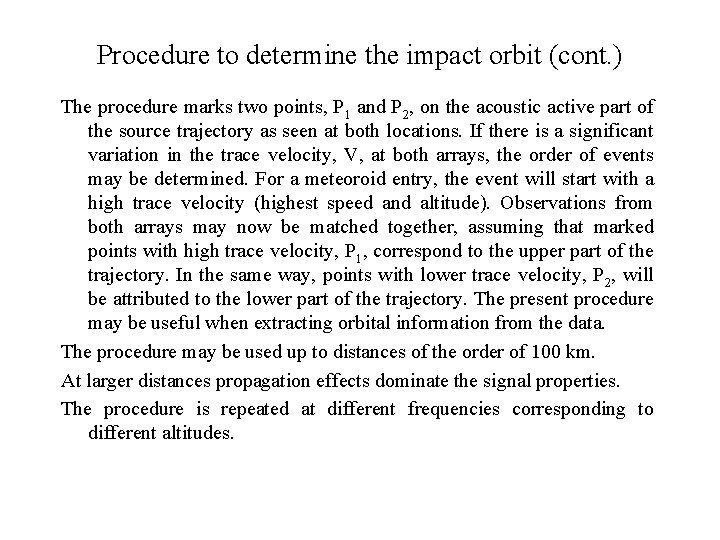
Procedure to determine the impact orbit (cont. ) The procedure marks two points, P 1 and P 2, on the acoustic active part of the source trajectory as seen at both locations. If there is a significant variation in the trace velocity, V, at both arrays, the order of events may be determined. For a meteoroid entry, the event will start with a high trace velocity (highest speed and altitude). Observations from both arrays may now be matched together, assuming that marked points with high trace velocity, P 1, correspond to the upper part of the trajectory. In the same way, points with lower trace velocity, P 2, will be attributed to the lower part of the trajectory. The present procedure may be useful when extracting orbital information from the data. The procedure may be used up to distances of the order of 100 km. At larger distances propagation effects dominate the signal properties. The procedure is repeated at different frequencies corresponding to different altitudes.
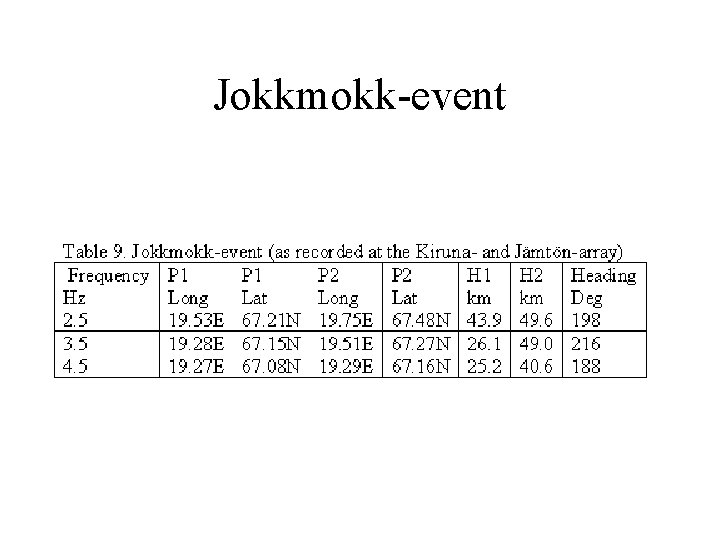
Jokkmokk-event
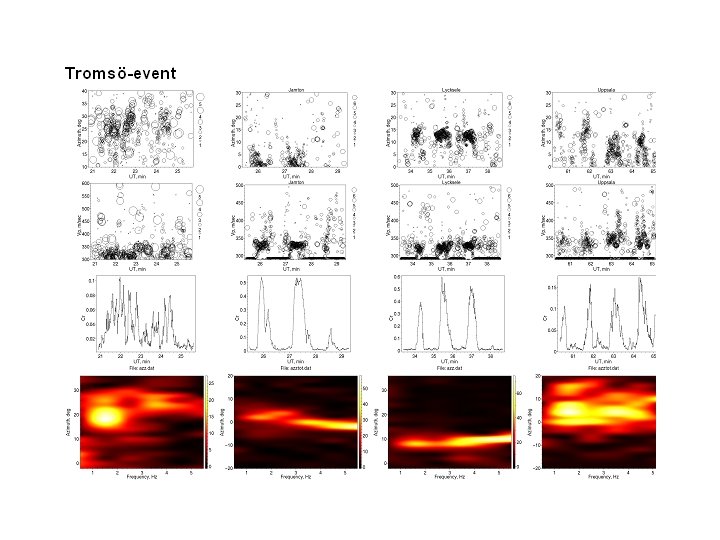
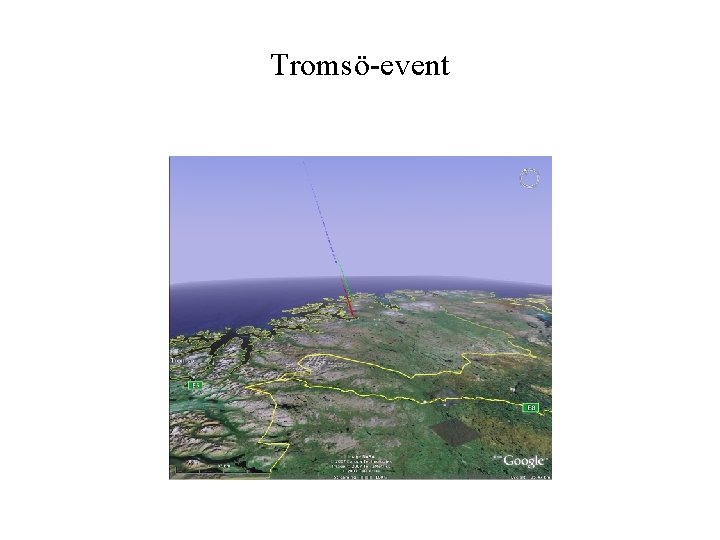
Tromsö-event
Search for unknown meteor events • Multiple indicators for known meteor events are extracted and used as a training set. • All infrasonic data are converted into multiple indicators (MIM-method) • A Neural Network model is constructed using the training set. • All data are passed through the model and the events which are most similar to the reference data are found. • These possible event are validated.
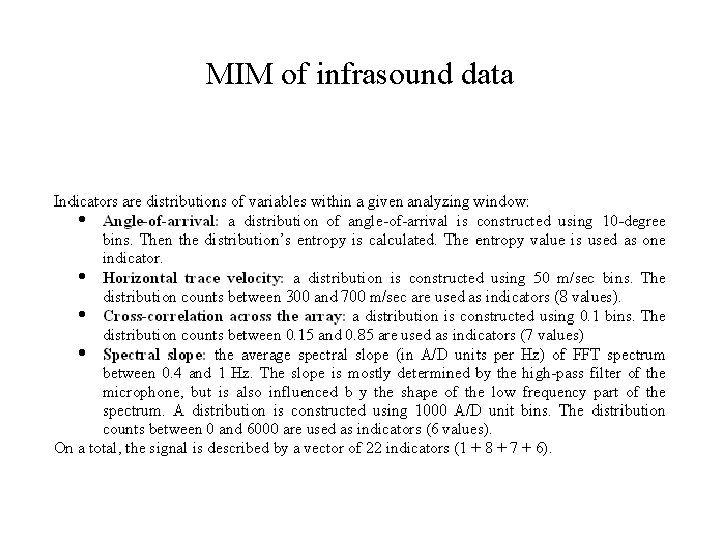
MIM of infrasound data
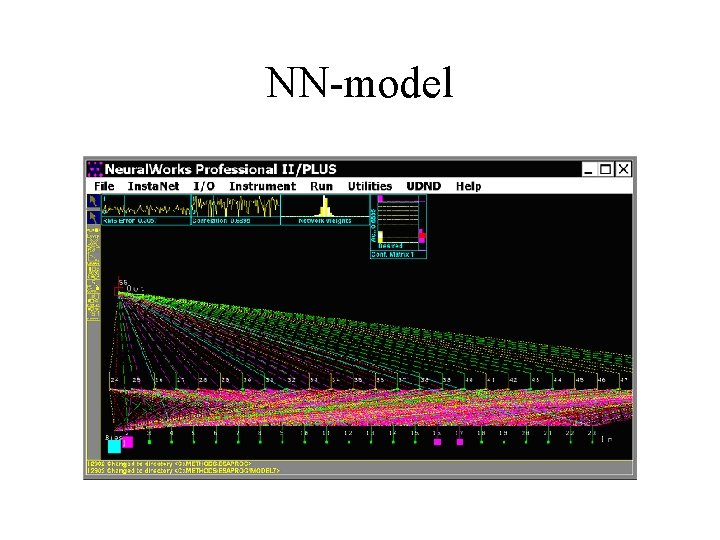
NN-model
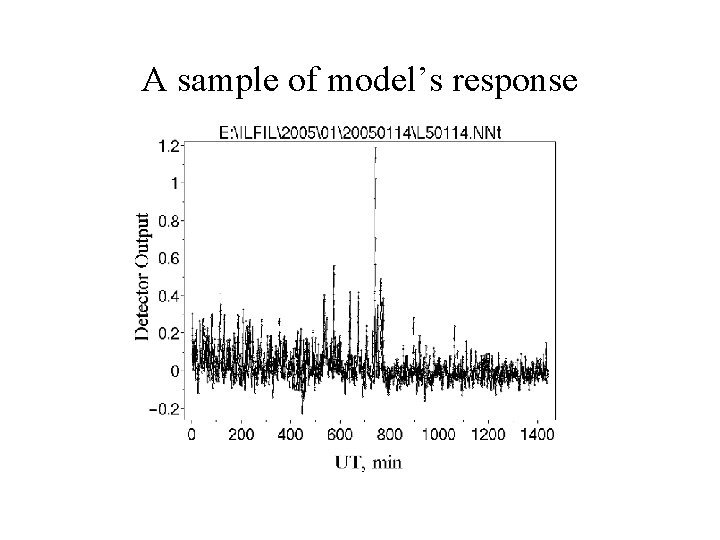
A sample of model’s response
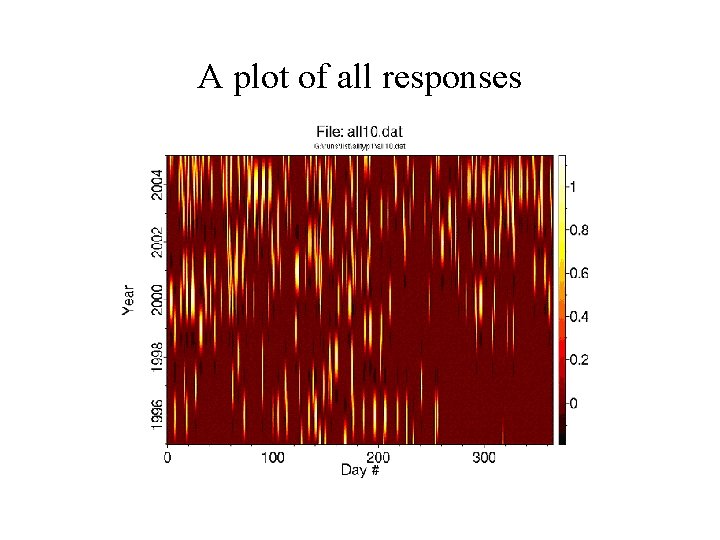
A plot of all responses
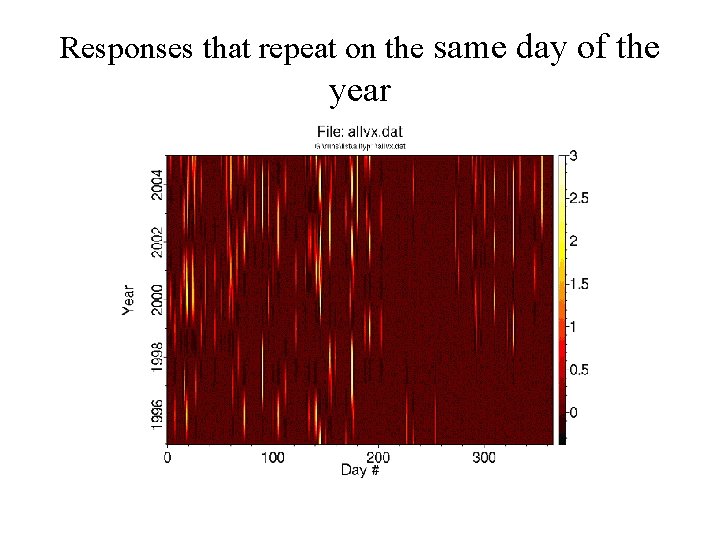
Responses that repeat on the same day of the year
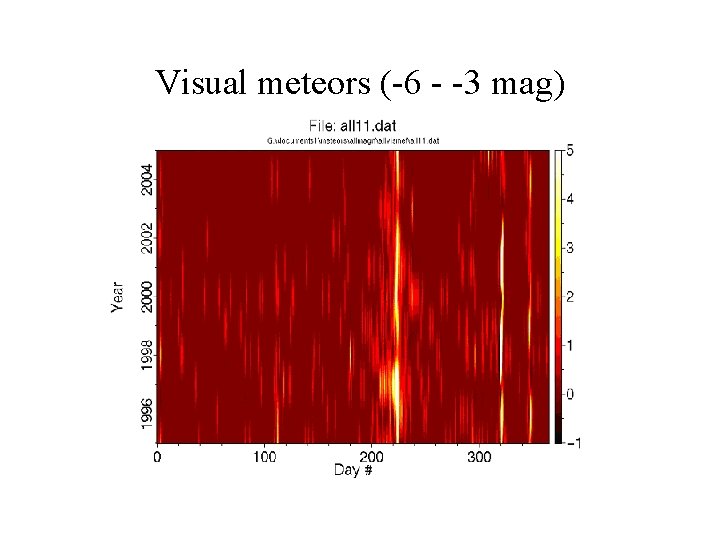
Visual meteors (-6 - -3 mag)
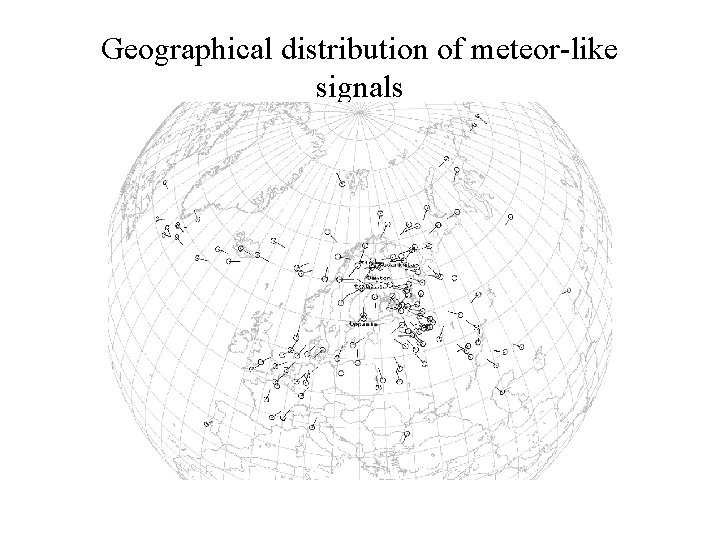
Geographical distribution of meteor-like signals