
INFRA RED ABSORPTION SPECTROSCOPY 1 2 Energy Levels
INFRA RED ABSORPTION SPECTROSCOPY 1
2
Energy Levels Basic Global Warming: The C 02 dance … About 15 micron radiation 3
4
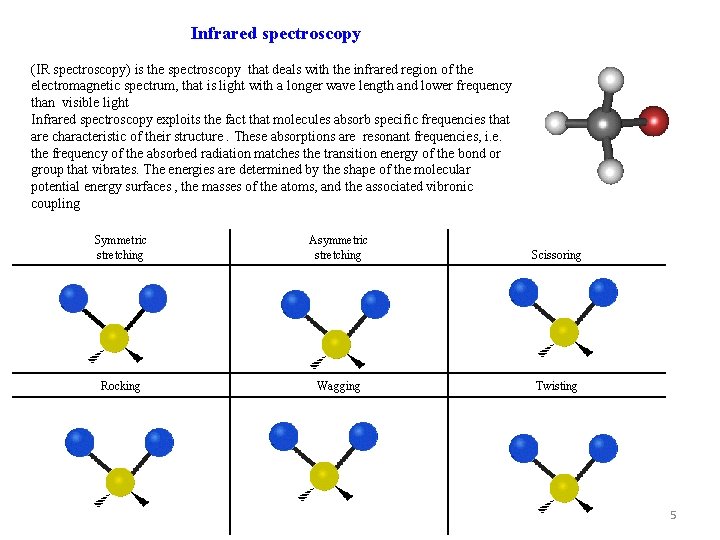
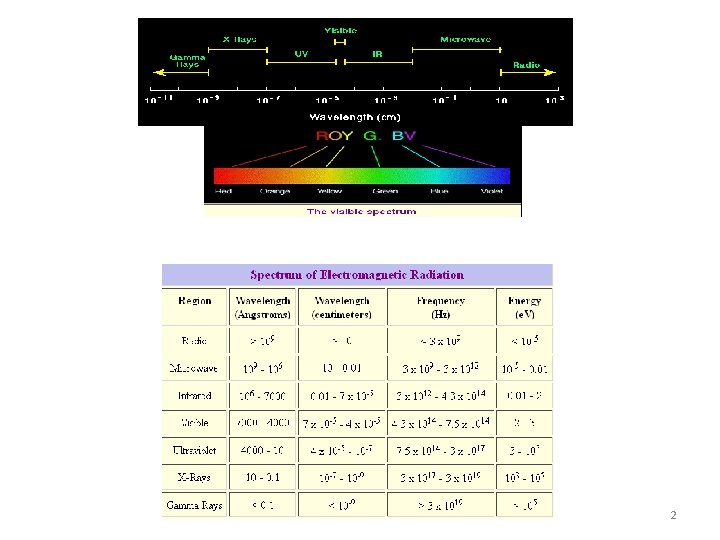
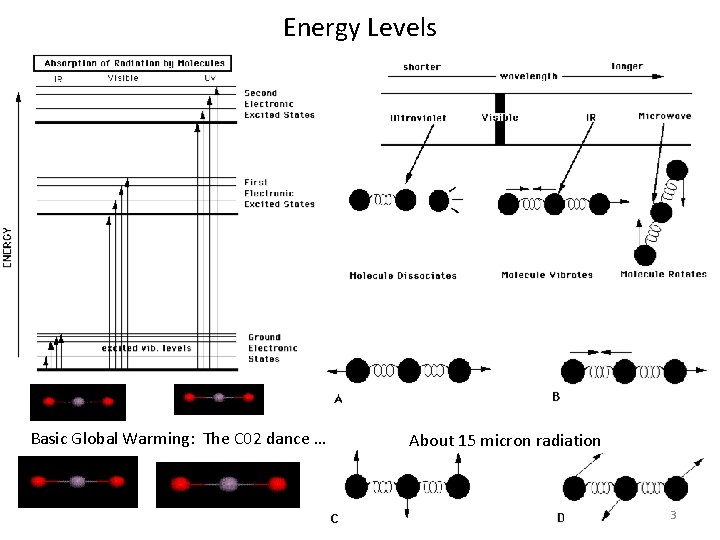
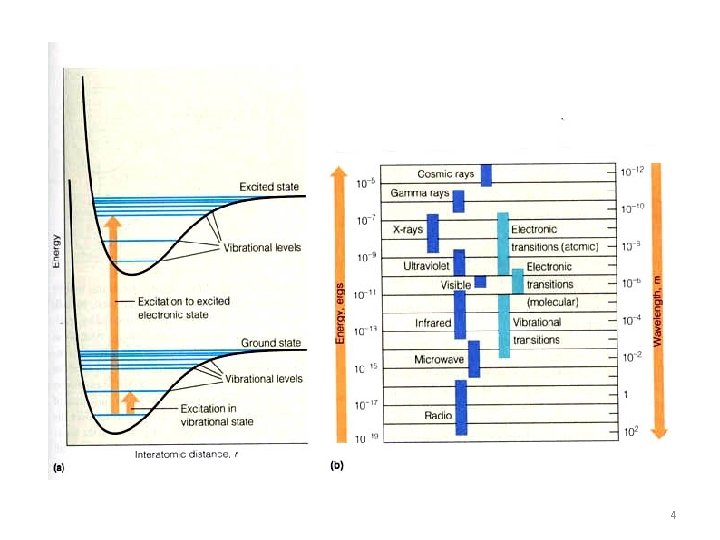
Infrared spectroscopy (IR spectroscopy) is the spectroscopy that deals with the infrared region of the electromagnetic spectrum, that is light with a longer wave length and lower frequency than visible light Infrared spectroscopy exploits the fact that molecules absorb specific frequencies that are characteristic of their structure. These absorptions are resonant frequencies, i. e. the frequency of the absorbed radiation matches the transition energy of the bond or group that vibrates. The energies are determined by the shape of the molecular potential energy surfaces , the masses of the atoms, and the associated vibronic coupling Symmetric stretching Asymmetric stretching Scissoring Rocking Wagging Twisting 5
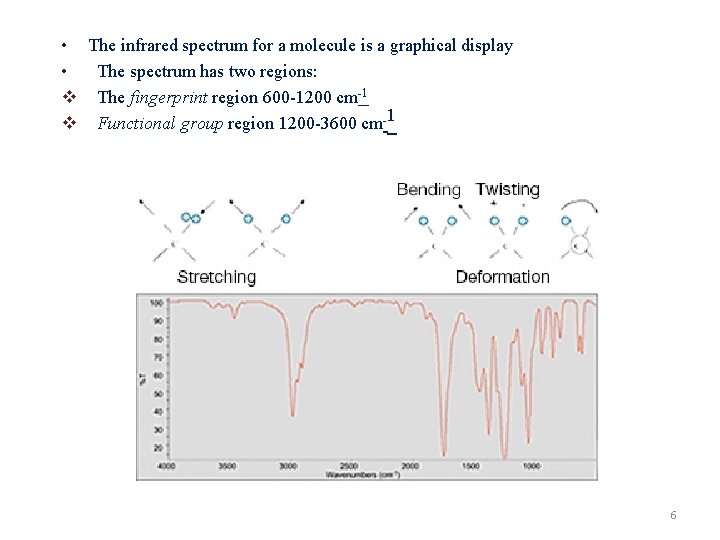
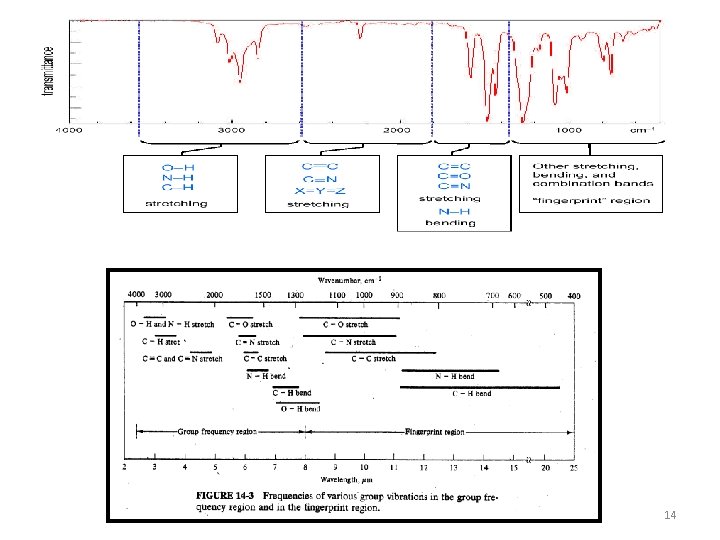
• The infrared spectrum for a molecule is a graphical display • The spectrum has two regions: v The fingerprint region 600 -1200 cm-1 v Functional group region 1200 -3600 cm-1 6
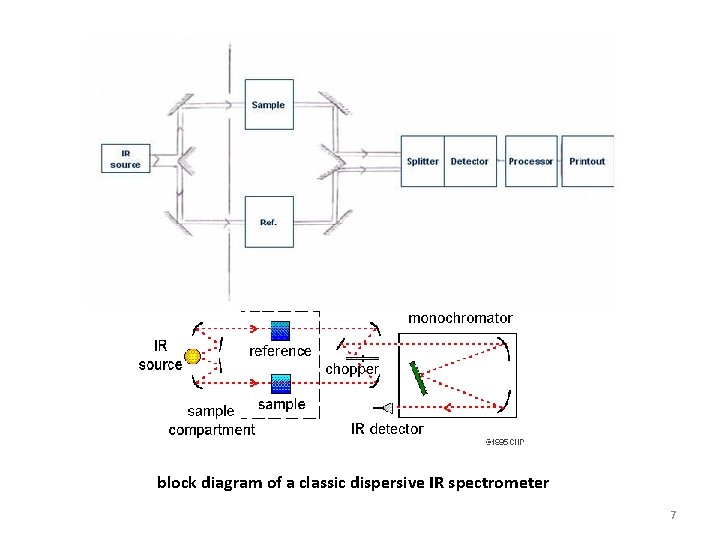
block diagram of a classic dispersive IR spectrometer 7
8
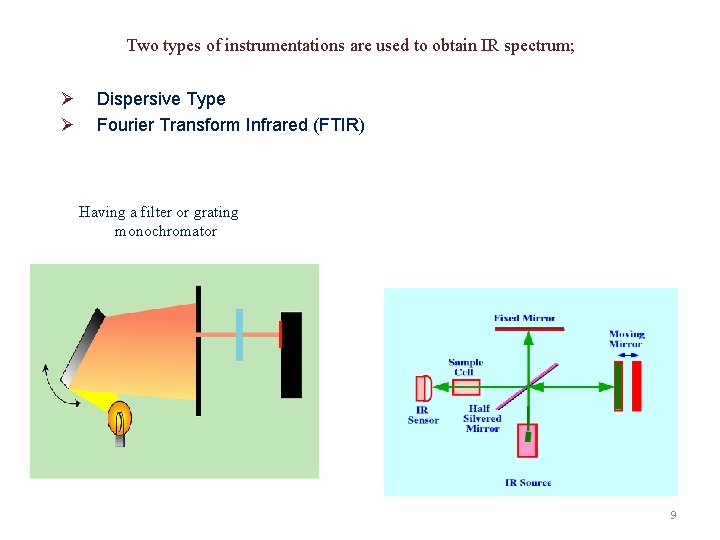
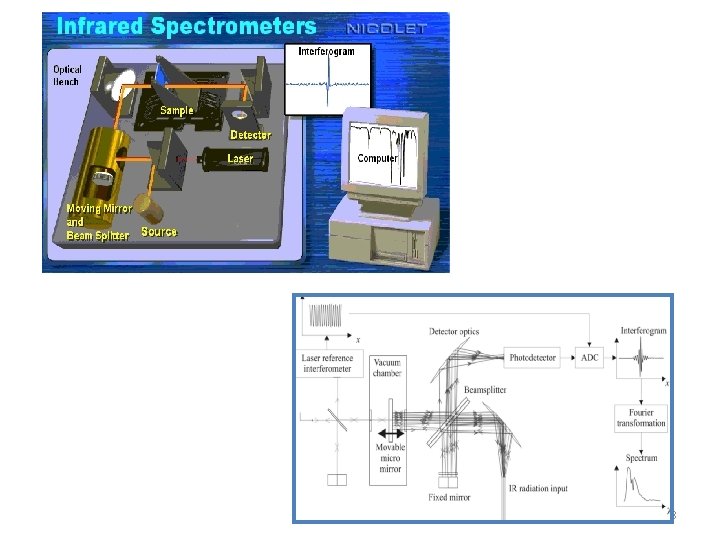
Two types of instrumentations are used to obtain IR spectrum; Ø Ø Dispersive Type Fourier Transform Infrared (FTIR) Having a filter or grating monochromator 9
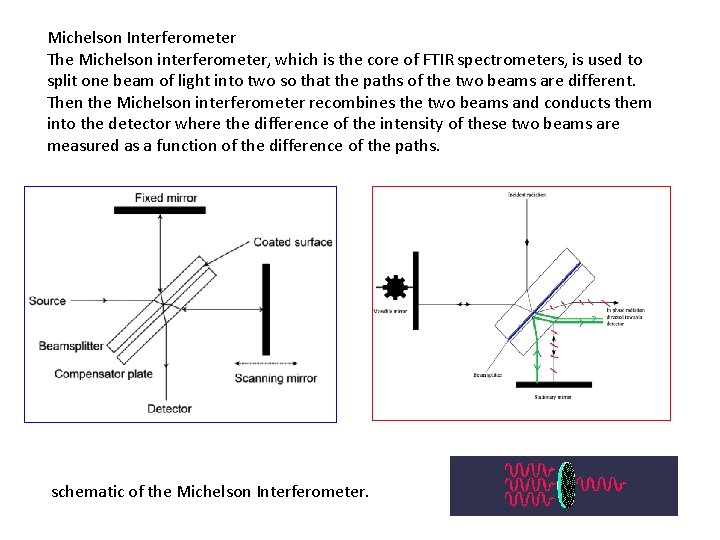
Michelson Interferometer The Michelson interferometer, which is the core of FTIR spectrometers, is used to split one beam of light into two so that the paths of the two beams are different. Then the Michelson interferometer recombines the two beams and conducts them into the detector where the difference of the intensity of these two beams are measured as a function of the difference of the paths. schematic of the Michelson Interferometer.
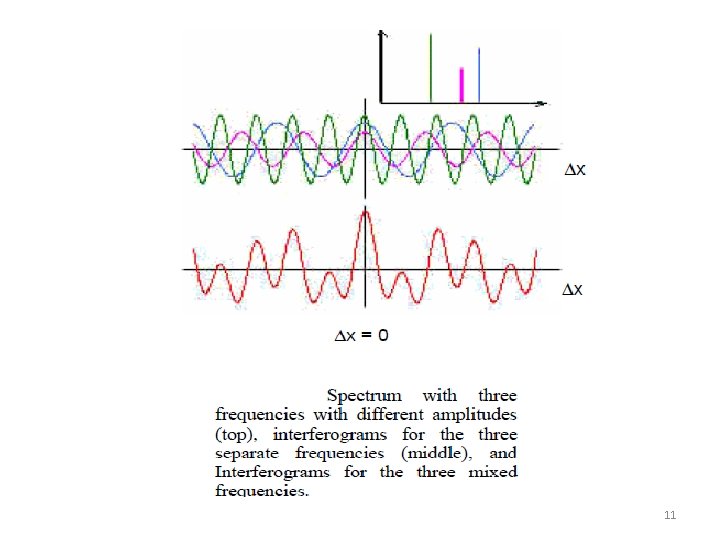
11
Applications of FT-IR v v v v Pharmaceutical research Forensic investigations Polymer analysis Lubricant formulation and fuel additives Foods research Quality assurance and control Environmental and water quality analysis methods v Biochemical and biomedical research coatings and surfactants 12
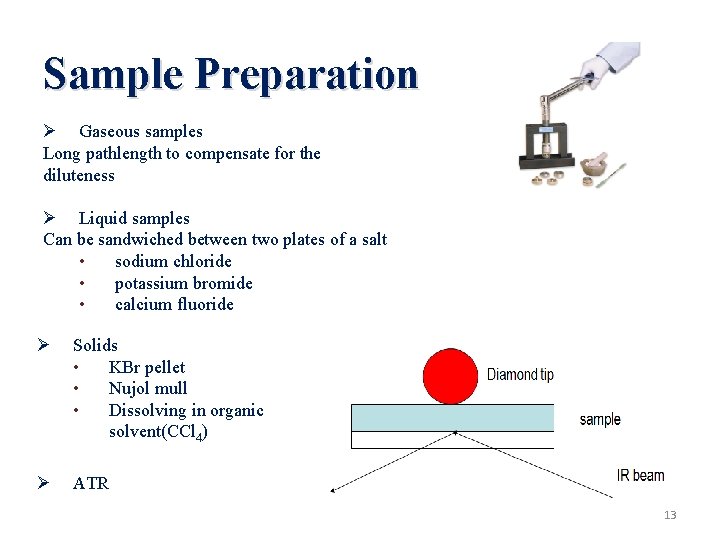
Sample Preparation Ø Gaseous samples Long pathlength to compensate for the diluteness Ø Liquid samples Can be sandwiched between two plates of a salt • sodium chloride • potassium bromide • calcium fluoride Ø Solids • KBr pellet • Nujol mull • Dissolving in organic solvent(CCl 4) Ø ATR 13
14
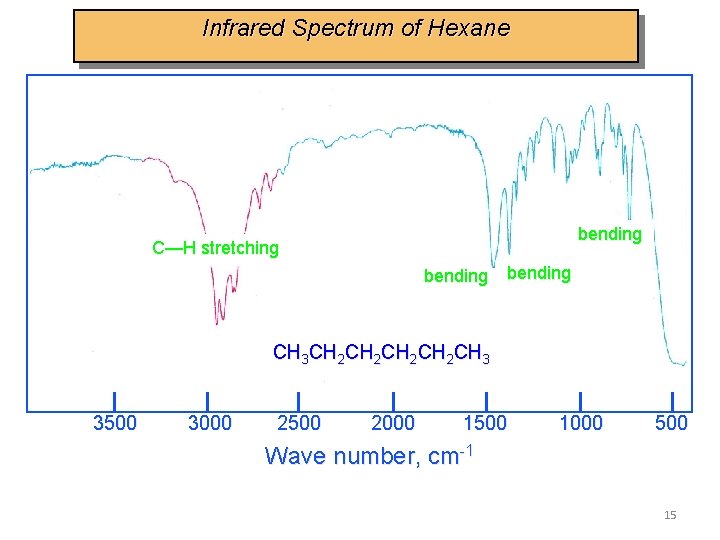
Infrared Spectrum of Hexane bending C—H stretching bending CH 3 CH 2 CH 2 CH 3 3500 3000 2500 2000 1500 1000 500 Wave number, cm-1 15
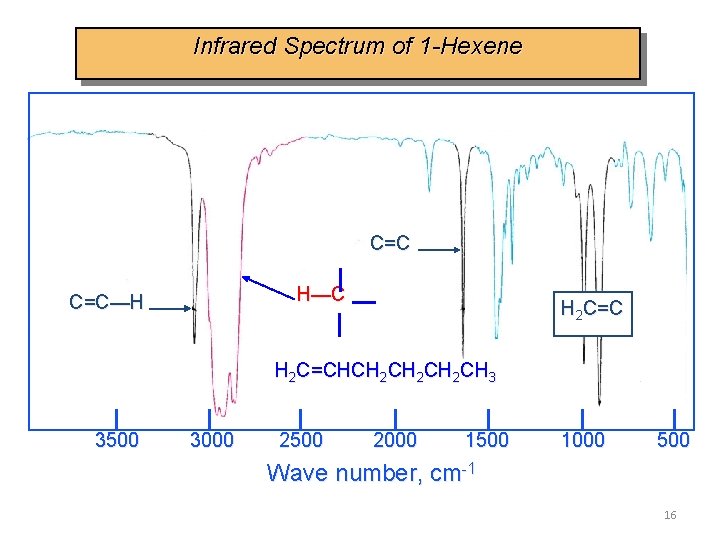
Infrared Spectrum of 1 -Hexene C=C H—C C=C—H H 2 C=CHCH 2 CH 2 CH 3 3500 3000 2500 2000 1500 1000 500 Wave number, cm-1 16
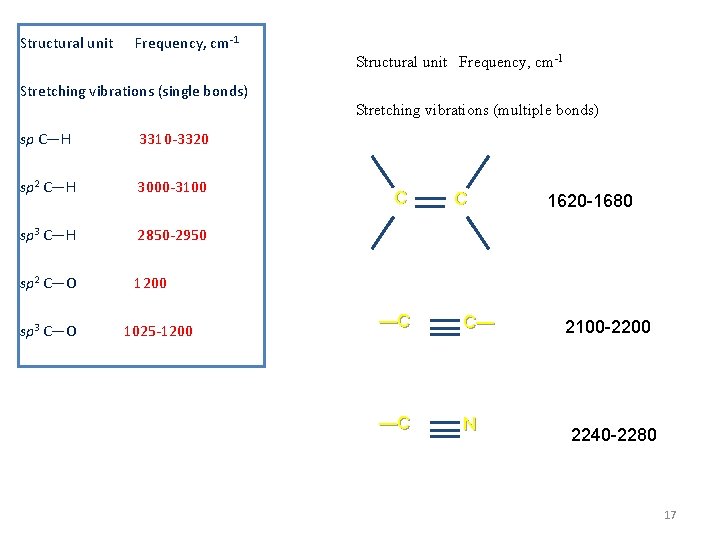
Structural unit Frequency, cm-1 Structural unit Frequency, cm-1 Stretching vibrations (single bonds) Stretching vibrations (multiple bonds) sp C—H 3310 -3320 sp 2 C—H 3000 -3100 C C 1620 -1680 sp 3 C—H 2850 -2950 sp 2 C—O 1200 sp 3 C—O 1025 -1200 —C C— —C N 2100 -2200 2240 -2280 17
- Slides: 17