
Informational Text Strategies for Improving Reading Comprehension Think
- Slides: 21
Informational Text Strategies for Improving Reading Comprehension
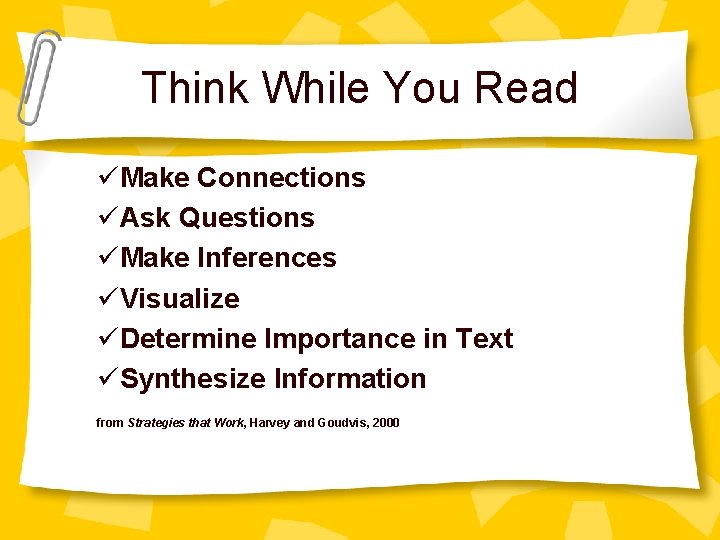
Think While You Read üMake Connections üAsk Questions üMake Inferences üVisualize üDetermine Importance in Text üSynthesize Information from Strategies that Work, Harvey and Goudvis, 2000
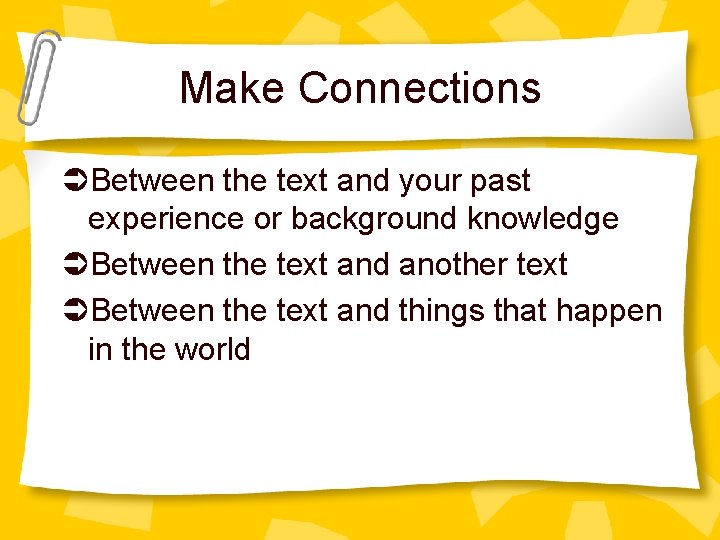
Make Connections Between the text and your past experience or background knowledge Between the text and another text Between the text and things that happen in the world
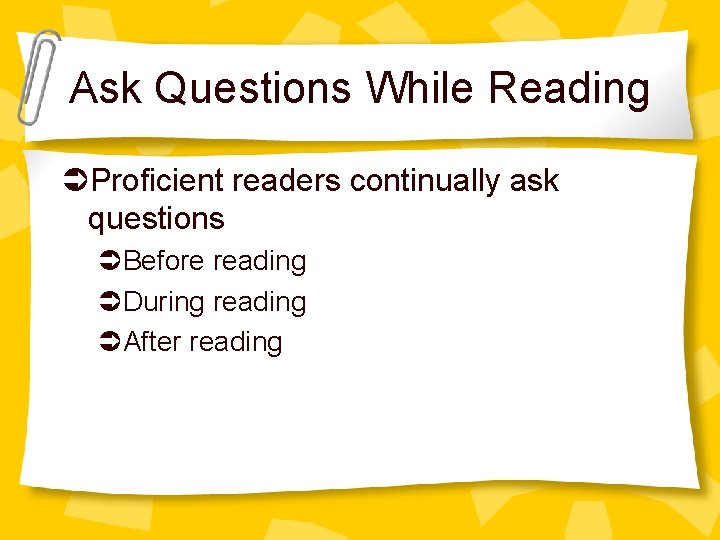
Ask Questions While Reading Proficient readers continually ask questions Before reading During reading After reading
Make Inferences While Reading Not all “answers” or facts can be found directly in the text. “Read between the lines. ” Writers sometimes IMPLY meaning; readers INFER that meaning.
Visualize While Reading Create pictures in your mind Use author’s words Use your own background/experience Make comparisons Note words that appeal to senses
Determine Important Facts and Details While Reading Activate prior knowledge Note characteristics of text Skim text Read bold print, illustrations, graphs and tables Read first and last line of each paragraph carefully Take notes or highlight text when possible; use sticky notes in textbooks
Synthesize After Reading Retell information Add personal response Make comparisons and contrasts Attempt to answer “I wonder” questions Make application of reading to real world
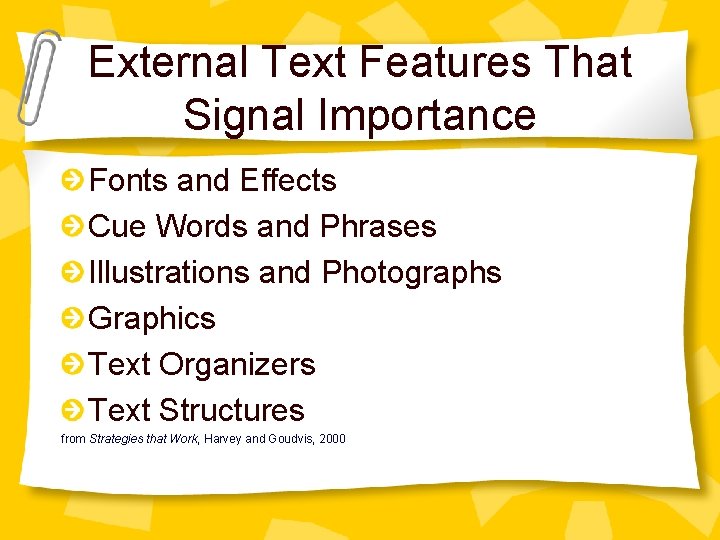
External Text Features That Signal Importance Fonts and Effects Cue Words and Phrases Illustrations and Photographs Graphics Text Organizers Text Structures from Strategies that Work, Harvey and Goudvis, 2000
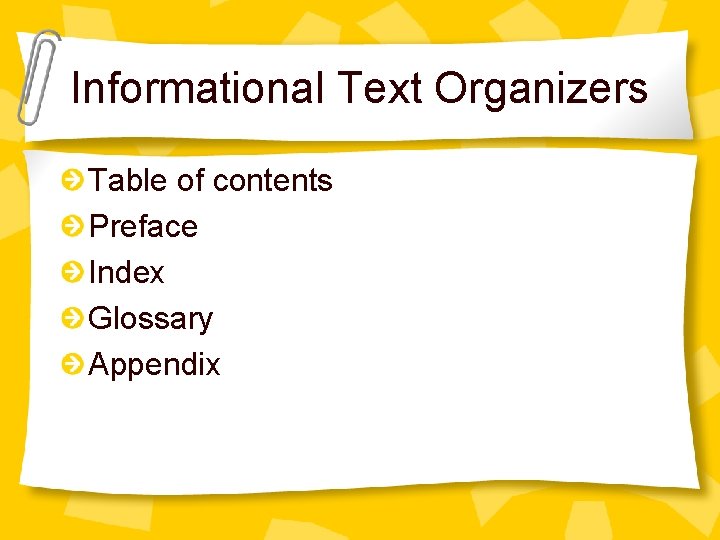
Informational Text Organizers Table of contents Preface Index Glossary Appendix
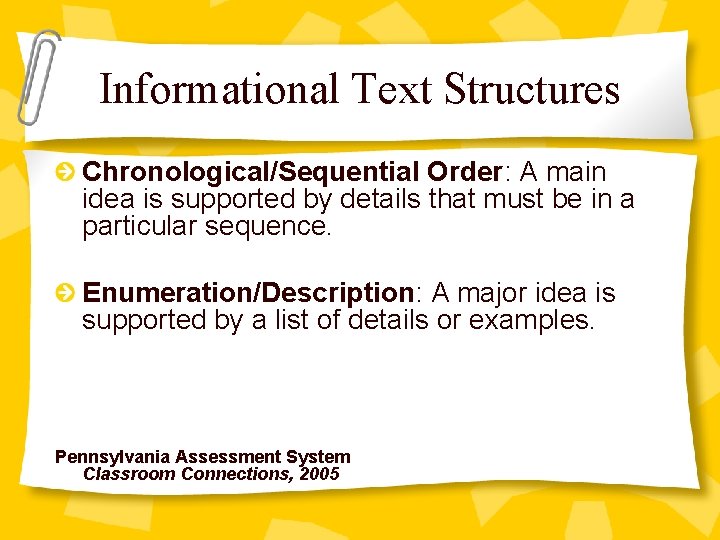
Informational Text Structures Chronological/Sequential Order: A main idea is supported by details that must be in a particular sequence. Enumeration/Description: A major idea is supported by a list of details or examples. Pennsylvania Assessment System Classroom Connections, 2005
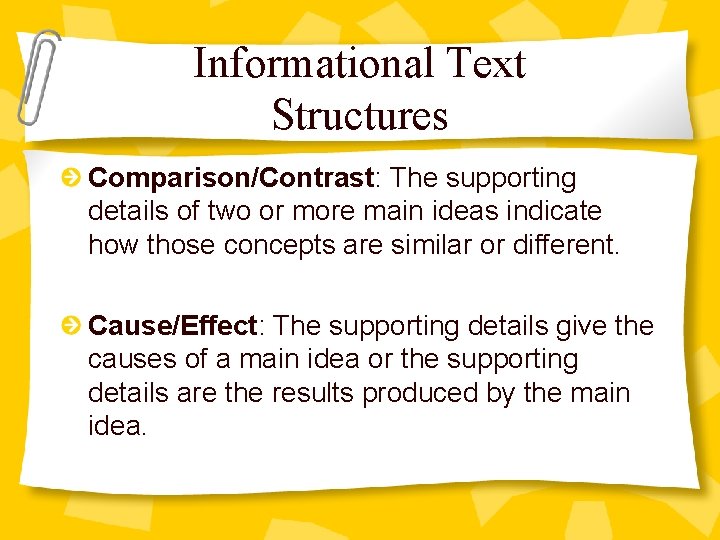
Informational Text Structures Comparison/Contrast: The supporting details of two or more main ideas indicate how those concepts are similar or different. Cause/Effect: The supporting details give the causes of a main idea or the supporting details are the results produced by the main idea.
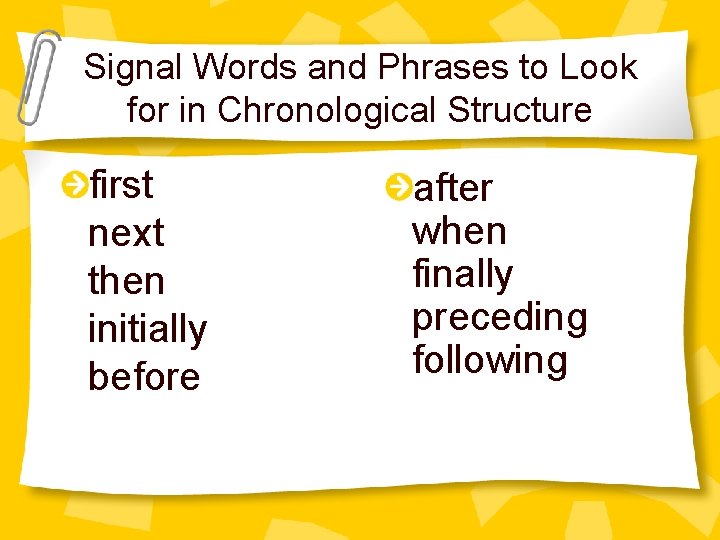
Signal Words and Phrases to Look for in Chronological Structure first next then initially before after when finally preceding following
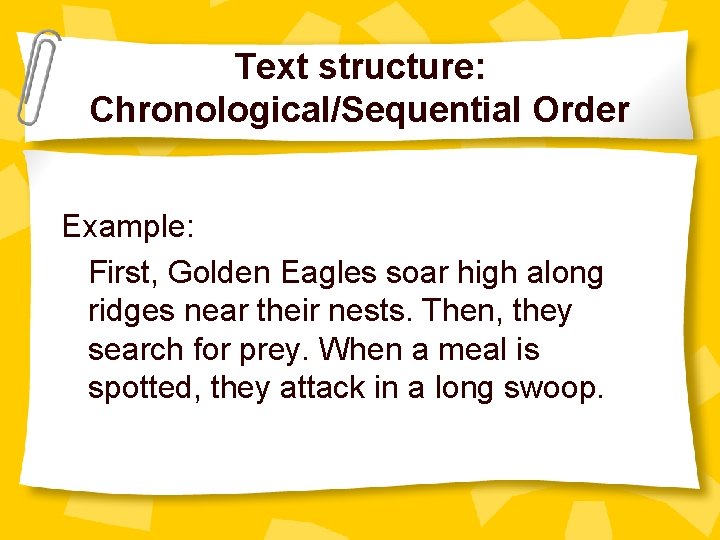
Text structure: Chronological/Sequential Order Example: First, Golden Eagles soar high along ridges near their nests. Then, they search for prey. When a meal is spotted, they attack in a long swoop.
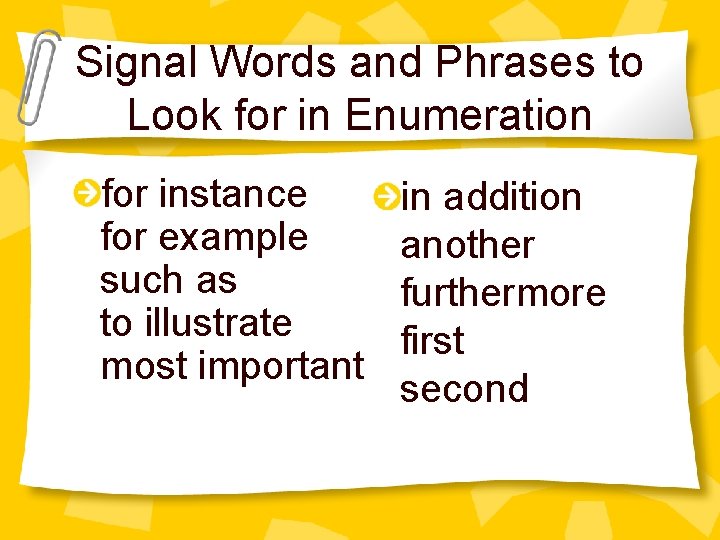
Signal Words and Phrases to Look for in Enumeration for instance for example such as to illustrate most important in addition another furthermore first second
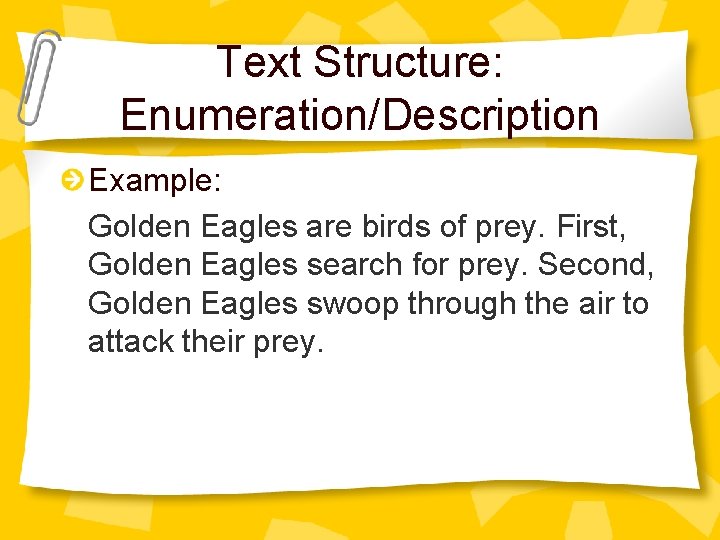
Text Structure: Enumeration/Description Example: Golden Eagles are birds of prey. First, Golden Eagles search for prey. Second, Golden Eagles swoop through the air to attack their prey.
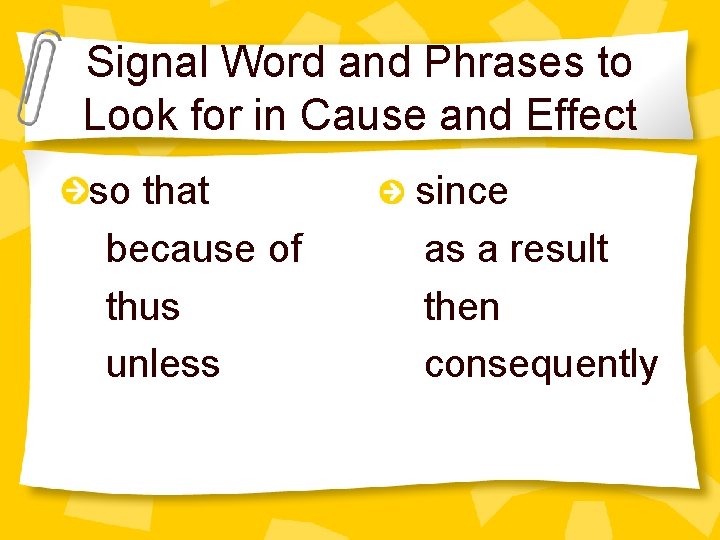
Signal Word and Phrases to Look for in Cause and Effect so that because of thus unless since as a result then consequently
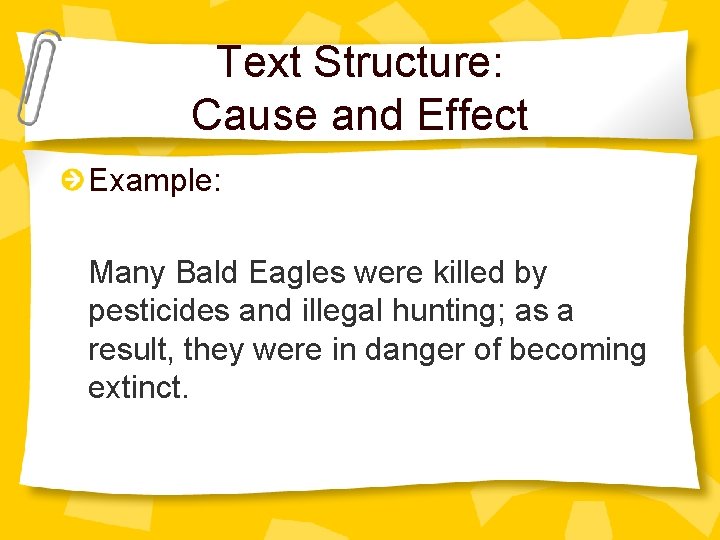
Text Structure: Cause and Effect Example: Many Bald Eagles were killed by pesticides and illegal hunting; as a result, they were in danger of becoming extinct.
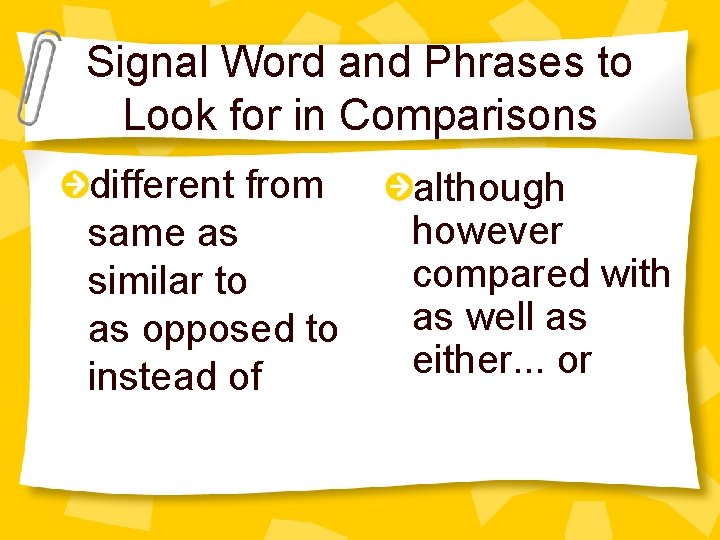
Signal Word and Phrases to Look for in Comparisons different from same as similar to as opposed to instead of although however compared with as well as either. . . or
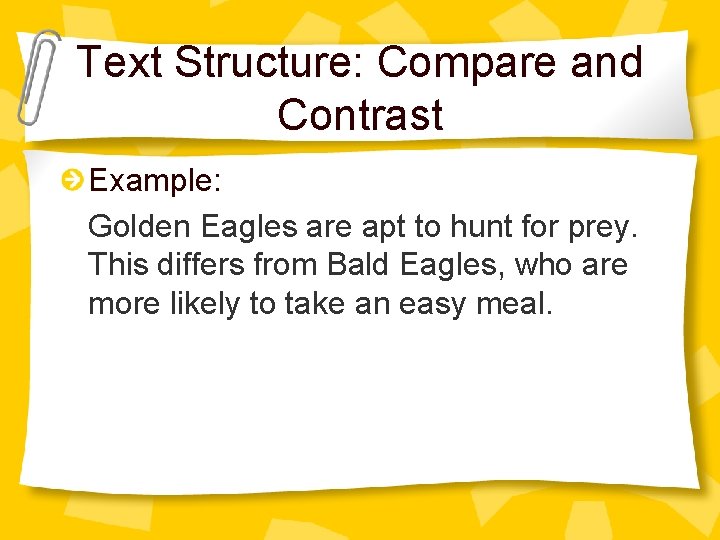
Text Structure: Compare and Contrast Example: Golden Eagles are apt to hunt for prey. This differs from Bald Eagles, who are more likely to take an easy meal.
When Assigned an Informational Text: • Use strategies before reading, while reading, and after reading! You will comprehend the material better and be able to do your assignments more easily ; )