
Information Theory and Security Prakash Panangaden Mc Gill
- Slides: 41
Information Theory and Security Prakash Panangaden Mc. Gill University First Canada-France Workshop on Foundations and Practice of Security Montréal 2008
Why do we care? • Security is about controlling the flow of “information. ” • We need to consider “adversaries” and analyze what they can do. • Adversaries may have access to lots of data and perform statistical analysis. • Thus we need to think probabilistically.
What is information? • A measure of uncertainty. • Can we really analyze it quantitatively? • What do the numerical values mean? • Is it tied to “knowledge”? • Is it subjective?
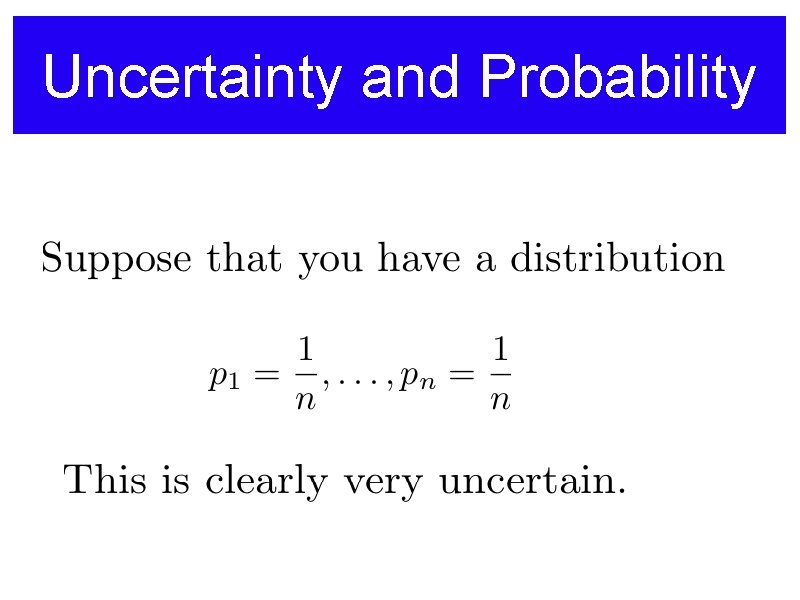
Uncertainty and Probability
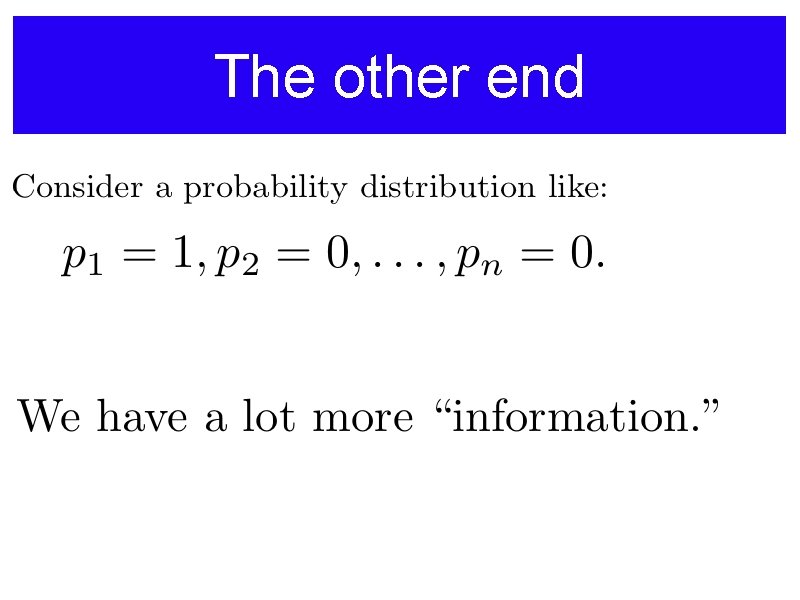
The other end
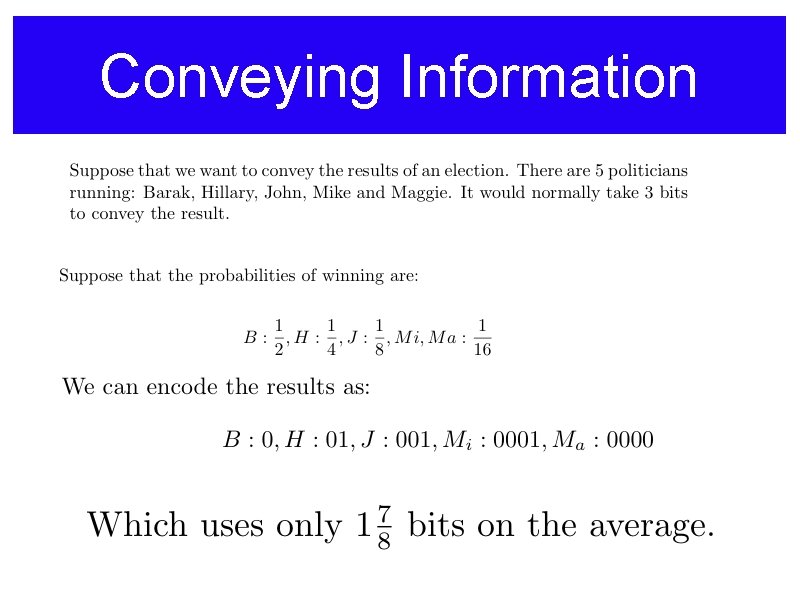
Conveying Information
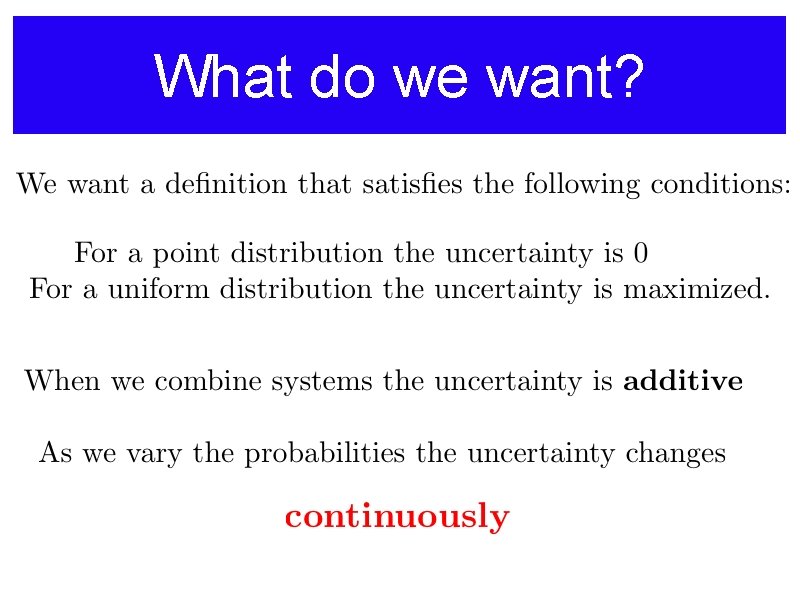
What do we want?
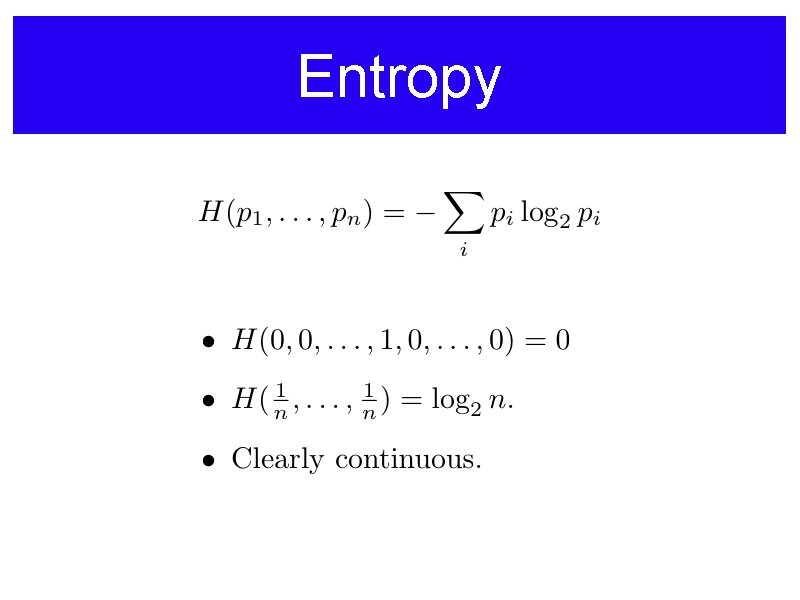
Entropy
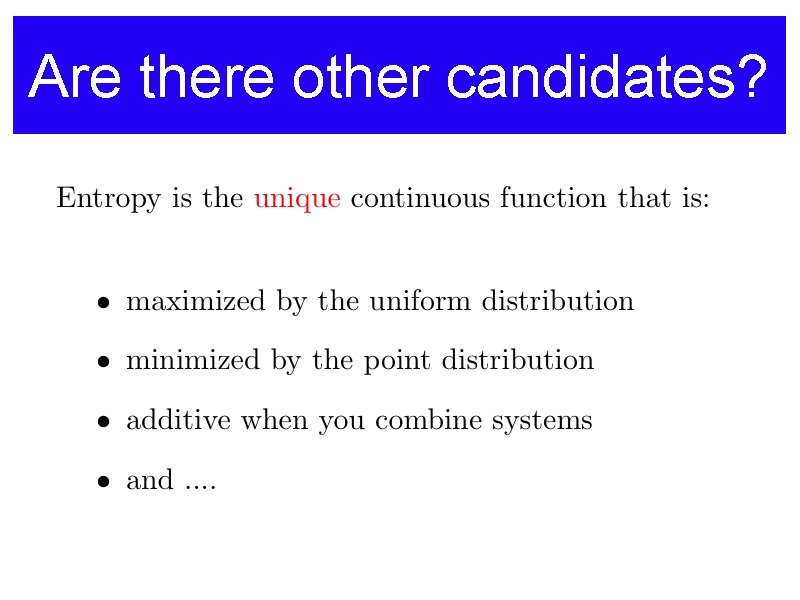
Are there other candidates?
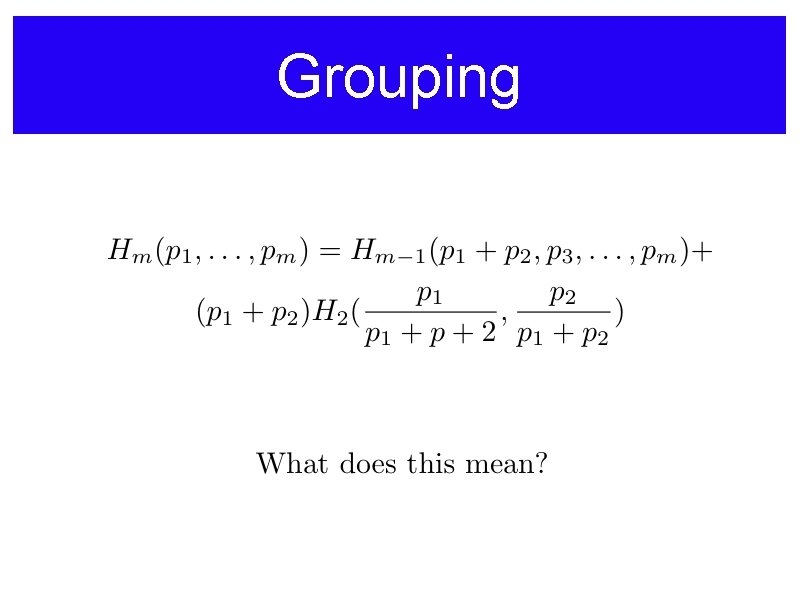
Grouping
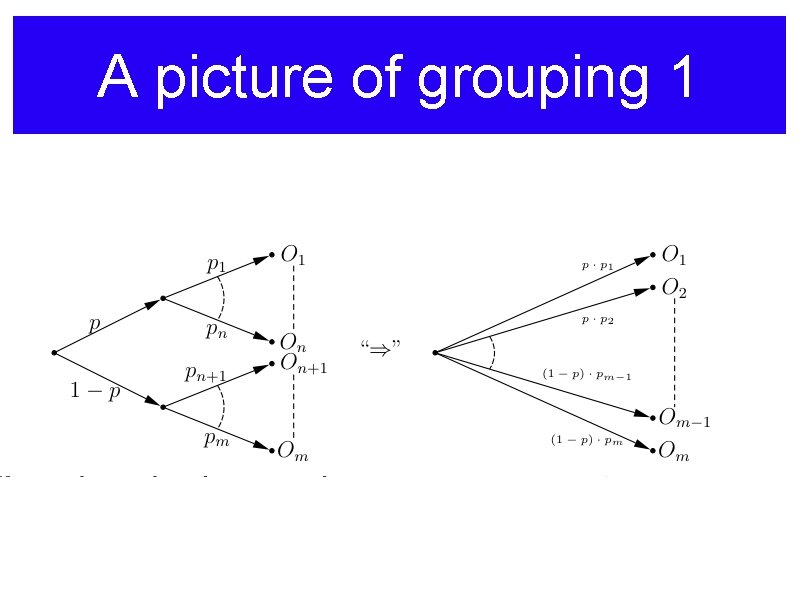
A picture of grouping 1
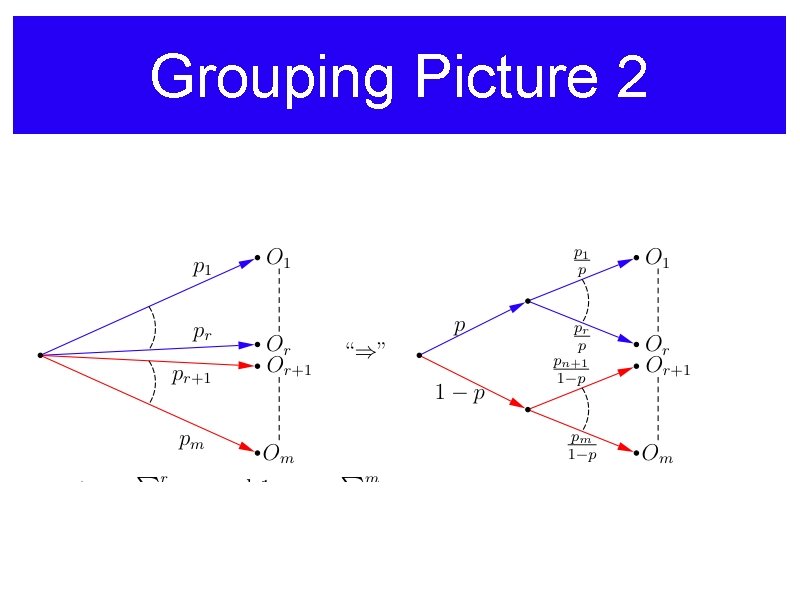
Grouping Picture 2
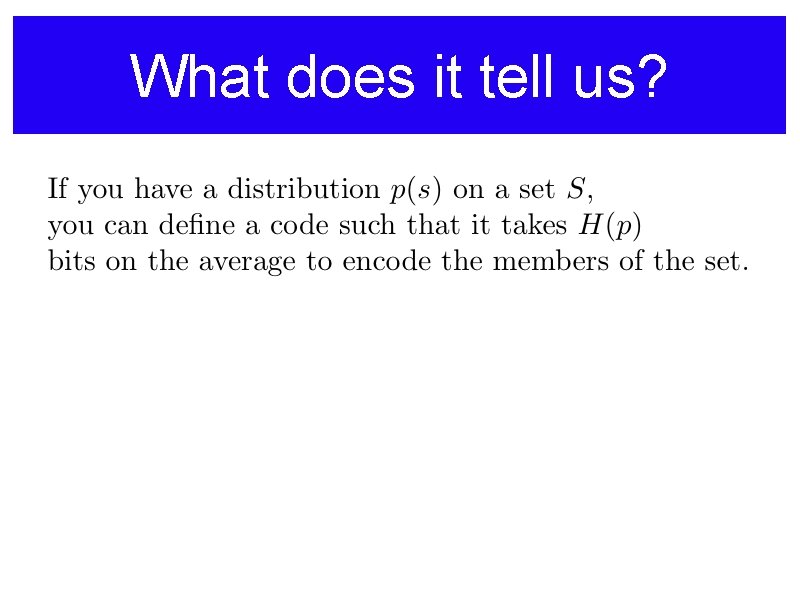
What does it tell us?
What we really care about • In security we want to know how to extract secret information from readily available data. • We want to measure how information (uncertainty) about one quantity conveys information about another.
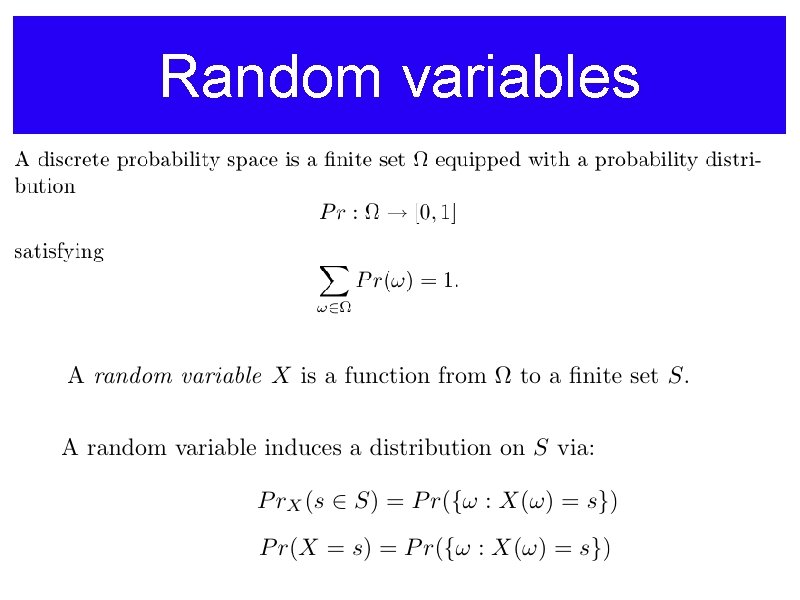
Random variables
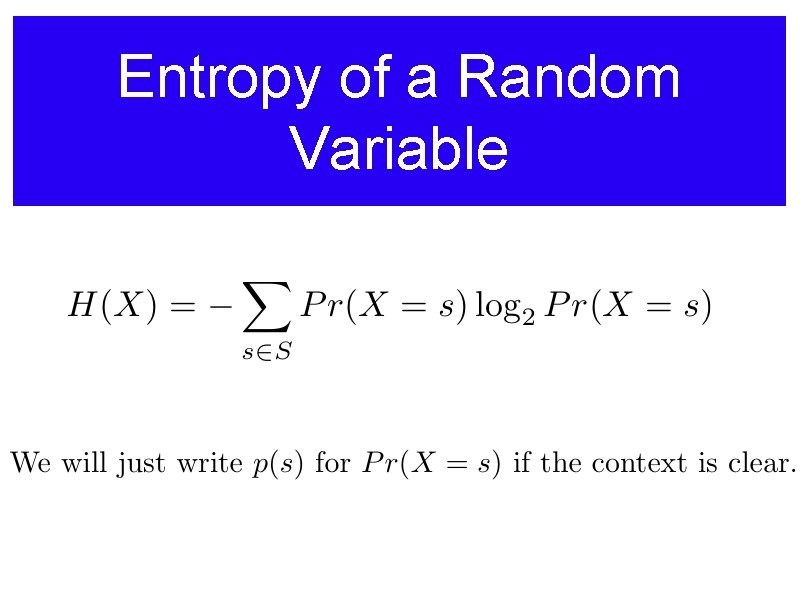
Entropy of a Random Variable
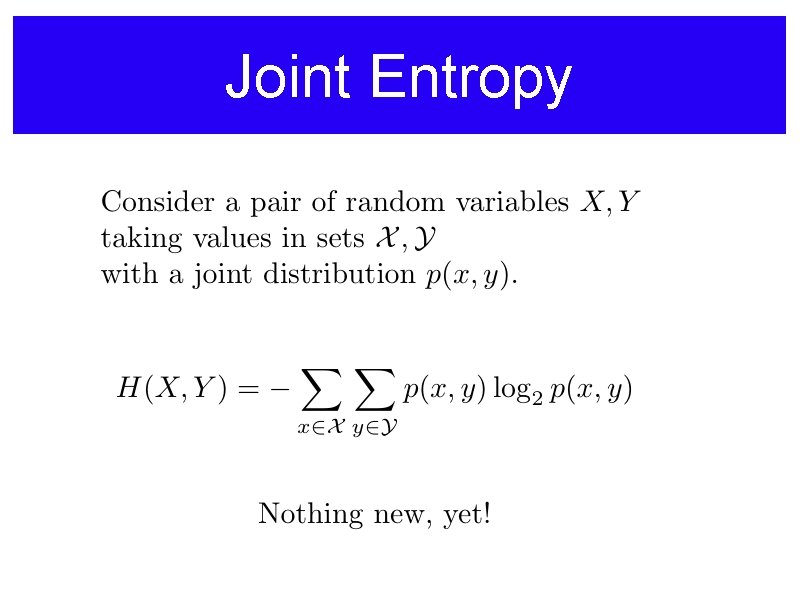
Joint Entropy
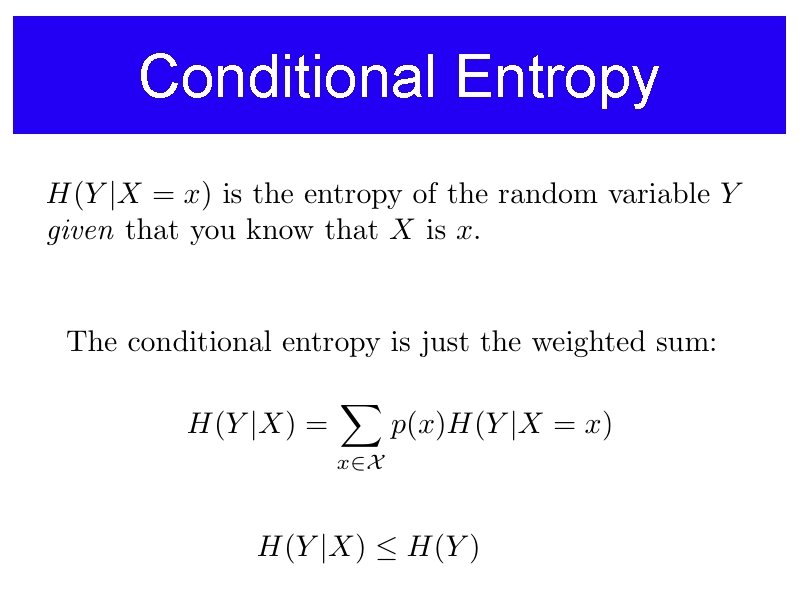
Conditional Entropy
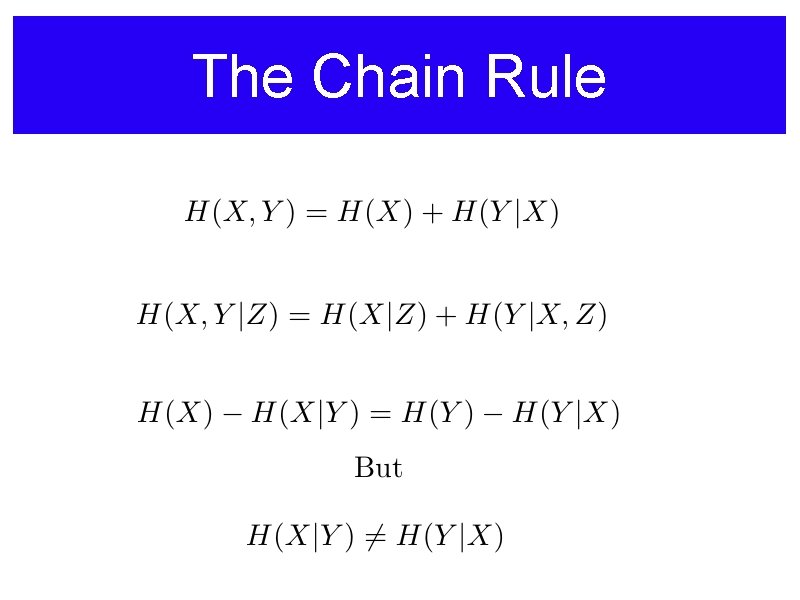
The Chain Rule
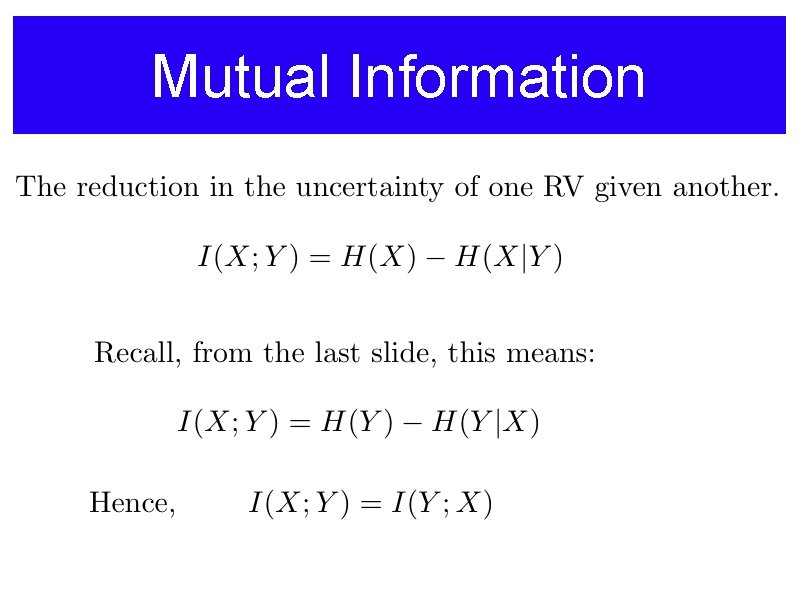
Mutual Information
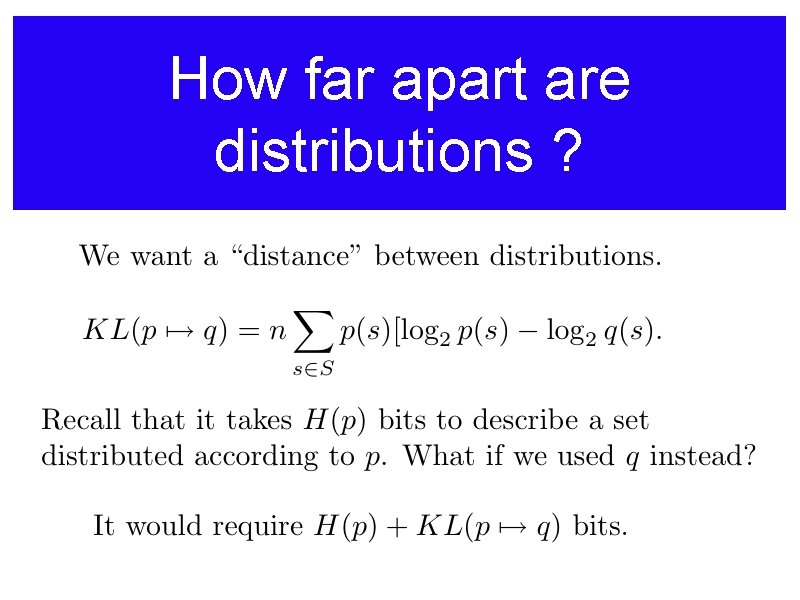
How far apart are distributions ?
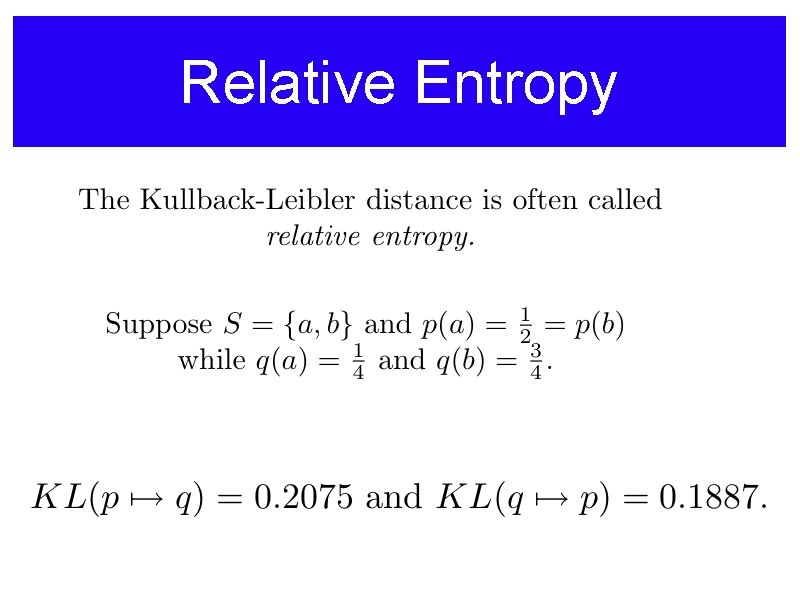
Relative Entropy
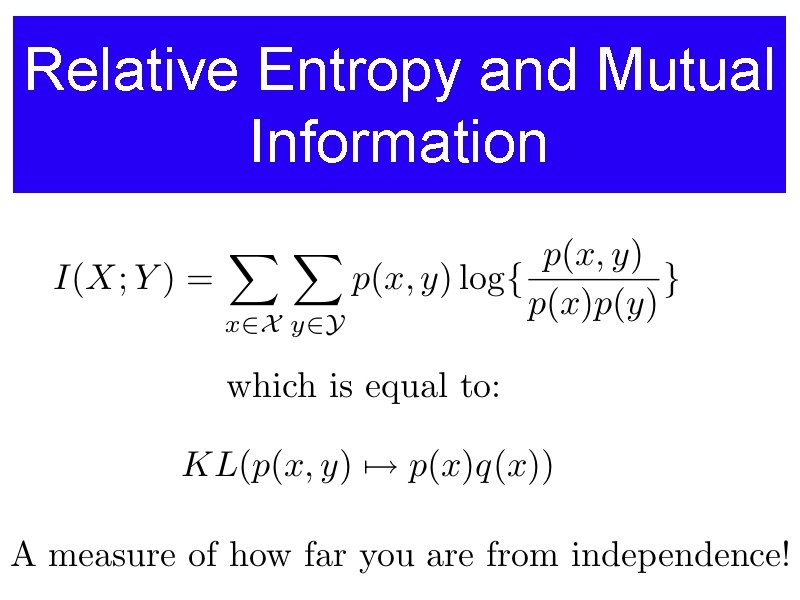
Relative Entropy and Mutual Information
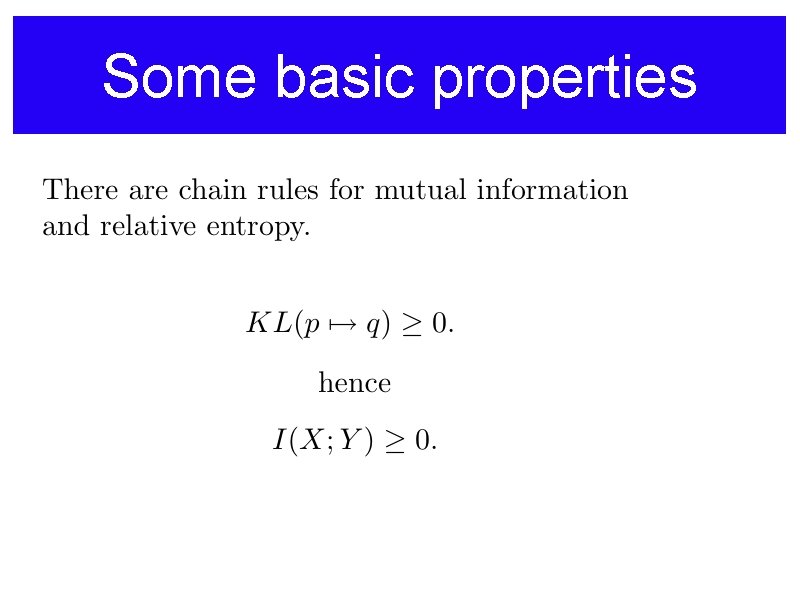
Some basic properties
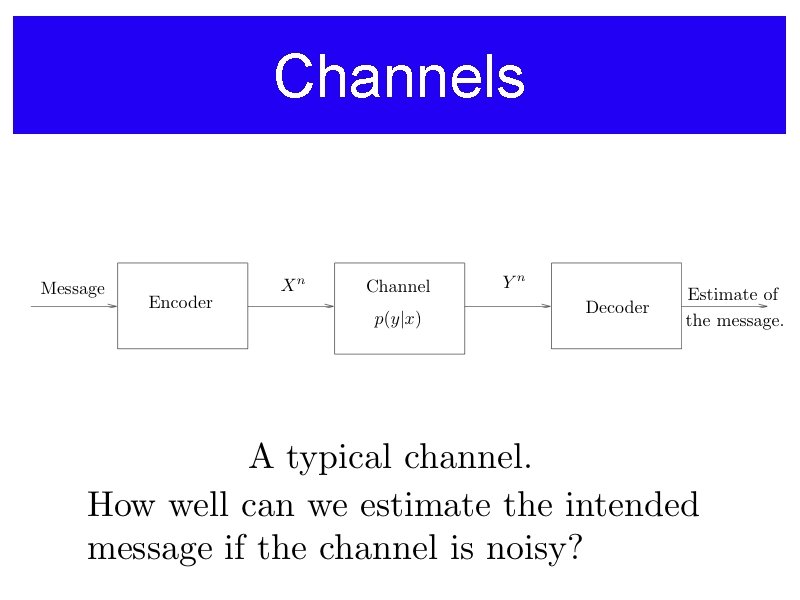
Channels
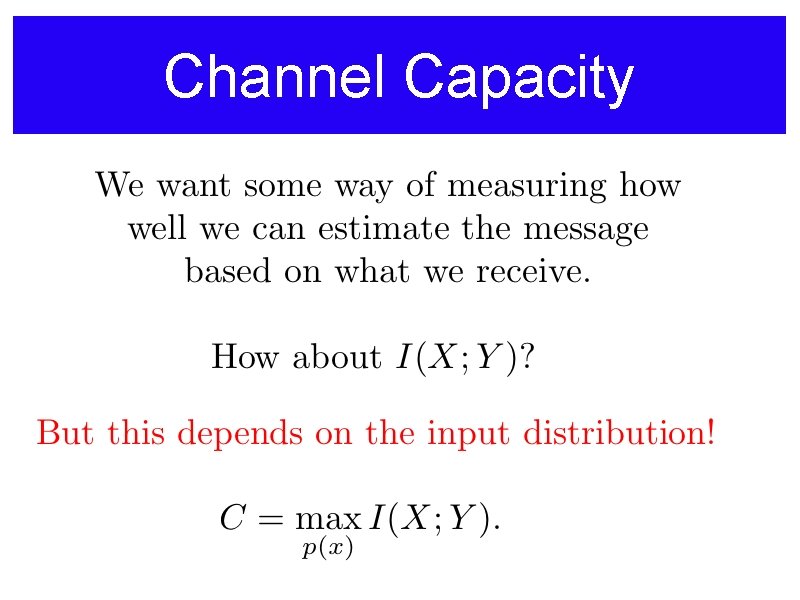
Channel Capacity
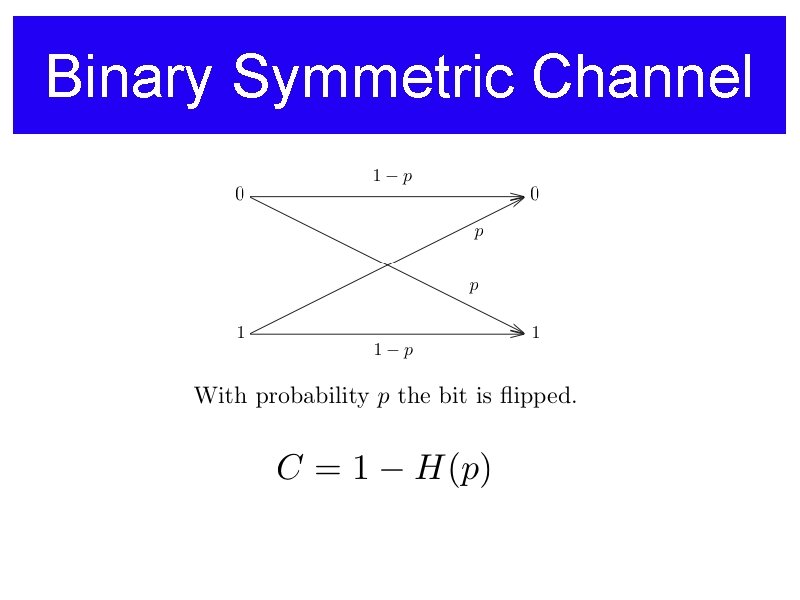
Binary Symmetric Channel
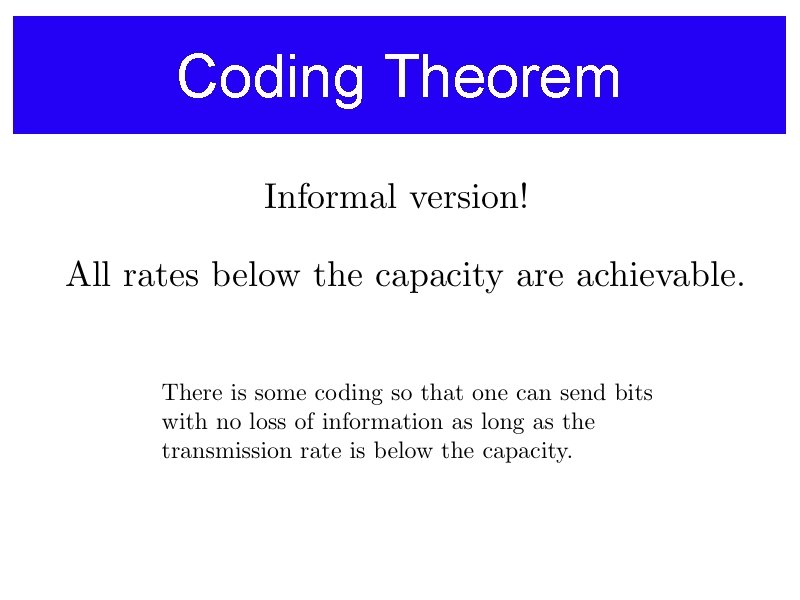
Coding Theorem
Capacity and Security • We want to view protocols as channels: they transmit information. • We would like our channels to be as bad as possible in transmitting information! • Catuscia Palamidessi’s talk: Channel capacity as a measure of anonymity.
Capacity of What? • Ira Moskowitz et. al. studied the capacity of a covert channel to measure how much information could be leaked out of a system by an agent with access to a covert channel. • We are viewing the protocol itself as an abstract channel and thus adopting channel capacity as a quantitative measure of anonymity.
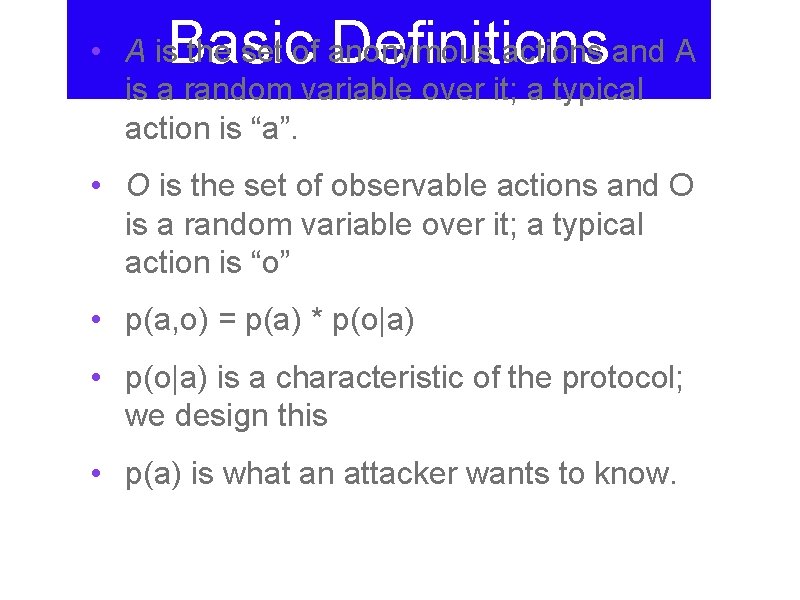
Basic Definitions • A is the set of anonymous actions and A is a random variable over it; a typical action is “a”. • O is the set of observable actions and O is a random variable over it; a typical action is “o” • p(a, o) = p(a) * p(o|a) • p(o|a) is a characteristic of the protocol; we design this • p(a) is what an attacker wants to know.
Anonymity Protocol • An anonymity protocol is a channel (A, O, p(. |. )) • The loss of anonymity is just the channel capacity
Sanity Check • To what does capacity 0 correspond? • It corresponds precisely to strong anonymity, i. e. to the statement that A and O are independent.
Relative Anonymity • Sometimes we want something to be revealed; we do not want this to be seen as a flaw in the protocol. • We need to conditionalize everything.
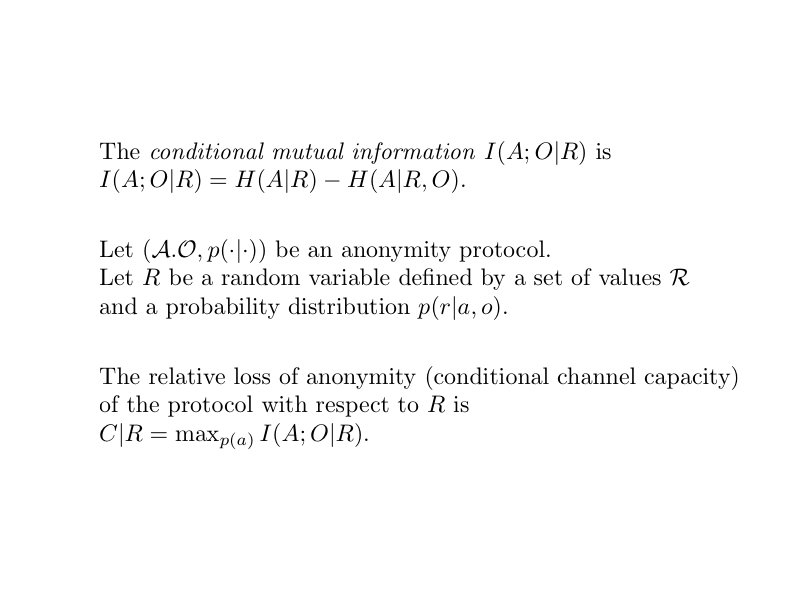
Conditional Mutual Information • Suppose that we want to reveal R • For example, in an election we want to reveal the total tallies while keeping secret who voted for whom. • Since we want to reveal R by design we can view it as an additional observable.
An Example: Elections • The actions are of the form “i votes for c” • Suppose that there are two candidates, “c” and “d”; clearly we want to reveal the number of votes for “c” [everyone votes for exactly one candidate]. • Then the values of R are exactly the number of votes for “c. ” • The observable event is a scrambled list of all the votes.
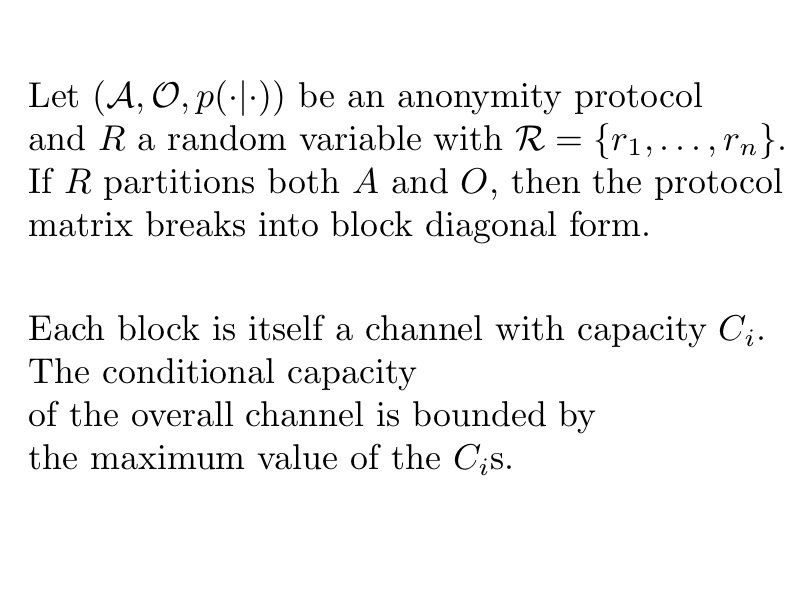
Partitions • This is a very special case: the hidden event, i. e. the complete description of who voted for whom, determines the value “r” of R. • The observable event also completely determines “r”. • Thus each value “r” produces partitions of the hidden values and of the observable values.
Computing the Capacity • There is no simple (analytic) formula for the channel capacity. • There are various special symmetric cases known; see the paper. • Recently Keye Martin has shown that channels can be ordered as a domain and that capacity is Scott continuous on this domain. These results have been extended by Chatzikokolakis with Keye.
Conclusions • Information theory is a rich and powerful way to analyze probabilistic protocols. • A wealth of work to be done given how hard it is to compute anything exactly. • All kinds of beautiful mathematics: convexity theory, domain theory in addition to traditional information theory.