
Information Systems Technology Seeing the Big Picture Knowledge
Information Systems & Technology Seeing the Big Picture

Knowledge is Power • Knowledge is the awareness gained by experience of information on facts. • When you have the knowledge, you understand how to put information into best use. • Information is the output of processing the raw fact about surrounding events.
Knowledge is Power
Knowledge is Power
The History • "In 1880, about nine out of 10 workers made and moved things; today, that is down to one out of five. The other four are knowledge people or service workers. " (Peter Drucker) • "I think there is a world market for maybe five computers. ” - Thomas Watson, chairman of IBM, 1943
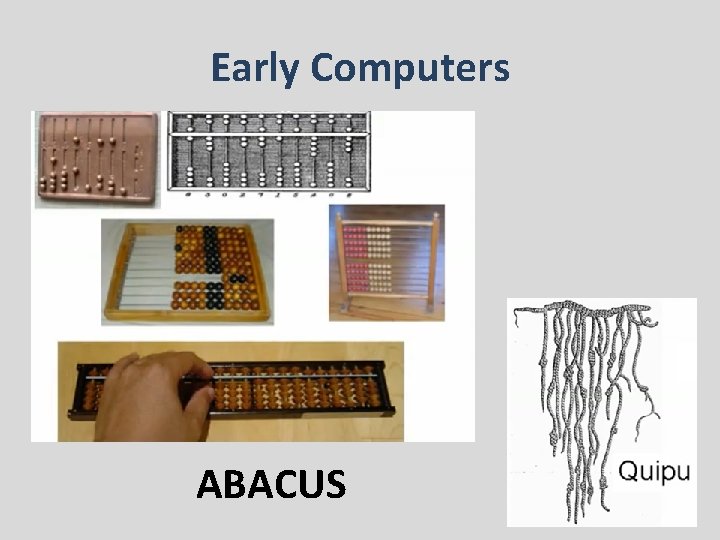
Early Computers ABACUS
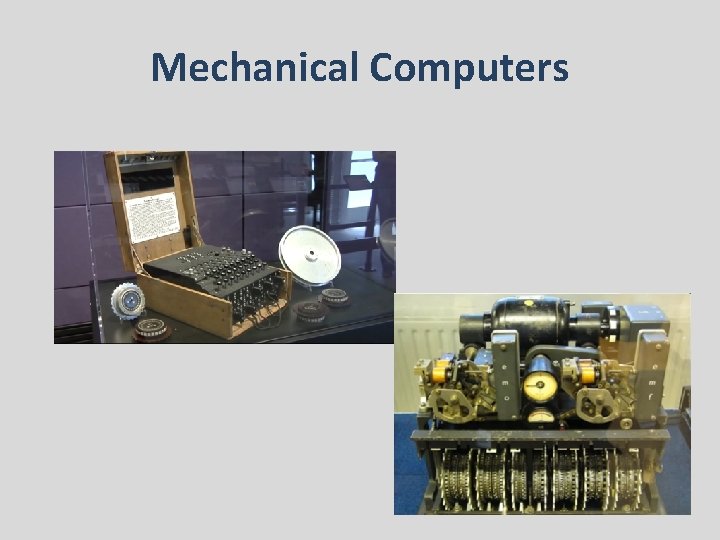
Mechanical Computers
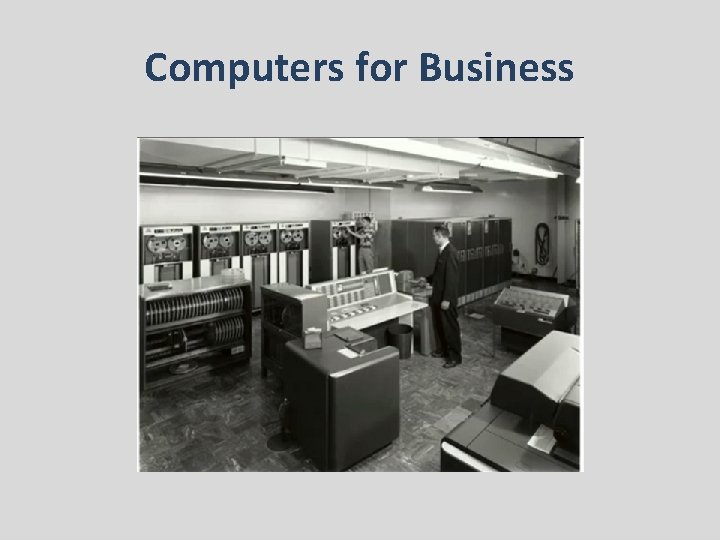
Computers for Business
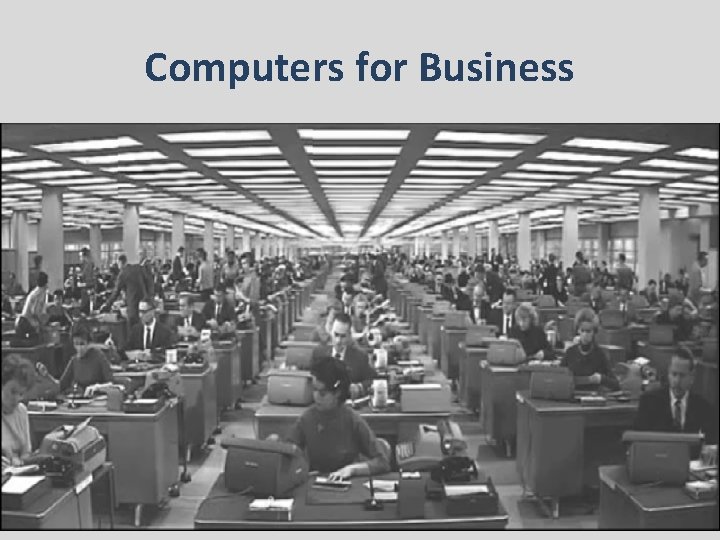
Computers for Business
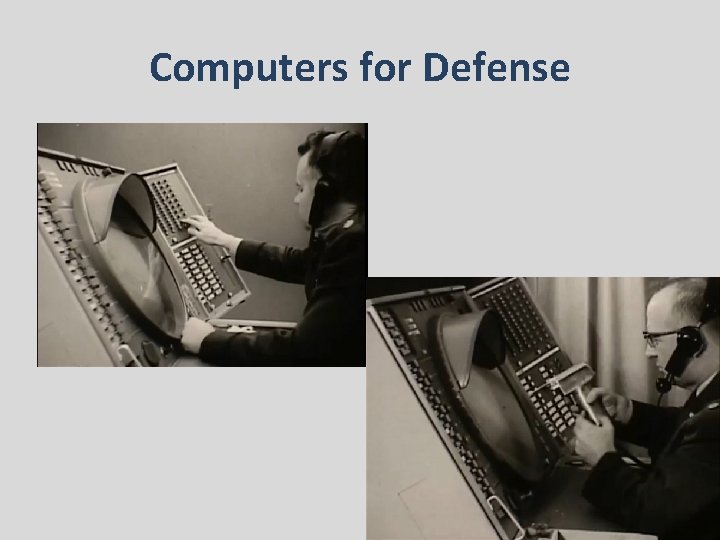
Computers for Defense
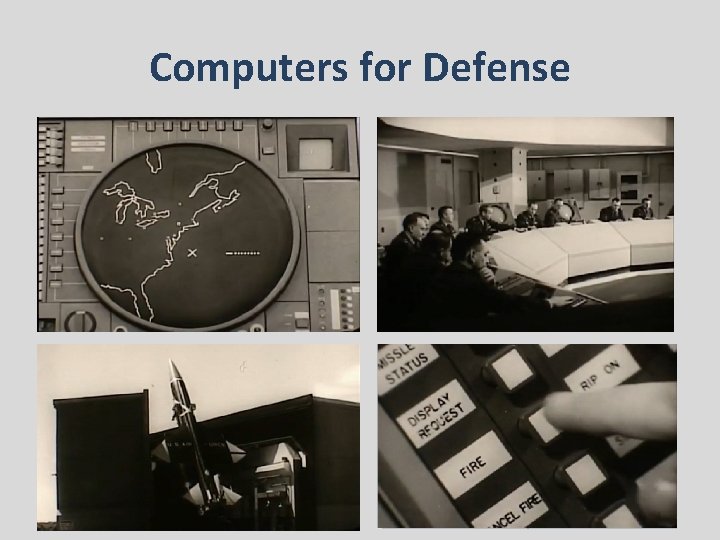
Computers for Defense
Computers for Business • Initially, the mainframe was mostly in the accounting department. • This was the era of Electronic Data Processing (EDP). EDP: is the processing of data by a computer and its programs in an environment involving electronic communication. It is now what is called Information Systems (IS)
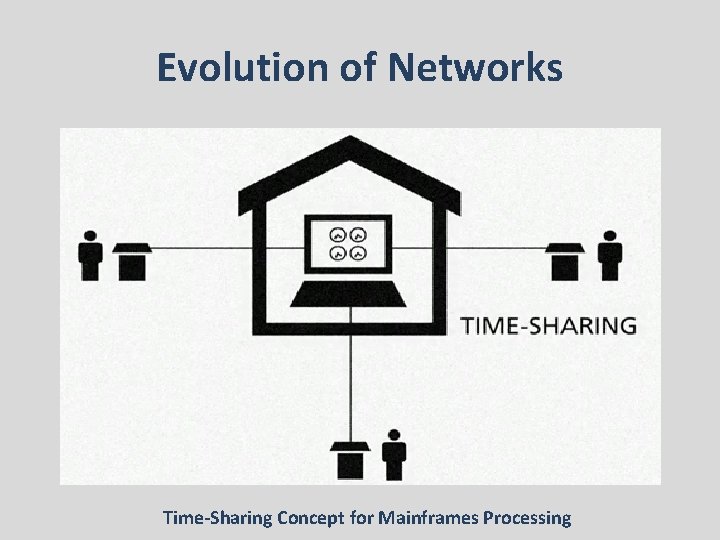
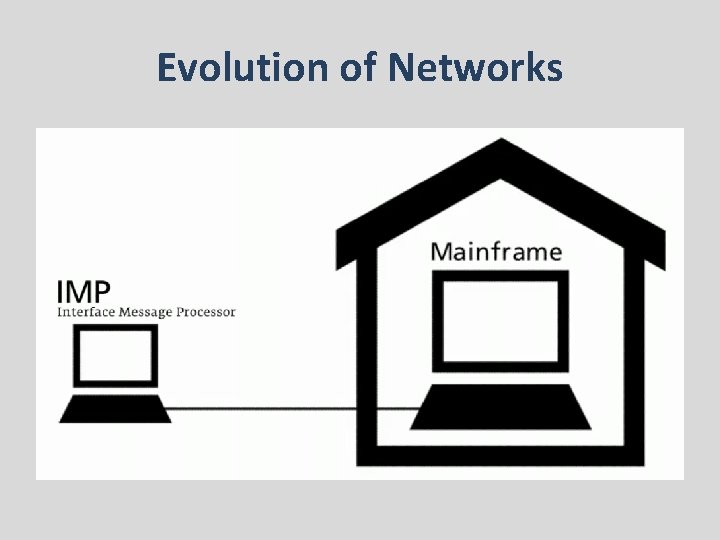
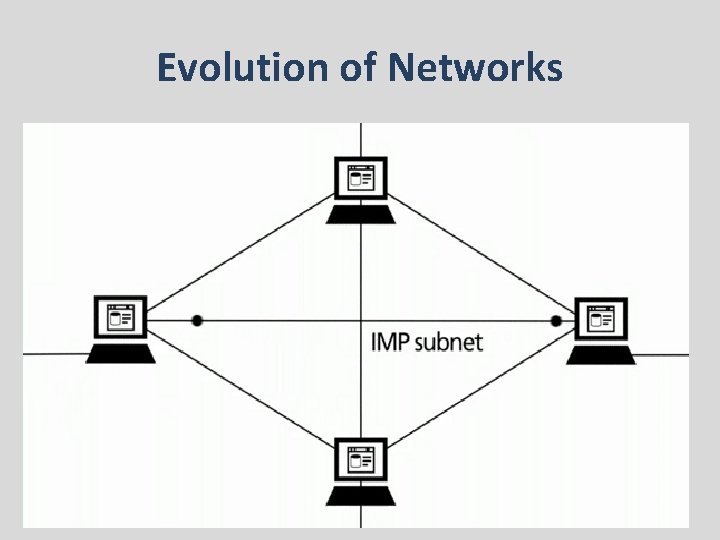
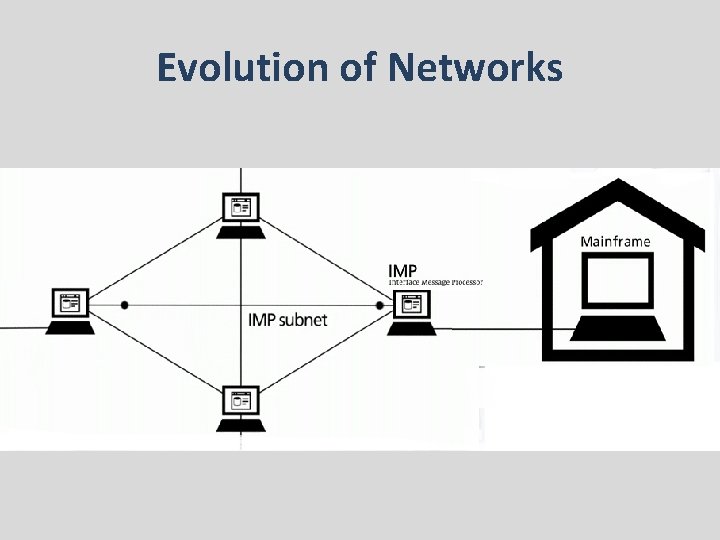
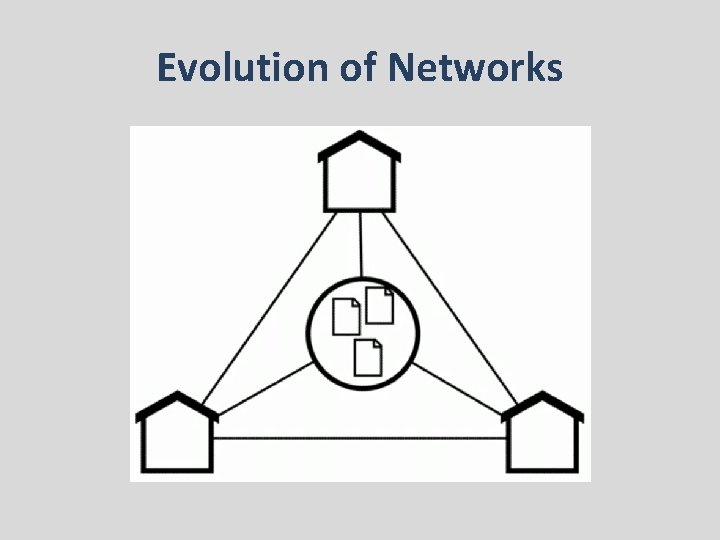
Evolution of Networks Time-Sharing Concept for Mainframes Processing
Evolution of Networks
Evolution of Networks
Evolution of Networks
Evolution of Networks
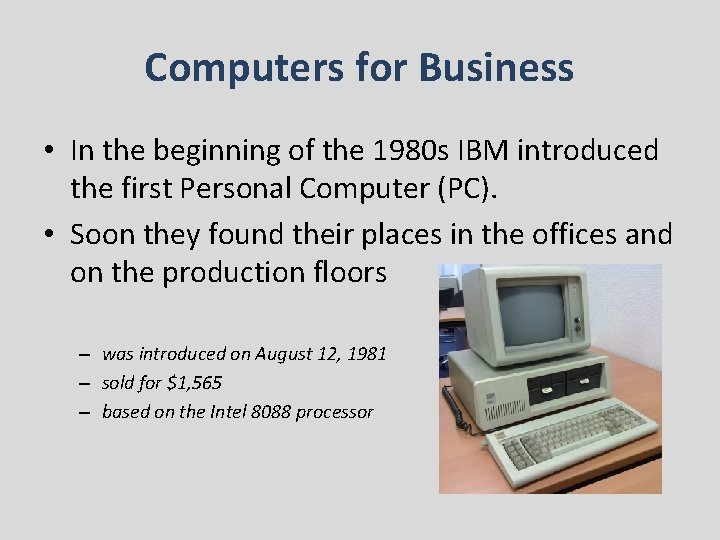
Computers for Business • In the beginning of the 1980 s IBM introduced the first Personal Computer (PC). • Soon they found their places in the offices and on the production floors – was introduced on August 12, 1981 – sold for $1, 565 – based on the Intel 8088 processor
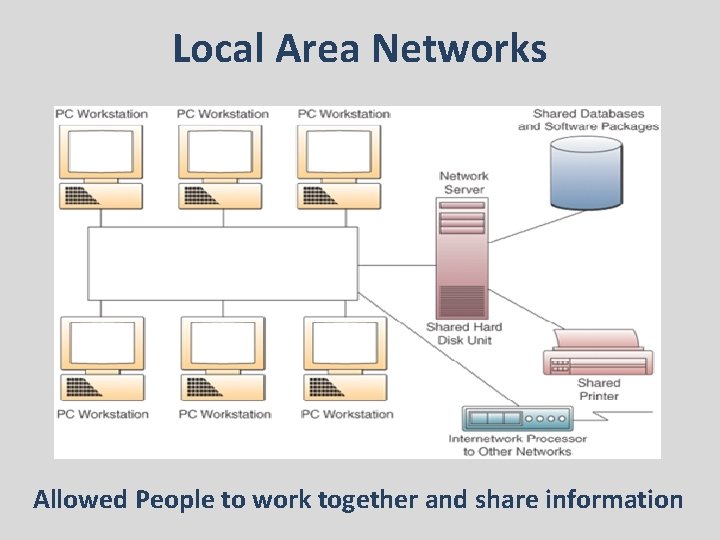
Local Area Networks Allowed People to work together and share information
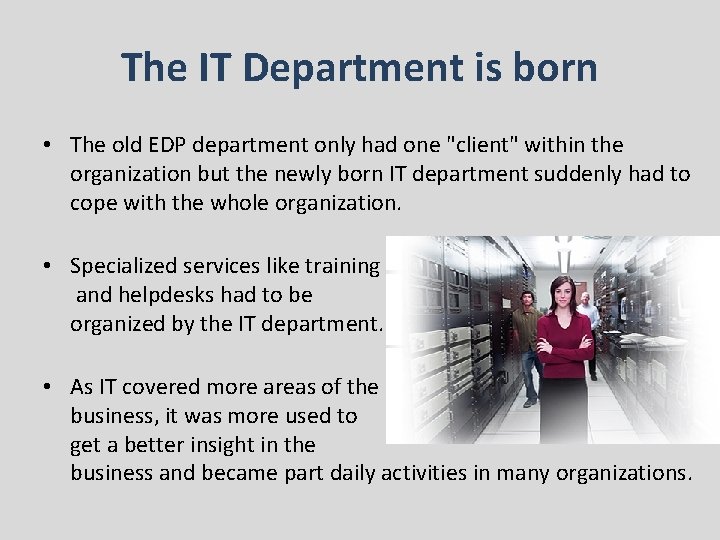
The IT Department is born • The old EDP department only had one "client" within the organization but the newly born IT department suddenly had to cope with the whole organization. • Specialized services like training and helpdesks had to be organized by the IT department. • As IT covered more areas of the business, it was more used to get a better insight in the business and became part daily activities in many organizations.
The need for Technology & Systems • Organizations have to take the aid of IT keep themselves in sync with the market and the world. • Departments utilize IT to carry out their operations in a productive and efficient manner. • Organizations need to buy software packages to satisfy their specific management, operational, and functional needs. • For this purpose, they need to approach IT firms who deal in such software applications.
The need for Technology & Systems • Larger organizations have their own operational and functional employees (IT staff). • They usually purchase software to coordinate different processes and functions into a single application.
The need for Technology & Systems • Larger organizations have their own operational and functional employees (IT staff). • They usually purchase software to coordinate different processes and functions into a single application.
The need for Technology & Systems • Larger organizations have their own operational and functional employees (IT staff). • They usually purchase software to coordinate different processes and functions into a single application. • This kind of software is what is called Information System (IS) e. g. ERP Applications
What is Information Systems? • It is an organized combination of People, technologies and procedures that store, retrieves, transform and distribute information to support operations, management, and decision-making. • It is not the technology only but also to the way in which people interact with this technology in support of business processes.
What is Information Systems? • It is an organized combination of People, technologies and procedures that store, retrieves, transform and distribute information to support operations, management, and decision-making. • It is not the technology only but also to the way in which people interact with this technology in support of business processes.
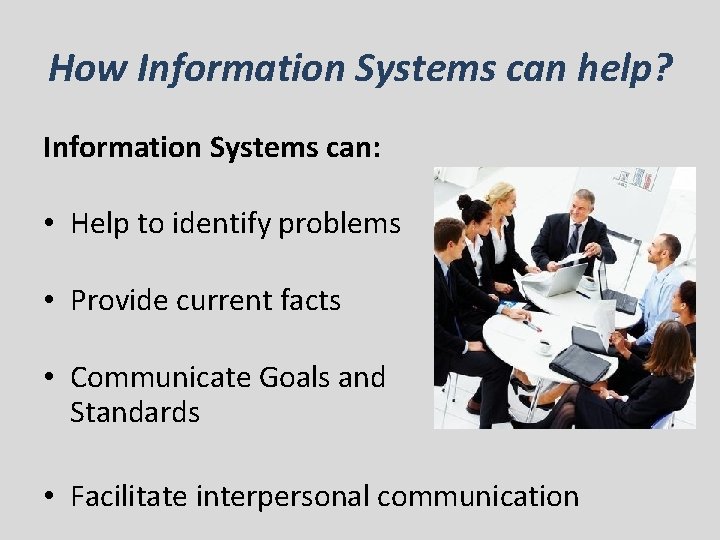
How Information Systems can help? Information Systems can: • Help to identify problems • Provide current facts • Communicate Goals and Standards • Facilitate interpersonal communication
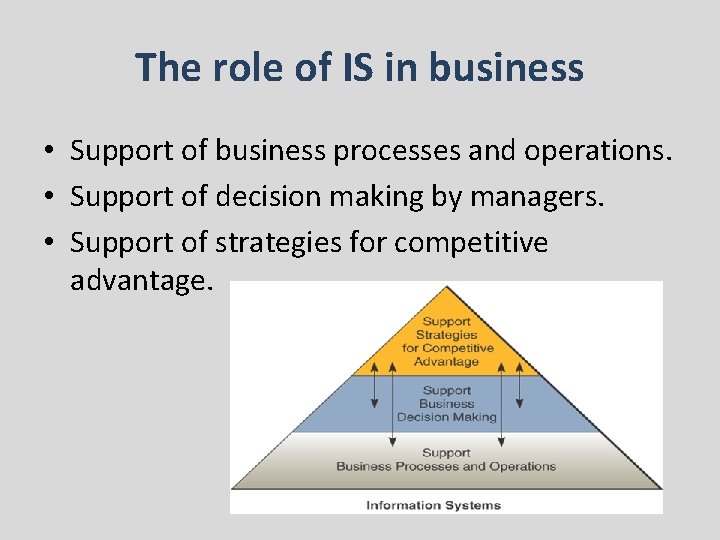
The role of IS in business • Support of business processes and operations. • Support of decision making by managers. • Support of strategies for competitive advantage.
Support for business processes and operations • A business model is the method of doing business and represents core aspects of a business. • A business process is a collection structured activities that produce a specific service or product. • A workflow is a description of a sequence of operations segregated for control purposes.
Business Process Management • Organizations want to promote business effectiveness and efficiency with control while striving for innovation, flexibility, and integration with technology. • That is what is called: Business Process Management (BPM). • BPM is the bridge between IT and Business.
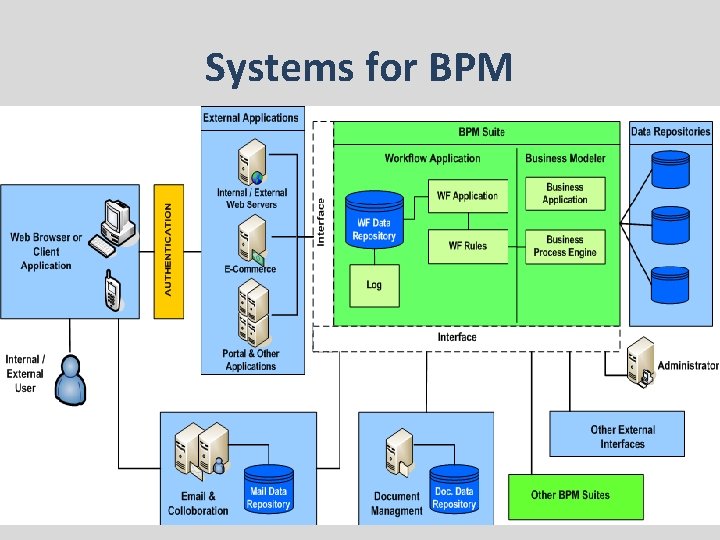
Systems for BPM
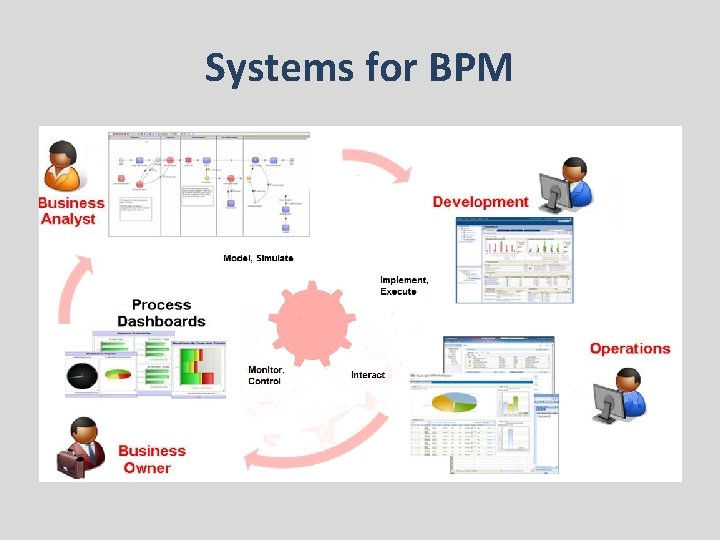
Systems for BPM
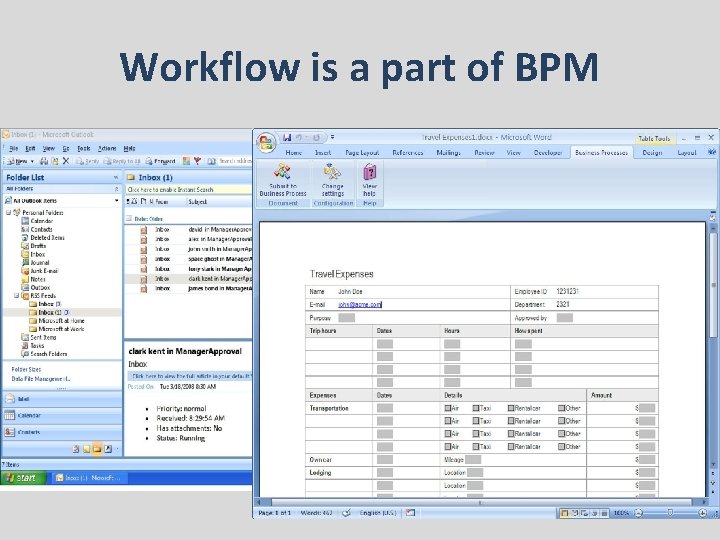
Workflow is a part of BPM
Support for decision making • Decision making is an outcome of processes to select of action among several alternatives. • It has four steps: 1. 2. 3. 4. Intelligence: identify problems & define objectives Design: develop and evaluate alternatives Choice: prioritize, and select alternatives Implement and evaluate: implement the choice and monitor success
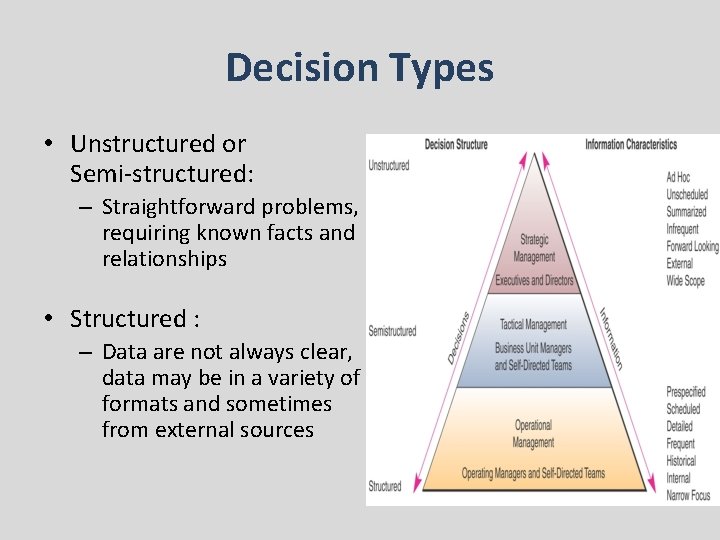
Decision Types • Unstructured or Semi-structured: – Straightforward problems, requiring known facts and relationships • Structured : – Data are not always clear, data may be in a variety of formats and sometimes from external sources
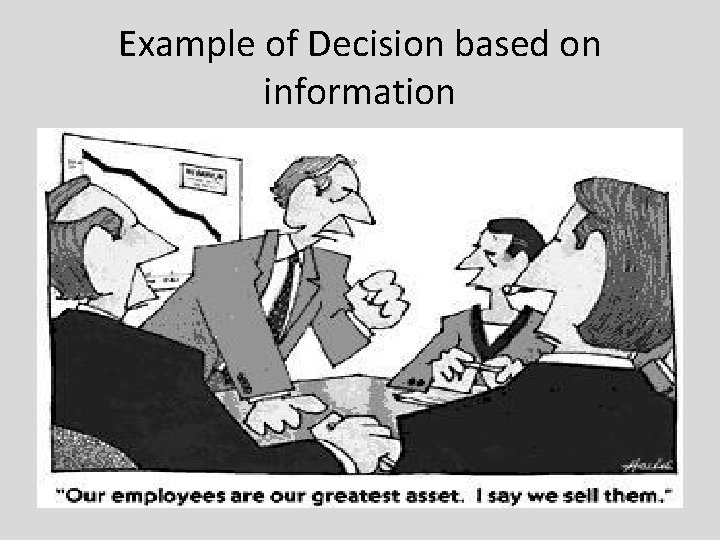
Example of Decision based on information
Decision Support Systems (DSS) • They are tools needed to facilitate decision making processes. • They are interactive software-based system s to help decision makers compile useful information to identify problems and make decisions. • They are integrated with other information systems through a common database.
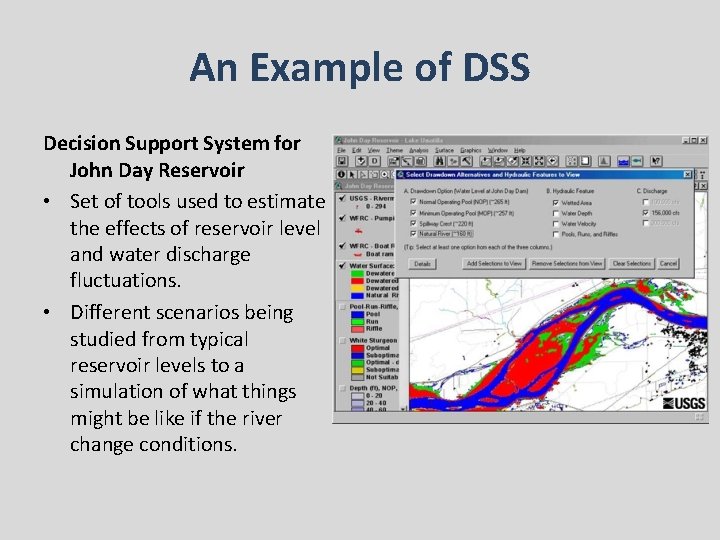
An Example of DSS Decision Support System for John Day Reservoir • Set of tools used to estimate the effects of reservoir level and water discharge fluctuations. • Different scenarios being studied from typical reservoir levels to a simulation of what things might be like if the river change conditions.
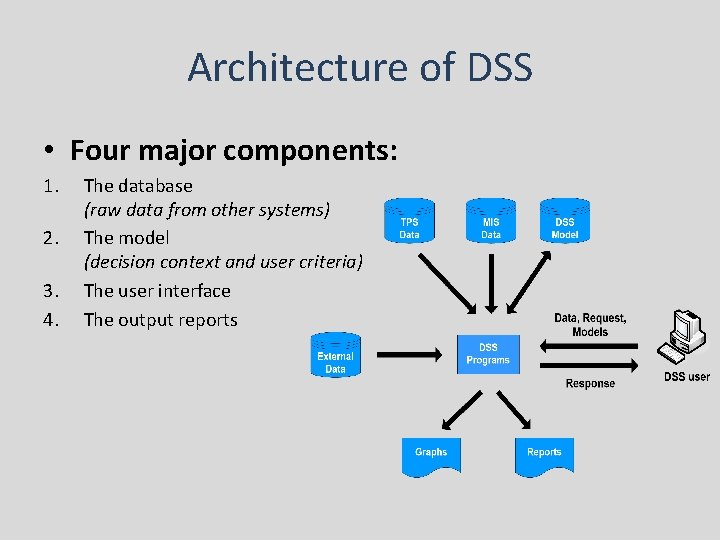
Architecture of DSS • Four major components: 1. 2. 3. 4. The database (raw data from other systems) The model (decision context and user criteria) The user interface The output reports
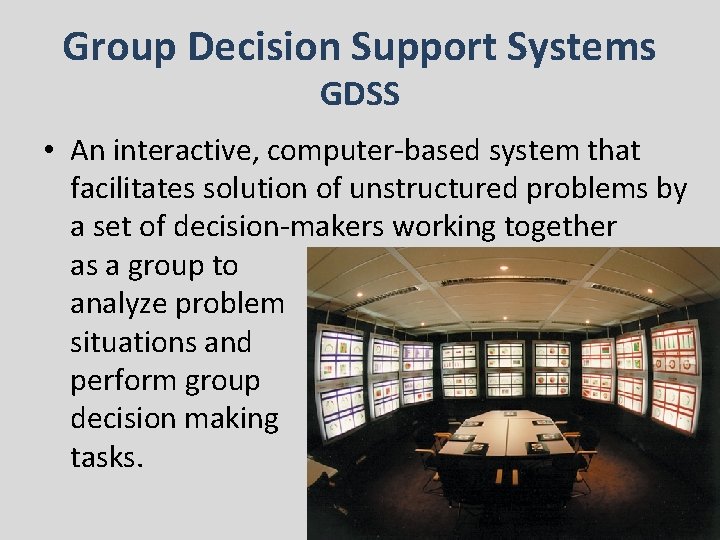
Group Decision Support Systems GDSS • An interactive, computer-based system that facilitates solution of unstructured problems by a set of decision-makers working together as a group to analyze problem situations and perform group decision making tasks.
Support for strategies competitive advantages • Cost Leadership Strategy: Becoming a low-cost producer by utilizing IT. • Differentiation Strategy: Developing new IT features for products. • Growth Strategy: Use IT to manage regional and global business expansion. • Innovation Strategy: Make changes to business processes with IT that cut costs. • Alliance Strategy: Use IT to create virtual organizations of business partners.
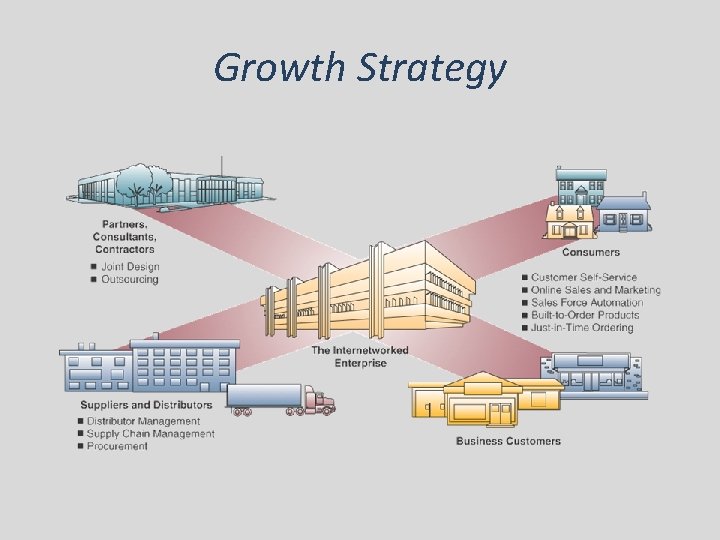
Growth Strategy
The Value Chain of activities • Information Systems are used through the Value Chain of activities to optimize and control function of operations. • They create a linkage between these activities and help in lowering cost of value activities or by product’s differentiation.
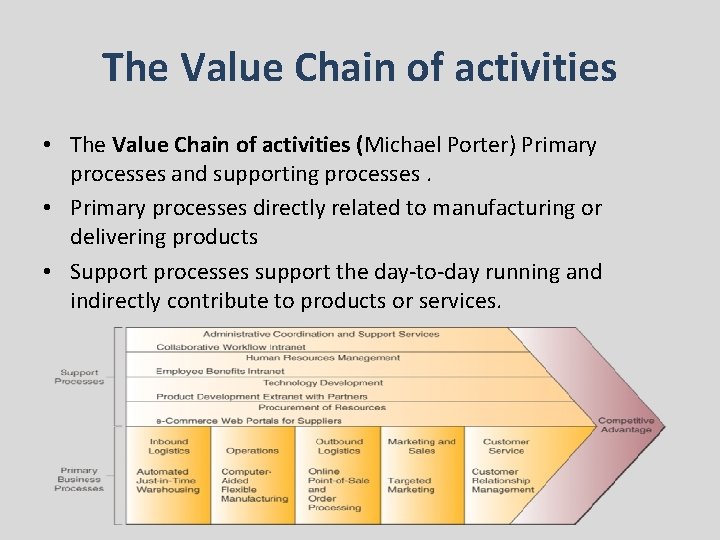
The Value Chain of activities • The Value Chain of activities (Michael Porter) Primary processes and supporting processes. • Primary processes directly related to manufacturing or delivering products • Support processes support the day-to-day running and indirectly contribute to products or services.
Conclusion • Executives are making critical business decisions every day based on the information available to them. • Information come from a variety of sources: opinions; a personal sense or business judgment; or data derived internally or externally to the organization by utilizing Technology and Systems.
Conclusion • Although IT & IS has become more of a commodity, when coupled with complementary changes in organization and management, it can provide the foundation for new products, services, and ways of conducting business that provide firms with a strategic advantage.
Information Systems Seeing the Big Picture Questions ? Mohamed Zedan mzedan@HOTMAIL. COM
- Slides: 47