
INFORMATION SECURITY MANAGEMENT LECTURE 7 RISK MANAGEMENT IDENTIFYING
- Slides: 31
INFORMATION SECURITY MANAGEMENT LECTURE 7: RISK MANAGEMENT IDENTIFYING AND You got to be careful if you don’t know where you’re going, ASSESSINGbecause RISK you might not get there. – Yogi Berra
Introduction • Information security departments are created primarily to manage IT risk • In any well-developed risk management program, two formal processes are at work – – Risk identification and assessment Risk control
Risk Management “The process of determining the maximum acceptable level of overall risk to and from a proposed activity, then using risk assessment techniques to determine the initial level of risk and, if this is excessive, developing a strategy to ameliorate appropriate individual risks until the overall level of risk is reduced to an acceptable level. ”
Knowing Yourself & The Enemy • Identifying, examining and understanding the information and how it is processed, stored, and transmitted • Identifying, examining, and understanding the threats facing the organization’s information assets
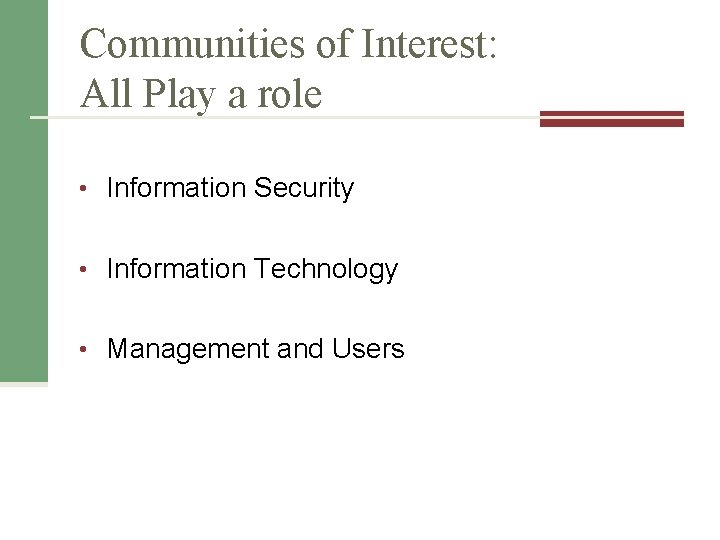
Communities of Interest: All Play a role • Information Security • Information Technology • Management and Users
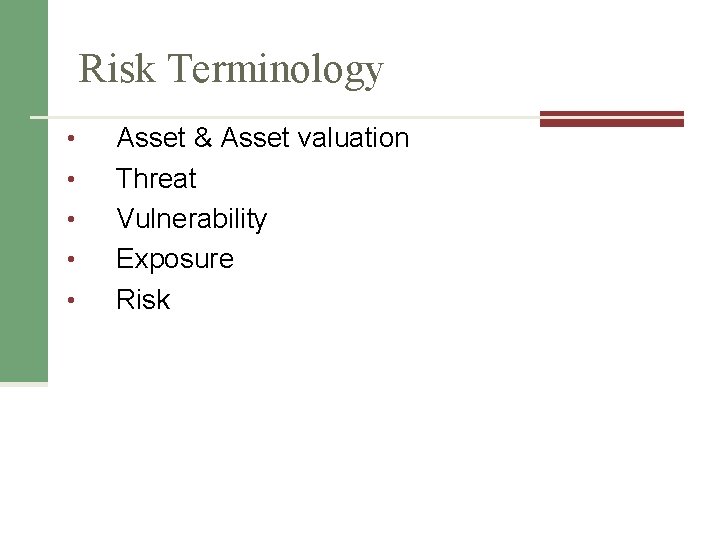
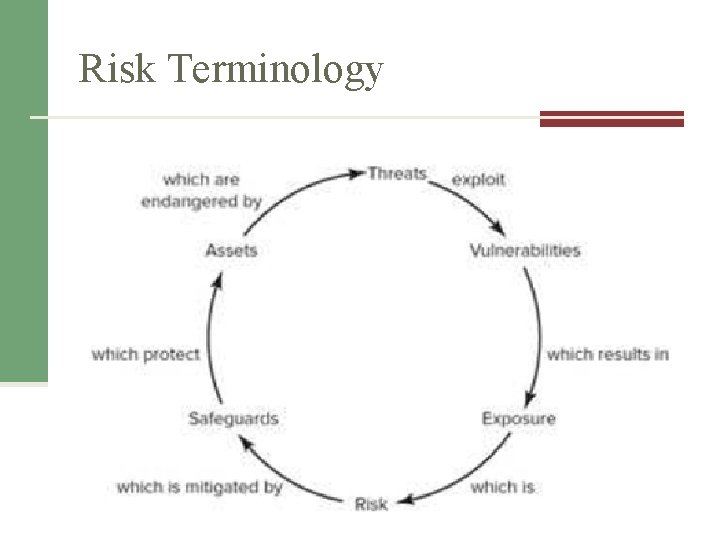
Risk Terminology • • • Asset & Asset valuation Threat Vulnerability Exposure Risk
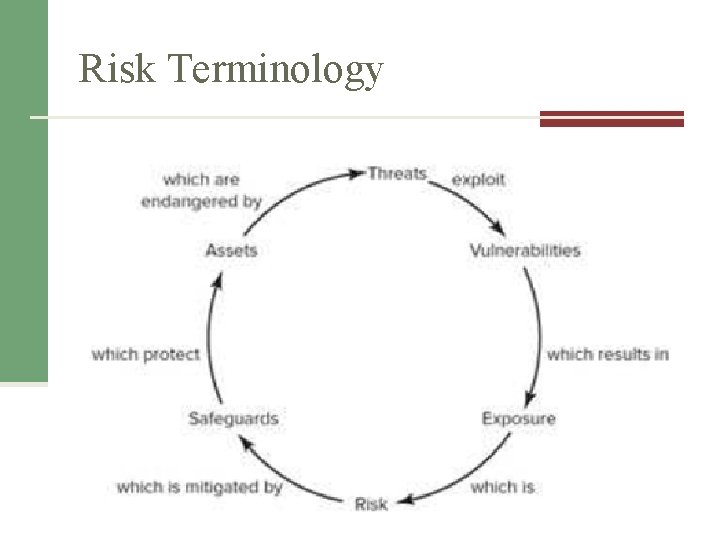
Risk Terminology
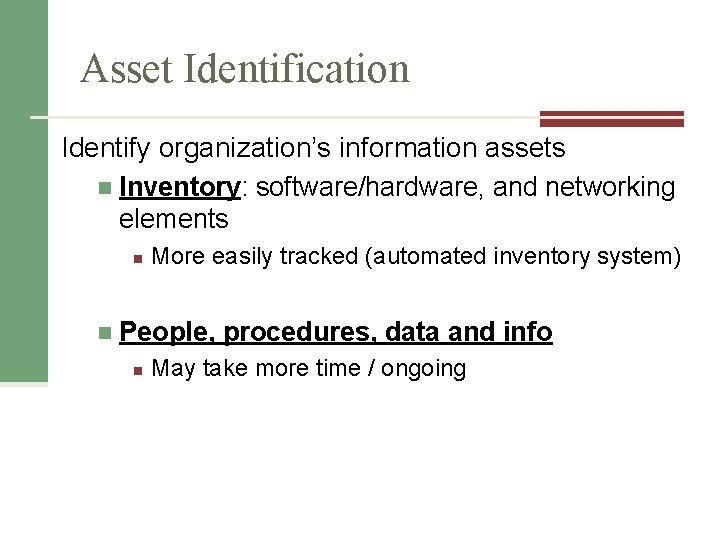
Asset Identification Identify organization’s information assets n Inventory: software/hardware, and networking elements n n More easily tracked (automated inventory system) People, procedures, data and info n May take more time / ongoing
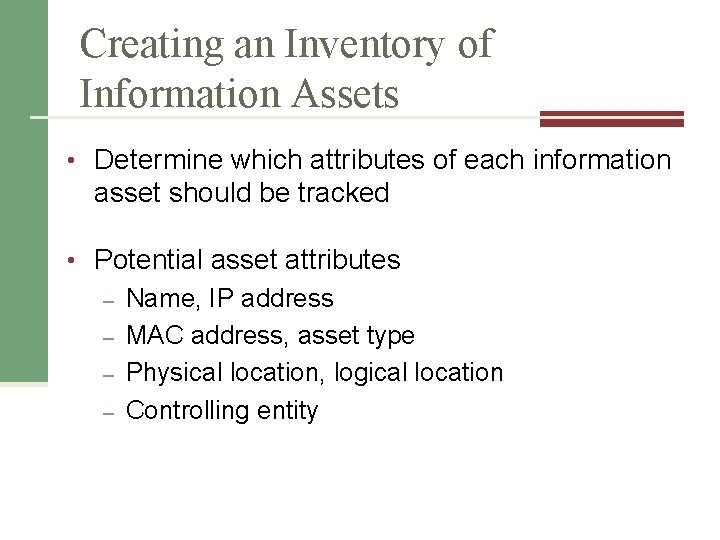
Creating an Inventory of Information Assets • Determine which attributes of each information asset should be tracked • Potential asset attributes – Name, IP address – MAC address, asset type – Physical location, logical location – Controlling entity
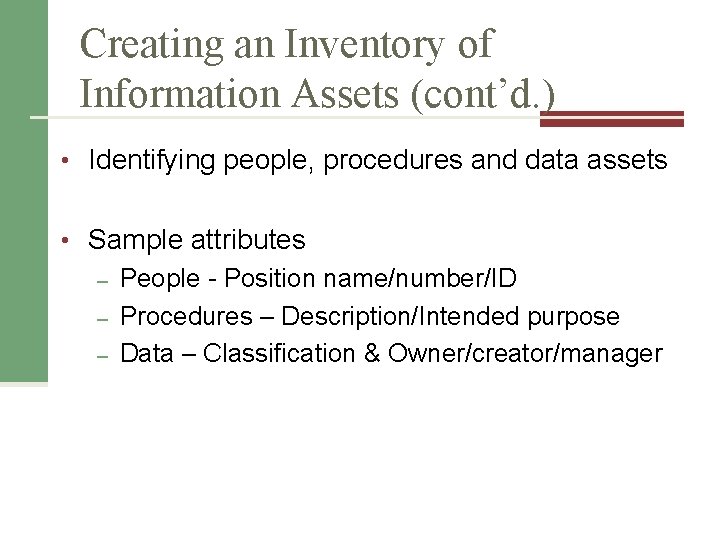
Creating an Inventory of Information Assets (cont’d. ) • Identifying people, procedures and data assets • Sample attributes – People - Position name/number/ID – Procedures – Description/Intended purpose – Data – Classification & Owner/creator/manager
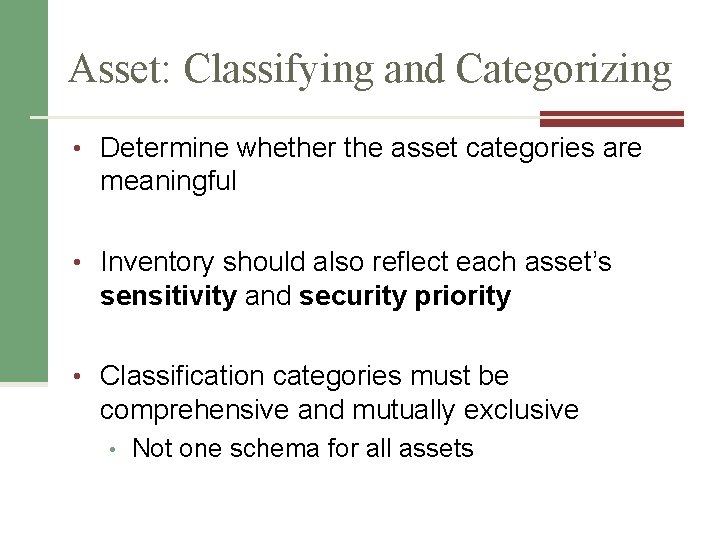
Asset: Classifying and Categorizing • Determine whether the asset categories are meaningful • Inventory should also reflect each asset’s sensitivity and security priority • Classification categories must be comprehensive and mutually exclusive • Not one schema for all assets
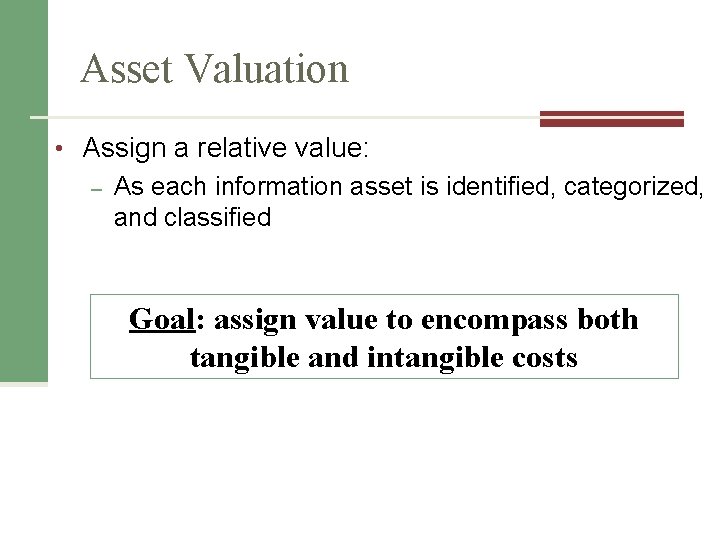
Asset Valuation • Assign a relative value: – As each information asset is identified, categorized, and classified Goal: assign value to encompass both tangible and intangible costs
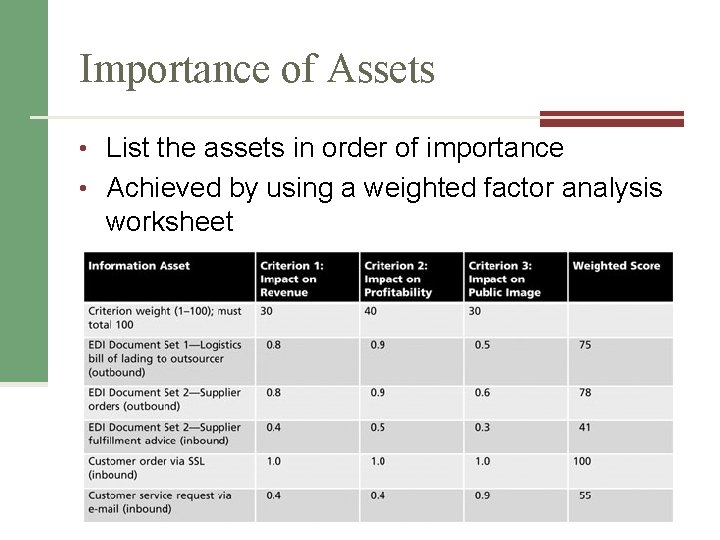
Importance of Assets • List the assets in order of importance • Achieved by using a weighted factor analysis worksheet
Risk Terminology
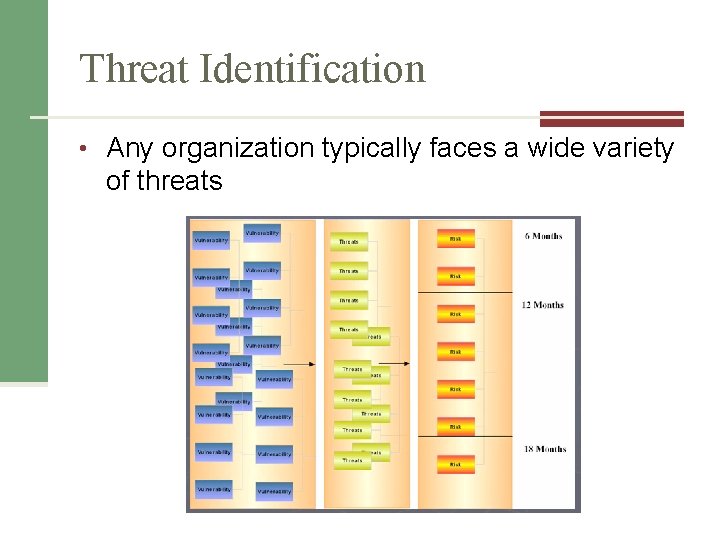
Threat Identification • Any organization typically faces a wide variety of threats
Threat Assessment • Each threat presents a unique challenge to information security • Each must be further examined to determine its potential to affect the targeted information asset
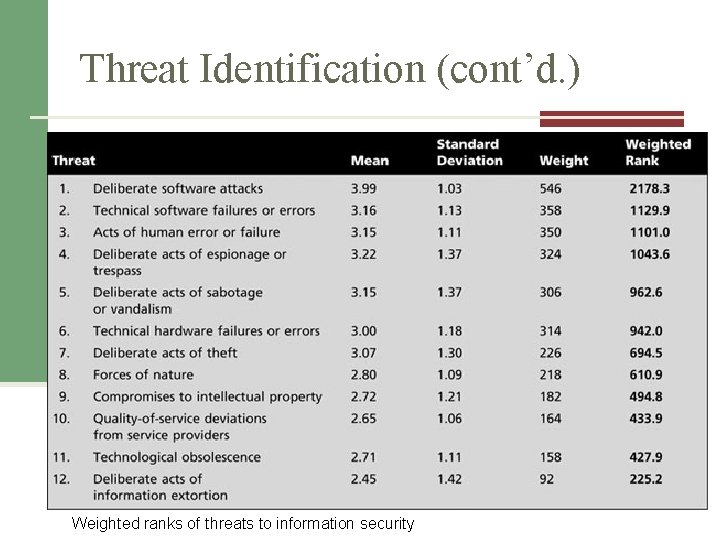
Threat Identification (cont’d. ) Weighted ranks of threats to information security Source: Adapted from M. E. Whitman. Enemy at the gates: Threats to information security. Communications of the ACM, August 2003. Reprinted with permission
Vulnerability Assessment • Vulnerability Assessment – Review every information asset for each threat – Leads to the creation of a list of vulnerabilities that remain potential risks to the organization • Vulnerabilities are specific avenues that threat agents can exploit to attack an information asset
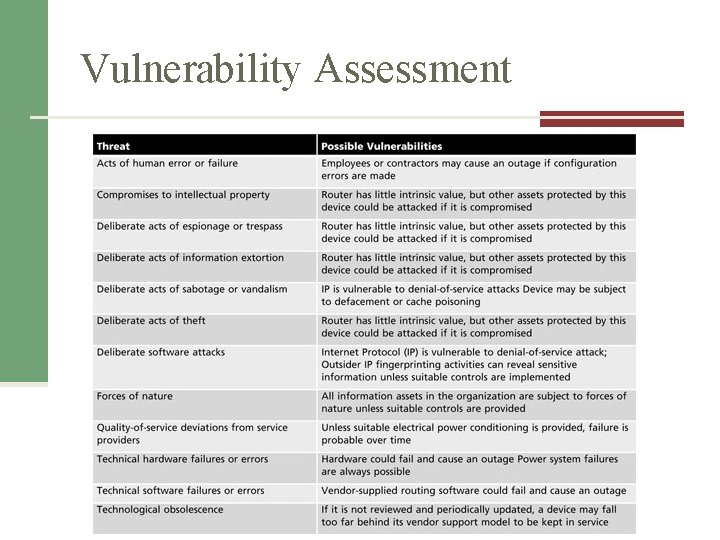
Vulnerability Assessment Table 8 -4 Vulnerability assessment of a DMZ router Management of Information Security, 3 rd ed. Source: Course Technology/Cengage Learning
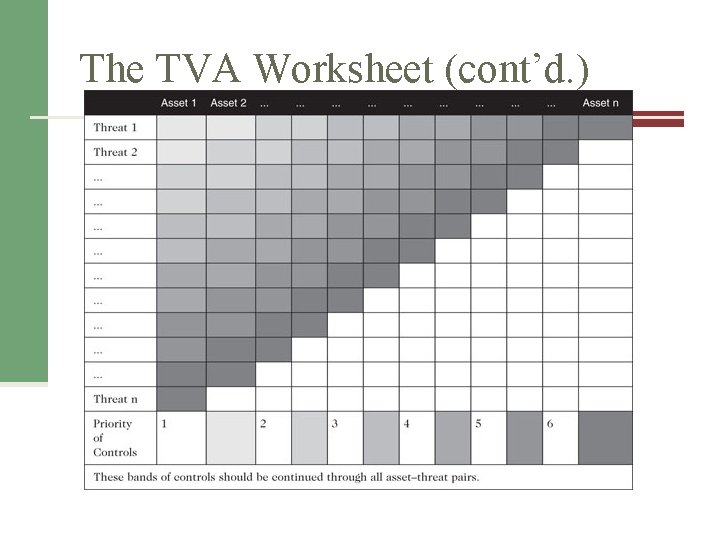
The TVA Worksheet (cont’d. ) Table 8 -5 Sample TVA spreadsheet Source: Course Technology/Cengage Learning
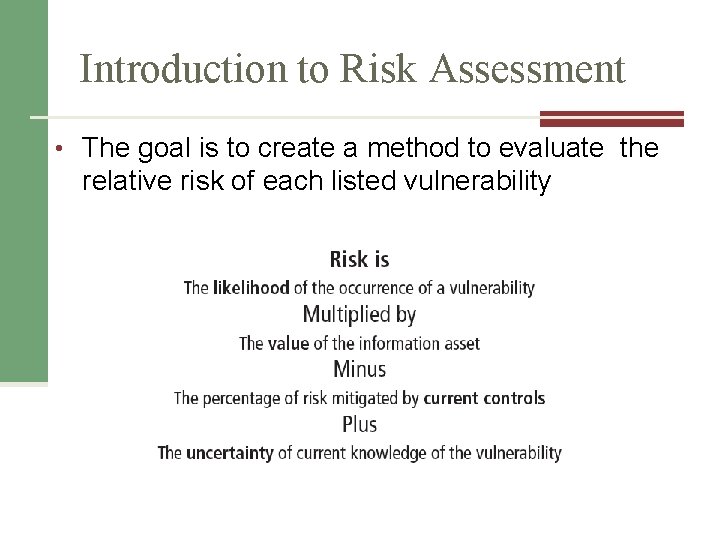
Introduction to Risk Assessment • The goal is to create a method to evaluate the relative risk of each listed vulnerability Figure 8 -3 Risk identification estimate factors Source: Course Technology/Cengage Learning
Likelihood • The overall rating of the probability that a specific vulnerability will be exploited • Using the information documented during the risk identification process, you can assign weighted scores based on the value of each information asset
Percentage of Risk Mitigated by Current Controls • If a vulnerability is fully managed by an existing control, it can be set aside • If it is partially controlled, estimate what percentage of the vulnerability has been controlled
Uncertainty • It is not possible to know everything about every vulnerability • The degree to which a current control can reduce risk is also subject to estimation error • Uncertainty is an estimate made by the manager using judgment and experience
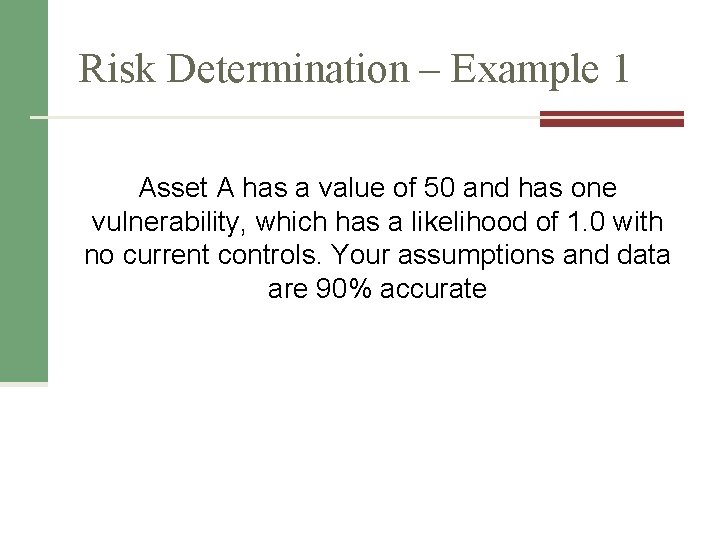
Risk Determination – Example 1 Asset A has a value of 50 and has one vulnerability, which has a likelihood of 1. 0 with no current controls. Your assumptions and data are 90% accurate
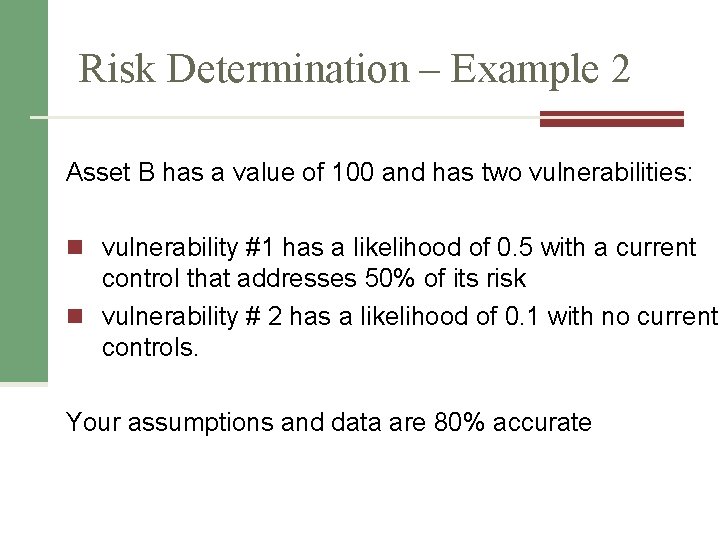
Risk Determination – Example 2 Asset B has a value of 100 and has two vulnerabilities: n vulnerability #1 has a likelihood of 0. 5 with a current control that addresses 50% of its risk n vulnerability # 2 has a likelihood of 0. 1 with no current controls. Your assumptions and data are 80% accurate
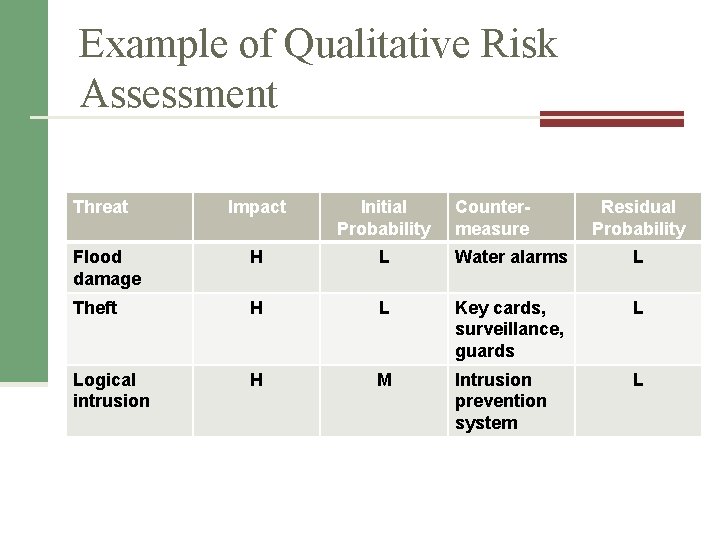
Example of Qualitative Risk Assessment Threat Impact Initial Probability Countermeasure Residual Probability Flood damage H L Water alarms L Theft H L Key cards, surveillance, guards L Logical intrusion H M Intrusion prevention system L
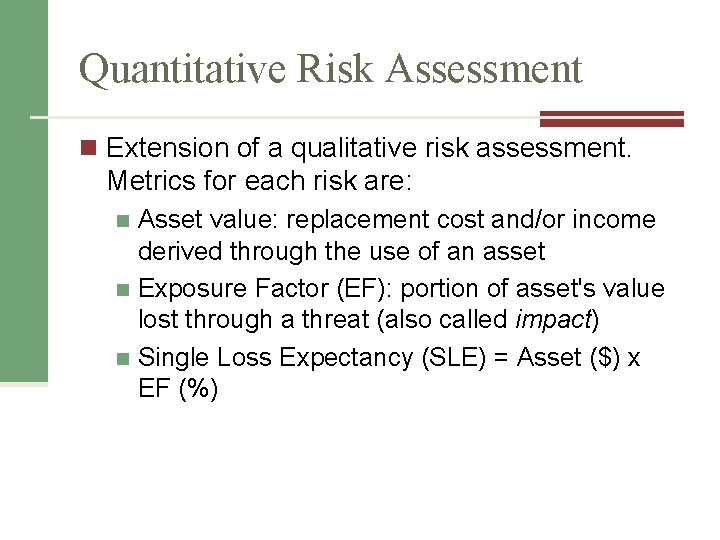
Quantitative Risk Assessment n Extension of a qualitative risk assessment. Metrics for each risk are: Asset value: replacement cost and/or income derived through the use of an asset n Exposure Factor (EF): portion of asset's value lost through a threat (also called impact) n Single Loss Expectancy (SLE) = Asset ($) x EF (%) n
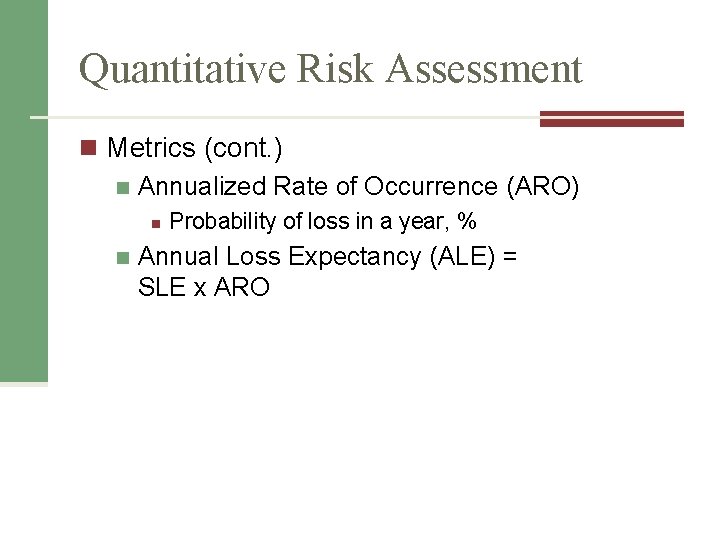
Quantitative Risk Assessment n Metrics (cont. ) n Annualized Rate of Occurrence (ARO) n n Probability of loss in a year, % Annual Loss Expectancy (ALE) = SLE x ARO
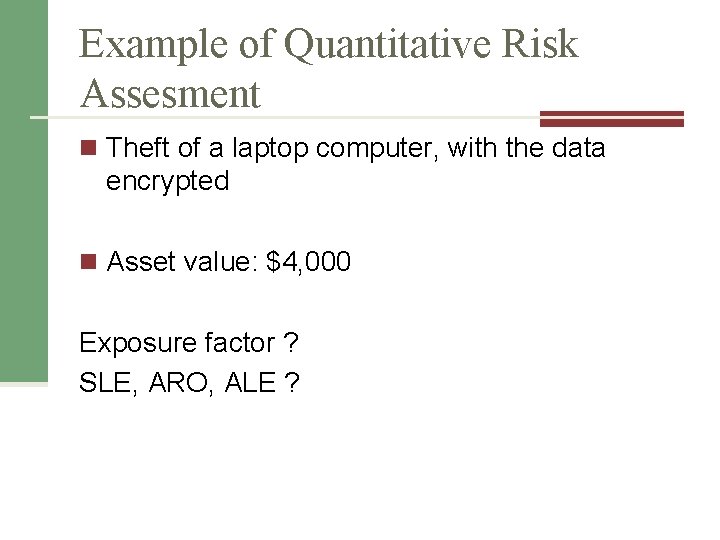
Example of Quantitative Risk Assesment n Theft of a laptop computer, with the data encrypted n Asset value: $4, 000 Exposure factor ? SLE, ARO, ALE ?
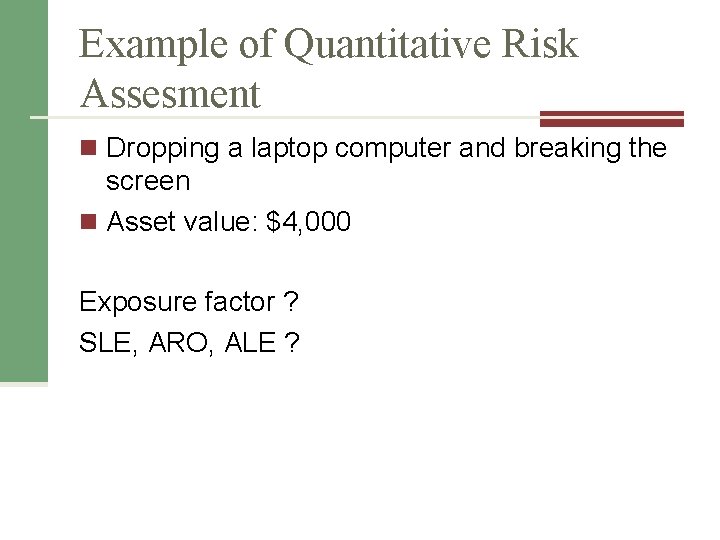
Example of Quantitative Risk Assesment n Dropping a laptop computer and breaking the screen n Asset value: $4, 000 Exposure factor ? SLE, ARO, ALE ?