
Information Retrieval System Document corpus Query String IR
- Slides: 33
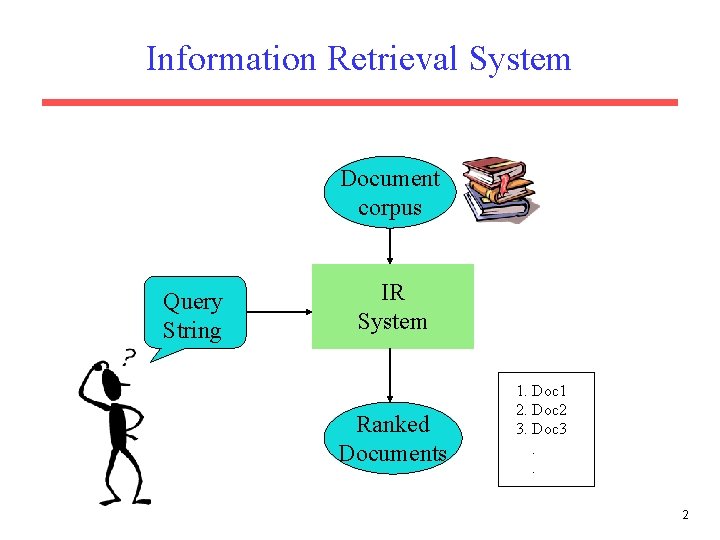
Information Retrieval System Document corpus Query String IR System Ranked Documents 1. Doc 1 2. Doc 2 3. Doc 3. . 2
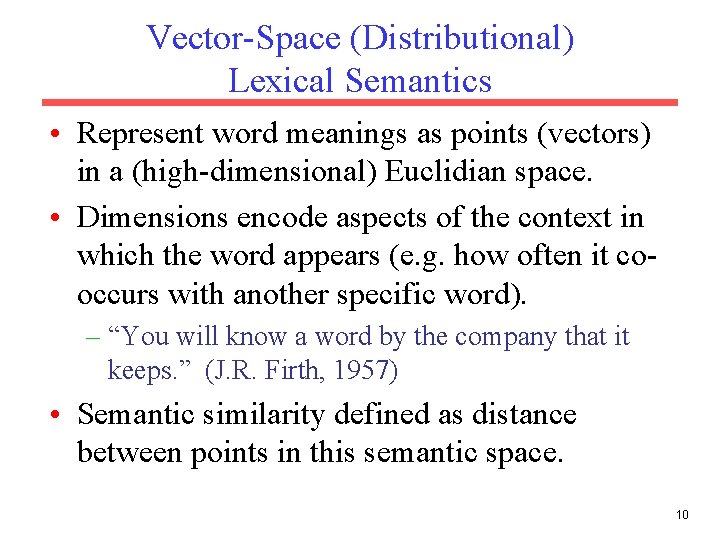
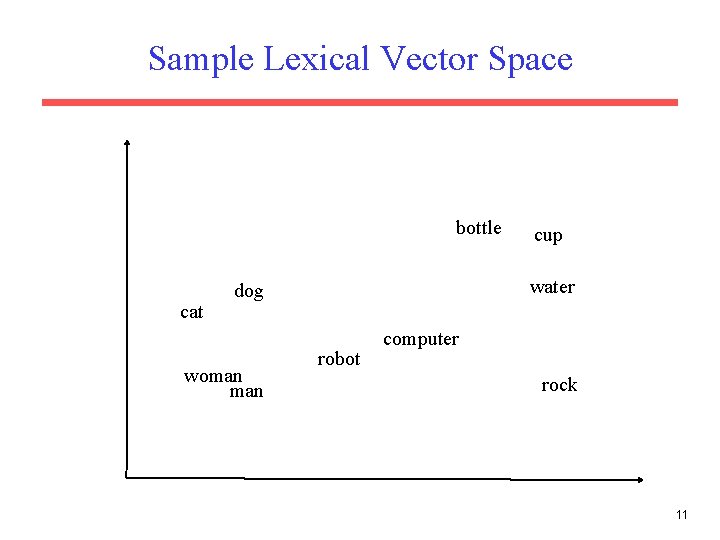
Vector-Space (Distributional) Lexical Semantics • Represent word meanings as points (vectors) in a (high-dimensional) Euclidian space. • Dimensions encode aspects of the context in which the word appears (e. g. how often it cooccurs with another specific word). – “You will know a word by the company that it keeps. ” (J. R. Firth, 1957) • Semantic similarity defined as distance between points in this semantic space. 10
Sample Lexical Vector Space bottle cat water dog woman cup robot computer rock 11
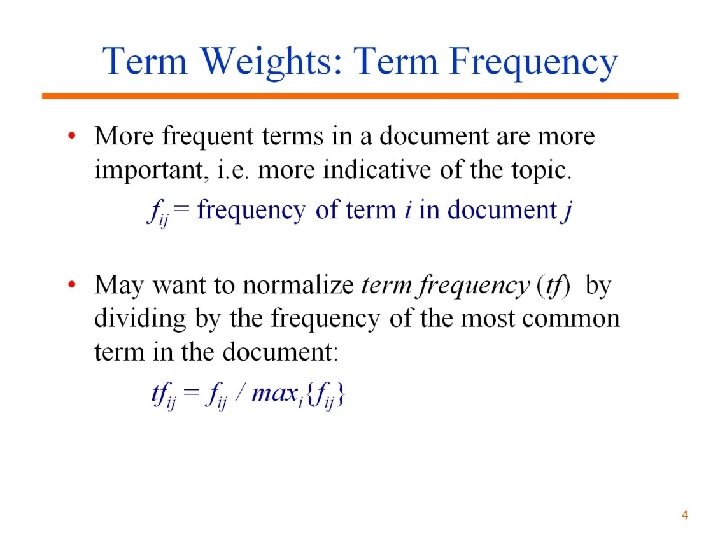
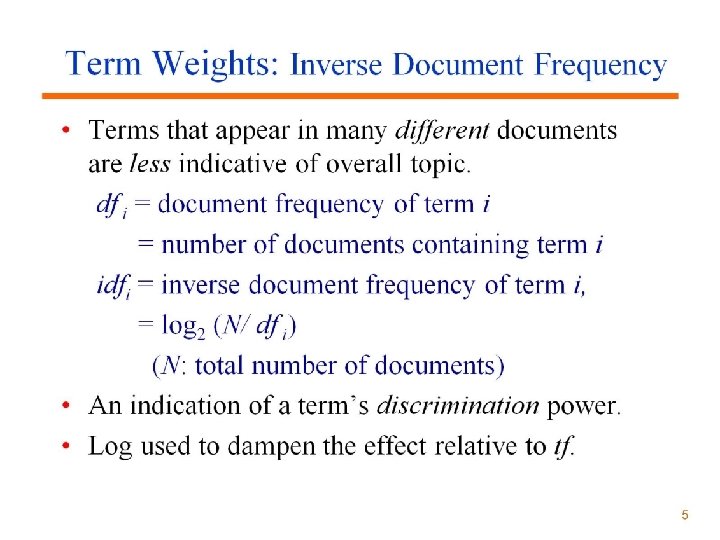
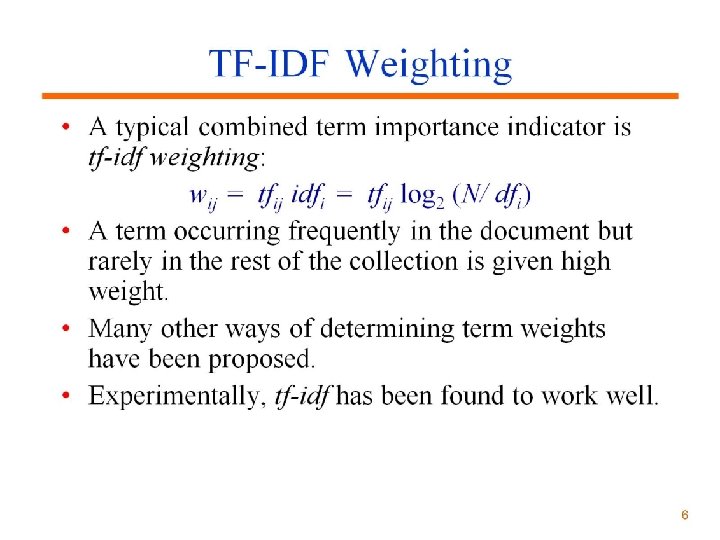
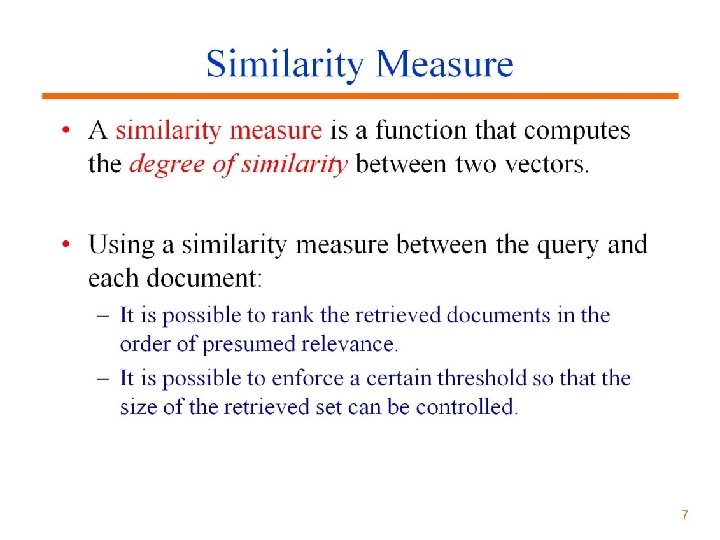
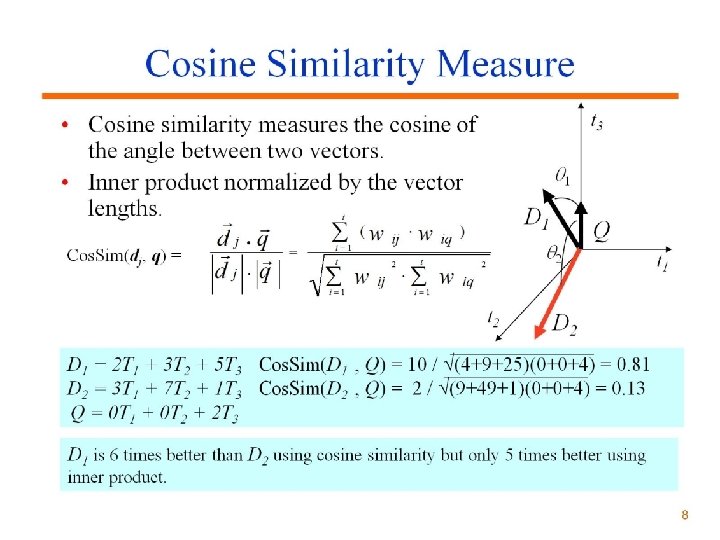
Simple Word Vectors • For a given target word, w, create a bag-ofwords “document” of all of the words that cooccur with the target word in a large corpus. – Window of k words on either side. – All words in the sentence, paragraph, or document. • For each word, create a (tf-idf weighted) vector from the “document” for that word. • Compute semantic relatedness of words as the cosine similarity of their vectors. 12
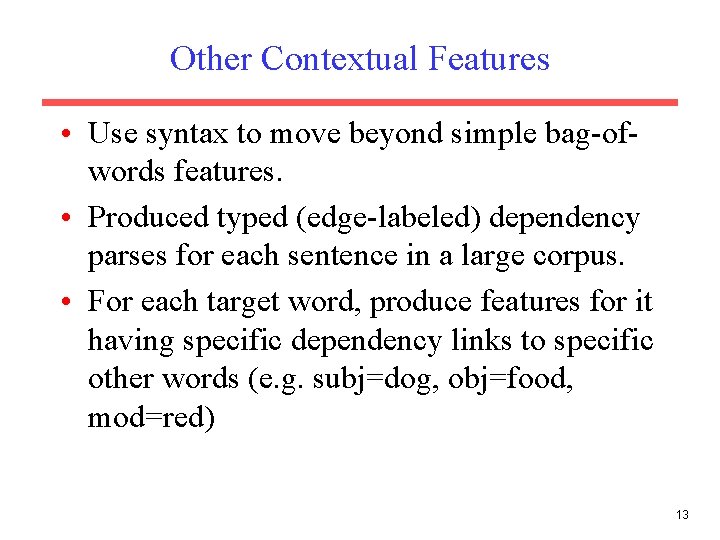
Other Contextual Features • Use syntax to move beyond simple bag-ofwords features. • Produced typed (edge-labeled) dependency parses for each sentence in a large corpus. • For each target word, produce features for it having specific dependency links to specific other words (e. g. subj=dog, obj=food, mod=red) 13
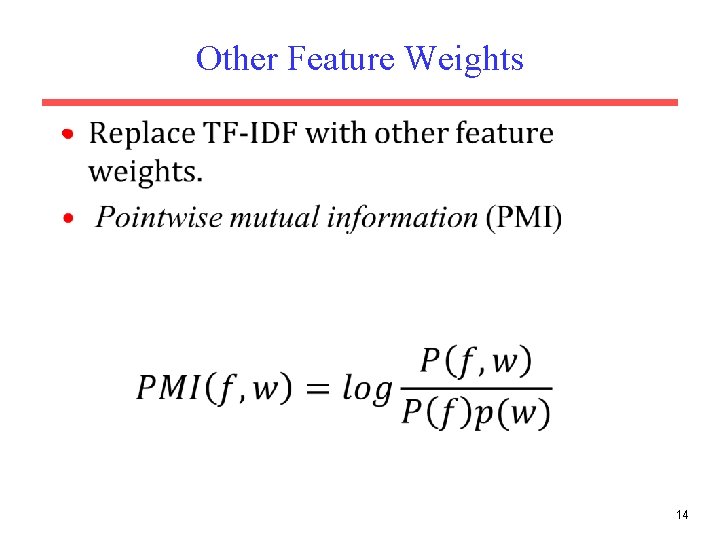
Other Feature Weights • 14
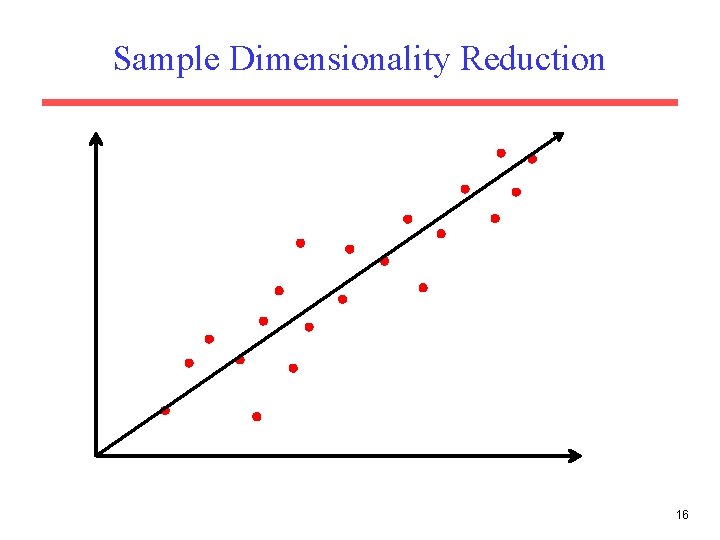
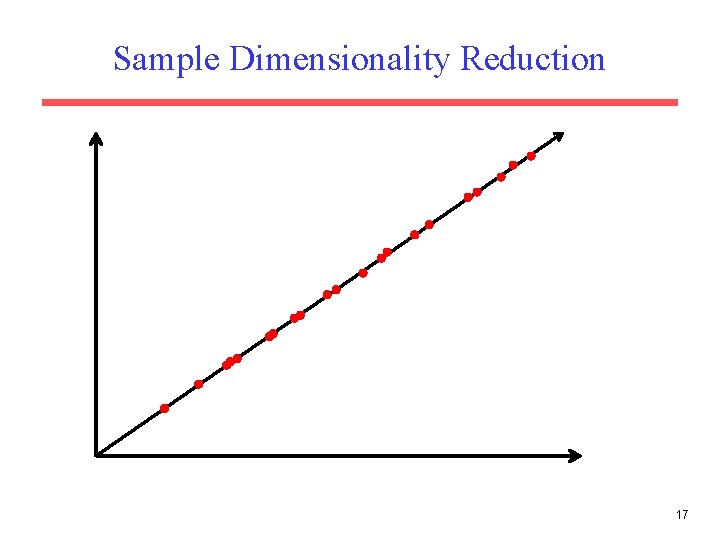
Dimensionality Reduction • Word-based features result in extremely highdimensional spaces that can easily result in over-fitting. • Reduce the dimensionality of the space by using various mathematical techniques to create a smaller set of k new dimensions that most account for the variance in the data. – Singular Value Decomposition (SVD) used in Latent Semantic Analysis (LSA) – Principle Component Analysis (PCA) 15
Sample Dimensionality Reduction 16
Sample Dimensionality Reduction 17
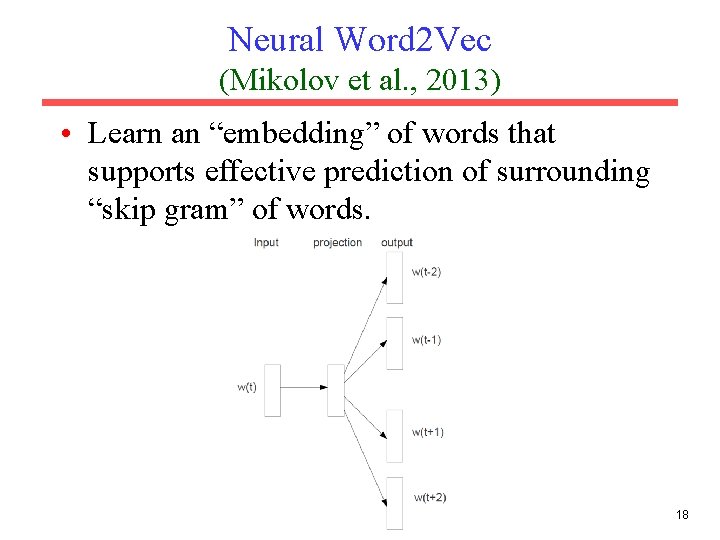
Neural Word 2 Vec (Mikolov et al. , 2013) • Learn an “embedding” of words that supports effective prediction of surrounding “skip gram” of words. 18
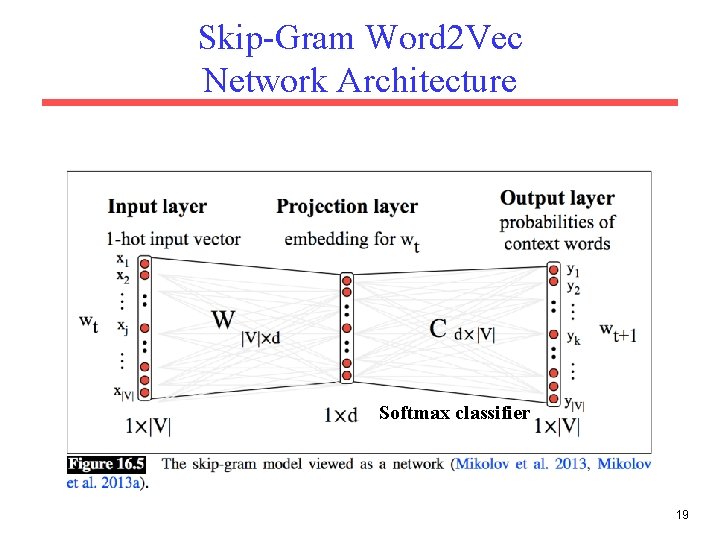
Skip-Gram Word 2 Vec Network Architecture Softmax classifier 19
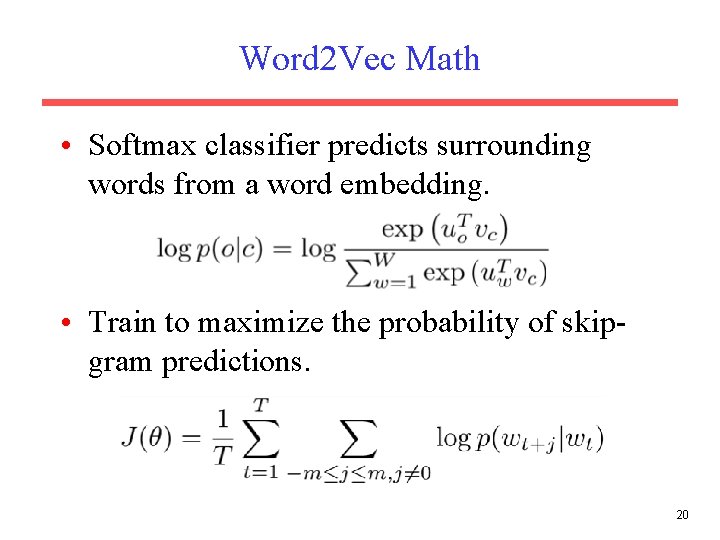
Word 2 Vec Math • Softmax classifier predicts surrounding words from a word embedding. • Train to maximize the probability of skipgram predictions. 20
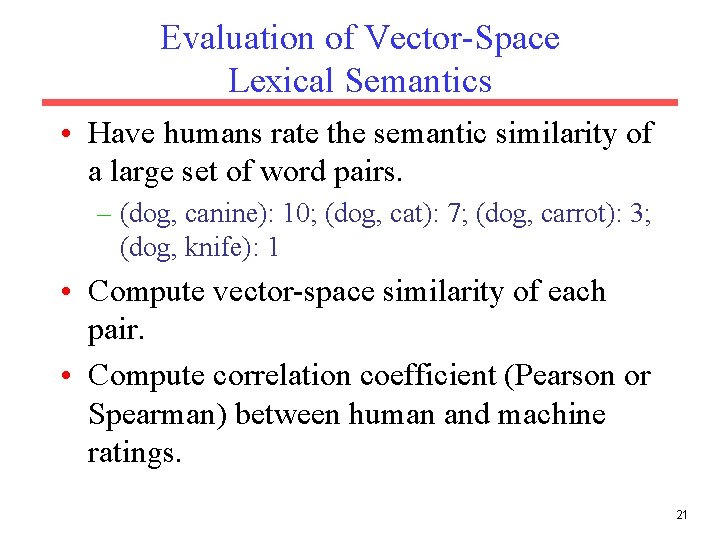
Evaluation of Vector-Space Lexical Semantics • Have humans rate the semantic similarity of a large set of word pairs. – (dog, canine): 10; (dog, cat): 7; (dog, carrot): 3; (dog, knife): 1 • Compute vector-space similarity of each pair. • Compute correlation coefficient (Pearson or Spearman) between human and machine ratings. 21
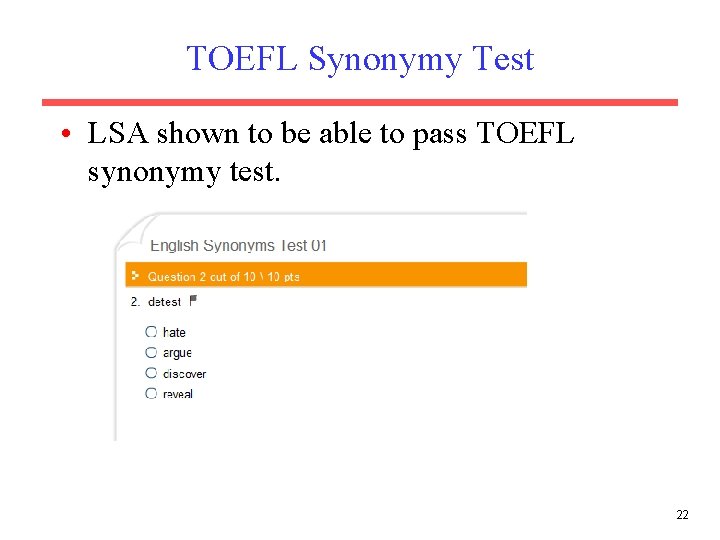
TOEFL Synonymy Test • LSA shown to be able to pass TOEFL synonymy test. 22
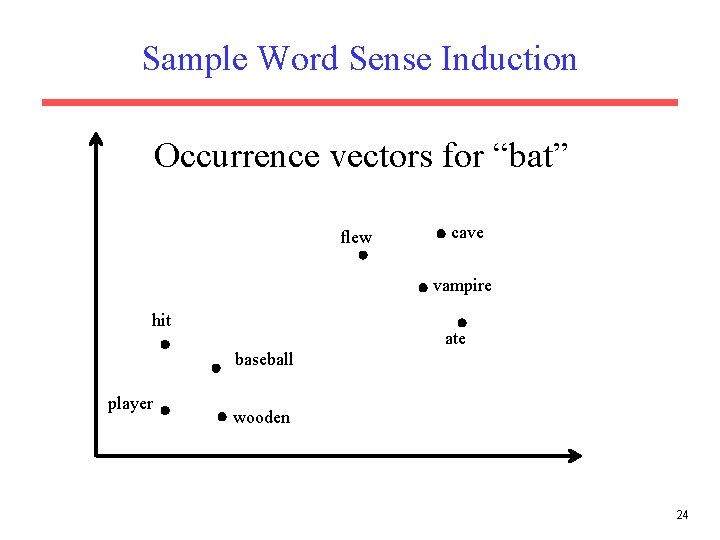
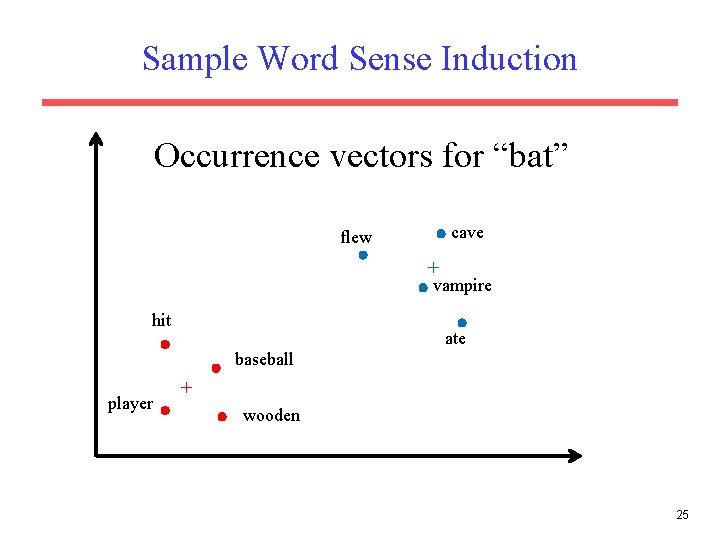
Vector-Space Word Sense Induction (WSI) • Create a context-vector for each individual occurrence of the target word, w. • Cluster these vectors into k groups. • Assume each group represents a “sense” of the word and compute a vector for this sense by taking the mean of each cluster. 23
Sample Word Sense Induction Occurrence vectors for “bat” flew cave vampire hit ate baseball player wooden 24
Sample Word Sense Induction Occurrence vectors for “bat” cave flew + vampire hit ate baseball player + wooden 25
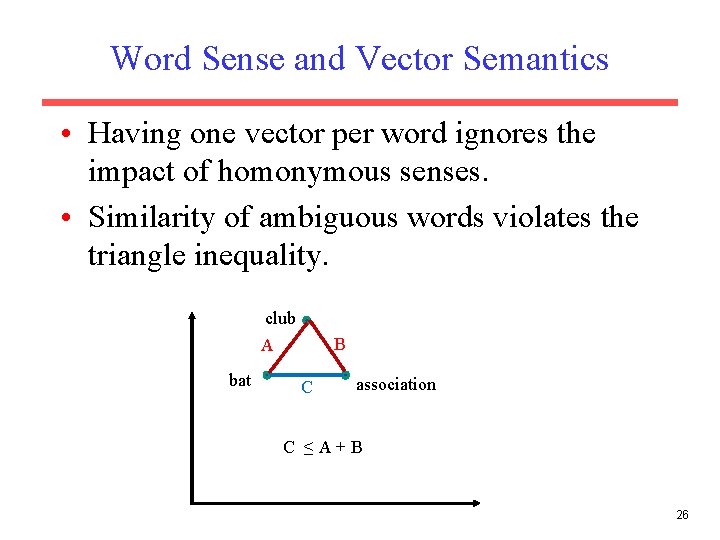
Word Sense and Vector Semantics • Having one vector per word ignores the impact of homonymous senses. • Similarity of ambiguous words violates the triangle inequality. club A bat B C association C ≤A+B 26
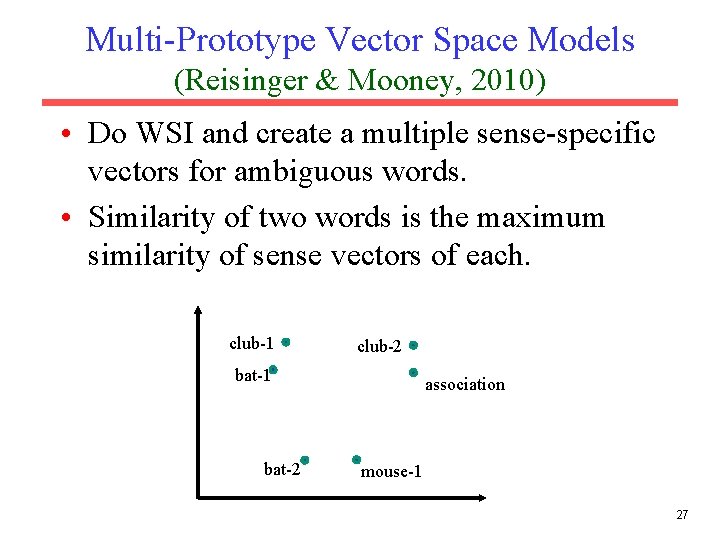
Multi-Prototype Vector Space Models (Reisinger & Mooney, 2010) • Do WSI and create a multiple sense-specific vectors for ambiguous words. • Similarity of two words is the maximum similarity of sense vectors of each. club-1 club-2 bat-1 bat-2 association mouse-1 27
Vector-Space Word Meaning in Context • Compute a semantic vector for an individual occurrence of a word based on its context. • Combine a standard vector for a word with vectors representing the immediate context. 28
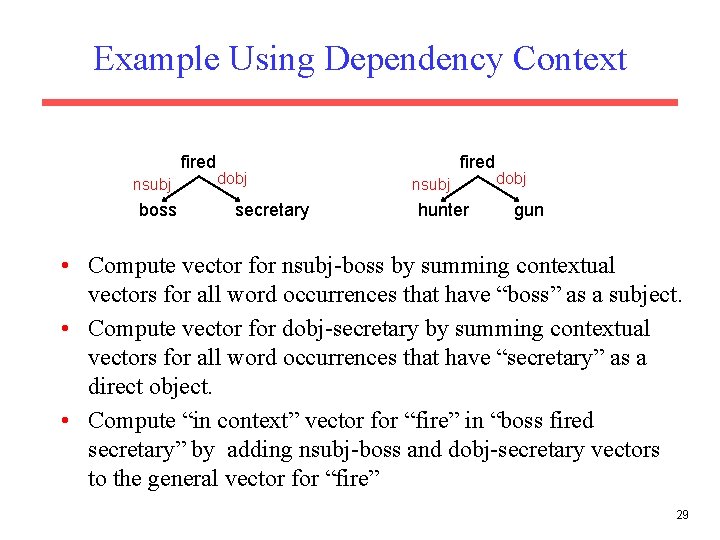
Example Using Dependency Context fired nsubj boss dobj secretary fired nsubj hunter dobj gun • Compute vector for nsubj-boss by summing contextual vectors for all word occurrences that have “boss” as a subject. • Compute vector for dobj-secretary by summing contextual vectors for all word occurrences that have “secretary” as a direct object. • Compute “in context” vector for “fire” in “boss fired secretary” by adding nsubj-boss and dobj-secretary vectors to the general vector for “fire” 29
Compositional Vector Semantics • Compute vector meanings of phrases and sentences by combining (composing) the vector meanings of its words. • Simplest approach is to use vector addition or component-wise multiplication to combine word vectors. • Evaluate on human judgements of sentencelevel semantic similarity (semantic textual similarity, STS, Sem. Eval competition). 30
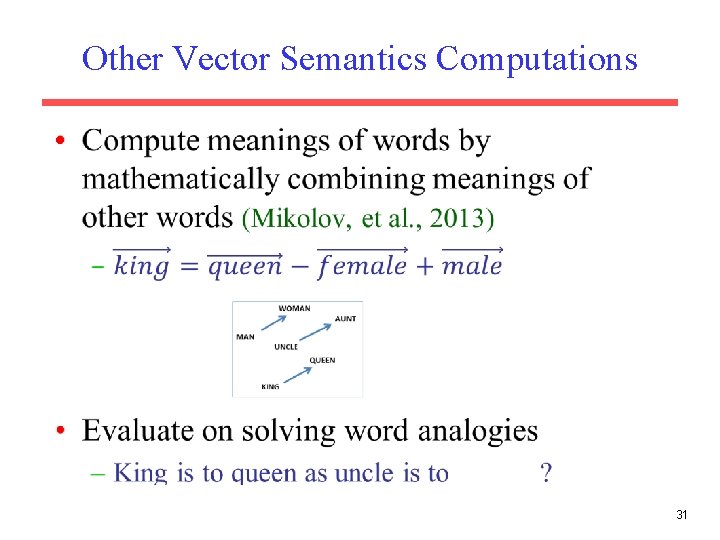
Other Vector Semantics Computations • 31
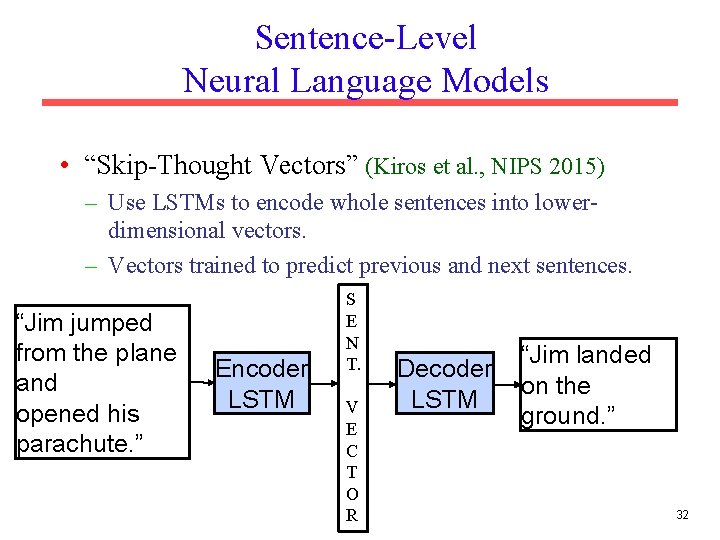
Sentence-Level Neural Language Models • “Skip-Thought Vectors” (Kiros et al. , NIPS 2015) – Use LSTMs to encode whole sentences into lowerdimensional vectors. – Vectors trained to predict previous and next sentences. “Jim jumped from the plane and opened his parachute. ” Encoder LSTM S E N T. V E C T O R Decoder LSTM “Jim landed on the ground. ” 32
Conclusions • A word’s meaning can be represented as a vector that encodes distributional information about the contexts in which the word tends to occur. • Lexical semantic similarity can be judged by comparing vectors (e. g. cosine similarity). • Vector-based word senses can be automatically induced by clustering contexts. • Contextualized vectors for word meaning can be constructed by combining lexical and contextual vectors. 33