
Information Processing Model Part 2 Storage Three Memory
- Slides: 10
Information Processing Model Part 2
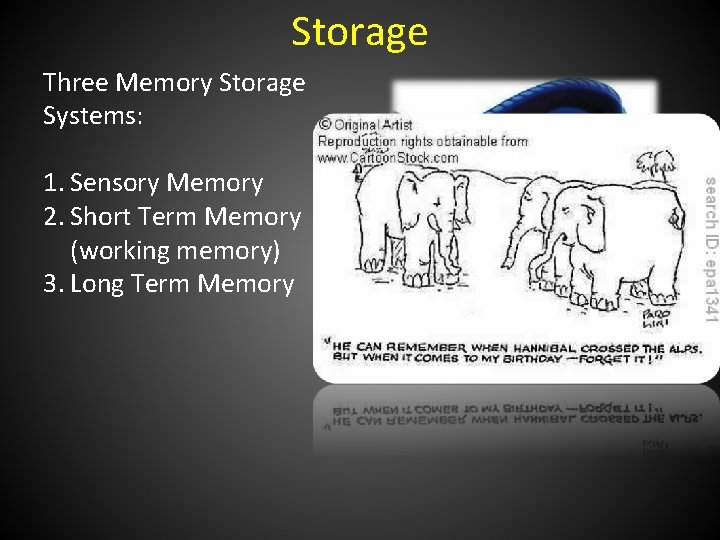
Storage Three Memory Storage Systems: 1. Sensory Memory 2. Short Term Memory (working memory) 3. Long Term Memory
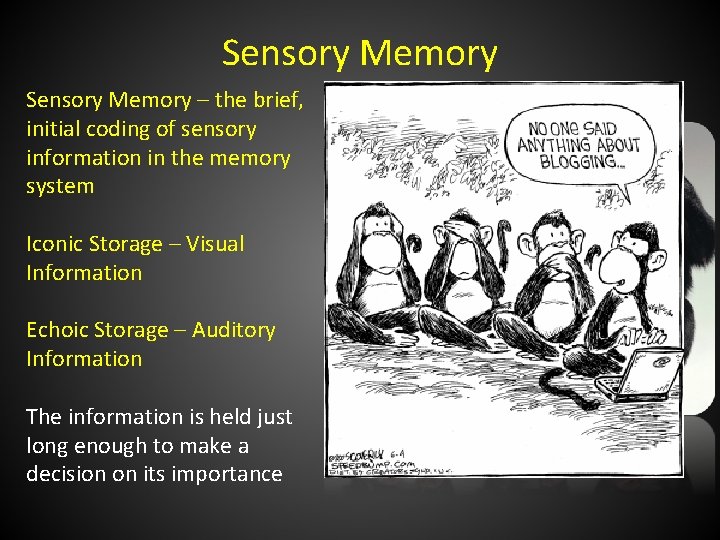
Sensory Memory – the brief, initial coding of sensory information in the memory system Iconic Storage – Visual Information Echoic Storage – Auditory Information The information is held just long enough to make a decision on its importance
Short Term Memory – Conscious, activated memory which holds information briefly before it is stored or forgotten Holds about 7 chunks of information, + or – 2 Can retain information as long as it is being rehearsed Also known as working memory
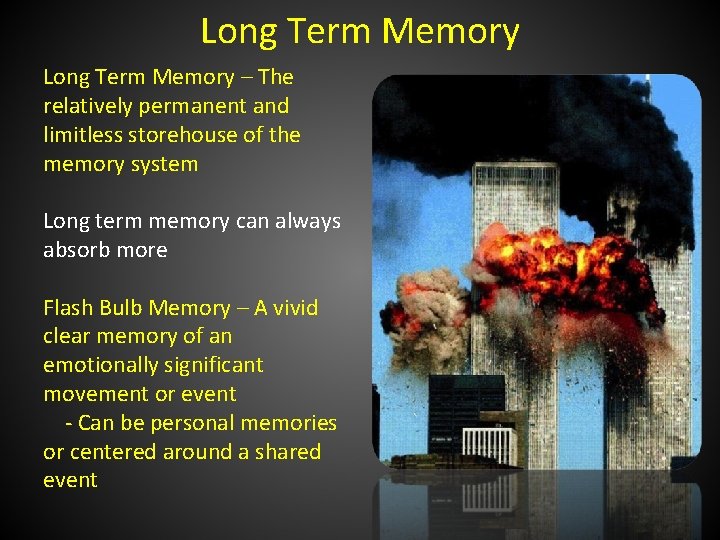
Long Term Memory – The relatively permanent and limitless storehouse of the memory system Long term memory can always absorb more Flash Bulb Memory – A vivid clear memory of an emotionally significant movement or event - Can be personal memories or centered around a shared event
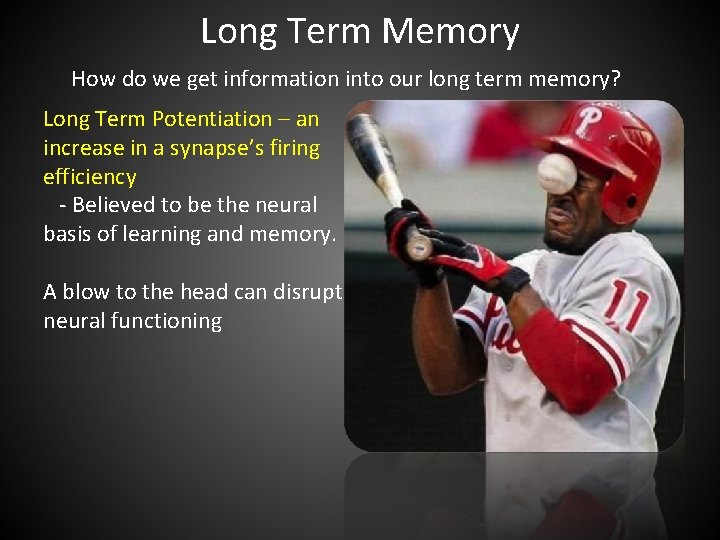
Long Term Memory How do we get information into our long term memory? Long Term Potentiation – an increase in a synapse’s firing efficiency - Believed to be the neural basis of learning and memory. A blow to the head can disrupt neural functioning
Memory Explicit Memories (declarative memory) – Memory of facts and experiences that one must consciously retrieve and declare - Processed in the Hippocampus Implicit Memories (procedural memory) – Memory of skills and procedures that are retrieved without conscious recollection - Processed in the Cerebellum
Retrieval – the process of getting information out of memory storage Two forms of retrieval: 1. Recognition 2. Recall
Retrieval Recognition – A measure of memory in which a person must identify items learned earlier Recall – A measure of memory in which the person must retrieve information learned earlier Multiple Choice and matching test questions test recognition Essay, fill in the blank, and short answer questions test recall
Retrieval Context Effect – The enhanced ability to retrieve information when you are in an environment similar to the one in which you encoded the information déjà vu – The sense that you’ve experienced something before - Cues from the current situation may subconsciously trigger the retrieval of an earlier experience Mood Congruent Memory – (known as state dependent memory) - The ability to retrieve information when the person is in the same physical and emotional state that they were in when they encoded the information - Retrieval state is same as the encoding state - If you meet someone at a party when you are drunk - you’ll remember them easier when you are drunk again