
Information processing A simplified model Input stimuli to
- Slides: 30
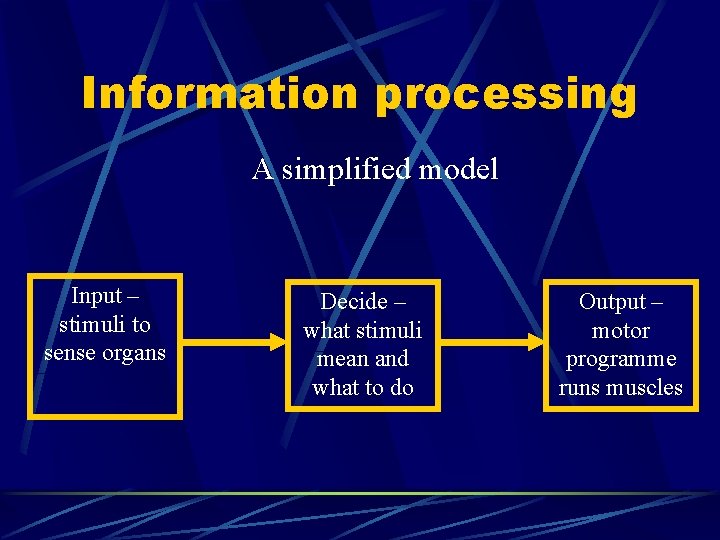
Information processing A simplified model Input – stimuli to sense organs Decide – what stimuli mean and what to do Output – motor programme runs muscles
Human Bat-Attack
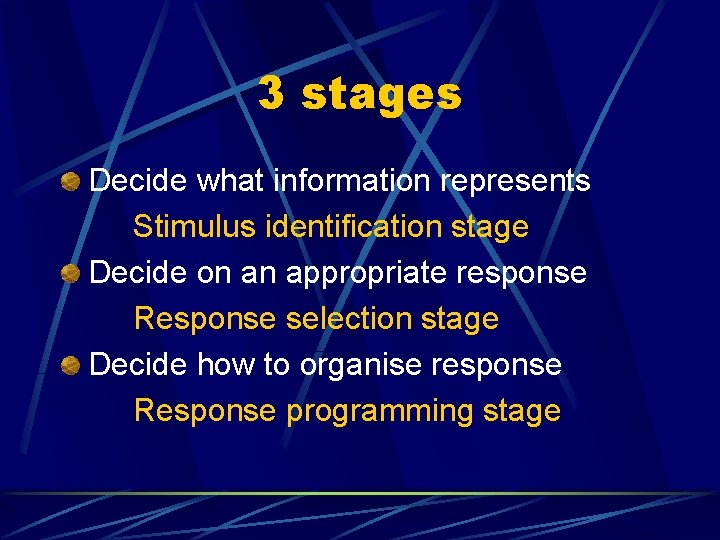
3 stages Decide what information represents Stimulus identification stage Decide on an appropriate response Response selection stage Decide how to organise response Response programming stage
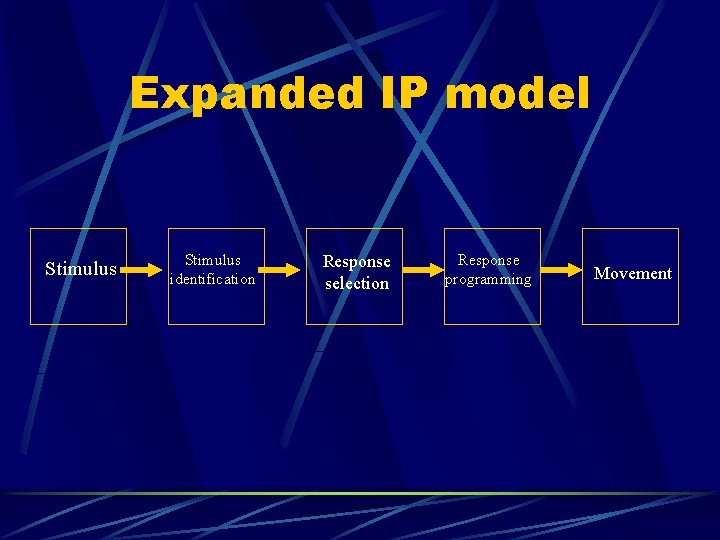
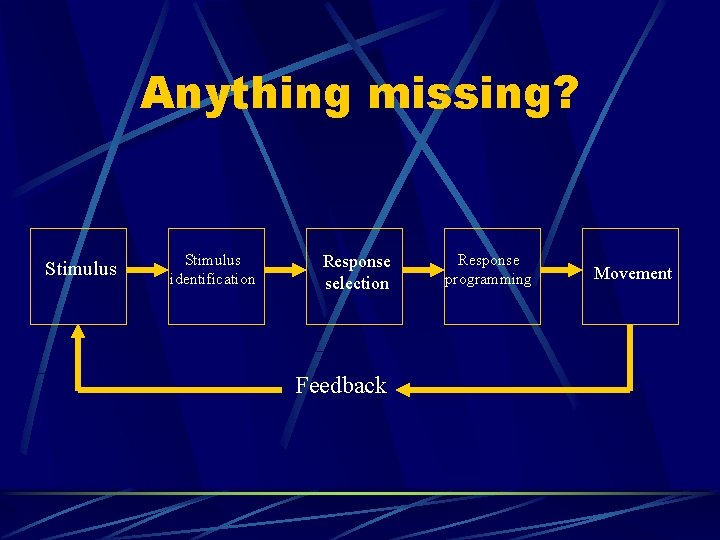
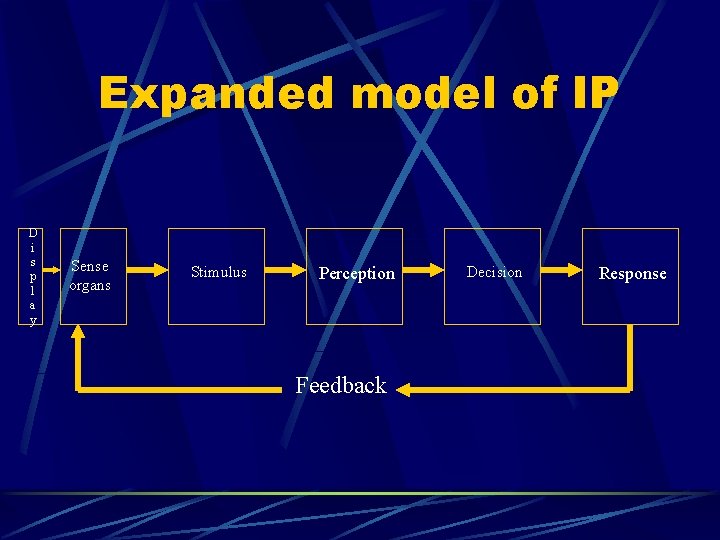
Expanded IP model Stimulus identification Response selection Response programming Movement
Anything missing? Stimulus identification Response selection Feedback Response programming Movement
Welford and Whiting Models of Information Processing
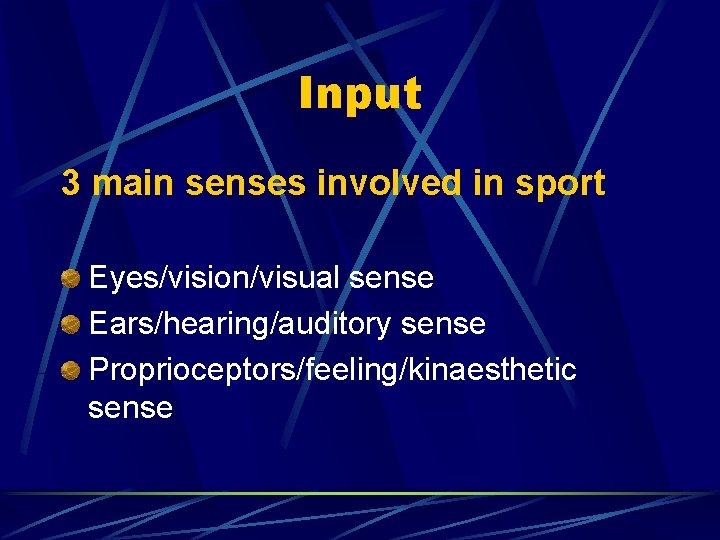
Input 3 main senses involved in sport Eyes/vision/visual sense Ears/hearing/auditory sense Proprioceptors/feeling/kinaesthetic sense
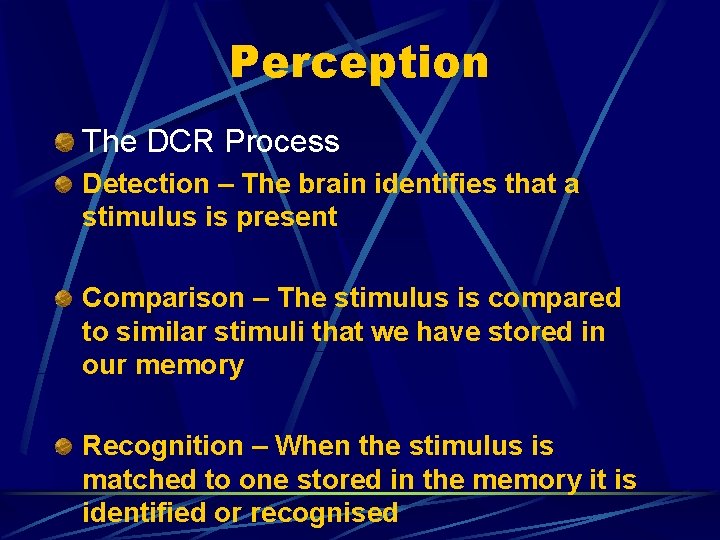
Perception The DCR Process Detection – The brain identifies that a stimulus is present Comparison – The stimulus is compared to similar stimuli that we have stored in our memory Recognition – When the stimulus is matched to one stored in the memory it is identified or recognised
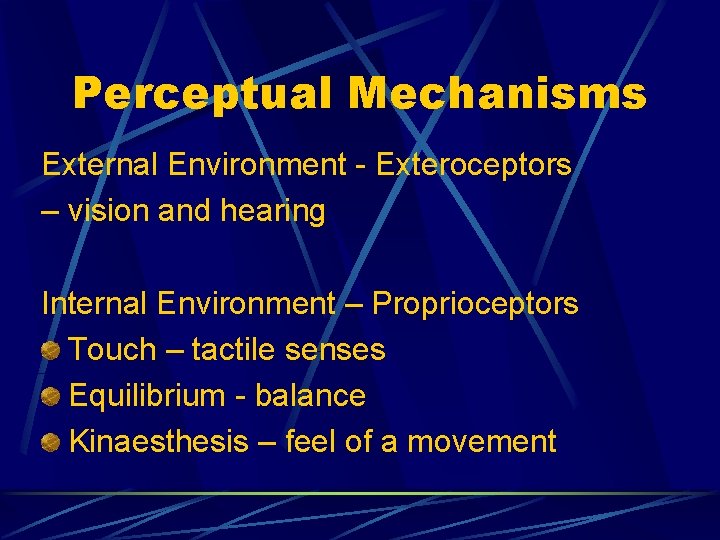
Perceptual Mechanisms External Environment - Exteroceptors – vision and hearing Internal Environment – Proprioceptors Touch – tactile senses Equilibrium - balance Kinaesthesis – feel of a movement
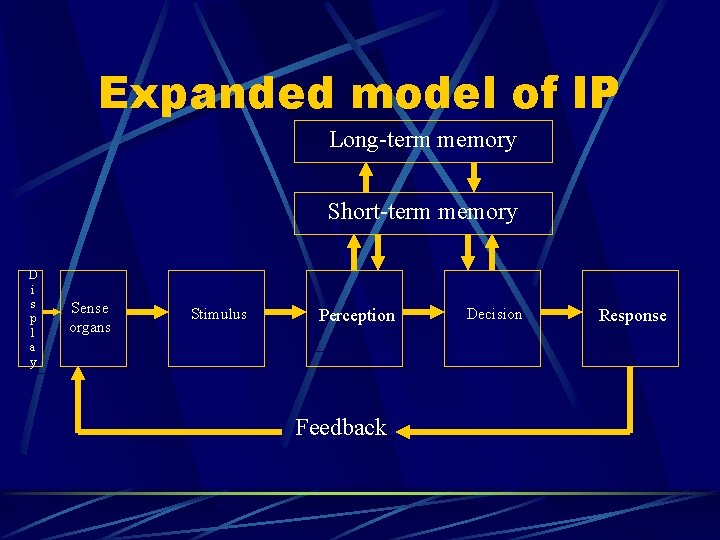
Expanded model of IP D i s p l a y Sense organs Stimulus Perception Feedback Decision Response
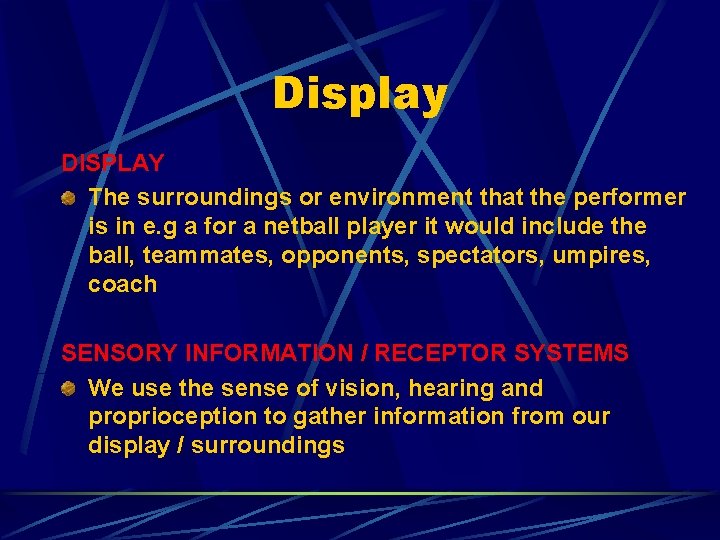
Display DISPLAY The surroundings or environment that the performer is in e. g a for a netball player it would include the ball, teammates, opponents, spectators, umpires, coach SENSORY INFORMATION / RECEPTOR SYSTEMS We use the sense of vision, hearing and proprioception to gather information from our display / surroundings
Selective attention
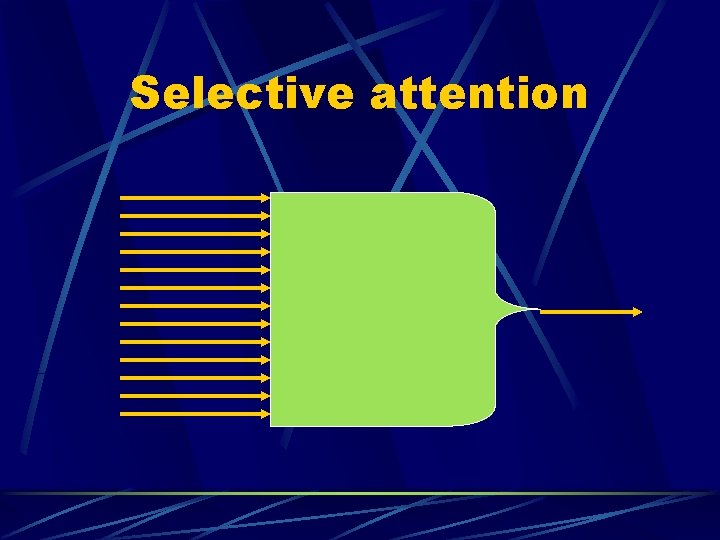
Selective Attention A process that filters irrelevant information gathered by the Sensory System and prioritises the stimuli that can affect the particular situation
DECISION MECHANISM (Translatory mechanism) Once the information has been interpreted, the correct response has to be put into action The part of the brain which makes decisions The correct action will be in the form of a motor programme
EFFECTOR MECHANISM Carries out the decisions by sending impulses via the nervous system to the appropriate muscles to respond EFFECTOR / MUSCULAR SYSTEM The muscles which put the motor programme into action
Information Processing Handout
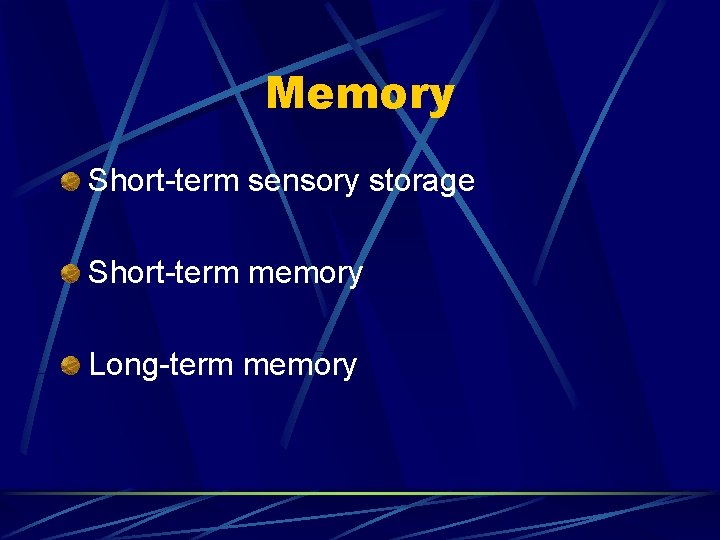
Memory Short-term sensory storage Short-term memory Long-term memory
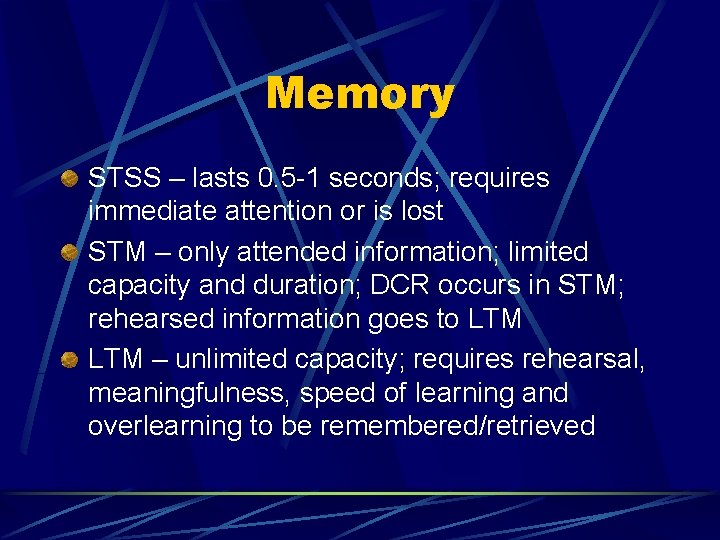
Memory STSS – lasts 0. 5 -1 seconds; requires immediate attention or is lost STM – only attended information; limited capacity and duration; DCR occurs in STM; rehearsed information goes to LTM – unlimited capacity; requires rehearsal, meaningfulness, speed of learning and overlearning to be remembered/retrieved
Expanded model of IP Long-term memory Short-term memory D i s p l a y Sense organs Stimulus Perception Feedback Decision Response
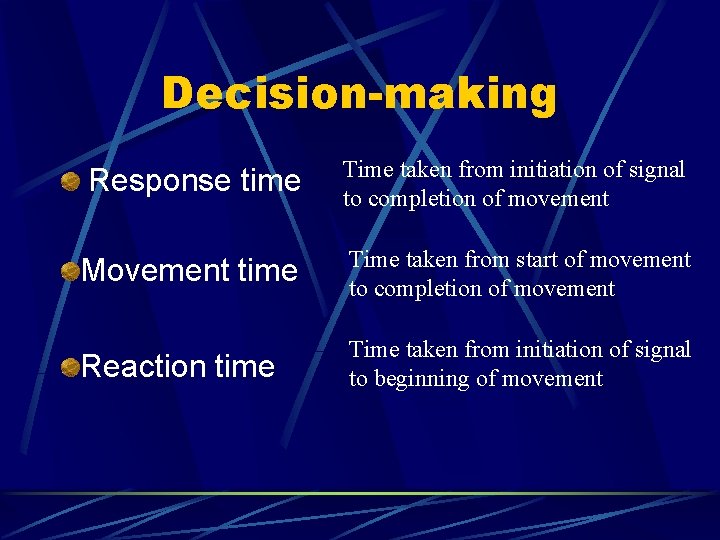
Decision-making Response time Time taken from initiation of signal to completion of movement Movement time Time taken from start of movement to completion of movement Reaction time Time taken from initiation of signal to beginning of movement
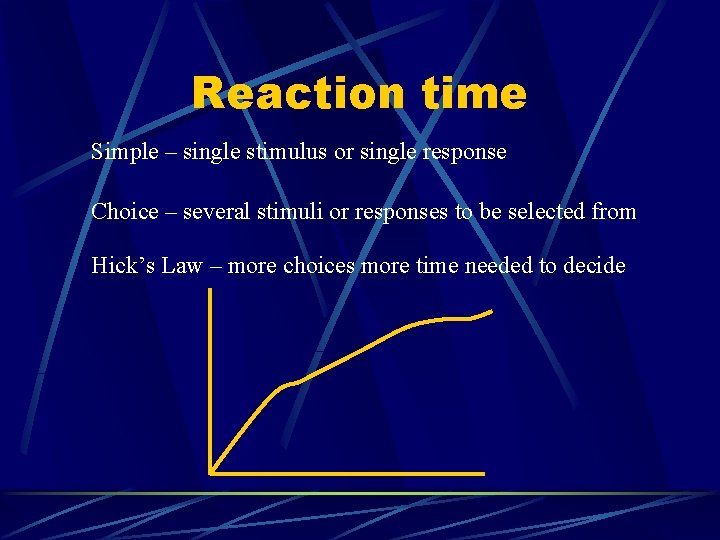
Reaction time Simple – single stimulus or single response Choice – several stimuli or responses to be selected from Hick’s Law – more choices more time needed to decide
Reaction time implications Avoid repeating movements/same response – becomes SRT for opponent – easy to react to Choice RT – provide variety of responses – means opponent has to select from many stimuli Practice – develop as wide a range of actions as possible
Psychological refractory period Unable to respond to second stimulus until first stimulus has been responded to – because of single channel Basis of ‘faking’ or ‘dummying’ Give a signal concerning intended movement, then move another way – opponent responds to first signal before responding to second signal, by which time you are long gone!
Feedback 3 functions Change incorrect response Reinforce correct response Motivate performer
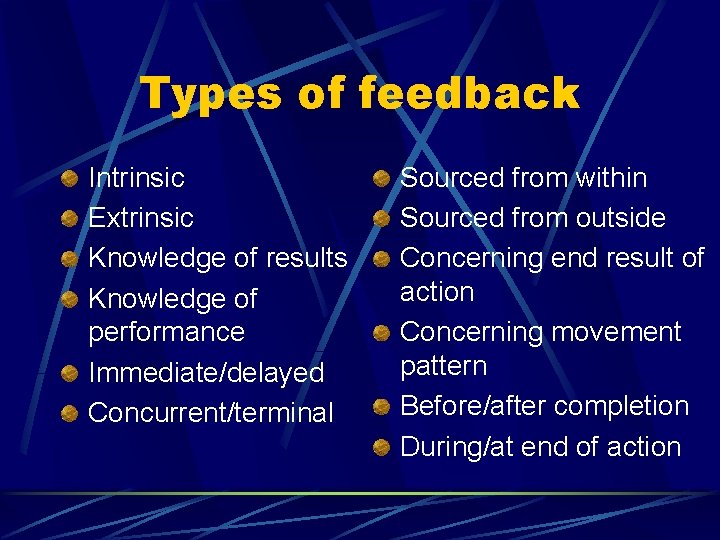
Types of feedback Intrinsic Extrinsic Knowledge of results Knowledge of performance Immediate/delayed Concurrent/terminal Sourced from within Sourced from outside Concerning end result of action Concerning movement pattern Before/after completion During/at end of action
Motor programmes Open loop theory No feedback. Pre-planned actions. Explains fast, ‘ballistic’ movements Stored as executive programmes that simply run and cannot be adjusted
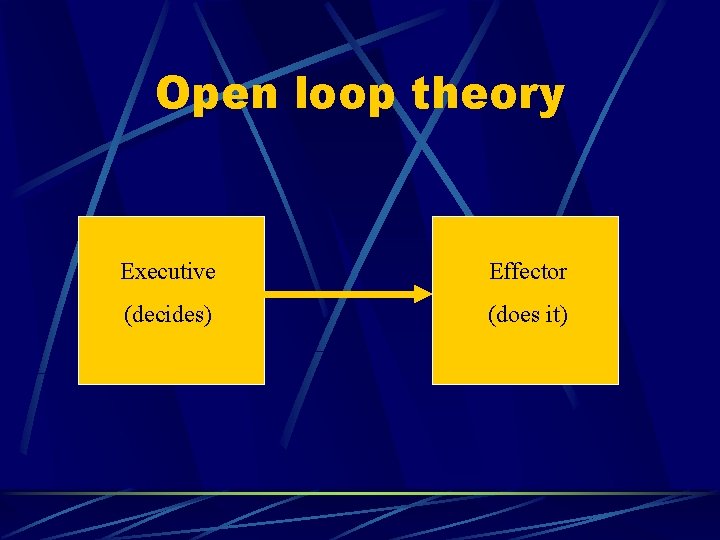
Open loop theory Executive Effector (decides) (does it)
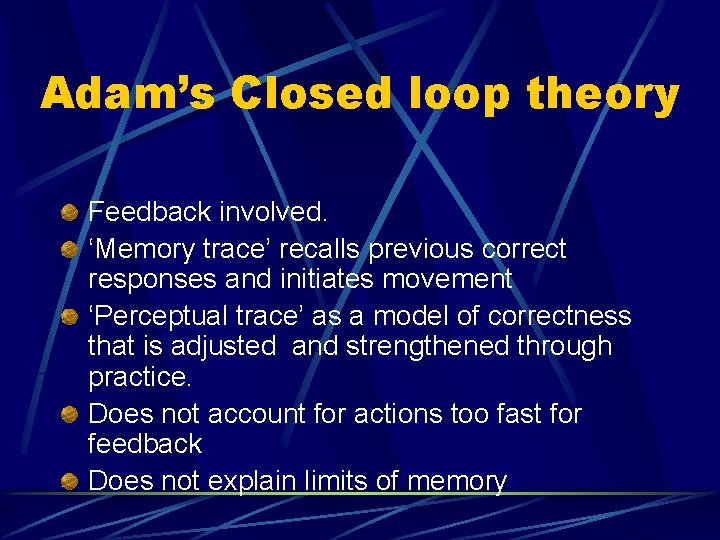
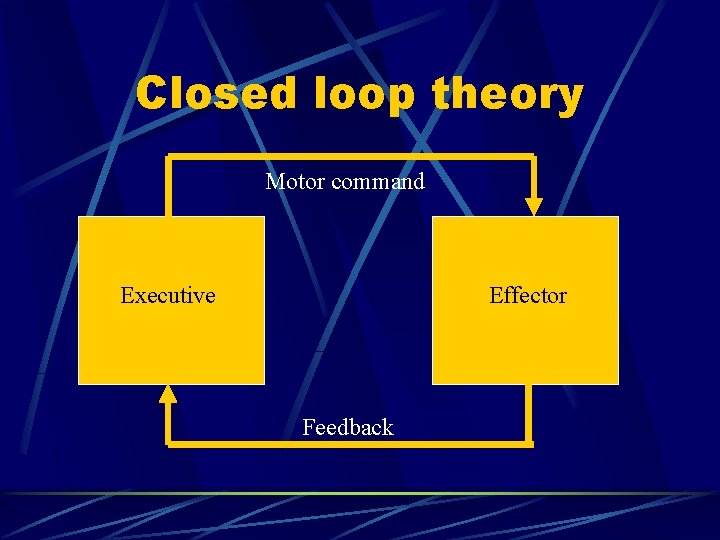
Adam’s Closed loop theory Feedback involved. ‘Memory trace’ recalls previous correct responses and initiates movement ‘Perceptual trace’ as a model of correctness that is adjusted and strengthened through practice. Does not account for actions too fast for feedback Does not explain limits of memory
Closed loop theory Motor command Executive Effector Feedback
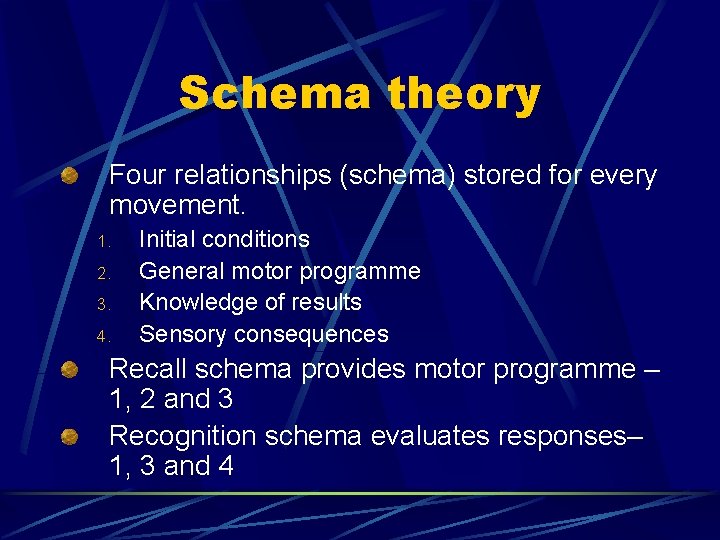
Schema theory Four relationships (schema) stored for every movement. 1. 2. 3. 4. Initial conditions General motor programme Knowledge of results Sensory consequences Recall schema provides motor programme – 1, 2 and 3 Recognition schema evaluates responses– 1, 3 and 4