
Information for All Programme Paul Hector UNESCO Programme

- Slides: 31
Information for All Programme Paul Hector UNESCO Programme Specialist Data, Digital assets & Innovation Platforms UNESCO Headquarters, Paris 12 & 13, July 2016 KFIT Project Digitization and information for all: Some future challenges
Overview of the Presentation Content § UNESCO’s intergovernmental Information for All Programme - What is IFAP and what does it do? § What is digitization, why does it matter? § Some challenges around digitization from IFAP’s perspectives § Some possible solutions
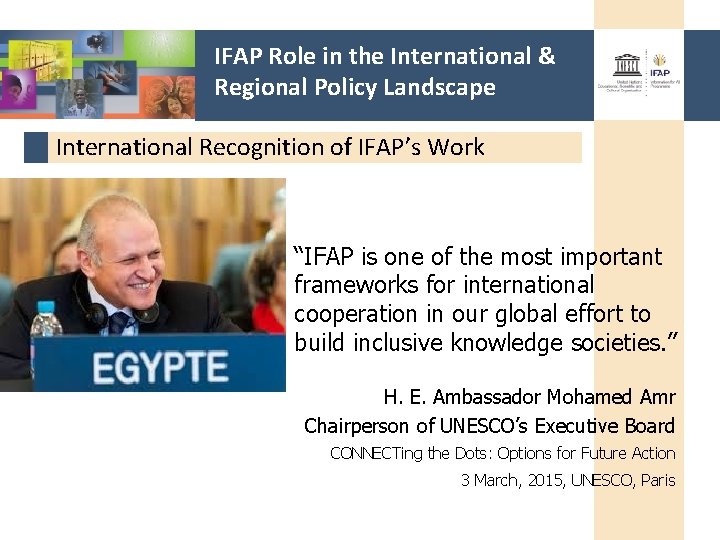
IFAP Role in the International & Regional Policy Landscape International Recognition of IFAP’s Work “IFAP is one of the most important frameworks for international cooperation in our global effort to build inclusive knowledge societies. ” H. E. Ambassador Mohamed Amr Chairperson of UNESCO’s Executive Board CONNECTing the Dots: Options for Future Action 3 March, 2015, UNESCO, Paris
IFAP’s Role in International & Regional Frameworks IFAP’s Role § Provides a platform for international policy discussions, cooperation and the development of guidelines for action in the area of access to information and knowledge. § Supports Member States to develop and implement national information policy and strategy frameworks across six strategic priority areas. § Serves as an advisory body to UNESCO’s Director-General. § Close cooperation/inputs to UNESCO’s 6 WSIS actions § Collaborates with IBC, IPDC, COMEST, MOST and other Intergovernmental partners in/outside UNESCO
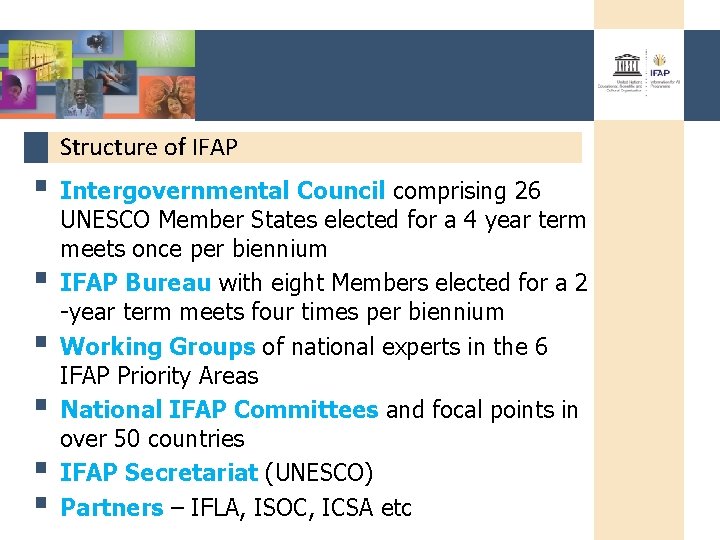
Structure of IFAP § Intergovernmental Council comprising 26 § § § UNESCO Member States elected for a 4 year term meets once per biennium IFAP Bureau with eight Members elected for a 2 -year term meets four times per biennium Working Groups of national experts in the 6 IFAP Priority Areas National IFAP Committees and focal points in over 50 countries IFAP Secretariat (UNESCO) Partners – IFLA, ISOC, ICSA etc
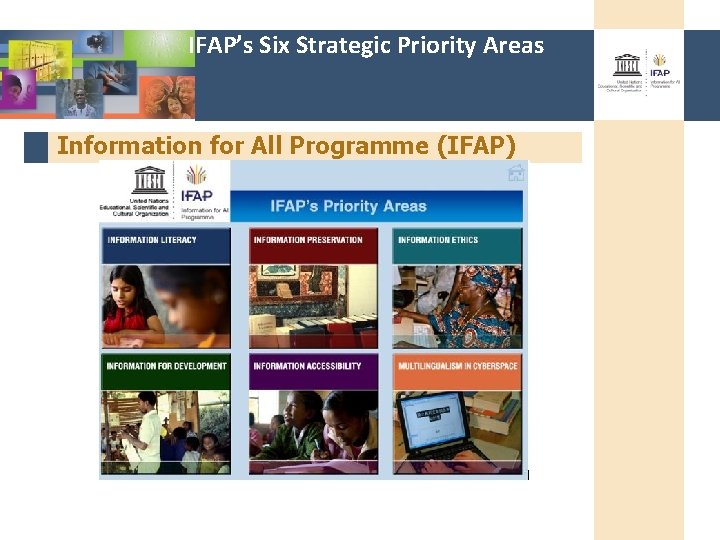
IFAP’s Six Strategic Priority Areas Information for All Programme (IFAP)
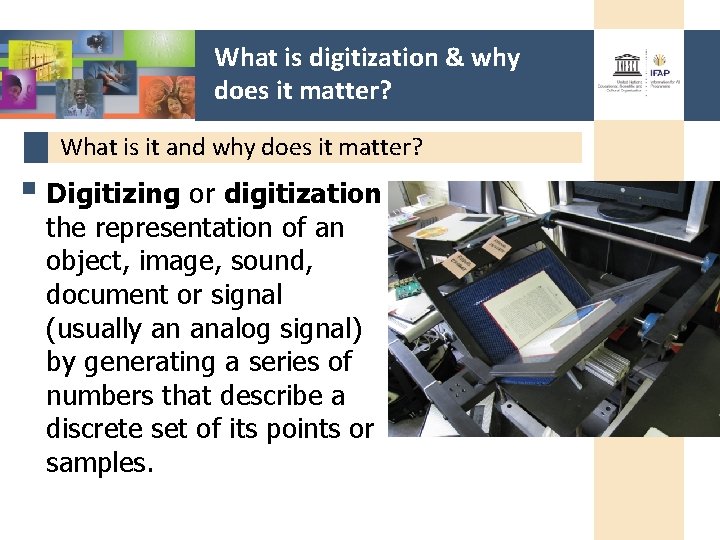
What is digitization & why does it matter? What is it and why does it matter? § Digitizing or digitization the representation of an object, image, sound, document or signal (usually an analog signal) by generating a series of numbers that describe a discrete set of its points or samples.
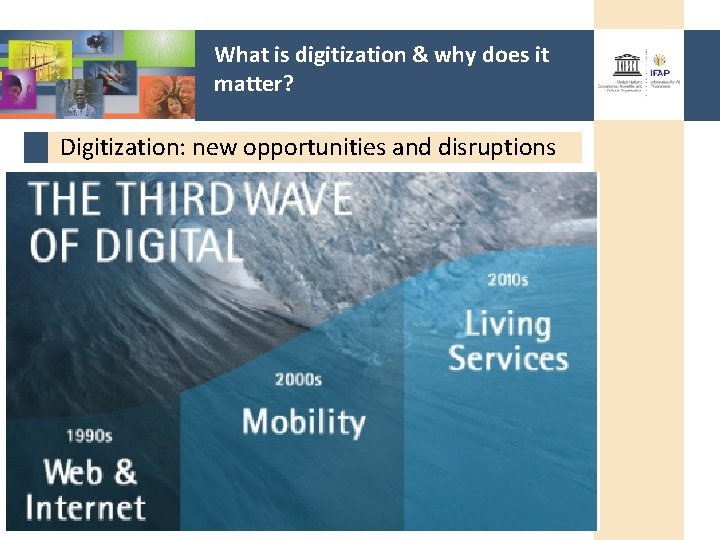
What is digitization & why does it matter? Digitization: new opportunities and disruptions
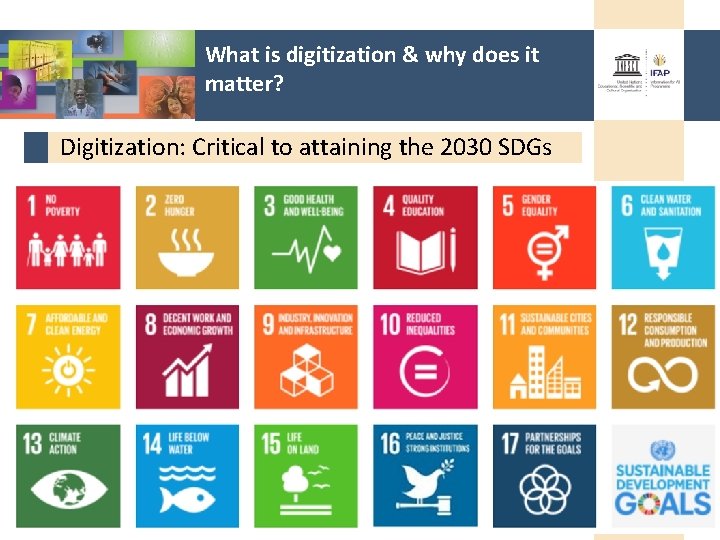
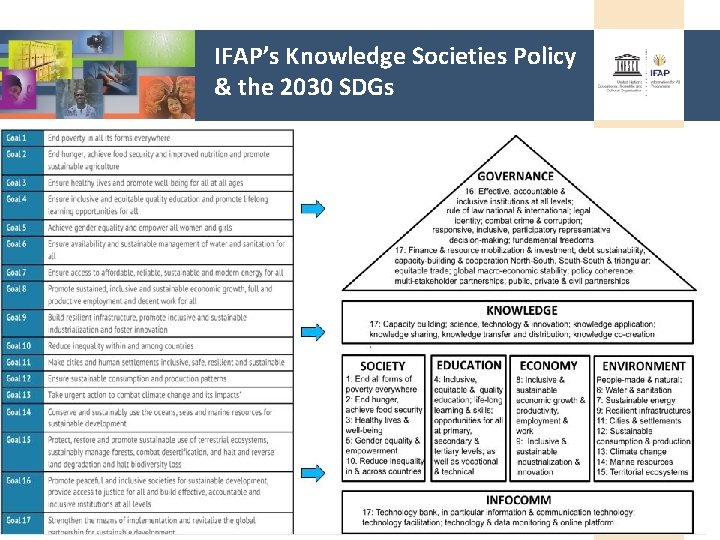
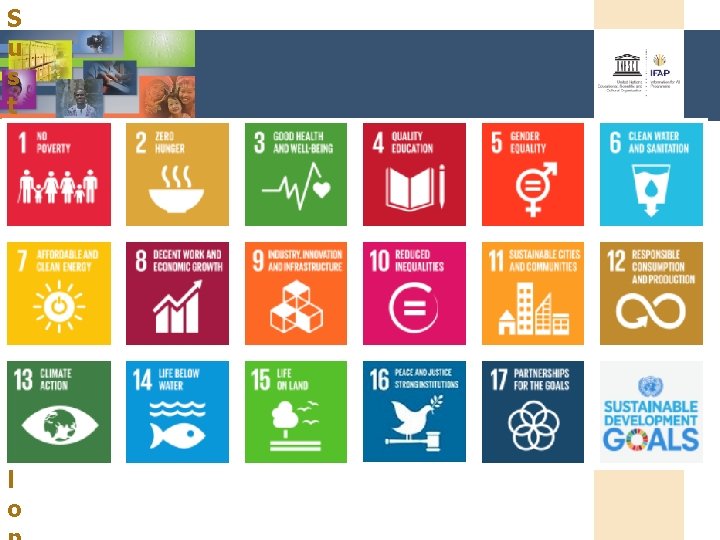
What is digitization & why does it matter? Digitization: Critical to attaining the 2030 SDGs
Some challenges around digitization Digital divide /mindset challenges to digitization § Despite enormous progress only 42% of the planet online at the end of 2015 § Supporting collaboration and sharing mindset to overcome silos to leverage network effects and properties of digital resources § From simple digitization to digital transformation – data analytics, attract talent
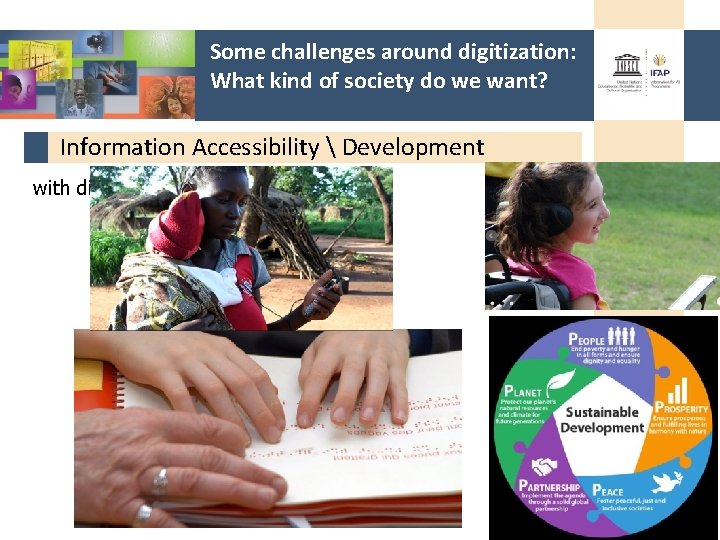
Some challenges around digitization: What kind of society do we want? Information Accessibility Development with disabilities
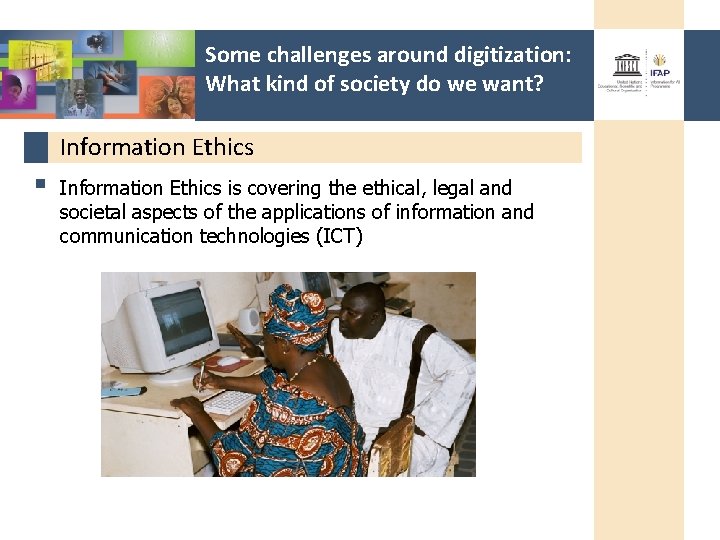
Some challenges around digitization: What kind of society do we want? Information Ethics § Information Ethics is covering the ethical, legal and societal aspects of the applications of information and communication technologies (ICT)
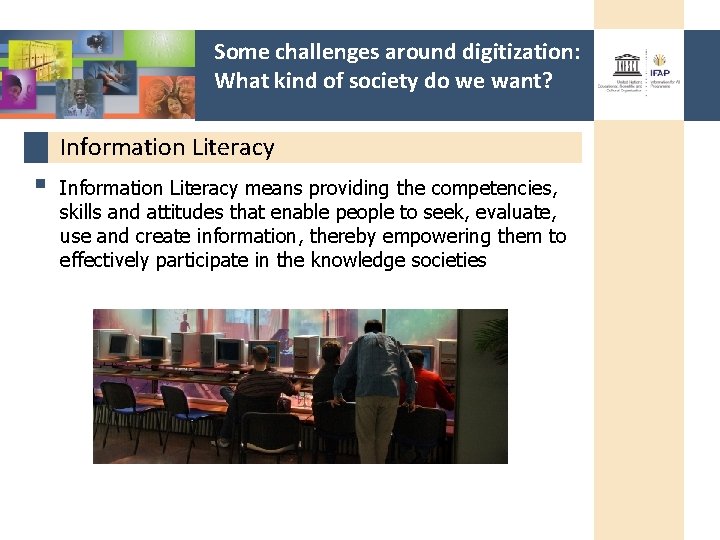
Some challenges around digitization: What kind of society do we want? Information Literacy § Information Literacy means providing the competencies, skills and attitudes that enable people to seek, evaluate, use and create information, thereby empowering them to effectively participate in the knowledge societies
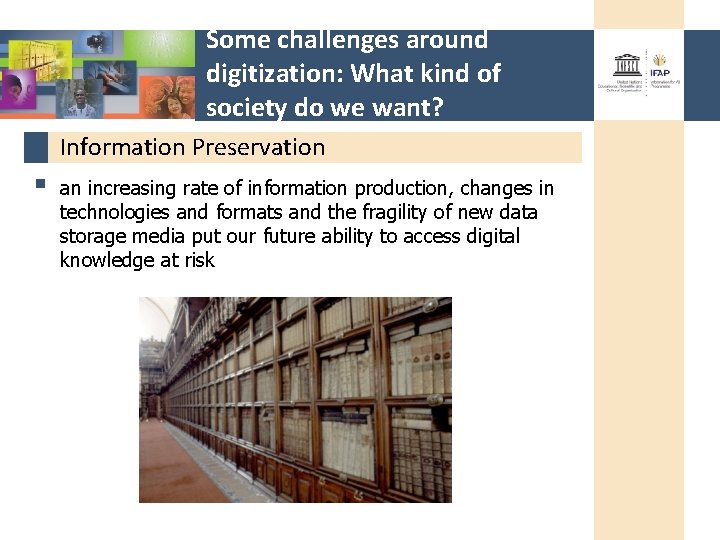
Some challenges around digitization: What kind of society do we want? Information Preservation § an increasing rate of information production, changes in technologies and formats and the fragility of new data storage media put our future ability to access digital knowledge at risk
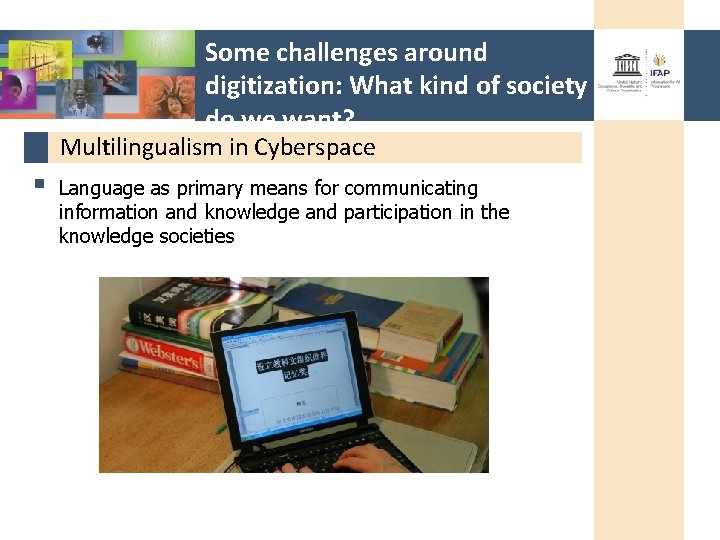
Some challenges around digitization: What kind of society do we want? Multilingualism in Cyberspace § Language as primary means for communicating information and knowledge and participation in the knowledge societies
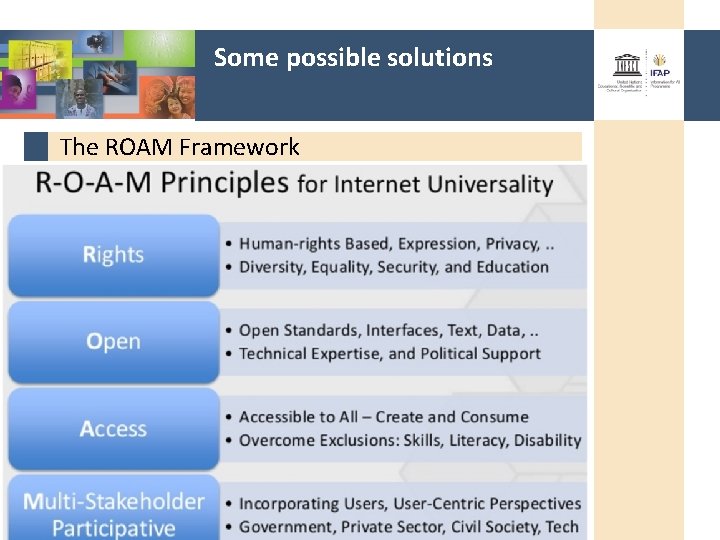
Some possible solutions The ROAM Framework
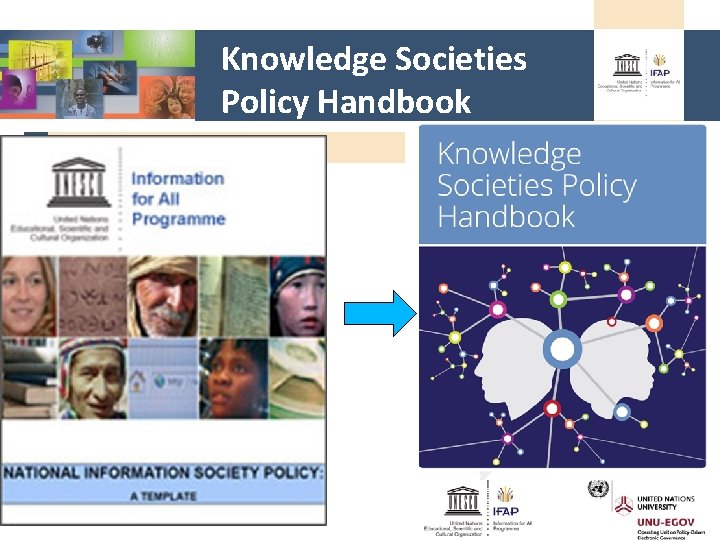
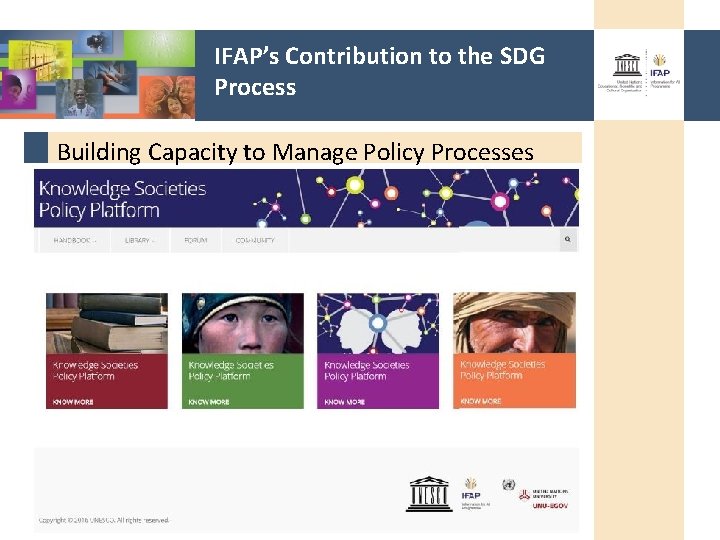
Knowledge Societies Policy Handbook
Thank you! UNESCO Information for All Programme www. unesco. org/webworld/ifap p. hector@unesco. org
IFAP’s Knowledge Societies Policy & the 2030 SDGs Contents
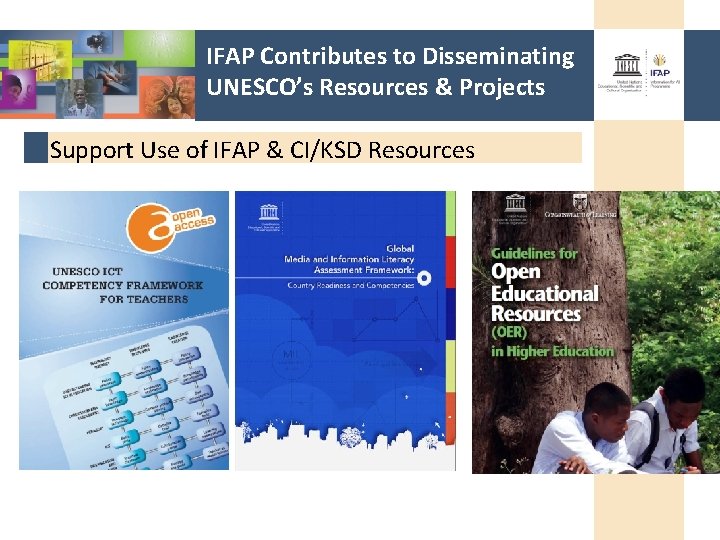
IFAP Contributes to Disseminating UNESCO’s Resources & Projects Support Use of IFAP & CI/KSD Resources
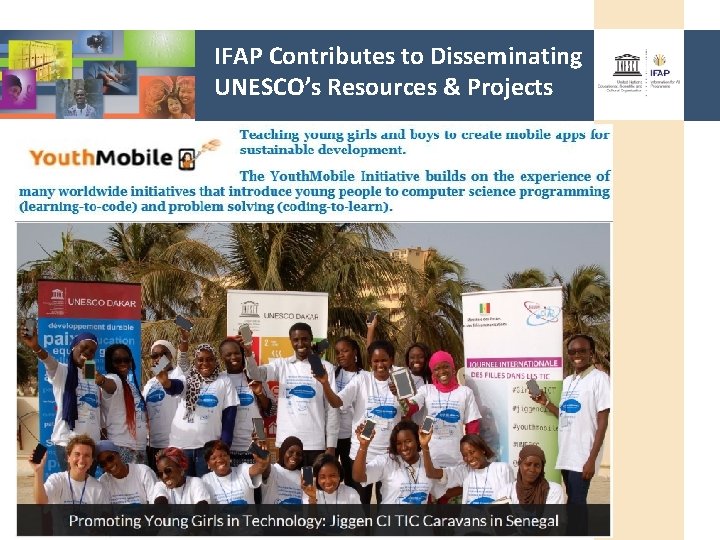
IFAP Contributes to Disseminating UNESCO’s Resources & Projects
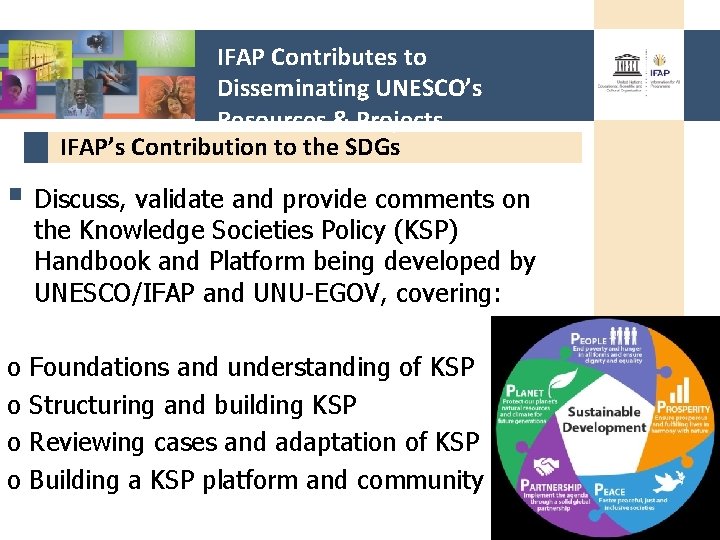
IFAP Contributes to Disseminating UNESCO’s Resources & Projects IFAP’s Contribution to the SDGs § Discuss, validate and provide comments on the Knowledge Societies Policy (KSP) Handbook and Platform being developed by UNESCO/IFAP and UNU-EGOV, covering: o o Foundations and understanding of KSP Structuring and building KSP Reviewing cases and adaptation of KSP Building a KSP platform and community
S u s t a i n a b l e D e v e l o
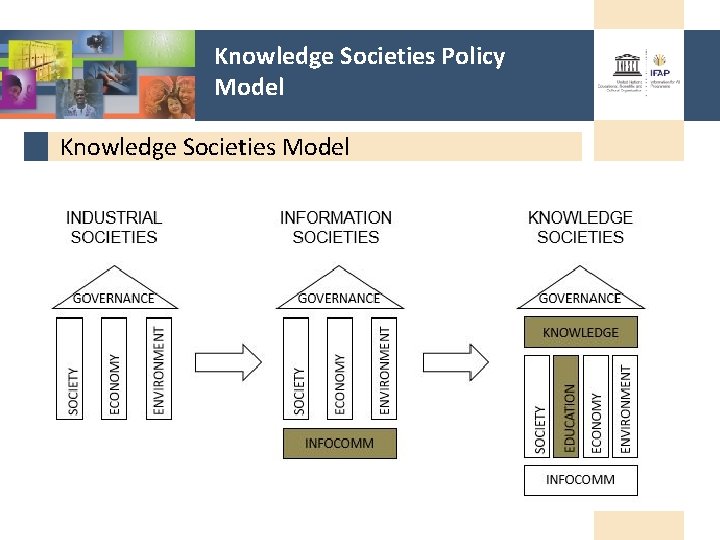
Knowledge Societies Policy Model Knowledge Societies Model
IFAP’s Contribution to the SDG Process Building Capacity to Manage Policy Processes
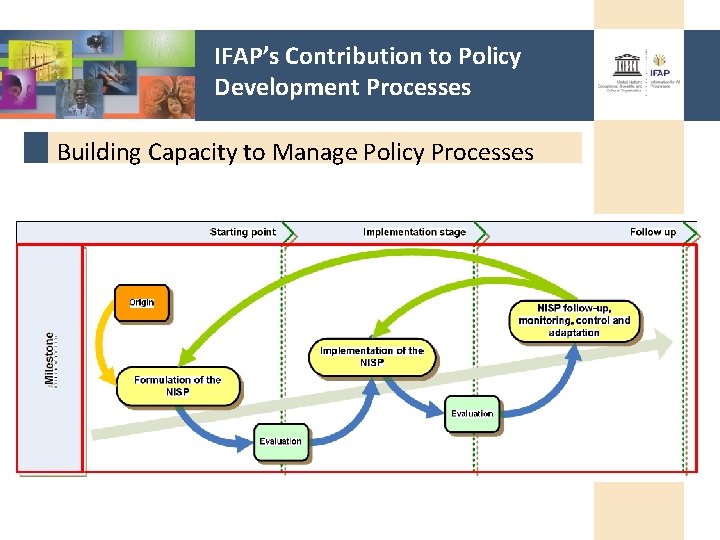
IFAP’s Contribution to Policy Development Processes Building Capacity to Manage Policy Processes
IFAP’s Contribution to the KFIT Project § IFAP Contributions to National Policy Establishment and strengthening of National IFAP Committees in each of the 3 project countries and their association to the KFIT national project teams (Including Capacity-building) § National Capacity-building Workshops on Policy-Cycle and use of the Knowledge Societies Policy Handbook § Development, publication and dissemination of National Case Studies based on the Knowledge Societies Policy Handbook
IFAP’s Contribution to the KFIT Project § IFAP Contributions to KFIT Project Development and publication of National Case Studies that result from the National KFIT Projects to Support Future Scale-up and Policy-making § Updating of Policy Platform with Case Studies and other miscellaneous activities. § International Conference for Policy-makers to discuss and disseminate IFAP-related outcomes of KFIT project