
INFORMATION EVOLUTION MODEL PERTEMUAN 7 RIYA WIDAYANTI SISTEM
- Slides: 13
INFORMATION EVOLUTION MODEL PERTEMUAN 7 RIYA WIDAYANTI SISTEM INFORMASI
KEMAMPUAN AKHIR YANG DIHARAPKAN • Memahami model evolusi informasi untuk menilai kematangan organisasi dalam manajemen sumber daya TI
Case • Imagine the plight of fifteenth-century seafaring explorers • From ports in western Europe, they sought trade routes to India and the Far East, hoping to retrieve riches that overland routes could not match. • They had no baseline information about the route ahead. No charts or maps, not even broad consensus as to the shape of the earth. • Sailing forward from those moorings, their destinations frequently did not match their targets—and sometimes did not even match the intended continent
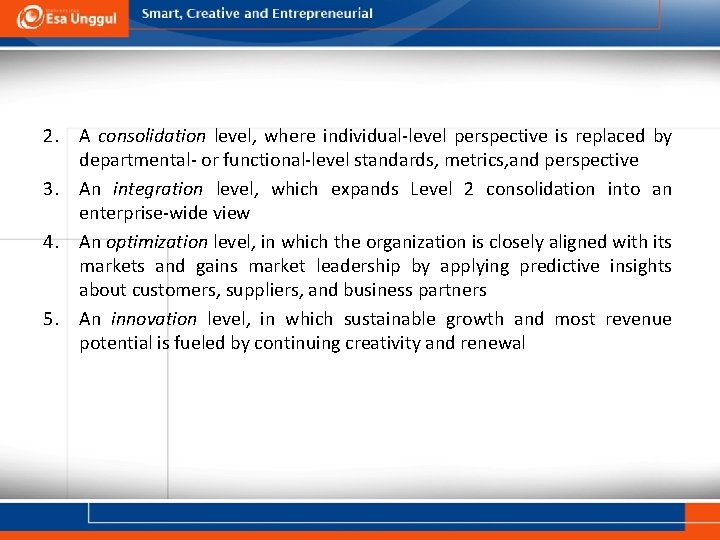
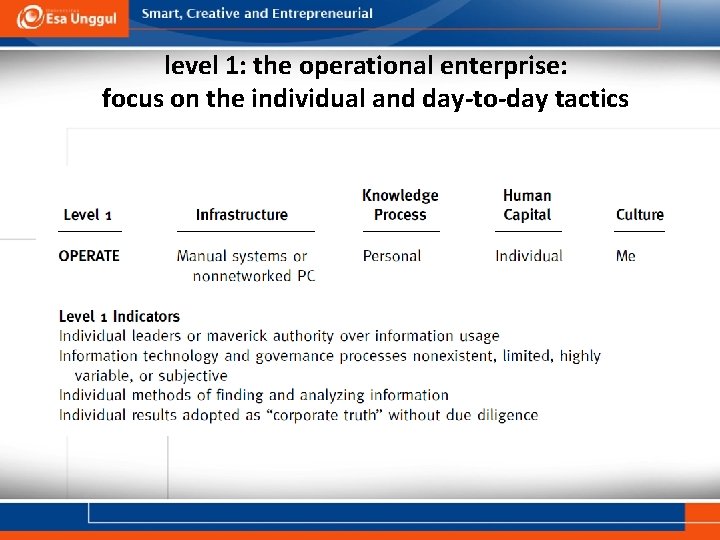
Five steps to maximize the value of information • A company’s success in managing information as a strategic asset is a function of infrastructure, process, people, and culture—ideally, all working in concert. A company’s maturity on these dimensions can be fairly represented in an Information Evolution Model that includes five evolutionary stages: 1. An operational level, characterized by individual data “ownership” and control, applied to tackle day-to-day functional issues
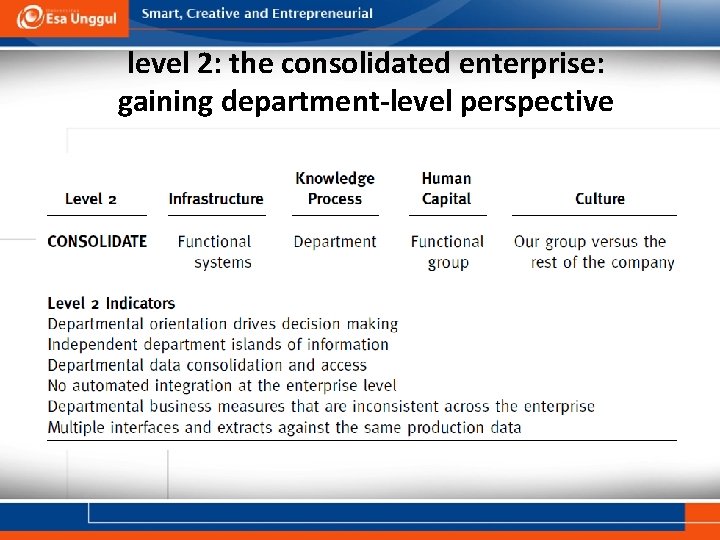
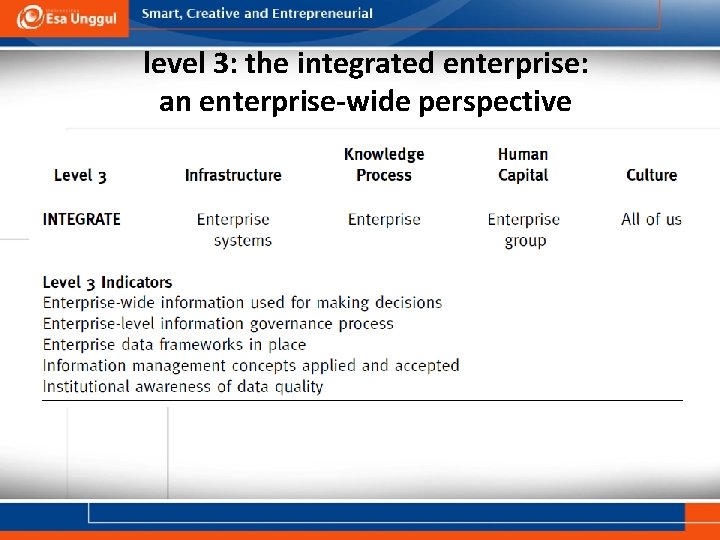
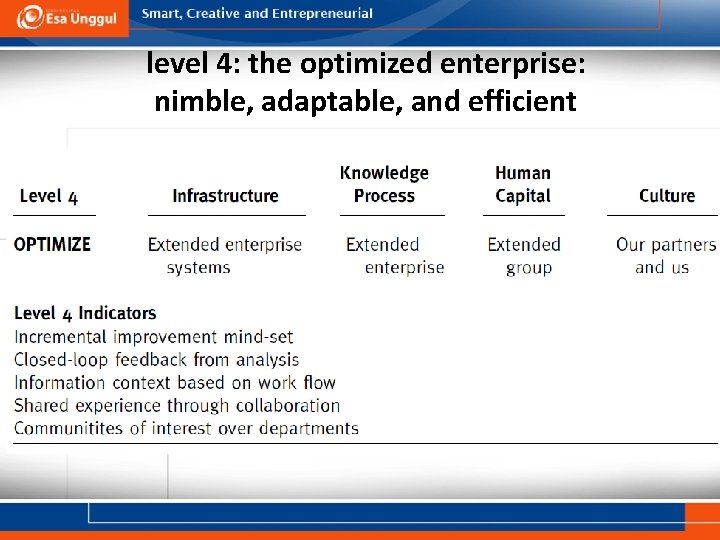
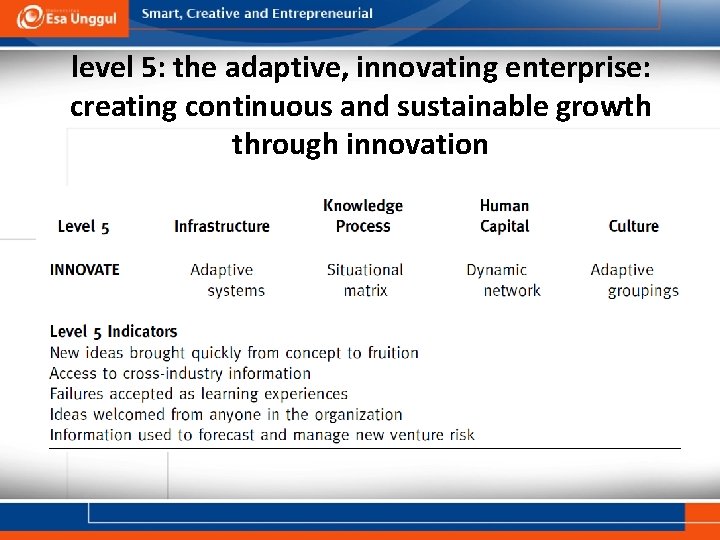
2. A consolidation level, where individual-level perspective is replaced by departmental- or functional-level standards, metrics, and perspective 3. An integration level, which expands Level 2 consolidation into an enterprise-wide view 4. An optimization level, in which the organization is closely aligned with its markets and gains market leadership by applying predictive insights about customers, suppliers, and business partners 5. An innovation level, in which sustainable growth and most revenue potential is fueled by continuing creativity and renewal
level 1: the operational enterprise: focus on the individual and day-to-day tactics
level 2: the consolidated enterprise: gaining department-level perspective
level 3: the integrated enterprise: an enterprise-wide perspective
level 4: the optimized enterprise: nimble, adaptable, and efficient
level 5: the adaptive, innovating enterprise: creating continuous and sustainable growth through innovation