
Informal Academic Diagnostic Assessment Using Data to Guide


- Slides: 34
Informal Academic Diagnostic Assessment: Using Data to Guide Intensive Instruction Part 2: Reviewing Graphed Data 1
Informal Academic Diagnostic Assessment: Using Data to Guide Intensive Instruction Administering Academic Progress Monitoring Data Reviewing Progress Monitoring Data Miscue and Skills Analysis Identifying Target Skills 2
Purpose and Objectives Purpose: To provide guidance on reviewing graphed progress monitoring data, helping teachers determine 1. If the student is responding sufficiently to the intervention 2. What type of intervention changes may be needed 3
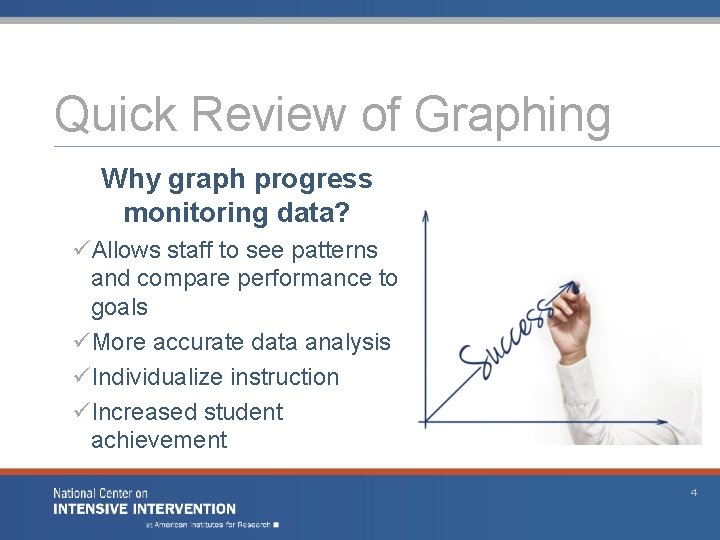
Quick Review of Graphing Why graph progress monitoring data? üAllows staff to see patterns and compare performance to goals üMore accurate data analysis üIndividualize instruction üIncreased student achievement 4
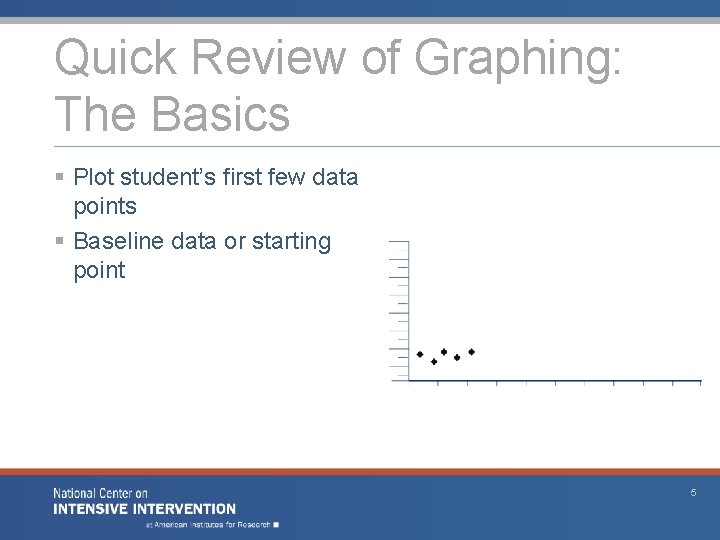
Quick Review of Graphing: The Basics § Plot student’s first few data points § Baseline data or starting point 5
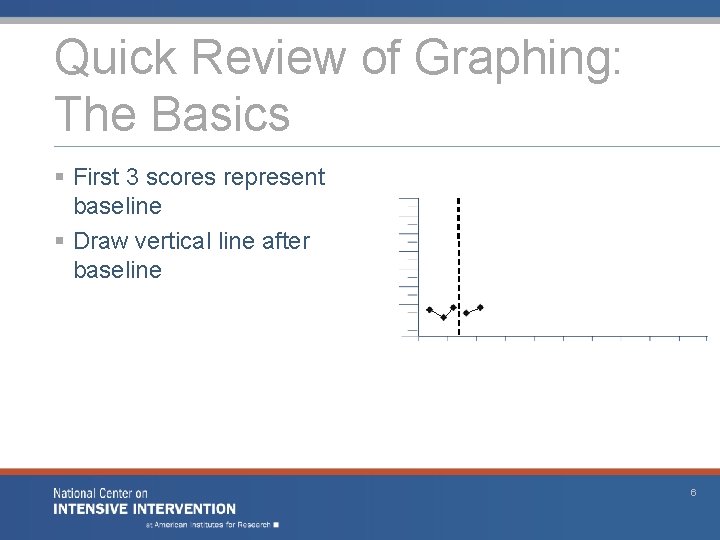
Quick Review of Graphing: The Basics § First 3 scores represent baseline § Draw vertical line after baseline 6
Quick Review of Graphing: The Basics § Determine a goal for your student’s performance at the end of the year. 7
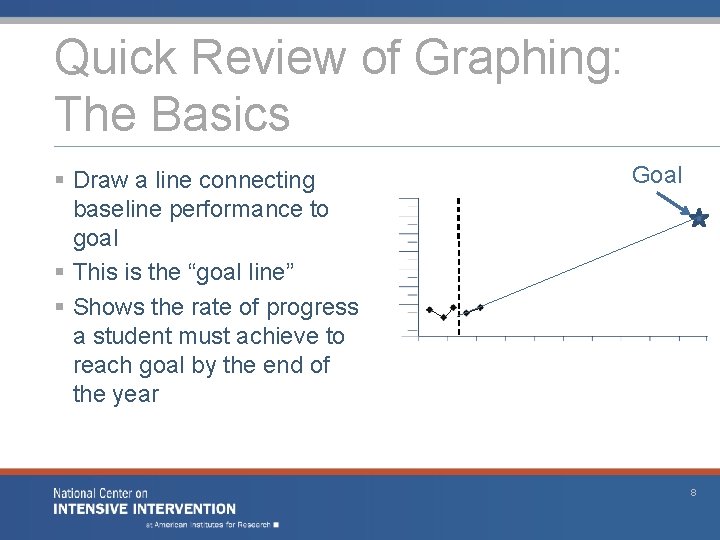
Quick Review of Graphing: The Basics § Draw a line connecting baseline performance to goal § This is the “goal line” § Shows the rate of progress a student must achieve to reach goal by the end of the year Goal 8
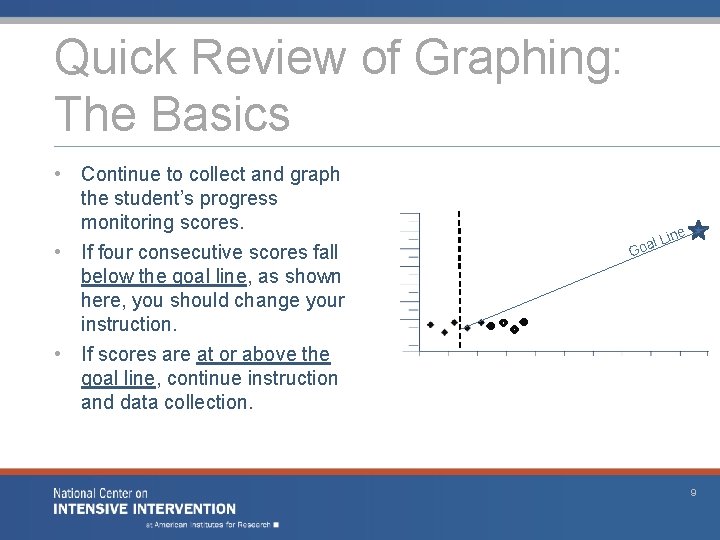
Quick Review of Graphing: The Basics • Continue to collect and graph the student’s progress monitoring scores. • If four consecutive scores fall below the goal line, as shown here, you should change your instruction. • If scores are at or above the goal line, continue instruction and data collection. ine l. L Goa 9
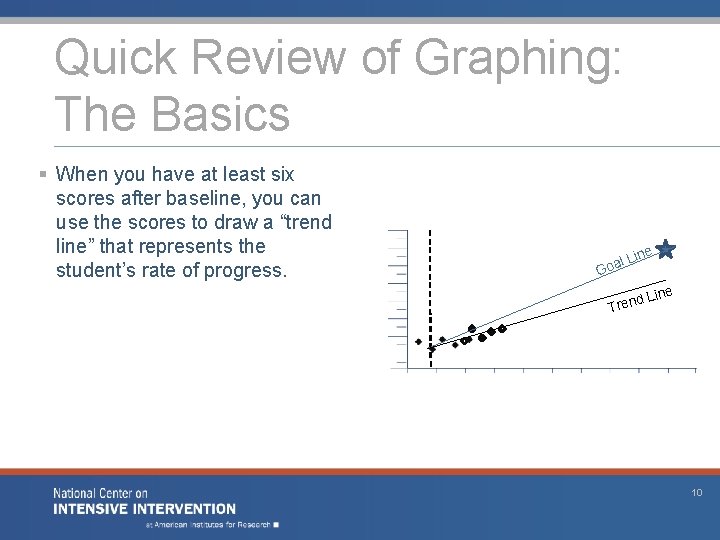
Quick Review of Graphing: The Basics § When you have at least six scores after baseline, you can use the scores to draw a “trend line” that represents the student’s rate of progress. ine l. L a o G d Tren Line 10
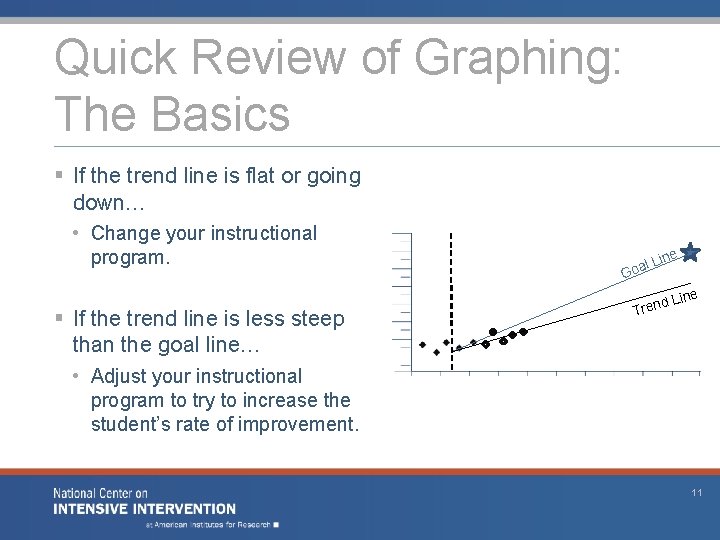
Quick Review of Graphing: The Basics § If the trend line is flat or going down… • Change your instructional program. § If the trend line is less steep than the goal line… e Lin oal G ine d. L Tren • Adjust your instructional program to try to increase the student’s rate of improvement. 11
Quick Review of Graphing: The Basics § When you make an instructional change, add a vertical line to the graph showing when you made the change. § Then continue collecting data to help you determine whether the instructional change has been effective. ine l. L Goa 12
It’s time to make a change, but what should I do? Observing data patterns can help guide your decision-making. 13
Potential Issues Impacting Progress • While reviewing student progress monitoring data, it is important to consider other issues that may be impacting progress: § Progress monitoring § Engagement/motivation § Fidelity § Instructional platform 14
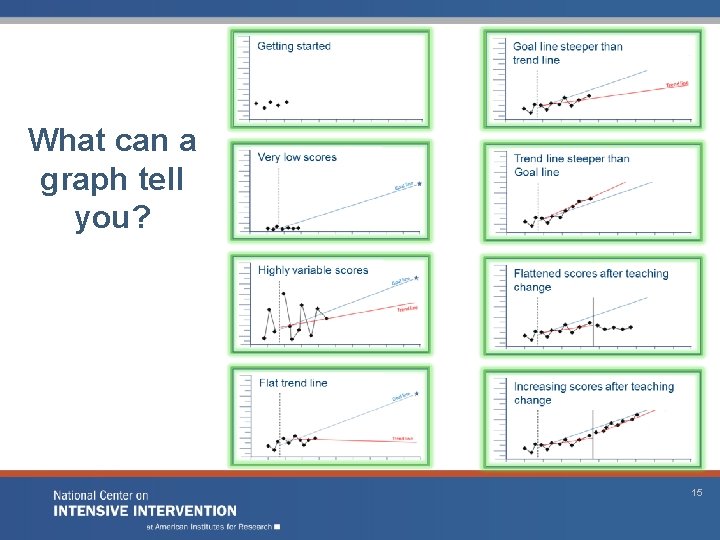
What can a graph tell you? 15
How do I know when a change is needed? When you make your first decision based on progress monitoring data, ask yourself two questions: 1) Is the student’s performance improving? 2) If so, is the student’s performance improving sufficiently to meet the end of the year goal? 16
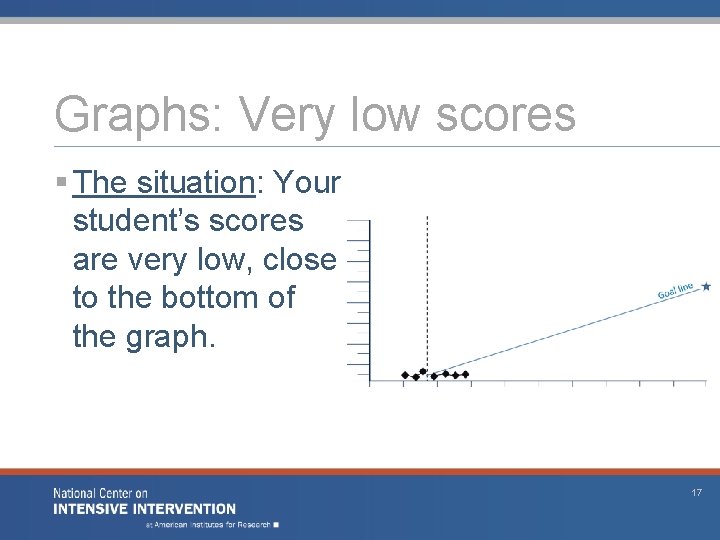
Graphs: Very low scores § The situation: Your student’s scores are very low, close to the bottom of the graph. 17
Consider… § Are there issues with your progress monitoring measure or process? 18
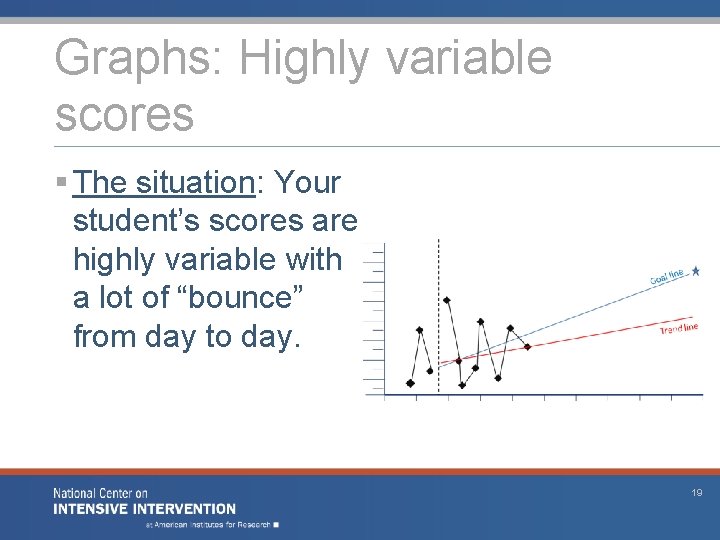
Graphs: Highly variable scores § The situation: Your student’s scores are highly variable with a lot of “bounce” from day to day. 19
Consider… • Are you using a technically sound (valid, reliable) measure? 20
Consider… • Consistency: is the assessment occurring at the same time of day, days of the week, setting, etc. ? 21
Consider… • Does the student’s engagement or motivation level vary from day to day? 22
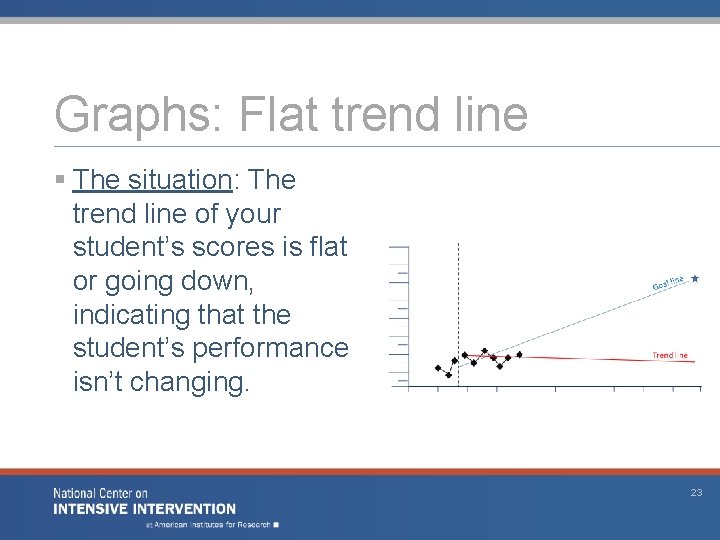
Graphs: Flat trend line § The situation: The trend line of your student’s scores is flat or going down, indicating that the student’s performance isn’t changing. 23
Consider… § Has the plan been implemented as intended? § Have other factors prevented the student from receiving the instruction as planned? • Scheduling conflicts? • Attendance? • Behavior/motivation? 24
Graphs: Goal line steeper than trend line § The situation: The trend line of your student’s scores is increasing, but not as steeply as the goal line. 25
Consider… § Did the teacher use an appropriate procedure/method to set the goal? 26
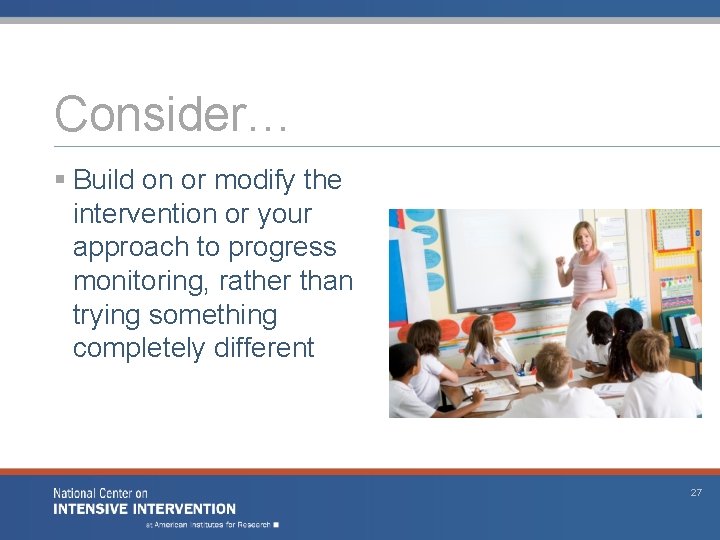
Consider… § Build on or modify the intervention or your approach to progress monitoring, rather than trying something completely different 27
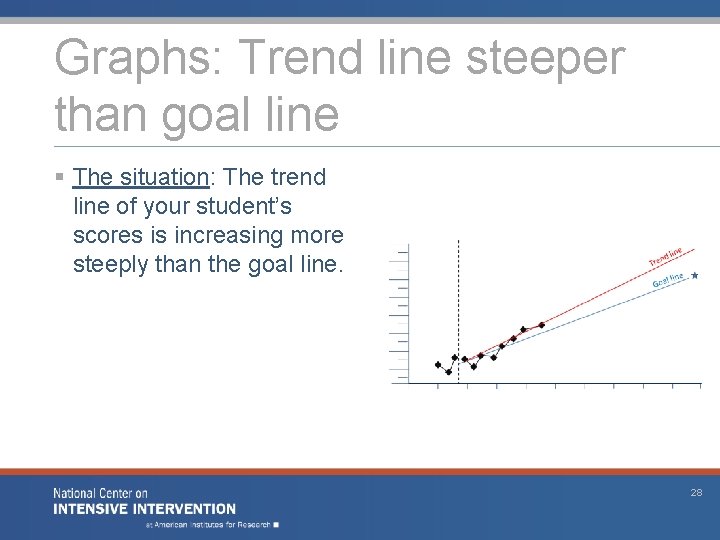
Graphs: Trend line steeper than goal line § The situation: The trend line of your student’s scores is increasing more steeply than the goal line. 28
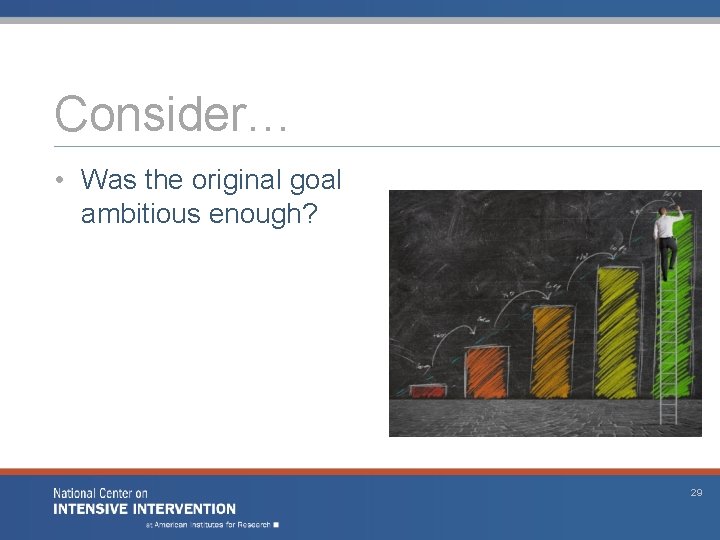
Consider… • Was the original goal ambitious enough? 29
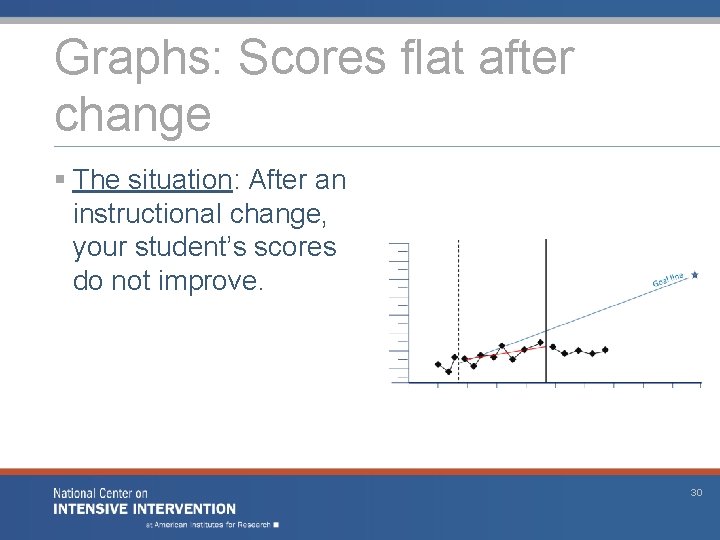
Graphs: Scores flat after change § The situation: After an instructional change, your student’s scores do not improve. 30
Consider… § Why might the original intervention have worked better for the student? § Use this insight to make an informed instructional change. 31
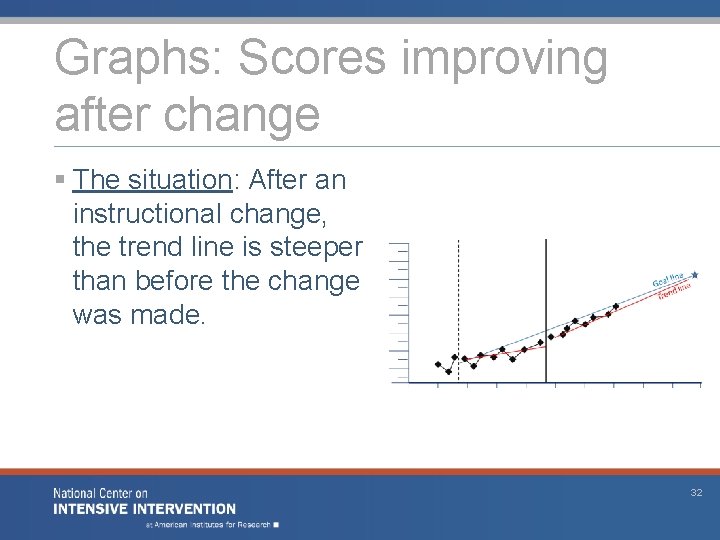
Graphs: Scores improving after change § The situation: After an instructional change, the trend line is steeper than before the change was made. 32
Consider… • What you’re doing is working. • Continue the intervention and monitor the student’s progress through the end of the year. 33
In Summary • Begin with a valid, reliable, and appropriate progress monitoring measure. • Graph your data to see patterns. • Ask questions about data patterns to arrive at hypothesis about student responsiveness. • Use your hypothesis to inform changes to intervention or assessment (if the data indicate that a change is needed). 34